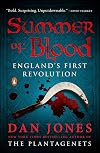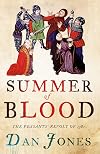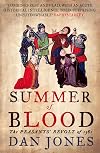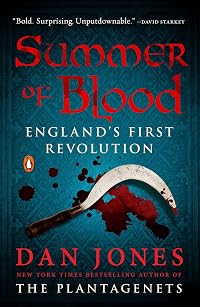
Summer of Blood: England's First Revolution
by Dan Jones
On This Page
Description
"From the New York Times bestselling author of The Plantagenets and a top authority on the historical events that inspired Game of Thrones, a vivid, blood-soaked account of one of the most famous rebellions in history--the first mass uprising by the people of England against their feudal masters. In the summer of 1381, ravaged by poverty and oppressed by taxes, the people of England rose up and demanded that their voices be heard. A ragtag army, led by the mysterious Wat Tyler and the show more visionary preacher John Ball, rose up against the fourteen-year-old Richard II and his most powerful lords and knights, who risked their property and their lives in a desperate battle to save the English crown. Dan Jones brings this incendiary moment to life and captures both the idealism and brutality of that fateful summer, when a brave group of men and women dared to challenge their overlords, demand that they be treated equally, and fight for freedom. Praise for Summer of Blood: 'Hot, brave and reeking with gore'--The Times (London); 'Sound scholarship and sexy writing make this essential reading'--The Independent (London), Book of the Year"--Provided by publisher. show lessTags
Recommendations



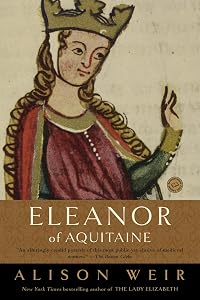
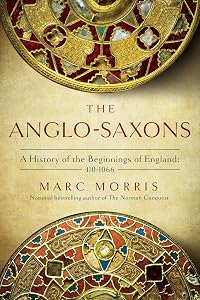
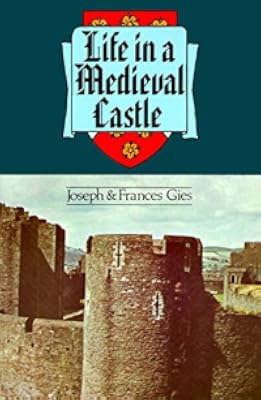


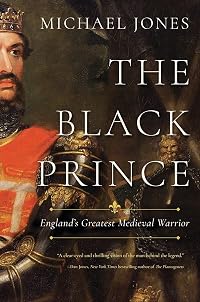

Member Recommendations
Member Reviews
A tale as old as time and one still prevalent today. The poor believing the propaganda fed to them that the rich and organized religion have their best interests at heart (And wield their wealth to protect and benefit said poor). The poor realizing that the rich and the church don’t give a shit about them as people, their well-being, their existence and only care about, not only maintaining their wealth but, acquiring more more more at any and all detriments to those the rich consider their lessers.
It would appear the message hasn’t quite been pounded through enough rich folk’s heads given the way our own modern society somehow sells the same propaganda pablum to us. More rich heads (Secular and church) need to be on more poor show more pikes, simple as. show less
It would appear the message hasn’t quite been pounded through enough rich folk’s heads given the way our own modern society somehow sells the same propaganda pablum to us. More rich heads (Secular and church) need to be on more poor show more pikes, simple as. show less
Not my favorite Jones book. But still a good yarn. Loved reading about the restraint of the mobs and how they just fell to madness and blood lust. The Fourteenth Century was a chaotic time to live in. Daily life was threaded through a needle. It was quite understandable for and obvious that the masses would eventually get tired of the status quo or lack of. Only Dan Jones could bring this time to life as well as this.
Summer of Blood by Dan Jones is an expertly written account of the Peasants Revolt of 1381 when the oppressed, disease and poverty stricken commoners of southeast England rose up in brutal rebellion. Prompted by yet another burdensome parliamentary poll-tax to fund England’s continental military ventures, the disgruntled local populace banded behind the magnetic idealism of Wat Tyler and John Ball. With all-encompassing demands of equality and justice they marched on London, bringing the entire English establishment to its knees with wanton murder and destruction until the young Plantagenet King Richard II and his closest advisors had finally had enough – launching ruthless and swift retribution. The author shows true passion for show more his chosen field of study and particularly this episode of history. He provides vivid descriptions of the events as they unfolded and also of life in fourteenth century Europe. show less
Unflinching look at one of the major upheavals of medieval England, the 1381 Wat Tyler Rebellion. The Rebellion left its mark on the then-teenaged Richard II, ushering in a fairly brutal reign that lasted until his deposition in 1399. The author's narrative flows logically and well, and he refrains from a lot of speculation as to "what they must have felt." Good illustrations, but the placement of maps in the front of the book, rather than spread out in the relevant text, does hurt a bit, since geography does play a key role in the Rebellion. Still, recommended.
Yay, another book of Dan Jones that I love. He has a way of weaving history together that’s novel-like, and Jones makes it easy to understand. Reading about England’s first revolution was interesting, and fascinating to learn more about it. Jones also did a great job, in m opinion, in the fact that the book was more focused on the pesants rising up rather than the nobility except when necessary. I highly recommend this as a read.
An enjoyable account of the events of the bloody Summer of 1381 when large scale unrest erupted in London, Kent, Essex, East Anglia and as far north as Yorkshire. Under the leadership of Wat Tyler, John Ball and Jack Straw the common people of England demanded equality and the end of villeiny but instead received bloody reprisals. Jones retells the events in a highly readable way and his analysis of the effects of the rebellion on the young and impressionable King Richard are insightful.
A bit thin, even for popular history. The narrative is coherent but moves at such a pace, and the book is so short, that the impact of the rebellion is somewhat lessened.
Members
- Recently Added By
Lists

Best Books on London (non-fiction)
43 works; 11 members
Author Information

24 Works 9,906 Members
Dan Jones is a British Author, Historian and Journalist. He was born Daniel Gwynne Jones in Reading, England on July 27, 1981, to Welsh parents. Jones was educated at The Royal Latin School before attending Pembroke College, University of Cambridge, where he received a first in History. In addition to his work as a newspaper columnist, Jones show more writes primarily about the middle ages. His titles include The Wars of the Roses, The Plantagenets and Summer of Blood. (Bowker Author Biography) show less
Common Knowledge
- Original publication date
- 2009
- People/Characters
- Richard II, King of England; Wat Tyler; John of Gaunt, Duke of Lancaster; Simon Sudbury, Archbishop of Canterbury; Nicholas Brembre; Sir William Walworth (show all 35); John Gower (poet); Jack Straw; John Ball; Sir John de Bampton; Sir Robert Belknap; Thomas of Woodstock, 1st Duke of Gloucester, 1st Earl of Buckingham, 1st Earl of Essex; Sir John Cavendish; William Courtenay, Archbishop of Canterbury; Henry le Despenser, Bishop of Norwich; Edward III, King of England; Edward, the Black Prince (Prince of Wales and Aquitaine); Sir John Gildesburgh; William Grindcobbe; Sir Robert Hales; Henry IV, King of England; Thomas Holland, 2nd Earl of Kent; Richard Imworth; Joan of Kent, 4th Countess of Kent, 5th Baroness Wake of Liddell; Henry Knighton; Sir Robert Knolles; John Legge; Geoffrey Litster; Sir William II Montague, 2nd Earl of Salisbury; Sir John Newton; Sir John Philpot; John Sewale; Robert Tresilian; Thomas Walsingham; John Wrawe
- Important places*
- Canterbury, Kent, England, UK; Rochester, Kent, England, UK; Fobbing, Essex, England, UK; Coggeshall, Essex, England, UK; Colchester, Essex, England, UK; Maidstone, Kent, England, UK (show all 33); Chelmsford, Essex, England, UK; Billericay, Essex, England, UK; St. Albans, Hertfordshire, England, UK; Dartford, Kent, England, UK; Gravesend, Kent, England, UK; Braintree, Essex, England, UK; Great Waltham, Essex, England, UK; Bocking, Essex, England, UK; Caister, Norfolk, England, UK; Norwich, Norfolk, England, UK; Stamford, Lincolnshire, England, UK; Cambridge, Cambridgeshire, England, UK; Peterborough, Cambridgeshire, England, UK; Huntingdon, Cambridgeshire, England, UK; King's Lynn, Norfolk, England, UK; Bury St. Edmunds, Suffolk, England, UK; Rougham, Suffolk, England, UK; Ely, Cambridgeshire, England, UK; Mousehold Heath, Norfolk, England, UK; Winterton, Norfolk, England, UK; North Walsham, Norfolk, England, UK; Great Yarmouth, Norfolk, England, UK; Lakenheath, Suffolk, England, UK; York, North Yorkshire, England, UK; Northampton, Northamptonshire, England, UK; London, England, UK; Brentwood, Essex, England, UK
- Important events
- Peasants' Revolt (1381)
- First words
- In 1390 John Gower, the Kentish landowner and poet, reflected at great and gloomy length on the state of the world he saw around him.
- Last words
- (Click to show. Warning: May contain spoilers.)A revell!
*Some information comes from Common Knowledge in other languages. Click "Edit" for more information.
Classifications
- Genres
- History, Nonfiction, General Nonfiction
- DDC/MDS
- 942.038 — History & geography History of Europe England and Wales England Plantagenet 1154-1399 Richard II 1377-99
- LCC
- DA235 .J56 — History of Europe, Asia, Africa and Oceania Great Britain History of Great Britain England History By period Early and medieval to 1485 1154-1485. Angevins. Plantagenets.
- BISAC
Statistics
- Members
- 409
- Popularity
- 76,062
- Reviews
- 7
- Rating
- (4.05)
- Languages
- English
- Media
- Paper, Audiobook, Ebook
- ISBNs
- 9
- UPCs
- 1
- ASINs
- 3