
Ben-Hur: A Tale of the Christ
by Lew Wallace
On This Page
Description
Judah Ben-Hur lives as a rich Jewish prince and merchant in Jerusalem at the beginning of the 1st century. His old friend Messala arrives as commanding officer of the Roman legions. They become bitter enemies. Because of an unfortunate accident, Ben-Hur is sent to slave in the mines while his family is sent to leprosy caves. As Messala is dying from being crushed in a chariot race, he reveals where Ben-Hur's family is. On the road to find them, Ben-Hur meets the Christ as he is on the road show more to Golgotha to be crucified. That day changes Ben-Hur's life forever, for that is the day he becomes a believer. show lessTags
Recommendations
















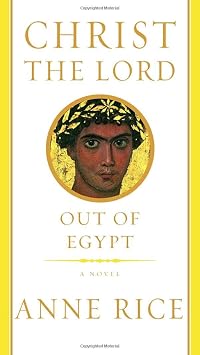

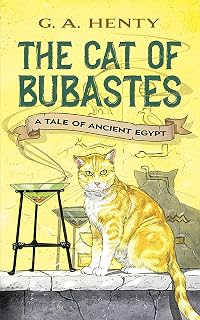
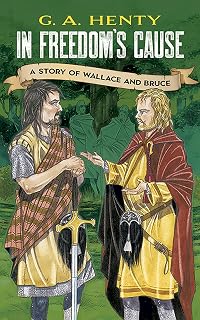


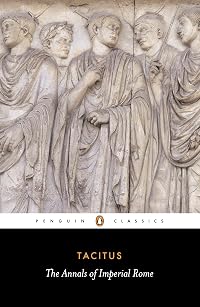








Member Recommendations

anonymous user The Count of Monte Cristo was the inspiration for Ben-Hur; the main character Edmond Dantes is falsely accused, escapes his imprisonment and seeks vengeance on those responsible for his imprisonment. [Wikipedia article, "Judah Ben Hur", citing The Book Lover's Devotional. Barbour Publishing. 2011]
Member Reviews
I was going to try to come up with a somewhat shorter review for this, but, hey. It's Ben-Hur, folks. Besides, it was a pretty special decision of mine to read Ben-Hur: A Tale of the Christ by author Carol Wallace.
Lover of classic literature that I am, I'm not someone who "worships" classics or who thinks all of them have to be marvelous to me just because they're old and celebrated. But even with its few aspects that I must have read with a lifted eyebrow, I truly appreciated the original Ben-Hur by Lew Wallace, finding it engrossing, thought-provoking, and amazing on more than one level.
I'll admit that I don't normally go for contemporary adaptations of classics when the originals are available. It's not my preference to read a show more reworded or whittled down version that may leave out much of what the first author wrote, since it was written for a reason, and I'm not looking for an easier read. Even if a classic novel may be a challenge, I'd rather set out to rise to that challenge.
With that said, I chose to read this 2016 adaptation of a novel from 1880 specifically because the present author is a direct part of her great-great-grandfather's legacy. I was curious to see exactly what she did with his work.
And I think Carol Wallace has done a fine job, taking the great material she had to work with and doing justice to it for a new audience. There's action and intrigue, tragedy and triumph on the journey that leads Judah Ben-Hur to a peculiar Nazarene, the one who's rumored to be the imminent king who'll liberate his people from Roman rule.
The historical and biblical settings on land and sea are wonderfully realized, and I especially enjoyed Judah's process through disillusionment, rage, determination, and the path that ultimately humbles and gives him a new purpose. I wasn't particularly impressed by the romance here but wasn't expecting it to be one of this story's strongest points anyway. I did miss the omitted opening, some of the dialogue, and Judah's musings that were left out, as I found much of the original novel's richness in those parts, but not everyone will miss them. And I liked the depiction of Christ here better, as the older version of the character came off as overdone and soft to me, too much of an ethereal beauty.
My inevitable comparisons of the two novels aside, I still enjoyed this new work from beginning to end. I'm sure many other historical and biblical fiction fans who like epic reads will enjoy it as well.
______________
Tyndale House provided me with a complimentary copy of this book for an honest review. show less
Lover of classic literature that I am, I'm not someone who "worships" classics or who thinks all of them have to be marvelous to me just because they're old and celebrated. But even with its few aspects that I must have read with a lifted eyebrow, I truly appreciated the original Ben-Hur by Lew Wallace, finding it engrossing, thought-provoking, and amazing on more than one level.
I'll admit that I don't normally go for contemporary adaptations of classics when the originals are available. It's not my preference to read a show more reworded or whittled down version that may leave out much of what the first author wrote, since it was written for a reason, and I'm not looking for an easier read. Even if a classic novel may be a challenge, I'd rather set out to rise to that challenge.
With that said, I chose to read this 2016 adaptation of a novel from 1880 specifically because the present author is a direct part of her great-great-grandfather's legacy. I was curious to see exactly what she did with his work.
And I think Carol Wallace has done a fine job, taking the great material she had to work with and doing justice to it for a new audience. There's action and intrigue, tragedy and triumph on the journey that leads Judah Ben-Hur to a peculiar Nazarene, the one who's rumored to be the imminent king who'll liberate his people from Roman rule.
The historical and biblical settings on land and sea are wonderfully realized, and I especially enjoyed Judah's process through disillusionment, rage, determination, and the path that ultimately humbles and gives him a new purpose. I wasn't particularly impressed by the romance here but wasn't expecting it to be one of this story's strongest points anyway. I did miss the omitted opening, some of the dialogue, and Judah's musings that were left out, as I found much of the original novel's richness in those parts, but not everyone will miss them. And I liked the depiction of Christ here better, as the older version of the character came off as overdone and soft to me, too much of an ethereal beauty.
My inevitable comparisons of the two novels aside, I still enjoyed this new work from beginning to end. I'm sure many other historical and biblical fiction fans who like epic reads will enjoy it as well.
______________
Tyndale House provided me with a complimentary copy of this book for an honest review. show less
I read this by mistake, thinking it was the original. It's not. It's an "updated" version to coincide with the gigantic flop that was the movie remake. Warning bells started going off as the language sounded too modern and it seemed like a novelization of a movie rather than a book. Unfortunately I can't say if the problem is that she's adapting a movie rather than the original novel since I haven't read the original. But given the additional material in this book where the author confesses to not liking the original book, chances are this isn't very faithful to the material.
Ben-Hur seems to have been a bait and switch originally with a "tale of the Christ" that's really just tacked onto an adventure tale. It's hard to see why this was show more one of the best selling book of its time, but easy to see why it made for a great movie adaptation. show less
Ben-Hur seems to have been a bait and switch originally with a "tale of the Christ" that's really just tacked onto an adventure tale. It's hard to see why this was show more one of the best selling book of its time, but easy to see why it made for a great movie adaptation. show less
https://nwhyte.livejournal.com/3240503.html
The film improved massively on the book, which is rare but not unique. My biggest regret about the adaptation is that the most interesting character, Balthasar's daughter Iras, who is Ben-Hur's alternate love interest (the Naughty Girl to Esther's Good Girl), is dropped from the film (as she is apparently from all the screen adaptations). But apart from that, the book is much more of a Shaggy God story, with Jesus healing Miriam and Tirzah (after a dramatic rescue from prison) much earlier, and Ben-Hur and Balthasar becoming active disciples of Christ in the years before the crucifixion (and it is Ben-Hur who gives the dying Christ his last drink via a sponge). The chariot race and downfall of show more Messala are also also much earlier in the book, and even if you haven't seen the film you get a sense that it's running out of steam in the last third or so, where Ben-Hur recruits an army of rebels who we don't hear any more of after he throws in his lot with Jesus, and then the biblical stuff is reiterated in some detail. Gone With The Wind would have been a much better film if it had been as ruthless with its source material.
It's interesting to note that Lew Wallace had not himself been to Palestine at that point in his life (he did go later, when he was American ambassador to the Ottoman Empire), so the very convincing descriptions of Palestinian landscapes and peoples are a combination of wide reading in the Library of Congress and observing the horse-crazy ethnically mixed environment of Santa Fe and New Mexico generally, where he was Governor while finishing the book. Indeed, I wonder if the relatively sympathetic treatment of Pilate comes directly of empathy from one colonial governor to another. New Mexico had been under US rule only a little longer in 1880 than Judæa had been under Roman rule at the time of Pilate.
Incidentally, Mary is explicitly fifteen years old at the time of the birth of Jesus in Wallace’s novel.
It's not a bad book, it just takes itself a bit too seriously and goes on a bit too long. show less
The film improved massively on the book, which is rare but not unique. My biggest regret about the adaptation is that the most interesting character, Balthasar's daughter Iras, who is Ben-Hur's alternate love interest (the Naughty Girl to Esther's Good Girl), is dropped from the film (as she is apparently from all the screen adaptations). But apart from that, the book is much more of a Shaggy God story, with Jesus healing Miriam and Tirzah (after a dramatic rescue from prison) much earlier, and Ben-Hur and Balthasar becoming active disciples of Christ in the years before the crucifixion (and it is Ben-Hur who gives the dying Christ his last drink via a sponge). The chariot race and downfall of show more Messala are also also much earlier in the book, and even if you haven't seen the film you get a sense that it's running out of steam in the last third or so, where Ben-Hur recruits an army of rebels who we don't hear any more of after he throws in his lot with Jesus, and then the biblical stuff is reiterated in some detail. Gone With The Wind would have been a much better film if it had been as ruthless with its source material.
It's interesting to note that Lew Wallace had not himself been to Palestine at that point in his life (he did go later, when he was American ambassador to the Ottoman Empire), so the very convincing descriptions of Palestinian landscapes and peoples are a combination of wide reading in the Library of Congress and observing the horse-crazy ethnically mixed environment of Santa Fe and New Mexico generally, where he was Governor while finishing the book. Indeed, I wonder if the relatively sympathetic treatment of Pilate comes directly of empathy from one colonial governor to another. New Mexico had been under US rule only a little longer in 1880 than Judæa had been under Roman rule at the time of Pilate.
Incidentally, Mary is explicitly fifteen years old at the time of the birth of Jesus in Wallace’s novel.
It's not a bad book, it just takes itself a bit too seriously and goes on a bit too long. show less
This is the story of Judah Ben-Hur, a nobly born Jewish boy with aspirations of becoming a soldier and fighting against the Roman Empire. As a youth he is falsely accused of an assassination attempt by his boyhood rival. He is sentenced to be a galley slave and his mother and sister are taken away by the soldiers. He is fortuitously saved from slavery by a Roman who promptly dies, leaving Ben-Hur his estate.
Ben-Hur immediately goes in search of his family and believing them lost, he sets his sights on revenge. Ultimately, he decides to defeat his boyhood rival in a chariot race and bankrupt him. He succeeds beyond his wildest dreams as his rival is also permanently crippled by the fall he takes in the race.
Running parallel to this show more story is the Biblical narrative of the birth and ministry of Christ. Judah is aware of the rumors surrounding a mysterious star and the promise of the messiah that is heralds. He decides to devote his money and life to growing an army that will serve the prophesied king of the Jews and aid him in overthrowing the Roman empire.
Meanwhile, Judah's mother and sister have developed leprosy in their captivity. They are eventually freed from jail but do not seek out Ben-Hur because they are too ashamed to be seen in their affliction. Eventually, Jesus heals them and they are reunited with Ben-Hur. The end of the book is essentially just the Passion with Ben-Hur and his friends standing around watching and reacting. Afterwards, Ben-Hur settles down with a sweet Jewish girl and becomes a Christ follower, having realized that the coming king would not reign on earth but in the next life.
I thought this book was a bit strange. The characters were not deeply developed and were just playing out their little drama more to set the stage than for their own sake. There wasn't much tension and the stakes were very low. What this book is actually good for is a rich sense of the place and time in history. The historical backdrop was interesting, not the characters.
I guess I'm not sure why this was a book about Jesus? The Biblical story runs throughout the novel, but mostly in the background. It wasn't really clear what point or purpose it served. The author doesn't expound upon the story and most of the Biblical scenes are quoted practically verbatim from the gospels. Just weird. I didn't get the point of Ben-Hur's story and I didn't get the point of the rehash of the gospel story either. Other than to tell an "epic" tale, it didn't accomplish much. show less
Ben-Hur immediately goes in search of his family and believing them lost, he sets his sights on revenge. Ultimately, he decides to defeat his boyhood rival in a chariot race and bankrupt him. He succeeds beyond his wildest dreams as his rival is also permanently crippled by the fall he takes in the race.
Running parallel to this show more story is the Biblical narrative of the birth and ministry of Christ. Judah is aware of the rumors surrounding a mysterious star and the promise of the messiah that is heralds. He decides to devote his money and life to growing an army that will serve the prophesied king of the Jews and aid him in overthrowing the Roman empire.
Meanwhile, Judah's mother and sister have developed leprosy in their captivity. They are eventually freed from jail but do not seek out Ben-Hur because they are too ashamed to be seen in their affliction. Eventually, Jesus heals them and they are reunited with Ben-Hur. The end of the book is essentially just the Passion with Ben-Hur and his friends standing around watching and reacting. Afterwards, Ben-Hur settles down with a sweet Jewish girl and becomes a Christ follower, having realized that the coming king would not reign on earth but in the next life.
I thought this book was a bit strange. The characters were not deeply developed and were just playing out their little drama more to set the stage than for their own sake. There wasn't much tension and the stakes were very low. What this book is actually good for is a rich sense of the place and time in history. The historical backdrop was interesting, not the characters.
I guess I'm not sure why this was a book about Jesus? The Biblical story runs throughout the novel, but mostly in the background. It wasn't really clear what point or purpose it served. The author doesn't expound upon the story and most of the Biblical scenes are quoted practically verbatim from the gospels. Just weird. I didn't get the point of Ben-Hur's story and I didn't get the point of the rehash of the gospel story either. Other than to tell an "epic" tale, it didn't accomplish much. show less
This was one of the most popular books in America in the late 19th century. There are shades of The Count of Monte Cristo with a winged man seeking revenge, but it gets a little lost along the way. Some elements were fascinating, like the chariot race, while others, like an Egyptian love interest, dragged. I loved seeing the story of Christ from an outside POV and his mother & sister’s healing. I’m glad I read it, but I wouldn’t read again.
My copy of Ben-Hur is over 50 years old – broken spine; brown, brittle pages; looks like it was written on a type-writer. It belonged to my father, who had an entire collection of books from the same publisher – Bancroft Classic. I’ve inherited this one, as well as Robinson Crusoe and A Tale of Two Cities. This one, I’ve been meaning to read the longest.
Ben-Hur follows the story of Judah, Prince of Jerusalem of the house of Hur, a young Jewish man who is wrongly accused of the attempted murder of a Roman General by a man he thought was his friend. After spending years as a galley slave, rowing the boat of another Roman General, Judas is set free and adopted by a Roman whom he saves from drowning. The rest…well, the rest is show more spoilers.
The novel ties in historical happenings around the time of Roman-Judea to the life of the infamous Jesus Christ. In fact, the whole novel is framed by his life and death. Judas, a faithful Jew, encounters Jesus Christ (and those affected by him) multiple times throughout the story, and it becomes most prominent at the very end.
The whole novel is, therefore, a very Christian tale. You can tell it is by the way Wallace wrote about people’s interactions with Jesus, and the way the miracles are portrayed. Rather than being a purely historical tale, the whole thing stinks of Christian propaganda and the teachings the religion brings.
Now, I’m not the most religious person in the world, but I did enjoy reading this. While the whole thing felt a bit like a morality tale at parts, and the glorification of the Christ figure is a bit too much for my taste, it’s still a classic that deserves to be read.
So, I did just that.
Final Rating: 3/5 – Not a waste of time to read, but I wouldn’t recommend it to just anyone. show less
Ben-Hur follows the story of Judah, Prince of Jerusalem of the house of Hur, a young Jewish man who is wrongly accused of the attempted murder of a Roman General by a man he thought was his friend. After spending years as a galley slave, rowing the boat of another Roman General, Judas is set free and adopted by a Roman whom he saves from drowning. The rest…well, the rest is show more spoilers.
The novel ties in historical happenings around the time of Roman-Judea to the life of the infamous Jesus Christ. In fact, the whole novel is framed by his life and death. Judas, a faithful Jew, encounters Jesus Christ (and those affected by him) multiple times throughout the story, and it becomes most prominent at the very end.
The whole novel is, therefore, a very Christian tale. You can tell it is by the way Wallace wrote about people’s interactions with Jesus, and the way the miracles are portrayed. Rather than being a purely historical tale, the whole thing stinks of Christian propaganda and the teachings the religion brings.
Now, I’m not the most religious person in the world, but I did enjoy reading this. While the whole thing felt a bit like a morality tale at parts, and the glorification of the Christ figure is a bit too much for my taste, it’s still a classic that deserves to be read.
So, I did just that.
Final Rating: 3/5 – Not a waste of time to read, but I wouldn’t recommend it to just anyone. show less
I can't recall another novel I've read that seesawed between sublime and sheer awfulness like this one. There were some wonderfully written moments, and then mere sentences later we'd get a description of a handshake that's, like, paragraphs long. The dialogue was the same way--some really subtle stuff, then a mallet to the head.
It's a great premise that's not handled that well. As a person of faith, I also found the handling of Christ reallllllly obnoxious, like a stoic model who also kind of looked like a figure from a Margaret Keane painting.
This is one of those cases where the '50s film version is vastly superior to the source material. Watch that instead.
It's a great premise that's not handled that well. As a person of faith, I also found the handling of Christ reallllllly obnoxious, like a stoic model who also kind of looked like a figure from a Margaret Keane painting.
This is one of those cases where the '50s film version is vastly superior to the source material. Watch that instead.
Members
- Recently Added By
Lists

1001 Books You Must Read Before You Die
1,448 works; 1,137 members

Best Historical Fiction
620 works; 261 members

Read the book and saw the movie
1,170 works; 195 members

Unread books
1,063 works; 87 members

Best historical fiction set in the ancient world
126 works; 40 members

Favourite 19th century fiction
257 works; 62 members

Historical Fiction
889 works; 91 members
Favourite Books
1,820 works; 316 members
Best Roman Empire Books
49 works; 18 members

Best Revenge Stories
69 works; 9 members

Publisher's Weekly Bestsellers Prior to 1895 in Chronological Order
95 works; 6 members

CCE 1000 Good Books List
1,033 works; 12 members

Books Set in Rome
98 works; 2 members

𓐩hought Daughter ♱♰✟✞✝︎☨†˚₊‧꒰ა ♱ ໒꒱ ‧
38 works; 1 member

Works Referenced in The League of Extraordinary Gentlemen
122 works; 6 members

Fiction (Mostly) in Selective Bibliography of American Literature 1775-1900
431 works; 3 members

The Movie Is Better than the Book: A Rare Phenomena
2 works; 1 member
Author Information

63+ Works 6,920 Members
Attorney, soldier, politician, and writer, Lew Wallace fought in both the Mexican and Civil wars, after which he returned to practicing law and then entered politics. He wrote his epic Ben-Hur (1880) while serving as territorial governor in New Mexico. A biography of General Benjamin Harrison followed in 1888. Wallace also wrote plays and poetry. show more (Bowker Author Biography) show less
Some Editions
Awards and Honors
Series
Belongs to Publisher Series
Biblioteca Clásicos Juveniles (22-23)
Doubleday Dolphin (C175)
World's Greatest Literature (Volume 10)
detebe-Klassiker (21291)
Dean's Classics (36)
Tus libros (103)
Limited Editions Club (S:28.09)
Airmont Classics (74)
Corticelli [Mursia] (208)
Work Relationships
Is contained in
Has the adaptation
Common Knowledge
- Canonical title
- Ben-Hur: A Tale of the Christ
- Original title
- Ben-Hur: A Tale of the Christ
- Alternate titles*
- Ben-Hur : een verhaal uit den tijd van Jezus' omwandeling op aarde
- Original publication date
- 1880-11-12
- People/Characters
- Judah Ben-Hur; Messala; Balthasar; Melchior; Gaspar; Herod the Great (show all 10); Valerius Gratus; Quintus Arrius; Simonides; Sheik Ilderim
- Important places
- Jerusalem; Rome, Italy (ancient); Aegean Sea; Nazareth, Israel; Roman Empire; Antonia Fortress
- Important events
- 1st century; Roman Empire; Birth of Jesus; Crucifixion of Jesus of Nazareth; Christmas; Easter
- Related movies
- Ben-Hur (1959 | IMDb); Ben-Hur: A Tale of the Christ (1925 | IMDb); Ben-Hur (2016 | IMDb)
- Epigraph
- "Learn of the philosophers always to look for natural causes in all extraordinary events; and when such natural causes are wanting, recur to God." Count De Gabalis.
- Dedication
- To the wife of my youth who still abides with me.
- First words
- The Jebel es Zubleh is a mountain fifty miles and more in length, and so narrow that its tracery on the map gives it a likeness to a caterpillar crawling from the south to the north.
- Last words
- (Click to show. Warning: May contain spoilers.)Out of that vast tomb Christianity issued to supersede the Caesars.
- Original language
- English
- Disambiguation notice
- This is the main work for the novel Ben-Hur: a tale of the Christ. Do not combine it with any adaptation, abridgement, etc.
*Some information comes from Common Knowledge in other languages. Click "Edit" for more information.
Classifications
- Genres
- Fiction and Literature, Christian Fiction, General Fiction, Historical Fiction
- DDC/MDS
- 813.4 — Literature & rhetoric American literature in English American fiction in English Later 19th Century 1861-1900
- LCC
- PS3134 .B4 — Language and Literature American literature American literature Individual authors 19th century
- BISAC
Statistics
- Members
- 6,300
- Popularity
- 1,965
- Reviews
- 95
- Rating
- (3.78)
- Languages
- 20 — Afrikaans, Catalan, Czech, Danish, Dutch, English, Finnish, French, German, Greek, Hebrew, Hungarian, Italian, Latvian, Norwegian (Bokmål), Polish, Romanian, Spanish, Swedish, Portuguese (Portugal)
- Media
- Paper, Audiobook, Ebook
- ISBNs
- 439
- UPCs
- 5
- ASINs
- 295