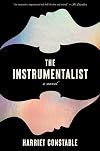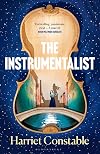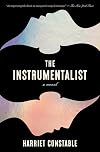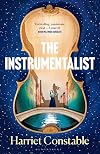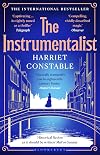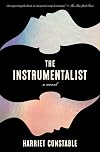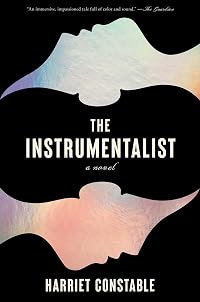
The Instrumentalist
by Harriet Constable
On This Page
Description
Music, intoxication, and betrayal combine in this "immersive, impassioned" (The Guardian) debut novel inspired by the true story of Anna Maria della Pietà, a Venetian orphan and violin prodigy who studied under Antonio Vivaldi and ultimately became his star musician—and his biggest muse."The Instrumentalist is more than a history lesson—with this novel, Constable has crafted an engrossing tale about an unexpected coup de musique." —The New York Times
Anna Maria della Pietà was show more destined to drown in one of Venice's canals. Instead, she became the greatest violinist of the 18th century.
Anna Maria has only known life inside the Pietà, an orphanage for children born of prostitutes. But the girls of the Pietà are lucky in a sense: most babies born of their station were drowned in the city's canals. And despite the strict rules, the girls are given singing and music lessons from an early age. The most promising musicians have the chance to escape the fate of the rest: forced marriage to anyone who will have them.
Anna Maria is determined to be the best violinist there is—and whatever Anna Maria sets out to do, she achieves. After all, the stakes for Anna could not be higher. But it is 1704 and she is a girl. The pursuit of her ambition will test everything she holds dear, especially when it becomes clear that her instructor, Antonio Vivaldi, will teach Anna everything he knows—but not without taking something in return.
From the opulent palaces of Venice to its mud-licked canals, The Instrumentalist is a "searing portrait of ambition and betrayal" (Elizabeth MacNeal, author of The Doll Factory). It is the story of one woman's irrepressible ambition and rise to the top. It is also the story of the orphans of Venice who overcame destitution and abuse to make music, and whose contributions to some of the most important works of classical music, including "The Four Seasons," have been overlooked for too long.
For fans of The Queen's Gambit and Fingersmith, The Instrumentalist is an "enthralling, passionate, vivid" (Kiran Millwood Hargrave, author of The Mercies) exploration of art and ambition, genius and exploitation, and loss and triumph. show less
Tags
Recommendations



Member Reviews
I struggled to rate this one because while the setting and imagery were spectacular, the ending doesn't quite match the energy of the rest of the book. But 18th century Venice is one of my specialties and I genuinely enjoyed the trip. Even Casanova has a brief cameo, not having been banished from Venice yet. It's a fun name drop, although his scene is interchangeable with any salonnière at the time.
But Anna Maria is no ordinary girl with lofty dreams. Even as a child, Anna expresses a pathological desire to achieve greatness; to "be remembered." Her ambition barely suppresses the emotional void left by being abandoned. Her aggressive and, at times, violent intrusive thoughts reminded me of "Black Swan" or "Pearl." I wanted Anna Maria show more to make that inescapably drastic leap. Even the death of a friend doesn't stop her. But the ending was too soft. The reveal doesn't shatter her as much as it should have, considering the build up. Nor does it make up for the mistakes she's made and the girls she piteously stepped on. Vivaldi being her mentor with grooming intentions was an intriguing take, but his final act you definitely see coming.
However Anna Maria's synesthesia makes for beautiful descriptions. The interplay of music and colors might make me go back and give this 4 ⭐. These sections were a feast for the imagination! show less
But Anna Maria is no ordinary girl with lofty dreams. Even as a child, Anna expresses a pathological desire to achieve greatness; to "be remembered." Her ambition barely suppresses the emotional void left by being abandoned. Her aggressive and, at times, violent intrusive thoughts reminded me of "Black Swan" or "Pearl." I wanted Anna Maria show more to make that inescapably drastic leap. Even the death of a friend doesn't stop her. But the ending was too soft. The reveal doesn't shatter her as much as it should have, considering the build up. Nor does it make up for the mistakes she's made and the girls she piteously stepped on. Vivaldi being her mentor with grooming intentions was an intriguing take, but his final act you definitely see coming.
However Anna Maria's synesthesia makes for beautiful descriptions. The interplay of music and colors might make me go back and give this 4 ⭐. These sections were a feast for the imagination! show less
This is one of those books I really struggled to review (as evidenced by how late this review is actually being published, compared to the original date on the draft which has been waiting patiently for me to hit that "post" button for several months). On the one hand, I am always interested in narratives aiming to re-centre women, their experiences, achievements and fights for freedom after literal centuries of them being hidden, sidelined, and forgotten. On the other hand, I have been growing increasingly frustrated with "feminist" anything (be they retellings or historical fiction books) which seemingly use it solely as a marketing tool (and I do think that's mostly to do with sales strategy rather than individual authors' show more positioning). I have said this before, and I will say it again for as long as it's needed: having a female protagonist does not make a book inherently feminist
Although I'm by no means an expert, I enjoy classical music and, living very close to Venice, was immediately intrigued by the premise of this book, and longed to learn more about Anna Maria della Pietà and Vivaldi, two historical figures I wasn't very familiar with beyond what is generally well-known. Sadly, my expectations fell mostly flat. This was due to a variety of reasons including the writing style, which I found to be highly repetitive and simplistic, unchanging even as time passed, so that Anna Maria spoke and thought like an adult even at the age of 8. I did like the fact that Anna Maria is described as having synesthesia, and I enjoyed the descriptions of vibrant colours while she played the violin. I was entertained enough to finish this, but by the end I was deeply frustrated and sad at another missed opportunity.
The Instrumentalist is based on the true story of Anna Maria della Pietà, an orphan raised at the Ospedale della Pietà, a brilliant violinist who displayed her musical prowess as a young child and was taught by Vivaldi, who also composed pieces specifically for her. This premise held incredible potential, telling the story of a woman who fought for her place in a patriarchal, misogynistic society, a talented musician relegated to a footnote in musical history. And yet...
I have a few issues with this book, but my main one is the character of Anna Maria herself. She is not simply unlikeable - which would be fine, unlikeable people exist and they often make for very compelling main characters. Anna Maria is essentially a proto-girlboss, single-mindedly ambitious and ruthless to excess, to the point that she comes across as inauthentic. I will happily accept that some of these character traits would fit Anna Maria's circumstances more than generosity of spirit and kindness - it was a ruthless world after all. Where I draw the line is having an 18th century child worry about being "professional", feeling concerned by being average or behind her peers, or barging into her highly acclaimed teacher's office, making demands. This just feels lazy, as though taking a modern woman and inserting her forcefully into a historical setting.
This is compounded by one of the other main issues I had with this book, which is the way in which Vivaldi's character is constructed. There is very little development there, as he is the object of Anna Maria's adoration and fantasies of success for the majority of the book, only to be revealed as an opportunistic, abusive and cruel man, who full-on steals Anna Maria's work for himself - and nothing less than La Stravaganza and the Four Seasons, his most famous works.
Now, I think we can all agree that certain men in history have been idolised and paraded as geniuses with probably little reason. And we can also agree that women's contributions have frequently been overlooked or downright ignored. However, it is quite different to suggest that a composer's most famous works were actually the fruit of his protégé's work and stolen by him for his own greatness, effectively reducing him as a one-note villain. Especially when, as the author's note admits, some events and timelines were shuffled around "for dramatic purposes".
Just as it's not enough to have a female protagonist to write a feminist novel, it is disingenuous to write male characters either as the driving force behind a woman's accomplishments or as evil villains standing in the way of their success. Which brings me to another point: despite the novel seemingly aiming to bring to light a successful woman's forgotten achievements, Anna Maria still exists only in Vivaldi's shadow, either as his star pupil or as a victim of his own ambition. Her actual, historically documented, successes and the efforts that must have been needed to get her there are never shown: she is a prodigy, knowing how to play from the moment she picks up the violin and, despite the odds being stacked against her, she tends to get what she wants. For me, this diminishes Anna Maria's achievements rather than celebrating them: her work is not worthy of being remembered if it cannot be linked directly to a man's most famous creations, even if it becomes necessary to force historical events to make it so.
The other female characters in the book are almost non-existent except as fillers. Friends are discarded once they seem to be weighing down Anna Maria, then forgiving her for all kinds of awful behaviour without ever needing her to make amends; and the other girls are either too incompetent for her to be bothered with them, or rivals needing to be annihilated. To be clear, I wouldn't expect something like "female solidarity" or "sisterhood" to appear as it would also be anachronistic. But the "figlie di coro" were professional musicians and composers in their own right, highly trained and renowned as one of the best orchestras in Europe at the time. To erase all of them and celebrate Anna Maria as the sole genius, demonising the previously revered male genius and substituting him with her, thus perpetuating the same patterns of idolisation without ever challenging them, ultimately feels like a betrayal and a missed opportunity.
I received an e-arc of this book for free from the publisher via NetGalley and as part of the readalong organised by The Tandem Collective. This did not affect my opinion of the book in any way. show less
Although I'm by no means an expert, I enjoy classical music and, living very close to Venice, was immediately intrigued by the premise of this book, and longed to learn more about Anna Maria della Pietà and Vivaldi, two historical figures I wasn't very familiar with beyond what is generally well-known. Sadly, my expectations fell mostly flat. This was due to a variety of reasons including the writing style, which I found to be highly repetitive and simplistic, unchanging even as time passed, so that Anna Maria spoke and thought like an adult even at the age of 8. I did like the fact that Anna Maria is described as having synesthesia, and I enjoyed the descriptions of vibrant colours while she played the violin. I was entertained enough to finish this, but by the end I was deeply frustrated and sad at another missed opportunity.
The Instrumentalist is based on the true story of Anna Maria della Pietà, an orphan raised at the Ospedale della Pietà, a brilliant violinist who displayed her musical prowess as a young child and was taught by Vivaldi, who also composed pieces specifically for her. This premise held incredible potential, telling the story of a woman who fought for her place in a patriarchal, misogynistic society, a talented musician relegated to a footnote in musical history. And yet...
I have a few issues with this book, but my main one is the character of Anna Maria herself. She is not simply unlikeable - which would be fine, unlikeable people exist and they often make for very compelling main characters. Anna Maria is essentially a proto-girlboss, single-mindedly ambitious and ruthless to excess, to the point that she comes across as inauthentic. I will happily accept that some of these character traits would fit Anna Maria's circumstances more than generosity of spirit and kindness - it was a ruthless world after all. Where I draw the line is having an 18th century child worry about being "professional", feeling concerned by being average or behind her peers, or barging into her highly acclaimed teacher's office, making demands. This just feels lazy, as though taking a modern woman and inserting her forcefully into a historical setting.
This is compounded by one of the other main issues I had with this book, which is the way in which Vivaldi's character is constructed. There is very little development there, as he is the object of Anna Maria's adoration and fantasies of success for the majority of the book, only to be revealed as an opportunistic, abusive and cruel man, who full-on steals Anna Maria's work for himself - and nothing less than La Stravaganza and the Four Seasons, his most famous works.
Now, I think we can all agree that certain men in history have been idolised and paraded as geniuses with probably little reason. And we can also agree that women's contributions have frequently been overlooked or downright ignored. However, it is quite different to suggest that a composer's most famous works were actually the fruit of his protégé's work and stolen by him for his own greatness, effectively reducing him as a one-note villain. Especially when, as the author's note admits, some events and timelines were shuffled around "for dramatic purposes".
Just as it's not enough to have a female protagonist to write a feminist novel, it is disingenuous to write male characters either as the driving force behind a woman's accomplishments or as evil villains standing in the way of their success. Which brings me to another point: despite the novel seemingly aiming to bring to light a successful woman's forgotten achievements, Anna Maria still exists only in Vivaldi's shadow, either as his star pupil or as a victim of his own ambition. Her actual, historically documented, successes and the efforts that must have been needed to get her there are never shown: she is a prodigy, knowing how to play from the moment she picks up the violin and, despite the odds being stacked against her, she tends to get what she wants. For me, this diminishes Anna Maria's achievements rather than celebrating them: her work is not worthy of being remembered if it cannot be linked directly to a man's most famous creations, even if it becomes necessary to force historical events to make it so.
The other female characters in the book are almost non-existent except as fillers. Friends are discarded once they seem to be weighing down Anna Maria, then forgiving her for all kinds of awful behaviour without ever needing her to make amends; and the other girls are either too incompetent for her to be bothered with them, or rivals needing to be annihilated. To be clear, I wouldn't expect something like "female solidarity" or "sisterhood" to appear as it would also be anachronistic. But the "figlie di coro" were professional musicians and composers in their own right, highly trained and renowned as one of the best orchestras in Europe at the time. To erase all of them and celebrate Anna Maria as the sole genius, demonising the previously revered male genius and substituting him with her, thus perpetuating the same patterns of idolisation without ever challenging them, ultimately feels like a betrayal and a missed opportunity.
I received an e-arc of this book for free from the publisher via NetGalley and as part of the readalong organised by The Tandem Collective. This did not affect my opinion of the book in any way. show less
In 1696, a destitute and desperate mother deposits her baby “through the wall of Ospedale della Pietà,” an orphanage in Venice administered by nuns. The child, Anna Maria della Pietà, receives a rudimentary education, performs menial chores, eats unsavory meals, and rarely has an opportunity to breathe fresh air or socialize with outsiders. Her sole comfort is the friendship of a few children with whom she forms a close bond. At the age of eight, she takes up the violin—the Ospedale della Pietà was renowned for nurturing its orphans’ musical gifts—and before long, she exhibits so much potential that a well-known maestro decides to give her private lessons. As the years pass, she tries her hand at composing, and she secretly show more helps her teacher create pieces that he will pass off as his own.
Harriet Constable’s “The Instrumentalist,” is a moving and atmospheric novel that is based on factual events. This dramatic tale traces the peaks and valleys of Anna Maria’s life as she grows from a child to a driven adolescent obsessed with becoming a world-famous violinist and composer. Unfortunately, her mentor is an insecure and vain man who exploits his prize student’s talent for his own purposes. Furthermore, Anna Maria becomes so consumed by ambition that she prioritizes her determination to succeed over her loyalty to the orphans who love her. The author paints Anna Maria as exceptionally gifted, but also naïve, anxious, and emotionally stunted.
“The Instrumentalist” is multi-dimensional in its scope. Constable explores the affluence and poverty of eighteenth-century Venice, where the wealthy adorned themselves with fancy clothing and jewels, while their impoverished counterparts scrambled to put a roof over their heads and feed themselves and their families. This dramatic story also deals with the fierce competitiveness and ego of aspiring musicians; the powerlessness of many females, who, throughout the centuries, have too often been at the mercy of arrogant and spiteful men; and the potential of beautiful music to transport people and transform their lives. This beautifully constructed, lyrical, and gorgeously descriptive novel will engross readers with its searing social commentary and its heartbreaking depiction of the ways in which recorded history gives short shrift to the accomplishments of brilliant women. show less
Harriet Constable’s “The Instrumentalist,” is a moving and atmospheric novel that is based on factual events. This dramatic tale traces the peaks and valleys of Anna Maria’s life as she grows from a child to a driven adolescent obsessed with becoming a world-famous violinist and composer. Unfortunately, her mentor is an insecure and vain man who exploits his prize student’s talent for his own purposes. Furthermore, Anna Maria becomes so consumed by ambition that she prioritizes her determination to succeed over her loyalty to the orphans who love her. The author paints Anna Maria as exceptionally gifted, but also naïve, anxious, and emotionally stunted.
“The Instrumentalist” is multi-dimensional in its scope. Constable explores the affluence and poverty of eighteenth-century Venice, where the wealthy adorned themselves with fancy clothing and jewels, while their impoverished counterparts scrambled to put a roof over their heads and feed themselves and their families. This dramatic story also deals with the fierce competitiveness and ego of aspiring musicians; the powerlessness of many females, who, throughout the centuries, have too often been at the mercy of arrogant and spiteful men; and the potential of beautiful music to transport people and transform their lives. This beautifully constructed, lyrical, and gorgeously descriptive novel will engross readers with its searing social commentary and its heartbreaking depiction of the ways in which recorded history gives short shrift to the accomplishments of brilliant women. show less
A young woman pushes a bundle through an opening at the Ospidale di Piéta, a Venetian orphanage for girls run by nuns. That bundle is given the name Anna Maria della Piéta, and she becomes the title character of this novel, which traces her life thereafter from the age of eight to sixteen. Not much is known about the real young woman who became the most renowned violinist of her day, but Constable uses what little research can provide and her imagination to give us a compelling story.
The girls at the orphanage are given a sound education and, if they show any talent, music lessons as well. Anna Maria, like all the rest, begins with the flute. But one day she hears a sound that fascinates her and follows it to a room where a young man show more with red hair is playing an instrument she has never seen before. The notes float from his instrument as colors--a unique sensibility that later helps her to learn music and even to compose it. This is the Master of Music, Antonio Vivaldi. At first annoyed by the interruption, he is stunned when the girl picks up a student's violin and begins playing back the piece she has just heard. From that moment, Anna Maria knows what she wants to do with her life, and Vivaldi agrees to give her lessons.
The novel traces her rise to become the youngest member of the orphanage's famous orchestra, then first violinist and the toast of Venice. But it is so much more. There is her friendship with two other girls. Agata, a girl who plays the harpsichord, suffered a skull deformity by being a bit too large when she was pushed through the hole in the wall. Paulina is a talented oboist who has lost an eye. The three of them are known as the Triplets because of their close bond. Later, she is befriended by Chiara, a former rival. And of course, there is her relationship with the Maestro, who at times can be frighteningly stern and at other times tender. He sees in her a kindred spirit, one that will go to any lengths to forge ahead in the musical world of Venice. When he learns that she also has a talent for composing, he encourages her and allows her to work with him--but only if she never tells a soul.
Constable paints what seems to be an accurate portrait of early eighteenth-century Venice and of life at the orphanage. As you would expect, it's not an easy life, although there are perks for those who make it into the orchestra. Yet all of the girls hold out hope that someone will come for them. In Anna Maria's case, she was left with half of a playing card by the mother who abandoned her.
As someone who loves Vivaldi's work, I found this book quite fascinating. Of course, Constable takes some liberties, including a feminist leaning (although I imagine that these hard working and talented young women would feel constricted by the gender roles of the day). But that is the nature of a novel. I think anyone who is a fan of historical fiction or Venice would enjoy The Instrumentalist. show less
The girls at the orphanage are given a sound education and, if they show any talent, music lessons as well. Anna Maria, like all the rest, begins with the flute. But one day she hears a sound that fascinates her and follows it to a room where a young man show more with red hair is playing an instrument she has never seen before. The notes float from his instrument as colors--a unique sensibility that later helps her to learn music and even to compose it. This is the Master of Music, Antonio Vivaldi. At first annoyed by the interruption, he is stunned when the girl picks up a student's violin and begins playing back the piece she has just heard. From that moment, Anna Maria knows what she wants to do with her life, and Vivaldi agrees to give her lessons.
The novel traces her rise to become the youngest member of the orphanage's famous orchestra, then first violinist and the toast of Venice. But it is so much more. There is her friendship with two other girls. Agata, a girl who plays the harpsichord, suffered a skull deformity by being a bit too large when she was pushed through the hole in the wall. Paulina is a talented oboist who has lost an eye. The three of them are known as the Triplets because of their close bond. Later, she is befriended by Chiara, a former rival. And of course, there is her relationship with the Maestro, who at times can be frighteningly stern and at other times tender. He sees in her a kindred spirit, one that will go to any lengths to forge ahead in the musical world of Venice. When he learns that she also has a talent for composing, he encourages her and allows her to work with him--but only if she never tells a soul.
Constable paints what seems to be an accurate portrait of early eighteenth-century Venice and of life at the orphanage. As you would expect, it's not an easy life, although there are perks for those who make it into the orchestra. Yet all of the girls hold out hope that someone will come for them. In Anna Maria's case, she was left with half of a playing card by the mother who abandoned her.
As someone who loves Vivaldi's work, I found this book quite fascinating. Of course, Constable takes some liberties, including a feminist leaning (although I imagine that these hard working and talented young women would feel constricted by the gender roles of the day). But that is the nature of a novel. I think anyone who is a fan of historical fiction or Venice would enjoy The Instrumentalist. show less
"In 1696 a baby was posted through the wall of the Ospedale della Pietà, an orphanage in Venice. She was named Anna Maria della Pietà and became one of the greatest violinists of the eighteenth century. Her teacher was Antonio Vivaldi."
"This girl had notes before she had words, and those notes have always had color."
“A composer is a translator, connecting people to that which they cannot voice, that which they may not even know. It is a bridge between sound and emotion, mere humans and God.”
“Music has the same potential. The ability to control the emotion, the will, the memory of the audience.”
"They play what it means to be a girl in this world. The fame and devastation, the fear and exhilaration, the rush of ideas and the show more crush of silence."
"We have a collection of disabled and disfigured female orphans to thank for the most famous piece of classical music on earth: The Four Seasons."
I learned so much while reading The Instrumentalist. I kept looking bits up online to see what was based on fact, theory, rumour, or none of the above. I loved the story of Anna Maria. Her passion, her desire, her talent, her determination and hard work. As well as her friends and her experiences. I did have this uncomfortable feeling throughout that she was going to be taken advantage of in some way,but luckily, the result of that feeling was less severe than I was expecting. Overall, a very enjoyable read with plenty of new knowledge gained. show less
"This girl had notes before she had words, and those notes have always had color."
“A composer is a translator, connecting people to that which they cannot voice, that which they may not even know. It is a bridge between sound and emotion, mere humans and God.”
“Music has the same potential. The ability to control the emotion, the will, the memory of the audience.”
"They play what it means to be a girl in this world. The fame and devastation, the fear and exhilaration, the rush of ideas and the show more crush of silence."
"We have a collection of disabled and disfigured female orphans to thank for the most famous piece of classical music on earth: The Four Seasons."
I learned so much while reading The Instrumentalist. I kept looking bits up online to see what was based on fact, theory, rumour, or none of the above. I loved the story of Anna Maria. Her passion, her desire, her talent, her determination and hard work. As well as her friends and her experiences. I did have this uncomfortable feeling throughout that she was going to be taken advantage of in some way,
Anna Maria della Pieta is an orphan, passed through a hole in the wall of the Pieta as a baby she has known no other life. However, when she picks up a violin at age eight she finds her vocation. Able to see the colours of notes, she becomes a virtuoso, joining the famed convent orchestra and rising to become first violinist under her teacher, a renowned composer. Anna Maria can compose as well but when her teacher finds out he destroys her works and Anna Maria vows vengeance.
The character of Anna Maria is a real-life one, a maestro from 17th century Venice almost forgotten now. Her teacher, Antonio Vivaldi, is not named here and her story almost forgotten. Constable has woven a really engaging book around the scant facts and one with a show more bit of personality, Anna Maria is definitely no insipid orphan. A solid piece of work. show less
The character of Anna Maria is a real-life one, a maestro from 17th century Venice almost forgotten now. Her teacher, Antonio Vivaldi, is not named here and her story almost forgotten. Constable has woven a really engaging book around the scant facts and one with a show more bit of personality, Anna Maria is definitely no insipid orphan. A solid piece of work. show less
Fiction account of the life of Anna Maria della Pieta, daughter of a streetwalker, given over to an orphanage in Venice, where she shows unusual musical talent at an early age. She becomes the muse of Antonio Vivaldi, her violin teacher, and he is her mentor. He encourages her composing but later becomes jealous at her originality. The novel follows her rise to high musical positions--in their orchestra then to Master of Music. [Vivaldi has since left Venice.] A fascinating read, with strong characters
and vivid portrayal of Venice.
and vivid portrayal of Venice.
Members
- Recently Added By
Lists

WBS - Book Club
71 works; 1 member
Author Information
1 Work 212 Members
Some Editions
Awards and Honors
Awards
Common Knowledge
- Important places
- Venice, Veneto, Italy
- Blurbers
- Hargrave, Kiran Millwood
Classifications
Statistics
- Members
- 212
- Popularity
- 154,453
- Reviews
- 14
- Rating
- (4.01)
- Languages
- English, Polish, Spanish
- Media
- Paper, Audiobook, Ebook
- ISBNs
- 22
- ASINs
- 4