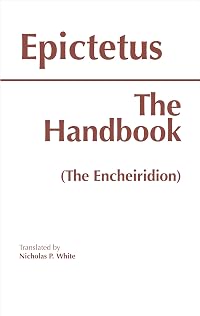
Enchiridion
by Epictetus
On This Page
Description
Epictetus was born into slavery about 55 ce in the eastern outreaches of the Roman Empire. Once freed, he established an influential school of Stoic philosophy, stressing that human beings cannot control life, only their responses to it. By putting into practice the ninety-three witty, wise, and razor-sharp instructions that make up The Art of Living, readers learn to meet the challenges of everyday life successfully and to face life's inevitable losses and disappointments with grace.Tags
Recommendations













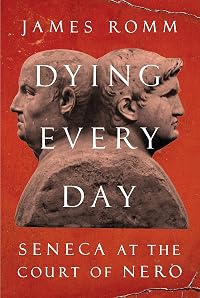
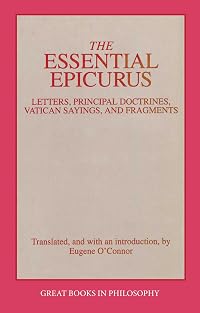
Member Recommendations

prosfilaes It's mostly the same philosophy, except Irvine had read Voltaire's Candide. But it's expanded, with a lot more discussion about how it applies practically and to modern life.
Member Reviews
Stoics are weird. And I'm kinda surprised so many people reviewed this book as some amazing bit of timeless philosophy.
The Handbook is just that, a handbook. An ancient Roman self-help book from the Stoic perspective. Some of the the advice still holds true, things like:
- don't doddle and miss your boat, a literal boat, not a figurative one
- know that there are things in your power and things beyond your power, don't confuse them
- do be disciplined in your undertakings and don't procrastinate
Good stuff right? Unfortunately that is pretty much all of the advice he gives that still holds true. The rest doesn't make sense unless you live in ancient Rome and the world is innately perfect and harmonious and magical even when shitty things show more happen. This seems to be the gaping hole in Stoic philosophy, the conviction that the universe was perfect and harmonious despite evidence to the contrary. When shitty things happen to you, according to the Stoics, they aren't really shitty, they just seem shitty because you have let yourself become out of sync with the universe. Your wife and child died? Well of course they did! That's the nature of the universe, you should have expected it and accepted it. You're a slave? Well that's just how it is, you can't very well expect to be free can you? Just try to get used to it.
This is the backbone of Epictetus' advice, lowering your expectations so that they coincide with the course your life is probably going to take anyway. No one ever rocked the boat or overcame great odds based on Stoic philosophy. Throw in some quick advice about how to respond to omens and when you should and shouldn't see a fortune teller and that's about it. Well, that and advising you to be as boring as possible, not hanging out with non philosophers, not talking at all if you can help it, not swearing but frowning to show your disapproval when others do and certainly not having sex if you can avoid it. Stoics sure tried their darnedest to live boring, unremarkable lives.
But ol' Epictetus wasn't a completetwat wet blanket. He understood that there are somethings you just can't live without.
"Take what has to do with the body to the point of bare need, such as food, drink, clothing, house, household slaves, and cut out everything that is for reputation and luxury."
Timeless, no?
Ultimately this is a quick, fairly amusing read, but I certainly wouldn't take it too seriously. show less
The Handbook is just that, a handbook. An ancient Roman self-help book from the Stoic perspective. Some of the the advice still holds true, things like:
- don't doddle and miss your boat, a literal boat, not a figurative one
- know that there are things in your power and things beyond your power, don't confuse them
- do be disciplined in your undertakings and don't procrastinate
Good stuff right? Unfortunately that is pretty much all of the advice he gives that still holds true. The rest doesn't make sense unless you live in ancient Rome and the world is innately perfect and harmonious and magical even when shitty things show more happen. This seems to be the gaping hole in Stoic philosophy, the conviction that the universe was perfect and harmonious despite evidence to the contrary. When shitty things happen to you, according to the Stoics, they aren't really shitty, they just seem shitty because you have let yourself become out of sync with the universe. Your wife and child died? Well of course they did! That's the nature of the universe, you should have expected it and accepted it. You're a slave? Well that's just how it is, you can't very well expect to be free can you? Just try to get used to it.
This is the backbone of Epictetus' advice, lowering your expectations so that they coincide with the course your life is probably going to take anyway. No one ever rocked the boat or overcame great odds based on Stoic philosophy. Throw in some quick advice about how to respond to omens and when you should and shouldn't see a fortune teller and that's about it. Well, that and advising you to be as boring as possible, not hanging out with non philosophers, not talking at all if you can help it, not swearing but frowning to show your disapproval when others do and certainly not having sex if you can avoid it. Stoics sure tried their darnedest to live boring, unremarkable lives.
But ol' Epictetus wasn't a complete
"Take what has to do with the body to the point of bare need, such as food, drink, clothing, house, household slaves, and cut out everything that is for reputation and luxury."
Timeless, no?
Ultimately this is a quick, fairly amusing read, but I certainly wouldn't take it too seriously. show less
Should we control or suppress our desires? I like Epictetus' key lesson: it's not the events happening to us that really affect us but, how we judge and interpret them. Thus, contentment with life is your sole responsibility, as is misery -it's down to the way you think, so up to you! Even while being wary of the extreme asceticism such philosophies can lead to, there are nonetheless in this 'Manual' very good and valuable advices to take inspiration from. Moderation, individualism, and the choice to focus on what truly matter (acting only on what we can control, without bothering for appearances like material comfort or social status)...Its message still resonates nowadays.
A tiny little atom bomb of wisdom. Learned about Epictetus in Tom Wolfe's "A Man in Full", and sought out this book.
The text is brief - could even be a pocket book, if they chose to do so. But the teachings are profound and practical. Now if I could only live by them...
The text is brief - could even be a pocket book, if they chose to do so. But the teachings are profound and practical. Now if I could only live by them...
Not everything that survived from antiquity is gold. This is a terrible book, a 1st century self-help book equivalent with plenty of profound sounding prescriptions without much argumentation behind them. When it does provide the reasoning it's logical fallacies galore. Most of it sounds like rambling of a belligerent drunkard. I'll save you the chore of slogging through this: desire only what you have and ignore anything that you can't control. Also worship Zeus.
I have three bones to pick with Sharon Lebell's "new interpretation" of Epictetus' Enchiridion. (1) It's over-elaborate; the original is pithy, directness and leanness are not only stylistically distinctive, but underscore the "stoical" message. (2) It's unnecessarily idiomatic: expressions like "death is no big deal," and "don't kid yourself" tend to further trivialize sentiments that, to a modern audience, already might appear simplistic (deceptively so, though, in my opinion.) (3) It's wrong. Here's a contrast between Lebell's version and the translation by George Long, available on Project Gutenberg. Lebell: "Do your best to reign in your desire. For if you desire something that isn't within your own control, disappointment will show more surely follow; meanwhile, you will be neglecting the very things that are within your control that are worthy of desire. Of course, there are times when for practical reasons you must go after one thing or shun another, but do so with grace, finesse, and flexibility." Long: "For if you desire anything which is not in our power, you must be unfortunate; but of the things in our power, and which it would be good to desire, nothing yet is before you. But employ only the power of moving towards an object and retiring from it; and these powers indeed only slightly and with exceptions and with remission." Different, wouldn't you say? show less
Epictetus' attitude is often rather stern, stern as a schoolteacher, and he can be unyielding and at times even difficult. If one extends a little forgiveness for the rigidity and aridness of his style, however, I think it must be granted that the central message of his philosophy-- that we cannot allow ourselves to be vexed and troubled too much by things beyond our control-- offers us some measure of comfort from the vicissitudes of life, and has a soothing effect upon the passions.
And I personally find that although it's easy to find him a touch grumpy at first, you can really learn to like the way he looks at things.
(9/10)
And I personally find that although it's easy to find him a touch grumpy at first, you can really learn to like the way he looks at things.
(9/10)
My first stoicism text.
I really enjoyed reading the book. It's supposed to (or at least I feel it's more effective this way) be used as a guidebook than something you read in one go.
There is nothing startlingly new or that cannot be found in stoicism videos on YouTube. However, I am glad to have a single book that covers most aspects of the stoic lifestyle. Most of it is applicable in life, some of it, I have to admit, has a more passive and resigned nature to it. I'm not saying that there is something wrong with believing that everything that happens is predetermined. But just that it doesn't sit right with me.
Due to the lack of my ability to put it into better words, I am going to stop here.
As great as Stoicism or any philosophy is show more it is always wise to not blindly believe teachings and apply them to your life. So take what you need and apply what you can. show less
I really enjoyed reading the book. It's supposed to (or at least I feel it's more effective this way) be used as a guidebook than something you read in one go.
There is nothing startlingly new or that cannot be found in stoicism videos on YouTube. However, I am glad to have a single book that covers most aspects of the stoic lifestyle. Most of it is applicable in life, some of it, I have to admit, has a more passive and resigned nature to it. I'm not saying that there is something wrong with believing that everything that happens is predetermined. But just that it doesn't sit right with me.
Due to the lack of my ability to put it into better words, I am going to stop here.
As great as Stoicism or any philosophy is show more it is always wise to not blindly believe teachings and apply them to your life. So take what you need and apply what you can. show less
Members
- Recently Added By
Lists

Antigua Roma
39 works; 2 members

Books Read in 2018
4,360 works; 110 members

Books Read in 2021
5,361 works; 114 members

How to Read a Book's Recommended Reading List
309 works; 10 members

My List
302 works; 1 member

philosophy
28 works; 2 members

🌱
3 works; 1 member

The Complete Rory Gilmore Reading List
506 works; 5 members

Philosophy Reading List
9 works; 1 member

Philosophy
5 works; 1 member
Author Information

317+ Works 10,601 Members
Epictetus (A.D. 55-A.D. 135) taught in Rome until the year 94, when Emperor Domitian banished philosophers from the city. In exile, he established his school of philosophy where his distinguished students included Marcus Aurelius, author of the Meditations.
All Editions
Some Editions
Awards and Honors
Notable Lists
Series
Belongs to Publisher Series
Work Relationships
Common Knowledge
- Canonical title
- Enchiridion
- Original title
- Handbook
- Alternate titles
- The Art of Living: The Classical Mannual on Virtue, Happiness, and Effectiveness
- Original publication date
- c.125; 2013
- People/Characters
- Epictetus
- First words
- Some things are up to us and some are not up to us.
- Quotations*
- Non sono le cose a turbare gli uomini, ma i giudizi sulle cose... Quando dunque siamo ostacolati, o turbati, o soffriamo, non accusiamo mai nessun altro se non noi stessi, ovvero i nostri giudizi.
Non adoperarti perché gli avvenimenti vadano come vuoi, ma desidera piuttosto che essi si svolgano come viene, e vivrai sereno. - Last words
- (Click to show. Warning: May contain spoilers.)Anytus and Meletus can kill me, but they can't harm me.
- Original language
- Greek
*Some information comes from Common Knowledge in other languages. Click "Edit" for more information.
Classifications
Statistics
- Members
- 3,704
- Popularity
- 4,348
- Reviews
- 52
- Rating
- (4.00)
- Languages
- 15 — Catalan, Czech, Danish, Dutch, English, French, German, Greek (Ancient), Italian, Norwegian (Nynorsk), Polish, Portuguese, Spanish, Swedish, Turkish
- Media
- Paper, Audiobook, Ebook
- ISBNs
- 167
- UPCs
- 2
- ASINs
- 49