On This Page
Description
From the archives of the British Library, the master of locked-room mystery John Dickson Carr presents an atmospheric and haunting example of crime fiction written in the Golden Age of Murder.Alison has been murdered. But his blazing body was seen running about the battlements of Castle Skull.
And so a dark shadow looms over the Rhineland where Inspector Henri Bencolin and his accomplice Jeff Marle have arrived from Paris. Entreated by the Belgian financier D'Aunay to investigate the show more gruesome and grimly theatrical death of actor Myron Alison, the pair find themselves at the imposing hilltop fortress Schloss Schädel, in which a small group of suspects are still assembled.
As thunder rolls in the distance, Bencolin and Marle enter a world steeped in macabre legends of murder and magic to catch the killer still walking the maze-like passages and towers of the keep.
This new edition of John Dickson Carr's spirited and deeply atmospheric whodunit also features the rare Inspector Bencolin short story 'The Fourth Suspect.'
. show less
Tags
Recommendations




















Member Reviews
Ablaze on the Battlements
A review of the Poisoned Pen Press eBook (November 5, 2020) of the British Library Crime Classics reprint (January 10, 2020) of the Harper & Brothers hardcover original (1931).
Castle Skull is one of the earliest books by the prolific American/Anglo writer John Dickson Carr. It features his show more French detective (technically a juge d'instruction i.e. an examining magistrate) Henri Bencolin. Carr would go on to greater success for his so-called "locked room" mysteries with the sleuths Dr. Gideon Fell (23 novels from 1932-1967) and Sir Henry Merrivale (23 novels from 1934-1991).
This Bencolin mystery is more along the lines of an "impossible crime." A retired actor is seen running along the battlements of Castle Skull having been set ablaze. The witnesses view the event from a house across the Rhine river and are all present and accounted for. The body is recovered and found to have been shot as well. A Belgian financier asks Bencolin to take the case. The site of the crime is in Germany however, and the Berlin police send Baron Sigmund von Arnheim, an espionage rival of Bencolin, to also investigate.
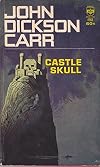
See cover here https://images-na.ssl-images-amazon.com/images/S/compressed.photo.goodreads.com/...
The front cover of the original Harper & Brothers edition (1931). Image sourced from Goodreads.
The house and the castle were the homes of a notorious magician Mageler, who willed the properties to the actor Alison and the financier d'Aunay on his death. But did Mageler really die? Is he or one of his descendants seeking revenge for some slight? Arnheim and Bencolin propose varying solutions to the case until Arnheim reveals his grand explanation at the conclusion. But perhaps Bencolin has an alternative solution which he is not prepared to expose.
The descriptive settings of the gothic atmosphere here were the best part. The witnesses / suspects were really far-fetched characters though and made for rather unbelievable situations. So this wasn't completely satisfactory, but you could see it as an early template for Carr's later works which often involved historical settings and seemingly impossible crimes which occurred in locked rooms where no one beyond the victim had entered or departed.
Trivia and Links
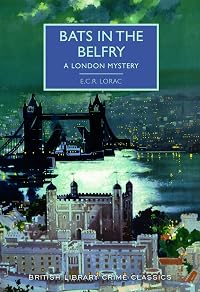
See poster at https://scontent-ord5-2.xx.fbcdn.net/v/t39.30808-6/464719184_28317217367877013_6...
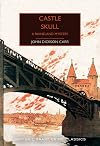
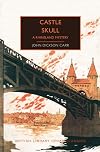
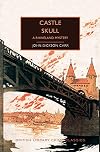
The BLCC cover illustration is cropped from a 1927 poster of the former bridge over the Rhine River in Bonn, Germany. The bridge was destroyed in WW2. Image sourced from Alamy.
The British Library Crime Classics series are reprints of forgotten titles from the 1860's through to the 1950's. You can see a list at the British Library Crime Classics Shop (for North America they are reprinted by the publisher Poisoned Pen Press). There is also a Goodreads Listopia for the series which you can see here. show less
A review of the Poisoned Pen Press eBook (November 5, 2020) of the British Library Crime Classics reprint (January 10, 2020) of the Harper & Brothers hardcover original (1931).
It was a breath-taking sight to see Castle Skull illuminated in that fashion, and I have no doubt that night-travellers on the Rhine gaped up at it. The vast death’s head lifted itself to stare with light. The eyes were enormous oval windows of violet coloured glass; the nose was triangular and yellow, as were also the arches of the gallery forming the teeth; and all of them shone out with a devilish and sardonic blaze.
Castle Skull is one of the earliest books by the prolific American/Anglo writer John Dickson Carr. It features his show more French detective (technically a juge d'instruction i.e. an examining magistrate) Henri Bencolin. Carr would go on to greater success for his so-called "locked room" mysteries with the sleuths Dr. Gideon Fell (23 novels from 1932-1967) and Sir Henry Merrivale (23 novels from 1934-1991).
This Bencolin mystery is more along the lines of an "impossible crime." A retired actor is seen running along the battlements of Castle Skull having been set ablaze. The witnesses view the event from a house across the Rhine river and are all present and accounted for. The body is recovered and found to have been shot as well. A Belgian financier asks Bencolin to take the case. The site of the crime is in Germany however, and the Berlin police send Baron Sigmund von Arnheim, an espionage rival of Bencolin, to also investigate.
See cover here https://images-na.ssl-images-amazon.com/images/S/compressed.photo.goodreads.com/...
The front cover of the original Harper & Brothers edition (1931). Image sourced from Goodreads.
The house and the castle were the homes of a notorious magician Mageler, who willed the properties to the actor Alison and the financier d'Aunay on his death. But did Mageler really die? Is he or one of his descendants seeking revenge for some slight? Arnheim and Bencolin propose varying solutions to the case until Arnheim reveals his grand explanation at the conclusion. But perhaps Bencolin has an alternative solution which he is not prepared to expose.
The descriptive settings of the gothic atmosphere here were the best part. The witnesses / suspects were really far-fetched characters though and made for rather unbelievable situations. So this wasn't completely satisfactory, but you could see it as an early template for Carr's later works which often involved historical settings and seemingly impossible crimes which occurred in locked rooms where no one beyond the victim had entered or departed.
Trivia and Links
See poster at https://scontent-ord5-2.xx.fbcdn.net/v/t39.30808-6/464719184_28317217367877013_6...
The BLCC cover illustration is cropped from a 1927 poster of the former bridge over the Rhine River in Bonn, Germany. The bridge was destroyed in WW2. Image sourced from Alamy.
The British Library Crime Classics series are reprints of forgotten titles from the 1860's through to the 1950's. You can see a list at the British Library Crime Classics Shop (for North America they are reprinted by the publisher Poisoned Pen Press). There is also a Goodreads Listopia for the series which you can see here. show less
On the whole, I like Carr's early Bencolin series about a French policeman --they have a strong horror-fantasy atmosphere, but the crimes are rationally explained. This one has a wonderfully dramatic setting --a skull-shaped castle --and a vivid crime scene --a burning man plunging from the castle into the river. I must admit the final explanation is far-fetched even for Carr, which is why I rated this 4 rather than 5.
This is a unique mystery story in which a French detective competes with a German police detective to solve a bizarre murder at a menacing castle situated on the Rhine River. The detectives are called upon to solve a puzzling murder in a country house setting consisting of the gothic Skull Castle (also known by its German name, Schloss Schadel) perched above the Rhine and "a great stone house with an enormous veranda" on the opposite riverbank overlooking the castle. The murder happened in the castle and the suspects are staying at the stone house. How the killer got from one to the other is one of the many little mysteries involved in the story.
It's a classic Golden Age story, set in the interwar years, and features a cast of oddball show more characters including the two detectives themselves: Henri Bencolin ("the celebrated juge d'instruction of the Seine") and Herr Baron Sigmund von Arnheim of the Berlin police. The story narrator is Bencolin's assistant, Richard Marle. He's an American who does a good job of playing the dim bulb of the detective array, but is a keen observer and reporter.
The gloomy setting looms over the story of the sudden death of one of two friends who inherit the castle from a famous but eccentric magician. This magician disappeared a decade or so ago in mysterious circumstances and was presumed dead. The two beneficiaries of his will are an English actor and a wealth Belgian. The actor is killed in spectacular fashion and the Belgian engages Bencoin to find the murderer. Von Arnheim is assigned to the case to lead the police investigation. Bencoin and von Arnheim joust with each other as they attempt to identify the culprit. Along the way to a surprising conclusion with a shocking twist, they encounter secret tunnels and false walls to challenge their sleuthing. However, the investigation is secondary to the atmospheric setting which dominates and drives the storytelling. It's over-the-top at times but in the final analysis the sheer entertainment is worth the necessary suspension of belief.
The Henri Bencolin novella included in the book is a welcome bonus for the reader. Similarly, Martin Edwards's Introduction provides useful background colour about the author, his detective creation and the stories in the book. All in all, it's a neat package of entertainment.
_____
I received a complementary advance reading copy of this book from Poisoned Pen Press, via Netgalley. The comments about it are my own. show less
It's a classic Golden Age story, set in the interwar years, and features a cast of oddball show more characters including the two detectives themselves: Henri Bencolin ("the celebrated juge d'instruction of the Seine") and Herr Baron Sigmund von Arnheim of the Berlin police. The story narrator is Bencolin's assistant, Richard Marle. He's an American who does a good job of playing the dim bulb of the detective array, but is a keen observer and reporter.
The gloomy setting looms over the story of the sudden death of one of two friends who inherit the castle from a famous but eccentric magician. This magician disappeared a decade or so ago in mysterious circumstances and was presumed dead. The two beneficiaries of his will are an English actor and a wealth Belgian. The actor is killed in spectacular fashion and the Belgian engages Bencoin to find the murderer. Von Arnheim is assigned to the case to lead the police investigation. Bencoin and von Arnheim joust with each other as they attempt to identify the culprit. Along the way to a surprising conclusion with a shocking twist, they encounter secret tunnels and false walls to challenge their sleuthing. However, the investigation is secondary to the atmospheric setting which dominates and drives the storytelling. It's over-the-top at times but in the final analysis the sheer entertainment is worth the necessary suspension of belief.
The Henri Bencolin novella included in the book is a welcome bonus for the reader. Similarly, Martin Edwards's Introduction provides useful background colour about the author, his detective creation and the stories in the book. All in all, it's a neat package of entertainment.
_____
I received a complementary advance reading copy of this book from Poisoned Pen Press, via Netgalley. The comments about it are my own. show less
The British Library Crime Classics series doesn’t just embrace British writers. Castle Skull is positively international: the work of the American crime novelist John Dickson Carr, set in Germany, with the Parisian detective Bencolin as its protagonist. It’s one of Carr’s earlier works, published in 1931, and he seems to have thrown everything at it in an excess of exuberance. A mystery, but also a macabre piece of Grand Guignol, this story takes us deep into the dark gorges of the Rhineland, and to the eponymous Castle Skull, former home of the magician Maleger. This extravagant folly was left jointly in his will to his friends Jerome d’Aunay, the Belgian financier, and Myron Alison, the British actor. But now d’Aunay has show more come to Paris in search of Bencolin’s brilliant mind, for there has been a horrific death, and the castle has seen blood spilled upon its walls: ‘Alison has been murdered. His blazing body was seen running about the battlements of Castle Skull.’ It’s definitely one of the more ‘what the…?!’ opening gambits in detective fiction. A blazing body; a castle shaped like a skull; a whole treasure trove of dark secrets… Bencolin can’t resist and, along with his friend (and the book’s narrator) Jeff Marle, he heads for the Rhineland to discover the full sinister history of Castle Skull...
For the full review, please see my blog:
https://theidlewoman.net/2020/04/10/castle-skull-john-dickson-carr/ show less
For the full review, please see my blog:
https://theidlewoman.net/2020/04/10/castle-skull-john-dickson-carr/ show less
British-crime-classics*****
Unusual! An early work of a master of the detective novel set in an eerie German castle and even seems to have macabre ghosts! I was unfamiliar with Henri Bencolin as detective, but you can never go wrong with a twisty work by John Dickson Carr. Just ask my bookshelves!
I requested and received a free ebook copy from Poisoned Pen Press via NetGalley. Thank you!
Unusual! An early work of a master of the detective novel set in an eerie German castle and even seems to have macabre ghosts! I was unfamiliar with Henri Bencolin as detective, but you can never go wrong with a twisty work by John Dickson Carr. Just ask my bookshelves!
I requested and received a free ebook copy from Poisoned Pen Press via NetGalley. Thank you!
Ratings
Members
- Recently Added By
Lists

#ReadingBingo2021
25 works; 1 member

#JustTheFacts2021Gold
60 works; 1 member

Books Read in 2021
5,361 works; 113 members
Author Information

231+ Works 19,063 Members
John Dickson Carr, the master of locked room mysteries, was born in Uniontown, Pennsylvania, in 1906. He was educated at Haverford College and the Sorbonne in Paris. Carr is a prolific writer with more than 80 novels and collections of short stories to his credit. He began his writing career at the age of 26 with his first published novel, It show more Walks At Night. Some of his most popular works are The Three Coffins (1935), The Burning Coat (1937), and The Bride of Newgate (1951). Carr also collaborated with Adrian Doyle, the son of Sir Arthur Conan Doyle in The Exploits of Sherlock Holmes (1954). Carr met his wife in 1932 and settled in England in 1933. He was drafted by the United States military in World War II, and was ordered to remain in England and work with the BBC. He lived in many cities throughout the world until 1967, when he permanently moved to Greenville, South Carolina. John Dickson Carr also wrote mystery novels under the name Carter Dickson. He died in Greenville in 1977. (Bowker Author Biography) show less
Some Editions
Series

Belongs to Publisher Series
Work Relationships
Is contained in
Common Knowledge
- Original title
- Castle Skull
- Original publication date
- 1931
- People/Characters
- Henri Bencolin
- Important places*
- Burg Schädel
- Dedication*
- Für Edward Coleman Delafield Jr. und William O'Neil Kennedy.
- First words
- D'Aunay talked of murder, castes, and magic.
- Last words
- (Click to show. Warning: May contain spoilers.)Cards, ladies and gentlemen?
- Original language
- English
*Some information comes from Common Knowledge in other languages. Click "Edit" for more information.
Classifications
Statistics
- Members
- 310
- Popularity
- 102,889
- Reviews
- 5
- Rating
- (3.42)
- Languages
- English, German, Italian
- Media
- Paper, Audiobook, Ebook
- ISBNs
- 13
- ASINs
- 13