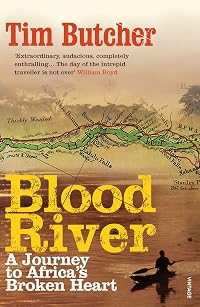
Blood River: A Journey to Africa's Broken Heart
by Tim Butcher
On This Page
Description
When Daily Telegraph correspondent Tim Butcher was sent to cover Africa he quickly became obsessed with the idea of recreating H.M. Stanley's famous expedition - but travelling alone. Despite warnings that his plan was 'suicidal', Butcher set out for the Congo's eastern border with just a rucksack and a few thousand dollars hidden in his boots. Making his way in an assortment of vessels including a motorbike and a dugout canoe, helped along by a cast of characters from UN aid workers to a show more campaigning pygmy, he followed in the footsteps of the great Victorian adventurers. show lessTags
Recommendations






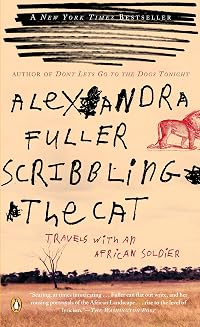
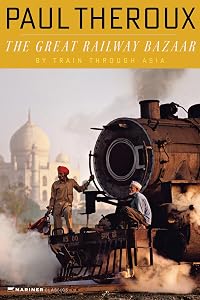
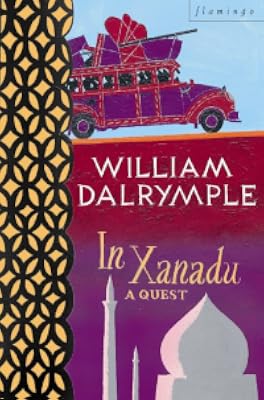
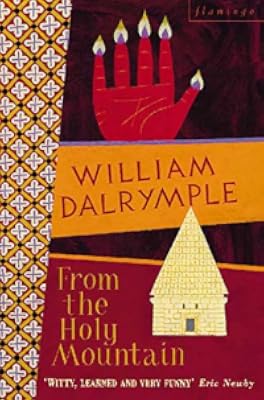


Member Recommendations
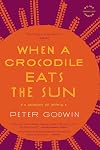
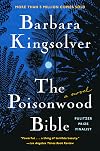
CatherineRM I love both these books and they nicely juxtapose each other with their Congo total immersion albeit one fictional and one factual. Tim Butcher traces the Congo River from its source through the dense equatorial land that the protagonist of the Kingsolver book occupied with his suffering family. Both books made a lasting impression on me and I have great time for Africa as I lived in Tanzania - close to Congo geographically for most of the time - and it has a big place in my heart. Read both books and be enriched!
Member Reviews
This was really good! I’m an Africa fan and this works as both history and ill-advised adventure travel.
Butcher does a good job with the Belgians and other colonialists. Some of them were monsters, but some also built things that were good and useful to the people oof the Congo. Or, at least useful for a while. The DRC is a country that hasn’t just stood still since independence, it is moving backwards. I can’t think of anther place for which the decline is as remarkable as the Congo, and I‘ve been Iraq more than once. The DRC had railroads, ferries, plantations, factories, and a robust mining sector. Only the mines seem to have remained and they have devolved into primitive shovel work or tiny, highly contained operations that show more put nothing into the local economy. It seems that the only way in which life might have improved for inhabitants of the interior since independence is the penetration of cellphones and the end of Belgian oppression. And, I’m not sure the second thing counts as the Belgians at least provided some public services while the current regime robs the people and provides no services.
North Korea is the only other candidate that occurs to me. It is an awful place, but it can still make things even that is limited to weapons, drugs, and counterfeit currency. Somalia is in terrible shape as well, but parts of that country have improved since the 1990s. show less
Butcher does a good job with the Belgians and other colonialists. Some of them were monsters, but some also built things that were good and useful to the people oof the Congo. Or, at least useful for a while. The DRC is a country that hasn’t just stood still since independence, it is moving backwards. I can’t think of anther place for which the decline is as remarkable as the Congo, and I‘ve been Iraq more than once. The DRC had railroads, ferries, plantations, factories, and a robust mining sector. Only the mines seem to have remained and they have devolved into primitive shovel work or tiny, highly contained operations that show more put nothing into the local economy. It seems that the only way in which life might have improved for inhabitants of the interior since independence is the penetration of cellphones and the end of Belgian oppression. And, I’m not sure the second thing counts as the Belgians at least provided some public services while the current regime robs the people and provides no services.
North Korea is the only other candidate that occurs to me. It is an awful place, but it can still make things even that is limited to weapons, drugs, and counterfeit currency. Somalia is in terrible shape as well, but parts of that country have improved since the 1990s. show less
Butcher sets out to retrace Stanley's descent of the Congo River. While I had a few quibble early in the book about some of Butcher's claims that King Leopold's acquisition of Congo territory started the "scramble for Africa," the rest of the book is spectacular. Butcher's narrative is compelling, but also his history and social context are sensitive and clear. He alludes often to Stanley, but doesn't make the mistake of many "retracers" of getting too caught up in the "quest" to forget the real people and places around him. Fantastic.
In 2004, British journalist Tim Butcher took his life in his hands and traveled the interior of the Democratic Republic of Congo (DRC). He followed the approximate path of Henry Morton Stanley, the explorer that found David Livingstone in 1871 and went back in 1874 to map the Congo River. Between descriptions of his journey, Butcher tells the history of the country, including Stanley’s expedition, colonial rule by the Belgians, post-colonial political upheaval, and uprisings that have brought regular bouts of violence to the region.
He was also inspired by his mother, who, in 1958, crossed the Congo by train. That train and its infrastructure have since been reclaimed by the jungle. Butcher explains how a country so rich in natural show more resources –diamonds, cobalt, copper, oil, palm products, rubber – can remain underdeveloped and the bulk of its people living in deprivation. This country is one of the few that had gone backwards from fifty years before, primarily due to corruption, exploitation, lack of leadership, and lawlessness.
It is a description of an amazing 44-day journey through close to 3000 kilometers of jungle on foot, motorbike, pirogue, and riverboat, not knowing exactly where he would stay the night and relying on a network of contacts he had made before the trip. He connects with United Nations employees, humanitarian workers, and missionaries. He sees and describes how the people live, both in the bush and the decaying cities. He dodges militia carrying AK47s, survives on cassava, and suffers disease. He also meets caring Congolese that offer hospitality despite possessing few resources.
Tim Butcher writes in a direct style and does not shy away from expressing his opinions. This book is so much more than a travelogue. It provides an informative history of the DRC, while documenting an extremely challenging journey, offering perspective on the immense issues facing the country, and providing thoughts on the outlook for the Congolese people. It is eye-opening and inspired me to look up the recent history of the DRC to find out what has happened since 2007, when this book was published. show less
He was also inspired by his mother, who, in 1958, crossed the Congo by train. That train and its infrastructure have since been reclaimed by the jungle. Butcher explains how a country so rich in natural show more resources –diamonds, cobalt, copper, oil, palm products, rubber – can remain underdeveloped and the bulk of its people living in deprivation. This country is one of the few that had gone backwards from fifty years before, primarily due to corruption, exploitation, lack of leadership, and lawlessness.
It is a description of an amazing 44-day journey through close to 3000 kilometers of jungle on foot, motorbike, pirogue, and riverboat, not knowing exactly where he would stay the night and relying on a network of contacts he had made before the trip. He connects with United Nations employees, humanitarian workers, and missionaries. He sees and describes how the people live, both in the bush and the decaying cities. He dodges militia carrying AK47s, survives on cassava, and suffers disease. He also meets caring Congolese that offer hospitality despite possessing few resources.
Tim Butcher writes in a direct style and does not shy away from expressing his opinions. This book is so much more than a travelogue. It provides an informative history of the DRC, while documenting an extremely challenging journey, offering perspective on the immense issues facing the country, and providing thoughts on the outlook for the Congolese people. It is eye-opening and inspired me to look up the recent history of the DRC to find out what has happened since 2007, when this book was published. show less
In 2004, British journalist Tim Butcher took his life in his hands and traveled the interior of the Democratic Republic of Congo (DRC). He followed the approximate path of Henry Morton Stanley, the explorer that found David Livingstone in 1871 and went back in 1874 to map the Congo River. Between descriptions of his journey, Butcher tells the history of the country, including Stanley’s expedition, colonial rule by the Belgians, post-colonial political upheaval, and uprisings that have brought regular bouts of violence to the region.
He was also inspired by his mother, who, in 1958, crossed the Congo by train. That train and its infrastructure have since been reclaimed by the jungle. Butcher explains how a country so rich in natural show more resources –diamonds, cobalt, copper, oil, palm products, rubber – can remain underdeveloped and the bulk of its people living in deprivation. This country is one of the few that had gone backwards from fifty years before, primarily due to corruption, exploitation, lack of leadership, and lawlessness.
It is a description of an amazing 44-day journey through close to 3000 kilometers of jungle on foot, motorbike, pirogue, and riverboat, not knowing exactly where he would stay the night and relying on a network of contacts he had made before the trip. He connects with United Nations employees, humanitarian workers, and missionaries. He sees and describes how the people live, both in the bush and the decaying cities. He dodges militia carrying AK47s, survives on cassava, and suffers disease. He also meets caring Congolese that offer hospitality despite possessing few resources.
Tim Butcher writes in a direct style and does not shy away from expressing his opinions. This book is so much more than a travelogue. It provides an informative history of the DRC, while documenting an extremely challenging journey, offering perspective on the immense issues facing the country, and providing thoughts on the outlook for the Congolese people. It is eye-opening and inspired me to look up the recent history of the DRC to find out what has happened since 2007, when this book was published. show less
He was also inspired by his mother, who, in 1958, crossed the Congo by train. That train and its infrastructure have since been reclaimed by the jungle. Butcher explains how a country so rich in natural show more resources –diamonds, cobalt, copper, oil, palm products, rubber – can remain underdeveloped and the bulk of its people living in deprivation. This country is one of the few that had gone backwards from fifty years before, primarily due to corruption, exploitation, lack of leadership, and lawlessness.
It is a description of an amazing 44-day journey through close to 3000 kilometers of jungle on foot, motorbike, pirogue, and riverboat, not knowing exactly where he would stay the night and relying on a network of contacts he had made before the trip. He connects with United Nations employees, humanitarian workers, and missionaries. He sees and describes how the people live, both in the bush and the decaying cities. He dodges militia carrying AK47s, survives on cassava, and suffers disease. He also meets caring Congolese that offer hospitality despite possessing few resources.
Tim Butcher writes in a direct style and does not shy away from expressing his opinions. This book is so much more than a travelogue. It provides an informative history of the DRC, while documenting an extremely challenging journey, offering perspective on the immense issues facing the country, and providing thoughts on the outlook for the Congolese people. It is eye-opening and inspired me to look up the recent history of the DRC to find out what has happened since 2007, when this book was published. show less
[Blood River by Tim Butcher
A significant number of the review on LT are pretty negative about the book. I disagree and found Blood River to be one of the better books I have read this year.
The book is an account by the author of an attempt to retrace the route of Henry Morton Stanley following the Congo river. Having recently read Explorers of the Nile by Tim Jeal, Stanley's story was pretty fresh in my recollection but for purposes of the review a thumbnail sketch of Stanley seems to be in order. Stanley started as a journalist and is most remembered for successfully leading an expedition to locate David Livingstone, an early explorer of the African great lakes and Nile river, near Lake Tanganyika. For most people, the line of "Dr. show more Livingstone, I presume?" is the some total of Stanley's place in the history books. However, after his meeting with Livingstone, Stanley engaged in his own explorations of Africa that were every bit as impressive as Livingstone's and the other Victorian explorers searching for the Nile.
Stanley initially set out to follow a river identified as the Lualaba. Tracing the river was one of Livingstone's goals that he failed to accomplish. The belief at the time was that the Lualaba was a major tributary of the Nile as it was a northern flowing river of considerable volume when first discovered hence it was supposed to be the true start of the Nile. Stanley's expedition proved otherwise as the Lualaba turns west and is in actuality, a major source of the Congo.
Butcher sets out to retrace Stanley's initial trip along the Congo. What makes the book so interesting is the state of modern Congo (called today the Democratic Republic of Congo). Congo is a failed state. Butcher traces the history of Congo and how it got to the state it was in when Butcher set out on his expedition. It is an ugly story of decay, corruption and civil war. Congo was consumed by the same conflict that resulted in the Rwandan genocide. That conflict spilled across Congo's borders and collapsed an already rickety state. The ensuing conflicts (sometimes known as the First and Second Congo War) has resulted in a massive death tolls. One of the great ironies of the conflicts is that no one can agree on how many people have died with estimates ranging from 5.4 million people to about a million. If the conflict is so opaque that you can have a causality rate that varies by 4 million people it is fair to say that there are a lot of unknowns.
Butcher's travel took place shortly after the conclusion the Second Congo War in a period of prolonged instability and low level conflict where there were serious questions about the stability of the accords that ended the Second Congo War.
What Butcher finds on his trip is that the infrastructure of Congo is all but gone. Where once there were highways, railways, bridges and steamships, almost nothing is left. Some has been destroyed by conflict but much has simply been wiped away by the relentless jungle. As a result, Congo has been reduced to a collection towns and cities that are cut off from each other and the broader world. The little bit of civilization present is in the form of the UN or a few aid groups that are supplied largely by air as all other infrastructure is gone. Butcher contrasts this present reality with the state of Congo in the late 50s when it was still a Belgium colony. At that time, there were roads, cars, police and so on and travelers could crisscross the country if they so chose.
The other element of the book that stood out was the level of personal risk that Butcher undertook in making the trip. Here, I had trouble relating to Butcher. The level of risk he took by going into essentially lawless areas was extraordinary. I would characterize it as fool hardy. The fact that he largely succeeded on his trek along the river seems more the result of fortune than anything else and he clearly put himself at significant risk for the project.
There is not much to be cheerful about in a book about Congo but it is a gripping story and a warning that the veneer of civilization can peel away very rapidly. Highly recommended. show less
A significant number of the review on LT are pretty negative about the book. I disagree and found Blood River to be one of the better books I have read this year.
The book is an account by the author of an attempt to retrace the route of Henry Morton Stanley following the Congo river. Having recently read Explorers of the Nile by Tim Jeal, Stanley's story was pretty fresh in my recollection but for purposes of the review a thumbnail sketch of Stanley seems to be in order. Stanley started as a journalist and is most remembered for successfully leading an expedition to locate David Livingstone, an early explorer of the African great lakes and Nile river, near Lake Tanganyika. For most people, the line of "Dr. show more Livingstone, I presume?" is the some total of Stanley's place in the history books. However, after his meeting with Livingstone, Stanley engaged in his own explorations of Africa that were every bit as impressive as Livingstone's and the other Victorian explorers searching for the Nile.
Stanley initially set out to follow a river identified as the Lualaba. Tracing the river was one of Livingstone's goals that he failed to accomplish. The belief at the time was that the Lualaba was a major tributary of the Nile as it was a northern flowing river of considerable volume when first discovered hence it was supposed to be the true start of the Nile. Stanley's expedition proved otherwise as the Lualaba turns west and is in actuality, a major source of the Congo.
Butcher sets out to retrace Stanley's initial trip along the Congo. What makes the book so interesting is the state of modern Congo (called today the Democratic Republic of Congo). Congo is a failed state. Butcher traces the history of Congo and how it got to the state it was in when Butcher set out on his expedition. It is an ugly story of decay, corruption and civil war. Congo was consumed by the same conflict that resulted in the Rwandan genocide. That conflict spilled across Congo's borders and collapsed an already rickety state. The ensuing conflicts (sometimes known as the First and Second Congo War) has resulted in a massive death tolls. One of the great ironies of the conflicts is that no one can agree on how many people have died with estimates ranging from 5.4 million people to about a million. If the conflict is so opaque that you can have a causality rate that varies by 4 million people it is fair to say that there are a lot of unknowns.
Butcher's travel took place shortly after the conclusion the Second Congo War in a period of prolonged instability and low level conflict where there were serious questions about the stability of the accords that ended the Second Congo War.
What Butcher finds on his trip is that the infrastructure of Congo is all but gone. Where once there were highways, railways, bridges and steamships, almost nothing is left. Some has been destroyed by conflict but much has simply been wiped away by the relentless jungle. As a result, Congo has been reduced to a collection towns and cities that are cut off from each other and the broader world. The little bit of civilization present is in the form of the UN or a few aid groups that are supplied largely by air as all other infrastructure is gone. Butcher contrasts this present reality with the state of Congo in the late 50s when it was still a Belgium colony. At that time, there were roads, cars, police and so on and travelers could crisscross the country if they so chose.
The other element of the book that stood out was the level of personal risk that Butcher undertook in making the trip. Here, I had trouble relating to Butcher. The level of risk he took by going into essentially lawless areas was extraordinary. I would characterize it as fool hardy. The fact that he largely succeeded on his trek along the river seems more the result of fortune than anything else and he clearly put himself at significant risk for the project.
There is not much to be cheerful about in a book about Congo but it is a gripping story and a warning that the veneer of civilization can peel away very rapidly. Highly recommended. show less
I have always wanted to travel down the Congo River, from deep in the Congo to the Atlantic coast. But never dared doing so, through a country completely bankrupt and lawless. Tim Butcher did, in 2004, and wrote a fascinating book about it, “Blood River” (2006). Maybe he really wanted to travel the route the explorer Henry Morton Stanley took, in 1877, when he became the first Westerner to travel from the east to the west coast of the continent, and especially, discovered the Congo River, hitherto unknown to Western map makers. Or maybe he wanted to see where his mother travelled in colonial luxury in the 1950. But I think he just had the same obsession as I had, go down that river.
He quickly establishes that his is not adventure show more travel, no, he calls it ordeal travel. Every part is a major challenge, firstly organising transport in a country where there is none, and then actually moving from one to the next place. The first part is a gruelling couple of days on the back of a motor bike, but he also travels by UN patrol boat, by canoe, by another UN chartered barge. None of the travel is fun, but at least on the road, or the river, he feels slightly safer than in the towns. What he encounters on the way is a country totally lawless, ruled by local strongmen and gangs, vaguely linked to political entities but mostly after their own, immediate and uncontrolled interest, in the process terrorising everybody else. And what he describes is a country going backwards, from a relatively well developed infrastructure under Belgian colonial rule to a place not unlike the one encountered by Stanley: the roads have disappeared again, have been reduced to narrow tracks; the only remnant of the railway is an overgrown sleeper; rusty metal hulls are all that is left of ships that used to sail up and down the river frequently. In the jungle there is nothing that reminds one of what we would consider normal life. One of his most poignant observations is that the older generations have, in fact, been exposed to more modernity that the younger ones – the inverse of what is considered normal in the rest of the world.
Throughout his journey Mr Butcher lives in constant fear. And you wonder what for, in the end. You know, apart from the occasional character he finds – a Belgian priest who arrived in the 1940s, or a British spinster, who has spent her entire life in the Congo, or some extremely helpful aid workers, both expatriate and local – apart from those people, there is really nothing to see, apart from green jungle and muddy river, and the occasional dilapidated town. That he manages to reach the Atlantic coast, alive and in less than two months, is a major achievement, for which I have the utmost respect, never mind that during reading the book I often referred to Mr Butcher as the lunatic. The other thing he achieved is that I don’t need to make that trip anymore, myself. show less
He quickly establishes that his is not adventure show more travel, no, he calls it ordeal travel. Every part is a major challenge, firstly organising transport in a country where there is none, and then actually moving from one to the next place. The first part is a gruelling couple of days on the back of a motor bike, but he also travels by UN patrol boat, by canoe, by another UN chartered barge. None of the travel is fun, but at least on the road, or the river, he feels slightly safer than in the towns. What he encounters on the way is a country totally lawless, ruled by local strongmen and gangs, vaguely linked to political entities but mostly after their own, immediate and uncontrolled interest, in the process terrorising everybody else. And what he describes is a country going backwards, from a relatively well developed infrastructure under Belgian colonial rule to a place not unlike the one encountered by Stanley: the roads have disappeared again, have been reduced to narrow tracks; the only remnant of the railway is an overgrown sleeper; rusty metal hulls are all that is left of ships that used to sail up and down the river frequently. In the jungle there is nothing that reminds one of what we would consider normal life. One of his most poignant observations is that the older generations have, in fact, been exposed to more modernity that the younger ones – the inverse of what is considered normal in the rest of the world.
Throughout his journey Mr Butcher lives in constant fear. And you wonder what for, in the end. You know, apart from the occasional character he finds – a Belgian priest who arrived in the 1940s, or a British spinster, who has spent her entire life in the Congo, or some extremely helpful aid workers, both expatriate and local – apart from those people, there is really nothing to see, apart from green jungle and muddy river, and the occasional dilapidated town. That he manages to reach the Atlantic coast, alive and in less than two months, is a major achievement, for which I have the utmost respect, never mind that during reading the book I often referred to Mr Butcher as the lunatic. The other thing he achieved is that I don’t need to make that trip anymore, myself. show less
Tim Butcher, a journalist for The Daily Telegraph decides to recreate H.M. Stanley's famous expedition in the 1870's. (Stanley had been also sponsored by the same newspaper!) He was also curious to see the country that his mother had visited in the 1950's as a tourist. He was told that by just about everyone he contacted that the journey was impossible, but against the odds he manages to enlist the help of aid workers (including a pygmy human rights activist and the Malaysian commander of a vessel working for the UN) and others. Each stage of the journey is uncertain, and he's constantly in danger of his life and in great discomfort. But he does manage in the end to find the transport he needs (motorcycles, dugouts, a UN barge) and the show more journey continues. It's impossible not to salute his courage.
Blood River : A Journey into Africa's Broken Heart is a fascinating account, not just because it takes us into a part of the world we wouldn't normally venture into and lets us share the journey (from our comfy armchairs!), but also for the historical perspectives which are woven into the narrative.
In the space of half a century, Congo has gone completely backwards - it is not "a developing country", or an "underdeveloped country", so much as an "un-developing country", going backwards so fast that almost nothing remains of the infrastructure left under Belgian rule due to the greed and incompetence of its leaders. It's a terrifying portrait of how quickly things can unravel. You also come to realise that putting things right isn't a matter of throwing financial aid at the problems, but in establishing the rule of law.
It's impossible not to really pity the ordinary people of this failed country, but that there is such potential for economic growth (minerals, fertile land) turns this missed opportunity into a grand tragedy.
The book was chosen as one of the reads for the Richard and Judy bookclub and of course made the shortlist for this year's Samuel Johnson Prize. show less
Blood River : A Journey into Africa's Broken Heart is a fascinating account, not just because it takes us into a part of the world we wouldn't normally venture into and lets us share the journey (from our comfy armchairs!), but also for the historical perspectives which are woven into the narrative.
In the space of half a century, Congo has gone completely backwards - it is not "a developing country", or an "underdeveloped country", so much as an "un-developing country", going backwards so fast that almost nothing remains of the infrastructure left under Belgian rule due to the greed and incompetence of its leaders. It's a terrifying portrait of how quickly things can unravel. You also come to realise that putting things right isn't a matter of throwing financial aid at the problems, but in establishing the rule of law.
It's impossible not to really pity the ordinary people of this failed country, but that there is such potential for economic growth (minerals, fertile land) turns this missed opportunity into a grand tragedy.
The book was chosen as one of the reads for the Richard and Judy bookclub and of course made the shortlist for this year's Samuel Johnson Prize. show less
Members
- Recently Added By
Lists

Best of Travel Narratives
142 works; 28 members

Adventure Travel & Exploration In Africa
13 works; 4 members

Best Travel Writing - Non-Fiction
110 works; 6 members

BBC Radio 4 Bookclub
341 works; 13 members

Books Read in 2018
4,360 works; 110 members
Books With Body Parts in the Title
153 works; 9 members
Author Information

6+ Works 1,554 Members
Tim Butcher worked for the Daily Telegraph from 1990 to 2009 as chief war correspondent, Africa bureau chief, and Middle East correspondent. His first book, Blood River, was a number-one bestseller in the UK and was shortlisted for the Samuel Johnson Prize. He lives in Cape Town.
Awards and Honors
Common Knowledge
- Canonical title
- Blood River: A Journey to Africa's Broken Heart
- Original publication date
- 2007
- People/Characters
- Henry Morton Stanley; David Livingstone
- Important places
- Africa; Congo River, Africa; Democratic Republic of the Congo; Lake Tanganyika
- Dedication
- For Jane
- Blurbers
- Boyd, William ; Foden, Giles ; Keane, Fergal ; Le Carré, John ; Smith, Alexander McCall
Classifications
- Genres
- Travel, Nonfiction, General Nonfiction, Biography & Memoir
- DDC/MDS
- 916.7510434 — History & geography Geography & travel Geography of and travel in Africa East Africa Democratic Republic of the Congo (Congo-Kinshasa); Rwanda & Burundi Democratic Republic of the Congo (Congo-Kinshasa)
- LCC
- DT647.5 .B88 — History of Europe, Asia, Africa and Oceania Africa History of Africa West Africa. West Coast Zaire. Congo (Democratic Republic). Belgian Congo
- BISAC
Statistics
- Members
- 1,036
- Popularity
- 24,997
- Reviews
- 40
- Rating
- (3.94)
- Languages
- 6 — Dutch, English, German, Italian, Polish, Portuguese
- Media
- Paper, Audiobook, Ebook
- ISBNs
- 26
- ASINs
- 14