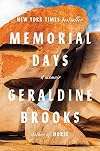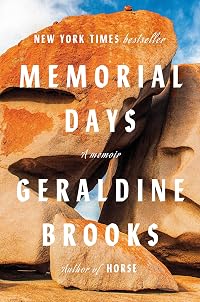
Memorial Days: A Memoir
by Geraldine Brooks
On This Page
Description
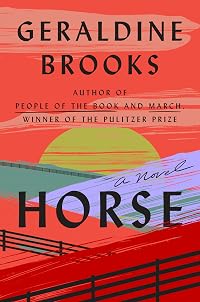
A New York Times Bestseller "Brooks tracks the geography of grief with patience and grace as she comes to terms with the ongoing nature of outliving the ones you love most. ... Her memoir is certainly a testament to her own unique loss, but it's moreover a lifeline to others who will find themselves in this familiar, shattered landscape of grief." --Los Angeles Times "A rich account of marriage and mourning." --Washington Post A heartrending and beautiful memoir of sudden loss and a journey show more towards peace, from the bestselling, Pulitzer Prize-winning author of Horse Many cultural and religious traditions expect those who are grieving to step away from the world. In contemporary life, we are more often met with red tape and to-do lists. This is exactly what happened to Geraldine Brooks when her partner of more than three decades, Tony Horwitz - just sixty years old and, to her knowledge, vigorous and healthy - collapsed and died on a Washington, D. C. sidewalk. After spending their early years together in conflict zones as foreign correspondents, Geraldine and Tony settled down to raise two boys on Martha's Vineyard. The life they built was one of meaningful work, good humor, and tenderness, as they spent their days writing and their evenings cooking family dinners or watching the sun set with friends at the beach. But all of this ended abruptly when, on Memorial Day 2019, Geraldine received the phone call we all dread. The demands were immediate and many. Without space to grieve, the sudden loss became a yawning gulf. Three years later, she booked a flight to a remote island off the coast of Australia with the intention of finally giving herself the time to mourn. In a shack on a pristine, rugged coast she often went days without seeing another person. There, she pondered the various ways in which cultures grieve and what rituals of her own might help to rebuild a life around the void of Tony's death. A spare and profoundly moving memoir that joins the classics of the genre, Memorial Days is a portrait of a larger-than-life man and a timeless love between souls that exquisitely captures the joy, agony, and mystery of life. show lessTags
Recommendations























Member Recommendations
vwinsloe a sudden death and way to move forward
Member Reviews
Brooks balances two timelines: receiving the news of her husband Tony Horwitz's sudden death in 2019, and actually taking the time to grieve on Flinders Island in 2023. In the immediate aftermath of a sudden death, she is inundated and overwhelmed with the logistics of getting the news to their sons, traveling to see Tony's body, making funeral arrangements, organizing memorials, and sorting out necessary paperwork that Tony had been responsible for handling in their family (including health insurance, credit cards, and taxes). Australian by birth, Brooks observes the bureaucratic nightmare that many widows or orphans are plunged into with a spouse's death; in Australia, the death of a spouse does not trigger a loss of health insurance, show more for example.
But this is not solely a memoir of the nitty-gritty; it's a critique of the way that, without religious rituals, American culture does not make time or space for grieving, and how Brooks finally takes that time for herself, coming to terms with Tony's absence and that the rest of her life without him will be different than they had envisioned.
Quotes
"Grief is praise....because it is the natural way love honors what it misses." (Martin Prechtel, The Smell of Rain on Dust, 8)
"We imprint like baby goslings, on a type of horizon. On a type of sky..." (Barbara Kingsolver, 16)
In her essay "On Grief" Jennifer Senior quotes a therapist who likens the survivors of loss to passengers on a plane that has crashed into a mountaintop and must find their way down. All have broken bones; none can assist the others. Each will have to make it down alone. (57)
There's one thing you must be able to do as a novelist, and that is understand how your characters explain their own actions to themselves. (re: Jane Franklin, 82)
"hurry sickness" (110)
Pay attention.
Be astonished.
Tell about it. (Mary Oliver, 125)
I suggest that everyone make a document. Call it Your Life: How It Works and periodically update it. (206) show less
But this is not solely a memoir of the nitty-gritty; it's a critique of the way that, without religious rituals, American culture does not make time or space for grieving, and how Brooks finally takes that time for herself, coming to terms with Tony's absence and that the rest of her life without him will be different than they had envisioned.
Quotes
"Grief is praise....because it is the natural way love honors what it misses." (Martin Prechtel, The Smell of Rain on Dust, 8)
"We imprint like baby goslings, on a type of horizon. On a type of sky..." (Barbara Kingsolver, 16)
In her essay "On Grief" Jennifer Senior quotes a therapist who likens the survivors of loss to passengers on a plane that has crashed into a mountaintop and must find their way down. All have broken bones; none can assist the others. Each will have to make it down alone. (57)
There's one thing you must be able to do as a novelist, and that is understand how your characters explain their own actions to themselves. (re: Jane Franklin, 82)
"hurry sickness" (110)
Pay attention.
Be astonished.
Tell about it. (Mary Oliver, 125)
I suggest that everyone make a document. Call it Your Life: How It Works and periodically update it. (206) show less
Geraldine Brooks is an award winning journalist and Pulitzer Prize winning novelist. She had a many decades long, happy marriage to author and celebrated journalist Tony Horwitz with whom she had two sons. Her beautiful and moving memoir, Memorial Days, is her account of Horwitz’s sudden, unexpected death while he was on book tour, her days of shock navigating ridiculous bureaucracy immediately following his death, and then four years later on the sparsely populated island of Flinders off the coast of Australia when she finally took the time and space to go and be fully immersed in her grief.
She weaves her narrative back and forth between that terrible Memorial Day weekend in 2019 and her 2023 remote sojourn in a couple of small show more cottages far from people and civilization to reflect back on her shared life and love with Horwitz. She recounts the news of her husband’s death and the aftermath in a straightforward, objective way, reporting her reactions, the logistics of a last minute flight from their home in Martha’s Vineyard to DC on a holiday weekend, trying the convince medical professionals she wants and needs to see her husband’s body, telling her sons about their father’s death—preferably before they heard about it thanks to the speed of our current news cycle, having to face and/or learn the marital tasks that were always Horwitz’s purview, and more, all while trying to finish the novel that would become Horse. The 2023 chapters are more contemplative and emotional, examining her deep loss, finding solace in nature and aloneness, and allowing herself to stop trying to move forward and just to feel whatever it is she needs to feel. Brooks is a gorgeous writer and this is an intimate, honest, and personal look into what it is to lose a beloved spouse. show less
She weaves her narrative back and forth between that terrible Memorial Day weekend in 2019 and her 2023 remote sojourn in a couple of small show more cottages far from people and civilization to reflect back on her shared life and love with Horwitz. She recounts the news of her husband’s death and the aftermath in a straightforward, objective way, reporting her reactions, the logistics of a last minute flight from their home in Martha’s Vineyard to DC on a holiday weekend, trying the convince medical professionals she wants and needs to see her husband’s body, telling her sons about their father’s death—preferably before they heard about it thanks to the speed of our current news cycle, having to face and/or learn the marital tasks that were always Horwitz’s purview, and more, all while trying to finish the novel that would become Horse. The 2023 chapters are more contemplative and emotional, examining her deep loss, finding solace in nature and aloneness, and allowing herself to stop trying to move forward and just to feel whatever it is she needs to feel. Brooks is a gorgeous writer and this is an intimate, honest, and personal look into what it is to lose a beloved spouse. show less
Memorial Days, Geraldine Brooks, author and narrator
On Memorial Day, in 2019, Geraldine Brooks lost her soulmate. From that day forward, she begins a journey to understand and overcome her grief. Moving back and forth between 2019 and 2024, between an island in America and an island in Australia, she reveals her shock and her unpreparedness to deal with so great a sudden and unexpected tragedy. There was no template for her to follow. In addition to her grief, and although they had loved intensely, they had lived independent lives, and she was unaware of how he took care of his many responsibilities that would now fall upon her shoulders. He would have been just as adrift had she been the victim. In a marriage, each spouse has different show more responsibilities unknown to the other. She learned from her experience that a list should have been made, by each of them, defining their tasks and how they took care of them. Whom does one call for a specific problem, how does one treat certain matters in the home, and what about issues that simply arise in an ordinary daily life? Her suggestion that others do think about making a list is a good one.
Geraldine Brooks and Anthony Lander Horwitz met while studying for advanced degrees. They were not necessarily meant for each other, when one considers he was conservative and she was liberal, he was from the United States and she was from Australia, and he was Jewish and she was not. They overcame their political differences, she converted to Judaism, and they tried out both countries for size. When they actually realized that they were meant to be with each other, for the rest of their lives, lives they hoped would be long and wonderful, adjustments were made.
Without contrivances, Brooks explains how they met, courted and married. The memoir follows their lives as they worked, played, and raised a family. It illustrates the compromises they made for each other. The memoir felt honest, authentic, insightful and so tender as it revealed the author’s emotions and extraordinary love for her husband and his love for her. Their relationship was indeed kismet, and it did end far too soon. Was anyone or anything to blame? She does not blame anyone. In the end she accepts the burden of her grief and her loss, understanding that choices were made and things simply happened that they really did not know they should have changed or done differently. No one can predict the future.
She did a superb job of writing this book. She was grieving over an enormous loss, a man who was not only a gift to her, but had been a gift to the world with his journalism and books. Both had been war correspondents. They had worked together earlier in their lives. The hole he left in her life was too deep to fathom. In this book, she honors the memory of Horwitz, as she deals with her own memories of their lives together, a life that will now be lived on its own. The book truly touched me, but it also advised me about how important it is to be prepared for all eventualities.
Her book is authentic, honest and to the point. There were no wasted words, but there were indeed, some that brought tears to this reader’s eyes. Most people will identify with her confusion and her grief, most people know that at some point, if they haven’t already faced grief, they will have to face it in their lives and will have to deal with it appropriately. There are some things we simply have no control over.
Unlike Doris Kearns Goodwin’s book which ran over 400 pages and delved into politics and seemed to be more about her than the 60’s and her husband, this book was less than 300 pages and very subtly dealt with politics when January 6th and RBG were just barely mentioned. Rather than focus on her own life, Brooks dwelt on their lives together, their joint endeavors, their joyous moments and the hole he left when he suddenly disappeared from her life. The reader gets the feeling that they were truly meant for each other and that the loss was truly enormous, a loss that was compounded when one realizes how bereft she was on the occasion of the death of one of their beloved dogs. Somehow, Geraldine Brooks illustrates how she coped with all of the sudden responsibilities, that no one prepares for, as she revealed all of the consequences of so great a tragic loss. In some instances, she failed to do what she would have hoped to, she wasn’t thinking clearly, she was truly suffering. Interestingly, she does acknowledge what she might have done to alter the outcome, what the system did to make it harder, and how she was expected to go forward versus how she actually did proceed.
I did not expect to enjoy this book and probably would not have picked it had my book club not selected it for next season. I am glad they did. Often when an author reads one’s own book, the result can be disastrous; not so, in this case. A performer might have over emoted and over emphasized at inappropriate times. Brooks read her book with just the right amount of emotion and stressed the narrative in all the right places. It was a genuine and tender exploration into the process of grieving, and an explanation about the roadblocks she had to face because of the bureaucracy and because of people who good naturedly intruded with well-meaning intentions. She acknowledges that sometimes, one needs to be alone to howl, to release the building torment in one’s heart and mind when faced with so unfair and unpreventable an occurrence as the death of a loved one. The questions that arise, the emotional pain that follows, the inadequate responses are dealt with honestly and openly. There is no artifice in this memoir. As Geraldine wrote, and I paraphrase, man plans and G-d laughs. show less
On Memorial Day, in 2019, Geraldine Brooks lost her soulmate. From that day forward, she begins a journey to understand and overcome her grief. Moving back and forth between 2019 and 2024, between an island in America and an island in Australia, she reveals her shock and her unpreparedness to deal with so great a sudden and unexpected tragedy. There was no template for her to follow. In addition to her grief, and although they had loved intensely, they had lived independent lives, and she was unaware of how he took care of his many responsibilities that would now fall upon her shoulders. He would have been just as adrift had she been the victim. In a marriage, each spouse has different show more responsibilities unknown to the other. She learned from her experience that a list should have been made, by each of them, defining their tasks and how they took care of them. Whom does one call for a specific problem, how does one treat certain matters in the home, and what about issues that simply arise in an ordinary daily life? Her suggestion that others do think about making a list is a good one.
Geraldine Brooks and Anthony Lander Horwitz met while studying for advanced degrees. They were not necessarily meant for each other, when one considers he was conservative and she was liberal, he was from the United States and she was from Australia, and he was Jewish and she was not. They overcame their political differences, she converted to Judaism, and they tried out both countries for size. When they actually realized that they were meant to be with each other, for the rest of their lives, lives they hoped would be long and wonderful, adjustments were made.
Without contrivances, Brooks explains how they met, courted and married. The memoir follows their lives as they worked, played, and raised a family. It illustrates the compromises they made for each other. The memoir felt honest, authentic, insightful and so tender as it revealed the author’s emotions and extraordinary love for her husband and his love for her. Their relationship was indeed kismet, and it did end far too soon. Was anyone or anything to blame? She does not blame anyone. In the end she accepts the burden of her grief and her loss, understanding that choices were made and things simply happened that they really did not know they should have changed or done differently. No one can predict the future.
She did a superb job of writing this book. She was grieving over an enormous loss, a man who was not only a gift to her, but had been a gift to the world with his journalism and books. Both had been war correspondents. They had worked together earlier in their lives. The hole he left in her life was too deep to fathom. In this book, she honors the memory of Horwitz, as she deals with her own memories of their lives together, a life that will now be lived on its own. The book truly touched me, but it also advised me about how important it is to be prepared for all eventualities.
Her book is authentic, honest and to the point. There were no wasted words, but there were indeed, some that brought tears to this reader’s eyes. Most people will identify with her confusion and her grief, most people know that at some point, if they haven’t already faced grief, they will have to face it in their lives and will have to deal with it appropriately. There are some things we simply have no control over.
Unlike Doris Kearns Goodwin’s book which ran over 400 pages and delved into politics and seemed to be more about her than the 60’s and her husband, this book was less than 300 pages and very subtly dealt with politics when January 6th and RBG were just barely mentioned. Rather than focus on her own life, Brooks dwelt on their lives together, their joint endeavors, their joyous moments and the hole he left when he suddenly disappeared from her life. The reader gets the feeling that they were truly meant for each other and that the loss was truly enormous, a loss that was compounded when one realizes how bereft she was on the occasion of the death of one of their beloved dogs. Somehow, Geraldine Brooks illustrates how she coped with all of the sudden responsibilities, that no one prepares for, as she revealed all of the consequences of so great a tragic loss. In some instances, she failed to do what she would have hoped to, she wasn’t thinking clearly, she was truly suffering. Interestingly, she does acknowledge what she might have done to alter the outcome, what the system did to make it harder, and how she was expected to go forward versus how she actually did proceed.
I did not expect to enjoy this book and probably would not have picked it had my book club not selected it for next season. I am glad they did. Often when an author reads one’s own book, the result can be disastrous; not so, in this case. A performer might have over emoted and over emphasized at inappropriate times. Brooks read her book with just the right amount of emotion and stressed the narrative in all the right places. It was a genuine and tender exploration into the process of grieving, and an explanation about the roadblocks she had to face because of the bureaucracy and because of people who good naturedly intruded with well-meaning intentions. She acknowledges that sometimes, one needs to be alone to howl, to release the building torment in one’s heart and mind when faced with so unfair and unpreventable an occurrence as the death of a loved one. The questions that arise, the emotional pain that follows, the inadequate responses are dealt with honestly and openly. There is no artifice in this memoir. As Geraldine wrote, and I paraphrase, man plans and G-d laughs. show less
This memoir of a brilliant marriage ended by a sudden death is a heartbreaker. Tony Horowitz, journalist and writer, collapses on the street and dies suddenly; his wife Geraldine Brooks, journalist and writer, reveals the complexity and sorrow in the immediate aftermath and the years following the tragedy. While one might think that dying this way is better than a long, drawn-out, painful demise, this heart wrenching story will convince you that it carries its own difficulties. Brooks moves between their home on Martha's Vineyard and an island in Australia, where she was born and where she retreats to write this book. I'm sure that treating this real misfortune must have been so much harder than creating fiction, but as her novels show more usually have a basis in history, she's very well suited for the task. This is a slim book that can be devoured in a few days, and there is much to be gained, especially for those who are part of a loving couple, when one of whom must go on alone. show less
It seems that grieving is a common theme in memoirs. Death is a part of life, so grieving certainly is a universal experience. Indeed, several excellent female authors recently have written memoirs about the passing of their spouses, so one might wonder whether Brooks has anything new to add to that conversation. Moreover, the Kubler-Ross stages of grief seem to have adequately codified the psychosocial aspects of grieving. Despite this, Brooks’ memoir has a unique focus on what happens when the normal grieving process gets short-circuited. Brooks notes that she did not permit herself “the time and space for a grief deep enough to reflect our love.”
She structures her memoir into two narratives: the time immediately following her show more husband’s fatal myocarditis episode, and four years later. Brooks captures her experience with the early stages characterized by confusion, shock and fear followed by the overwhelming sense of frustration surrounding the social and organizational duties that inevitably fall to the surviving loved ones. Clearly, these feelings reflect the early stages of the Kubler-Ross scenario. Unfortunately, the bargaining and acceptance stages that constitute the healing process were derailed for Brooks because of a myriad interruptions. The list is long but involved challenges unique to Brooks’ and Horowitz’s statuses as successful authors and parents of three boys, two of whom were away from the home. These included an approaching deadline for Brooks’ novel “Horse,” honoring promotional commitments for Horowitz’s recent book, the loss of family medical insurance, a guardianship issue for their adopted son, failure of the timely donation of his organs and especially inappropriate timing of notifications to the sons.
It took four years of this frenetic pace for Brooks to realize that the healing process had never adequately occurred for her. She came to understand that this would take a period of undisturbed isolation where she could commune with memories of her marriage. Fortunate access to Horowitz’s journals also provided priceless and previously unknown insights into his behavior and thinking. As an Australian native, she elected to relocate to the isolated island of Flinders, off the Tasmanian coast.
Brooks uses alternating chapters between her time around the death on Martha’s Vineyard and her later time on Flinders to capture her grieving process. Her writing is unusually intimate but also balanced by practical advice for others experiencing grief. She adopts a documentary tone in the Vineyard chapters. Although this was a necessary antecedent to what followed, the Flinders chapters soar. She describes a monastic isolation in a small shack quite removed from the rest of this sparsely populated island. There, she revisits her life with Horowitz and even obtains new insights. Moreover, she finds comfort in the rugged terrain, its flora and fauna. It is evident that her life with Horowitz will permanently mark the rest of her life, but one finds solace in her conclusion that she has “… embarked on making the life I have as vivid and consequential as I can.” show less
She structures her memoir into two narratives: the time immediately following her show more husband’s fatal myocarditis episode, and four years later. Brooks captures her experience with the early stages characterized by confusion, shock and fear followed by the overwhelming sense of frustration surrounding the social and organizational duties that inevitably fall to the surviving loved ones. Clearly, these feelings reflect the early stages of the Kubler-Ross scenario. Unfortunately, the bargaining and acceptance stages that constitute the healing process were derailed for Brooks because of a myriad interruptions. The list is long but involved challenges unique to Brooks’ and Horowitz’s statuses as successful authors and parents of three boys, two of whom were away from the home. These included an approaching deadline for Brooks’ novel “Horse,” honoring promotional commitments for Horowitz’s recent book, the loss of family medical insurance, a guardianship issue for their adopted son, failure of the timely donation of his organs and especially inappropriate timing of notifications to the sons.
It took four years of this frenetic pace for Brooks to realize that the healing process had never adequately occurred for her. She came to understand that this would take a period of undisturbed isolation where she could commune with memories of her marriage. Fortunate access to Horowitz’s journals also provided priceless and previously unknown insights into his behavior and thinking. As an Australian native, she elected to relocate to the isolated island of Flinders, off the Tasmanian coast.
Brooks uses alternating chapters between her time around the death on Martha’s Vineyard and her later time on Flinders to capture her grieving process. Her writing is unusually intimate but also balanced by practical advice for others experiencing grief. She adopts a documentary tone in the Vineyard chapters. Although this was a necessary antecedent to what followed, the Flinders chapters soar. She describes a monastic isolation in a small shack quite removed from the rest of this sparsely populated island. There, she revisits her life with Horowitz and even obtains new insights. Moreover, she finds comfort in the rugged terrain, its flora and fauna. It is evident that her life with Horowitz will permanently mark the rest of her life, but one finds solace in her conclusion that she has “… embarked on making the life I have as vivid and consequential as I can.” show less
MEMORIAL DAYS is a beautifully written and deeply personal story that begins on the worst day of the author’s life. On Memorial Day 2019, Australian-born bestselling author Geraldine Brooks (winner of the 2016 Pulitzer Prize for MARCH) receives a phone call from a rushed physician telling her that her 60-year old husband has dropped dead on the streets of Washington D.C. following a massive heart attack.
Her husband of 35 years, 1995 Pulitzer Prize winning journalist Tony Horwitz (1958-2019), had been traveling on a publicity tour promoting his latest book, SPYING ON THE SOUTH: AN ODYSSEY ACROSS THE AMERICAN DIVIDE. At home alone in her house on Martha’s Vineyard, Brooks begins walking the long road of grief, figuring out what has show more to be done. Notifying her absent children and Tony’s family, identifying the body, planning a funeral and memorial services, managing well-wishers, locating the “important papers” and figuring out what they require, stumbling onto unexpected issues with health care and credit cards, and more. In the midst of so much caretaking and paperwork, Brooks never takes the time SHE needs to personally process her beloved husband’s death. Not until four years later does she finally travel, alone, to a remote island near Tasmania, where she is able to truly experience her long-repressed feelings.
MEMORIAL DAYS offers us an insider's look at our own human vulnerability - because any life can change in a moment with no warning. Brooks writes honestly and movingly about her experience. The narrative weaves back and forth in time between that fateful phone call and the period Brooks spends on the remote island. And we learn about the history of her relationship with Horwitz. Her prose is sparse, episodic, powerful and intimate.
Reading MEMORIAL DAYS feels like you're reading someone’s diary. You are privy to the author’s innermost thoughts, hopes, and fears. So, it’s not necessarily an easy book to read. But I found it extremely compelling once I started. And I appreciated throughout just how important the act of writing the book must have been in helping Brooks transition to a new reality. I highly recommend this deeply emotional memoir.
Brooks even offers a few practical suggestions at the end about aspects of navigating death that we could all work to change, and which might ease the loss of a loved one. show less
Her husband of 35 years, 1995 Pulitzer Prize winning journalist Tony Horwitz (1958-2019), had been traveling on a publicity tour promoting his latest book, SPYING ON THE SOUTH: AN ODYSSEY ACROSS THE AMERICAN DIVIDE. At home alone in her house on Martha’s Vineyard, Brooks begins walking the long road of grief, figuring out what has show more to be done. Notifying her absent children and Tony’s family, identifying the body, planning a funeral and memorial services, managing well-wishers, locating the “important papers” and figuring out what they require, stumbling onto unexpected issues with health care and credit cards, and more. In the midst of so much caretaking and paperwork, Brooks never takes the time SHE needs to personally process her beloved husband’s death. Not until four years later does she finally travel, alone, to a remote island near Tasmania, where she is able to truly experience her long-repressed feelings.
MEMORIAL DAYS offers us an insider's look at our own human vulnerability - because any life can change in a moment with no warning. Brooks writes honestly and movingly about her experience. The narrative weaves back and forth in time between that fateful phone call and the period Brooks spends on the remote island. And we learn about the history of her relationship with Horwitz. Her prose is sparse, episodic, powerful and intimate.
Reading MEMORIAL DAYS feels like you're reading someone’s diary. You are privy to the author’s innermost thoughts, hopes, and fears. So, it’s not necessarily an easy book to read. But I found it extremely compelling once I started. And I appreciated throughout just how important the act of writing the book must have been in helping Brooks transition to a new reality. I highly recommend this deeply emotional memoir.
Brooks even offers a few practical suggestions at the end about aspects of navigating death that we could all work to change, and which might ease the loss of a loved one. show less
In 2019, Geraldine Brooks’s husband, author Tony Horwitz, age 60, collapsed and died on a street in Washington, D.C. This book recounts how she found out and what happened afterward. At a deeper level, it is an attempt to process her grief, which had been almost impossible while dealing with the “cruel bureaucracy of death” and trying to finish her novel Horse. She retreated to Flinders Island, off the coast of Tasmania where she found solace in nature and was able to fully feel her loss. She comments on our current society where a person feeling sad is uncomfortable or awkward for others. The narrative alternates between 2019 and her days on the island. It is both a candid memoir of grief and a loving tribute to her husband of show more thirty-five years. show less
Members
- Recently Added By
Lists

Phi Beta Kappa reading list
260 works; 8 members

Books Read in 2025
4,128 works; 98 members

Five star books
1,767 works; 110 members

Psychology: Abuse, Grief, Self-Help
189 works; 1 member

2024-2025 Ezra Klein Guest Recommendations
213 works; 6 members

Top Five Books of 2025
954 works; 303 members
Author Information

15+ Works 39,625 Members
Geraldine Brooks is the author of two acclaimed works of nonfiction, "Nine Parts of Desire" and "Foreign Correspondence." A former war correspondent, her writing has appeared in The Wall Street Journal, The New York Times, and The Washington Post. (Publisher Provided) Geraldine Brooks was born in Sydney, Australia on September 14, 1955. She show more attended Bethlehem College Ashfield and the University of Sydney. She worked as a feature writer with a special interest in environmental issues for The Sydney Morning Herald for three years. In 1982, she won the Greg Shackleton Australian News Correspondents scholarship to the journalism master's program at Columbia University in New York City. She later worked for The Wall Street Journal, where she covered the Middle East, Africa, and the Balkans. She has written both fiction and non-fiction books including Year of Wonders, Nine Parts of Desire, and The Secret Chord. She has won several awards including the Nita Kibble Literary Award for Foreign Correspondence, the Pulitzer Prize in fiction in 2006 for March, the New England Book Award for Fiction and the Christianity Today Book Award for Caleb's Crossing, and the Australian Book of the Year Award and the Australian Literary Fiction Award in 2008 for People of the Book. (Bowker Author Biography) show less
Awards and Honors
Awards
Distinctions
Common Knowledge
- Original publication date
- 2025
- People/Characters
- Geraldine Brooks; Tony Horwitz
- Important places
- Flinders Island, Tasmania, Australia; West Tisbury, Massachusetts, USA; Chevy Chase, Maryland, USA; Washington, D.C., USA; George Washington University Medical Center, Washington, D.C., USA; Parnassus Books, Nashville, Tennessee, USA
- Dedication
- For Natty and Bizu
Classifications
Statistics
- Members
- 588
- Popularity
- 50,049
- Reviews
- 31
- Rating
- (4.34)
- Languages
- English
- Media
- Paper, Audiobook, Ebook
- ISBNs
- 12
- ASINs
- 5