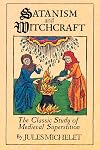
Satanism and Witchcraft: The Classic Study of Medieval Superstition
by Jules Michelet
On This Page
Description
La Sorcière: Satanism and Witchcraft - The Witch of the Middle Ages by Jules Michelet is a captivating and provocative exploration of the history of witchcraft, the persecution of witches, and the complex societal forces that shaped the witch hunts of the Middle Ages. Originally published in 1862, this groundbreaking work by the renowned French historian offers a unique blend of historical analysis, social commentary, and romanticism, painting a vivid picture of the witch as both victim and show more rebel. Michelet's La Sorcière delves into the dark and often tragic lives of women accused of witchcraft, examining how these women, often healers, midwives, and wise women, became targets of fear and hatred in a patriarchal society. He portrays the witch as a symbol of resistance against the oppressive structures of the medieval Church and feudal society, a figure who embraced forbidden knowledge and ancient, pagan practices that challenged the established order. Through his lyrical and passionate prose, Michelet presents the witch not only as a tragic victim of persecution but also as a misunderstood and powerful embodiment of female strength, knowledge, and defiance. He explores the witch's connection to nature, her role in local communities, and the complex relationships between witchcraft, heresy, and Satanism. La Sorcière is more than just a historical study; it is a deeply humanistic and empathetic portrayal of those who suffered under the brutal weight of superstition and religious zealotry. Michelet's work has influenced generations of historians, feminists, and scholars of the occult, offering a powerful critique of the social and religious forces that fueled the witch hunts. This book is an essential read for anyone interested in the history of witchcraft, the social dynamics of the Middle Ages, and the enduring cultural legacy of the witch. La Sorcière continues to resonate with modern readers, providing a compelling and insightful look into the dark chapters of history and the resilience of those who lived through them. show lessTags
Recommendations






















Member Recommendations


Member Reviews
Michelet provided a seminal treatment of witchcraft, influential on readers such as Gerald Gardner who went on to organize neo-pagan religion and influence modern ideas of occultism. In Michelet's view, medieval witches were adherents of indigenous, pre-Christian religion, and they expressed popular resistance against the oppressions of church and state. Heretics, witches and satanists all reflect a measure of virtuous anti-authoritarianism, containing the seeds of rational enlightenment.
Although Michelet was a credentialed historian capable of meticulous research, his Satanism and Witchcraft was written in broad, romanticizing strokes for a popular audience. Thus it is highly readable, but not all that reliable in its details as a work show more of positive history. It found its market well enough, and it has stayed perpetually in print. show less
Although Michelet was a credentialed historian capable of meticulous research, his Satanism and Witchcraft was written in broad, romanticizing strokes for a popular audience. Thus it is highly readable, but not all that reliable in its details as a work show more of positive history. It found its market well enough, and it has stayed perpetually in print. show less
This is not the edition I read, which is the one by Trotter published in 1863, available for free via Google Books. I prefer that one partly because it seems to capture Michelet's passion and poetry.
For an expose of what can only be described as a 1000-year genocide of women, this book is incomparable in my experience.
For an expose of what can only be described as a 1000-year genocide of women, this book is incomparable in my experience.
suite à l'expo sur la magie du Museum de Toulouse, mais bon, écrit en 1862.... compliqué à juger, il parle plus de la manière dont la sorcellerie a été utilisée contre les femmes et souvent par leurs confesseurs qui abusaient d'elles que de la sorcière en elle-même
Michelet traccia una storia della strega e della stregoneria raccontandola in modo vivace e immaginoso, forse più vicino al romanzo che al saggio. Per lui, alle origini, la strega è colei che conserva i resti del paganesimo sopravvissuti nel fondo della società tardoantica dopo il trionfo del cristianesimo. Egli vede il medioevo come un'età oppressa da un cristianesimo repressivo, nemico della natura della vita terrena e di ogni spontaneità, e dall'organizzazione sociale feudale fatta di arbitrio, oppressione, precarietà. "Il medioevo disperò, e la donna specialmente disperò", e da qui lo sviluppo della stregoneria, contrapposta alla cultura e alla società "ufficiali", quasi un rifugio e uno sfogo per il popolo oppresso, e in show more seguito collegata alla presenza e alle attività del diavolo e sottoposta a persecuzione. Grossomodo la prima parte è dedicata allo sviluppo del fenomeno dalle origini all'età moderna, e la seconda descrive le persecuzioni che raggiunsero l'apice nel XVI e XVII secolo, con il racconto di alcuni processi significativi. Il saggio appare solidamente basato su fonti e ricerche accurate, ma è ispirato a una visione del cristianesimo, della chiesa cattolica e del medioevo fortemente negativa, che a me suona un po' troppo unilaterale. Ciò si manifesta anche nel tono spesso irridente con cui descrive atteggiamenti e comportamenti della chiesa e dei religiosi, di cui sottolinea senza pietà, anche se certamente non senza ragione, gli abusi vergognosi, l'ipocrisia sfacciata, l'ottusità persecutoria. show less
Jan 18, 2014 (Edited)Italian
A favor: el uso de fuentes de archivo originales, sobre todo las actas de determinados procesos inquisitoriales, y también el uso de la literatura folklórica como forma de acercarse a tiempos y lugares en los que no hay otra cosa, o no la había al escribirse esta obra. Pero, sobre todo, la intuición original de que las brujas eran, en realidad, mujeres desgraciadas que trataban de paliar las enormes carencias del pueblo llano, al menos en la Edad Media.
En contra: la alegría con la que se rellenan las lagunas de las fuentes con los prejuicios ideológicos del autor, sobre todo en la primera parte, donde se utilizan las colecciones de cuentos tradicionales sin criticarlas. En la segunda parte, Michelet se dedica a analizar con todo show more detalle algunos procesos más o menos famosos, con lo que el texto se hace más farragoso y por momentos aburrido. Y sobre todo ello queda claro que el autor parte de una intención previa, que es desprestigiar todo lo posible a las iglesias, tanto católicas como protestantes, en nombre de la razón y la ilustración. Por eso creo que esta obra tan famosa no ha envejecido bien, incluso aunque el lector actual tienda a ser indulgente con un autor de hace dos siglos. show less
En contra: la alegría con la que se rellenan las lagunas de las fuentes con los prejuicios ideológicos del autor, sobre todo en la primera parte, donde se utilizan las colecciones de cuentos tradicionales sin criticarlas. En la segunda parte, Michelet se dedica a analizar con todo show more detalle algunos procesos más o menos famosos, con lo que el texto se hace más farragoso y por momentos aburrido. Y sobre todo ello queda claro que el autor parte de una intención previa, que es desprestigiar todo lo posible a las iglesias, tanto católicas como protestantes, en nombre de la razón y la ilustración. Por eso creo que esta obra tan famosa no ha envejecido bien, incluso aunque el lector actual tienda a ser indulgente con un autor de hace dos siglos. show less
Aug 1, 2021Spanish
Considerada por la Encyclopedia Britannica como "la obra más importante sobre supersticiones medievales escrita hasta la fecha". La bruja muestra la constante presencia de esta figura, reverenciada a la vez que perseguida, a lo largo de la historia.
Aug 29, 2022Spanish
Members
- Recently Added By
Author Information

242+ Works 1,745 Members
Jules Michelet (1798-1874) was a French historian and an internationally known scholar of theology and the occult.
Some Editions
Series
Belongs to Publisher Series
Work Relationships
Inspired
Common Knowledge
- Canonical title*
- Die Hexe
- Original title
- La sorcière; La Sorcière
- Alternate titles
- Satanism and Witchcraft: A Study of Medieval Superstition; Witchcraft, Sorcery and Superstition: The Classic Study of Medieval Hexes and Spell-Casting
- Original publication date
- 1862
- Related movies
- Kanashimi no beradonna (1973 | IMDb)
- First words
- Sprenger said, before 1500: We should speak of the Heresy of the Sorceresses, not of the Sorcerers; the latter are of small account.
- Quotations
- Such and such a neighbor is rich?...Witch! witch! Such and such is pretty?...Ah! witch!
The Sorceress is the Church's crime. - Original language
- French
*Some information comes from Common Knowledge in other languages. Click "Edit" for more information.
Classifications
- Genres
- Nonfiction, Religion & Spirituality, History, General Nonfiction
- DDC/MDS
- 133.4 — Philosophy & psychology Parapsychology & occultism Specific topics in parapsychology and occultism Demonology and witchcraft
- LCC
- BF1569 .M613 — Philosophy, Psychology and Religion Psychology Occult sciences Witchcraft
- BISAC
Statistics
- Members
- 576
- Popularity
- 51,237
- Reviews
- 7
- Rating
- (3.72)
- Languages
- 11 — Chinese, English, French, German, Greek, Italian, Polish, Portuguese, Serbian, Spanish, Swedish
- Media
- Paper, Ebook
- ISBNs
- 49
- ASINs
- 30