On This Page
Description
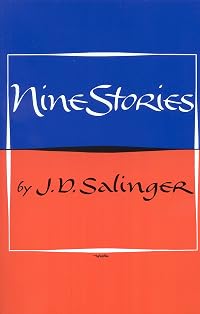
The "original, first-rate, serious, and beautiful" short fiction (New York Times Book Review) that introduced J. D. Salinger to American readers in the years after World War II, including "A Perfect Day for Bananafish" and the first appearance of Salinger's fictional Glass family.Nine exceptional stories from one of the great literary voices of the twentieth century. Witty, urbane, and frequently affecting, Nine Stories sits alongside Salinger's very best work—a treasure that will passed show more down for many generations to come. The stories:
Tags
Recommendations

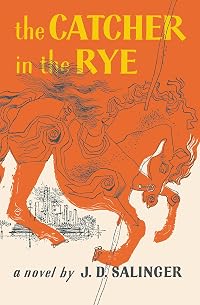


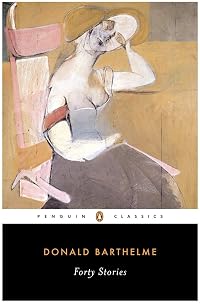
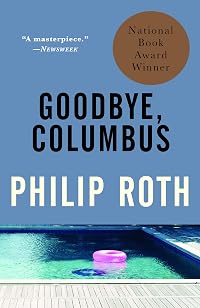
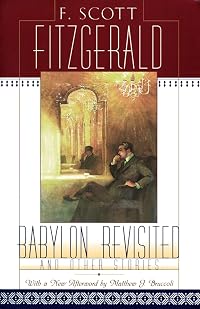
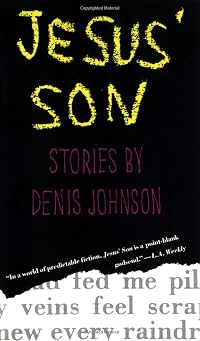





Member Recommendations

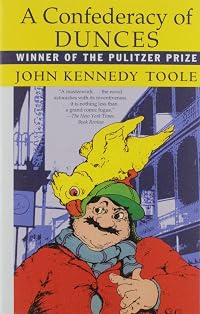
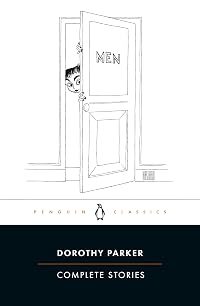
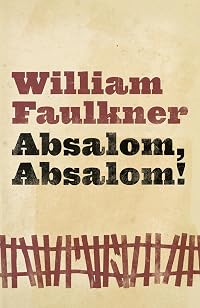
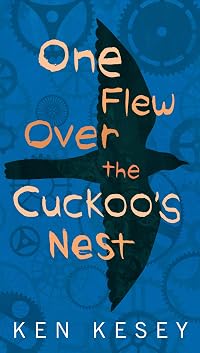
hayfa If you liked "Teddy" I think you'll like this book. It's poetry by monks and it has all that sort of things that Teddy was talking about.
20
Member Reviews
In J.D. Salinger's world, you don't want to be more gifted than everyone else. It only leads to trouble. And that's if you're lucky.
This theme in Salinger's work was evident even in his “Nine Stories,” published in 1954. The first and last stories in this classic collection, "A Perfect Day for Bananafish" and "Teddy," are most striking, even shocking, in this regard. In the first, Salinger introduces Seymour Glass, a brainy character found or at least mentioned in much of Salinger's later work, who engages in an imaginative conversation with a little girl at the beach, then returns to his hotel room and calmly shoots himself in the head while his wife sleeps in the bed next to his.
Teddy is a precocious 10-year-old on an ocean voyage show more with his parents and little sister. In a deck-chair conversation he tells a man about how his belief in reincarnation makes him unafraid of death. Readers may get a premonition about what happens next.
"De Daumier-Smith's Blue Period" tells of a young man with phony credentials who works for a shady company that, for a fee, gives advice by mail to aspiring artists with very little talent. Then he discovers that one of his students has extraordinary talent, but she is a nun whose priest and mother superior frown on her worldly pursuit of art.
Other stories in this priceless collection are almost as notable for their titles as for their subtle and masterful content — "Down at the Dinghy," "Just Before the War with the Eskimos," "Uncle Wiggly in Connecticut" and "For Esme — with Love and Squalor" among them.
I first read this book back in the 1960s. My paperback, purchased in a college bookstore, cost 50 cents. It was a pleasure returning to it all these years later. show less
This theme in Salinger's work was evident even in his “Nine Stories,” published in 1954. The first and last stories in this classic collection, "A Perfect Day for Bananafish" and "Teddy," are most striking, even shocking, in this regard. In the first, Salinger introduces Seymour Glass, a brainy character found or at least mentioned in much of Salinger's later work, who engages in an imaginative conversation with a little girl at the beach, then returns to his hotel room and calmly shoots himself in the head while his wife sleeps in the bed next to his.
Teddy is a precocious 10-year-old on an ocean voyage show more with his parents and little sister. In a deck-chair conversation he tells a man about how his belief in reincarnation makes him unafraid of death. Readers may get a premonition about what happens next.
"De Daumier-Smith's Blue Period" tells of a young man with phony credentials who works for a shady company that, for a fee, gives advice by mail to aspiring artists with very little talent. Then he discovers that one of his students has extraordinary talent, but she is a nun whose priest and mother superior frown on her worldly pursuit of art.
Other stories in this priceless collection are almost as notable for their titles as for their subtle and masterful content — "Down at the Dinghy," "Just Before the War with the Eskimos," "Uncle Wiggly in Connecticut" and "For Esme — with Love and Squalor" among them.
I first read this book back in the 1960s. My paperback, purchased in a college bookstore, cost 50 cents. It was a pleasure returning to it all these years later. show less
Some of these stories are much much better than others, but as I am now rereading these at an older age, it’s clear Salinger was a total master of story writing. Some of these stories reveal a great, preternatural understanding of childhood, truly like an emotionally savantish 8 year old had transmitted her understandings into Salinger’s brain. Others reveal a great awareness of our world’s many infinite one-way boulevards. (And the less effective stories try and basically fail to cope with this.)
To me the strongest stories are “A Perfect Day for Bananafish” and “For Esmé - with Love and Squalor,” both of which are basically perfect stories. They are in my all-time great class alongside a couple James Joyce stories, a show more couple by Alice Munro, and maybe one or two of Kafka’s pieces. Maybe a couple others but that’s what’s coming to mind right now. (Edit: forgot Borges)
Also very strong are “Uncle Wiggly in Connecticut,” “The Laughing Man,” “Down at the Dinghy,” and “De Daumier-Smith’s Blue Period.” The closing line of the first story is a classic, and who can forget that “tout le monde est une nonne”? “The Laughing Man” is impressively grotesque and is maybe the clearest bridging point between Salinger’s earlier stories that are more childlike and pained and his later stories that are more desperate and seeking.
But I don’t mean to say that the remaining three (“Just Before the War with the Eskimos,” “Pretty Mouth and Green My Eyes,” and “Teddy”) are weak, because I did think they were all pretty good stories, although each for different reasons. The first story was kind of closer to a Catcher in the Rye-ish sort of realism: a brief injection into the lifestreams of some (wealthy) 1940s New Yorkers tinged with strange subterranean hopefulness. The latter two seemed rather more cynical and exasperated, even if “Teddy” tried to deny it / work around it. Teddy was himself an interesting character, if maybe a little goofy.
Love it, wish there was more, hope someday more get published. I am glad to have found later on that my younger self was able to spot such great writing, just because it’s always such a shame when you revisit old stuff you liked and find it totally over sentimental or boring or just plain shite for some reason or another. Salinger is great. show less
To me the strongest stories are “A Perfect Day for Bananafish” and “For Esmé - with Love and Squalor,” both of which are basically perfect stories. They are in my all-time great class alongside a couple James Joyce stories, a show more couple by Alice Munro, and maybe one or two of Kafka’s pieces. Maybe a couple others but that’s what’s coming to mind right now. (Edit: forgot Borges)
Also very strong are “Uncle Wiggly in Connecticut,” “The Laughing Man,” “Down at the Dinghy,” and “De Daumier-Smith’s Blue Period.” The closing line of the first story is a classic, and who can forget that “tout le monde est une nonne”? “The Laughing Man” is impressively grotesque and is maybe the clearest bridging point between Salinger’s earlier stories that are more childlike and pained and his later stories that are more desperate and seeking.
But I don’t mean to say that the remaining three (“Just Before the War with the Eskimos,” “Pretty Mouth and Green My Eyes,” and “Teddy”) are weak, because I did think they were all pretty good stories, although each for different reasons. The first story was kind of closer to a Catcher in the Rye-ish sort of realism: a brief injection into the lifestreams of some (wealthy) 1940s New Yorkers tinged with strange subterranean hopefulness. The latter two seemed rather more cynical and exasperated, even if “Teddy” tried to deny it / work around it. Teddy was himself an interesting character, if maybe a little goofy.
Love it, wish there was more, hope someday more get published. I am glad to have found later on that my younger self was able to spot such great writing, just because it’s always such a shame when you revisit old stuff you liked and find it totally over sentimental or boring or just plain shite for some reason or another. Salinger is great. show less
I hadn't read these stories in many, many years, and I was curious as to how this collection, published almost 60 years ago, would hold up for me. Re-reading Salinger is also always somewhat an exercise in nostalgia for me, as his style, so singular, puts me in mind of the time in my life when I first read him, and of the wonderful 11th grade literature teacher who introduced me to Catcher in the Rye and at least some of the stories in this collection.
Anyway, one or two of the stories, most especially "Uncle Wiggly in Connecticut," I found over-wrought and not especially effective. One or two were good but went on too long, I thought. But there are several that are still and will always be, for me at least, examples of short story show more genius. "A Perfect Day for Bananafish," perhaps the Salinger short story most often anthologized, "The Laughing Man," "Down in the Dinghy," and, most especially, "For Esme--With Love and Squalor" are terrific and timeless. In these, Salinger best gets at the American human condition post-World War Two, as American's took stock, counted their losses, and tried to wade through the hollow, enforced "normality" of the materialistic world that was cropping up around them. As a teenager, it didn't occur to me as it did in this latest reading the extent to which almost all of these stories revolve around the damage done to families, psyches and dreams by the experience and/or consequences of the war. show less
Anyway, one or two of the stories, most especially "Uncle Wiggly in Connecticut," I found over-wrought and not especially effective. One or two were good but went on too long, I thought. But there are several that are still and will always be, for me at least, examples of short story show more genius. "A Perfect Day for Bananafish," perhaps the Salinger short story most often anthologized, "The Laughing Man," "Down in the Dinghy," and, most especially, "For Esme--With Love and Squalor" are terrific and timeless. In these, Salinger best gets at the American human condition post-World War Two, as American's took stock, counted their losses, and tried to wade through the hollow, enforced "normality" of the materialistic world that was cropping up around them. As a teenager, it didn't occur to me as it did in this latest reading the extent to which almost all of these stories revolve around the damage done to families, psyches and dreams by the experience and/or consequences of the war. show less
Reading this short story collection helps me to understand why Salinger was hounded to the ends of the earth in an effort to make him write again. His characters are so poignant and so real; his children so precocious and on the brink of something wholly indefinable.
I bought the book with a desire to revisit [b:For Esme - With Love And Squalor|22836075|For Esme - With Love And Squalor|J.D. Salinger|https://d.gr-assets.com/books/1406572749s/22836075.jpg|42390419] and found it as captivating and moving as I had remembered, but the unexpected treasures of [b:The Laughing Man|15986803|The Laughing Man|J.D. Salinger|https://d.gr-assets.com/books/1372036124s/15986803.jpg|21741855] and Teddy left me breathless. Salinger knows complete sorry, show more desperation and irony when he finds it. As we peep into the world of his characters, who smoke their endless cigarettes, carry on their conversations of double meaning, and attempt to connect with others, we cannot help nodding in recognition of the knowledge that this is a microcosm of the human condition. show less
I bought the book with a desire to revisit [b:For Esme - With Love And Squalor|22836075|For Esme - With Love And Squalor|J.D. Salinger|https://d.gr-assets.com/books/1406572749s/22836075.jpg|42390419] and found it as captivating and moving as I had remembered, but the unexpected treasures of [b:The Laughing Man|15986803|The Laughing Man|J.D. Salinger|https://d.gr-assets.com/books/1372036124s/15986803.jpg|21741855] and Teddy left me breathless. Salinger knows complete sorry, show more desperation and irony when he finds it. As we peep into the world of his characters, who smoke their endless cigarettes, carry on their conversations of double meaning, and attempt to connect with others, we cannot help nodding in recognition of the knowledge that this is a microcosm of the human condition. show less
A young woman discusses her husband’s strange behavior on the phone with her mother while the husband is out exhibiting, well, strange behavior. Two college roommates get together in an affluent Connecticut suburb to drink and compare disillusionments in their lives. A teenage girl visits the home of a schoolmate to collect on a debt and winds up having an awkward conversation with her friend’s brother. A man reminisces about a time in his youth when he was part of organized activity group led by a memorable storyteller. A young mother seems in over her head dealing with her precocious, but disturbed, son. A man recalls an impactful encounter with a young girl he met years before while waiting to be deployed in the war. A man calls show more his business partner worrying about his missing wife not realizing the partner knows exactly where she is. A man remembers a time in his life when he pretended to be an accomplished artist to get an ill-fated job at a correspondence school. A ten-year old child prodigy has an unsettling conversation on a cruise ship in which he appears to predict his own demise.
Those are very brief summaries of the tales comprising Nine Stories, a short fiction collection by legendary author J. D. Salinger. Published shortly after the Second World War, that cathartic event infuses many of these stories, either directly or indirectly, as many of the characters have been affected by the loss of loved ones or the challenges of returning to civilian life. The collection is also notable for offering glimpses into complex situations where details are often not revealed fully until the end, if at all. Instead, much of the narrative development takes place through dialogue rather than direct action. This stylistic choice gives the reader a sense of eavesdropping on the various scenes, which proves to be a very effective device, mainly because the author is so good at writing conversations that real people might have actually had with one another. While all the selections were good, there were a few that were truly outstanding and elegiac in their own way, including “A Perfect Day for Bananafish”, “For Esme-With Love and Squalor”, and “The Laughing Man”. Overall, this is a book that is thoroughly original and one that has clearly stood the test of time. show less
Those are very brief summaries of the tales comprising Nine Stories, a short fiction collection by legendary author J. D. Salinger. Published shortly after the Second World War, that cathartic event infuses many of these stories, either directly or indirectly, as many of the characters have been affected by the loss of loved ones or the challenges of returning to civilian life. The collection is also notable for offering glimpses into complex situations where details are often not revealed fully until the end, if at all. Instead, much of the narrative development takes place through dialogue rather than direct action. This stylistic choice gives the reader a sense of eavesdropping on the various scenes, which proves to be a very effective device, mainly because the author is so good at writing conversations that real people might have actually had with one another. While all the selections were good, there were a few that were truly outstanding and elegiac in their own way, including “A Perfect Day for Bananafish”, “For Esme-With Love and Squalor”, and “The Laughing Man”. Overall, this is a book that is thoroughly original and one that has clearly stood the test of time. show less
After reading The Catcher in the Rye I realized that angst and frustration were universal feelings. Franny and Zooey made me fall in love with the Glass family and decide to cover my walls with large sheets of handmade paper, covered in quotes. But it was Nine Stories that's always held my favorite bit of Salinger's writing.
Where his other novels are sometimes a bit too dramatic for my taste, Nine Stories offers single servings, just enough that it feels like brilliance as opposed to whining. In these smaller doses Salinger's writing is poignant and powerful. He doesn't give the reader everything, he makes you work for it and I appreciate that.
Many of the stories deal with someone connected to the Glass family in some way. I get show more something different from them each time I read one. My two favorites are "A Perfect Day for Bananafish," which broke my heart and "Down at the Dinghy," sweet in its innocence. "Teddy" is also memorable, because it's a bit disturbing.
Nine Stories has always seemed a bit underrated, which probably makes me love it more. It contains some of Salinger's greatest characters, if only a snapshot of them, and helps me get a Salinger fix if I need one. show less
Where his other novels are sometimes a bit too dramatic for my taste, Nine Stories offers single servings, just enough that it feels like brilliance as opposed to whining. In these smaller doses Salinger's writing is poignant and powerful. He doesn't give the reader everything, he makes you work for it and I appreciate that.
Many of the stories deal with someone connected to the Glass family in some way. I get show more something different from them each time I read one. My two favorites are "A Perfect Day for Bananafish," which broke my heart and "Down at the Dinghy," sweet in its innocence. "Teddy" is also memorable, because it's a bit disturbing.
Nine Stories has always seemed a bit underrated, which probably makes me love it more. It contains some of Salinger's greatest characters, if only a snapshot of them, and helps me get a Salinger fix if I need one. show less
Embarassingly, I had never read these iconic stories before; having been unimpressed by a glancing encounter with The Catcher in the Rye, I thought of them as irrelevant and dated bits of New Yorker-ly ephemera. In the words of Arnold Schwarzenegger (sp?): "WRONG!" I was stunned by how deeply strange and violent these stories are, full of bitter class envy, alcoholism, psychosis, and other vivid depravities. Salinger's style is full of remarkably precise descriptions that are ominous in what they don't say, or what they only imply: unsettling arhythmic prose.
Members
- Recently Added By
Lists

The Top Ten: Writers Pick Their Favorite Books
240 works; 33 members

Favourite Books
1,820 works; 316 members

1950s
340 works; 22 members

20th Century Literature
1,161 works; 55 members

Favorite Short Fiction
228 works; 99 members

Harold Bloom - The Western Canon: D. The Chaotic Age
833 works; 24 members

Books You Read During High School (For School)
301 works; 52 members
The American Experience
173 works; 18 members
Best of American Literature
146 works; 9 members
Blue Pyramid 1,276 Best Books of All Time
1,248 works; 32 members

Books With Numbers in the Title
308 works; 13 members

Literary Travelogue of the United States Challenge
133 works; 6 members

Books Read in 2006
424 works; 8 members

Nifty Fifties
129 works; 14 members

Tammen Keltainen kirjasto
81 works; 1 member
American Lit for Eng 11 Research Project
368 works; 6 members
Franklit
95 works; 1 member

LIT - Il Bookclub Della McMusa
51 works; 1 member

Puffin Books 70th anniversary handbook recommendations
537 works; 10 members

Tonikat reading completed on Librarything journals
329 works; 2 members

Unread books
1,063 works; 84 members
Talk Discussions
Past Discussions
Nine Stories (general discussion) in J.D. Salinger: Author In The Rye (May 2025)
Looking ahead to Salinger in Author Theme Reads (December 2013)
Salinger: For Esmé with Love and Squalor or Nine Stories in Author Theme Reads (December 2013)
Author Information

J. D. Salinger was born in New York City on January 1, 1919. He attended Manhattan public schools, Valley Forge Military Academy in Pennsylvania, and three colleges, but received no degrees. He was from an upper class Jewish family and they lived on the upper west side of Manhattan on Park Avenue. Salinger joined the U. S. Army in 1942 and fought show more in the D-Day invasion at Normandy as well as the Battle of the Bulge, but suffered a nervous breakdown due to all he had seen and experienced in the war and checked himself into an Army hospital in Germany in 1945. In December 1945, his short story I'm Crazy was published in Collier's. In 1947, his short story A Perfect Day for Bananafish was published in The New Yorker. Throughout his lifetime, he wrote more than 30 short stories and a handful of novellas, which were published in magazines and later collected in works such as Nine Stories, Franny and Zooey, and Raise High the Roof Beam, Carpenters and Seymour: An Introduction. The Catcher in the Rye, published in 1951, was his only novel. His last published story, Hapworth 16, 1924, appeared in 1965. He spent the remainder of his years in seclusion and silence in a home in Cornish, New Hampshire. He died of natural causes on January 27, 2010 at the age of 91. Salinger always wanted to write the great American novel; when he succeeded in this with Catcher in the Rye, he was unprepared for the onslaught on privacy issues that this popularity brought on. He never wanted to be in the spotlight and retreated from all contacts he had in New York City. (Bowker Author Biography) show less
Some Editions
Awards and Honors
Distinctions
Series

Belongs to Publisher Series
Signet Books (D1498)
Work Relationships
Is contained in
Contains
Has as a student's study guide
Common Knowledge
- Canonical title*
- Üheksa juttu
- Original title
- Nine Stories
- Alternate titles
- For Esmé - with Love and Squalor, and Other Stories (non-U.S.) (non-U.S.)
- Original publication date
- 1953
- People/Characters
- Seymour Glass; Muriel Fedder Glass; Sybil Carpenter; Eloise; Mary Jane; Ramona (show all 32); Lew; Walt Glass; Ginnie Mannox; Selena Graff; Franklin Graff; Eric; The Chief; The Laughing Man; Mary Hudson; Narrator; Beatrice "Boo Boo" Glass; Boo Boo Tannenbaum; Lionel Tannenbaum; Sandra; Mrs. Snell; Esmé; Sergeant X; Arthur; Lee; Joanie; De Daumier-Smith; Teddy McArdle; Bob Nicholson; Mr. McArdle; Mrs. McArdle; Booper McArdle
- Important places
- Florida, USA; New York, New York, USA; USA; Montréal, Québec, Canada
- Related movies
- My Foolish Heart (1949 | IMDb); Rebel in the Rye (2017 | IMDb)
- Epigraph
- We know the sound of two hands clapping.
But what is the sound of one hand clapping?
-- a Zen koan - Dedication
- To Dorothy Olding and Gus Lobrano
- First words
- There were ninety-seven New York advertising men in the hotel, and, the way they were monopolizing the long-distance lines, the girl in 507 had to wait from noon till almost two-thirty to get her call through.
- Quotations
- Life is a gift horse in my opinion.
- Last words
- (Click to show. Warning: May contain spoilers.)It was highly acoustical, as though it were reverberating within four tiled walls.
- Disambiguation notice
- Non-U.S. editions of J.D. Salinger's short story collection Nine Stories are titled For Esmé - with Love and Squalor, and Other Stories. "For Esmé – with Love and Squalor" is also the title of a singl... (show all)e Salinger short story from Nine Stories. Please distinguish between the collection of stories (this LT work) and the separate short story having the same title. Thank you.
*Some information comes from Common Knowledge in other languages. Click "Edit" for more information.
Classifications
Statistics
- Members
- 12,784
- Popularity
- 637
- Reviews
- 124
- Rating
- (4.14)
- Languages
- 26 — Albanian, Catalan, Chinese, Czech, Danish, Dutch, English, Estonian, Finnish, French, German, Galician, Greek, Hungarian, Italian, Japanese, Lithuanian, Farsi/Persian, Polish, Portuguese, Romanian, Russian, Serbian, Spanish, Swedish, Turkish
- Media
- Paper, Ebook
- ISBNs
- 109
- UPCs
- 3
- ASINs
- 86