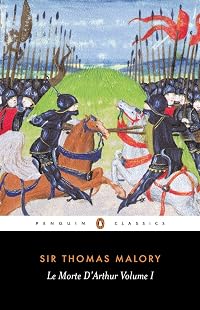
Le Morte d'Arthur, Volume 1
by Thomas Malory
On This Page
Description
The original spelling was Le Morte Darthur, which was Middle French for "the death of Arthur", and is one of the most famous works in English Literature. It is a re-working of traditional tales by Sir Thomas Malory about King Arthur, Guinevere, Lancelot, Merlin and the Knights of the Round Table though there are several original additions by him including the Gareth story. Little is known about Sir Thomas Malory and, indeed, it is only since the late nineteenth century that he has been show more identified with some certainity as Sir Thomas Malory of Newbold Revel in Warwickshire, a knight, land-owner, and Member of Parliament. In addition to his title and standing he appears to have suffered several bouts of imprisonment, mainly on charges that seem to have been politically trumped up. Le Morte d'Arthur was first published in 1485 by William Caxton, show lessTags
Recommendations














Member Recommendations
by CGlanovsky
Member Reviews
This is the first volume of Le Morte d'Arthur and shouldn't be seen as the first book of a trilogy, just the first half, and not meant to be read alone. I agree with the reviewer who said this is not for the faint of heart, and few general readers are going to find this a great read. If you're looking for an absorbing, entertaining read with characters you can relate to and root for, you're absolutely, positively in the wrong place. Read instead Arthurian novels such as T.H. White's The Once and Future King or Mary Stewart's Merlin Trilogy. There are countless other such novels inspired by this material worth reading, and I've read a lot of them.
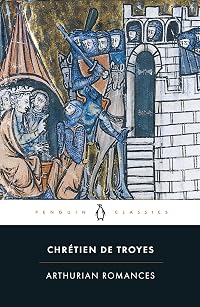
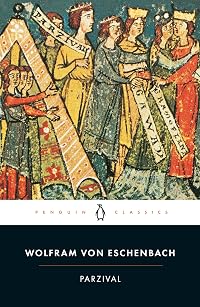
But I did find it interesting at times going through this, one of the ur-texts as it were of show more Arthurian legend. There are other, earlier works of Arthurian literature: Geoffrey of Monmouth's The History of the Kings of Britain (1136), Chrétien de Troyes's Arthurian Romances in the 12th century and Wolfram von Eschenbach's Parzival in the 13th century are among the most notable. But Malory drew from several sources, so much so he's often described more as the "compiler" than the author of the work. I own a edition in two volumes that comes close to 1,000 pages. So this is an exhaustive resource of all sorts of facets of the legend. The story of Tristram and Iseult is here, for instance.
And this is a medieval work, so it's imbued with its assumptions and attitudes. Obviously a source of outrage to some reviewers, and even by the standards of the time, comparing this to how women are treated in say Boccaccio's Decameron and Chaucer's Canterbury Tales--well, women don't come off well here. Misogyny abounds. And knights are held up as paragons who commit a lot of heinous acts and just plain WTF. A lot is repetitive and a slog--as one reviewer put it too much is "joust, joust, joust." And this was written about half-way between Chaucer and Shakespeare. With the spelling regularized it's quite readable, much more so than unmodernized Chaucer. But with those that choose to preserve the archaic words, that means wading through words such as "hight" (is called) and "mickle" (much). And there's just so much that can be excused by, well, "it's the times"--I found plenty of medieval writers who were wonderful reads, and just plain more humane: Dante, Boccaccio, Chaucer. I can't see Malory as their equal--not remotely. But as a fan of Arthurian literature and someone fascinated by the Middle Ages, this did from time to time have its fascinations. show less
But I did find it interesting at times going through this, one of the ur-texts as it were of show more Arthurian legend. There are other, earlier works of Arthurian literature: Geoffrey of Monmouth's The History of the Kings of Britain (1136), Chrétien de Troyes's Arthurian Romances in the 12th century and Wolfram von Eschenbach's Parzival in the 13th century are among the most notable. But Malory drew from several sources, so much so he's often described more as the "compiler" than the author of the work. I own a edition in two volumes that comes close to 1,000 pages. So this is an exhaustive resource of all sorts of facets of the legend. The story of Tristram and Iseult is here, for instance.
And this is a medieval work, so it's imbued with its assumptions and attitudes. Obviously a source of outrage to some reviewers, and even by the standards of the time, comparing this to how women are treated in say Boccaccio's Decameron and Chaucer's Canterbury Tales--well, women don't come off well here. Misogyny abounds. And knights are held up as paragons who commit a lot of heinous acts and just plain WTF. A lot is repetitive and a slog--as one reviewer put it too much is "joust, joust, joust." And this was written about half-way between Chaucer and Shakespeare. With the spelling regularized it's quite readable, much more so than unmodernized Chaucer. But with those that choose to preserve the archaic words, that means wading through words such as "hight" (is called) and "mickle" (much). And there's just so much that can be excused by, well, "it's the times"--I found plenty of medieval writers who were wonderful reads, and just plain more humane: Dante, Boccaccio, Chaucer. I can't see Malory as their equal--not remotely. But as a fan of Arthurian literature and someone fascinated by the Middle Ages, this did from time to time have its fascinations. show less
This the real thing in Medieval romance. It is a text with the spelling, and the spelling alone, regularized to the modern taste. It is the final embodiment of the medieval romance and the birth of modern Sword and Sorcery fantasy. It comes in two volumes, totaling over 1100 pages. But the mood and narrative style are those George R.R. Martin has in "Ice and Fire". Sword-fighting is dangerous business, and some good guys are not alive by the end. In fact only four main characters are alive at the end and of them one has been assumed into heaven, and another has been taken into Avalon from whence he shall come again. This book was a big best seller in the 1490's and has never really been out of print. And it was a printed book from the show more beginning, with only two manuscript copies being found. Both may have been submitted to the printers for typesetting. My favourite Book is Book IX"La Cote Male Tail" and the final book, which is tear jerking at its greatest. I've never stopped dipping into it , and any other version pales away when confronted with this beast! Be a man, and read the Malory! If you have trouble with the language, start reading it aloud, it'll be flowing in ten minutes! show less
An interesting read. It's kind of strange that the book is named after king Arthur when lots of the chapters are about his knights with only a passing mention of the legendary king.
Of course the women get a raw deal. Still it's a bit unsettling to see how little they got to decide for themselves.
Another thing is, this is a 15th century retelling of events from the 6th century. It's hard to see what belonged to the early middle ages and what was influenced by the centuries in between.
The introduction is informative, but it also contains spoilers about events from volume 2. I don't mean the obvious and well known parts of the betrayal but some of the details belonging to the stories of the knights. If you don't know (or don't remember) show more all the events surrounding Arthur's fall, you may want to skip the introduction. show less
Of course the women get a raw deal. Still it's a bit unsettling to see how little they got to decide for themselves.
Another thing is, this is a 15th century retelling of events from the 6th century. It's hard to see what belonged to the early middle ages and what was influenced by the centuries in between.
The introduction is informative, but it also contains spoilers about events from volume 2. I don't mean the obvious and well known parts of the betrayal but some of the details belonging to the stories of the knights. If you don't know (or don't remember) show more all the events surrounding Arthur's fall, you may want to skip the introduction. show less
Pretty fascinating collection of lore and legend around King Arthur and many notable contemporary knights. It reads like the Illiad or the Odyssey. Very short tales lacking in colorful detail, centered around chivalry and using arcane language that took a while to get used to (for example "and" sometimes means "if" and "the" sometimes means "die" and "die" sometimes means "the", etc. you see how one could get confused.)
I will read volume 2 someday, but for now I need a break.
I will read volume 2 someday, but for now I need a break.
THE definitive version of King Aruthur and his knights. Hard getting used to spellings and word usage; but once that happened, it was enchanting and magical. I loved every bit of it.
Le Morte D'Arthur: Very handy and well done edition of the classic Arthurian legends. This book is not for the feint at heart as it is written in old english, but once you get through that roadblock there is a power to the tales that starts to shine through.
The miidle English was comical to read and aime of he adventures were ridiculously funny. I can see where Monte Python git the inspiration for the Holy Grail movie!
Members
- Recently Added By
Author Information

234+ Works 17,814 Members
Sir Thomas Malory, 1405 - 1471 Sir Thomas Malory's works (consisting of the legends of Sir Lancelot, Sir Gareth, Sir Tristram, and the Holy Grail, as well as the stories of King Arthur's coming to the throne, his wars with the Emperor Lucius, and his death) are the most influential expression of Arthurian material in English. The author's sources show more are principally French romances; his own contributions are substantial, however, and the result is a vigorous and resonant prose. "Le Morte d'Arthur," finished between March 1469 and March 1470, was first printed in 1485 by William Caxton, the earliest English printer. Malory is presumed to have been a knight from an old Warwickshire family, who inherited his father's estates about 1433 and spent 20 years of his later life in jail accused of various crimes. The discovery of a manuscript version of "Le Morte d'Arthur" in 1934 in the library of Winchester College, supported the identification of Malory the author with Malory the traitor, burglar, and rapist. It showed that many of the inconsistencies in the printed text were traceable to the printing house rather than to the author. The most reliable modern version, therefore, is one like Eugene Vinaver's that is based on the Winchester manuscript. (Bowker Author Biography) show less
All Editions
Some Editions
Series
Belongs to Publisher Series
Work Relationships
Is contained in
Viduramžių riterių romanai (indirect)
Has as a reference guide/companion
Has as a commentary on the text
Common Knowledge
- Canonical title
- Le Morte d'Arthur, Volume 1
- Original publication date
- ms. 1450-1470 c.; 1485 Caxton
- People/Characters
- King Arthur; Lancelot du Lac; Guinevere (as Guenevere)
- Important places
- Camelot
- First words
- It befell in the days of Uther Pendragon, when he was king of all England, and so reigned, that there was a mighty duke in Cornwall that held war against him long time.
- Last words
- (Click to show. Warning: May contain spoilers.)'Sir,' he said, 'I had it of Queen Morgan le Fay, sister unto King Arthur.'
(Click to show. Warning: May contain spoilers.)And thereby at a priory they rested them all night.
Everyman's Library edition, 1906. - Original language
- English (Late Middle) (Late Middle)
- Disambiguation notice
- This is volume one of the two-volume edition of Morte d'Arthur. Do not combine with abridged or single-volume editions.
Classifications
Statistics
- Members
- 1,646
- Popularity
- 13,641
- Reviews
- 14
- Rating
- (3.73)
- Languages
- 7 — Czech, English, English (Middle), French, German, Portuguese, Spanish
- Media
- Paper, Audiobook, Ebook
- ISBNs
- 49
- ASINs
- 33