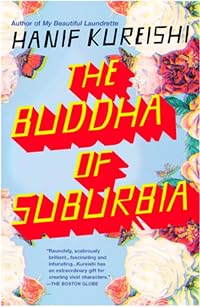
The Buddha of Suburbia
by Hanif Kureishi
On This Page
Description
Karim Amir lives with his English mother and Indian father in the routine comfort of suburban London, enduring his teenage years with good humor, always on the lookout for adventure and sexual possibilities. Life gets more interesting, however, when his father becomes the Buddha of Suburbia, beguiling a circle of would-be mystics. And when the Buddha falls in love with one of his disciples, the beautiful and brazen Eva, Karim is introduced to a world of renegade theater directors, punk rock show more stars, fancy parties, and all the sex a young man could desire. A love story for at least two generations, a high-spirited comedy of sexual manners and social turmoil, The Buddha of Suburbia is one of the most enchanting, provocative, and original books to appear in years. show lessTags
Recommendations











Member Recommendations
Member Reviews
I am very late to the party with this book, but I got there in the end and what a book.
It grabs you by the lapels and drags you along: it's funny, dark and full of sex. Karim is stuck out in the suburbs of south London and bored. Bored with his life, with school, with his parents until his father starts to sit cross-legged at Eva's house and pass on his wisdom from years of chanting and meditating. His father, Haroon, falls in love with Eva and eventually leaves his wife, Karim's mother, and starts a new life, moving out of the suburbs and into London.
Meanwhile, Karim's uncle, Anwar, becomes insistent that his daughter have an arranged marriage; he even goes on hunger strike to get his way and so here we have two Indian men who behave show more differently. One takes up the freedom and lack of Indian traditions and the other clings to them slavishly with little thought for his daughter.
Karim escapes the suburbs, becoming successful as an actor, staying in London and living the life. It's just that it turns out it isn't the life he wants, which is often the case, and so he returns home. Escape is everything in this book from Jammila finding a way to live with and escape her arranged marriage to Eva and Haroon living in London and holding parties for people who are semi-famous.
As my darling new mother (whom I loved) moved radiantly about the room introducing Derek, who had just directed Equus at the Contact Theatre, to Robert, who was a designer; as she spoke of the new Dylan album and what Riverside Studios was doing, I saw that she wanted to scour that suburban stigma right off her body. She didn't realize it was in the blood and not on the skin; she didn't see there could be nothing more suburban that suburbanites repudiating themselves.
p134
There are times when the book is uncomfortable if not a little blunt, particularly about the British and our attitutdes to foreigners, but it is also follows on in the tradition of claiming that suburbia is boring, constraining and needs to be escaped whereas the city is exciting, diverse and a place for experimentation. Plot wise, this is an A to B to A story with a gradual acceptance from Karim that he is shaped by suburbia and the people who love him. It is a story of a new type of Britishness, one where cultural and self-identity are less clear but accepts the fact that the majority of us are suburban. show less
It grabs you by the lapels and drags you along: it's funny, dark and full of sex. Karim is stuck out in the suburbs of south London and bored. Bored with his life, with school, with his parents until his father starts to sit cross-legged at Eva's house and pass on his wisdom from years of chanting and meditating. His father, Haroon, falls in love with Eva and eventually leaves his wife, Karim's mother, and starts a new life, moving out of the suburbs and into London.
Meanwhile, Karim's uncle, Anwar, becomes insistent that his daughter have an arranged marriage; he even goes on hunger strike to get his way and so here we have two Indian men who behave show more differently. One takes up the freedom and lack of Indian traditions and the other clings to them slavishly with little thought for his daughter.
Karim escapes the suburbs, becoming successful as an actor, staying in London and living the life. It's just that it turns out it isn't the life he wants, which is often the case, and so he returns home. Escape is everything in this book from Jammila finding a way to live with and escape her arranged marriage to Eva and Haroon living in London and holding parties for people who are semi-famous.
As my darling new mother (whom I loved) moved radiantly about the room introducing Derek, who had just directed Equus at the Contact Theatre, to Robert, who was a designer; as she spoke of the new Dylan album and what Riverside Studios was doing, I saw that she wanted to scour that suburban stigma right off her body. She didn't realize it was in the blood and not on the skin; she didn't see there could be nothing more suburban that suburbanites repudiating themselves.
p134
There are times when the book is uncomfortable if not a little blunt, particularly about the British and our attitutdes to foreigners, but it is also follows on in the tradition of claiming that suburbia is boring, constraining and needs to be escaped whereas the city is exciting, diverse and a place for experimentation. Plot wise, this is an A to B to A story with a gradual acceptance from Karim that he is shaped by suburbia and the people who love him. It is a story of a new type of Britishness, one where cultural and self-identity are less clear but accepts the fact that the majority of us are suburban. show less
In the early 70's, South London, we meet teenager Karim, the son of an English mother and Indian father, Haroon, whom Karim nicknames both "God" and "Buddha of Suburbia" after Haroon begins leading groups of middle-class English suburbanites in his brand of living room Eastern mysticism. That the woman who is encouraging Haroon in the new career is also seducing him away from his family is obviously to Karim, who wants his family to survive but who also is entranced by both the woman and her handsome teenage son and wants to see what will unfold.
Over the next few years the reader follows Karim as he drops out of college, lies to his parents, gets brutally truthful at times, and has various crushes and encounters with both men and women, show more and makes good on his pronounced desire to be an actor. There's an awful lot of graphic sex, and some hilarious scenes, especially with Changez, a physically repulsive and lazy man who Karim's uncle was tricked into bringing over from Bombay to marry his daughter and help with the family business. That everyone else loathes Changez just makes him more interesting to the contrary Karim. show less
Over the next few years the reader follows Karim as he drops out of college, lies to his parents, gets brutally truthful at times, and has various crushes and encounters with both men and women, show more and makes good on his pronounced desire to be an actor. There's an awful lot of graphic sex, and some hilarious scenes, especially with Changez, a physically repulsive and lazy man who Karim's uncle was tricked into bringing over from Bombay to marry his daughter and help with the family business. That everyone else loathes Changez just makes him more interesting to the contrary Karim. show less
“Someone to whom jokes are never told soon contracts enthusiasm deficiency.”
In man respects this is a coming of age novel set mainly in 1970's London against a background of the emergence of Punk Rock and political turmoil leading to the rise to ascendancy of Margaret Thatcher. The ''Buddha'' of the title is Haroon, father of Karim, the narrator, who works as a mundane Government bureaucrat until he deserts his British wife, Margaret, and moves in with socially climbing Eva giving out advice in the evening like some mystic guru to largely other bored Londoners. However Haroon is a fairly peripheral figure in the book. He is not even the most memorable.
Rather the story centres on his son Karim. Karim is a sort of hybrid. He was born show more in England to Indian and English parents yet has never even visited India so regards himself to be English yet because of his colour is not treated as such. He is struggling to find his place in British society having feet in two separate camps. Moving from "suburbia" to London, with its promise of drugs, sex and excitement, Karim discovers a talent for acting which sets him on a path to the first of many disillusionments over love and politics.
Tucked within is a real gem of a secondary tale. This is the story of Jamila, a liberated, sexually free and politically radical British-born Muslim woman and Changez, the Indian groom chosen for her by her father. Changez is twice her age, physically repulsive and emotionally retarded. Yet Jamila and Changez eventually seem to come to an unusual but seemingly amicable arrangement.
There is no neat ending and at times reads autobiographical. Rather the novel is pointedly political and highly critical of British racism making it at times uncomfortable reading . On the whole I enjoyed the author's writing style and I often found myself reading it with a smile on my face despite not overly taking to any of the main characters. Yet how it portrays teenage life in 1970s London, confronting disturbing home truths about British attitudes towards immigrants, which still remain within a section of British society today, means that this book deserves to be more widely read. show less
In man respects this is a coming of age novel set mainly in 1970's London against a background of the emergence of Punk Rock and political turmoil leading to the rise to ascendancy of Margaret Thatcher. The ''Buddha'' of the title is Haroon, father of Karim, the narrator, who works as a mundane Government bureaucrat until he deserts his British wife, Margaret, and moves in with socially climbing Eva giving out advice in the evening like some mystic guru to largely other bored Londoners. However Haroon is a fairly peripheral figure in the book. He is not even the most memorable.
Rather the story centres on his son Karim. Karim is a sort of hybrid. He was born show more in England to Indian and English parents yet has never even visited India so regards himself to be English yet because of his colour is not treated as such. He is struggling to find his place in British society having feet in two separate camps. Moving from "suburbia" to London, with its promise of drugs, sex and excitement, Karim discovers a talent for acting which sets him on a path to the first of many disillusionments over love and politics.
Tucked within is a real gem of a secondary tale. This is the story of Jamila, a liberated, sexually free and politically radical British-born Muslim woman and Changez, the Indian groom chosen for her by her father. Changez is twice her age, physically repulsive and emotionally retarded. Yet Jamila and Changez eventually seem to come to an unusual but seemingly amicable arrangement.
There is no neat ending and at times reads autobiographical. Rather the novel is pointedly political and highly critical of British racism making it at times uncomfortable reading . On the whole I enjoyed the author's writing style and I often found myself reading it with a smile on my face despite not overly taking to any of the main characters. Yet how it portrays teenage life in 1970s London, confronting disturbing home truths about British attitudes towards immigrants, which still remain within a section of British society today, means that this book deserves to be more widely read. show less
Set in England in the 1970s, seventeen-year-old protagonist Karim was born to an English mother and Indian father. The first half of the book takes place in the suburbs and the second half in London. The novel is filled with 1970s pop culture references. It was a time of massive cultural change. It was also a time of emerging forms of self-expression, and Karim decides to become an actor. His friend, Charlie, decides to become a singer. His father, Haroon, is the titular “Buddha of Suburbia,” and Karim’s family dynamics play a key role in the story. It is told from Karim’s perspective, looking back on his youth.
This is a story of a search for identity. Even in multicultural London, Karim cannot escape racial stereotyping. The show more plot follows Karim’s struggle to fit into a society in which he sees himself as belonging (since he was born there) but is assumed to be “other” based on his appearance. Once he reaches his initial goal of living the city, he finds just as much narrow-mindedness as he encountered in the suburbs.
This book is well-written, witty, and, at times, bawdy. It is filled with irreverent humor. I was not sure I would like it at first since I do not usually have a high tolerance for graphic sexual content but ended up enjoying it immensely. I have never read anything quite like it. show less
This is a story of a search for identity. Even in multicultural London, Karim cannot escape racial stereotyping. The show more plot follows Karim’s struggle to fit into a society in which he sees himself as belonging (since he was born there) but is assumed to be “other” based on his appearance. Once he reaches his initial goal of living the city, he finds just as much narrow-mindedness as he encountered in the suburbs.
This book is well-written, witty, and, at times, bawdy. It is filled with irreverent humor. I was not sure I would like it at first since I do not usually have a high tolerance for graphic sexual content but ended up enjoying it immensely. I have never read anything quite like it. show less
This book takes the reader on a trip through the London suburbs onto the metropolis and then out into the wider world. It’s also a journey through the cultural and political landscape of 1970s England as we travel from counterculture to Thatcherism. It’s a very funny novel overflowing with serious themes: cultural and sexual identity, the suffocating conformity of the suburbs and the vertiginous liberation of the city, self-fulfilment versus obligation, materialism and spirituality, social class and ambition and the parasitic nature of art. It’s the story of teenager Karim Amir, the son of a white English mother and Indian father, growing up in Bromley and hungry for adventure. In addition to its lightness of touch it possesses an show more organic narrative flow and never feels as though Kureishi is working through a checklist of Important Issues.
Buddha is a novel of complex and subtly shifting characterisation with Kureishi repeatedly subverting stereotypes and the reader’s initial assumptions about the characters. Self-transformation is another of the central themes and most of the characters are busy becoming someone else. The suburban Buddha of the title is Karim’s father, Haroon, a Civil Servant who reinvents himself as a Buddhist guru to white upmarket neo-hippies. My initial impression was of an opportunist dispensing platitudes to the credulous. By the end of the novel his refusal to remain trapped in a soul-destroying job beneath his natural abilities seemed more than understandable and his concern with spiritual values not so trite after all as Margaret Thatcher, that ultimate materialist, is elected Prime Minister.
Kureishi captures the zeitgeist of ‘70s London: ambitious middle class boys becoming rich and famous by reinventing themselves as no future proletarian punks; hippies turning into yuppies; radical plays attacking middle class society being lapped up by middle class audiences; revolutionary workers parties with lots of actors in them acting out the revolution but no actual workers; and racism as the all-pervasive mood music. The absurdities of the period are caught with satiric verve along with its idealistic and transformative energy.
Karim’s first-person narrative of self-discovery contains plenty of sex, drugs and profanity but also an intoxicating sense of life opening out and a world of possibilities opening up. That sense of endless possibility you have when young, greedy for experience and making your way in the world by making yourself up as you go along.
A coming of age tale told with humour, truth and poignancy. show less
Buddha is a novel of complex and subtly shifting characterisation with Kureishi repeatedly subverting stereotypes and the reader’s initial assumptions about the characters. Self-transformation is another of the central themes and most of the characters are busy becoming someone else. The suburban Buddha of the title is Karim’s father, Haroon, a Civil Servant who reinvents himself as a Buddhist guru to white upmarket neo-hippies. My initial impression was of an opportunist dispensing platitudes to the credulous. By the end of the novel his refusal to remain trapped in a soul-destroying job beneath his natural abilities seemed more than understandable and his concern with spiritual values not so trite after all as Margaret Thatcher, that ultimate materialist, is elected Prime Minister.
Kureishi captures the zeitgeist of ‘70s London: ambitious middle class boys becoming rich and famous by reinventing themselves as no future proletarian punks; hippies turning into yuppies; radical plays attacking middle class society being lapped up by middle class audiences; revolutionary workers parties with lots of actors in them acting out the revolution but no actual workers; and racism as the all-pervasive mood music. The absurdities of the period are caught with satiric verve along with its idealistic and transformative energy.
Karim’s first-person narrative of self-discovery contains plenty of sex, drugs and profanity but also an intoxicating sense of life opening out and a world of possibilities opening up. That sense of endless possibility you have when young, greedy for experience and making your way in the world by making yourself up as you go along.
A coming of age tale told with humour, truth and poignancy. show less
It was great to revisit this book and discuss it with my book group. It's as much about class and social mobility as about race and sexuality, but there is plenty of all these things. Karim is a great character, young and reckless, open to everything that comes his way. In fact all the characters are larger than life and leap off the page.
It's set pretty locally to where I live which adds to the fun, though its probably a bit less grim and racist round here these days.
It's really evocative of the music, permissiveness and chaos of 1970s London alongside the gritty grey reality of the suburbs.
It's set pretty locally to where I live which adds to the fun, though its probably a bit less grim and racist round here these days.
It's really evocative of the music, permissiveness and chaos of 1970s London alongside the gritty grey reality of the suburbs.
very funny but true to life. like an Indian Jean Sheperd from London in the 1970s - but with sex, drugs, and, yes, even a little rock ‘n’ roll.
early in the book the story gave me a great little encapsulation or distillation of itself: the father is from a higher caste in India. he and his friend moved to the England to make their way up in the world and got a reality check. the protagonist’s father, Haroon (aka Harry aka God), was glad to see Englishmen in their own country. he had never seen them in any other position than that of a lord or governor or someone well-to-do and in a position of authority. he liked seeing that they swept streets, kept bars, didn’t have water, and often couldn’t even read.
it’s also very show more interesting because it shows the UK culture around London from the decade before the Internet and cell phones rearranged our lives. not only that, i am seeing into the immigrant life of the post-colonial West. on street level. on a personal level.
i loved the characters and cared about them deeply almost immediately. we see so many people through the lens of the protagonist (Karim). they behave according to their own internal structures despite what he thinks and sometimes he gets a shock.
it’s a wonderful piece about love and class and sexualtiy and ethnicity and racism and many other kinds of things that we don’t often like to look at- and many that we do. it’s very often funny on the level of Karim’s descriptions and characterizations but also on a satiric level where we are taken through a diverse showcase of British cultural strata to make sure we see the entire panoply of ethnicity and socioeconomic class. none of them, however, are caricatures as far as i know.
i discovered the existence of a 4-part BBC production of this book that was done in the 1990s. i’m going to see if i can track it down. show less
early in the book the story gave me a great little encapsulation or distillation of itself: the father is from a higher caste in India. he and his friend moved to the England to make their way up in the world and got a reality check. the protagonist’s father, Haroon (aka Harry aka God), was glad to see Englishmen in their own country. he had never seen them in any other position than that of a lord or governor or someone well-to-do and in a position of authority. he liked seeing that they swept streets, kept bars, didn’t have water, and often couldn’t even read.
it’s also very show more interesting because it shows the UK culture around London from the decade before the Internet and cell phones rearranged our lives. not only that, i am seeing into the immigrant life of the post-colonial West. on street level. on a personal level.
i loved the characters and cared about them deeply almost immediately. we see so many people through the lens of the protagonist (Karim). they behave according to their own internal structures despite what he thinks and sometimes he gets a shock.
it’s a wonderful piece about love and class and sexualtiy and ethnicity and racism and many other kinds of things that we don’t often like to look at- and many that we do. it’s very often funny on the level of Karim’s descriptions and characterizations but also on a satiric level where we are taken through a diverse showcase of British cultural strata to make sure we see the entire panoply of ethnicity and socioeconomic class. none of them, however, are caricatures as far as i know.
i discovered the existence of a 4-part BBC production of this book that was done in the 1990s. i’m going to see if i can track it down. show less
Members
- Recently Added By
Lists

The Guardian's 1000 Novels Everyone Must Read
1,005 works; 551 members

1001 Books You Must Read Before You Die
1,448 works; 1,136 members

Best Books Set in London
157 works; 42 members

Top Five Books of 2013
1,562 works; 721 members
Best of British Literature
226 works; 41 members

Favourite Books
1,820 works; 316 members
Books That Changed Me
158 works; 47 members

Books I've Read More Than Once
602 works; 49 members

The Immigrant's Stories
74 works; 19 members

1970s Narratives
40 works; 6 members

1,001 BYMRBYD Concensus
723 works; 27 members

A Novel Cure
742 works; 23 members

BBC Radio 4 Bookclub
341 works; 13 members

Indian Diaspora
42 works; 2 members
First Novels
373 works; 17 members

Books Read in 2020
4,379 works; 123 members

Tonikat reading completed on Librarything journals
329 works; 2 members

BBC World Book Club
267 works; 5 members

Gen X Library
245 works; 4 members

Books Read in 2025
4,128 works; 98 members

World Book Club (BBC World Service)
212 works; 1 member
Author Information

91+ Works 8,993 Members
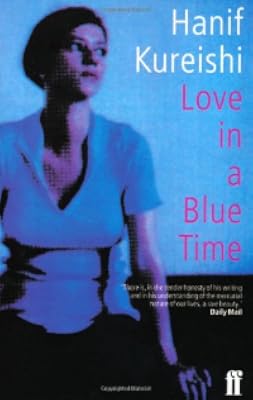
Hanif Kureishi won England's prestigious Whitbread Prize for his first novel, The Buddha of Suburbia. His screenplays include Sammy and Rosie Get Laid and My Beautiful Laundrette, which received an Oscar nomination for Best Screenplay. His other works include the novels The Black Album and Gabriel's Gift and the short story collection Love in a show more Blue Time. He lives in London. (Publisher Fact Sheets) show less
Some Editions
Awards and Honors
Awards
Notable Lists
Series
Belongs to Publisher Series
Work Relationships
Has the adaptation
Has as a student's study guide
Common Knowledge
- Canonical title*
- Il Budda delle periferie
- Original title
- The Buddha of suburbia
- Original publication date
- 1990
- People/Characters
- Karim Amir; Jamila; Eva; Changez
- Important places
- London, England, UK; United Kingdom; Beckenham, London, England, UK
- Related movies
- The Buddha of Suburbia (1993 | IMDb)
- First words
- My name is Karim Amir, and I am an Englishman born and bred, almost.
- Last words
- (Click to show. Warning: May contain spoilers.)I thought of what a mess everything had been, but that it wouldn't always be that way.
- Blurbers
- Rushdie, Salman
- Original language*
- Inglese
*Some information comes from Common Knowledge in other languages. Click "Edit" for more information.
Classifications
Statistics
- Members
- 3,226
- Popularity
- 5,354
- Reviews
- 61
- Rating
- (3.66)
- Languages
- 18 — Catalan, Danish, Dutch, English, Estonian, Finnish, French, German, Italian, Latvian, Norwegian (Bokmål), Portuguese, Russian, Serbian, Croatian, Slovenian, Spanish, Swedish
- Media
- Paper, Audiobook, Ebook
- ISBNs
- 72
- ASINs
- 14