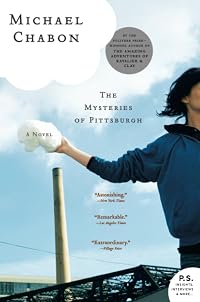
The Mysteries of Pittsburgh
by Michael Chabon
On This Page
Description
The Pulitzer Prize–winning author's "astonishing" debut novel, about a son's struggle to find his own identity and integrity (The New York Times).Michael Chabon, author of The Amazing Adventures of Kavalier & Clay, Moonglow, and The Yiddish Policeman's Union, is one of the most acclaimed talents in contemporary fiction. The Mysteries of Pittsburgh, published when Chabon was just twenty-five, is the beautifully crafted debut that propelled him into the literary stratosphere.
Art Bechstein show more may be too young to know what he wants to do with his life, but he knows what he doesn't want: the life of his father, a man who laundered money for the mob. He spends the summer after graduation finding his own way, experimenting with a group of brilliant and seductive new friends: erudite Arthur Lecomte, who opens up new horizons for Art; mercurial Phlox, who confounds him at every turn; and Cleveland, a poetry-reciting biker who pulls him inevitably back into his father's mobbed-up world.
A New York Times bestseller, The Mysteries of Pittsburgh was called "astonishing" by Alice McDermott, and heralded the arrival of one of our era's great voices.
This ebook features a biography of the author.
. show less
Tags
Recommendations
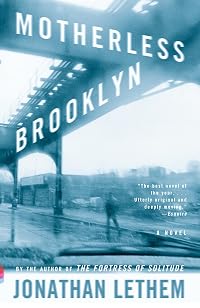
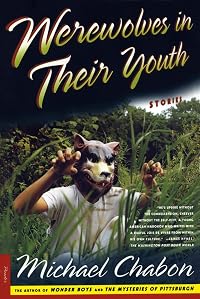
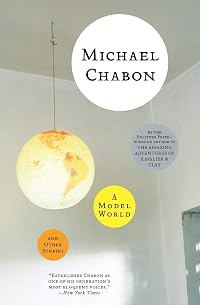
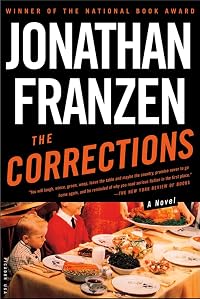





Member Recommendations
Member Reviews
this book reminded me of young summer in an unnamed east coast industrial town, smoking too many cigarettes, falling in embarrassing love and lust with inappropriate people, unsure where the train of my life is barreling.
but there was that whole "father is a gangster" thing, that kind of pulled me out of the fiction/reverie, in the way that i didn't really believe in it, but began, slowly, to accept it for the plot-driving device it is.
this book broke my heart, like long-ago people did. it made me yearn for it when it was no longer around. it made me ache, but in kind of a good way.
but there was that whole "father is a gangster" thing, that kind of pulled me out of the fiction/reverie, in the way that i didn't really believe in it, but began, slowly, to accept it for the plot-driving device it is.
this book broke my heart, like long-ago people did. it made me yearn for it when it was no longer around. it made me ache, but in kind of a good way.
This book fits so nicely in the oeuvre of mid-80s urban 20-something stories like Alice K's Guide to the Life (Boston) and A Girl in Love With Her Clothes (NYC). Told from the point of view of a young man, Art, recently finished from college and contemplating his future, Mysteries shows an accurate portrayal of the confusion and excitement that comes with exploring familial expectations, personal histories, and social/sexual desires.
Considered somewhat groundbreaking (at the time) for its depiction of homosexuality and bi-sexuality, in today's light I would say this is less of a "coming out" story as it is one about making decisions, and the avoidance of making decisions, about the path of one's life. Whether it's sexual, personal show more expression, creative, social, professional... the early 20s are the time that many experience a barrage of personal choices. Some hit each mark with a seeming overabundance of ease, while others, like Art, struggle on all fronts. But, it's a struggle almost all can relate to, even if our 20s are many decades removed.
Oh yes, it's also quite lovely to read a story with nary a mention of cell phones, the internet, and Facebook. Can you remember what that was like? :-) show less
Considered somewhat groundbreaking (at the time) for its depiction of homosexuality and bi-sexuality, in today's light I would say this is less of a "coming out" story as it is one about making decisions, and the avoidance of making decisions, about the path of one's life. Whether it's sexual, personal show more expression, creative, social, professional... the early 20s are the time that many experience a barrage of personal choices. Some hit each mark with a seeming overabundance of ease, while others, like Art, struggle on all fronts. But, it's a struggle almost all can relate to, even if our 20s are many decades removed.
Oh yes, it's also quite lovely to read a story with nary a mention of cell phones, the internet, and Facebook. Can you remember what that was like? :-) show less
I took my time reading this and really enjoyed it. I don't have any sort of familiarity with Pittsburgh, or the lifestyles of the characters. But I do know Border Books! And what it's like to feel lost, and to experiment while lost. And to be overly confused about your emotions and what's happening all around you. And to walk away from a summer with some number of regrets.
‘Los misterios de Pittsburgh’ fue la primera novela de Michael Chabon, y en ella se encuentra el germen de lo que es su magnífica carrera literaria. Sin ser una novela redonda, sí contiene la suficiente calidad como para convertirla en una lectura imprescindible para comprender lo que serían las siguientes obras de Chabon, sobre todo ‘Chicos prodigiosos’ y la obra maestra que es ‘Las asombrosas aventuras de Kavalier y Clay’, ganadora del Pulitzer, sin olvidar sus excelentes relatos, muchos de ellos publicados en el prestigioso New Yorker.
La historia, ambientada en los 80, tiene como protagonista y narrador a Art Bechstein, que cuenta el verano que pasó al término de sus estudios universitarios, meses tras los cuáles show more tendrá que dar el gran paso hacia la vida de adulto y asumir responsabilidades como tal. Art, que trabaja a tiempo parcial en una librería, conocerá un día a Arthur, lo que supondrá un cambio fundamental en su vida, así como una forma de evasión frente a lo que está por venir. Pero el personaje de Art, siendo el protagonista total de la novela, no me ha interesado tanto como los secundarios: el propio Arthur, gay y al que no le importa reconocerlo; la encantadora Phlox, tan especial como su nombre, una chica que trabaja en la biblioteca y que se siente atraída por Art; Cleveland, amigo de Arthur, que vive para su motocicleta, su novia Jane y sus sueños, y la propia Jane, preocupada siempre por Cleveland y sus líos, y de la que he echado de menos algo más de protagonismo. De la mano de este grupo de amigos obtenemos una visión inteligente y emocionante, quizás algo ingenua, de lo que significa el paso a la madurez, y del que Art aprenderá a disfrutar del placer de una conversación, de la amistad sincera y del amor.
Una parte fundamental de la novela es la ambigüedad sexual del protagonista, que duda constantemente entre el amor por Arthur o Phlox. Así mismo, también es importante en la vida de Art la difícil relación que mantiene con su padre, el clásico gángster, con el que cena eventualmente y de cuyo cariño y reconocimiento tiene absoluta dependencia.
En resumen, ‘Los misterios de Pittsburgh’ es una novela muy bien escrita, que no hace más que apuntar en lo que se convertiría Chabon con los años: uno de los mejores escritores norteamericanos actuales. show less
La historia, ambientada en los 80, tiene como protagonista y narrador a Art Bechstein, que cuenta el verano que pasó al término de sus estudios universitarios, meses tras los cuáles show more tendrá que dar el gran paso hacia la vida de adulto y asumir responsabilidades como tal. Art, que trabaja a tiempo parcial en una librería, conocerá un día a Arthur, lo que supondrá un cambio fundamental en su vida, así como una forma de evasión frente a lo que está por venir. Pero el personaje de Art, siendo el protagonista total de la novela, no me ha interesado tanto como los secundarios: el propio Arthur, gay y al que no le importa reconocerlo; la encantadora Phlox, tan especial como su nombre, una chica que trabaja en la biblioteca y que se siente atraída por Art; Cleveland, amigo de Arthur, que vive para su motocicleta, su novia Jane y sus sueños, y la propia Jane, preocupada siempre por Cleveland y sus líos, y de la que he echado de menos algo más de protagonismo. De la mano de este grupo de amigos obtenemos una visión inteligente y emocionante, quizás algo ingenua, de lo que significa el paso a la madurez, y del que Art aprenderá a disfrutar del placer de una conversación, de la amistad sincera y del amor.
Una parte fundamental de la novela es la ambigüedad sexual del protagonista, que duda constantemente entre el amor por Arthur o Phlox. Así mismo, también es importante en la vida de Art la difícil relación que mantiene con su padre, el clásico gángster, con el que cena eventualmente y de cuyo cariño y reconocimiento tiene absoluta dependencia.
En resumen, ‘Los misterios de Pittsburgh’ es una novela muy bien escrita, que no hace más que apuntar en lo que se convertiría Chabon con los años: uno de los mejores escritores norteamericanos actuales. show less
Validates the notion that one long summer with the right people--or the wrong--can educate you about life more than many years of "higher" education ever will. It won't be everyone's cup of Yuengling, but I enjoyed it.
My eyes rolled so much when reading this, I thought they might pop out of their sockets. This is one of our great American writers? A Pulitzer Prize winner? What a sad state of affairs that is. I suppose Kavalier & Clay is the one I'm supposed to read...but since I received this from the publisher for free, and it was by Chabon, I thought at least it would be good if not great.
It was terrible. Just awful. There was almost nothing about it that I liked. It was nearly unbearable, and I would have put it aside without finishing it if I hadn't owed the publisher "an honest review" based on the free book. The Mysteries of Pittsburgh really got on my nerves. First person stories can be tricky. You have to be willing to live with the character show more for an entire book. The main character here was a whiny, douchebaggy, lying, pseudo-witty, insecure, recent college grad trying to "find himself." I just wanted to constantly slap him, not to hear his semi-clever little jokes and his oh-so-tedious struggle with "deciding" if he was gay or not gay. Get the fuck over it, buddy. I couldn't care about this guys struggle to decide whether or not to cheat on his girlfriend (whom he thought he loved) with this charming Machiavellian hipster dude. I have no doubt there are many in society today who struggle with their gender ambiguity. But reading about this sort of whiny struggle in the 80s didn't provide any better understanding about the struggle today. It's seemed so dated...this book has lost its relevancy since it was published in 1988.
Perhaps that is mainly due to the awkwardness and contrived nature of all the relationship in this particular book. I'm sure in the hands of other more capable authors, a story of facing ones gender ambiguity could be meaningful in ANY time setting. But in this particular story, the storytelling no longer seemed relevant. I would think that almost everyone who reads Pulitzer Prize winning mainstream literary authors is 99.9% likely to be socially liberal even if they are economically libertarian. So who is gaining empathy for someone struggling with being gay in the 80s? We've moved on past this, and the battle lines are clearly set between the right-wing racist/homophobes authoritarians who support the Republican party and the liberal humanists who range from supporting Democrats to anarchists, socialists, etc. Right wing homophobes are not reading Chabon and aren't going to be moved either by this annoying hipster college grad weiner who can't make up his mind about what he is. If you are trying to get readers to accept and like someone struggling with gender ambiguity then create someone we can care about.
The other characters were equally smarmy, phony and awkwardly written. And their relationships were just odd and a few steps off from realistic. I liked none of them nor believed any of them despite the profusion of tiny character details intended to build realism. I fluctuate in my appreciation for realistic characters and experimentalism in literature. It's books like these where they teeter between contrived details to create believability and "quality" writing (yes, he's not incompetent as a writer) where I become most disgusted by realism, feeling the author is just attempting to trick the reader into believing his story.
This book's premise seems dated (it literally is, being set in the 80s) and besides the point. In fact, it's so besides the point that the supposedly realistic characters in this book never ONCE mentioned anything about politics. It's set in the 80s when Jimmy Carter and Ronald Reagan were Presidents for fuck's sake. And not a single mention of it by any character? These were all kids just graduated or recently graduating college. And the government never once crossed their mind? That reinforced the bizarre myopia for me. And writing about Pittsburgh...if the setting was important enough to put in the title, then what was the point of that? What did we learn about Pittsburgh? One would think we would learn about the experience of living in Pittsburgh, perhaps the collapse of the steel industry and blue-collar career opportunities and unions would be some aspect of the book. Nope. For some reason Chabon elected to choose semi-intellectual college grads who seems more like New Yorkers to represent the city. And gangsters. Yes, old school mafia gangsters. These choices baffled me and felt completely irrelevant to understand...the city or anyone, for that matter. Post-college grads trying to "find themselves" could happen in any city, but somehow this was supposed to represent Pittsburgh? And somehow the mashup of recognizing one's gayness or bisexuality gets mashed up with dealing with his father being in the mafia? It was a schizophrenic muddle that did not come together.
I get the feeling some of the relationship stories in here were fictionalized autobiography. Big. Deal. They made for a terrible and terribly annoying story. If this character was somehow based himself, then all I can say he, he makes a terrible character that I wanted to run over with a car.
Mysteries of Pittsburgh? More like the Mysteries of Why Chabon Wrote this Self Indulgent Waste of Time. It's just a bad book.
show less
It was terrible. Just awful. There was almost nothing about it that I liked. It was nearly unbearable, and I would have put it aside without finishing it if I hadn't owed the publisher "an honest review" based on the free book. The Mysteries of Pittsburgh really got on my nerves. First person stories can be tricky. You have to be willing to live with the character show more for an entire book. The main character here was a whiny, douchebaggy, lying, pseudo-witty, insecure, recent college grad trying to "find himself." I just wanted to constantly slap him, not to hear his semi-clever little jokes and his oh-so-tedious struggle with "deciding" if he was gay or not gay. Get the fuck over it, buddy. I couldn't care about this guys struggle to decide whether or not to cheat on his girlfriend (whom he thought he loved) with this charming Machiavellian hipster dude. I have no doubt there are many in society today who struggle with their gender ambiguity. But reading about this sort of whiny struggle in the 80s didn't provide any better understanding about the struggle today. It's seemed so dated...this book has lost its relevancy since it was published in 1988.
Perhaps that is mainly due to the awkwardness and contrived nature of all the relationship in this particular book. I'm sure in the hands of other more capable authors, a story of facing ones gender ambiguity could be meaningful in ANY time setting. But in this particular story, the storytelling no longer seemed relevant. I would think that almost everyone who reads Pulitzer Prize winning mainstream literary authors is 99.9% likely to be socially liberal even if they are economically libertarian. So who is gaining empathy for someone struggling with being gay in the 80s? We've moved on past this, and the battle lines are clearly set between the right-wing racist/homophobes authoritarians who support the Republican party and the liberal humanists who range from supporting Democrats to anarchists, socialists, etc. Right wing homophobes are not reading Chabon and aren't going to be moved either by this annoying hipster college grad weiner who can't make up his mind about what he is. If you are trying to get readers to accept and like someone struggling with gender ambiguity then create someone we can care about.
The other characters were equally smarmy, phony and awkwardly written. And their relationships were just odd and a few steps off from realistic. I liked none of them nor believed any of them despite the profusion of tiny character details intended to build realism. I fluctuate in my appreciation for realistic characters and experimentalism in literature. It's books like these where they teeter between contrived details to create believability and "quality" writing (yes, he's not incompetent as a writer) where I become most disgusted by realism, feeling the author is just attempting to trick the reader into believing his story.
This book's premise seems dated (it literally is, being set in the 80s) and besides the point. In fact, it's so besides the point that the supposedly realistic characters in this book never ONCE mentioned anything about politics. It's set in the 80s when Jimmy Carter and Ronald Reagan were Presidents for fuck's sake. And not a single mention of it by any character? These were all kids just graduated or recently graduating college. And the government never once crossed their mind? That reinforced the bizarre myopia for me. And writing about Pittsburgh...if the setting was important enough to put in the title, then what was the point of that? What did we learn about Pittsburgh? One would think we would learn about the experience of living in Pittsburgh, perhaps the collapse of the steel industry and blue-collar career opportunities and unions would be some aspect of the book. Nope. For some reason Chabon elected to choose semi-intellectual college grads who seems more like New Yorkers to represent the city. And gangsters. Yes, old school mafia gangsters. These choices baffled me and felt completely irrelevant to understand...the city or anyone, for that matter. Post-college grads trying to "find themselves" could happen in any city, but somehow this was supposed to represent Pittsburgh? And somehow the mashup of recognizing one's gayness or bisexuality gets mashed up with dealing with his father being in the mafia? It was a schizophrenic muddle that did not come together.
I get the feeling some of the relationship stories in here were fictionalized autobiography. Big. Deal. They made for a terrible and terribly annoying story. If this character was somehow based himself, then all I can say he, he makes a terrible character that I wanted to run over with a car.
Mysteries of Pittsburgh? More like the Mysteries of Why Chabon Wrote this Self Indulgent Waste of Time. It's just a bad book.
show less
 This review was written for LibraryThing Early Reviewers.
Having liked Michael Chabon’s short story collection (Model World) I decided to try his first book. It was taken from his Master's thesis while a grad student. In fact, his professor sent it off to a publisher with Chabon's knowledge (!) and it gained the author a 155k advance.
Mysteries of Pittsburgh is a coming of age novel. Like Catcher in the Ryle it’s a first person account by an adolescent male (Art Bechstein) trying to make his way through a world where he doesn’t fit; and as in James Baldwin’s Giovanni’s Room, much of that search involves figuring out his own sexual orientation, at great cost to those who care for him. Nominally, the story involves Art’s relationship with his father and friends and his interactions show more with a motley bunch of characters on both sides of the law. It’s a wild ride, this book, and while there’s enough of a plot to keep things interesting, the real attraction lies in the author’s unique perspective and exuberant, joyous prose.
As the story begins, his father asks Art his plans for the summer. “I said, more or less… ‘I'm standing in the lobby of a thousand-story grand hotel, where a bank of elevators a mile long and an endless red row of monkey attendants in gold braid wait to carry me up, up, up through the suites of moguls, of spies, and of starlets, to rush me straight to the zeppelin mooring at the art deco summit, where they keep the huge dirigible of August tied up and bobbing in the high winds. On the way to the shining needle at the top I will wear a lot of neckties, I will buy five or six works of genius on 45 rpm, and perhaps too many times I will find myself looking at the snapped spine of a lemon wedge at the bottom of a drink.’ I said ‘I anticipate a coming season of dilated time and of women all in disarray.’”
Despite the title, the story is not set in the downtown, commercial Pittsburgh, but in the nearby academic enclave of Oakland, where resides the University of Pittsburgh, where the author earned his B.A. Readers familiar with the area will love the many local references –the Cathedral of Learning (Pitt’s great gothic skyscraper), the Carnegie Museum, CMU, Shenley Park, the Dirty O, Hillman Library…. The Shenley Park bridge passes over a gorge, and the narrator gazes down, down to where he can see little houses and people … ”I smoked and looked down at the bottom of Pittsburgh for a little while, watching the kids playing tiny baseball, the distant figures of dogs snatching at a little passing car, a miniature housewife on her back porch shaking out a snippet of red rug, and I made a sudden, frightened vow never to become that small, and to devote myself to getting bigger and bigger and bigger.”
He meets Phlox, the woman who is to become his girlfriend, and ruminates ”I admit I have an ugly fondness for generalizations, so perhaps I may be forgiven when I declare that there is always something weird about a girl who majors in French…. The unlucky girl who pursues her studies past the second year comes inevitably and headlong into contact with French Literature, potentially one of the most destructive forces known to mankind and she begins to relish such previously unglamorous elements of her vocabulary as langueur and funeste… The writers she comes to appreciate... have an alienating effect, especially on her attitude toward love and her manner of expressing her emotions becomes difficult and theatrical.” They spend the night together: ”When she came back into the room, she wore nothing but a peach teddy, wide-hipped, her face coppery and new washed, her hair pulled up by a white ribbon. She looked 1940ish, the wife of some soldier off fighting the Germans, and briefly I felt the thrill of being an intruder in the house.”
As Art’s summer progresses, he meets Arthur, to whom he develops a strong attachment (only Michael Chabon would give both of his main characters the same first name!); Cleveland (an aging, long-haired, motorcyclist who loves literature, petty crime, and violence); and Jane (whom he first sees hitting golf balls at a house party): "I watched her stroke. It was my father's ideal: a slight, philosophical tilt to her neck, her backswing a tacit threat, her rigid exultant follow-through held for one aristocratic fraction of a second too long. She looked tall, thin and, in the bad light, rather gray in her white golf skirt and shirt. Thik! And she smiled, shaking out her yellow hair.” Jane, we’re told, smells “interestingly of light exertion, beer, perfume and cut grass”).
Working for a loan shark, Cleveland knows that Art’s father has underworld crime connections, and engineers an introduction and a new mentor, the city’s biggest jewel fence. The resultant breach of the wall between Art’s personal life and his father has devastating consequences.The story culminates in a police chase in which Cleveland (who has been purposely exposed by Art's disapproving father) meets a dramatic demise in the aforementioned Shenley gorge. And Art, breaking with his father, leaves for Europe with Arthur, but the relationship peters out. Art's sexual ambiguity remains, and he concludes that the standard categories have little meaning.
At the tale's end, Art reminisces: ” When I remember that dizzy summer, that dull, stupid, lovely, dire summer, it seems that in those days I ate my lunches, smelled another's skin, noticed a shade of yellow, even simply sat, with greater lust and hopefulness - and that I lusted with greater faith, hoped with greater abandon. The people I loved were celebrities, surrounded by rumor and fanfare; the places I sat with them, movie lots and monuments. No doubt all of this is not true remembrance but the ruinous work of nostalgia, which obliterates the past, and no doubt, as usual, I have exaggerated everything.”
Chabon's book reads like a first novel. It is not perfect. The characters are sometimes flat, and plot elements (notably the mysterious death of Art's mother) are hinted at but not developed. Furthermore, at times his phraseology seems too mannered and affected, too purposefully idiosyncratic, as if the author spent hours laboring over a single sentence. Nonetheless, for readers who appreciate it, his prose is often magical, exuberant, and unlike anything attempted before. As a first novel, Mysteries of Pittsburgh is remarkable achievement. show less
Mysteries of Pittsburgh is a coming of age novel. Like Catcher in the Ryle it’s a first person account by an adolescent male (Art Bechstein) trying to make his way through a world where he doesn’t fit; and as in James Baldwin’s Giovanni’s Room, much of that search involves figuring out his own sexual orientation, at great cost to those who care for him. Nominally, the story involves Art’s relationship with his father and friends and his interactions show more with a motley bunch of characters on both sides of the law. It’s a wild ride, this book, and while there’s enough of a plot to keep things interesting, the real attraction lies in the author’s unique perspective and exuberant, joyous prose.
As the story begins, his father asks Art his plans for the summer. “I said, more or less… ‘I'm standing in the lobby of a thousand-story grand hotel, where a bank of elevators a mile long and an endless red row of monkey attendants in gold braid wait to carry me up, up, up through the suites of moguls, of spies, and of starlets, to rush me straight to the zeppelin mooring at the art deco summit, where they keep the huge dirigible of August tied up and bobbing in the high winds. On the way to the shining needle at the top I will wear a lot of neckties, I will buy five or six works of genius on 45 rpm, and perhaps too many times I will find myself looking at the snapped spine of a lemon wedge at the bottom of a drink.’ I said ‘I anticipate a coming season of dilated time and of women all in disarray.’”
Despite the title, the story is not set in the downtown, commercial Pittsburgh, but in the nearby academic enclave of Oakland, where resides the University of Pittsburgh, where the author earned his B.A. Readers familiar with the area will love the many local references –the Cathedral of Learning (Pitt’s great gothic skyscraper), the Carnegie Museum, CMU, Shenley Park, the Dirty O, Hillman Library…. The Shenley Park bridge passes over a gorge, and the narrator gazes down, down to where he can see little houses and people … ”I smoked and looked down at the bottom of Pittsburgh for a little while, watching the kids playing tiny baseball, the distant figures of dogs snatching at a little passing car, a miniature housewife on her back porch shaking out a snippet of red rug, and I made a sudden, frightened vow never to become that small, and to devote myself to getting bigger and bigger and bigger.”
He meets Phlox, the woman who is to become his girlfriend, and ruminates ”I admit I have an ugly fondness for generalizations, so perhaps I may be forgiven when I declare that there is always something weird about a girl who majors in French…. The unlucky girl who pursues her studies past the second year comes inevitably and headlong into contact with French Literature, potentially one of the most destructive forces known to mankind and she begins to relish such previously unglamorous elements of her vocabulary as langueur and funeste… The writers she comes to appreciate... have an alienating effect, especially on her attitude toward love and her manner of expressing her emotions becomes difficult and theatrical.” They spend the night together: ”When she came back into the room, she wore nothing but a peach teddy, wide-hipped, her face coppery and new washed, her hair pulled up by a white ribbon. She looked 1940ish, the wife of some soldier off fighting the Germans, and briefly I felt the thrill of being an intruder in the house.”
As Art’s summer progresses, he meets Arthur, to whom he develops a strong attachment (only Michael Chabon would give both of his main characters the same first name!); Cleveland (an aging, long-haired, motorcyclist who loves literature, petty crime, and violence); and Jane (whom he first sees hitting golf balls at a house party): "I watched her stroke. It was my father's ideal: a slight, philosophical tilt to her neck, her backswing a tacit threat, her rigid exultant follow-through held for one aristocratic fraction of a second too long. She looked tall, thin and, in the bad light, rather gray in her white golf skirt and shirt. Thik! And she smiled, shaking out her yellow hair.” Jane, we’re told, smells “interestingly of light exertion, beer, perfume and cut grass”).
Working for a loan shark, Cleveland knows that Art’s father has underworld crime connections, and engineers an introduction and a new mentor, the city’s biggest jewel fence. The resultant breach of the wall between Art’s personal life and his father has devastating consequences.
At the tale's end, Art reminisces: ” When I remember that dizzy summer, that dull, stupid, lovely, dire summer, it seems that in those days I ate my lunches, smelled another's skin, noticed a shade of yellow, even simply sat, with greater lust and hopefulness - and that I lusted with greater faith, hoped with greater abandon. The people I loved were celebrities, surrounded by rumor and fanfare; the places I sat with them, movie lots and monuments. No doubt all of this is not true remembrance but the ruinous work of nostalgia, which obliterates the past, and no doubt, as usual, I have exaggerated everything.”
Chabon's book reads like a first novel. It is not perfect. The characters are sometimes flat, and plot elements (notably the mysterious death of Art's mother) are hinted at but not developed. Furthermore, at times his phraseology seems too mannered and affected, too purposefully idiosyncratic, as if the author spent hours laboring over a single sentence. Nonetheless, for readers who appreciate it, his prose is often magical, exuberant, and unlike anything attempted before. As a first novel, Mysteries of Pittsburgh is remarkable achievement. show less
Members
- Recently Added By
Published Reviews
ThingScore 75
Chabon’s talent bursts from the pages. For instance, he is very good at describing inebriation: “I had drunk very much very quickly,” Art, the narrator tells us, “and wasn’t following the action of the film too well. Everything seemed impossibly fast and noisy.” There are intriguing jokes: “I admit I have an ugly fondness for generalisations, so perhaps I may be forgiven when I show more declare that there is always something weird about a girl that majors in French.” And there are some excellent character portraits, such as that of Jane, who is introduced to readers thwacking golf balls across the neighbourhood at a house party, smelling “interestingly of light exertion, beer, perfume and cut grass”. show less
added by danielx
"Cleveland and I drank until the bar closed. It was a hot night, and the ceiling fans ruffled our hair and tore the cigarette smoke into little scraps. Each bottle of Rolling Rock came to us pearled with condensation," remembers Art, about to recall the occasion when Cleveland started reciting Frank O'Hara. "The Mysteries of Pittsburgh" has hundreds of such moments, effortless, golden, show more reminding us that Chabon always had the capacity to amaze; he was, and is, the wonder boy. show less
added by danielx
there is much to admire here, and what the novel lacks in insight it compensates for in language, wit and ambition, in the sheer exuberance of its voice: the voice of a young writer with tremendous skill as he discovers, joyously, just what his words can do.
added by danielx
Lists

20th Century Literature
1,161 works; 55 members

Best Campus Novels
99 works; 18 members

Blue Pyramid 1,276 Best Books of All Time
1,248 works; 32 members

A Novel Cure
742 works; 23 members

Good LGBT fiction for LGBT folk and friends
551 works; 55 members

Books Set in Pennsylvania
17 works; 5 members

Academia in Fiction
158 works; 23 members

Literary Travelogue of the United States Challenge
133 works; 6 members

First Novels
373 works; 17 members

Literary Pittsburgh
45 works; 1 member

Tonikat reading completed on Librarything journals
329 works; 2 members

Books Read in 2018
4,360 works; 110 members

Books With Place Names in the Title
257 works; 11 members

Gen X Library
245 works; 4 members

Novels with a city or town in the title
61 works; 1 member

The "A" List
67 works; 8 members

Books Read in 1992
9 works; 1 member
Author Information

74+ Works 67,836 Members
Michael Chabon was born in Washington, D.C. on May 24, 1963. He received a B.A. in English literature from the University of Pittsburgh in 1985 and a Master of Fine Arts degree in English writing at the University of California at Irvine in 1987. Chabon found success at the age of 24, when William Morrow publishing house offered him $155,000, a show more near-record sum, for the rights to his first novel The Mysteries of Pittsburgh, which was his thesis in graduate school. After The Mysteries of Pittsburgh became a national bestseller, he began writing a series of short stories about a little boy dealing with his parents' divorce. The stories, which in part appeared in The New Yorker and G.Q., were bound together in 1991 into a volume titled A Model World and Other Stories. His other works include Wonder Boys, The Astonishing Secret of Awesome Man, Telegraph Avenue, and Pop: Fatherhood in Pieces. In 2001 he won the Pulitzer Prize for fiction for his novel The Amazing Adventures of Kavalier and Clay. He and Ayelet Waldman are co-editors of, Kingdom of Olives and Ash: Writers Confront the Occupation.. (Bowker Author Biography) show less
Some Editions
Awards and Honors
Distinctions
Notable Lists
Series
Belongs to Publisher Series
Work Relationships
Is contained in
Is abridged in
Common Knowledge
- Canonical title
- The Mysteries of Pittsburgh
- Original title
- The Mysteries of Pittsburgh
- Original publication date
- 1988
- People/Characters
- Art Bechstein; Arthur Lecomte; Phlox Lombardi; Jane Bellwether; Cleveland Arning; Ondine Lecomte
- Important places
- Pittsburgh, Pennsylvania, USA; Pennsylvania, USA
- Related movies
- The Mysteries of Pittsburgh (2008 | IMDb)
- Epigraph
- We have shared it out like thieves
the amazing treasure of nights and days
J.L.Borges - Dedication
- To Lollie
- First words
- At the beginning of the summer I had lunch with my father, the gangster, who was in town for the weekend to transact some of his vague business.
- Last words
- (Click to show. Warning: May contain spoilers.)No doubt all of this is not true remembrance but the ruinous work of nostalgia, which obliterates the past, and no doubt, as usual, I have exaggerated everything.
- Original language
- English
Classifications
Statistics
- Members
- 4,338
- Popularity
- 3,476
- Reviews
- 76
- Rating
- (3.57)
- Languages
- 13 — Catalan, Czech, Danish, Dutch, English, Finnish, French, German, Hebrew, Italian, Portuguese, Spanish, Swedish
- Media
- Paper, Audiobook, Ebook
- ISBNs
- 45
- UPCs
- 1
- ASINs
- 33
