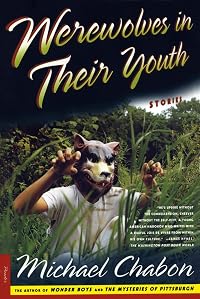
Werewolves in Their Youth
by Michael Chabon
On This Page
Description
By the New York Times–bestselling author of Moonglow: "When you read these stories, it may strike you how seldom you come across really beautiful writing" (USA Today).Cherished by readers and critics alike for such extraordinary novels as The Amazing Adventures of Kavalier & Clay, The Mysteries of Pittsburgh, and Wonder Boys, Michael Chabon is at the height of his considerable powers in this striking and bittersweet collection of short stories.
An anxious young misfit does nothing to show more protect his best friend from the scorn of their teachers and classmates. A kleptomaniac real estate agent leads an unhappy couple on a disastrous house tour. A heartbroken grifter finds his ex-girlfriend's grandmother to be an easy mark—and an unexpected source of redemption. Throughout these stories, Chabon's characters, suffused with yearning but crippled by broken love, often find themselves at a crossroads—and faced with sudden insight.
Michael Chabon is "Updike without the condescension," wrote James Hynes in the Washington Post Book World, "Cheever without the self-pity, a young American Nabokov who writes with a rueful joie de vivre." In this darkly funny, achingly delicate collection, he renders the compromises of adulthood and the vivid fantasies of childhood with clarity and warmth.
This ebook features a biography of the author.
. show less
Tags
Recommendations

Member Recommendations
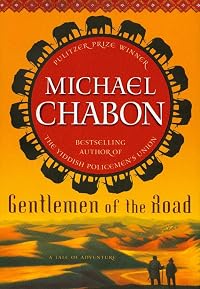
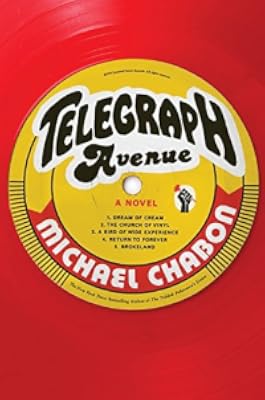
Patangel La même humanité transparait dans ces deux ouvrages du même auteur.
Member Reviews
Stories with characters who never quite got a grip on life and encountered such turbulence that they lost what little they had, though through some alchemy of mischance a few get knocked back into a better positions. The stew of inept anger and inarticulate guilt, sexual, social, professional is all very recognizable.
Michael Chabon escribió estos cuentos en sus primeros años como escritor. "Chico prodigioso" a temprana edad, la revista New Yorker publicaba sus relatos a mediados de los ochenta, cuando Chabon era un veinteañero. La mayoría de los cuentos que componen este volumen son maravillosos. Con una aparente simplicidad, Chabon escribe sobre matrimonios que se desintegran, y cómo es de difícil el paso de la juventud a la madurez. Mezclando sabiamente el humor, la ironía y el drama, Chabon nos ofrece nueve cuentos que bien podrían haberse convertido en novelas, pero que son perfectos y se valen por sí mismos. Aquí van los nueve cuentos con mi valoración:
- JÓVENES HOMBRES LOBO (*****), en el que dos chicos, amigos que comparten el ser show more unos parias en su colegio, ven como su mundo se desintegra, el de Timothy por creerse un "hombre lobo" y el de Paul por la separación de sus padres. Una obra maestra.
- CACERÍA DE CASAS (*****), en el que Daniel y Christy, un joven matrimonio, acude con el señor Hogue a visitar una casa para su posible compra, y los problemas de la pareja salen a relucir, al igual que las sorpresas y equívocos. Simplemente genial.
- HIJO DEL HOMBRE LOBO (*****), en el que Cara ha sido violada por el Violador del Embalse y queda embarazada, con el consecuente trauma tanto para ella como para Richard, su marido. Ternura y compasión en un cuento redondo.
- EL LIBRO DE GREEN (**), en el que Green y su hija Jocelyn, acuden a la fiesta de graduación del hijo de una antigua amiga, para la que trabajó en su juventud como canguro de su otra hija, Ruby, a la que esperaba no volver a ver. El cuento que menos me ha gustado.
- LA SEÑORA BOX (****), en el que Eddie, que tiene graves problemas económicos, decide hacer una visita sorpresa a la abuela de su ex mujer y nada sale como esperaba. Un buen cuento.
- ZAPATILLAS DE CLAVOS (*****), en el que Kohn, con su propia tragedia familiar, decide echar una mano a un chaval que vive en la misma isla, inadaptado socialmente. Una miniatura perfecta, otra obra maestra.
- LA HISTORIA DE HARRIS FETKO (****), en el que Harris, jugador de fútbol americano, es invitado por su padre, entrenador, a la circuncisión de su hermanastro. También hay sitio para el humor.
- ESA ERA YO (***), en el que una pareja visita una taberna buscando el pasarlo bien e intentar encontrar una salida a su situación. Buen cuento.
- EN LA NEGRA FUNDICIÓN (*****), en el que Chabon nos hace un guiño contándonos una historia de misterio y terror, al más puro estilo Poe, escrita por August van Zorn, el autor fetiche de Grady Tripp, el protagonista de 'Chicos prodigiosos'. Otra maravilla.
Como colofón, decir simplemente que hubiese querido que los cuentos siguiesen y siguiesen infinitamente. Da gusto leer cuentos, y libros, si son así. show less
- JÓVENES HOMBRES LOBO (*****), en el que dos chicos, amigos que comparten el ser show more unos parias en su colegio, ven como su mundo se desintegra, el de Timothy por creerse un "hombre lobo" y el de Paul por la separación de sus padres. Una obra maestra.
- CACERÍA DE CASAS (*****), en el que Daniel y Christy, un joven matrimonio, acude con el señor Hogue a visitar una casa para su posible compra, y los problemas de la pareja salen a relucir, al igual que las sorpresas y equívocos. Simplemente genial.
- HIJO DEL HOMBRE LOBO (*****), en el que Cara ha sido violada por el Violador del Embalse y queda embarazada, con el consecuente trauma tanto para ella como para Richard, su marido. Ternura y compasión en un cuento redondo.
- EL LIBRO DE GREEN (**), en el que Green y su hija Jocelyn, acuden a la fiesta de graduación del hijo de una antigua amiga, para la que trabajó en su juventud como canguro de su otra hija, Ruby, a la que esperaba no volver a ver. El cuento que menos me ha gustado.
- LA SEÑORA BOX (****), en el que Eddie, que tiene graves problemas económicos, decide hacer una visita sorpresa a la abuela de su ex mujer y nada sale como esperaba. Un buen cuento.
- ZAPATILLAS DE CLAVOS (*****), en el que Kohn, con su propia tragedia familiar, decide echar una mano a un chaval que vive en la misma isla, inadaptado socialmente. Una miniatura perfecta, otra obra maestra.
- LA HISTORIA DE HARRIS FETKO (****), en el que Harris, jugador de fútbol americano, es invitado por su padre, entrenador, a la circuncisión de su hermanastro. También hay sitio para el humor.
- ESA ERA YO (***), en el que una pareja visita una taberna buscando el pasarlo bien e intentar encontrar una salida a su situación. Buen cuento.
- EN LA NEGRA FUNDICIÓN (*****), en el que Chabon nos hace un guiño contándonos una historia de misterio y terror, al más puro estilo Poe, escrita por August van Zorn, el autor fetiche de Grady Tripp, el protagonista de 'Chicos prodigiosos'. Otra maravilla.
Como colofón, decir simplemente que hubiese querido que los cuentos siguiesen y siguiesen infinitamente. Da gusto leer cuentos, y libros, si son así. show less
A paired look at Rohinton Mistry Tales from Firozsha Baag and Michael Chabon Werewolves in Their Youth.
I chanced upon these back to back, both short story collections, both by writers in their working youth – Mistry’s first book and an early one for Chabon. Both as much as anything nostalgic, bittersweet recollections of childhood, the middle class childhoods of their own existences.
Chabon: laugh out loud funny – you know…so that it gets almost irritating for those who are suffering through your pleasure. They start sounding snarky when they say they must read it too. The guy’s brilliant, this collection is splendid.
Mistry: the blurb says ‘extremely funny’. But the only good thing about the shit of his world – and I mean show more that literally, the shit on the street, the upstairs lavatory that leaks onto your head as you sit on the toilet, the filth, the water supply turned off at 6am because the city is without again, the monsoonal water running down the inside of your house – the good thing about it is that this is all happening to middle class educated people, the same ones who, had they lived in Chabon’s childhood, would have been clean and without want. This life he writes of is the relatively privileged existence one can have in India, that’s what I mean by ‘good’. I mean, there is a worse life. I couldn’t imagine anything less hilarious. I could not imagine anything, if it comes to that, less ‘compassionate’ – another promise of the blurb. I don’t know that Mistry is ever the victim of that sentiment, but certainly not in this book.
rest here: https://alittleteaalittlechat.wordpress.com/2016/10/18/chabon-and-mistry-short-s... show less
I chanced upon these back to back, both short story collections, both by writers in their working youth – Mistry’s first book and an early one for Chabon. Both as much as anything nostalgic, bittersweet recollections of childhood, the middle class childhoods of their own existences.
Chabon: laugh out loud funny – you know…so that it gets almost irritating for those who are suffering through your pleasure. They start sounding snarky when they say they must read it too. The guy’s brilliant, this collection is splendid.
Mistry: the blurb says ‘extremely funny’. But the only good thing about the shit of his world – and I mean show more that literally, the shit on the street, the upstairs lavatory that leaks onto your head as you sit on the toilet, the filth, the water supply turned off at 6am because the city is without again, the monsoonal water running down the inside of your house – the good thing about it is that this is all happening to middle class educated people, the same ones who, had they lived in Chabon’s childhood, would have been clean and without want. This life he writes of is the relatively privileged existence one can have in India, that’s what I mean by ‘good’. I mean, there is a worse life. I couldn’t imagine anything less hilarious. I could not imagine anything, if it comes to that, less ‘compassionate’ – another promise of the blurb. I don’t know that Mistry is ever the victim of that sentiment, but certainly not in this book.
rest here: https://alittleteaalittlechat.wordpress.com/2016/10/18/chabon-and-mistry-short-s... show less
Il titolo italiano è un po' fuorviante e fa pensare a una qualche variante su temi orrorifici (vampiri, lupi mannari et similia), mentre il titolo originale, pur facendo riferimento ai lupi mannari aggiunge un particolare rivelatore: si tratta di germogli di tali creature. E poi stiamo parlando di Chabon, uno che può scrivere con la massima serietà di disegnatori di supereroi e di poliziotti yddish ...
This is a really good (IMO) early collection of stories by Chabon. Stories about the human condition with a little twist. The title story in on boys playing at werewolves, Son of the Wolfman is on a husband's reaction when his childless wife decides to keep the baby from a rape, and Mrs. Box is on a man who tries to rob his ex-wife's grandmother. The last story, interestingly is a gothic/lovecraftian horror story told by a fictitious author who is introduced to us by the main character of Chabon's 2nd novel The Wonder Boys
(Son of the Wolfman) The front porch had been overwhelmed years before by a salmon pink bougainvillea, and a disheveled palm tree murmured in the backyard, battering the roof at night with inedible nuts. It had been show more fall, the only season in Southern California that made any lasting claim on the emotions
(Spikes) She yearned to have a child. Kohn was an Easterner, socially awkward, obsessive. He was an instrument maker who built custom electric guitars, mostly for the Japanese market, and he preferred to keep his own yearnings pressed between the clear panes of a marijuana habit where he could safely observe them. show less
(Son of the Wolfman) The front porch had been overwhelmed years before by a salmon pink bougainvillea, and a disheveled palm tree murmured in the backyard, battering the roof at night with inedible nuts. It had been show more fall, the only season in Southern California that made any lasting claim on the emotions
(Spikes) She yearned to have a child. Kohn was an Easterner, socially awkward, obsessive. He was an instrument maker who built custom electric guitars, mostly for the Japanese market, and he preferred to keep his own yearnings pressed between the clear panes of a marijuana habit where he could safely observe them. show less
A paired look at Rohinton Mistry Tales from Firozsha Baag and Michael Chabon Werewolves in Their Youth.
I chanced upon these back to back, both short story collections, both by writers in their working youth – Mistry’s first book and an early one for Chabon. Both as much as anything nostalgic, bittersweet recollections of childhood, the middle class childhoods of their own existences.
Chabon: laugh out loud funny – you know…so that it gets almost irritating for those who are suffering through your pleasure. They start sounding snarky when they say they must read it too. The guy’s brilliant, this collection is splendid.
Mistry: the blurb says ‘extremely funny’. But the only good thing about the shit of his world – and I mean show more that literally, the shit on the street, the upstairs lavatory that leaks onto your head as you sit on the toilet, the filth, the water supply turned off at 6am because the city is without again, the monsoonal water running down the inside of your house – the good thing about it is that this is all happening to middle class educated people, the same ones who, had they lived in Chabon’s childhood, would have been clean and without want. This life he writes of is the relatively privileged existence one can have in India, that’s what I mean by ‘good’. I mean, there is a worse life. I couldn’t imagine anything less hilarious. I could not imagine anything, if it comes to that, less ‘compassionate’ – another promise of the blurb. I don’t know that Mistry is ever the victim of that sentiment, but certainly not in this book.
rest here: https://alittleteaalittlechat.wordpress.com/2016/10/18/chabon-and-mistry-short-s... show less
I chanced upon these back to back, both short story collections, both by writers in their working youth – Mistry’s first book and an early one for Chabon. Both as much as anything nostalgic, bittersweet recollections of childhood, the middle class childhoods of their own existences.
Chabon: laugh out loud funny – you know…so that it gets almost irritating for those who are suffering through your pleasure. They start sounding snarky when they say they must read it too. The guy’s brilliant, this collection is splendid.
Mistry: the blurb says ‘extremely funny’. But the only good thing about the shit of his world – and I mean show more that literally, the shit on the street, the upstairs lavatory that leaks onto your head as you sit on the toilet, the filth, the water supply turned off at 6am because the city is without again, the monsoonal water running down the inside of your house – the good thing about it is that this is all happening to middle class educated people, the same ones who, had they lived in Chabon’s childhood, would have been clean and without want. This life he writes of is the relatively privileged existence one can have in India, that’s what I mean by ‘good’. I mean, there is a worse life. I couldn’t imagine anything less hilarious. I could not imagine anything, if it comes to that, less ‘compassionate’ – another promise of the blurb. I don’t know that Mistry is ever the victim of that sentiment, but certainly not in this book.
rest here: https://alittleteaalittlechat.wordpress.com/2016/10/18/chabon-and-mistry-short-s... show less
A paired look at Rohinton Mistry Tales from Firozsha Baag and Michael Chabon Werewolves in Their Youth.
I chanced upon these back to back, both short story collections, both by writers in their working youth – Mistry’s first book and an early one for Chabon. Both as much as anything nostalgic, bittersweet recollections of childhood, the middle class childhoods of their own existences.
Chabon: laugh out loud funny – you know…so that it gets almost irritating for those who are suffering through your pleasure. They start sounding snarky when they say they must read it too. The guy’s brilliant, this collection is splendid.
Mistry: the blurb says ‘extremely funny’. But the only good thing about the shit of his world – and I mean show more that literally, the shit on the street, the upstairs lavatory that leaks onto your head as you sit on the toilet, the filth, the water supply turned off at 6am because the city is without again, the monsoonal water running down the inside of your house – the good thing about it is that this is all happening to middle class educated people, the same ones who, had they lived in Chabon’s childhood, would have been clean and without want. This life he writes of is the relatively privileged existence one can have in India, that’s what I mean by ‘good’. I mean, there is a worse life. I couldn’t imagine anything less hilarious. I could not imagine anything, if it comes to that, less ‘compassionate’ – another promise of the blurb. I don’t know that Mistry is ever the victim of that sentiment, but certainly not in this book.
rest here: https://alittleteaalittlechat.wordpress.com/2016/10/18/chabon-and-mistry-short-s... show less
I chanced upon these back to back, both short story collections, both by writers in their working youth – Mistry’s first book and an early one for Chabon. Both as much as anything nostalgic, bittersweet recollections of childhood, the middle class childhoods of their own existences.
Chabon: laugh out loud funny – you know…so that it gets almost irritating for those who are suffering through your pleasure. They start sounding snarky when they say they must read it too. The guy’s brilliant, this collection is splendid.
Mistry: the blurb says ‘extremely funny’. But the only good thing about the shit of his world – and I mean show more that literally, the shit on the street, the upstairs lavatory that leaks onto your head as you sit on the toilet, the filth, the water supply turned off at 6am because the city is without again, the monsoonal water running down the inside of your house – the good thing about it is that this is all happening to middle class educated people, the same ones who, had they lived in Chabon’s childhood, would have been clean and without want. This life he writes of is the relatively privileged existence one can have in India, that’s what I mean by ‘good’. I mean, there is a worse life. I couldn’t imagine anything less hilarious. I could not imagine anything, if it comes to that, less ‘compassionate’ – another promise of the blurb. I don’t know that Mistry is ever the victim of that sentiment, but certainly not in this book.
rest here: https://alittleteaalittlechat.wordpress.com/2016/10/18/chabon-and-mistry-short-s... show less
Members
- Recently Added By
Lists

Books Read in 2023
5,638 works; 147 members

Animals in the Title
498 works; 11 members
Stephen King's 'On Writing' reading list
95 works; 4 members
Author Information

74+ Works 67,836 Members
Michael Chabon was born in Washington, D.C. on May 24, 1963. He received a B.A. in English literature from the University of Pittsburgh in 1985 and a Master of Fine Arts degree in English writing at the University of California at Irvine in 1987. Chabon found success at the age of 24, when William Morrow publishing house offered him $155,000, a show more near-record sum, for the rights to his first novel The Mysteries of Pittsburgh, which was his thesis in graduate school. After The Mysteries of Pittsburgh became a national bestseller, he began writing a series of short stories about a little boy dealing with his parents' divorce. The stories, which in part appeared in The New Yorker and G.Q., were bound together in 1991 into a volume titled A Model World and Other Stories. His other works include Wonder Boys, The Astonishing Secret of Awesome Man, Telegraph Avenue, and Pop: Fatherhood in Pieces. In 2001 he won the Pulitzer Prize for fiction for his novel The Amazing Adventures of Kavalier and Clay. He and Ayelet Waldman are co-editors of, Kingdom of Olives and Ash: Writers Confront the Occupation.. (Bowker Author Biography) show less
Work Relationships
Common Knowledge
- Canonical title
- Werewolves in Their Youth
- Original title
- Werewolves in Their Youth
- Original publication date
- 1999-01-07
- People/Characters
- Al or Alf from Tacoma; Mr. Albert; Bob Badham; John Bekkedahl; Olivier Berquet; George Birch (show all 78); Oriole Box; Carlotta Brown-Jenkin; Debbie Browne; Bob Buterbaugh; Jeremy Case; Matthew Case; Richard Case; Nordell Coley; Daniel Diamond; Hugh Eggert; Mrs. Eibonas; Dexter Eibonas; Ed Eibonas; Sheila Fahey; Siobahen Fahey; Harris Fetko; Norm Fetko; Sidney Luckman Fetko; Lester Foley; Elizabeth Gladfelter; Jocelyn Green; Red Johnnie Green; Martin Green [in Green's Book]; Dr. Halbenzoller; Old Halicek; Bob Hogue; Jake [in That Was Me]; Christy Kite; Mr. Kite; Kohn [in Spikes]; Jill Kohn; Ellen Korg; Lisabeth Korg; Emily Klein [in Green's Book]; Harvey Klein; Ruby Klein; Seth Klein; Melvin Kovel; Paul Kovel; Carla Lacy; Tommy Latrobe; Tommy Latrobe's father; Marilyn Levine; Dane Lichty; Ray Lindquist; Mrs. Magarac; Nice Dave Madsen; Mrs. Maloney; Grace Meadows; Moe [in In the Black Mill]; Philippa Howard Murrough; Oly Olafsen; Virginia Pease; Brenda Petersen; Harley Dave Sacklet; Lou Sammartino; Joel Schachter; Irwin Selwyn; The Sikh [in Mrs. Box]; Althea Stokes; Timothy Stokes; Royce T. Sturgeon; Bengt Thorkelson; Sharon Toole; Grady Tripp; August Van Zorn; Mike Veal; Deloyd White; New Wave Dave Willard; Yuggog; Dolores Zwang; Eddie Zwang
- Important places
- Chubb Island, Washington, USA; Los Angeles, California, USA; Portland, Oregon, USA; Plunkettsburg, Pennsylvania, USA; Rockville, Maryland, USA; Seattle, Washington, USA (show all 12); Tacoma, Washington, USA; Washington, D.C., USA; Washington, USA; California, USA; Pennsylvania, USA; Maryland, USA
- First words*
- Je l'avais faire le bulldozer, le samouraï, l'androïde programmé pour tuer, Plastic Man, Titanium Man, l'homme qui mange tout, une Buick Electra, un camion Peterbilt et même, pendant une semaine, le pont Mackinac, mais c'... (show all)est dans le rôle de loup-garou que Timothy Stokes finit par dépasser les bornes.
- Last words*
- (Click to show. Warning: May contain spoilers.)Quel faix ces trains emportent-ils ?
- Original language
- English
*Some information comes from Common Knowledge in other languages. Click "Edit" for more information.
Classifications
Statistics
- Members
- 1,223
- Popularity
- 20,255
- Reviews
- 18
- Rating
- (3.63)
- Languages
- 6 — Dutch, English, French, German, Italian, Spanish
- Media
- Paper, Ebook
- ISBNs
- 15
- ASINs
- 6