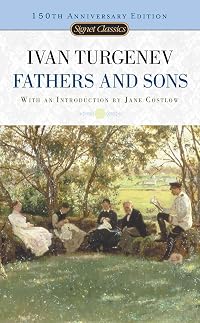
Fathers and Sons
by Ivan Turgenev
On This Page
Description
Clashes and conflicts between fathers and sons are a story as old as humanity itself. Russian novelist Ivan Turgenev uses the turbulence of familial relations as a symbolic lens through which to explore the changing of the ideological guard in his native country. Turgenev's best-known work, Fathers and Sons is widely regarded as the first Russian novel to gain prominence and critical acclaim in Western literary circles..
Tags
Recommendations


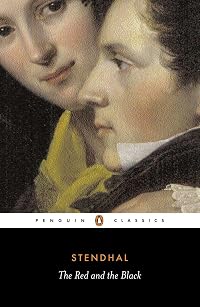
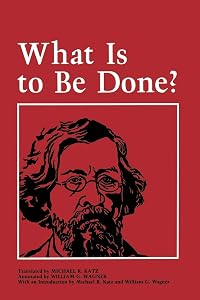
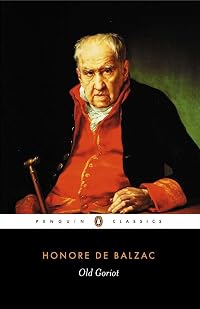
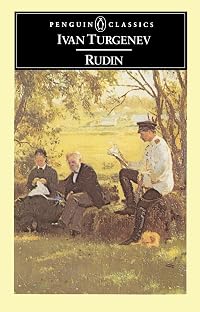






Member Recommendations
sparemethecensor Conflict of old and new in Russia, decades apart.
Member Reviews
For once I read the book before reading the introduction; an approach which has its merits. The analysis in the introduction seemed to be a little over the top at first but then after learning of the letters Turgenev exchanged with Dostoevsky, particularly concerning the former's construction of the character Bazarov, really drives home how truly great novels are so much more than the product of a vivid imagination. The beauty of reading such works is to open my eyes to a place and period that was simply neglected in my early education due to the Cold War. Yet Turgenev highlights many issues which remain relevant in modern society: nationalism East or West, revolutionary or evolutionary development, the perpetual quest for newness in show more youth, to the pointlessness of life when humanity's frailty is illuminated. It also reunited me with the importance of the simple things in life which are often overlooked in our individual quests for glory which probably never arrives: the scene involving Bazarov's grieving parents still haunts me, as does the thought that Arkady is now under-the-thumb in an ever-so-happy way. The great writers were great because of their ability to intellectualise so many issues without a hint of discontinuity - a trait Turgenev displays with relative ease despite his own personal agonising over his critics (both revolutionaries and aristocrats). Indeed, had we never known about Turgenev's agonising from his letters, the work does not belie any such lack of confidence. Yet had I read the introduction first I may well have formed an entirely different view. show less
Fathers and Sons is among those novels that were quickly devoured, despite my initial concern I wouldn't be thrilled by a story in which one of the main characters is a Nihilist with an unpleasant attitude to match. But I was on the contrary pleasantly surprised to find this novel touch on a variety of other subjects I found quite engrossing indeed, so that even Bazarov, the unpleasant proponent of Nihilism in question, became, if not appealing exactly, quite essential to a masterful whole, as was evidently Turgenev’s intention all along.
Some of the topics broached here are the major socio-economic shifts going on in Russia during the mid-19th century, with landowners freeing their serfs and allowing them to become paid tenants, with show more the attendant class conflicts; the concept or what makes up a true Russian identity; the generation gap and how the old guard is always relegated to obsolescence by the young. Social conflicts seem to be at the heart of this novel, but these subjects became all the more interesting with the deft hand of Turgeniev, who presents these topics from the unique standpoints of young student Arkady Nikolaevich Kirsanov, who brings his friend and Nihilistic hero Yevgeny Vasilyevich Bazarov on a visit to his family farm to meet his father and uncle.
Arkady Nikolaevich's father Nikolai Petrovich is excited to get together with his grown son again, looking forward to forging a close friendship with him based on intellectual equality, and thinks of himself as being 'with the times' for embracing modern socioeconomic concerns—having among other things recently emancipated his serfs and removed himself to a smaller house with few paid servants—and keeping up with all the latest authors, though at heart, he is a great lover of the Romantic Old Guard, Pushkin. His hopes are fairly dashed when Bazarov is introduced into the household with his uncouth, brusque manners and disdain for art, tradition, and sentimentality. Arkady has become Bazarov's disciple and parrots his older friend's ideas, though all the while he is made uneasy by Bazarov's repeated critical sallies and generally disrespectful attitude toward his beloved father and his uncle Pavel Petrovich, a gallant aristocrat very much attached to tradition and with keeping up appearances, which Arkady nevertheless sees as a tragic hero. Through this prism we see a whole nation shifting toward what laid the ground for the inevitable Russian Revolution and the Communist USSR, though again, Turgeniev, far from making his protagonists all black or white, lets them evolve throughout the novel and experience conflicting emotions and motivations.
Here, together with a large dose of philosophical doctrine, there is also love and romance and its deceptions, and even an unlikely duel which ends rather unexpectedly. In other words, it is a mix of intellectual ideas and romantic concerns and for this reason, still feels incredibly modern and shows us once again that human nature never really changes much.
A wonderful novel I look forward to reading again. show less
Some of the topics broached here are the major socio-economic shifts going on in Russia during the mid-19th century, with landowners freeing their serfs and allowing them to become paid tenants, with show more the attendant class conflicts; the concept or what makes up a true Russian identity; the generation gap and how the old guard is always relegated to obsolescence by the young. Social conflicts seem to be at the heart of this novel, but these subjects became all the more interesting with the deft hand of Turgeniev, who presents these topics from the unique standpoints of young student Arkady Nikolaevich Kirsanov, who brings his friend and Nihilistic hero Yevgeny Vasilyevich Bazarov on a visit to his family farm to meet his father and uncle.
Arkady Nikolaevich's father Nikolai Petrovich is excited to get together with his grown son again, looking forward to forging a close friendship with him based on intellectual equality, and thinks of himself as being 'with the times' for embracing modern socioeconomic concerns—having among other things recently emancipated his serfs and removed himself to a smaller house with few paid servants—and keeping up with all the latest authors, though at heart, he is a great lover of the Romantic Old Guard, Pushkin. His hopes are fairly dashed when Bazarov is introduced into the household with his uncouth, brusque manners and disdain for art, tradition, and sentimentality. Arkady has become Bazarov's disciple and parrots his older friend's ideas, though all the while he is made uneasy by Bazarov's repeated critical sallies and generally disrespectful attitude toward his beloved father and his uncle Pavel Petrovich, a gallant aristocrat very much attached to tradition and with keeping up appearances, which Arkady nevertheless sees as a tragic hero. Through this prism we see a whole nation shifting toward what laid the ground for the inevitable Russian Revolution and the Communist USSR, though again, Turgeniev, far from making his protagonists all black or white, lets them evolve throughout the novel and experience conflicting emotions and motivations.
Here, together with a large dose of philosophical doctrine, there is also love and romance and its deceptions, and even an unlikely duel which ends rather unexpectedly. In other words, it is a mix of intellectual ideas and romantic concerns and for this reason, still feels incredibly modern and shows us once again that human nature never really changes much.
A wonderful novel I look forward to reading again. show less
I'm always excited when I begin to read a title from Russian literature to read, because despite initially looking daunting and portentous, all of them (but particularly Tolstoy and Dostoevsky) prove to be deep and layered, cultured and weighty and yet surprisingly easy to read. Ivan Turgenev's Fathers and Sons was much the same way, particularly in being easy to read, and yet having finished it I find myself with less to say about it than I expected I would.
Whereas Tolstoy and Dostoevsky would root powerful themes deep within their stories, and their characters and structure would successfully embody these themes, Turgenev's attempts to do so here are more mixed. My English translation by Rosemary Edmonds, first published (perhaps not show more coincidentally) in the mid-1960s, emphasises the generational gap between Bazarov and Arkady and their fathers, the obvious 'fathers and sons' of the book's title. The youthful dissidence of Bazarov and Arkady latches on to the trendy ideology of nihilism, which stands at odds with the less exciting conservatism of their fathers' generation.
This is the obvious interpretation, but the society Turgenev paints – he does some fine character work – swirls so that one could also see it as the difficulty for anyone to understand another person: their emotions, feelings, ambitions and fears, particularly when they come into conflict with other people. "Possibly every human being is an enigma," Bazarov says on page 174, while in discussion with Madame Odintsov, and the frustrating romantic relationship the two share could be seen as another complement to the 'fathers and sons' generational narrative; that is, two people failing to understand another. "I did not understand you – you did not understand me," Madame Odintsov says a few pages later, before continuing: "I did not understand myself either" (pg. 183). This seems to recognise what drives Turgenev's novel: a cast of well-drawn characters who both clash and complement one another, all under the lens of the writer's microscope.
It leads to a lot of perfectly able writing, much of which is also narratively satisfying, but it denies the book a sharpness found in, for example, Tolstoy or Dostoevsky. Tolstoy would bring out the characters as a reflection of their time and his themes with more vivacity, whereas in Turgenev's novel the fact that events play out against the backdrop of the emancipation of the serfs (the peasant 'sons' becoming free of their patriarchal 'fathers') often seems incidental. And whereas Dostoevsky would strengthen the conflicting viewpoints of the characters so that their resulting clash was more profound, Turgenev, in contrast, doesn't seem to hold much respect for the nihilist viewpoint held by some of his younger characters, and waters it down. Some of his writing decisions seem almost satirical, such as Bazarov falling in love (an irony for a nihilist) or Arkady saying he accepts no authority in the same breath he names Bazarov as his mentor (pg. 138), though the book shies away from anything as pointed as satire.
The frustration Turgenev's characters feel in one another, then, is a frustration I also found myself in reading about them. Bazarov in particular is a wretched being, though Turgenev does bring a liveliness to both him and the other characters which justifies the book's continued status as a classic. This novel was the first major piece of Russian literature which found success in the West, and paved the way not only for his storied countrymen but also proved an influence in how later authors, such as Hemingway, explored their characters' emotions and reserve as an end in itself, rather than as subservient to a plot or adventure. But for all that I enjoyed its readability and its drawing of character, I couldn't help feeling that the novel hit limiters that greater literature would have burst through. Whereas Tolstoy and Dostoevsky still seem fresh and dynamic, even timeless, Fathers and Sons feels very much like 19th-century literature. show less
Whereas Tolstoy and Dostoevsky would root powerful themes deep within their stories, and their characters and structure would successfully embody these themes, Turgenev's attempts to do so here are more mixed. My English translation by Rosemary Edmonds, first published (perhaps not show more coincidentally) in the mid-1960s, emphasises the generational gap between Bazarov and Arkady and their fathers, the obvious 'fathers and sons' of the book's title. The youthful dissidence of Bazarov and Arkady latches on to the trendy ideology of nihilism, which stands at odds with the less exciting conservatism of their fathers' generation.
This is the obvious interpretation, but the society Turgenev paints – he does some fine character work – swirls so that one could also see it as the difficulty for anyone to understand another person: their emotions, feelings, ambitions and fears, particularly when they come into conflict with other people. "Possibly every human being is an enigma," Bazarov says on page 174, while in discussion with Madame Odintsov, and the frustrating romantic relationship the two share could be seen as another complement to the 'fathers and sons' generational narrative; that is, two people failing to understand another. "I did not understand you – you did not understand me," Madame Odintsov says a few pages later, before continuing: "I did not understand myself either" (pg. 183). This seems to recognise what drives Turgenev's novel: a cast of well-drawn characters who both clash and complement one another, all under the lens of the writer's microscope.
It leads to a lot of perfectly able writing, much of which is also narratively satisfying, but it denies the book a sharpness found in, for example, Tolstoy or Dostoevsky. Tolstoy would bring out the characters as a reflection of their time and his themes with more vivacity, whereas in Turgenev's novel the fact that events play out against the backdrop of the emancipation of the serfs (the peasant 'sons' becoming free of their patriarchal 'fathers') often seems incidental. And whereas Dostoevsky would strengthen the conflicting viewpoints of the characters so that their resulting clash was more profound, Turgenev, in contrast, doesn't seem to hold much respect for the nihilist viewpoint held by some of his younger characters, and waters it down. Some of his writing decisions seem almost satirical, such as Bazarov falling in love (an irony for a nihilist) or Arkady saying he accepts no authority in the same breath he names Bazarov as his mentor (pg. 138), though the book shies away from anything as pointed as satire.
The frustration Turgenev's characters feel in one another, then, is a frustration I also found myself in reading about them. Bazarov in particular is a wretched being, though Turgenev does bring a liveliness to both him and the other characters which justifies the book's continued status as a classic. This novel was the first major piece of Russian literature which found success in the West, and paved the way not only for his storied countrymen but also proved an influence in how later authors, such as Hemingway, explored their characters' emotions and reserve as an end in itself, rather than as subservient to a plot or adventure. But for all that I enjoyed its readability and its drawing of character, I couldn't help feeling that the novel hit limiters that greater literature would have burst through. Whereas Tolstoy and Dostoevsky still seem fresh and dynamic, even timeless, Fathers and Sons feels very much like 19th-century literature. show less
The Russian title of this novel would be more accurately translated Fathers and Children, but the name by which it is usually called in English is good enough, since at the heart of the story are two sons. Arkady is the first introduced, but in the course of the plot plays the second lead, the friend and would-be disciple of Bazanov, a self-styled Nihilist. Turgenev is famously credited with inventing the term and is often regarded as a prophet of future developments in Russian history. That would reduce Bazanov to a type and do Turgenev the novelist a disservice. It’s also important to be clear that “nihilist” is not “anarchist,” nor is it “Bolshevist.” It is simply the refusal to believe in anything, whether expert or show more institution. Bazanov is suitably impatient with all abstract concepts, seemingly unaware of the contradiction of an allegiance to Nihilism, which, after all, is simply another “-ism.”
Turgenev creates in Bazanov a strong, complex character, while at the same time gently deflating his pretensions. Bazanov’s naive assumption that the Russian serf, on the cusp of emancipation as the book opens, embodies the true soul of Russia is lampooned. Arkady, his companion, is effete, and a further disciple, Sitnikov, is depicted as ridiculous, although one suspects he is just the kind of personality who will end up on top when the upheaval finally comes.
The final undoing of their nihilist stance is, unsurprisingly, the experience of love, something the two friends had dismissed as illusory until they met two remarkable women, the young widow Madame Odintsova, and her sister Katya.
In a final irony, Bazanov meets his untimely demise in a manner that reflects his contradictions. He had studied chemistry and medicine. Although he rejects the illusion of scientific progress, he is insatiably curious, spending much of his time dissecting frogs. When a person he is tending dies, Bazanov obtains permission to dissect the cadaver, but accidentally cuts himself and contracts typhus.
Until now, I’ve spoken only of the sons, and the final difficulty with the title of this book is that the fathers are set first, although the plot follows the sons more closely. In their case, too, it’s essential to be clear about what they are not. They are not reactionary Slavophiles, the kind of figures one would expect nihilists to despise. They are minor, mildly impoverished but well-connected landowners. They accept the imminent emancipation of the serfs and have already apportioned their land to theirs and placed them on a wage system, something that has failed to improve the lot of either landlord or tenant. They love their sons, even to the point of idolizing them, and the sons love the fathers yet scoff at their well-intentioned but ineffectual liberalism (if there is anything politically prophetic about this book, it is this).
Compared to the elephantine masterpieces of Tolstoy and Dostoevsky, this book more closely accords with Western European ideals of a novel. Yet it is at heart a Russian novel, one that reflects the author’s lover’s quarrel with his native land and its people, yet, as with any good book, you don’t have to be Russian to read and enjoy. show less
Turgenev creates in Bazanov a strong, complex character, while at the same time gently deflating his pretensions. Bazanov’s naive assumption that the Russian serf, on the cusp of emancipation as the book opens, embodies the true soul of Russia is lampooned. Arkady, his companion, is effete, and a further disciple, Sitnikov, is depicted as ridiculous, although one suspects he is just the kind of personality who will end up on top when the upheaval finally comes.
The final undoing of their nihilist stance is, unsurprisingly, the experience of love, something the two friends had dismissed as illusory until they met two remarkable women, the young widow Madame Odintsova, and her sister Katya.
In a final irony, Bazanov meets his untimely demise in a manner that reflects his contradictions. He had studied chemistry and medicine. Although he rejects the illusion of scientific progress, he is insatiably curious, spending much of his time dissecting frogs. When a person he is tending dies, Bazanov obtains permission to dissect the cadaver, but accidentally cuts himself and contracts typhus.
Until now, I’ve spoken only of the sons, and the final difficulty with the title of this book is that the fathers are set first, although the plot follows the sons more closely. In their case, too, it’s essential to be clear about what they are not. They are not reactionary Slavophiles, the kind of figures one would expect nihilists to despise. They are minor, mildly impoverished but well-connected landowners. They accept the imminent emancipation of the serfs and have already apportioned their land to theirs and placed them on a wage system, something that has failed to improve the lot of either landlord or tenant. They love their sons, even to the point of idolizing them, and the sons love the fathers yet scoff at their well-intentioned but ineffectual liberalism (if there is anything politically prophetic about this book, it is this).
Compared to the elephantine masterpieces of Tolstoy and Dostoevsky, this book more closely accords with Western European ideals of a novel. Yet it is at heart a Russian novel, one that reflects the author’s lover’s quarrel with his native land and its people, yet, as with any good book, you don’t have to be Russian to read and enjoy. show less
19th century Russian literature set in 1859. (Follows the Paris Revolution, Crimean War, Nicholas I) A book about fathers and their sons. The sons have been to university and been educated. They have embraced nihilism. The Nihilist movement was a Russian movement in the 1860s which rejected all authorities.It is derived from the Latin nihil, meaning "nothing". The decision has been made to emancipate the serfs which happened in 1861. The fathers are doing their best to cooperate with the mandate. The opposite of nihilism is romanticism and the author has set the book up through the fathers and sons to contrast the different philosophy.
"All moral disease derives from poor education, from all the rubbish with which people's heads are show more filled from birth onwards--in short, from the shocking state of society. Reform society, and there'll be no more disease". This is a statement by Bazarov. I think this statement has proven to be untrue many times. Poor education does not equal moral disease, nor does good education preclude moral disease. The origin is something else.
The women characters are interesting. We have Fenichka who is "living with Nikolai and has a son but no marriage", we have Anna who is a widow and has been alluded to as empty headed who is quite intelligent and a bit of a nihilist herself, and Katerina the young lady who is quiet but probably the strongest of all. And not to omit, Bazarov's mother who is the one with the property and money but also a lot of superstitions. Bazarov's attitude is quite antifeminist but over all the book is filled with storng women.
I enjoyed the book. As a Russian novel it wasn't hard to read. I am not a fan of nihilism but I learned a lot and find it interesting that it was a Russian movement. The novel contributes to the Russian literature and Russian history, it is not only relevant to its 19 century setting but also offers some relevance to the present and a good reminder that generations do change. The characters were well crafted. This is more a character study than a plot driven book. show less
"All moral disease derives from poor education, from all the rubbish with which people's heads are show more filled from birth onwards--in short, from the shocking state of society. Reform society, and there'll be no more disease". This is a statement by Bazarov. I think this statement has proven to be untrue many times. Poor education does not equal moral disease, nor does good education preclude moral disease. The origin is something else.
The women characters are interesting. We have Fenichka who is "living with Nikolai and has a son but no marriage", we have Anna who is a widow and has been alluded to as empty headed who is quite intelligent and a bit of a nihilist herself, and Katerina the young lady who is quiet but probably the strongest of all. And not to omit, Bazarov's mother who is the one with the property and money but also a lot of superstitions. Bazarov's attitude is quite antifeminist but over all the book is filled with storng women.
I enjoyed the book. As a Russian novel it wasn't hard to read. I am not a fan of nihilism but I learned a lot and find it interesting that it was a Russian movement. The novel contributes to the Russian literature and Russian history, it is not only relevant to its 19 century setting but also offers some relevance to the present and a good reminder that generations do change. The characters were well crafted. This is more a character study than a plot driven book. show less
At social, historical and other inflection points, where older, received ways of doing and valuing things appear to have outlived their relevance, some kind of change is needed. The challenge is in instigating change and choosing a new direction. It seems that the nihilism Turgenev is attempting to understand in this novel is one way of instigating change through destructive negation, but it does so without choosing a new direction. The end point of nihilistic negation, as portrayed, appears to be the revelation our own insignificance as individuals, made insignificant by the vastness of time that has preceded us and that will extend after us, by the insignificant space that we occupy compared to vastness of space around us, or the show more insignificance of any action that we take or decision that we make amid all the actions and decisions made by others around us. The heart of complete nihilism appears to be paralyzing inaction because of its apparent fruitlessness even if nihilism itself appears to be the solution to paralyzing inaction due to the centripetal and conservative force of convention and custom.
I see this socio-historical tension expressed metaphorically as a generational difference between fathers and sons. The fathers represent received conventions and tendencies toward change or conservatism, but neither in the extreme. Both Arkady and Bazarov have elements of their fathers in them. That is, they are products of prevailing conventions and customs, passed on through their families. Eventually, Arkady adapts to the conventions and modern moral principles, finding direction in a modernist world. Despite Arkady's respect for Bazarov, he is nicely portrayed as being ultimately unable to fully internalize or appreciate Bazarov's tendency toward rejection and negation. Bazarov also has elements of his father in him, but his wholesale rejection of values and institutions, even those that could connect him to his own family, ultimately results in his death, which seems as much literal as figurative.
Turgenev's writing was truly artful. On one level the novel is a narrative presentation of ordinary events, but so many of the images and actions are rich with symbolic meaning, authorial points and counter-points in this philosophical investigation. This is a book that would reward multiple readings both because of the depth of meaning and because of the quality of the writing. show less
I see this socio-historical tension expressed metaphorically as a generational difference between fathers and sons. The fathers represent received conventions and tendencies toward change or conservatism, but neither in the extreme. Both Arkady and Bazarov have elements of their fathers in them. That is, they are products of prevailing conventions and customs, passed on through their families. Eventually, Arkady adapts to the conventions and modern moral principles, finding direction in a modernist world. Despite Arkady's respect for Bazarov, he is nicely portrayed as being ultimately unable to fully internalize or appreciate Bazarov's tendency toward rejection and negation. Bazarov also has elements of his father in him, but his wholesale rejection of values and institutions, even those that could connect him to his own family, ultimately results in his death, which seems as much literal as figurative.
Turgenev's writing was truly artful. On one level the novel is a narrative presentation of ordinary events, but so many of the images and actions are rich with symbolic meaning, authorial points and counter-points in this philosophical investigation. This is a book that would reward multiple readings both because of the depth of meaning and because of the quality of the writing. show less
Every intellectually curious young man tends toward either Arkady or Bazarov. Whichever you are, following upon the key idea of Turgenev’s book, it would be best to seek out your counterpart. Turgenev knows that what makes Bazarov a charismatic and compelling character is that he actually is a lot more coherent than the people and the ideologies he sets himself against. There is a simple satisfaction easily acquired by the just-intelligent-enough, in negating any of the imperfect and absurd reasons that “normal “ people give themselves for existing. Nietzsche said that these negators were like lions set apart from the sheep, and like lions they can inspire awe, fear, and admiration. Nietzsche, like Turgenev before him, saw the show more dead end that one inevitably reached if one lived as a lion for too long. The true genius is one who can become like a child again, playfully engaging with the complexity of life, without animus or judgement.
Ironically, it is easier to become like a child as one grows older, when the passions of youth cool and experience reveals each and every dogma as the shadow that it is. Bazarov, in his extreme lion-ness, could never have grown old, and indeed he didn’t. show less
Ironically, it is easier to become like a child as one grows older, when the passions of youth cool and experience reveals each and every dogma as the shadow that it is. Bazarov, in his extreme lion-ness, could never have grown old, and indeed he didn’t. show less
Members
- Recently Added By
Published Reviews
ThingScore 100
Turgenev was advancing, novelistically, a line of thought that runs through all his work. Beliefs are admirable, strong beliefs perhaps even more so. But there is a point at which belief can tip over into fanaticism. Turgenev had seen this with Belinsky, and in Bazarov he re-created and dramatized it. Bazarov loves nature but turns it into a science project, loves Odintsova but feels bad about show more it, and loves his parents but refuses to indulge this affection by spending time with them. All of this, from Turgenev’s perspective, is a mistake. It’s well and good, in other words, to talk about the existence of God and the future of the revolution, but you need to take a break for lunch.... When I first read “Fathers and Sons,” I was in college; all I cared about were the sons, their willingness (in Bazarov’s case) to die for their beliefs, their certainty. Reading the book again, twenty-five years later, I found myself rooting for the fathers. What might they do to bridge the divide? And why were their sons so mean to them, after all the fathers had done? Sure, they weren’t perfect, but they were doing their best!
That, of course, I see now, is what the book is about. This rupture between parents and their children is what happens, over and over, with every new generation; there is nothing for it, no remedy, no answer. Who is right in “Fathers and Sons”: the fathers or the sons? They’re both right, and they’re both wrong, and neither will ever understand the other. show less
That, of course, I see now, is what the book is about. This rupture between parents and their children is what happens, over and over, with every new generation; there is nothing for it, no remedy, no answer. Who is right in “Fathers and Sons”: the fathers or the sons? They’re both right, and they’re both wrong, and neither will ever understand the other. show less
added by danielx
Lists

1001 Books You Must Read Before You Die
1,448 works; 1,134 members

The Guardian's 1000 Novels Everyone Must Read
1,005 works; 550 members

Russian Literature
184 works; 35 members

Unread books
1,063 works; 87 members

1898 C.K. Shorter List of Best 100 Novels
100 works; 34 members

Favourite 19th century fiction
257 works; 62 members

Favourite Books
1,819 works; 316 members
Philip Ward's Lifetime Reading Plan
592 works; 22 members
Favorite Coming of Age Novels.
164 works; 51 members

100 Most Recommended Works
100 works; 11 members

19th Century
190 works; 16 members

Western World's Greatest Books - Project Gutenberg
295 works; 15 members
Out of Copyright
244 works; 14 members
Harold Bloom - The Western Canon: C. The Democratic Age
336 works; 15 members

Best family sagas
244 works; 34 members

1964 College Preparatory Reading List
202 works; 8 members

W. S. Maugham's Reading Suggestions for Spiritual Enrichment: Continental
19 works; 3 members

1,001 BYMRBYD Concensus
723 works; 27 members

Books about Russia and the former USSR
67 works; 12 members
Mensa for Kids Excellence in Reading Award Program (Grades 9-12)
116 works; 5 members
Lamont's Hundred Best Novels (1947)
100 works; 4 members

The Road to Freedom (Will Durant's 100 Best Books for an Education)
100 works; 8 members
The College Board: 101 Great Books Recommended for College-Bound Readers
111 works; 7 members

Books Read in 2023
5,547 works; 145 members

1860s
25 works; 4 members

A Novel Cure
742 works; 23 members

Russian Literature Sequence
28 works; 1 member
Best Domestic Fiction
77 works; 6 members
Literature in Translation
113 works; 5 members

Europe
205 works; 6 members

100
56 works; 1 member

SHOULD Read Books!
354 works; 9 members
CCE 1000 Good Books List
1,033 works; 12 members

Books Read in 2022
5,168 works; 114 members

The 150 Greatest Novels of All Time
150 works; 6 members

DigitalDreamDoor top 300
300 works; 4 members
My Favorite Russian Novels
37 works; 2 members
Books in Riverdale
123 works; 3 members

Favorite Books in Translation
320 works; 133 members

.
194 works; 2 members

.
396 works; 1 member

Recommended Reading : 600 Classics Reviewed, Editors of Salem Press, 2015
634 works; 6 members

Books Read in 2019
4,052 works; 110 members
New Lifetime Reading Plan by Fadiman and Major
225 works; 5 members

Greatest Books, allegedly
484 works; 9 members
My Favourite Books
86 works; 5 members

Further Russian Reading
19 works; 3 members
Mensa for Kids Excellence in Reading Award Program (Grades 9-12)
116 works; 3 members
Trinity College Booklist (1951): Class Nine, Foreign Literatures
161 works; 3 members

Tagged 19th Century
104 works; 7 members

All Things Russia
459 works; 11 members
bound
100 works; 1 member
Talk Discussions
Past Discussions
Fathers and Sons (by Ivan Turgenev) Group Read - May in 75 Books Challenge for 2013 (May 2013)
Author Information

612+ Works 24,501 Members
Ivan Turgenev, 1818 - 1883 Novelist, poet and playwright, Ivan Turgenev, was born to a wealthy family in Oryol in the Ukraine region of Russia. He attended St. Petersburg University (1834-37) and Berlin University (1838-41), completing his master's exam at St. Petersburg. His career at the Russian Civil Service began in 1841. He worded for the show more Ministry of Interior from 1843-1845. In the 1840's, Turgenev began writing poetry, criticism, and short stories under Nikolay Gogol's influence. "A Sportsman's Sketches" (1852) were short pieces written from the point of view of a nobleman who learns to appreciate the wisdom of the peasants who live on his family's estate. This brought him a month of detention and eighteen months of house arrest. From 1853-62, he wrote stories and novellas, which include the titles "Rudin" (1856), "Dvorianskoe Gnedo" (1859), "Nakanune" (1860) and "Ottsy I Deti" (1862). Turgenev left Russia, in 1856, because of the hostile reaction to his work titled "Fathers and Sons" (1862). Turgenev finally settled in Paris. He became a corresponding member of the Imperial Academy of Sciences in 1860 and Doctor of Civil Law at Oxford University in 1879. His last published work, "Poems in Prose," was a collection of meditations and anecdotes. On September 3, 1883, Turgenev died in Bougival, near Paris. (Bowker Author Biography) show less
Some Editions
Awards and Honors
Distinctions
Notable Lists
Torchlight List (#146)
Daniel S. Burt's Novel 100 (043 – 43)
Series
Belongs to Publisher Series
Clube de Literatura Clássica (CLC) (44 [December 2023])
Wereldbibliotheek (378)
Letras Universales (360)
insel taschenbuch (0064 / 3512)
Amstelboeken (149-150)
Airmont Classics (129)
A tot vent (182)
Gyldendals Tranebøger (167)
Rainbow pocketboeken (211)
Everyman's Library (742)
Penguin Classics (L147)
Work Relationships
Is contained in
Has the adaptation
Is abridged in
Is replied to in
Has as a reference guide/companion
Has as a study
Common Knowledge
- Canonical title
- Fathers and Sons
- Original title
- Отцы и дети
- Alternate titles
- Fathers and Children
- Original publication date
- 1862
- People/Characters
- Yevgeny Vasilyevich Bazarov; Arkady Nikolaevich Kirsanov; Nikolai Petrovich Kirsanov; Pavel Petrovich Kirsanov; Vasily Ivanovich Bazarov; Arina Vlasyevna Bazarova (show all 8); Anna Sergeevna Odintsova; Katerina Sergeevna Lokteva
- Important places
- Russia; St. Petersburg, Russia; Maryino, Russia; Nikolskoe, Russia; Dresden, Saxony, Germany
- Dedication
- Dedicated to the memory of Vissarion Grigor'evich Belinsky
- First words
- "Well, Piotr, not in sight yet?" was the question asked on May the 20th, 1859, by a gentleman of a little over forty, in a dusty coat and checked trousers, who came out without his hat on to the low steps of the posting stati... (show all)on at S—.
- Quotations*
- Il tempo … vola qualche volta come un uccello e qualche volta striscia come un verme, ma l'uomo si sente bene specialmente quando nemmeno si accorge se passi presto o con lentezza.
Spesso è utile che nella vita ricompaia la mediocrità: rallenta le corde troppo tese, disperde i fumi della presunzione e dei cedimenti interiori, mostrando la loro stessa banalità. - Last words
- (Click to show. Warning: May contain spoilers.)However passionate, sinning, and rebellious the heart hidden in the tomb, the flowers growing over it peep serenely at us with their innocent eyes; they tell us not of eternal palce alone, of that great peach of "indifferent" nature; they tell us, too, of eternal reconciliation and of life without end.
- Original language
- Russian
*Some information comes from Common Knowledge in other languages. Click "Edit" for more information.
Classifications
- Genres
- General Fiction, Fiction and Literature
- DDC/MDS
- 891.733 — Literature & rhetoric Literatures of other languages East Indo-European and Celtic literatures Russian and East Slavic languages Russian fiction 1800–1917
- LCC
- PG3421 .O8 — Language and Literature Slavic languages and literatures. Baltic languages. Albanian language Slavic. Baltic. Albanian Russian literature Individual authors and works 1800-1870 Turgenev
- BISAC
Statistics
- Members
- 10,053
- Popularity
- 986
- Reviews
- 148
- Rating
- (3.86)
- Languages
- 30 — Arabic, Catalan, Czech, Danish, Dutch, English, Esperanto, Estonian, Finnish, French, German, Greek, Hebrew, Hungarian, Italian, Japanese, Norwegian (Bokmål), Norwegian, Farsi/Persian, Polish, Russian, Serbian, Slovak, Slovenian, Spanish, Swedish, Turkish, Welsh, Portuguese (Portugal), Portuguese (Brazil)
- Media
- Paper, Audiobook, Ebook
- ISBNs
- 401
- UPCs
- 5
- ASINs
- 275