Invidia
by Yuri Olesha
On This Page
Description
One of the delights of Russian literature, a tour de force that has been compared to the best of Nabokov and Bulgakov, Yuri Olesha's novella Envybrings together cutting social satire, slapstick humour, and a wild visionary streak. Andrei is a model Soviet citizen, a swaggering, self-satisfied mogul of the food industry who intends to revolutionise modern life with mass-produced sausage. Nikolai is a loser. Finding him drunk in the gutter, Andrei gives him a bed for the night and a job as a show more gofer. Nikolai takes what he can, but that doesn't mean he's grateful. Griping, sulking, grovellingly abject, he despises everything Andrei believes in, even if he envies him his every breath. Producer and sponger, insider and outcast, master and man fight back and forth in the pages of Olesha's anarchic comedy. It is a contest of wills in which nothing is sure, except the incorrigible human heart. show lessTags
Recommendations





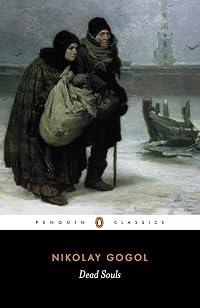

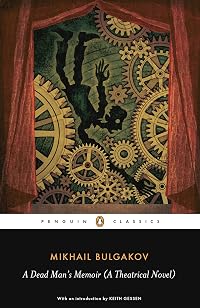
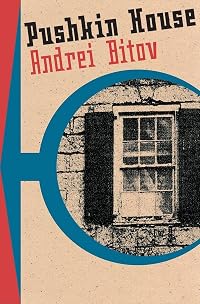
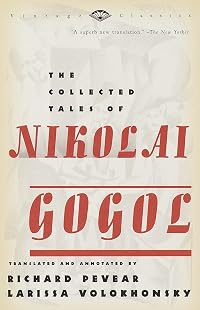



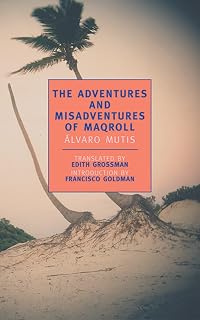
Member Recommendations
sparemethecensor Conflict of old and new in Russia, decades apart.
Member Reviews
Here's a question for you: What do you get when you cross Dostoyevsky's underground man, Gogol's wicked satire, a Nabokovian gift for metaphor, and place them in early Soviet Russia?
Unfortunately, something less than the sum of its parts.
Envy is set in 1920s Soviet Russia, with a drunken loser, Kavalerov, living in the home of a porcine official sausage-maker, Babichev, who is beloved by all. Kavalerov hates Babichev's guts, and writes a letter full of bile against him. Soon after, there's some family drama with Babichev's brother, Ivan.
The language, aside from a few fantastic metaphors, is dull. The narrative is gormless, and largely exists to string together the better moments together. For a 'Modernist' work, it is not as show more metaphorical or colorful, like Petersburg. I'm not sure whether to ascribe it to undiscovered Soviet editorial mangling, or a subpar translation (the NYRB edition). A pity. show less
Unfortunately, something less than the sum of its parts.
Envy is set in 1920s Soviet Russia, with a drunken loser, Kavalerov, living in the home of a porcine official sausage-maker, Babichev, who is beloved by all. Kavalerov hates Babichev's guts, and writes a letter full of bile against him. Soon after, there's some family drama with Babichev's brother, Ivan.
The language, aside from a few fantastic metaphors, is dull. The narrative is gormless, and largely exists to string together the better moments together. For a 'Modernist' work, it is not as show more metaphorical or colorful, like Petersburg. I'm not sure whether to ascribe it to undiscovered Soviet editorial mangling, or a subpar translation (the NYRB edition). A pity. show less
First published in 1927 at the wave of Soviet avant-garde fiction, it is a small wonder that this book got in print. Its surreal and playful style is a great precursor to Master and Margarita, which Bulgakov started to write in 1928. Olesha managed to write a deeply ironic and satiric piece that nevertheless won official critical acclaim - this alone is a testimony that the novel can be read on several different levels.
A masterpiece of Russian fiction that deserves to be listed among the major works of 20th century literature.
A masterpiece of Russian fiction that deserves to be listed among the major works of 20th century literature.
I confess I had a bit of trouble following. Maybe some of the allegories for early Soviet bureaucracy were lost on me. I'd be curious to read it again in a different translation, but maybe not curious enough to do so.
I just read John Haskell's The Tramp in the latest A Public Space, which is a weirdly literal retelling of the Charlie Chaplin movie, but the mirrored trope of the vagrant picked up by the rich guy, allowed to live in his home, still lacks depth for me. Again, I feel I may lack the cultural context.
I just read John Haskell's The Tramp in the latest A Public Space, which is a weirdly literal retelling of the Charlie Chaplin movie, but the mirrored trope of the vagrant picked up by the rich guy, allowed to live in his home, still lacks depth for me. Again, I feel I may lack the cultural context.
Brilliantly double-hearted attack on the Soviet system and the new man. At times hilarious, but also grim and tragical. The heroic, but selfdestructive resistance of Iwan Babitsjew and his final confrontation with his arrogant and overbearing brother is one of the highlights of this book.
Jan 11, 2016Dutch
Ik kocht dit boek ooit omwille van de cover - in die tijd kocht ik alles wat naar Rusland neigde. Ik dweepte met Sint-Petersburg, deelde mijn minachting voor Moskou met Dostojevski, schreef me gedurende zes maanden in voor een zevenjarige Russische taalcursus en kocht me zelfs het eerste deel van het woordenboek van Honselaar (om en bij de €100 moet u weten - tot vandaag, samen met de correspondentie Brouwers-Komrij, het duurste boek in de collectie!).
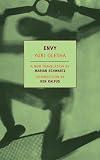
Maar om diezelfde cover liet ik het boek verder ook ongelezen: romans uit de beginjaren van de 'Sowjet-Unie' willen nogal eens wat pathetisch en verwarrend zijn. Wat had ik het mis ...
Afgunst van Oljesja is een hilarisch boekje (zoals alleen lettervreters hilarische boekjes kennen), show more zoals de boeken van Queneau dat zijn, zoals de boeken van Venedikt (J)Erofejev dat zijn - maak het iets groffer, en je begint zelf te denken aan de Myra en Myron-romans van Gore Vidal (al is dat overdreven). Ook Bohumil Hrabal, als patroonheilige van alle romanpersonages die zichzelf van bladzijde naar bladzijde slepen, hoor je erin terug. (Al werkt het natuurlijk omgekeerd, en ja, dan gaan we al vlug denken aan Gontsjarov en Gogol.)
Enkele zwakke momenten ook wel - de brief van Kawalerow toch wel als dieptepunt -, maar ganse pagina's ook die ik gniffelend las, de laatste pagina, de allerlaatste pagina als absolute dijenkletser. Ik citeer: 'Hoera!'
http://www.occamsrazorlibrary.org/ show less
Maar om diezelfde cover liet ik het boek verder ook ongelezen: romans uit de beginjaren van de 'Sowjet-Unie' willen nogal eens wat pathetisch en verwarrend zijn. Wat had ik het mis ...
Afgunst van Oljesja is een hilarisch boekje (zoals alleen lettervreters hilarische boekjes kennen), show more zoals de boeken van Queneau dat zijn, zoals de boeken van Venedikt (J)Erofejev dat zijn - maak het iets groffer, en je begint zelf te denken aan de Myra en Myron-romans van Gore Vidal (al is dat overdreven). Ook Bohumil Hrabal, als patroonheilige van alle romanpersonages die zichzelf van bladzijde naar bladzijde slepen, hoor je erin terug. (Al werkt het natuurlijk omgekeerd, en ja, dan gaan we al vlug denken aan Gontsjarov en Gogol.)
Enkele zwakke momenten ook wel - de brief van Kawalerow toch wel als dieptepunt -, maar ganse pagina's ook die ik gniffelend las, de laatste pagina, de allerlaatste pagina als absolute dijenkletser. Ik citeer: 'Hoera!'
http://www.occamsrazorlibrary.org/ show less
Jul 8, 2008Dutch
Ratings
Members
- Recently Added By
Lists

Russian Literature
187 works; 36 members

Harold Bloom - The Western Canon: D. The Chaotic Age
833 works; 24 members

Amanda's Guaranteed Books
110 works; 5 members

O, those Russians (as Boney M sang)
16 works; 1 member
Author Information

32+ Works 1,049 Members
Some Editions
Awards and Honors
Series
Belongs to Publisher Series
Work Relationships
Is contained in
Common Knowledge
- Canonical title
- Envy; Invidia
- Original title
- Зависть; Zavistʹ
- Alternate titles*
- Savist’
- Original publication date
- 1927; 1928
- People/Characters
- Nikolaj Kavalerov; Andrej Babičev; Volodya Makarov; Ivan Babičev; Valja; Anička Prokopovič
- Important places
- Rusland; Mosca; Russia
- First words
- In the morning he sings in the john.
La mattina, canta a distesa in gabinetto. - Last words
- (Click to show. Warning: May contain spoilers.)Today, Kavalerov, is your turn to sleep with Anichka. Hurrah!
(Click to show. Warning: May contain spoilers.)E oggi, a proposito… state a sentire: vi comunico una piacevole nuova… quest'oggi, Kavalerov, tocca a voi dormire con l'Anička. Urrà! - Blurbers
- Howe, Irving
- Original language*
- Russisch
*Some information comes from Common Knowledge in other languages. Click "Edit" for more information.
Classifications
- Genres
- General Fiction, Fiction and Literature
- DDC/MDS
- 891.7342 — Literature & rhetoric Literatures of other languages East Indo-European and Celtic literatures Russian and East Slavic languages Russian fiction USSR 1917–1991 Early 20th century 1917–1945
- LCC
- PG3476 .O37 .Z213 — Language and Literature Slavic languages and literatures. Baltic languages. Albanian language Slavic. Baltic. Albanian Russian literature Individual authors and works 1917-1960
- BISAC
Statistics
- Members
- 735
- Popularity
- 38,575
- Reviews
- 5
- Rating
- (3.46)
- Languages
- 14 — Amharic, Dutch, English, Estonian, Finnish, French, German, Hebrew, Italian, Norwegian (Bokmål), Russian, Spanish, Swedish, Turkish
- Media
- Paper, Ebook
- ISBNs
- 24
- ASINs
- 13