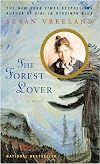
The Forest Lover
by Susan Vreeland
On This Page
Description
Presents a fictional portrait of pioneering artist Emily Carr, whose independence, boldly original artwork, and unconventional approach to life overcame Victorian restrictions to blaze a new path for twentieth-century women artists.Tags
Recommendations
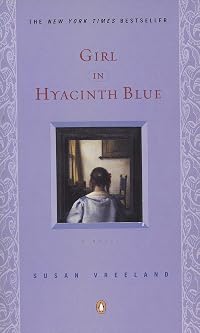
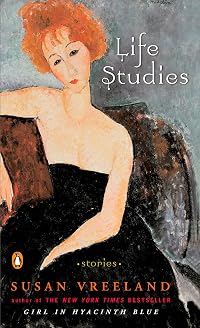
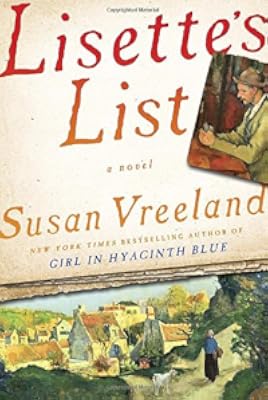



Member Recommendations
Member Reviews
I generally struggle with historical fiction featuring a real person. I feel compelled to know what is true and what is made up. Fortunately, the internet makes this much easier than in the past. Also, when the featured person died relatively recently, I worry about what family members may think about how their relative is treated. In this case, the author has an obvious respect and sympathy for her character, Emily Carr, which makes it easier to read.
The book didn't have much of a plot, It was the strong character of Emily Carr that held my interest. The book made me think about the acceptance of "women artists". Would Emily's avant-garde style have been more accepted had she been male? Was it a greater transgression for a woman to show more stray beyond realism than for a man?
Other issues raised include cultural appropriation; not something considered much at the time the novel is set, but certainly an issue today. And spirituality is a major theme. I wondered to what extent a "forest lover" could be religious in the traditional sense prevalent at the time of the novel's setting.
I didn't enjoy the book itself so much as the experience of having read it and thought about the many issues it provoked. show less
The book didn't have much of a plot, It was the strong character of Emily Carr that held my interest. The book made me think about the acceptance of "women artists". Would Emily's avant-garde style have been more accepted had she been male? Was it a greater transgression for a woman to show more stray beyond realism than for a man?
Other issues raised include cultural appropriation; not something considered much at the time the novel is set, but certainly an issue today. And spirituality is a major theme. I wondered to what extent a "forest lover" could be religious in the traditional sense prevalent at the time of the novel's setting.
I didn't enjoy the book itself so much as the experience of having read it and thought about the many issues it provoked. show less
A fictional biography of Emily Carr, a Canadian post-impressionist painter, who sought to capture the Native American culture of the northern reaches of the Pacific Northwest. Unknown to many of us in the lower 48, she lived an adventurous life, travelling up the coast and painting tribal villages and especially the totem poles. Vreeland brings to life another feminist free spirit, not widely known. The book is a touching elegy for a culture already vanishing in her time (early 20th century) due to the usual villains, imported diseases, rapacious traders, encroaching civilization. Having lived in this area myself and explored the rain forest, I can confirm that she captures the climate perfectly, the lush fecundity of the vegetation, show more the incessant rain, the mosquitoes, the moss and mold. She effectively uses the flora and fauna for her chapter titles, and it is not contrived. show less
Art was the vehicle Emily Carr chose in order to communicate with the world around her. She was fascinated with color and emotion and desperately wanted her art to say something through these characteristics. Whether they are Vreeland's words or Carr's the descriptions of the art of the time (1912 - Monet, Van Gogh, Carr herself) fairly dance off the page. Images come to life through the passion used to describe them. Early in The Forest Lover Carr was fixated on the totems of the Vancouver Island natives. She sought desperately to convey their spiritual power on the canvas so much so that she traveled to Paris with her sister to learn more about capturing color in just the right way. Being able to communicate and show passion through show more art excited her.
Along the way Carr was confronted with cultural differences between herself (being a white woman) and the tribes of natives she needed to befriend in order to paint their totems. Vreeland goes into deep character development for one Squamish friend, basket maker Sophie. This character development allows Vreeland to illustrate not only how crucial it was for Carr to develop a trust with the different tribes but to say something about Carr's soothing personality and her ability to connect with people. She could put even the native most distrustful of the white man at ease.
The third and probably most important element to The Forest Lover is Emily Carr's reaction to Victorian society through her fighting spirit. In addition to having a strong passion for art and the ability to befriend any culture Carr had a devil-may-care feminist approach to confines of her day. For example, during the early 1900s it was unbecoming for a woman to travel alone. While she took her sister as a traveling companion to France Carr was not necessarily worried about what the neighbors might think. She remained true to her spunky attitudes and rarely let anything or anyone intimidate her (although she did seem to have a weird hangup concerning intimacy). Vreeland's writing style in The Forest Lover has made me a fan. show less
Along the way Carr was confronted with cultural differences between herself (being a white woman) and the tribes of natives she needed to befriend in order to paint their totems. Vreeland goes into deep character development for one Squamish friend, basket maker Sophie. This character development allows Vreeland to illustrate not only how crucial it was for Carr to develop a trust with the different tribes but to say something about Carr's soothing personality and her ability to connect with people. She could put even the native most distrustful of the white man at ease.
The third and probably most important element to The Forest Lover is Emily Carr's reaction to Victorian society through her fighting spirit. In addition to having a strong passion for art and the ability to befriend any culture Carr had a devil-may-care feminist approach to confines of her day. For example, during the early 1900s it was unbecoming for a woman to travel alone. While she took her sister as a traveling companion to France Carr was not necessarily worried about what the neighbors might think. She remained true to her spunky attitudes and rarely let anything or anyone intimidate her (although she did seem to have a weird hangup concerning intimacy). Vreeland's writing style in The Forest Lover has made me a fan. show less
Emily Carr was a pioneering painter, choosing as her subject the lush landscape and pre-European history of British Columbia. She focused her efforts first on recording the incredible art of the First Nations clans, especially as expressed in their totem poles, but soon expanded to capturing the spirit of the place - the serenity, power and life’s blood of the centuries-old forests that surrounded her. The path she chose was not an easy one. She refused to conform to the expectations of the white Vancouver society into which she was born. She fought her sisters for the money she needed to paint as she felt she must. She suffered negative reviews and scorn of her countrymen for her focus on native peoples. She pushed her way into art show more studios in France to learn the techniques she would need to capture the spirit of her beloved forests. She refused to compromise her vision, and finally achieved the recognition she deserved.
Vreeland paints a vivid portrait of Emily. She had a wealth of information from which to draw her novel’s characters. Carr, herself, left volumes of journals and narrative sketches, chronicling her efforts to understand, preserve and celebrate the land and the rich culture of its tribal people. I was captured from the first paragraph. There are passages in the novel that are breathtaking, powerful, urgent, serene and/or heartbreaking. I felt Emily’s frustration, elation, confusion, compassion and joy.
I’ve visited Canada many times, going to art museums in Vancouver, Victoria, Toronto and Montreal. Reading the book I can only think that I never saw Carr’s work in all those visits. How could I forget something so evocative and powerful? This novel makes me want to visit “the forest primeval” again, and to see Emily Carr’s paintings. show less
Vreeland paints a vivid portrait of Emily. She had a wealth of information from which to draw her novel’s characters. Carr, herself, left volumes of journals and narrative sketches, chronicling her efforts to understand, preserve and celebrate the land and the rich culture of its tribal people. I was captured from the first paragraph. There are passages in the novel that are breathtaking, powerful, urgent, serene and/or heartbreaking. I felt Emily’s frustration, elation, confusion, compassion and joy.
I’ve visited Canada many times, going to art museums in Vancouver, Victoria, Toronto and Montreal. Reading the book I can only think that I never saw Carr’s work in all those visits. How could I forget something so evocative and powerful? This novel makes me want to visit “the forest primeval” again, and to see Emily Carr’s paintings. show less
The Forest Lover - Susan Vreeland
3 stars
Emily Carr was a post impressionist Canadian artist who died in 1945. Forest Lover is an uneven fictionalized biography of her life as a struggling female painter. I find the woman and her work to be fascinating, but this retelling of her life leaves much to be desired. The story begins with Emily as a grown woman trying to scratch a living as an artist. She teaches art to well-to-do ladies and their children, but is continually dissatisfied with the limits placed on her life and her art. Throughout the book Vreeland creates some fictional relationships for Emily, but none of these friendships seem to have depth and they continue to feel fictional as the story progresses.
After reading this book, I show more read more about the life of Emily Carr. The more I know about her, the less satisfied I am with The Forest Lover. Apparently, Carr first studied art in San Francisco and later in London. These experiences get only passing reference in Vreeland's book. Vreeland does capture the depth of Carr's interest and sympathy for native people, but again, I felt the personal relationships were improbable. The redeeming feature of this book was Vreeland's descriptions of the physical difficulties Carr had to endure to create her master works. I couldn't believe the relationship with the French Canadian trapper/trader, but the details of the constant rain and the pestilential mosquitoes made me want to run for cover. show less
3 stars
Emily Carr was a post impressionist Canadian artist who died in 1945. Forest Lover is an uneven fictionalized biography of her life as a struggling female painter. I find the woman and her work to be fascinating, but this retelling of her life leaves much to be desired. The story begins with Emily as a grown woman trying to scratch a living as an artist. She teaches art to well-to-do ladies and their children, but is continually dissatisfied with the limits placed on her life and her art. Throughout the book Vreeland creates some fictional relationships for Emily, but none of these friendships seem to have depth and they continue to feel fictional as the story progresses.
After reading this book, I show more read more about the life of Emily Carr. The more I know about her, the less satisfied I am with The Forest Lover. Apparently, Carr first studied art in San Francisco and later in London. These experiences get only passing reference in Vreeland's book. Vreeland does capture the depth of Carr's interest and sympathy for native people, but again, I felt the personal relationships were improbable. The redeeming feature of this book was Vreeland's descriptions of the physical difficulties Carr had to endure to create her master works. I couldn't believe the relationship with the French Canadian trapper/trader, but the details of the constant rain and the pestilential mosquitoes made me want to run for cover. show less
The Forest Lover is a fictionalized biography of painter Emily Carr (1871-1945) that focuses on her life from around 1905 through 1930 (and which covers her two most productive periods). Born and raised in Victoria, British Columbia, Carr struggles against her restrictive, repressed, and very English upbringing to become a free-spirited eclectic and lover of both nature and indigenous art. She makes several trips to the remote areas of the BC coast to paint totem poles, which she realizes are quickly disappearing as they rot into the rainforest or are taken to museums.
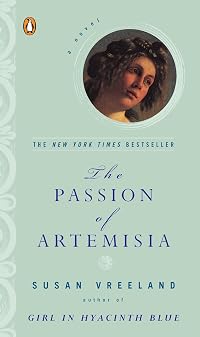
Susan Vreeland is an author who has fabulous ideas for books, but who fails to deliver. Being a serious fan of Vermeer, I was excited to read The Girl in Hyacinth Blue; show more however, I was very disappointed with the novel and had to force myself to finish it. My hopes weren’t as high then when I picked up The Passion of Artemisia, but I thought the combination of woman artist and 17th century Italy held promise. The reality was a fairly boring, mundane piece of historical fiction. When she came out with The Forest Lover, her third novel, the subject of Emily Carr and the setting of the West Coast intrigued me, despite being burned by Vreeland before. In the end, The Forest Lover isn’t as bad as I feared it would be. It’s very slow starting, and doesn’t really get going until past the 100 page mark when Carr travels to France to study oils and learn to paint in the Fauvist style. From that point it was an okay read with a few gripping moments and the occasional interesting character.
What I liked: The settings (Victoria, the wilds of BC, Vancouver & France), and I appreciate that the publisher printed a map on the inside cover. The character of New Zealand painter Frances Hodgkins was interesting, wise, and felt natural, although later I was disappointed to learn that there is no evidence the two women met. Also, I see from reviews that many readers weren’t familiar with Emily Carr and were happy for the introduction—so if this novel brings new viewer’s to Carr’s art, well, that’s a good thing.
What I didn’t like: I studied Vreeland’s writing to try and figure out why I dislike it so intensely. On the sentence-by-sentence level, she’s perfectly competent and occasionally turns a pretty phrase. I think her biggest fault is in her storytelling. It’s almost never engaging. Her characters are often stereotypical (Indigenous = spiritual and pure, White people & missionaries = greedy, mean and unsympathetic) and her dialogue sounds unnatural and stilted. Overall, I find that she’s an uptight writer who plays it safe because that’s all she knows. There are a couple of sentences in the novel where a character challenges Carr on misappropriation of First Nations culture, and Carr dismisses them with just a few words—just as Vreeland dismisses any challenging aspects of Carr’s life, or for that matter, any depth, nuance, or complexity at all.
Part way through I was so annoyed by the narrative voice that I pulled out the one book I have that Emily Carr wrote. As I expected, Carr’s own voice was very different—and she’s a much stronger, more interesting writer. I should have just read Carr herself, and forgotten about Vreeland.
Recommended for: Vreeland fans and readers who like her homogeneous style of historical fiction. If you want to learn more about Emily Carr, she’s a far superior writer, so just go read one of her many books instead. show less
Susan Vreeland is an author who has fabulous ideas for books, but who fails to deliver. Being a serious fan of Vermeer, I was excited to read The Girl in Hyacinth Blue; show more however, I was very disappointed with the novel and had to force myself to finish it. My hopes weren’t as high then when I picked up The Passion of Artemisia, but I thought the combination of woman artist and 17th century Italy held promise. The reality was a fairly boring, mundane piece of historical fiction. When she came out with The Forest Lover, her third novel, the subject of Emily Carr and the setting of the West Coast intrigued me, despite being burned by Vreeland before. In the end, The Forest Lover isn’t as bad as I feared it would be. It’s very slow starting, and doesn’t really get going until past the 100 page mark when Carr travels to France to study oils and learn to paint in the Fauvist style. From that point it was an okay read with a few gripping moments and the occasional interesting character.
What I liked: The settings (Victoria, the wilds of BC, Vancouver & France), and I appreciate that the publisher printed a map on the inside cover. The character of New Zealand painter Frances Hodgkins was interesting, wise, and felt natural, although later I was disappointed to learn that there is no evidence the two women met. Also, I see from reviews that many readers weren’t familiar with Emily Carr and were happy for the introduction—so if this novel brings new viewer’s to Carr’s art, well, that’s a good thing.
What I didn’t like: I studied Vreeland’s writing to try and figure out why I dislike it so intensely. On the sentence-by-sentence level, she’s perfectly competent and occasionally turns a pretty phrase. I think her biggest fault is in her storytelling. It’s almost never engaging. Her characters are often stereotypical (Indigenous = spiritual and pure, White people & missionaries = greedy, mean and unsympathetic) and her dialogue sounds unnatural and stilted. Overall, I find that she’s an uptight writer who plays it safe because that’s all she knows. There are a couple of sentences in the novel where a character challenges Carr on misappropriation of First Nations culture, and Carr dismisses them with just a few words—just as Vreeland dismisses any challenging aspects of Carr’s life, or for that matter, any depth, nuance, or complexity at all.
Part way through I was so annoyed by the narrative voice that I pulled out the one book I have that Emily Carr wrote. As I expected, Carr’s own voice was very different—and she’s a much stronger, more interesting writer. I should have just read Carr herself, and forgotten about Vreeland.
Recommended for: Vreeland fans and readers who like her homogeneous style of historical fiction. If you want to learn more about Emily Carr, she’s a far superior writer, so just go read one of her many books instead. show less
Following the deaths of her parents, Emily Carr endures a "proper" (stifling) existence living with her three older sisters in Victoria, British Columbia, but Emily only feels alive when she's painting, and she feels drawn to paint native art and communities of the Pacific Northwest. Despite her siblings' disapproval, Emily embarks on a number of journeys to remote sites in pursuit of her dream, but the beauty of what she sees contrasts with the increasingly bleak lives of the people she meets and the destruction and theft of their art.
The story is moderately interesting, but this novel is probably one of Vreeland's weakest. Though her passion for art history shines through, this book might be forgettable if it hadn't been based on a show more real historical figure. It is always fairly uncomfortable reading an author's attempt to depict "broken English," and to rub salt in the wound it appears to have been used inconsistently among the very same speakers. I wouldn't necessarily recommend unless you are already a fan of Vreeland and are working your way through her oeuvre. show less
The story is moderately interesting, but this novel is probably one of Vreeland's weakest. Though her passion for art history shines through, this book might be forgettable if it hadn't been based on a show more real historical figure. It is always fairly uncomfortable reading an author's attempt to depict "broken English," and to rub salt in the wound it appears to have been used inconsistently among the very same speakers. I wouldn't necessarily recommend unless you are already a fan of Vreeland and are working your way through her oeuvre. show less
Members
- Recently Added By
Lists

Books About the Arts that Aren't Art Books
21 works; 5 members

Canadian Historical Fiction 🇨🇦
157 works; 8 members
Author Information

27+ Works 9,057 Members
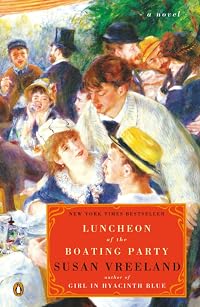
Susan Vreeland was born in Racine, Wisconsin on January 20, 1946. She received a bachelor's degree in literature from San Diego State University. After graduating, she taught high school English in San Diego from 1969 to 2000. In 1980, she began writing articles about art, culture, and travel for newspapers and magazines. Her first novel What Love show more Sees was published in 1988. Her other novels include Girl in Hyacinth Blue, The Passion of Artemisia, Luncheon of the Boating Party, Life Studies, The Forest Lover, Lisette's List, and Clara and Mr. Tiffany. Her short fiction has appeared in numerous publications including The Missouri Review, Ploughshares, New England Review, Alaska Quarterly Review, and Connecticut Review. She died after heart surgery on August 23, 2017 at the age of 71. (Bowker Author Biography) show less
Some Editions
Common Knowledge
- Original title
- The forest lover
- Original publication date
- 2003
- People/Characters
- Emily Carr; Jessica Howard; Sophie Frank; Harold Cook
- Important places
- British Columbia, Canada; Pacific Northwest; Vancouver Island, British Columbia, Canada; Victoria, British Columbia, Canada; Vancouver, British Columbia, Canada
- Epigraph
- There is something bigger than fact: the underlying spirit, all it stands for, the mood, the vastness, the Western breath of go-to-the-devil-if-you-don't like it, the eternal big spaceness of it. Oh the West! I'm of it and ... (show all)I love it.
---Emily Carr, "Hundreds and Thousands" 1966
This is the forest primeval.
The murmuring pines and the hemlocks,
Bearded with moss, and in garments green
Indistinct in the twilight
Stand like Druids of eld,
With voices sad and prophetic.
--Henry Wadswo... (show all)rth Longfellow, "Evangeline" 1847 - Dedication
- For C. JERRY HANNAH who makes strong talk
- First words
- Letting her cape snap in the wind, Emily gripped her carpetbag and wicker food hamper, and hiked up the beach, feasting her eyes on Hitats'uu spread wide beneath fine-spun vapor.
- Quotations
- She picked up a fibrous piece of cedar bark that Sophie had discarded and held it to her nose. The tree had breathed through this. She could have this, the spirit of British Columbia, when breathing city soot, she would cra... (show all)ve the piquant smell of woods, or when, amid the clang of trains, she would long for its deep silent places. Hoping that cedar might be her power spirit, she put the bark in her pocket.
You Who Dwell in the Forest,” Emily murmured into the hush. “You have given me the longing to paint. You see I am lonely, and have nowhere to pour my love. Give wisdom to my eyes to see into the soul of this land. Tho... (show all)ugh I will walk through the valley of the shadow of a far and lonely wilderness, help me to hear a spirit song. Give power to my brushes so I can create something true and beautiful and important.
Once I thought it was to make a record. Now I think it's to be close to some spirit I don't understand – yet. To honor the people who do. And to express my love for the West.
She would sing the forest eternal. She would place her body in the womb of trees. She would bleed into the earth. She would place her bare feet onto moss and spiced pine needles, peat and mud, and up between her toes and thro... (show all)ugh her pores would ooze the rich dark syrup of Mother Earth, and over her ankles would swarm tiny insects, and around her shoulders would float the exquisite flowing drapery of her green hemlock cape. (p. 328) - Last words
- (Click to show. Warning: May contain spoilers.)She would drink the forest liquids and drench herself in possibility.
- Original language
- English
Classifications
Statistics
- Members
- 882
- Popularity
- 30,859
- Reviews
- 32
- Rating
- (3.64)
- Languages
- English, German, Italian, Russian
- Media
- Paper, Audiobook, Ebook
- ISBNs
- 17
- UPCs
- 1
- ASINs
- 10