
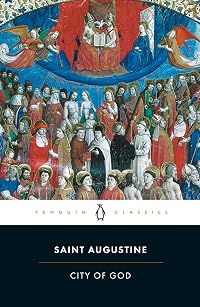
City of God
by Saint Augustine (Author), St. Augustine (Author)
On This Page
Description
Written after the capture of Rome in 410 by Alaric, King of the Visigoths, St Augustine's City of God was intended as a response to pagan critics who blamed Christianity for this brutal defeat. Augustine attacks ancient pagan beliefs and relates the corruption and immorality that led to Rome's downfall, which began before Christ, before reaching his main argument: that the City of Man is perishing and only the Heavenly City of God will endure. Members of the City of Man, misled by vanities show more and futile laws, will suffer the same fate as the Romans, while those of the City of God, who act in harmony with God's will, will reach salvation and paradise. Monumental in its scope, City of God is a theological and philosophical treasure trove that offers fascinating insights into the perennial problems of Christian philosophy, such as free will and the problem of evil, as well as the longstanding conflict between church and state. show lessTags
Recommendations




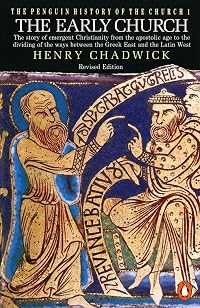
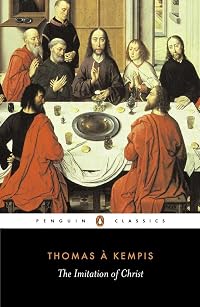





Member Recommendations
by anonymous user
Member Reviews
Saint Augustine's City of God is proof that autism has always existed. This 1000+ treatise contains the answer to every theological question a 5th Century thinker could possibly come up with.
Is the relationship of the body to the soul more like a horse to its rider, or like a tea cup to its contents?
If we are to be restored to our bodies at the end of all things, what will happen if one person has cannibalised another, and thus had part of another individual's body become part of their own?
Will you still be fat in heaven? If we are to be resurrected without flaws, does that mean women will be resurrected as men, thus eliminating the "flaw" of being female.
Since sex requires lust, and lust is inherently sinful, how would Adam and Eve show more have procreated before sin was brought into the world?
Augustine's dogged determination in answering all these questions was only matched by mine in reading this book for the past eight months. Sometimes I had to read a passage more than once to get sense out of it - like the soul/teacup thing, which at first seemed like nonsense but actually did make sense on further thought (a rider is superior to a horse, and if removed from the horse, suffers no loss of substance, but if you pour the water out of a cup it's just gonna go everywhere).
A lot of these digressions can seem silly and tedious but you have to remember the time and place. We are in a declining empire, and Augustine is arguing against paganism. There's probably very few people alive today who sincerely believe what the ancient Romans did with regard to their gods, so the whole context of the argument is foreign to us. Augustine is clearly very well read, which is impressive in his time, since literacy and literature would have been harder to come by.
I was struck most by a single sentence in this tome, one which made me stop, feeling I had come to the very crossroads that western thought had once come to. In his argument about the degeneracy of the pagan way of life, Augustine states that "anyone should be free to do as he likes about his own, or with his own, or with others, if they consent". This is a negative to the pagan ways, spoken with enough feeling to show that he considered this attitude blatantly ridiculous.
It was Augustine's perspective that was stronger in the end, and Christianity's divine laws and militant sex-negativity became so ingrained in our society that we are only just starting to come back to the idea of "being free to do as one likes, with consent", and beginning to unpack our one-size-fits-all-and-if-it-makes-you-miserable-so-be-it approach to sex, gender, family structure...everything.
I felt a little grief in that moment. We could have had 2000 years of freedom and consent! Of course, it's likely Augustine was exaggerating the situation for emphasis - hoping to horrify his reader but instead making me wistful for a past that never existed. I doubt 5th Century society was as free for, say, women, or slaves, as that turn of phrase makes it sound (maybe it was only free men who got to do as they liked?)
Instead, Augustine touts a sanitised sinless society, one that existed before the fall and which will exist again after the resurrection, in which procreation takes place without lust, the act of insemination performed with the same disinterest as one might take out the garbage, and a naked body excites nothing but appreciation of God's wonderful creation. And what will we be doing in the after time, in that world free from sin and struggle and strife, in Augustine's state of "perfect felicity"? We will simply praise and appreciate God. Sounds great to him (apparently), sound horrible to me - a person who thrives on challenge and learning and independence.
Despite disagreeing with Augustine in many ways, I feel some affection for him. Who else would arrive at the single correct belief system by categorising all possible belief systems and systematically eliminating all the bad ones? show less
Is the relationship of the body to the soul more like a horse to its rider, or like a tea cup to its contents?
If we are to be restored to our bodies at the end of all things, what will happen if one person has cannibalised another, and thus had part of another individual's body become part of their own?
Will you still be fat in heaven? If we are to be resurrected without flaws, does that mean women will be resurrected as men, thus eliminating the "flaw" of being female.
Since sex requires lust, and lust is inherently sinful, how would Adam and Eve show more have procreated before sin was brought into the world?
Augustine's dogged determination in answering all these questions was only matched by mine in reading this book for the past eight months. Sometimes I had to read a passage more than once to get sense out of it - like the soul/teacup thing, which at first seemed like nonsense but actually did make sense on further thought (a rider is superior to a horse, and if removed from the horse, suffers no loss of substance, but if you pour the water out of a cup it's just gonna go everywhere).
A lot of these digressions can seem silly and tedious but you have to remember the time and place. We are in a declining empire, and Augustine is arguing against paganism. There's probably very few people alive today who sincerely believe what the ancient Romans did with regard to their gods, so the whole context of the argument is foreign to us. Augustine is clearly very well read, which is impressive in his time, since literacy and literature would have been harder to come by.
I was struck most by a single sentence in this tome, one which made me stop, feeling I had come to the very crossroads that western thought had once come to. In his argument about the degeneracy of the pagan way of life, Augustine states that "anyone should be free to do as he likes about his own, or with his own, or with others, if they consent". This is a negative to the pagan ways, spoken with enough feeling to show that he considered this attitude blatantly ridiculous.
It was Augustine's perspective that was stronger in the end, and Christianity's divine laws and militant sex-negativity became so ingrained in our society that we are only just starting to come back to the idea of "being free to do as one likes, with consent", and beginning to unpack our one-size-fits-all-and-if-it-makes-you-miserable-so-be-it approach to sex, gender, family structure...everything.
I felt a little grief in that moment. We could have had 2000 years of freedom and consent! Of course, it's likely Augustine was exaggerating the situation for emphasis - hoping to horrify his reader but instead making me wistful for a past that never existed. I doubt 5th Century society was as free for, say, women, or slaves, as that turn of phrase makes it sound (maybe it was only free men who got to do as they liked?)
Instead, Augustine touts a sanitised sinless society, one that existed before the fall and which will exist again after the resurrection, in which procreation takes place without lust, the act of insemination performed with the same disinterest as one might take out the garbage, and a naked body excites nothing but appreciation of God's wonderful creation. And what will we be doing in the after time, in that world free from sin and struggle and strife, in Augustine's state of "perfect felicity"? We will simply praise and appreciate God. Sounds great to him (apparently), sound horrible to me - a person who thrives on challenge and learning and independence.
Despite disagreeing with Augustine in many ways, I feel some affection for him. Who else would arrive at the single correct belief system by categorising all possible belief systems and systematically eliminating all the bad ones? show less
Under the shock of the election results, I looked for a book that would help me think about reconciling the demands of being a citizen and a Christian. This venerable masterpiece seemed as good a place to start as any. I began reading the 19th century Dods translation in the Great Books set, also widely available for free online. It’s not bad, based on the passages I compared with the Latin original, which can also be read online (thelatinlibrary.com). Nevertheless, to reduce the difficulty a bit, I switched to the recent translation by R. W. Dyson. I regret that my Latin isn’t good enough for me to read the book in the original. In one passage I compared, it took Dods and Dyson each 19 words to render what Augustine said elegantly show more in eight. And yet both were good translations.
In all, I found the book long, repetitive, and not always consistent (see for example his discussion of free will), but still valuable. One benefit of reading it was to become aware of how different the world in which Christianity took its classic form was from ours. His defense of God takes place against the background of a polytheistic society. Not only the existence of God or gods was rarely questioned; Augustine lived in a time when the existence of mediating beings—angels, demons—was unquestioned. Most held that the highest God had no direct dealing with humans.
Another difference between then and now: Ever since the Enlightenment, many have insisted an atheist could be an ethical person; in other words, they have argued for uncoupling morality and faith. Augustine, though, wrote at a time when he could point to the ethical component in the Judeo-Christian tradition as one of the traits that made it superior to polytheism. The Judeo-Christian God was the first to demand ethical behavior from his followers—something the pagan gods neither demanded nor modeled. Further, Augustine could assume that all thinking people, Christian and non-Christian, shared the assumption of a final end, or ultimate good, in life. Drawing on Plato—his primary partner in dialogue among the philosophers—Augustine denies that this could be found in that which pertains either to the mind or the body, and certainly not in anything extrinsic (money, honor, etc.), but in that which the mind contemplates, i.e., the God who is the cause of all. In other words, the most important thing in life was to achieve the blessed life after this life, and therefore Augustine limits the discussion to how this can be gained. Augustine’s argument ultimately rests on the divergent eternal fate of the citizens of the two cities: never-ending torment or everlasting bliss in the presence of God. So this book is a reminder of how far concern has shifted from the afterlife to this one.
It was also valuable to finally read what Augustine believed happened in Eden. One of the first things I knew about Augustine, long before I read him, was that he was certain Adam got an erection right after eating the fruit Eve proffered. In essence, those who reduce Augustine for popular consumption cut straight to the money shot. But reading about it in context—from chapter 16 on in Book XIV—I’m struck by how psychologically acute Augustine is. Nevertheless, he suffers here, as through the entire work, from his rigorous soul/body duality. Physiology has made some progress since his time.
As for help in thinking about the at times complementary, at times contradictory demands of citizenship and faith, one theme was helpful. That was Augustine’s definition of populus, a people. To him, it is a group bound together not by race nor language, but “an assembled multitude of rational creatures bound together by common agreement as to the objects of their love” (XIX:24).
Who should read this book today? Certainly, anyone who is wrestling with the conflicting claims of faith and patriotism, looking for a classic formulation of the dilemma. Beyond that, I imagine the book would interest anyone exploring Christian interaction with Greek philosophical tradition. Most other readers, I’m afraid, will be put off by its length, its density. Those who take it on nonetheless will come across many insights surprisingly relevant for our time, even though far removed from the world in which it was written. show less
In all, I found the book long, repetitive, and not always consistent (see for example his discussion of free will), but still valuable. One benefit of reading it was to become aware of how different the world in which Christianity took its classic form was from ours. His defense of God takes place against the background of a polytheistic society. Not only the existence of God or gods was rarely questioned; Augustine lived in a time when the existence of mediating beings—angels, demons—was unquestioned. Most held that the highest God had no direct dealing with humans.
Another difference between then and now: Ever since the Enlightenment, many have insisted an atheist could be an ethical person; in other words, they have argued for uncoupling morality and faith. Augustine, though, wrote at a time when he could point to the ethical component in the Judeo-Christian tradition as one of the traits that made it superior to polytheism. The Judeo-Christian God was the first to demand ethical behavior from his followers—something the pagan gods neither demanded nor modeled. Further, Augustine could assume that all thinking people, Christian and non-Christian, shared the assumption of a final end, or ultimate good, in life. Drawing on Plato—his primary partner in dialogue among the philosophers—Augustine denies that this could be found in that which pertains either to the mind or the body, and certainly not in anything extrinsic (money, honor, etc.), but in that which the mind contemplates, i.e., the God who is the cause of all. In other words, the most important thing in life was to achieve the blessed life after this life, and therefore Augustine limits the discussion to how this can be gained. Augustine’s argument ultimately rests on the divergent eternal fate of the citizens of the two cities: never-ending torment or everlasting bliss in the presence of God. So this book is a reminder of how far concern has shifted from the afterlife to this one.
It was also valuable to finally read what Augustine believed happened in Eden. One of the first things I knew about Augustine, long before I read him, was that he was certain Adam got an erection right after eating the fruit Eve proffered. In essence, those who reduce Augustine for popular consumption cut straight to the money shot. But reading about it in context—from chapter 16 on in Book XIV—I’m struck by how psychologically acute Augustine is. Nevertheless, he suffers here, as through the entire work, from his rigorous soul/body duality. Physiology has made some progress since his time.
As for help in thinking about the at times complementary, at times contradictory demands of citizenship and faith, one theme was helpful. That was Augustine’s definition of populus, a people. To him, it is a group bound together not by race nor language, but “an assembled multitude of rational creatures bound together by common agreement as to the objects of their love” (XIX:24).
Who should read this book today? Certainly, anyone who is wrestling with the conflicting claims of faith and patriotism, looking for a classic formulation of the dilemma. Beyond that, I imagine the book would interest anyone exploring Christian interaction with Greek philosophical tradition. Most other readers, I’m afraid, will be put off by its length, its density. Those who take it on nonetheless will come across many insights surprisingly relevant for our time, even though far removed from the world in which it was written. show less
Any star rating is entirely meaningless. This is a ludicrous book, astonishing in scope, and in desperate need of an editor to make sense of it. I simply can't; it's overwhelming. Arid stretches of rhetoric suddenly cough up a fascinating philosophical argument, which then itself belches forth more arid rhetoric, and so on. Augustine takes the ancient pagan beliefs to pieces by showing that they simply can't be rationalized--then immediately forgets the obvious lesson and tries to rationalize Christianity in order to defend it. Who the hell am I to criticize, though?
That said, I'd much rather read about this book than read it again. Never before have I felt the ancient's wisdom so strongly: this is not a book, this is 22 books, and show more trying to read it as one is the definition of hubris. show less
That said, I'd much rather read about this book than read it again. Never before have I felt the ancient's wisdom so strongly: this is not a book, this is 22 books, and show more trying to read it as one is the definition of hubris. show less
"𝘛𝘩𝘦 𝘩𝘦𝘢𝘷𝘦𝘯 𝘪𝘴 𝘢 𝘣𝘦𝘵𝘵𝘦𝘳 𝘤𝘰𝘶𝘯𝘵𝘳𝘺, 𝘢𝘯𝘥 𝘪𝘵 𝘪𝘴 𝘵𝘩𝘦𝘳𝘦 𝘵𝘩𝘢𝘵 𝘸𝘦 𝘴𝘩𝘢𝘭𝘭 𝘧𝘪𝘯𝘥 𝘰𝘶𝘳 𝘱𝘦𝘢𝘤𝘦."
this lovely quote is from augustine's "city of god," a philosophical and theological dissertation that investigates the nature of God, mankind, and the universe. and by philosophical dissertation, i mean augustine having a written argument between the entire city of rome and himself. after the Christian faith came under attack after the sack of Rome in 410 AD, augustine penned this book to defend it. basically, he wasn't gonna have anyone diss what he valued most in the world; his show more religion and god. and contrary to popular belief, augustine argues in "City of God" that the collapse of the Roman Empire was not caused by Christianity but rather by the corruption and decadence of the empire itself! essentially, augustine's saying that rome was already falling LONG before jesus was even introduced to rome. a bold claim, i know!
how does he argue this? well, he divides society into two groups: the "City of God" people (or people who love God and strive to do good), and the "City of Man" people (those who don't follow God and often make poor decisions). with that, augustine asserts that even if there is much evil in the world, god isn't to blame, and because us humans have free will and sometimes make poor decisions, we have to trust in God and attempt to be a nice person in order to be happy. so, augustine is essentially saying to stop blaming god for your screwups and admit to your mistakes. man up!
though i'm not religious, even i agree that augustine's brilliant understanding of human experience and spirituality remains one of the most influential works in the christian faith in general, and prompts deep thoughts and a healthy dose of faith. with that, i'd recommend this book for any aspiring philosophy beginners (especially those who aren't religious!)
thanks for reading, and i hope you have a lovely day!
arwa show less
this lovely quote is from augustine's "city of god," a philosophical and theological dissertation that investigates the nature of God, mankind, and the universe. and by philosophical dissertation, i mean augustine having a written argument between the entire city of rome and himself. after the Christian faith came under attack after the sack of Rome in 410 AD, augustine penned this book to defend it. basically, he wasn't gonna have anyone diss what he valued most in the world; his show more religion and god. and contrary to popular belief, augustine argues in "City of God" that the collapse of the Roman Empire was not caused by Christianity but rather by the corruption and decadence of the empire itself! essentially, augustine's saying that rome was already falling LONG before jesus was even introduced to rome. a bold claim, i know!
how does he argue this? well, he divides society into two groups: the "City of God" people (or people who love God and strive to do good), and the "City of Man" people (those who don't follow God and often make poor decisions). with that, augustine asserts that even if there is much evil in the world, god isn't to blame, and because us humans have free will and sometimes make poor decisions, we have to trust in God and attempt to be a nice person in order to be happy. so, augustine is essentially saying to stop blaming god for your screwups and admit to your mistakes. man up!
though i'm not religious, even i agree that augustine's brilliant understanding of human experience and spirituality remains one of the most influential works in the christian faith in general, and prompts deep thoughts and a healthy dose of faith. with that, i'd recommend this book for any aspiring philosophy beginners (especially those who aren't religious!)
thanks for reading, and i hope you have a lovely day!
arwa show less
Augustine's City of God (in Latin, Civitas Dei) is a foundational treatise on basic Christian doctrine, and is an important work in the development of Western Christianity. I'm not a scholar and don't plan to trace the work's theological, rhetorical, and historical importance; I read it for pleasure and it delivered. I love how it has opened my eyes to see beyond my here-and-now, to realize that I am just part of the long history of the City of God, just one of the saints on my journey through this world. We can be so blinkered in our own lives, but our Christianity is not even about us. It's all about the City of God, the people He has chosen for His own to glorify Him in this life and the next. We are part of something much bigger show more than ourselves, that reaches back to the beginning and stretches forward into eternity.
Augustine was a fifth-century Christian and a highly intelligent scholar, author, apologist, and theologian. People have parsed his statements for centuries. And yet I find him very relevant. I know my intelligence is nowhere near his, but I think I could talk to him. We love the same Lord and so many times I found myself ardently agreeing with his statements about right living and correct theology. Because his themes are timeless, most of Augustine's work is still compelling reading for us today. I don't agree with everything he writes, but I'm happy to have gained some impression of him from this book, as I have not yet read his more personal Confessions. He reminds me of C. S. Lewis in a lot of ways.
There is just so much here; it's so vast. Augustine's mission is to trace out the progress of the two cities, that of God and that of the devil, from the very beginning. It starts with Abel and Cain and it just goes from there, all the way through the biblical genealogies into the time of Christ and beyond. To be honest, I was expecting City of God to be heavy and dry, something dutiful to read in between fiction books, but to my surprise it was eminently readable and actually very interesting. Especially fascinating are the glimpses of Augustine's world and the intellectual climate of the day. Augustine spends a lot of time defending the Christians against the taunts of the pagans, making this an apologetic work. Augustine often explores pagan legends and characters through the lens of Christianity, finding many things to praise and many others to decry. He is convinced that the Roman gods were demons because of the atrocities and indecencies they demanded in their worshipers, and my guess is that he's probably right. Really interesting stuff.
This really is a tome of a book; at over a thousand pages in my unabridged paperback copy, it took me quite some time to finish. And there is a point in the middle when Augustine gets very involved with tracing biblical genealogies and explaining what seem to be inconsistencies in the biblical record. All probably valuable in some way, but some of it is, admittedly, tedious to the non-scholar like myself. But I read every word and am glad I did.
One thing I did not care for was the arrogant tone of some of the footnotes in this edition (translated by Henry Bettenson and David Knowles). Not that I believe Augustine's work is flawless, but how can you call Augustine's etymology of a particular word "absurd" and then, in the next line, admit that the word's actual etymology is unknown? How can Augustine's etymology be absurd when there's no correct etymology known? And there are other instances like this that just rubbed me the wrong way. If you want to argue with Augustine, write your own book. Don't snark at him from the footnotes.
Sometimes Augustine's musings overwhelm him with the incredible beauty, power, and wisdom of God and he bursts out with praise. This paragraph spurred me to adoration; the more I pondered it, the more awed and worshipful I became, in love with the glory of God:
Thus God is the supreme reality, with his Word and Holy Spirit — three who are one. He is the God omnipotent, creator and maker of every soul and every body; participation in him brings happiness to all who are happy in truth and not in illusion; he has made man a rational animal, consisting of soul and body; and when a man sins he does not let him go unpunished, nor does he abandon him without pity. He has given, to good men and bad alike, the existence they share with the stones; he has given man reproductive life which he shares with the plants, the life of the senses, which he shares with the animals, and the life of the intellect, shared only with the angels. From him derives every mode of being, every species, every order, all measure, number, and weight. He is the source of all that exists in nature, whatever its kind, whatever its value, and of the seeds of forms, and the forms of seeds, and the motions of seeds and forms. He has given to flesh its origin, beauty, health, fertility in propagation, the arrangement of the bodily organs, and the health that comes from their harmony. He has endowed even the soul of irrational creatures with memory, sense, and appetite, but above all this, he has given to the rational soul thought, intelligence, and will. He has not abandoned even the inner parts of the smallest and lowliest creature, or the bird's feather (to say nothing of the heavens and the earth, the angels and mankind) — he has not left them without a harmony of their constituent parts, a kind of peace. It is beyond anything incredible that he should have willed the kingdoms of men, their dominations and their servitudes, to be outside the range of the laws of his providence. (p. 196)
And really, the scope of this book is so incredibly vast I can't do it justice. All I want to do is quote Augustine, so I'll end with a smattering of the profundities I wrote down as I read:
Thus the wicked, under pressure of affliction, execrate God and blaspheme; the good, in the same affliction, offer up prayers and praises. This shows that what matters is the nature of the sufferer, not the nature of the suffering. Stir a cesspit, and a foul stench arises; stir a perfume, and a delightful fragrance ascends. But the movement is identical. (p. 14)
Among the daily chances of this life every man on earth is threatened in the same way by innumerable deaths, and it is uncertain which of them will come to him. And so the question is whether it is better to suffer one in dying or to fear them all in living. (p. 20)
Now purity is a virtue of the mind. It has courage as its companion, and courage decides to endure evil rather than consent to evil. (p. 27)
The truth is that in the mysterious justice of God, the wickedness of desire is given rope, as it were, for the present, while its punishment is plainly being reserved for the final judgement. (p. 40)
What use is it to give as an excuse the splendid titles of 'honour' and 'victory'? Take away the screens of such senseless notions and let the crimes be seen, weighed, and judged in all their nakedness. (p. 104)
We do not subject the life and foreknowledge of God to necessity, if we say that it is 'necessary' for God to be eternal and to have complete foreknowledge; nor is his power diminished by saying that he cannot die or make a mistake... It is just because he is all-powerful that there are some things he cannot do. (p. 194)
It is God who gives happiness; for he is the true wealth of men's souls. (p. 207)
Is anything more loquacious than folly? But it must not be supposed that folly is as powerful as truth, just because it can, if it likes, shout louder and longer than truth. (p. 224)
It remains true that no one is happy without the enjoyment of what he loves. Even those who set their heart on the wrong thing do not suppose their happiness to consist in the loving, but in the enjoyment. (p. 324)
Surely the supremely important thing in religion is to model oneself on the object of one's worship. (p. 324)
Only truth and virtue can offer a centre of resistance against turbulent and degraded passions. (p. 345)
As it is, there is one road, and one only, well secured against all possibility of going astray; and this road is provided by one who is himself both God and man. As God, he is the goal; as man, he is the way. (p. 431)
There is no such entity in nature as 'evil'; 'evil' is merely a name for the privation of good. (p. 455)
Thus we say that there is one unchanging Good; and that is the one, true, and blessed God. The things he made are good because they were made by him; but they are subject to change, because they were made not out of his being but out of nothing. (p. 472)
But as it is, the punishment of sin has been turned by the great and wonderful grace of our Savior to a good use, to the promotion of righteousness. It was then said to man, 'You will die if you sin.' Now it is said to the martyr, 'Die, rather than sin.' (p. 513)
The choice of the will, then, is genuinely free only when it is not subservient to faults and sins. (p. 569)
This is assuredly the great difference that sunders the two cities of which we are speaking: the one is a community of devout men, the other a company of the irreligious, and each has its own angels attached to it. In one city love of God has been given first place, in the other, love of self. (p. 573)
A brief and true definition of virtue is 'rightly ordered love.' (p. 637)
In fact, all the enemies of the Church, however blinded by error or depraved by wickedness, train the Church in patient endurance if they are given the power of inflicting bodily harm, while if they oppose her only by their perverse notions they train her in wisdom... In this manner the Church proceeds on its pilgrim way in this world, in these evil days. Its troubled course began not merely in the time of the bodily presence of Christ and the time of his apostles; it started with Abel himself, the first righteous man slain by an ungodly brother; and the pilgrimage goes on from that time right up to the end of history, with the persecutions of the world on one side and on the other the consolations of God. (p. 833–5)
Indeed, even when men choose war, their only wish is for victory; which shows that their desire in fighting is for peace with glory. For what is victory but the conquest of the opposing side? And when this is achieved, there will be peace. Even wars, then, are waged with peace as their object... Hence it is an established fact that peace is the desired end of war, even in waging war, whereas no one is in quest of war while making peace. (p. 866)
A 'bishop' who has set his heart on a position of eminence rather than an opportunity for service should realize he is no bishop. (p. 880)
But things which come before our eyes in everyday experiences are little reckoned of... daily familiarity gradually blunts the edge of wonder. (p. 970)
Evil men do many things contrary to the will of God; but so great is his wisdom, and so great his power, that all things which seem to oppose his will tend toward those results or ends which he himself has foreknown as good and just. (p. 1023)
Brilliant, eloquent, and rich in the love of God. show less
Augustine was a fifth-century Christian and a highly intelligent scholar, author, apologist, and theologian. People have parsed his statements for centuries. And yet I find him very relevant. I know my intelligence is nowhere near his, but I think I could talk to him. We love the same Lord and so many times I found myself ardently agreeing with his statements about right living and correct theology. Because his themes are timeless, most of Augustine's work is still compelling reading for us today. I don't agree with everything he writes, but I'm happy to have gained some impression of him from this book, as I have not yet read his more personal Confessions. He reminds me of C. S. Lewis in a lot of ways.
There is just so much here; it's so vast. Augustine's mission is to trace out the progress of the two cities, that of God and that of the devil, from the very beginning. It starts with Abel and Cain and it just goes from there, all the way through the biblical genealogies into the time of Christ and beyond. To be honest, I was expecting City of God to be heavy and dry, something dutiful to read in between fiction books, but to my surprise it was eminently readable and actually very interesting. Especially fascinating are the glimpses of Augustine's world and the intellectual climate of the day. Augustine spends a lot of time defending the Christians against the taunts of the pagans, making this an apologetic work. Augustine often explores pagan legends and characters through the lens of Christianity, finding many things to praise and many others to decry. He is convinced that the Roman gods were demons because of the atrocities and indecencies they demanded in their worshipers, and my guess is that he's probably right. Really interesting stuff.
This really is a tome of a book; at over a thousand pages in my unabridged paperback copy, it took me quite some time to finish. And there is a point in the middle when Augustine gets very involved with tracing biblical genealogies and explaining what seem to be inconsistencies in the biblical record. All probably valuable in some way, but some of it is, admittedly, tedious to the non-scholar like myself. But I read every word and am glad I did.
One thing I did not care for was the arrogant tone of some of the footnotes in this edition (translated by Henry Bettenson and David Knowles). Not that I believe Augustine's work is flawless, but how can you call Augustine's etymology of a particular word "absurd" and then, in the next line, admit that the word's actual etymology is unknown? How can Augustine's etymology be absurd when there's no correct etymology known? And there are other instances like this that just rubbed me the wrong way. If you want to argue with Augustine, write your own book. Don't snark at him from the footnotes.
Sometimes Augustine's musings overwhelm him with the incredible beauty, power, and wisdom of God and he bursts out with praise. This paragraph spurred me to adoration; the more I pondered it, the more awed and worshipful I became, in love with the glory of God:
Thus God is the supreme reality, with his Word and Holy Spirit — three who are one. He is the God omnipotent, creator and maker of every soul and every body; participation in him brings happiness to all who are happy in truth and not in illusion; he has made man a rational animal, consisting of soul and body; and when a man sins he does not let him go unpunished, nor does he abandon him without pity. He has given, to good men and bad alike, the existence they share with the stones; he has given man reproductive life which he shares with the plants, the life of the senses, which he shares with the animals, and the life of the intellect, shared only with the angels. From him derives every mode of being, every species, every order, all measure, number, and weight. He is the source of all that exists in nature, whatever its kind, whatever its value, and of the seeds of forms, and the forms of seeds, and the motions of seeds and forms. He has given to flesh its origin, beauty, health, fertility in propagation, the arrangement of the bodily organs, and the health that comes from their harmony. He has endowed even the soul of irrational creatures with memory, sense, and appetite, but above all this, he has given to the rational soul thought, intelligence, and will. He has not abandoned even the inner parts of the smallest and lowliest creature, or the bird's feather (to say nothing of the heavens and the earth, the angels and mankind) — he has not left them without a harmony of their constituent parts, a kind of peace. It is beyond anything incredible that he should have willed the kingdoms of men, their dominations and their servitudes, to be outside the range of the laws of his providence. (p. 196)
And really, the scope of this book is so incredibly vast I can't do it justice. All I want to do is quote Augustine, so I'll end with a smattering of the profundities I wrote down as I read:
Thus the wicked, under pressure of affliction, execrate God and blaspheme; the good, in the same affliction, offer up prayers and praises. This shows that what matters is the nature of the sufferer, not the nature of the suffering. Stir a cesspit, and a foul stench arises; stir a perfume, and a delightful fragrance ascends. But the movement is identical. (p. 14)
Among the daily chances of this life every man on earth is threatened in the same way by innumerable deaths, and it is uncertain which of them will come to him. And so the question is whether it is better to suffer one in dying or to fear them all in living. (p. 20)
Now purity is a virtue of the mind. It has courage as its companion, and courage decides to endure evil rather than consent to evil. (p. 27)
The truth is that in the mysterious justice of God, the wickedness of desire is given rope, as it were, for the present, while its punishment is plainly being reserved for the final judgement. (p. 40)
What use is it to give as an excuse the splendid titles of 'honour' and 'victory'? Take away the screens of such senseless notions and let the crimes be seen, weighed, and judged in all their nakedness. (p. 104)
We do not subject the life and foreknowledge of God to necessity, if we say that it is 'necessary' for God to be eternal and to have complete foreknowledge; nor is his power diminished by saying that he cannot die or make a mistake... It is just because he is all-powerful that there are some things he cannot do. (p. 194)
It is God who gives happiness; for he is the true wealth of men's souls. (p. 207)
Is anything more loquacious than folly? But it must not be supposed that folly is as powerful as truth, just because it can, if it likes, shout louder and longer than truth. (p. 224)
It remains true that no one is happy without the enjoyment of what he loves. Even those who set their heart on the wrong thing do not suppose their happiness to consist in the loving, but in the enjoyment. (p. 324)
Surely the supremely important thing in religion is to model oneself on the object of one's worship. (p. 324)
Only truth and virtue can offer a centre of resistance against turbulent and degraded passions. (p. 345)
As it is, there is one road, and one only, well secured against all possibility of going astray; and this road is provided by one who is himself both God and man. As God, he is the goal; as man, he is the way. (p. 431)
There is no such entity in nature as 'evil'; 'evil' is merely a name for the privation of good. (p. 455)
Thus we say that there is one unchanging Good; and that is the one, true, and blessed God. The things he made are good because they were made by him; but they are subject to change, because they were made not out of his being but out of nothing. (p. 472)
But as it is, the punishment of sin has been turned by the great and wonderful grace of our Savior to a good use, to the promotion of righteousness. It was then said to man, 'You will die if you sin.' Now it is said to the martyr, 'Die, rather than sin.' (p. 513)
The choice of the will, then, is genuinely free only when it is not subservient to faults and sins. (p. 569)
This is assuredly the great difference that sunders the two cities of which we are speaking: the one is a community of devout men, the other a company of the irreligious, and each has its own angels attached to it. In one city love of God has been given first place, in the other, love of self. (p. 573)
A brief and true definition of virtue is 'rightly ordered love.' (p. 637)
In fact, all the enemies of the Church, however blinded by error or depraved by wickedness, train the Church in patient endurance if they are given the power of inflicting bodily harm, while if they oppose her only by their perverse notions they train her in wisdom... In this manner the Church proceeds on its pilgrim way in this world, in these evil days. Its troubled course began not merely in the time of the bodily presence of Christ and the time of his apostles; it started with Abel himself, the first righteous man slain by an ungodly brother; and the pilgrimage goes on from that time right up to the end of history, with the persecutions of the world on one side and on the other the consolations of God. (p. 833–5)
Indeed, even when men choose war, their only wish is for victory; which shows that their desire in fighting is for peace with glory. For what is victory but the conquest of the opposing side? And when this is achieved, there will be peace. Even wars, then, are waged with peace as their object... Hence it is an established fact that peace is the desired end of war, even in waging war, whereas no one is in quest of war while making peace. (p. 866)
A 'bishop' who has set his heart on a position of eminence rather than an opportunity for service should realize he is no bishop. (p. 880)
But things which come before our eyes in everyday experiences are little reckoned of... daily familiarity gradually blunts the edge of wonder. (p. 970)
Evil men do many things contrary to the will of God; but so great is his wisdom, and so great his power, that all things which seem to oppose his will tend toward those results or ends which he himself has foreknown as good and just. (p. 1023)
Brilliant, eloquent, and rich in the love of God. show less
Oh my word, this is a masterpiece. I had read his Confession years ago, but I wish I had read this first. I would have been more interesting in finding out about his life after reading this. It is rich in doctrine. After reading Greek/Roman Lives and all the conflict and stife, it was lovely to sit down with a man who knew God, the Word, and knew how superior God is to the Greek/Roman gods! It dovetailed so nicely with my time in the prophets this year too! So many things come from this book. If you want to understand Western Civilization, this book is a must read.
Augustine’s City of God is a classic; in terms of his legacy and influence, it stands up there with his Confessions.
Yet as a read, City of God can be quite challenging.
Augustine’s ultimate desire was to set forth two contrasting places: the city of man versus the city of God, and all to the end of defending the Christian church and faith from all the criticisms which attended to it once Alaric and his Goths sacked Rome.
But the way he strove to do so was through very detailed, and for the modern reader often arcane, discussions and analyses of many subjects.
The first ten books specifically address the criticism regarding the fall of Rome by pointing out the continual failures of pagan religion and the fallacies within pagan show more religion and philosophy. In theory, the final eleven books would address the contrast between the city of man and the city of God, which really explore the narratives of the Old and New Testaments and often Augustine’s speculation about sin, the fall, the hellbound, the resurrected, etc.
It’s probably easy to look back and wonder how Augustine found much coherence in all of this. It’s very challenging for a modern reader who has been told how important Augustine’s framework would prove to be for medieval and modern political philosophy in terms of both Western nations and Christianity, because the work was not laid out systematically the way they might expect.
But the nuggets are there. Augustine’s defense would resound through ages which would somehow prove even darker than his own day. The contrast between the ways of the city of man and the city of God endures in both politics and theology.
But you’re probably better off finding the appropriate snippets which make the case, unless you’re really into Late Antique philosophy and theology. show less
Yet as a read, City of God can be quite challenging.
Augustine’s ultimate desire was to set forth two contrasting places: the city of man versus the city of God, and all to the end of defending the Christian church and faith from all the criticisms which attended to it once Alaric and his Goths sacked Rome.
But the way he strove to do so was through very detailed, and for the modern reader often arcane, discussions and analyses of many subjects.
The first ten books specifically address the criticism regarding the fall of Rome by pointing out the continual failures of pagan religion and the fallacies within pagan show more religion and philosophy. In theory, the final eleven books would address the contrast between the city of man and the city of God, which really explore the narratives of the Old and New Testaments and often Augustine’s speculation about sin, the fall, the hellbound, the resurrected, etc.
It’s probably easy to look back and wonder how Augustine found much coherence in all of this. It’s very challenging for a modern reader who has been told how important Augustine’s framework would prove to be for medieval and modern political philosophy in terms of both Western nations and Christianity, because the work was not laid out systematically the way they might expect.
But the nuggets are there. Augustine’s defense would resound through ages which would somehow prove even darker than his own day. The contrast between the ways of the city of man and the city of God endures in both politics and theology.
But you’re probably better off finding the appropriate snippets which make the case, unless you’re really into Late Antique philosophy and theology. show less
Members
- Recently Added By
Lists

100 Books to Read in a Lifetime (That Are Older Than 200 Years)
415 works; 173 members

Church Times 100 Best Christian Books
106 works; 26 members

Harold Bloom - The Western Canon: A. The Theocratic Age
97 works; 13 members

Christianity Books You've Read
179 works; 19 members
Trinity Norman Recommended Christian Readings
170 works; 5 members

Filosofía - Clásicos
217 works; 1 member

Well-Educated Mind
150 works; 3 members

Greatest Books, allegedly
484 works; 9 members

The Well-Educated Mind, Susan Wise Bauer, 2016
179 works; 3 members

Christian Classics (Old and Modern)
53 works; 3 members

1970s
657 works; 23 members

Book Titles Mentioned In Newberry Medal And Honor Books
884 works; 3 members

Shaykh Hamza's Book Recommendations
439 works; 3 members

Western Canon
206 works; 2 members

How to Read a Book's Recommended Reading List
309 works; 10 members

Books Set in Rome
98 works; 2 members

CCE 100 Great Books List
145 works; 8 members
GreatBooks Worldview Academy Lists
133 works; 4 members

Recommendations by Peter Kreeft
45 works; 4 members
Author Information

Saint Augustine was born to a Catholic mother and a pagan father on November 13, 354, at Thagaste, near Algiers. He studied Latin literature and later taught rhetoric in Rome and Milan. He originally joined the Manicheans, a religious sect, but grew unhappy with some of their philosophies. After his conversion to Christianity and his baptism in show more 387, Augustine developed his own approach to philosophy and theology, accommodating a variety of methods and different perspectives. He believed that the grace of Christ was indispensable to human freedom, and he framed the concepts of original sin and just war. His thoughts greatly influenced the medieval worldview. One of Augustine's major goals was a single, unified church. He was ordained a priest in 391 and appointed Bishop of Hippo, in Roman Africa, in 396. Augustine was one of the most prolific Latin authors in terms of surviving works, and the list of his works consists of more than one hundred separate titles. His writings and arguments with other sects include the Donatists and the Pelagians. On the Trinity, The City of God, and On Nature and Grace are some of his important writings. Confessions, which is considered his masterpiece, is an autobiographical work that recounts his restless youth and details the spiritual experiences that led him to Christianity. Many of Augustine's ideas, such as those concerning sin and predestination, became integral to the doctrines of the Roman Catholic Church. In the Catholic Church he is a saint and pre-eminent Doctor of the Church, and the patron of the Augustinians. He is the patron saint of brewers, printers, and theologians. Augustine died on August 28, 430. (Bowker Author Biography) show less
Some Editions
Awards and Honors
Series
Belongs to Publisher Series
Work Relationships
Is contained in
Contains
Is abridged in
Has as a reference guide/companion
Has as a study
Has as a student's study guide
Common Knowledge
- Canonical title
- City of God
- Original title
- De Civitate Dei contra paganos libri viginti duo; Concerning the City of God against the Pagans
- Alternate titles
- De stad Gods
- Original publication date
- 426
- Important places
- Ancient Rome; Rome, Italy; Roman Empire
- Important events
- Fall of Rome
- First words
- Here, my dear Marcellinus, is the fulfilment of my promise, a book in which I have taken upon myself the task of defending the glorious City of God against those who prefer their own gods to the Founder of that City.--Bettens... (show all)on translation (1984)
- Last words
- (Click to show. Warning: May contain spoilers.)I think that I have now, by God’s help, discharged my obligation in writing this large work. Let those who think I have said too little, or those who think I have said too much, forgive me; and let those who think I have said just enough join me in giving thanks to God. Amen.
---
And now, as I think, I have discharged my debt, with the completion, by God's help, of this huge work. It may be too much for some, too little or others. Of both these groups I ask forgiveness. But of those for whom it is enough I make this request: that they do not thank me, but join with me in rendering thanks to God. Amen. Amen.--Bettenson translation (1984) - Publisher's editor
- Radice, Betty [Penguin Books]
- Original language
- Latin
Classifications
Statistics
- Members
- 7,118
- Popularity
- 1,647
- Reviews
- 39
- Rating
- (3.94)
- Languages
- 15 — Chinese, Danish, Dutch, English, French, German, Italian, Latin, Multiple languages, Norwegian (Bokmål), Farsi/Persian, Polish, Portuguese, Russian, Spanish
- Media
- Paper, Audiobook, Ebook
- ISBNs
- 122
- ASINs
- 99
