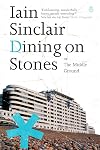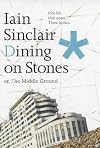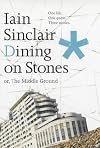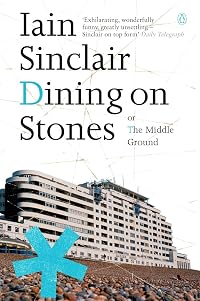
Dining on Stones
by Iain Sinclair
On This Page
Description
An unreliable narrator, exiled on the coast, looks back on a book he may never have written. On a walk down the A13 from Aldgate Pump to Southend he acquires a package left by a missing woman - a package of stories that anticipate his quest.Tags
Recommendations


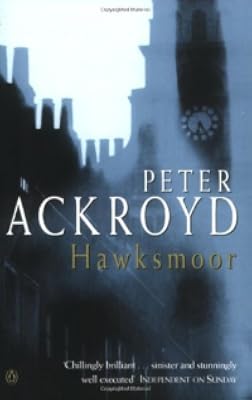


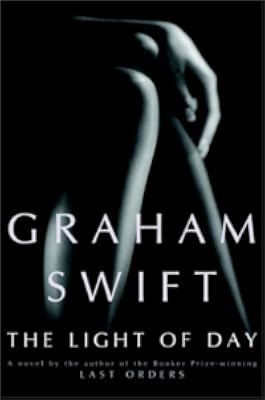

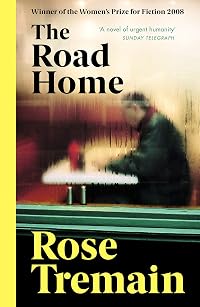
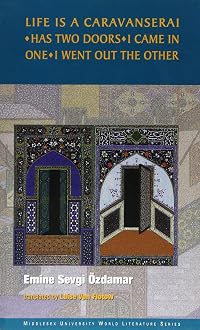
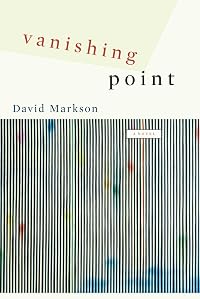
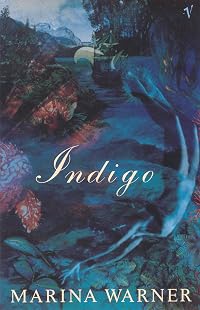

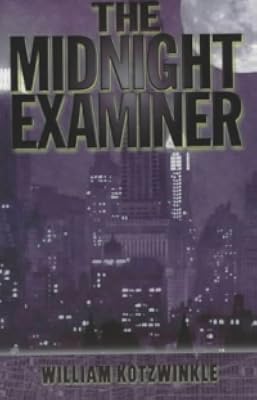
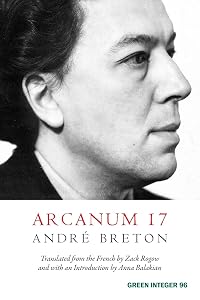
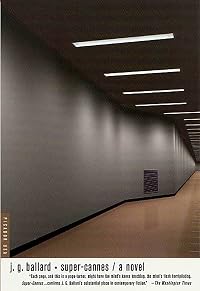
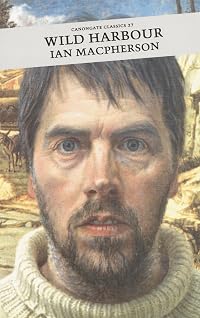
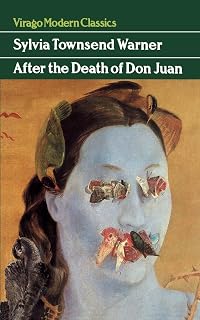
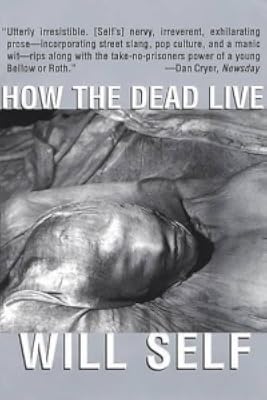






Member Recommendations
charlie68 Has the same sort of stream of consciousness writing and keeping the reader paying attention to every word sort of vibe. If you like that sort of thing, although sometimes I zone out.
charlie68 Mr. Borges has the same sort of conceits as Mr. Sinclair, and the aforementioned Marten Amis; where the author makes cameos in his fiction and interacting with his characters, sometimes to amusing consequences.
Member Reviews
You know you’re in for a rough ride when the book you’re about to read is recommended by the lamentable Will Self.
When everything else fails, fall back on doctored autobiography.
p76
While this is ostensibly one of the musings of our protagonist, I believe this also provides us with an insight into exactly what Sinclair has done here.
Basically, Sinclair wandered the Ballardian wastes of Essex, came up with nothing worthwhile for a novel and then just decided to write what happened to him instead. Sadly for us, that was pretty much nothing.
One of the worst novels you’ll read in a good many years. For some reason, Sinclair (and apparently his publisher) thinks that he can write a novel.
Characters, plot, development… forget all that. show more They’re far too mundane for the great Sinclair. How anyone edited this is beyond me. Single. Word. Sentences. Abound.
Come now, I hear those of you who haven’t yet read it argue, many classic experimental novels lack the traditional ingredients for a novel. That is true.
But in the same way that I could make an experimental cake by substiting sperm, talc and tangerines for butter, flour and eggs, it would hardly be considered worthy of consumption by anyone except the most brown-nosed of my diners. It’s almost as if the title is a metaphor for what his readers will go through.
In an era which churns out more novels each month than the entire 18th century managed, surely there’s more need than ever for a title to justify its existence. Perhaps Stones does that by aiming to be the worst novel ever published.
He not only picks what is arguably the ugliest part of Britain to write about, he writes about it in prose that is barely recognisable as lucid. If you want to tell me that that is precisely the point, then fair play to you, but the resulting mess isn’t worth anyone’s time at all. show less
When everything else fails, fall back on doctored autobiography.
p76
While this is ostensibly one of the musings of our protagonist, I believe this also provides us with an insight into exactly what Sinclair has done here.
Basically, Sinclair wandered the Ballardian wastes of Essex, came up with nothing worthwhile for a novel and then just decided to write what happened to him instead. Sadly for us, that was pretty much nothing.
One of the worst novels you’ll read in a good many years. For some reason, Sinclair (and apparently his publisher) thinks that he can write a novel.
Characters, plot, development… forget all that. show more They’re far too mundane for the great Sinclair. How anyone edited this is beyond me. Single. Word. Sentences. Abound.
Come now, I hear those of you who haven’t yet read it argue, many classic experimental novels lack the traditional ingredients for a novel. That is true.
But in the same way that I could make an experimental cake by substiting sperm, talc and tangerines for butter, flour and eggs, it would hardly be considered worthy of consumption by anyone except the most brown-nosed of my diners. It’s almost as if the title is a metaphor for what his readers will go through.
In an era which churns out more novels each month than the entire 18th century managed, surely there’s more need than ever for a title to justify its existence. Perhaps Stones does that by aiming to be the worst novel ever published.
He not only picks what is arguably the ugliest part of Britain to write about, he writes about it in prose that is barely recognisable as lucid. If you want to tell me that that is precisely the point, then fair play to you, but the resulting mess isn’t worth anyone’s time at all. show less
"Everything that had happened to them... had been refracted through Norton’s fiction, his voice. The unplaceable accent. The half-truths. The bending and warping of a simple event, a walk."
Boy when you finish a Sinclair book you certainly know you've been in a fight... wait maybe that isn't how your supposed to feel while reading :P ?
Some prior material that might help with this one includes [b:Heart of Darkness|4900|Heart of Darkness|Joseph Conrad|https://images.gr-assets.com/books/1392799983s/4900.jpg|2877220], [b:Nostromo|115476|Nostromo|Joseph Conrad|https://images.gr-assets.com/books/1328865264s/115476.jpg|678519] and the film Performance. They won't help entirely though as there are innumerable film, book and art references in show more this one, more than usual i felt. I would also recommend the art of Max Beckmann but looking at that actually seemed to make the references to it make less sense :lol .
All of Sinclair's books tend to be about an author trying to write a book, the search for narrative presented as the narrative itself. The books end up somewhere between Lost in La Mancha and Adaptation.
I actually made it to the 2/3 point with a decent grasp on things but everything after that is pretty spotty. I think you might need to be an artist of somesort or have a degree in art/literary criticism to get a lot of that final 1/3.
The plot such as there is involves i think 3 different author avatars all of them trying to write versions of the same story or at least involving some of the same characters. Bits of gangster plots, documentary, doppelgangers and recovered notes and photos from a 19th century doomed trip to the amazon.
There are certainly elements of enjoyment but too messy, too long and too much Art for my rudimentary taste. show less
Boy when you finish a Sinclair book you certainly know you've been in a fight... wait maybe that isn't how your supposed to feel while reading :P ?
Some prior material that might help with this one includes [b:Heart of Darkness|4900|Heart of Darkness|Joseph Conrad|https://images.gr-assets.com/books/1392799983s/4900.jpg|2877220], [b:Nostromo|115476|Nostromo|Joseph Conrad|https://images.gr-assets.com/books/1328865264s/115476.jpg|678519] and the film Performance. They won't help entirely though as there are innumerable film, book and art references in show more this one, more than usual i felt. I would also recommend the art of Max Beckmann but looking at that actually seemed to make the references to it make less sense :lol .
All of Sinclair's books tend to be about an author trying to write a book, the search for narrative presented as the narrative itself. The books end up somewhere between Lost in La Mancha and Adaptation.
I actually made it to the 2/3 point with a decent grasp on things but everything after that is pretty spotty. I think you might need to be an artist of somesort or have a degree in art/literary criticism to get a lot of that final 1/3.
The plot such as there is involves i think 3 different author avatars all of them trying to write versions of the same story or at least involving some of the same characters. Bits of gangster plots, documentary, doppelgangers and recovered notes and photos from a 19th century doomed trip to the amazon.
There are certainly elements of enjoyment but too messy, too long and too much Art for my rudimentary taste. show less
While there may not be monsters, there is no plot here--which in itself isn't bad, but what remains is turbulent and opaque, a bundling of doubles and their unedited transcription. All this links across spouses and walks along the A13 to the coast. Kubrick and Conrad reappear as leitmotifs. But not the rain.
Sinclair isn't for everyone. Staccato references, few verbs.
Roads are traversed and often repeated via different protagonists--who may be the same person or a literary construction. Interspersed are found manuscripts.
Sediment prevails. As does rust.
And rot.
Sinclair isn't for everyone. Staccato references, few verbs.
Roads are traversed and often repeated via different protagonists--who may be the same person or a literary construction. Interspersed are found manuscripts.
Sediment prevails. As does rust.
And rot.
Well that was quite the book. Comprehensible yes, plot sporadic, writing excellent. If you're a reader who is well read, for example you started at the beginning of 1001 books to read before you Die, you'll get a bit more out of this story. A lot of conciets story within a story, stories written by fictional authors posing as the real one sometimes appearing in the story well it goes on... I enjoyed it, somewhat, but it didn't change my life.
God awful.... that's my thought on Iain Sinclair's novel "Dining on Stones." It is absolutely everything I hate in contemporary fiction.
Written in lots of choppy sentences, the book attempts to be clever but fails. I can't even tell you what the story was about.... about halfway through, I read the blurb on the back cover and said, "Wait, what?" because I don't remember any of that happening. I don't remember anything happening except the narrator wandering around talking about a book he wrote or didn't write or was about to write.
I have no idea what makes this a candidate for 1,001 Books to Read Before you Die. I suspect the person who nominated it is friends with the author. Absolute drivel... I gave this one up about halfway through.
Written in lots of choppy sentences, the book attempts to be clever but fails. I can't even tell you what the story was about.... about halfway through, I read the blurb on the back cover and said, "Wait, what?" because I don't remember any of that happening. I don't remember anything happening except the narrator wandering around talking about a book he wrote or didn't write or was about to write.
I have no idea what makes this a candidate for 1,001 Books to Read Before you Die. I suspect the person who nominated it is friends with the author. Absolute drivel... I gave this one up about halfway through.
I'm not entirely sure what to make of it. It was interesting and the writing was pretty brilliant, but I just couldn't sustain the interest. And left it 1/3 in.
This book took me forever to read, and it's not particularly long - 450 pages.
I can't say I didn't enjoy it, because I think I did. It wasn't an easy read and it was very fast paced. Sinclair definitely has a style of his own that you have to get used to. I didn't understand some of the points of the book - where he kept seeing himself, although he didn't know it was him, and the forwards and backwardsness of it at times.
It was a rewarding read though, and I'm glad I perservered and didn't give up on it. It was probably a good read when concentration levels aren't that great because it was quite disjointed and I think that was the point of the book, so you could let your brain flow whilst reading it.
I can't say I didn't enjoy it, because I think I did. It wasn't an easy read and it was very fast paced. Sinclair definitely has a style of his own that you have to get used to. I didn't understand some of the points of the book - where he kept seeing himself, although he didn't know it was him, and the forwards and backwardsness of it at times.
It was a rewarding read though, and I'm glad I perservered and didn't give up on it. It was probably a good read when concentration levels aren't that great because it was quite disjointed and I think that was the point of the book, so you could let your brain flow whilst reading it.
Members
- Recently Added By
Author Information

87+ Works 4,604 Members
Iain Sinclair is a professional theatre director and dramaturge based in Sydney, Australia. He is a graduate of both The Royal Academy of Dramatic Art (RADA) and King's College London. His works includes Our Town and Blood Wedding for the Sydney Theatre Company, as well as The Seed for Company B. Belvoir.
Awards and Honors
Notable Lists
Common Knowledge
- Original publication date
- 2004
- Important places
- London, England, UK
Classifications
Statistics
- Members
- 183
- Popularity
- 178,784
- Reviews
- 9
- Rating
- (2.37)
- Languages
- English
- Media
- Paper, Ebook
- ISBNs
- 3
- ASINs
- 2