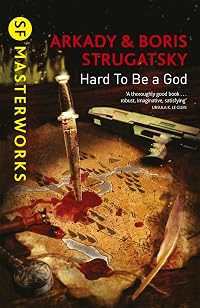
Hard to be a god
by Arkady Strugatsky, Boris Strugatsky
Noon Universe, Chronological (4), Noon Universe (4)
On This Page
Description
Don Rumata has been sent from Earth to the medieval kingdom of Arkanar with instructions to observe and to save what he can. Masquerading as an arrogant nobleman, a dueler, and a brawler, he is never defeated, but yet he can never kill. With his doubt and compassion, and his deep love for a local girl named Kira, Rumata wants to save the kingdom from the machinations of Don Reba, the first minister to the king. But given his orders, what role can he play? This long overdue translation will show more reintroduce one of the most profound Soviet-era novels to an eager audience. show lessTags
Recommendations




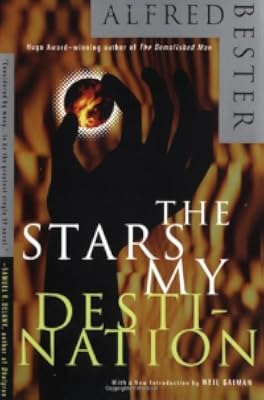


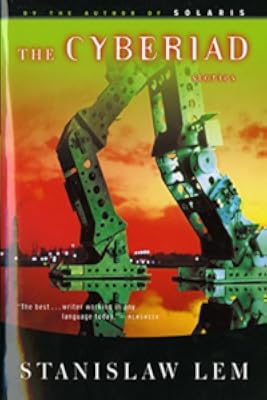


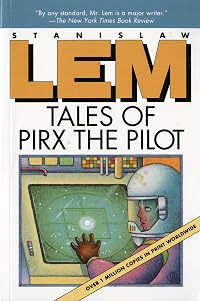
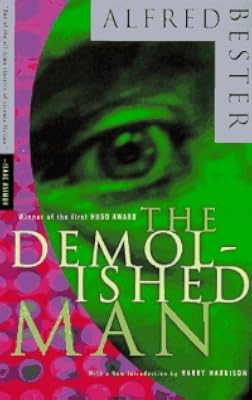









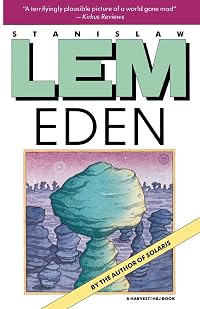
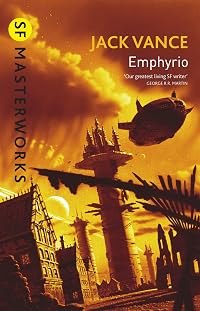
Member Recommendations
prezzey Banks seems to have been inspired by the Strugatskys' concept of Progressors. Similar theme, different perspective (Western vs Eastern bloc) - if you liked one, you will probably be interested in the other.
Member Reviews
This is my third Strugatsky work (The Dead Mountaineer's Inn and Roadside Picnic) and likely not the last. The premise is the future (violence and political turmoil are a thing of the past) with space travel and concern to help prevail. Having come across a planet so earth-like as to be virtually identical (homo sapiens top of the food chain) but mired in medieval chaos, 'historians' are sent to 'observe' and where possible tweak things in the direction of enlightenment. The soviet way has prevailed in this future world, and the initial story was meant to be apolitical and fun--except in the USSR of the early 1960's (when the book was written)--that was not an option. The protagonist/hero, Don Rumata (Anton) has been in this world for show more three years, posing as a powerful and wealthy aristocrat in a very class/caste oriented society, top dog. He isn't a god, but he might as well be with his unlimited gold and impervious armour. Rumata has been trying to save anyone who shows any spark but even the best are not ready to progress beyond their own personal situation/salvation. He feels increasingly hopeless, intuiting a situation beyond anything that ever happened on earth, that any of their "Basis Theory" of history encompasses. The man behind this, Don Reba (oddly resonant with Beria) has seized control of the area Rumata is observing, but Rumata cannot figure him out--no motivation or purpose is perceivable, just ever increasing violence and chaos which moreover Reba doesn't even, really, seem to relish but is compelled to keep on with even to his own downfall. Knowing great violence will erupt the next day, Rumata ponders: "Two hundred thousand people! To a visitor from Earth they all had something in common. It was probably the fact that almost without exception, they were not yet humans in the modern sense of the word, but blanks, unfinished pieces, which only the bloody centuries of history could one day fashion into true men, proud and free." This passage, on p 145 of my copy, lies at the heart of where the story, meant once to be light-hearted adventure, turned into an exploration of the constant tension between pure self-interest and working for the benefit of the aggregate. Kind of timely. Or perhaps always timely. Not an SF light read. As with like Roadside Picnic a book with so much in it, humor, imagination, heart and soul and seriousness. The greatest flaw is that, apparently, in the future, women don't play much of a part in the big affairs. The Strugatskys' were men of their time in that regard after all. **** show less
The outline of the story is pretty much a TNG episode; advanced human civilization observing life on another colony stuck at an earlier stage of development. On a deeper level, it's directly attacking Beria (almost by name, as the afterword suggests) and the faults of the soviet union, which while interesting from a nonfictional context doesn't make that good a story in itself. You can follow how they've tried to walk a line with what they can say without running afoul of censors, so as polemic it's also hamstrung.
Roadside Picnic remains their best so far.
Roadside Picnic remains their best so far.
Hard to be a God by the Strugatsky brothers was first published in 1964, and my previous copy, read many years ago, was an early 1970s translation from Wendayne and Forrest Ackermann, no less. However, that edition was actually a secondary translation from a German (probably East German) edition; what was more, it was sourced from the published novel, and so had been through the hands of the Soviet censors. This review is based on a more recent translation by Olena Bormashenko, made in 2014 from the original manuscript and published (in the UK) in Gollancz's SF Masterworks series, which deserves major credit for keeping back-list sf in circulation. It has an introduction by Ken Macleod, which gives some perspective as to the political show more environment that the book was first published in; and an afterword by Boris Strugatsky which recounts in more detail the political events within the Soviet writing community at the time.
Originally conceived as a somewhat baroque Three Musketeers-style adventure, what we have is a story of human observers on a late-Medieval stage planet. They are placed for long periods in the target society, and their movements are recorded and transmitted back to Earth. We follow Anton, in his assumed persona of Don Rumata, a well-placed nobleman. Although there is no cast-iron Prime Directive in the novel, Don Rumata and his colleagues are aware of their duty. They are there to observe, not to intervene - at least, not in any sort of significant way. Obviously, by just being in the society and living within it, they do affect that society in some way; and when they see the society turning towards a repressive regime, they take surreptitious steps to alleviate the condition of some of the oppressed - people who they have identified as key individuals in the development of society in terms of arts, literature and science, spiriting them away to another country on the same world.
This is what distinguishes this novel from a similar plot line in a Western novel. The Strugatskys were brought up within the Soviet system and its underlying Marxist philosophy, that societies pass through various stages - feudal, capitalistic and so on - on the way to the perfected end state, socialism. Marxism taught that this progression was inevitable merely through the progress of human development; therefore, by making comparatively minor interventions, Don Rumata and his colleagues are merely maintaining the overall progress of the alien society towards its inevitable conclusion.
That's not to say that this novel is some sort of Communistic tract; far from it. There's a perfectly good adventure story sitting front and centre and the reader is completely caught up in the derring-do, especially as Don Rumata is a fine swordsman - though he was taught all the techniques of swordsmanship known to Earth, and so displays skill that is way beyond his opponents. But this does not make him invulnerable. Neither does he possess secret trappings of super-science; apart from a secret stash of medicines, a stab vest superior to the local chainmail and a hidden transmutation machine so he can create gold coins to pay his way, he is required to survive by his wits. His humanistic traits are dismissed by the locals as merely the acceptable eccentricities of a member of the nobility, and Don Rumata plays them perfectly straight, and is quite capable of playing the feudal lord when it suits him. And there is no mother-ship waiting to yank him out of trouble; we find that plenty of observers have been caught out and killed in the history of alien observation; but the observers know and accept the risks.
Along the way, Anton/Don Rumata has cause to question what he and his colleagues are doing, and why; some of these ruminations are those that were toned down for the original Soviet publication. The overall effect is of a very human character, in a very realistic setting. That setting certainly isn't an identikit MedievalWorld (TM) one; other lives are appropriately nasty, brutish and short.
I have made a brief comparison between this text and the earlier translation. The language in the earlier version is far less polished and quite awkward at times. The newer translation is a far more fluent production, and indeed manages to convey a wry sense of humour at times. Anyone who already possesses a copy of the earlier version should acquire this new edition and find out what they have been missing, as the new text does make the story spring off the page. show less
Originally conceived as a somewhat baroque Three Musketeers-style adventure, what we have is a story of human observers on a late-Medieval stage planet. They are placed for long periods in the target society, and their movements are recorded and transmitted back to Earth. We follow Anton, in his assumed persona of Don Rumata, a well-placed nobleman. Although there is no cast-iron Prime Directive in the novel, Don Rumata and his colleagues are aware of their duty. They are there to observe, not to intervene - at least, not in any sort of significant way. Obviously, by just being in the society and living within it, they do affect that society in some way; and when they see the society turning towards a repressive regime, they take surreptitious steps to alleviate the condition of some of the oppressed - people who they have identified as key individuals in the development of society in terms of arts, literature and science, spiriting them away to another country on the same world.
This is what distinguishes this novel from a similar plot line in a Western novel. The Strugatskys were brought up within the Soviet system and its underlying Marxist philosophy, that societies pass through various stages - feudal, capitalistic and so on - on the way to the perfected end state, socialism. Marxism taught that this progression was inevitable merely through the progress of human development; therefore, by making comparatively minor interventions, Don Rumata and his colleagues are merely maintaining the overall progress of the alien society towards its inevitable conclusion.
That's not to say that this novel is some sort of Communistic tract; far from it. There's a perfectly good adventure story sitting front and centre and the reader is completely caught up in the derring-do, especially as Don Rumata is a fine swordsman - though he was taught all the techniques of swordsmanship known to Earth, and so displays skill that is way beyond his opponents. But this does not make him invulnerable. Neither does he possess secret trappings of super-science; apart from a secret stash of medicines, a stab vest superior to the local chainmail and a hidden transmutation machine so he can create gold coins to pay his way, he is required to survive by his wits. His humanistic traits are dismissed by the locals as merely the acceptable eccentricities of a member of the nobility, and Don Rumata plays them perfectly straight, and is quite capable of playing the feudal lord when it suits him. And there is no mother-ship waiting to yank him out of trouble; we find that plenty of observers have been caught out and killed in the history of alien observation; but the observers know and accept the risks.
Along the way, Anton/Don Rumata has cause to question what he and his colleagues are doing, and why; some of these ruminations are those that were toned down for the original Soviet publication. The overall effect is of a very human character, in a very realistic setting. That setting certainly isn't an identikit MedievalWorld (TM) one; other lives are appropriately nasty, brutish and short.
I have made a brief comparison between this text and the earlier translation. The language in the earlier version is far less polished and quite awkward at times. The newer translation is a far more fluent production, and indeed manages to convey a wry sense of humour at times. Anyone who already possesses a copy of the earlier version should acquire this new edition and find out what they have been missing, as the new text does make the story spring off the page. show less
I'd read two other novels by the Strugatsky brothers before [b:Hard to Be a God|759517|Hard to Be a God|Arkady Strugatsky|https://i.gr-assets.com/images/S/compressed.photo.goodreads.com/books/1425850190l/759517._SX50_.jpg|41364467] and have observed a theme: they're a real downer. I still want to read more of them, though, as their ideas are ingenious. It's interesting to note from the afterword that [b:Hard to Be a God|759517|Hard to Be a God|Arkady Strugatsky|https://i.gr-assets.com/images/S/compressed.photo.goodreads.com/books/1425850190l/759517._SX50_.jpg|41364467] was originally intended as a fun adventure romp when the brothers began. During the writing process, it gradually became darker and more allegorical. The setting is an show more alien planet, inhabited by what appear to be humans at a feudalistic stage of development. The protagonist Anton is a communist from Earth, there with a small group of others to observe the planet's social development without intervening. Obviously he and the others cannot fully resist meddling, although they try to stay undercover. As the book goes on, Anton and his comrades find it increasingly difficult to reconcile what they observe with 'Basic Theory' (i.e Soviet Marxist historiography). The country where Anton lives slides into proto-fascism while retaining a monarchy, then seems set for theocracy. There is no sign of a socialist movement or technological changes that might catalyse social upheaval; the arts and sciences are brutally suppressed.
The reader can detect hints of the original adventure-romp in the aristocrats who swagger about feasting, drinking, and getting into swordfights. Somehow the contrasting braggadocio of these Dumas-esque figures accentuates the cruel systematic repression of ordinary people. Anton is disgusted by the aristocratic Don Rumata persona he wears and fears that the brutal environment has made him brutish:
The afterword recounts a period of artistic and literary repression in the USSR during the early 1960s. It's not hard to link the Strugatsky brothers' disgust at Soviet anti-intellectual witch hunts to passages like this:
The above quote forms only part of an extended polemic passage two-thirds of the way through, which expounds the whole thesis of the book. Such monologues addressed directly to the reader sit slightly awkwardly alongside action sequences in which Rumata rescues his friends from imprisonment and torture. Then again, that in itself conveys the disjunctions of his role: as an impassive distant observer who is nonetheless enmeshed in events. The people indigenous to the planet have a much more fatalistic perspective.
I experienced [b:Hard to Be a God|759517|Hard to Be a God|Arkady Strugatsky|https://i.gr-assets.com/images/S/compressed.photo.goodreads.com/books/1425850190l/759517._SX50_.jpg|41364467] primarily as a historically interesting critique of the 1960s USSR. It was compelling to read, despite being bleak and not as inventive as [b:Roadside Picnic|331256|Roadside Picnic|Arkady Strugatsky|https://i.gr-assets.com/images/S/compressed.photo.goodreads.com/books/1173812259l/331256._SY75_.jpg|1243896] or [b:The Doomed City|27219742|The Doomed City|Arkady Strugatsky|https://i.gr-assets.com/images/S/compressed.photo.goodreads.com/books/1460505874l/27219742._SY75_.jpg|1560368]. show less
The reader can detect hints of the original adventure-romp in the aristocrats who swagger about feasting, drinking, and getting into swordfights. Somehow the contrasting braggadocio of these Dumas-esque figures accentuates the cruel systematic repression of ordinary people. Anton is disgusted by the aristocratic Don Rumata persona he wears and fears that the brutal environment has made him brutish:
He heard the storm trooper stomping indecisively behind him and suddenly caught himself thinking that insulting words and careless gestures now came naturally to him, that he was no longer playing the role of a highborn boor but had largely become one. He imagined himself like this on Earth and felt disgusted and ashamed. Why? What has happened to me? Where did it go, my nurtured-since-childhood respect and trust in my own kind, in man - the amazing creature called man? Nothing can help me now, he thought in horror. Because I sincerely hate and despise them. Not pity them, no - only hate and despise. I can justify the stupidity and brutality of the kid I just passed all I want - the social conditions, the appalling upbringing, anything at all - but now I see that he's my enemy, the enemy of all that I love, the enemy of my friends, the enemy of what I hold most sacred. And I don't hate him theoretically, as a 'typical specimen', but as himself, him as an individual.
The afterword recounts a period of artistic and literary repression in the USSR during the early 1960s. It's not hard to link the Strugatsky brothers' disgust at Soviet anti-intellectual witch hunts to passages like this:
No country can develop without science - it will be destroyed by its neighbours. Without arts and general culture, the country loses its capacity for self-criticism, begins to encourage faulty tendencies, starts to constantly spawn hypocrites and scum, develops consumerism and conceit in its citizens, and eventually becomes a victim of its more sensible neighbours. Persecute bookworms all you like, prohibit science, and destroy art, but sooner or later you'll be forced to think better of it, and with much gnashing of teeth open the way for everything that is so hated by the power-hungry dullards and blockheads.
The above quote forms only part of an extended polemic passage two-thirds of the way through, which expounds the whole thesis of the book. Such monologues addressed directly to the reader sit slightly awkwardly alongside action sequences in which Rumata rescues his friends from imprisonment and torture. Then again, that in itself conveys the disjunctions of his role: as an impassive distant observer who is nonetheless enmeshed in events. The people indigenous to the planet have a much more fatalistic perspective.
"The essence of man," Budach said, chewing slowly, "lies in his astonishing ability to get used to anything. There's nothing in nature that man could not learn to live with. Neither horse nor dog nor mouse has this property. Probably God, as he was creating man, guessed the torments he was condemning him to and gave him an enormous reserve of strength and patience. It is difficult to say whether this is good or bad. If man didn't have such patience and endurance, all good people would have long since perished, and only the wicked and soulless would be left in this world. On the other hand, the habit of enduring and adapting turns people into dumb beasts, who differ from the animals in nothing except anatomy, and who only exceed them in helplessness. And each new day gives rise to a new horror of evil and violence."
I experienced [b:Hard to Be a God|759517|Hard to Be a God|Arkady Strugatsky|https://i.gr-assets.com/images/S/compressed.photo.goodreads.com/books/1425850190l/759517._SX50_.jpg|41364467] primarily as a historically interesting critique of the 1960s USSR. It was compelling to read, despite being bleak and not as inventive as [b:Roadside Picnic|331256|Roadside Picnic|Arkady Strugatsky|https://i.gr-assets.com/images/S/compressed.photo.goodreads.com/books/1173812259l/331256._SY75_.jpg|1243896] or [b:The Doomed City|27219742|The Doomed City|Arkady Strugatsky|https://i.gr-assets.com/images/S/compressed.photo.goodreads.com/books/1460505874l/27219742._SY75_.jpg|1560368]. show less
The more I think about this book the better it gets.
It starts rather abruptly with a prologue that shows three youngsters wandering around a wilderness to no real purpose. The real function of this prologue isn't clear until the epilogue...
Then suddenly everyone has grown up and we're on a different planet which is remarkably like Earth (same ecology, humans live in a feudal society with mediaeval technology) a bizarre coincidence that is never addressed. We also learn that back home on Earth a genuinely Communist society has taken root globally and technology has advanced greatly - interstellar travel is practised, after all. The visitors from Earth are historical observers - they are supposed to be collecting data to support the show more prevaling theory of history which dictates that there is only one eventual result of human history - the Communist State of course. But things seem to be going wrong - an alarming individual, a minister to the King, seems to be trying to eliminate all centres of learning and all literate individuals. Is it a bid to establish a Totalitarian State? That shouldn't happen according to the accepted theory of history.
The observers from Earth are not supposed to interfere, but it's hard to be a god and remain aloof when surrounded by misery, disease, ignorance, brutality and persecution. What's the right thing to do?
It's a thematically complex novel that nevertheless could be read by a young person simply as a kind of adventure tale. Unsurprisingly many of the themes are political; censorship and suppression of learning, Totalitarianism and will to power, Communist theory, religious oppression, but some are as much ethical: is interference in an attempt to improve the lot of the masses justified or not? And (perhaps the most interesting and unexpected to me) if you take a person from an ideal society, Utopian, safe, stable, moral, with fair and equal distribution of resources and put him in the antithetical situation, largely isolated from his peers, what happens? Does he maintain the moral code of home, or does the society around him eventually corrupt him? What exactly happens at the end is left a little ambiguous but the implication is clear. The impact is made clear in the epilogue, back on Earth, with the three friends from the prologue re-united.
There's an afterword to this translation which appears to date back to 1997, by the surviving Strugatsky brother. It's as fascinating as the book itself, setting a context for its writing that is very illuminating. Initially a straight-forward SF adventure story in the vein of Dumas' Musketeers novels was the sole aim, but it was the early 1960s and the political situation in Russia inevitably reared its ugly head. A furore arose regarding whether the SF community's younger elements' satirical and critical attacks on the status quo of political oppression, ever changing approved political doctrine, hypocrisy were allowable. Older writers, government shills, were loudly complaining. The regime was visibly critical of much of the new art, visual, literary or even musical. Was there going to be a crack-down?
Well, the Strugatskies decided to risk it and turned their prospective piece of pure escapism into an attack on those in power, Communist theory, Totalitarianism in general and the will to power of individuals. The crack-down never came and the book was not treated severely by the censors, though their editor persuaded the authors to change the name of the villain from Rebia (anagram of Beria, a prominent politician of the time) to the marginally more subtle Reba.
The other thing the afterword establishes is that there was a thriving market for SF in Soviet era Russia, big enough to have a society specifically for SF authors, a fact that it would be hard to believe given only the evidence of what has been published in English translation. Another observation is that just as social and political concerns are frequently explored in English language SF, so they were in the Russian SF of that time, with the same somewhat reduced level of scrutiny by dismissive people in power. (Compare with Solzhenitsyn, who published One Day in the Life of Ivan Denisovich in 1962, the same year Hard to be a God was being written).
I'll certainly be looking for the other Strugatsky books with editions in English but I'm also interested in picking up any other Russian SF available in translation to further compare and contrast the trends and themes of Russian and Anglo-American SF. show less
It starts rather abruptly with a prologue that shows three youngsters wandering around a wilderness to no real purpose. The real function of this prologue isn't clear until the epilogue...
Then suddenly everyone has grown up and we're on a different planet which is remarkably like Earth (same ecology, humans live in a feudal society with mediaeval technology) a bizarre coincidence that is never addressed. We also learn that back home on Earth a genuinely Communist society has taken root globally and technology has advanced greatly - interstellar travel is practised, after all. The visitors from Earth are historical observers - they are supposed to be collecting data to support the show more prevaling theory of history which dictates that there is only one eventual result of human history - the Communist State of course. But things seem to be going wrong - an alarming individual, a minister to the King, seems to be trying to eliminate all centres of learning and all literate individuals. Is it a bid to establish a Totalitarian State? That shouldn't happen according to the accepted theory of history.
The observers from Earth are not supposed to interfere, but it's hard to be a god and remain aloof when surrounded by misery, disease, ignorance, brutality and persecution. What's the right thing to do?
It's a thematically complex novel that nevertheless could be read by a young person simply as a kind of adventure tale. Unsurprisingly many of the themes are political; censorship and suppression of learning, Totalitarianism and will to power, Communist theory, religious oppression, but some are as much ethical: is interference in an attempt to improve the lot of the masses justified or not? And (perhaps the most interesting and unexpected to me) if you take a person from an ideal society, Utopian, safe, stable, moral, with fair and equal distribution of resources and put him in the antithetical situation, largely isolated from his peers, what happens? Does he maintain the moral code of home, or does the society around him eventually corrupt him? What exactly happens at the end is left a little ambiguous but the implication is clear. The impact is made clear in the epilogue, back on Earth, with the three friends from the prologue re-united.
There's an afterword to this translation which appears to date back to 1997, by the surviving Strugatsky brother. It's as fascinating as the book itself, setting a context for its writing that is very illuminating. Initially a straight-forward SF adventure story in the vein of Dumas' Musketeers novels was the sole aim, but it was the early 1960s and the political situation in Russia inevitably reared its ugly head. A furore arose regarding whether the SF community's younger elements' satirical and critical attacks on the status quo of political oppression, ever changing approved political doctrine, hypocrisy were allowable. Older writers, government shills, were loudly complaining. The regime was visibly critical of much of the new art, visual, literary or even musical. Was there going to be a crack-down?
Well, the Strugatskies decided to risk it and turned their prospective piece of pure escapism into an attack on those in power, Communist theory, Totalitarianism in general and the will to power of individuals. The crack-down never came and the book was not treated severely by the censors, though their editor persuaded the authors to change the name of the villain from Rebia (anagram of Beria, a prominent politician of the time) to the marginally more subtle Reba.
The other thing the afterword establishes is that there was a thriving market for SF in Soviet era Russia, big enough to have a society specifically for SF authors, a fact that it would be hard to believe given only the evidence of what has been published in English translation. Another observation is that just as social and political concerns are frequently explored in English language SF, so they were in the Russian SF of that time, with the same somewhat reduced level of scrutiny by dismissive people in power. (Compare with Solzhenitsyn, who published One Day in the Life of Ivan Denisovich in 1962, the same year Hard to be a God was being written).
I'll certainly be looking for the other Strugatsky books with editions in English but I'm also interested in picking up any other Russian SF available in translation to further compare and contrast the trends and themes of Russian and Anglo-American SF. show less
I picked this up in bookstore because I was intrigued by the cover. And I have to admit this was very interesting SF story that reads like blend of Time Patrol and Foundation. We follow agents from very advanced humanity civilization from planet Earth (years in the future from now) as they try to subtly guide the humans living on distant planet (this seems to be a colony that is completely cutoff from Earth and is not aware of its very existence). Goal is to direct that society from existing medieval-like state towards the advancements in science and society in general so they can prosper and develop into enlightened society that can (re)establish links with Earth.
Authors excellently portray the dilemma these agents have on how to show more properly direct this society when one has access to advanced technology and knowledge (they are gods in this society for all the means and purposes) but needs to remain in shadows and must not use full powers overtly. All the agents are very emphatic and first and foremost they are humans, meaning they cannot live outside their surroundings and they get touched by all the violence and hard-living conditions of the locals. When they see how society slowly starts to degrade and spiral into reminiscent of Earth's [very] dark age (all caused by unknown variable that popped up unexpectedly - person very similar to Mule from Foundation series) they have to chose whether to continue their undercover guidance from the shadows, trying to save as many people with skills and knowledge as possible, or take active role. And they know that taking active role in leading the society (organizing peasants, fighting wars and revolutions) while that same society can be easily influenced, swayed and forced on the wrong path is something that will only bring more conflict and wont solve anything in the long run.
While they try to guard the civilization they are aware that single-mindedness, superstition and complete social inflexibility cannot be so easily overcome. How does one communicate with non-compromising people that are used to violence and living under the iron ruthless rule of aristocracy. How can people that are kept under very bad conditions of life, constantly on the lookout for ruler's spies and snitches, chased because of knowledge or because of thinking that contradicts the established dogma .... how can one expect people to approach the life from different perspective. Once tyranny puts people into the ground it takes generations to create free thinking society back again.
In all honesty I did not expect the book to be so contemporary. But again considering that authors come from Russia they are more than aware how society can be easily degraded and how difficult it is to recover.
Excellent novel, translation was so good it was pure joy to read the story.
Highly recommended to all fans of SF and especially SF readers that enjoy social aspects of the story. show less
Authors excellently portray the dilemma these agents have on how to show more properly direct this society when one has access to advanced technology and knowledge (they are gods in this society for all the means and purposes) but needs to remain in shadows and must not use full powers overtly. All the agents are very emphatic and first and foremost they are humans, meaning they cannot live outside their surroundings and they get touched by all the violence and hard-living conditions of the locals. When they see how society slowly starts to degrade and spiral into reminiscent of Earth's [very] dark age (all caused by unknown variable that popped up unexpectedly - person very similar to Mule from Foundation series) they have to chose whether to continue their undercover guidance from the shadows, trying to save as many people with skills and knowledge as possible, or take active role. And they know that taking active role in leading the society (organizing peasants, fighting wars and revolutions) while that same society can be easily influenced, swayed and forced on the wrong path is something that will only bring more conflict and wont solve anything in the long run.
While they try to guard the civilization they are aware that single-mindedness, superstition and complete social inflexibility cannot be so easily overcome. How does one communicate with non-compromising people that are used to violence and living under the iron ruthless rule of aristocracy. How can people that are kept under very bad conditions of life, constantly on the lookout for ruler's spies and snitches, chased because of knowledge or because of thinking that contradicts the established dogma .... how can one expect people to approach the life from different perspective. Once tyranny puts people into the ground it takes generations to create free thinking society back again.
In all honesty I did not expect the book to be so contemporary. But again considering that authors come from Russia they are more than aware how society can be easily degraded and how difficult it is to recover.
Excellent novel, translation was so good it was pure joy to read the story.
Highly recommended to all fans of SF and especially SF readers that enjoy social aspects of the story. show less
Fascinating and important work. Published in 1964, I feel that it may have been an influence on, or at least a precursor to, many of my favorite books. I saw thematic similarities with some of Iain Banks’ Culture novels, especially Inversions, and Kage Baker’s Company series.
The story deals with a ‘deep’ agent from an advanced civilization, who is supposed to observe and record the feudal society he’s been planted in, without interfering. However, the society he’s working in is on the verge of a shift from feudalism to fascism. Purges of intellectuals are increasing, and the agent finds it harder and harder to maintain any kind of objectivity. Meanwhile, he also battles the tendency to lose sight of his identity; he finds show more himself becoming more and more like the callous, boorish aristocrat he is impersonating. But he also finds himself truly caring for his native lover…
There’s a lot going on in the relatively brief book. Anton, while maintaining his cover identity as Don Rumata, tries to balance his ethics against the demands of his job. His attempts to rescue the scientists and artists that he sees as the lights of hope in a dark and ignorant world make for an exciting story. But it’s also very philosophical, exploring the ramifications of a non-interference policy, the tendency toward abuse of power, and the nature of humanity.
It’s very interesting to see science-fiction themes which I’ve seen explored from American and European perspectives many times from the point of view of Russian authors. Here, the advanced, peaceful and free society which the researchers are from is, of course, one where the ideals of communism have come to full fruition. I wished I could see more of that world – and may have to seek out some of the Strugatsky brothers’ other books to explore further. However, their vision is not all starry-eyed: the world of Arkanar and its Inquisitorial brutalities are very clearly parallel to abuses and purges from Russia’s history.
Highly recommended – both as a great reading experience, and for anyone interested in the various facets of science fiction as a genre.
Copy provided by NetGalley - thanks for bringing this book to my attention! As always, my opinion is purely my own. show less
The story deals with a ‘deep’ agent from an advanced civilization, who is supposed to observe and record the feudal society he’s been planted in, without interfering. However, the society he’s working in is on the verge of a shift from feudalism to fascism. Purges of intellectuals are increasing, and the agent finds it harder and harder to maintain any kind of objectivity. Meanwhile, he also battles the tendency to lose sight of his identity; he finds show more himself becoming more and more like the callous, boorish aristocrat he is impersonating. But he also finds himself truly caring for his native lover…
There’s a lot going on in the relatively brief book. Anton, while maintaining his cover identity as Don Rumata, tries to balance his ethics against the demands of his job. His attempts to rescue the scientists and artists that he sees as the lights of hope in a dark and ignorant world make for an exciting story. But it’s also very philosophical, exploring the ramifications of a non-interference policy, the tendency toward abuse of power, and the nature of humanity.
It’s very interesting to see science-fiction themes which I’ve seen explored from American and European perspectives many times from the point of view of Russian authors. Here, the advanced, peaceful and free society which the researchers are from is, of course, one where the ideals of communism have come to full fruition. I wished I could see more of that world – and may have to seek out some of the Strugatsky brothers’ other books to explore further. However, their vision is not all starry-eyed: the world of Arkanar and its Inquisitorial brutalities are very clearly parallel to abuses and purges from Russia’s history.
Highly recommended – both as a great reading experience, and for anyone interested in the various facets of science fiction as a genre.
Copy provided by NetGalley - thanks for bringing this book to my attention! As always, my opinion is purely my own. show less
Members
- Recently Added By
Lists

Best Science Fiction Novels
816 works; 430 members

S.F. Masterworks (Complete)
229 works; 15 members

XB-1: Osobnosti zanru doporucuji
67 works; 1 member

SF Masterworks
193 works; 8 members
Author Information

292+ Works 12,126 Members
Popular science-fiction writers, the Strugatsky brothers have used the genre since the 1960s to comment on contemporary society, at times provoking major controversy. It's Hard to Be a God (1964) is a dysutopia with commentary on historical theories. The Snail on the Slope (1966--68) features a KGB-like organization and an extraordinarily show more oppressive atmosphere. Pre-glasnost, glasnost, some of the Strugatskys' major works had to be circulated in samizdat, but the brothers' situation is now dramatically better. (Bowker Author Biography) show less

90+ Works 11,578 Members
Popular science-fiction writers, the Strugatsky brothers have used the genre since the 1960s to comment on contemporary society, at times provoking major controversy. It's Hard to Be a God (1964) is a dysutopia with commentary on historical theories. The Snail on the Slope (1966--68) features a KGB-like organization and an extraordinarily show more oppressive atmosphere. Pre-glasnost, glasnost, some of the Strugatskys' major works had to be circulated in samizdat, but the brothers' situation is now dramatically better. (Bowker Author Biography) show less
Some Editions
Awards and Honors
Notable Lists
Series


Belongs to Publisher Series
Ullstein Science Fiction (31047)
Roman-Zeitung (464)
SF Masterworks (New design)
Présence du futur (161)
DAW Book Collectors (126)
Gallimard, Folio SF (506)
Work Relationships
Is contained in
Hard to be God Monday begins on Saturday Picnic on sidelines One Billion Years Before End World LANGUAGE Trudno byt bogom Ponedelnik nachinaetsja v subbotu Piknik na obochine Za milliard let do kontsa sveta by Boris Strugatskiy Arkadiy Strugatskiy
Is retold in
Has the adaptation
Inspired
Common Knowledge
- Canonical title
- Hard to be a god
- Original title
- Трудно быть богом.; Трудно быть богом [Trudno byt Bogom]
- Alternate titles*
- Es ist schwer, ein Gott zu sein; Ein Gott zu sein ist schwer
- Original publication date
- 1964 (original edition) (original edition); 1973 (English translation) (English translation)
- People/Characters
- Rumata (Anton); Paschka; Anka; Kiun; Vater Kabani; Kondor (show all 28); Hug; Uno; Tameo; Sera; Vater Kin; Bruder Nanin; Waga Koleso; Vater Hauk; Kyra; Ripat; Okana; Pampa; Reba; Vater Gur; Budach; Vater Zupik; Bruder Aba; Muga; Kickus; Keu; Pifa; Arata
- Epigraph
- The sorrow that tortured me, the shame that overwhelmed me, the desperation that wracked my mind, all these I could then feel, but even now I can find no words to express them.
-Peter Abalard
Now one thing I have to tell you. In this particular show you have to be armed to enforce your authority. But you're not to use your weapon under any circumstances. Under any circumstances. Is that quite clear?
-Ernest... (show all) Hemingway - First words
- The black stock of Anka's crossbow was made of plastic, while the strings were chrome steel, operated by a single motion of a noiselessly sliding lever.
When Rumata passed Holy Mica's grave—the seventh and last along the road—it was already completely dark. - Last words
- (Click to show. Warning: May contain spoilers.)He stood over her for a bit, then picked up his swords, slowly descended the stairs, and started waiting for the door to fall ...
(Click to show. Warning: May contain spoilers.)But it wasn't blood—only strawberry juice. - Blurbers
- Le Guin, Ursula K; Sturgeon, Theodore
- Original language
- Russian
*Some information comes from Common Knowledge in other languages. Click "Edit" for more information.
Classifications
- Genres
- Science Fiction, Fiction and Literature
- DDC/MDS
- 891.7 — Literature & rhetoric Literatures of other languages East Indo-European and Celtic literatures Russian and East Slavic languages
- LCC
- PG3488 .T73 .T713 — Language and Literature Slavic languages and literatures. Baltic languages. Albanian language Slavic. Baltic. Albanian Russian literature Individual authors and works 1961-2000
- BISAC
Statistics
- Members
- 1,280
- Popularity
- 19,175
- Reviews
- 36
- Rating
- (3.80)
- Languages
- 17 — Czech, Danish, English, Esperanto, Finnish, French, German, Hungarian, Italian, Polish, Romanian, Russian, Serbian, Slovenian, Spanish, Swedish, Turkish
- Media
- Paper, Audiobook, Ebook
- ISBNs
- 63
- ASINs
- 18