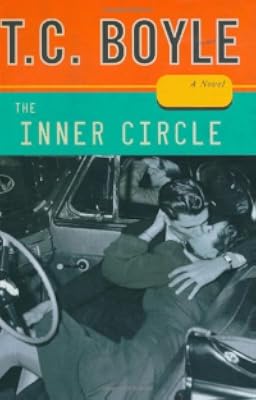
The Inner Circle
by T. Coraghessan Boyle
On This Page
Description
A virginal man with a beautiful wife accepts a job as an assistant to Dr. Alfred Kinsey, a charming professor whose life's calling is sex.Tags
Recommendations

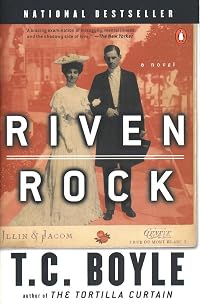
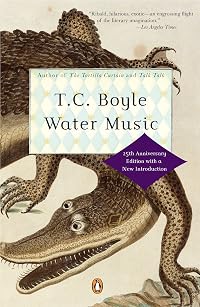


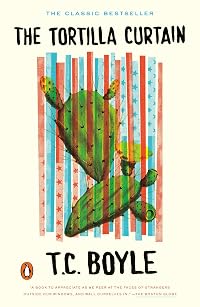
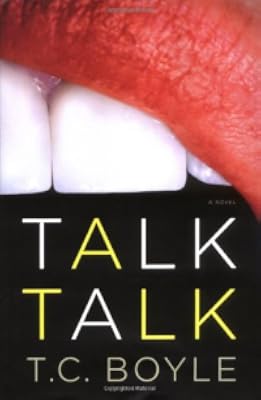
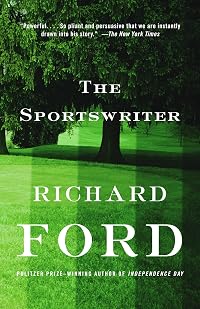
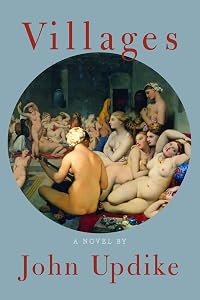
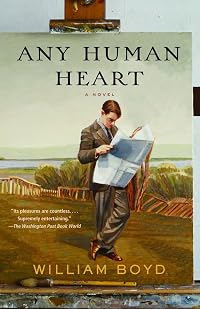
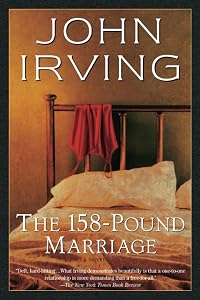



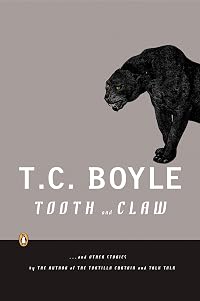

Member Recommendations
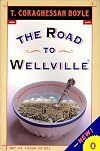


JuliaMaria Empirische Forscher, Sexualität bzw. Bedeutung von Sexualität als wichtiges zu erforschendes Thema
JuliaMaria In Wellness geht es um die Wissenschaft des Placebo-Effekts, die Liebe auf den ersten Blick und die Ehe. In Dr. Sex geht es um die Sexualitätsforschung und -forschenden und die Auswirkung auf deren Liebesleben.
Member Reviews
This book caused more mixed feelings than any that I have read in quite a while. I picked up the book because it was a TC Boyle book without any idea that it was about Dr. Alfred Kinsey, the famous sex researcher in the 40’s. The story is told through the voice of John Milk, Kinsey’s easily manipulated assistant. Through Milk, we learn of the research Dr. Kinsey is performing (and sometimes he really is performing), and the effect that research has on Milk’s own personal life. Milk goes from a sexually naïve undergraduate at Indiana University to a man who buys into Kinsey’s idea that any form of sexual experience is perfectly normal. There are some scenes in the book that are really disturbing. I suppose Dr. Kinsey would call show more me “sex shy”, but a scene involving an infant is disturbing as is any sexual encounter when one of the participants has been forced or manipulated.
I read “The Women” by Boyle and couldn’t help thinking that Kinsey and Frank Lloyd Wright both were masters in controlling others while they had difficulty controlling themselves. Although I’m sure that Kinsey’s research has been valuable, from this book, I’m not convinced his motives were altogether altruistic. Was he really trying to free society from unnecessary guilt and sexual repression, or was he a sexual predator or sex addict (for lack of better terms).
I developed no sympathy for any of the characters in the book except for Iris, Milk’s wife, and then only toward the very end of the book. All of the women appear to be either used or so enthralled by Kinsey that they lost all sense of judgment. In short, it’s a well written book which presents the very “hot topic” of sex in a most detached way. show less
I read “The Women” by Boyle and couldn’t help thinking that Kinsey and Frank Lloyd Wright both were masters in controlling others while they had difficulty controlling themselves. Although I’m sure that Kinsey’s research has been valuable, from this book, I’m not convinced his motives were altogether altruistic. Was he really trying to free society from unnecessary guilt and sexual repression, or was he a sexual predator or sex addict (for lack of better terms).
I developed no sympathy for any of the characters in the book except for Iris, Milk’s wife, and then only toward the very end of the book. All of the women appear to be either used or so enthralled by Kinsey that they lost all sense of judgment. In short, it’s a well written book which presents the very “hot topic” of sex in a most detached way. show less
I’m a big fan of T. C. Boyle, and this book is well-written and meticulously crafted, as I have come to expect from Boyle, but, I was just disgusted with two of the main characters. The novel tells the story of Professor Kinsey and his inner circle of sex researchers. Kinsey and his wife are historical figures, the rest of the characters are fictional. Kinsey is portrayed as overbearing, authoritarian, obsessed, domineering, abusive, and borderline perverted – all of which is probably close to the mark historically. And I really hated him.
The other major character, and the narrator, is John Milk, the first researcher that Kinsey hired. He is weak and easily led, treating Kinsey as a god, to the detriment of his own marriage. I’m show more sure Boyle, in the manner of Dickens, chose Milk’s name on purpose – he really is a milquetoast. I wanted him to stand up to Kinsey, quit his job, maybe buy a gun and take some revenge, but he could never bring himself to do much of anything.
So I liked the writing but hated the two most important characters! What a dilemma… show less
The other major character, and the narrator, is John Milk, the first researcher that Kinsey hired. He is weak and easily led, treating Kinsey as a god, to the detriment of his own marriage. I’m show more sure Boyle, in the manner of Dickens, chose Milk’s name on purpose – he really is a milquetoast. I wanted him to stand up to Kinsey, quit his job, maybe buy a gun and take some revenge, but he could never bring himself to do much of anything.
So I liked the writing but hated the two most important characters! What a dilemma… show less
It’s a love story all right – between John Milk and Dr. Kinsey for the most part. While he never really sees the destructive nature of his devotion to Prok, John does eventually value the love he has for his wife over that he has for Prok. It takes pretty much the whole book for Milk (who is as pale and bland as his name) to figure it out.
Milk is one of those guys who have very low self-esteem, so when Kinsey shows an interest in him and gives him a job, Milk returns it with undying love and blind devotion. It’s amazing how empty Milk’s character is and how much he is ruled by circumstance. He’s a go with the flow kind of guy to the point of not being able to formulate his own thoughts. When Kinsey comes on to him sexually, he show more just goes along. He doesn’t seem to have a thought or feeling about sex with a man at all, he just does it. Blasé is too light a word for Milk’s inability to engage himself in anything. He’s just drifting along with a strong current and goes wherever it takes him.
Kinsey could behave as rigidly, coldly or cruelly as he liked and Milk would just take it. On more than one occasion Kinsey insults and berates Milk only to have Milk shrug it off and make excuses. No matter what the abuse, Milk takes it and one step further; thinks he deserves it. His lack of identity and self-reliance is wearing after a while.
In a way, this makes him a perfect sex researcher. His inability to form an opinion about anything leaves him as a pure instrument for data. There is no stamp of personality on his findings. He does not judge and soon, his weakness allows him to cross the line of research into voyeurism and exploitation. Kinsey’s mantra of not being ‘sex shy’ has let him to push the boundaries of science into pure hedonism. Not only is he having sex with his employees, but encouraging them to adultery, pornography and eventually orgies.
This last ultimately causes Milk to rebel. Instead of one of his usual at home ‘musicale’ gatherings where he plays obscure classical music for friends and acquaintances and instructs them as to what they are hearing, Kinsey invites only the inner circle and wives. He feeds everybody Zombie cocktails which are very potent and pretty soon they are all fairly lit. He leads them upstairs to an attic room where mattresses cover the floor. They obey his instructions to strip and a few of the bolder couples have sex while the rest watch. Kinsey has performed but stays aroused and casually masturbates during the proceedings. When it comes to Milk’s turn, his wife does not want to have sex with him, but with his colleague and sometimes lover to both of them. But Kinsey wants her instead and she flees at the prospect. Milk shoves Kinsey down and takes off after his wife.
This is the proverbial straw for Iris who takes their kid and escapes to her mother’s house. Eventually she comes back, but the time in between is killer for Milk. He drinks all day and doesn’t go to work. The house turns into a pit as does his person. Eventually he does go back to work and is scorned for having shoved Kinsey. How dare he lay hands on him in violence? But Kinsey is pompously forgiving and eventually helps Milk get Iris back. Having a divorced man on staff would be impossible and Milk would have to go otherwise.
Even though Milk remains with Kinsey and continues to do the research as well as participate in the more salacious activities that go along with the job, Iris returns with the knowledge of where the line is and how much John will preserve that line in order to protect her. He is literally lost without her and that appeals. Iris sets out to create as much distance as she can between herself and the rest of the inner circle, eventually she succeeds.
Sex is treated as frankly in this fictionalization as it probably was by the real inner circle. Nothing was taboo and Kinsey sincerely believed that nothing was immoral – all human sexual behavior was allowable and he even did research into children, pedophiles and rapists. I’m not sure that this didn’t warp the already liberal views of sex Kinsey and his closest employees had. Constant exposure to deviant practices allowed Kinsey a broader and broader range of sexual practices that even he at first must have balked at. I have read that towards the end of his life only men interested him and it is true in this novel as well.
The book’s lack of discernable plot was a bit off-putting to me. There wasn’t any point to the tale, just the tale itself which really only focused on Milk and Kinsey; the former completely the creature of the latter. I suppose it could be called a character study, but the narrator didn’t have any character and his subject was a caricature, so I don’t think that works. In the end, it was fairly enjoyable to read albeit not one with a purpose and point. No one in the end was much changed from the time we first encountered them. With Kinsey’s death a lot of their behaviors changed, but they themselves stayed constant. show less
Milk is one of those guys who have very low self-esteem, so when Kinsey shows an interest in him and gives him a job, Milk returns it with undying love and blind devotion. It’s amazing how empty Milk’s character is and how much he is ruled by circumstance. He’s a go with the flow kind of guy to the point of not being able to formulate his own thoughts. When Kinsey comes on to him sexually, he show more just goes along. He doesn’t seem to have a thought or feeling about sex with a man at all, he just does it. Blasé is too light a word for Milk’s inability to engage himself in anything. He’s just drifting along with a strong current and goes wherever it takes him.
Kinsey could behave as rigidly, coldly or cruelly as he liked and Milk would just take it. On more than one occasion Kinsey insults and berates Milk only to have Milk shrug it off and make excuses. No matter what the abuse, Milk takes it and one step further; thinks he deserves it. His lack of identity and self-reliance is wearing after a while.
In a way, this makes him a perfect sex researcher. His inability to form an opinion about anything leaves him as a pure instrument for data. There is no stamp of personality on his findings. He does not judge and soon, his weakness allows him to cross the line of research into voyeurism and exploitation. Kinsey’s mantra of not being ‘sex shy’ has let him to push the boundaries of science into pure hedonism. Not only is he having sex with his employees, but encouraging them to adultery, pornography and eventually orgies.
This last ultimately causes Milk to rebel. Instead of one of his usual at home ‘musicale’ gatherings where he plays obscure classical music for friends and acquaintances and instructs them as to what they are hearing, Kinsey invites only the inner circle and wives. He feeds everybody Zombie cocktails which are very potent and pretty soon they are all fairly lit. He leads them upstairs to an attic room where mattresses cover the floor. They obey his instructions to strip and a few of the bolder couples have sex while the rest watch. Kinsey has performed but stays aroused and casually masturbates during the proceedings. When it comes to Milk’s turn, his wife does not want to have sex with him, but with his colleague and sometimes lover to both of them. But Kinsey wants her instead and she flees at the prospect. Milk shoves Kinsey down and takes off after his wife.
This is the proverbial straw for Iris who takes their kid and escapes to her mother’s house. Eventually she comes back, but the time in between is killer for Milk. He drinks all day and doesn’t go to work. The house turns into a pit as does his person. Eventually he does go back to work and is scorned for having shoved Kinsey. How dare he lay hands on him in violence? But Kinsey is pompously forgiving and eventually helps Milk get Iris back. Having a divorced man on staff would be impossible and Milk would have to go otherwise.
Even though Milk remains with Kinsey and continues to do the research as well as participate in the more salacious activities that go along with the job, Iris returns with the knowledge of where the line is and how much John will preserve that line in order to protect her. He is literally lost without her and that appeals. Iris sets out to create as much distance as she can between herself and the rest of the inner circle, eventually she succeeds.
Sex is treated as frankly in this fictionalization as it probably was by the real inner circle. Nothing was taboo and Kinsey sincerely believed that nothing was immoral – all human sexual behavior was allowable and he even did research into children, pedophiles and rapists. I’m not sure that this didn’t warp the already liberal views of sex Kinsey and his closest employees had. Constant exposure to deviant practices allowed Kinsey a broader and broader range of sexual practices that even he at first must have balked at. I have read that towards the end of his life only men interested him and it is true in this novel as well.
The book’s lack of discernable plot was a bit off-putting to me. There wasn’t any point to the tale, just the tale itself which really only focused on Milk and Kinsey; the former completely the creature of the latter. I suppose it could be called a character study, but the narrator didn’t have any character and his subject was a caricature, so I don’t think that works. In the end, it was fairly enjoyable to read albeit not one with a purpose and point. No one in the end was much changed from the time we first encountered them. With Kinsey’s death a lot of their behaviors changed, but they themselves stayed constant. show less
Disclaimer - I'd pretty much read anything by Boyle and have yet to dislike anything I've read. This is a good example of a subject I am not even remotely interested in and yet I ate this book up. It's not primo Boyle but it's darn good and just a little bit creepy.
I wonder if that's what Kinsey and the folks that worked for him were really like. The amorality of it was very disturbing - not the sex but the rationale behind not interferring with, for example, pedophilia.
It's funny how a book about sex can be so unsexy but I am sure that's purposeful.
I wonder if that's what Kinsey and the folks that worked for him were really like. The amorality of it was very disturbing - not the sex but the rationale behind not interferring with, for example, pedophilia.
It's funny how a book about sex can be so unsexy but I am sure that's purposeful.
Boyle has nearly as much fun with Alfred Kinsey as he did with John Harvey Kellogg, but the basic plot idea is the same as in The Road to Wellville: one half of a young couple becomes an ardent disciple of an eccentric midwestern guru; his other half remains sceptical and their relationship suffers. The difference, of course, is that this time the guru is obsessed with sex, rather than the bowels.
The novel, narrated in the first person by one of Kinsey's researchers, takes as its theme the relationships within the "inner circle" (Kinsey, his researchers, and their wives) as Kinsey leads them into various forms of sexual experimentation. The results are as bizarre as one could wish for, and some of the descriptions of Kinsey's show more experiments and interviews are hilarious.
The plot requires the narrator, John Milk, to be rather dim and lacking in perception, which is funny for a while, but Boyle doesn't really manage to carry it off for the full length of the book. At times, you have the feeling that Boyle is as fed up with Milk as we are. show less
The novel, narrated in the first person by one of Kinsey's researchers, takes as its theme the relationships within the "inner circle" (Kinsey, his researchers, and their wives) as Kinsey leads them into various forms of sexual experimentation. The results are as bizarre as one could wish for, and some of the descriptions of Kinsey's show more experiments and interviews are hilarious.
The plot requires the narrator, John Milk, to be rather dim and lacking in perception, which is funny for a while, but Boyle doesn't really manage to carry it off for the full length of the book. At times, you have the feeling that Boyle is as fed up with Milk as we are. show less
This is the fictionalized story of Dr. Alfred Kinsey, the zoologist at Indiana University who revolutionized the field of sex research and authored The Kinsey Report. The novel is narrated by John Milk, a (fictional) assistant to Kinsey and a member of his inner circle of aides, assistants and their spouses. Milk is presented as a worshipful innocent, and Kinsey as charismatic and manipulative of his circle--Kinsey's view is that sex is strictly animalistic, and he requires all his "inner circle" to have sex with him, his wife, and with each other's spouses--sometimes with an audience.
Boyle is an excellent writer, although this is not his best book. The plot keeps the pages turning and all the characters are well-developed. An show more interesting look at an iconic figure. show less
Boyle is an excellent writer, although this is not his best book. The plot keeps the pages turning and all the characters are well-developed. An show more interesting look at an iconic figure. show less
I am not sure what to think about this book. I don't think it is a badly written book or bad storytelling at all, but I hated the main character so much that it spoiled the book for me. The story was told from a first person perspective by a coworker of the sex researcher Kinsey, but instead of making me inclined to understand the storyteller's dilemmas it made me loathe him even more.
He was hypocritical, two-faced, and a weak character. He did everything to please Kinsey, even if it meant alienating his wife. He prided himself on being liberated but applied totally different standards to his wife's liberation. His reluctance to let anyone criticise Kinsey didn't help. In short: he was not a likable character.
I'm unsure if T.C Boyle did show more this on purpose: question the so called liberator of America by exposing how two faced even he and his "Inner Circle" acted. If that was the intend, then it wasn't successful. It only exposed his weak little underling. I don't mind weak heroes, but they have to have at least one redeeming quality. This storyteller didn't redeem himself at all and I hated the book even more for that.
I know a lot of people who like T.C Boyle's books, so I assume it's just me who either doesn't get it, or just plainly doesn't like that kind of writing. show less
He was hypocritical, two-faced, and a weak character. He did everything to please Kinsey, even if it meant alienating his wife. He prided himself on being liberated but applied totally different standards to his wife's liberation. His reluctance to let anyone criticise Kinsey didn't help. In short: he was not a likable character.
I'm unsure if T.C Boyle did show more this on purpose: question the so called liberator of America by exposing how two faced even he and his "Inner Circle" acted. If that was the intend, then it wasn't successful. It only exposed his weak little underling. I don't mind weak heroes, but they have to have at least one redeeming quality. This storyteller didn't redeem himself at all and I hated the book even more for that.
I know a lot of people who like T.C Boyle's books, so I assume it's just me who either doesn't get it, or just plainly doesn't like that kind of writing. show less
Members
- Recently Added By
Published Reviews
ThingScore 75
A great subject imperfectly tamed and controlled. Well worth reading, but not Boyle’s best.
added by Richardrobert
Lists

real people in fiction circumstances
74 works; 10 members
Books Read in 2005
174 works; 7 members
Author Information

103+ Works 28,046 Members
T. C. Boyle was born Thomas John Boyle in Peekskill, New York on December 2, 1948. He received a B.A. in English and history from SUNY Potsdam in 1968, a MFA from the University of Iowa Writers' Workshop in 1974, and a Ph.D. degree in nineteenth century British literature from the University of Iowa in 1977. He has been a member of the English show more department at the University of Southern California since 1978. He has written over 20 books including After the Plague, Drop City, The Inner Circle, Tooth and Claw, The Human Fly, Talk Talk, The Women, Wild Child, and When the Killing's Done. He has received numerous awards including the PEN/Faulkner Award for best novel of the year for World's End; the PEN/Malamud Prize in the short story for T. C. Boyle Stories; and the Prix Médicis Étranger for best foreign novel in France for The Tortilla Curtain. His title's Sam Miguel and The Harder They Caome made The New York Times Best Seller List. (Bowker Author Biography) T. Coraghessan Boyle is the best-selling author of "T.C. Boyle Stories," "Riven Rock," "The Tortilla Curtain," "Without a Hero," "The Road to Wellville," "East Is East," "If the River Was Whiskey," "World's End" (winner of the PEN/Faulkner Award), "Greasy Lake," "Budding Prospects," "Water Music," & "Descent of Man" (all available from Penguin). His fiction regularly appears in major American magazines, including "The New Yorker," "GQ," "The Paris Review," "Playboy," & "Esquire." He lives in Santa Barbara, California. (Publisher Provided) show less
Some Editions
Awards and Honors
Common Knowledge
- Canonical title
- The Inner Circle
- Original title
- The Inner Circle
- Original publication date
- 2004
- People/Characters
- John Milk; Alfred Kinsey; Paul Sehorn; Clara Kinsey; Corcoran; Rutledge
- Important places
- Bloomington, Indiana, USA
- Epigraph
- Eternity was in our lips and eyes,
Bliss in our brows' bent....
- William Shakespeare, Antony and Cleopatra
Some sort of non-penile stimulation of the female genitalia is almost universal among the lower mammals, where, however, the lack of prehensile hands places the burden of the activity on the nose and mouth of the male.
- A... (show all)lfred C. Kinsey, Sexual Behaviour in the Human Female - Dedication
- For Robert Coover, mi apreciadisimo maestro
- First words
- Looking back on it now, I don't think I was ever actually "sex shy" (to use one of Prok's pet phrases), but I'll admit I was pretty naive when I first came to him, not to mention hopelessly dull and conventional.
Prolo... (show all)gue
For all my bravado that day at the tavern, I have to admit I had my qualms about the interview, and I know this must sound ridiculous coming from me, since I've contributed materially to the project to a degree exceeded only ... (show all)by Corcoran and Prok himself, and ultimately wound up conducting some two thousand interviews on my own, but if the truth be known, I was scared.
Chapter 1
Classifications
Statistics
- Members
- 1,439
- Popularity
- 16,284
- Reviews
- 25
- Rating
- (3.50)
- Languages
- 7 — Danish, Dutch, English, French, German, Italian, Portuguese
- Media
- Paper, Audiobook, Ebook
- ISBNs
- 28
- ASINs
- 12