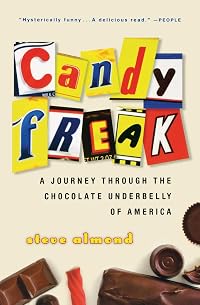
Candyfreak: A Journey through the Chocolate Underbelly of America
by Steve Almond
On This Page
Description
Perhaps you remember the whipped splendor of the Choco-Lite, or the luscious Caravelle bar, or maybe the sublime and perfectly balanced Hershey's Cookies 'n Mint. The Marathon, an inimitable rope of caramel covered in chocolate. Oompahs. Bit-O-Choc. The Kit Kat Dark. Steve Almond certainly does. In fact, he was so obsessed by the inexplicable disappearance of these bars—where'd they go?—that he embarked on a nationwide journey to uncover the truth about the candy business. There, he show more found an industry ruled by huge conglomerates, where the little guys, the last remaining link to the glorious boom years of the candy bar in America, struggle to survive. Visiting the candy factories that produce the Twin Bing, the Idaho Spud, the Goo Goo Cluster, the Valomilk, and a dozen other quirky bars, Almond finds that the world of candy is no longer a sweet haven. Today's precious few regional candy makers mount daily battles against corporate greed, paranoia, and that good old American compulsion: crushing the little guy. Part candy porn, part candy polemic, part social history, part confession, Candyfreak explores the role candy plays in our lives as both source of pleasure and escape from pain. By turns ecstatic, comic, and bittersweet, Candyfreak is the story of how Steve Almond grew up on candy—and how, for better and worse, candy has grown up, too.. show less
Tags
Recommendations





Member Recommendations
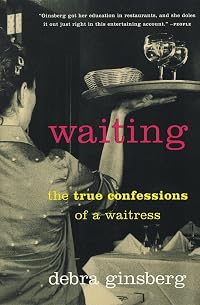
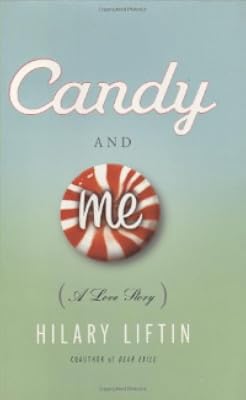
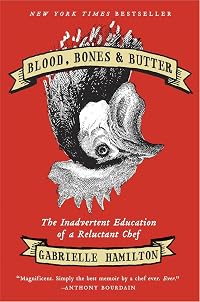
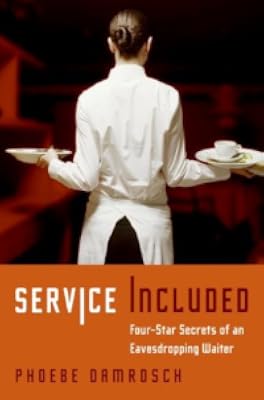
Alliebadger Both of these are similar in that they explore the seedy underbelly of their respective food industries: candy and fast food. They are both witty and informative (and they definitely make you want to eat something).
Member Reviews
Almond reports on his quest to tour small business candy factories and interview their owners while at the same time chronicling his own life-long obsession with candy. So it's part microhistory and part autobiography, as he narrates his childhood love of chocolate bars, his struggles with depression, and his reactions to the political happenings concurrent with his candy-tour travels.
I have mixed feelings about this one. I loved the history of candy in America and the descriptions of the factories and how the candies are made. I also really enjoyed Almond's self-deprecating and sometimes downright goofy sense of humor. What didn't work so well for me was the way he approached the topic of his own bouts of depression, his childhood show more (which he sometimes seems to describe as awful and lonely and at others as really not...), and his current loneliness, which he chalks up to being bad at relationships. He tries to tie the personal stuff to the candy stuff with the notion that candy was and is his one source of comfort and happiness, but the link seems awkward and forced in places; it feels like this should be two separate books, mostly because there is an inconsistency not only in the topics but in the tone as well. When he slides into talk of his own misery, the goofiness slides off the self-deprecation and everything gets...awkward. show less
I have mixed feelings about this one. I loved the history of candy in America and the descriptions of the factories and how the candies are made. I also really enjoyed Almond's self-deprecating and sometimes downright goofy sense of humor. What didn't work so well for me was the way he approached the topic of his own bouts of depression, his childhood show more (which he sometimes seems to describe as awful and lonely and at others as really not...), and his current loneliness, which he chalks up to being bad at relationships. He tries to tie the personal stuff to the candy stuff with the notion that candy was and is his one source of comfort and happiness, but the link seems awkward and forced in places; it feels like this should be two separate books, mostly because there is an inconsistency not only in the topics but in the tone as well. When he slides into talk of his own misery, the goofiness slides off the self-deprecation and everything gets...awkward. show less
I was totally taken off guard with how funny this book was. I went to read the introduction one day and found myself 30 pages into the book in no time at all. What I expected to be a somewhat dry documentary of the history of candy turned out to be a hilarious personal account of a lifetime spent worshipping candy of all types. I was dying at his various interludes such as "mistakes were made," candy so terrible nobody should ever eat it. After the opening section that documents his interest in sweets, most of the rest of the book is spent with the author taking trips from factory to factory, recording a diverse number of candies and their manufacturing process. I pestered my friends and family for months with anecdotes after reading it.
If you are on a diet....do not read this book. A trip down memory lane of nostalgia for all the candy favourites of our lives that have been discontinued and for which we continue to look. My personal lost madeline is an orange coloured ball, the size of a small jaw breaker, made with coconut and very chewy and lasted a long time. You sucked it like a jaw breaker until the orange coating was gone and exterior slightly softened by saliva and heat of your mouth until you could bite into it and start to chew. I have searched for some record of this for thirty years and since the internet even more but have found no trace anywhere except one person who was also looking for the same candy on line in one of the question blogs. The candy was show more sold in the mid 50's at every corner smoke shop/candy shop. The author of this book was on a somewhat similar quest but on a large scale...all those hundreds and hundreds of chocolate bars that have gone out of existence. My diet yesterday was trashed as reading this drool worthy book set me craving chocolate like a mad woman. show less
This book vacillates between the hysterical and the depressing. Most of it's pretty funny -- the author's adventures in eating candy and learning more about how the sugary goodness is made. He visited small regional candy companies, each very different from the last. (My favorite was Sifer Valomilk, just because it sounded adorably anachronistic.) There is some about the history of modern candy and the changes in the markets over the years. But it's also a sad book, because the Big Three companies -- Mars, Nestle, and Hershey -- are killing off small candy businesses, and the owners of the small companies profiled in this book are almost all on the verge of either bankruptcy or sale.
Candyfreak is a very moving book, and a quick read, show more and very worth picking up. Just don't read it when you're hungry... show less
Candyfreak is a very moving book, and a quick read, show more and very worth picking up. Just don't read it when you're hungry... show less
Steve Almond opens his new book Candyfreak: a Journey Through the Chocolate Underbelly of America with a section called "Some Things You Should Know About the Author." Item #1: The author has eaten a piece of candy every single day of his entire life. He then asks us to say a little prayer on behalf of his molars.
In truth, it's our teeth we should be worried about because, if you're anything like me (and if you aren't, then why the hell not?), after reading Candyfreak, you'll go out and binge-gorge on chocolate bars. And not just any candy bars, mind you—the candy that's lovingly produced in small factories like Marty Palmer's in Sioux City, Iowa where conveyor belts carry a daily parade of Twin Bings ("Imagine, if you will, two show more brown lumps, about the size of golf balls, roughly textured, and stuck to one another like Siamese twins. The lumps are composed of crushed peanuts and a chocolate compound. Inside each of the lumps is a bright pink, cherry-flavored filling.").
Even before turning the last page of Almond's mouth-watering love letter to American candy, I was at the local Gas-n-Go snatching crinkly-wrapped bars off the racks. Unfortunately, all my local store had to offer were the bland products of the Big Three chocolate companies—Nestle, Hershey's and Mars—and I had to satisfy my craving with boring brown planks of chocolate-nuts-nougat like Snickers, Baby Ruth and Milky Way. I was sorely disappointed in the mild, crumbling chocolate, the mealy, deflated crisped rice and the varnish-colored caramel (to paraphrase Almond).
What I really wanted was an Idaho Spud.
Those of you who didn't grow up in the immediate neighborhood of the "Famous Potatoes" State probably haven't heard of the Idaho Spud. Your loss. And I weep for you.
I live in Alaska now, miles and years from my childhood home in Wyoming, but I can still taste the Spud on my tongue. Shaped like a Twinkie, it's a chocolate-and-coconut-covered lump made of marshmallow filling flavored with maple, vanilla and dried cocoa. Until I read Almond's book, I hadn't realized that the ingredients also included ager ager, a seaweed derivative. That's not enough to dampen my lust for Spud and reading about Almond's trip through the Boise candy plant made me teary-eyed with nostalgia for the days as a teenager when I'd smuggle Idaho Spuds into my bedroom, carefully, quietly tearing open the brown wrappers so as not to trigger parental radar. Then I'd sprawl across my bed, sink my teeth into the slightly-firm chocolate shell and feel something akin to a prepubescent orgasm when that spongy marshmallow-maple-vanilla-cocoa-seaweed filling slid through my mouth. I'd read my Hardy Boys books or think about all the wonderful things I'd do with Tracey Albrecht if by some freak miracle I ever got her alone in my bedroom, savoring with masturbatory pleasure those bites of Spud which were always gone too soon. Then I'd carefully brush the flaky crumbs of coconut from the front of my shirt onto the floor where I ground them into the carpet with my shoe in the vain hope that my parents wouldn't notice the detritus of my pleasure. So, yes, Spuds filled my veins for many years, as did the sugar of Charleston Chews, BB-Bats, Big Hunks, Wacky Wafers, Cup of Golds, and Mallo Cups.
I mention this because we all have stories about candy that was an intimate staple of our youth. Reading Candyfreak is bound to bring those memories to the surface. Indeed, the book came about because of Almond's own longing for candy which seems to have inexplicably disappeared from stores over the years.
Oh where are you now, you brave stupid bars of yore? Where Oompahs, those delectable doomed pods of chocolate and peanut butter? Where the molar-ripping Bit-O-Choc? And where Caravelle, a bar so dear to my heart that I remain, two decades after its extinction, in an active state of mourning?
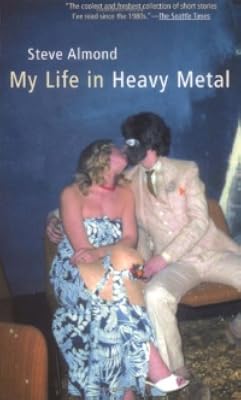
Candyfreak is the funniest, most endearing book I've read in a long time. Almond, whose previous book was the short-story collection My Life in Heavy Metal, is spot-on in his evocative descriptions of not only the Candy of Our Youth, but in the way we lived back in the 70s. He rhapsodizes about how candy triggers nostalgic secretions in our brains then goes on to describe how he burned heads off Gummy Bears in his ninth-grade science class ("I loved the way the little gummy bear heads would sizzle and smoke, and the syrupy consistency of the resulting mess."). He talks about Halloween with the kind of reverence some folks reserve for Christmas ("There's something incredibly liberating about a holiday that encourages children to take candy from strangers.").
This is candy porn for the undiscriminating palate. Speaking of palates, did anyone else besides Almond and me suck on Jolly Rancher Stix until they softened and you could mold them with your tongue to the roof of your mouth in retainer-like fashion? ("At a certain point, this habit morphed into an ardent belief that I could use candy to straighten my teeth," he writes.)
This is just one of many moments of personal connection I felt while reading Candyfreak. I should add that I don't always agree with his opinion of certain candies. He has unkind words for marshmallow Peeps and coconut. But I immediately forgive him when he also trashes Jujubes:
The young and fortunate reader may not have heard of Jujubes, and this candy will be hard to describe in a fashion that makes it sound suitable for human consumption. They were basically hard pellets the size and shape of pencil erasers. Indeed, if one were to set Jujubes beside pencil erasers in a blind taste test, it would be tough to make a distinction, except that pencil erasers have more natural fruit flavor.
In these pages, we learn that Oliver R. Chase invented the lozenge cutter which began producing Necco wafers in 1847—later a staple of Union soldiers in the Civil War; that there was once—briefly—a pineapple-flavored Mars bar; and that people used to buy something called the Vegetable Sandwich (dehydrated vegetables covered in chocolate).
We also learn about "slotting fees," the book's most unforgettable villain. Some of the nation's larger retail chains and supermarkets charge tens of thousands of dollars to stock a particular candy bar in the racks near the register, squeezing out the smaller companies who cannot possibly compete with the big-budget Big Three. Slotting fees are partly responsible for the extinction of the beloved Candy of Our Youth.
Almond's fascination with candy initially leads him to send letters to manufacturers asking for factory tours. When he's rebuffed by the big mega-corporations—who, as it turns out, are paranoid about industry spies stealing recipes and techniques—Almond turns to the little guys, the barely-struggling companies spread across the nation. The account of his journey through the sweet, chewy center of America is fresh, funny and, at times, heartbreaking as we witness the hanging-by-a-fingernail survival of these small, independent candy companies. Most of them can't afford the slotting fees to be placed on the checkout-stand impulse racks at Wal-Mart, chain supermarkets, or even the grocery stores in their own home town. So, even though Almond writes rapturously about velvety chocolate commingling with satiny marshmallow filling, we're left with the taste of bittersweet chocolate on the tongue. When it comes down to it, the book's really about the David and Goliath battles being fought every day in the candy industry. One factory's aging machinery is literally patched together with Band-aids and duct tape.
As Almond says in the closing pages of Candyfreak: "In the end, the laws of the candy world were the laws of the broader world: the strong survived, the weak struggled, people sought pleasure to endure their pain." Almond does a marvelous job of turning a candy memoir into a broader statement on cutthroat economics which threaten to homogenize society, turning it into one big, bland nougat. Candyfreak will make you laugh, cheer and cry—but mostly it will make you hungry.
Now if you'll excuse me, I must go inject some marshmallow filling directly into my veins. show less
In truth, it's our teeth we should be worried about because, if you're anything like me (and if you aren't, then why the hell not?), after reading Candyfreak, you'll go out and binge-gorge on chocolate bars. And not just any candy bars, mind you—the candy that's lovingly produced in small factories like Marty Palmer's in Sioux City, Iowa where conveyor belts carry a daily parade of Twin Bings ("Imagine, if you will, two show more brown lumps, about the size of golf balls, roughly textured, and stuck to one another like Siamese twins. The lumps are composed of crushed peanuts and a chocolate compound. Inside each of the lumps is a bright pink, cherry-flavored filling.").
Even before turning the last page of Almond's mouth-watering love letter to American candy, I was at the local Gas-n-Go snatching crinkly-wrapped bars off the racks. Unfortunately, all my local store had to offer were the bland products of the Big Three chocolate companies—Nestle, Hershey's and Mars—and I had to satisfy my craving with boring brown planks of chocolate-nuts-nougat like Snickers, Baby Ruth and Milky Way. I was sorely disappointed in the mild, crumbling chocolate, the mealy, deflated crisped rice and the varnish-colored caramel (to paraphrase Almond).
What I really wanted was an Idaho Spud.
Those of you who didn't grow up in the immediate neighborhood of the "Famous Potatoes" State probably haven't heard of the Idaho Spud. Your loss. And I weep for you.
I live in Alaska now, miles and years from my childhood home in Wyoming, but I can still taste the Spud on my tongue. Shaped like a Twinkie, it's a chocolate-and-coconut-covered lump made of marshmallow filling flavored with maple, vanilla and dried cocoa. Until I read Almond's book, I hadn't realized that the ingredients also included ager ager, a seaweed derivative. That's not enough to dampen my lust for Spud and reading about Almond's trip through the Boise candy plant made me teary-eyed with nostalgia for the days as a teenager when I'd smuggle Idaho Spuds into my bedroom, carefully, quietly tearing open the brown wrappers so as not to trigger parental radar. Then I'd sprawl across my bed, sink my teeth into the slightly-firm chocolate shell and feel something akin to a prepubescent orgasm when that spongy marshmallow-maple-vanilla-cocoa-seaweed filling slid through my mouth. I'd read my Hardy Boys books or think about all the wonderful things I'd do with Tracey Albrecht if by some freak miracle I ever got her alone in my bedroom, savoring with masturbatory pleasure those bites of Spud which were always gone too soon. Then I'd carefully brush the flaky crumbs of coconut from the front of my shirt onto the floor where I ground them into the carpet with my shoe in the vain hope that my parents wouldn't notice the detritus of my pleasure. So, yes, Spuds filled my veins for many years, as did the sugar of Charleston Chews, BB-Bats, Big Hunks, Wacky Wafers, Cup of Golds, and Mallo Cups.
I mention this because we all have stories about candy that was an intimate staple of our youth. Reading Candyfreak is bound to bring those memories to the surface. Indeed, the book came about because of Almond's own longing for candy which seems to have inexplicably disappeared from stores over the years.
Oh where are you now, you brave stupid bars of yore? Where Oompahs, those delectable doomed pods of chocolate and peanut butter? Where the molar-ripping Bit-O-Choc? And where Caravelle, a bar so dear to my heart that I remain, two decades after its extinction, in an active state of mourning?
Candyfreak is the funniest, most endearing book I've read in a long time. Almond, whose previous book was the short-story collection My Life in Heavy Metal, is spot-on in his evocative descriptions of not only the Candy of Our Youth, but in the way we lived back in the 70s. He rhapsodizes about how candy triggers nostalgic secretions in our brains then goes on to describe how he burned heads off Gummy Bears in his ninth-grade science class ("I loved the way the little gummy bear heads would sizzle and smoke, and the syrupy consistency of the resulting mess."). He talks about Halloween with the kind of reverence some folks reserve for Christmas ("There's something incredibly liberating about a holiday that encourages children to take candy from strangers.").
This is candy porn for the undiscriminating palate. Speaking of palates, did anyone else besides Almond and me suck on Jolly Rancher Stix until they softened and you could mold them with your tongue to the roof of your mouth in retainer-like fashion? ("At a certain point, this habit morphed into an ardent belief that I could use candy to straighten my teeth," he writes.)
This is just one of many moments of personal connection I felt while reading Candyfreak. I should add that I don't always agree with his opinion of certain candies. He has unkind words for marshmallow Peeps and coconut. But I immediately forgive him when he also trashes Jujubes:
The young and fortunate reader may not have heard of Jujubes, and this candy will be hard to describe in a fashion that makes it sound suitable for human consumption. They were basically hard pellets the size and shape of pencil erasers. Indeed, if one were to set Jujubes beside pencil erasers in a blind taste test, it would be tough to make a distinction, except that pencil erasers have more natural fruit flavor.
In these pages, we learn that Oliver R. Chase invented the lozenge cutter which began producing Necco wafers in 1847—later a staple of Union soldiers in the Civil War; that there was once—briefly—a pineapple-flavored Mars bar; and that people used to buy something called the Vegetable Sandwich (dehydrated vegetables covered in chocolate).
We also learn about "slotting fees," the book's most unforgettable villain. Some of the nation's larger retail chains and supermarkets charge tens of thousands of dollars to stock a particular candy bar in the racks near the register, squeezing out the smaller companies who cannot possibly compete with the big-budget Big Three. Slotting fees are partly responsible for the extinction of the beloved Candy of Our Youth.
Almond's fascination with candy initially leads him to send letters to manufacturers asking for factory tours. When he's rebuffed by the big mega-corporations—who, as it turns out, are paranoid about industry spies stealing recipes and techniques—Almond turns to the little guys, the barely-struggling companies spread across the nation. The account of his journey through the sweet, chewy center of America is fresh, funny and, at times, heartbreaking as we witness the hanging-by-a-fingernail survival of these small, independent candy companies. Most of them can't afford the slotting fees to be placed on the checkout-stand impulse racks at Wal-Mart, chain supermarkets, or even the grocery stores in their own home town. So, even though Almond writes rapturously about velvety chocolate commingling with satiny marshmallow filling, we're left with the taste of bittersweet chocolate on the tongue. When it comes down to it, the book's really about the David and Goliath battles being fought every day in the candy industry. One factory's aging machinery is literally patched together with Band-aids and duct tape.
As Almond says in the closing pages of Candyfreak: "In the end, the laws of the candy world were the laws of the broader world: the strong survived, the weak struggled, people sought pleasure to endure their pain." Almond does a marvelous job of turning a candy memoir into a broader statement on cutthroat economics which threaten to homogenize society, turning it into one big, bland nougat. Candyfreak will make you laugh, cheer and cry—but mostly it will make you hungry.
Now if you'll excuse me, I must go inject some marshmallow filling directly into my veins. show less
An affectionate romp through candy nostalgia, not omitting biting commentary on the politics of big corporations vs. independent manufacturers
- Frequent forced humor
Not the easiest book to read on the treadmill, filled as it is with virtually pornographic paeans to a variety of candies. Motivated by his great love of candy, Almond tours several independent candy companies still hanging on in the U.S. If you like Americana or still bore your friends with tales of a local candy you enjoyed in your youth and have never seen again, you'll enjoy this book. Almond's love of candy is endearing and the book is both entertaining and informative.
Almond is at his worst when he strains to be funny rather than trusting that his observations are show more amusing on their own, or in juxtaposition with his rather pathos-saturated analyses of what sounds like a reasonably average American childhood. I’d rather read a book that simply includes exposition on the author’s various inadequacies and failures without also having to suffer his attempts at wittiness. The Prologue and Chapter 1 particularly suffer from what I can only describe as a failed attempt to emulate Woody Allen. Don't let this dissuade you from plowing onward to the rest of the book, which is considerably less self-conscious.
The most critical observation I have to make about Candyfreak is that Almond's nostalgia for the golden age of American candy is paired with his contempt for today's analogue of the family-owned candy company of yore: The small organic, gourmet, or specialty candy manufacturer. Though he uses a candy-sampling vocabulary that would do a wine snob proud, Almond presents himself as a proletarian kind of guy who wants nothing to do with the bourgeois piggery of new small candy concerns, and prefers instead to bemoan the crushing of the old candy companies by the Big Three large candy corporations. Yet confusingly he praises and appreciates Lake Champlain Chocolates. Other reviewers have criticized him for his self-disclosures and personal narrative in this book; I'd have liked to hear more, particularly about this seeming paradox, which I can only understand as a conflict between his image of himself and self-conscious image management versus how he actually behaves in the here-and-now. It reminds me of people who enjoy a local microbrew but want to complain about how much it costs; how stupid everyone is to drink it; and how when they were a teen "local beer" meant Ortlieb's, which by god cost $5 a case and wasn't any good, but still evokes one's callow youth. (Note: Not that I know anything about "Joe's beer.") I don't mean to suggest by this comment that Almond's book isn't fun to read, but that there's an inherent schism between what he wants and what he chooses to do. If candy is about the little guy, Almond should visit the little guys who have figured out the niche market for specialty candies; if it's about nostalgia, he should own this as his personal, Proust-like odyssey. The book would be better for it.
Note to Algonquin Books: It's really obvious when you spell agar agar both correctly and as "ager ager" several times in two pages. For a modest fee, I'll correct your proofs.
Note to the author: You consistently eat a great deal of candy, don't gain weight from this, and describe hypoglycemic reactions. Get your blood sugar checked now and then, Steve. I'm not a doctor but you sound like somebody at risk of developing adult-onset Type I diabetes. show less
- Frequent forced humor
Not the easiest book to read on the treadmill, filled as it is with virtually pornographic paeans to a variety of candies. Motivated by his great love of candy, Almond tours several independent candy companies still hanging on in the U.S. If you like Americana or still bore your friends with tales of a local candy you enjoyed in your youth and have never seen again, you'll enjoy this book. Almond's love of candy is endearing and the book is both entertaining and informative.
Almond is at his worst when he strains to be funny rather than trusting that his observations are show more amusing on their own, or in juxtaposition with his rather pathos-saturated analyses of what sounds like a reasonably average American childhood. I’d rather read a book that simply includes exposition on the author’s various inadequacies and failures without also having to suffer his attempts at wittiness. The Prologue and Chapter 1 particularly suffer from what I can only describe as a failed attempt to emulate Woody Allen. Don't let this dissuade you from plowing onward to the rest of the book, which is considerably less self-conscious.
The most critical observation I have to make about Candyfreak is that Almond's nostalgia for the golden age of American candy is paired with his contempt for today's analogue of the family-owned candy company of yore: The small organic, gourmet, or specialty candy manufacturer. Though he uses a candy-sampling vocabulary that would do a wine snob proud, Almond presents himself as a proletarian kind of guy who wants nothing to do with the bourgeois piggery of new small candy concerns, and prefers instead to bemoan the crushing of the old candy companies by the Big Three large candy corporations. Yet confusingly he praises and appreciates Lake Champlain Chocolates. Other reviewers have criticized him for his self-disclosures and personal narrative in this book; I'd have liked to hear more, particularly about this seeming paradox, which I can only understand as a conflict between his image of himself and self-conscious image management versus how he actually behaves in the here-and-now. It reminds me of people who enjoy a local microbrew but want to complain about how much it costs; how stupid everyone is to drink it; and how when they were a teen "local beer" meant Ortlieb's, which by god cost $5 a case and wasn't any good, but still evokes one's callow youth. (Note: Not that I know anything about "Joe's beer.") I don't mean to suggest by this comment that Almond's book isn't fun to read, but that there's an inherent schism between what he wants and what he chooses to do. If candy is about the little guy, Almond should visit the little guys who have figured out the niche market for specialty candies; if it's about nostalgia, he should own this as his personal, Proust-like odyssey. The book would be better for it.
Note to Algonquin Books: It's really obvious when you spell agar agar both correctly and as "ager ager" several times in two pages. For a modest fee, I'll correct your proofs.
Note to the author: You consistently eat a great deal of candy, don't gain weight from this, and describe hypoglycemic reactions. Get your blood sugar checked now and then, Steve. I'm not a doctor but you sound like somebody at risk of developing adult-onset Type I diabetes. show less
Every person in America has something they freak about. For some it's model airplanes; for others it's war re-enactment. Steve Almond's freak focus is candy, and he succeeds at getting the reader just as hyped about it as he is. He professes to have eaten a piece of candy every single day of his life--and he can recall the subtle flavors, textures, and emotions associated with each one. Almond goes around the country, visiting local candy makers, and reveling in both the stories and the free samples that he given by the owners and candy makers he visits. At times, he displays a childish giddiness about his factory visits, but he does manage to parlay his adventures into an outlook on both his past and our future. An excellent read.
Members
- Recently Added By
Lists

Books About Candy
13 works; 5 members

Adult Books for YA Readers
194 works; 6 members
Author Information

Awards and Honors
Awards
Distinctions
Notable Lists
Common Knowledge
- Canonical title
- Candyfreak: A Journey through the Chocolate Underbelly of America
- Original publication date
- 2004-05-04 [2004]
- People/Characters
- Steve Almond
- Epigraph
- See, only a chocolate Jesus will satisfy my soul. ~ Tom Waits
- Dedication
- To Don Ricci Almond, a freak of unparalleled wisdom and sweetness. I love you, Pop.
- First words
- SOME THINGS YOU SHOULD KNOW
ABOUT THE AUTHOR
I. The author has eaten a piece of candy every single day of his entire life.
(Prologue) - Last words
- (Click to show. Warning: May contain spoilers.)There is hope for him yet.
- Blurbers
- Sedaris, Amy; Thorne, John; Perrotta, Tom; Saunders, George; Singleton, George; Malgieri, Nick
Classifications
- Genres
- Nonfiction, General Nonfiction, Biography & Memoir, Food & Cooking
- DDC/MDS
- 338.476641530973 — Society, government, & culture Economics Production Secondary industries and services Services and specific products Technology
- LCC
- HD9330 .C653 .U513 — Social sciences Industries. Land use. Labor Industries. Land use. Labor Special industries and trades Agricultural industries
- BISAC
Statistics
- Members
- 1,335
- Popularity
- 17,897
- Reviews
- 68
- Rating
- (3.77)
- Languages
- English
- Media
- Paper, Audiobook, Ebook
- ISBNs
- 14
- UPCs
- 3
- ASINs
- 11