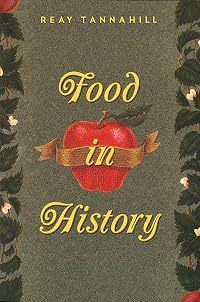
Food in History
by Reay Tannahill
On This Page
Description
Surveys the evolution of man's diverse gastronomic habits, customs, and traditions against their cultural and historical background.Tags
Recommendations
















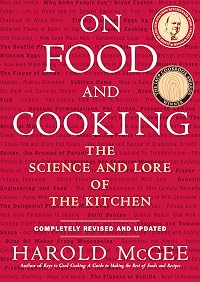
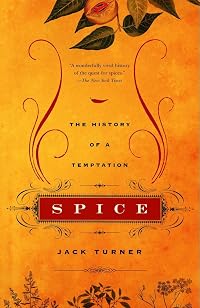
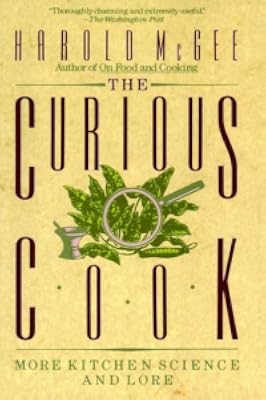

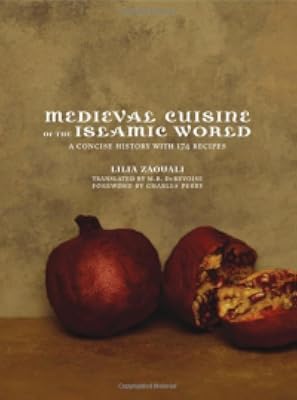



Member Recommendations

Much Depends on Dinner: The Extraordinary History and Mythology, Allure and Obsessions, Perils and Taboos of an Ordinary Meal by Margaret Visser
nessreader Food in history is more of a narrative history of western eating; Much depends has a quirkier layout, being an indepth look at the provenance of key ingredients.
Member Reviews
Food in History strikes just the right balance between an accurate, well-researched treatise and a readable narrative about our place in the universe. Quotations and endnotes abound, and Tannahill uses that astringent, slightly skeptical tone (you're not just going to believe what that text says, are you...?) that fills you with trust in her and reminds you of a favorite teacher. The subject matter is pure genius: you've learned all kinds of things about world history before a few chapters are gone, while you're snickering over medieval table manners. There's a section on foods which were reputed to give you wind! Why isn't this a standard world history textbook?
There's a lot of speculation in the prehistoric section. Some of that is show more fine, but at the 10th instance of 'a housewife must have discovered *** when she left *** next to the stove for a few days' I started to wonder what the author was adding to the discussion. I can spend hours speculating how yogurt was discovered just fine on my own.
The last section, on how we're all going to be eating synthetic protein by the 21st century, is a little bizarre. And the liberal use of the word 'housewife' makes the book seem very Jetsons at times. It was published in the early 70s, though, so we'll give Tannahill a break. show less
There's a lot of speculation in the prehistoric section. Some of that is show more fine, but at the 10th instance of 'a housewife must have discovered *** when she left *** next to the stove for a few days' I started to wonder what the author was adding to the discussion. I can spend hours speculating how yogurt was discovered just fine on my own.
The last section, on how we're all going to be eating synthetic protein by the 21st century, is a little bizarre. And the liberal use of the word 'housewife' makes the book seem very Jetsons at times. It was published in the early 70s, though, so we'll give Tannahill a break. show less
My first Folio Society book and a fascinating one detailing the changes in diet, hunting/gathering/farming of food and its preparation and cooking from pre-history to the beginning of the 21st century. Tannahill not only describes these changes and, for example, regional differences in diet but also explains them, e.g. in hot climates people eat spicy foods which make them perspire which cools them down (and prompts them to drink more fluids).
The book also demonstrates the wide-ranging impact of food-related issues on civilization. Thus science and technology are important (e.g. the effects of the Industrial Revolution on mechanised farming, or indeed simply the invention of the plough, let alone 20th century and later concerns such as show more GMOs and food additives) as are socio-economic issues - e.g. cookery books are only of general use when literacy is widespread, when people have enough disposable income to be able to afford the books and the ingredients and when they have some knowledge or curiosity about foods from outside the immediate vicinity (itself in practical terms necessitating improvements in transportation).
Changes in food can have long-lasting impacts. This doesn't just refer to the change from hunting and gathering to domestication and farming but also, e.g., in colonization - today's taste for refine sugars (and thus the West's obesity crisis) came from the New World plantations worked by African slave labour.
Sri Lanka's ethnic tensions similarly stem from plantations in the colonies. It was not the tea that the country (formerly Ceylon) is famous for, but instead for coffee, produced by Dutch colonists, that the Tamil workforce was brought to the plantations from India.
A fascinating book tracing food from pre-cooking-with-fire beginnings to modern day preoccupations with obesity vs famine, food buzzwords like 'natural' 'healthy' 'organic', diseases such as BSE and Foot and Mouth, additives and genetic modification. show less
The book also demonstrates the wide-ranging impact of food-related issues on civilization. Thus science and technology are important (e.g. the effects of the Industrial Revolution on mechanised farming, or indeed simply the invention of the plough, let alone 20th century and later concerns such as show more GMOs and food additives) as are socio-economic issues - e.g. cookery books are only of general use when literacy is widespread, when people have enough disposable income to be able to afford the books and the ingredients and when they have some knowledge or curiosity about foods from outside the immediate vicinity (itself in practical terms necessitating improvements in transportation).
Changes in food can have long-lasting impacts. This doesn't just refer to the change from hunting and gathering to domestication and farming but also, e.g., in colonization - today's taste for refine sugars (and thus the West's obesity crisis) came from the New World plantations worked by African slave labour.
Sri Lanka's ethnic tensions similarly stem from plantations in the colonies. It was not the tea that the country (formerly Ceylon) is famous for, but instead for coffee, produced by Dutch colonists, that the Tamil workforce was brought to the plantations from India.
A fascinating book tracing food from pre-cooking-with-fire beginnings to modern day preoccupations with obesity vs famine, food buzzwords like 'natural' 'healthy' 'organic', diseases such as BSE and Foot and Mouth, additives and genetic modification. show less
I read this book a few years ago (softcover book), and it sits as a treasured book in my collection (I'd like to have a hard cover of it one day). This is a fantastic reference book. It begins where humans began, back in the caves, and gives archeological evidence as well as common sense theories on how certain foods likely came to be, such as yogurt and butter were probably discovered because of the practice of traveling with milk in the dried stomachs of animals. And one thing leads to another. The book is full of fascinating points on the usage, origin and development of all kinds of food, and not just covering the western world. Nearly every country is mentioned, though as the author freely admits, written history needs to be taken show more with a... grain of salt, so to speak.
I have several food history books in my collection - this one is my favorite that I flip through time and again. show less
I have several food history books in my collection - this one is my favorite that I flip through time and again. show less
Read this for my Food in History course at college and really enjoyed it. Here and there it's a bit repetitive, so I gave it the four stars instead of five because the writing could be tightened a bit. However, the author if British and hilarious here and there, some of the footnotes she adds are just her own comments. If you're interested in the development of food, farming, meals, cuisine, etc, from really the dawn of time through the 1980s, I'd pick this up, even if you only wanted to read a particular section on Food in Sumer or Fillet of Pegasus.
This was the book I read to wind down before bedtime most nights. Interesting without being provocative or overly stimulating, it helped settle my thoughts and was quite calming. I highly recommend it for this purpose. In addition, this book is marvelous for anyone doing research into the history of food (naturally). Meticulously cited.
Food in History
Reay Tannahill
Jul 5, 2010 11:07 AM
Another of my purchases from the Folio Society, reflecting my weakness for acquiring fine books. The author set out to write about the history of food, from pre-historic to modern times, in all areas of the world. It is not comprehensive, but readable, with interesting tales. The prehistoric world is mostly speculation, of course, and in ancient times there are mentions of menus and food, but not always recipes, so the tastes and textures of food are a guess. The Romans used a fish sauce, liquamen, and there are some recipes for gathering it from dried and salted fish. The other major Roman spice was pepper, acquired from India, and silphium, a herb, from North Africa. Silphium show more disappeared from mention and from the markets in the middle of the 1st century, CE, and it is not certain what herb it was. The middle ages cookery was a constant replenished cauldron, and rough bread from mixed rye and wheat flour. India and China have very intricate cuisines, and the new world contributed uexolotl (turkey), potatoes, maize, tomatoes and tobacco. The last part of the book is a bit contentious, remarking on food fads and dieting. Very informative, well written show less
Reay Tannahill
Jul 5, 2010 11:07 AM
Another of my purchases from the Folio Society, reflecting my weakness for acquiring fine books. The author set out to write about the history of food, from pre-historic to modern times, in all areas of the world. It is not comprehensive, but readable, with interesting tales. The prehistoric world is mostly speculation, of course, and in ancient times there are mentions of menus and food, but not always recipes, so the tastes and textures of food are a guess. The Romans used a fish sauce, liquamen, and there are some recipes for gathering it from dried and salted fish. The other major Roman spice was pepper, acquired from India, and silphium, a herb, from North Africa. Silphium show more disappeared from mention and from the markets in the middle of the 1st century, CE, and it is not certain what herb it was. The middle ages cookery was a constant replenished cauldron, and rough bread from mixed rye and wheat flour. India and China have very intricate cuisines, and the new world contributed uexolotl (turkey), potatoes, maize, tomatoes and tobacco. The last part of the book is a bit contentious, remarking on food fads and dieting. Very informative, well written show less
Food in History is an academic, yet readable, overview of food throughout history. From prehistoric hunting and gathering to modern day genetically modified crops, Tannahill looks at how food availability, preparation, and consumption have a profound affect on culture and politics.
The book is divided into broad time categories - first thousands of years and then hundreds. In each section, Tannahill explores food in different broad areas such as the Americas, Europe, Asia, India, Africa, etc. This is not a cookbook - don't expect historical recipes. Also keep in mind that it's an overview - don't expect details on the evolution of every single regional cuisine. Food in History is very well researched and comprehensively documented. show more Tannahill has a pleasant writing style, and just when the material threatens to get a bit too dry, up pops an interesting factoid or anecdote to recapture your interest.
I would recommend this book to anyone interested in how food has helped shape our history.
3 Stars show less
The book is divided into broad time categories - first thousands of years and then hundreds. In each section, Tannahill explores food in different broad areas such as the Americas, Europe, Asia, India, Africa, etc. This is not a cookbook - don't expect historical recipes. Also keep in mind that it's an overview - don't expect details on the evolution of every single regional cuisine. Food in History is very well researched and comprehensively documented. show more Tannahill has a pleasant writing style, and just when the material threatens to get a bit too dry, up pops an interesting factoid or anecdote to recapture your interest.
I would recommend this book to anyone interested in how food has helped shape our history.
3 Stars show less
Members
- Recently Added By
Published Reviews
A fascinating survey of man's diet from earliest cave dwellers, through the first use of fire to heat meat ... to a doomwatch look at chemical additives, fertilizers, synthetic foods and future world demands. ... Quite fascinatingly relates man's development through history to his food.
added by KayCliff
Lists

Best "Foodie" Books
114 works; 40 members

Folio Society
831 works; 49 members
Author Information

21+ Works 4,095 Members
Work Relationships
Common Knowledge
- Canonical title
- Food in History
- Original title
- Food in History
- Original publication date
- 1973-10
- People/Characters
- Jean Anthelme Brillat-Savarin; Antonin Carême; Auguste Escoffier
- Dedication
- For Shirley and John Curley
- First words
- (Preface): When the idea of Food in History first occurred to me, I was mystified by the fact that no one had already written such a book.
(Prologue): It is an obvious truth, all too often forgotten, that food is not only inseparable from the history of the human race, but basic to it.
In the very earliest times nature was in charge and the problem of the food supply was a great deal simpler than it is now -- although perhaps it would be wiser to say 'must have been simpler', since there are as many theorie... (show all)s about prehistory and the pattern of human evolution as there are theoreticians. - Last words
- (Click to show. Warning: May contain spoilers.)Thirty-nine years earlier the answer to the same question had been tomato soup, sole, roast chicken with roast potatoes, peas and sprouts, trifle and cream, chees and biscuits, coffee and wine.
(Click to show. Warning: May contain spoilers.)(Epliogue): Complacency is something neither governments nor scientists can afford, because whatever the shape of the future, the role of food in it will be every bit as decisive as it has been in the past.
Classifications
- Genres
- History, Nonfiction, General Nonfiction, Food & Cooking
- DDC/MDS
- 641.3009 — Applied science & technology Home economics & family management Food, Cooking & Recipes / Meals, Picnics Food History, geographic treatment, biography
- LCC
- GT2850 .T34 — Geography, Anthropology and Recreation Manners and customs (General) Manners and customs (General) Customs relative to private life
- BISAC
Statistics
- Members
- 1,401
- Popularity
- 16,865
- Reviews
- 16
- Rating
- (3.88)
- Languages
- English, German, Italian, Polish
- Media
- Paper
- ISBNs
- 14
- UPCs
- 1
- ASINs
- 10