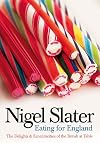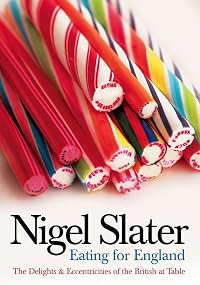
Eating for England: The Delights and Eccentricities of the British at Table
by Nigel Slater
On This Page
Description
Written in a style similar to that of Nigel Slater's multi-award-winning food memoir 'Toast', this is a celebration of the glory, humour, eccentricities and embarrassments that are the British at Table. The British have a relationship with their food that is unlike that of any other country. Once something that was never discussed in polite company, it is now something with which the nation is obsessed. But are we at last developing a food culture or are we just going through the motions? show more 'Eating for England' is an entertaining, detailed and somewhat tongue-in-cheek observation of the British and their food, their cooking, their eating and how they behave in restaurants, with chapters on - amongst other things - dinner parties, funeral teas, Indian restaurants, dieting and eating whilst under the influence. Written in Nigel Slater's trademark readable style, 'Eating for England' highlights our idiosyncratic attitude towards the fine art of dining. show lessTags
Recommendations






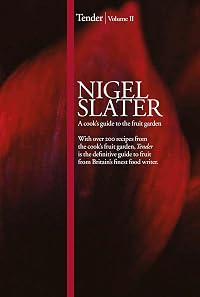



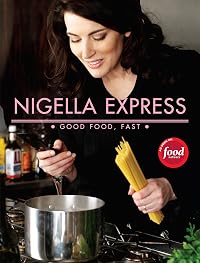


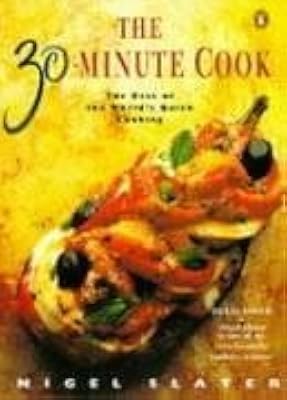

Member Recommendations

Member Reviews
Titbits about the social and psychological significance of different English (but with brief forays to the rest of the UK) food and eating habits, especially those of his childhood in the 60s and 70s (thus overlapping somewhat with the more autobiographical Toast (see my review HERE).
If you're a similar age to him, and grew up middle class in England, it's particularly nostalgic; if not, bits of it may be baffling.
Most topics are only a few paragraphs, and although sometimes one leads into another, it is perhaps better to dip into than read cover to cover (though I did the latter and polished it off in a pleasant Sunday afternoon). Actually, it’s very like “Toast”, but without a chronological narrative and with a little more show more repetition.
Some passages are very poetic, some very funny (e.g. most British puddings are really just glue - grey flour and water, and why Digestives are the dunking choice of adrenaline junkies) or acerbic (writing about new men in the kitchen). Some sections are reminiscent of Alan Bennett, though at times he is more campaigning than AB (e.g. about how little society cares about how and what the elderly are fed and the need to support local independent food shops).
The only negative was that I was a little put out by his suggestion that the few people who don't want dishwashers are women who would feel they had no purpose in life if they couldn't wash the dishes by hand! And the fact he repeats himself a little too often (did I say that already?) – get a better editor. show less
If you're a similar age to him, and grew up middle class in England, it's particularly nostalgic; if not, bits of it may be baffling.
Most topics are only a few paragraphs, and although sometimes one leads into another, it is perhaps better to dip into than read cover to cover (though I did the latter and polished it off in a pleasant Sunday afternoon). Actually, it’s very like “Toast”, but without a chronological narrative and with a little more show more repetition.
Some passages are very poetic, some very funny (e.g. most British puddings are really just glue - grey flour and water, and why Digestives are the dunking choice of adrenaline junkies) or acerbic (writing about new men in the kitchen). Some sections are reminiscent of Alan Bennett, though at times he is more campaigning than AB (e.g. about how little society cares about how and what the elderly are fed and the need to support local independent food shops).
The only negative was that I was a little put out by his suggestion that the few people who don't want dishwashers are women who would feel they had no purpose in life if they couldn't wash the dishes by hand! And the fact he repeats himself a little too often (did I say that already?) – get a better editor. show less
A thick book of short essays about British foods that Slater grew up with, or his parents did and his observations about newer choices in the market. I had a hard time putting it down, as this book explains what barley water, treacle tart or good Lord, spotted dick, are, as you hear them mentioned in a movie or a book and wonder. Slater also writes about many British treats that are now extinct or on the verge and manages to bring his grumpy father and racist aunt into his food memories. A must for Anglophiles or foodies.
I loved this book! It's everything I wanted, but sadly didn't get, from 'Toast', Slater's much-lauded autobiography. Although the format is similar, 'Toast' veered into pretension towards the end and left a sour taste in my mouth, bringing together otherwise pleasant food memories with an altogether more unsavoury sort of anecdote. 'Eating for England', on the other hand, is just plain delicious!
It is split into tiny mini-essays, ranging from a few lines to a couple of pages, each celebrating an aspect of British cuisine. Whether he's commenting on modern cookery habits or extolling the virtues of some traditional teatime treat, Slater's love of food floods every page with warmth, and his humour and pitch-perfect observations made me show more smile in recognition. From the first crack of an After Eight to the colourful splendour of a farmer's market, chips and seaside rock on the pier to a strawberry picnic, the modern Jamie Oliver-inspired Man in the Kitchen to that annoying woman at the supermarket who insists on using every voucher she's collected that week, there's something for everyone here! And of course, toast once again features several times, in all its many guises and delights...
Highly recommended for food lovers and nostalgic souls, not to mention non-Brits who are downright confused by all the strange names, regional variations, and clashes of terminology between Britain and Everywhere Else! My advice? Make yourself a large mug of tea and a slice of cake, curl up in a cozy armchair, and enjoy... show less
It is split into tiny mini-essays, ranging from a few lines to a couple of pages, each celebrating an aspect of British cuisine. Whether he's commenting on modern cookery habits or extolling the virtues of some traditional teatime treat, Slater's love of food floods every page with warmth, and his humour and pitch-perfect observations made me show more smile in recognition. From the first crack of an After Eight to the colourful splendour of a farmer's market, chips and seaside rock on the pier to a strawberry picnic, the modern Jamie Oliver-inspired Man in the Kitchen to that annoying woman at the supermarket who insists on using every voucher she's collected that week, there's something for everyone here! And of course, toast once again features several times, in all its many guises and delights...
Highly recommended for food lovers and nostalgic souls, not to mention non-Brits who are downright confused by all the strange names, regional variations, and clashes of terminology between Britain and Everywhere Else! My advice? Make yourself a large mug of tea and a slice of cake, curl up in a cozy armchair, and enjoy... show less
Having enjoyed Toast: The Story of a Boy's Hunger by Nigel Slater, I thought this would be a great read.
I wish I hadn't bothered with it now! Whilst some bits were mildly enjoyable, I ended up skim reading a lot of it. It had great premise, with chapters named after the food from the 60s, 70s and 80s, e.g 'Jacob's Club', 'Fry's Five Centres', 'The Ritual of the KitKat' and 'Bisto' etc I thought it would be a walk though my childhood.
However, then I got to the chapter "washing up" and couldn't believe the sexist nonsense he was spewing. I mean, the following statement might have been true in the 1950s but now...?!
"An announcement that 'having a machine is not the same as when you do it yourself' is perhaps the last, desperate cry of the show more woman worried her position might be in jeopardy. The idea that she could be replaced by a machine is a thread altogether too real. Losing her husband to another woman would be one thing, but to a machine that did the dishes would be a humiliation altogether too much to bear."
With his slagging off of other celebrity chefs and his sweeping generalisation that British stews are "the colour of washing-up water and smell of old people" (his might be, mine aren't) I decided he was so far up his own backside that I've gone right off him.
What a disappointment. show less
I wish I hadn't bothered with it now! Whilst some bits were mildly enjoyable, I ended up skim reading a lot of it. It had great premise, with chapters named after the food from the 60s, 70s and 80s, e.g 'Jacob's Club', 'Fry's Five Centres', 'The Ritual of the KitKat' and 'Bisto' etc I thought it would be a walk though my childhood.
However, then I got to the chapter "washing up" and couldn't believe the sexist nonsense he was spewing. I mean, the following statement might have been true in the 1950s but now...?!
"An announcement that 'having a machine is not the same as when you do it yourself' is perhaps the last, desperate cry of the show more woman worried her position might be in jeopardy. The idea that she could be replaced by a machine is a thread altogether too real. Losing her husband to another woman would be one thing, but to a machine that did the dishes would be a humiliation altogether too much to bear."
With his slagging off of other celebrity chefs and his sweeping generalisation that British stews are "the colour of washing-up water and smell of old people" (his might be, mine aren't) I decided he was so far up his own backside that I've gone right off him.
What a disappointment. show less
I’ve been a fan of Nigel Slater for a long time. His writing, the humor, his recipes and gardening tips….I’ll read anything he writes. This collection of essays in Eating for England is top notch. As you read his very descriptive writing you can mentally see exactly what he’s talking about. This particular book was published in England and isn’t an American edition. The quality of the actual book is fantastic. The paper is weightier, there is a silk ribbon attached into the spine to mark your pages and the jacket is heavy and smooth. It’s a gorgeous book.
If you are an Anglophile you’ll love this book for the description of everyday life; the shopping, getting tea ready, interactions in the shops, offices and home. I like show more this book even more than I did his autobiographical account in Toast.
This one will always have a place on my overcrowded boom shelf. show less
If you are an Anglophile you’ll love this book for the description of everyday life; the shopping, getting tea ready, interactions in the shops, offices and home. I like show more this book even more than I did his autobiographical account in Toast.
This one will always have a place on my overcrowded boom shelf. show less
Wonderful. I haven't actually read it cover to cover so posting a review may seem somewhat disengenuous - as it is, the book is not so much a sit down and eat it up in a single sitting, rather, take the time to flick through every now and again to find a treasured food memory. Split into short paragraphs about British foodie topics, anyone who enjoys food or indeed wants to rekindle some nostalgia for childhood will enjoy this book. Slater does memory so well that it is difficult not to feel great warmth from pieces covering the ritual unwrapping and pressing of KitKat foil or more obvious turns such as the polarising effect of Marmite. Although I am still a loss to explain why - apart from the physical resemblance - Nigel Slater show more reminds me a great deal of Alan Bennet. There is something quintessentially British "lovable bookish" sort of chap about the both of them, a trait which comes through in their writing. Other books are worth a read on this topic (culinary oddities) such as The Gentlemans Relish, but the tone is distant and cold when compared with Slater and his unmistakable passion for the quirks of a culinary life.
August 2012 Update:
I have now read this book cover to cover, and still concur with the earlier review seen above. In fact my complete digestion of Nigel Slater's observational memoir would suit his style perfectly: I enjoyed it a few pieces at a time while crunching celery, cheese, and on occasion a chocolate bar during my work lunch (half) hour. The perfect way to read it for as long as colleagues are a good humoured bunch, you can share the most tantalising and rib tickling treats from this smorgasbord of all our fond food memories. show less
August 2012 Update:
I have now read this book cover to cover, and still concur with the earlier review seen above. In fact my complete digestion of Nigel Slater's observational memoir would suit his style perfectly: I enjoyed it a few pieces at a time while crunching celery, cheese, and on occasion a chocolate bar during my work lunch (half) hour. The perfect way to read it for as long as colleagues are a good humoured bunch, you can share the most tantalising and rib tickling treats from this smorgasbord of all our fond food memories. show less
It doesn't state anywhere in my copy exactly where these passages were taken from, but I would assume they are from his column in the Observer. I don't know how the sequence was decided upon, but I felt this was a slight flaw in the book - sometimes similar themes were grouped together, but others were mixed about which could sometimes make you wonder if you hadn't already read that passage before.
But besides that, this book was really quite charming. I love how here is a food writer, who fully embraces some of the more naff aspects of British food like mass produced biscuits as well as the higher brow things like organic farmers markets. I'm of a different generation to him, but there were a lot of foods he mentioned that I could join show more in on the nostalgia of (I actually went & bought some Murray Mints after reading about them!). As someone who cooks more out of necessity than passion, & who's talent is limited at best, I also felt I learned a bit from this book too.
The nature of the book being a patchwork of (I assume) previously published passages does make it a bit jumpy, & I mainly preferred the longer passages where he really got into his stride on a topic, but as a light read before bed I felt this was a fairly ok book. But I'll be honest - it wont be a permanent resident on my bookshelf that I'll re-read. show less
But besides that, this book was really quite charming. I love how here is a food writer, who fully embraces some of the more naff aspects of British food like mass produced biscuits as well as the higher brow things like organic farmers markets. I'm of a different generation to him, but there were a lot of foods he mentioned that I could join show more in on the nostalgia of (I actually went & bought some Murray Mints after reading about them!). As someone who cooks more out of necessity than passion, & who's talent is limited at best, I also felt I learned a bit from this book too.
The nature of the book being a patchwork of (I assume) previously published passages does make it a bit jumpy, & I mainly preferred the longer passages where he really got into his stride on a topic, but as a light read before bed I felt this was a fairly ok book. But I'll be honest - it wont be a permanent resident on my bookshelf that I'll re-read. show less
Members
- Recently Added By
Published Reviews
We're living in a golden age of British food. And yet, as Nigel Slater writes in his hilarious and insightful new book Eating for England: The Delights & Eccentricities of the British at Table, we remain a nation obsessed by Dairylea triangles, Jammie Dodgers and takeaway cappuccinos
added by John_Vaughan
Lists

Food Memoirs
97 works; 9 members
Author Information

Some Editions
Common Knowledge
- Original publication date
- 2007
- Important places
- UK; England, UK
- Dedication
- For D and P and in memory of M
- Original language
- English
Classifications
- Genres
- Nonfiction, Food & Cooking, General Nonfiction, Biography & Memoir
- DDC/MDS
- 394.120941 — Society, government, & culture Customs, etiquette & folklore General customs Eating, drinking, using drugs Eating and drinking standard subdivisions History, geographic treatment, biography Europe British Isles - UK, Great Britain, Scotland, Ireland
- LCC
- GT2853 .G7 .S55 — Geography, Anthropology and Recreation Manners and customs (General) Manners and customs (General) Customs relative to private life
- BISAC
Statistics
- Members
- 444
- Popularity
- 69,181
- Reviews
- 16
- Rating
- (3.66)
- Languages
- English, French
- Media
- Paper, Audiobook, Ebook
- ISBNs
- 10
- ASINs
- 3