On This Page
Description
An extraordinary English nanny blows in on the East Wind with her parrot-headed umbrella and magic carpetbag and introduces her charges, Jane and Michael, to some delightful people and experiences.Tags
Recommendations


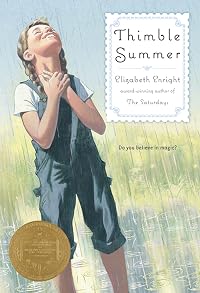
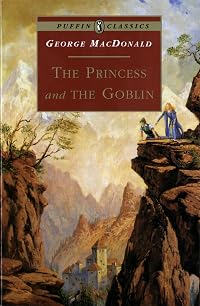
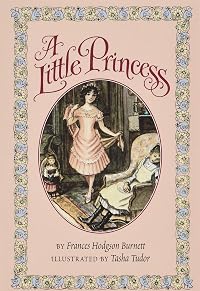
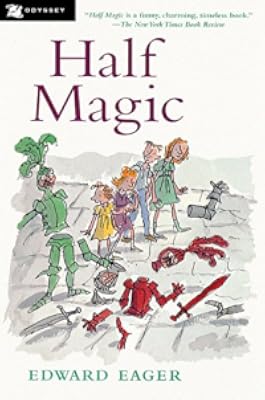

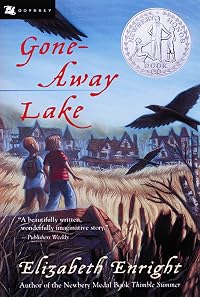
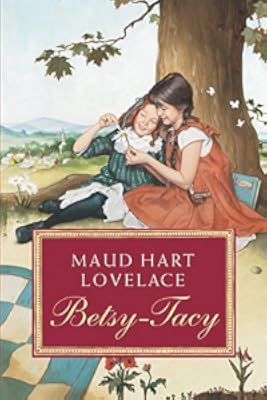
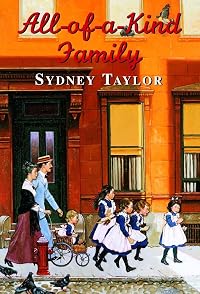
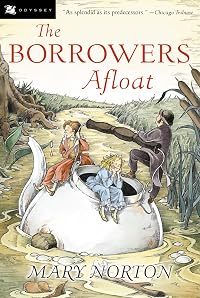
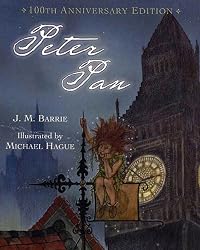
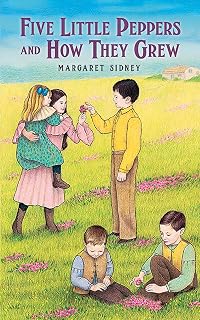
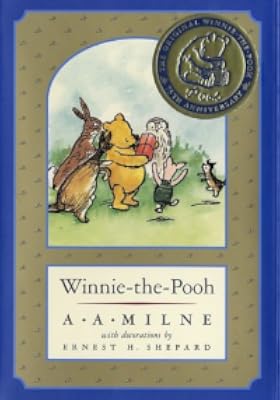

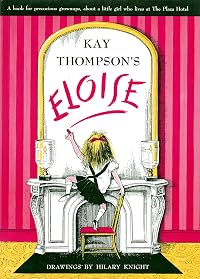
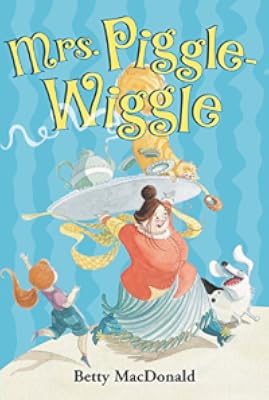
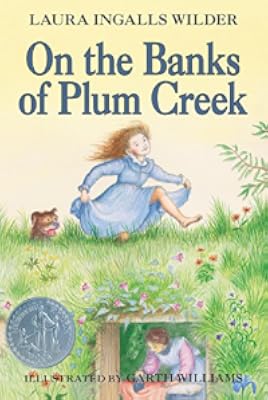
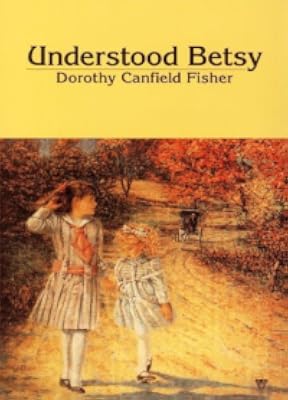
Member Recommendations
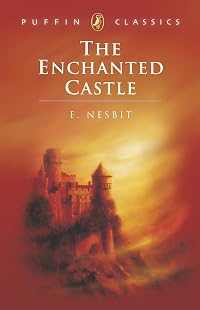
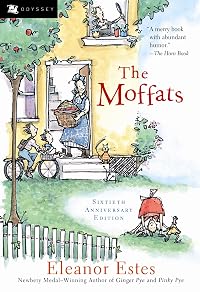
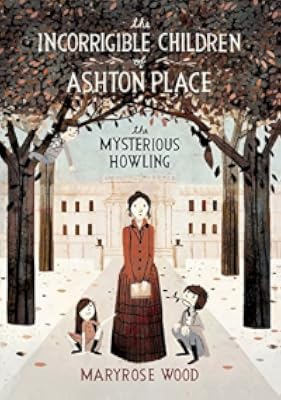
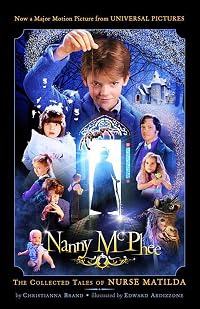
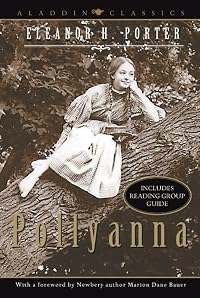
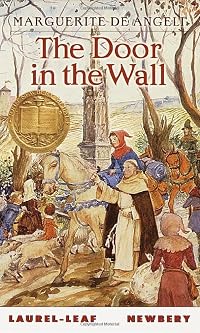
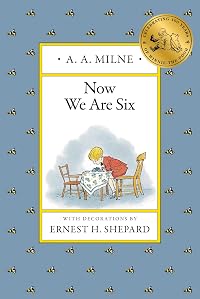
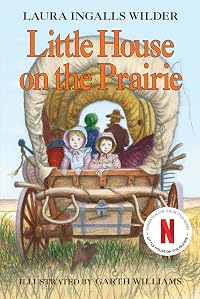
JenniferRobb Both works contain nannies who do miraculous/magical things. There is more romance in Macomber's novel than in Travers'.



Member Reviews
This would have been a four-star review, except for the lack of a plot. The chapters are loosen episodes, which is handy when it comes to story-telling in an afterschool; simply, I did expect the book to tell me a story worth of the name.
This said, the magical adventures are brilliant, Mary Poppins' personality is quirky and not sweet-honey at all, and there is a strange air of eeriness around a couple of episodes, such as the abusive tiny candy-seller who psychologically tortures her gigantic daughters; Mary Poppins herself is half a self-enamoured teenager, half a mytical creature whose eon-ancient age is hinted at in more than one occasion. Definitely worth reading!
This said, the magical adventures are brilliant, Mary Poppins' personality is quirky and not sweet-honey at all, and there is a strange air of eeriness around a couple of episodes, such as the abusive tiny candy-seller who psychologically tortures her gigantic daughters; Mary Poppins herself is half a self-enamoured teenager, half a mytical creature whose eon-ancient age is hinted at in more than one occasion. Definitely worth reading!
Hadn't read the original till now; indeed, the new movie (Mary Poppins Returns) seems to stay quite true to the capricious, vain, forbidding, cold, and kind (in turns) Mary Poppins of the book. She arrives on the East Wind and leaves on the West Wind, and in between she visits all kinds of bewildering wonders on the Banks children, Jane and Michael (and the infant twins Barbara and John). After each adventure or observed oddity that leaves Jane and Michael marveling, Mary Poppins insists she has no idea what they're talking about - a bit like Ms. Frizzle after a field trip, only somehow more sinister.
"Don't you know," she said pityingly, "that everybody's got a Fairyland of their own?" (28)
"But Grown-ups never mean what they say, it show more seems to me." (Barbara to John, 140)
"It's no good asking her. She knows everything, but she never tells," said Jane. (153)
"We are all made of the same stuff, remember..." (Hamadryad to Jane and Michael, 174)
"Could we have imagined it?"
"Perhaps...We imagine strange and lovely things, my darling." (Michael and Mother, 194) show less
"Don't you know," she said pityingly, "that everybody's got a Fairyland of their own?" (28)
"But Grown-ups never mean what they say, it show more seems to me." (Barbara to John, 140)
"It's no good asking her. She knows everything, but she never tells," said Jane. (153)
"We are all made of the same stuff, remember..." (Hamadryad to Jane and Michael, 174)
"Could we have imagined it?"
"Perhaps...We imagine strange and lovely things, my darling." (Michael and Mother, 194) show less
Ms. Travers does not placate to children--and neither does Mary Poppins.
Ms. Travers was steeped in mythologies and folklore and created Mary not as just some nanny but as more of- for lack of a better word- Goddess, or perhaps another easier to understand concept, a Shaman.
For Mary took the children with her on Multidimensional journeys.
Bert, the Match-man, appears in only one chapter and it is subtle in what it implies and completely mysterious...but...it is clear that Bert knows who Mary really is....
Of course, no one should understand her, she is not of this world. She is seen as "vain"; as she "puts on such airs"; gazes at her own reflection in shop-windows; is often "cross." but Mary knows herself as She Is, as sovereign and show more free. She isn't here to conform to this world; she doesn't see her employer as being above her in any way.
"Mary Poppins never wasted time being nice": She wasn't "nice" she was Real and she embodied true kindness on a very deep level. She was stern with the children because the society they lived in demanded they learn discipline. Further more, it grounded them after Journeys that they not dwell too much on what they just saw. Mary was only planting seeds in their consciousness. How they grew up was up to them. show less
Ms. Travers was steeped in mythologies and folklore and created Mary not as just some nanny but as more of- for lack of a better word- Goddess, or perhaps another easier to understand concept, a Shaman.
For Mary took the children with her on Multidimensional journeys.
Bert, the Match-man, appears in only one chapter and it is subtle in what it implies and completely mysterious...but...it is clear that Bert knows who Mary really is....
Of course, no one should understand her, she is not of this world. She is seen as "vain"; as she "puts on such airs"; gazes at her own reflection in shop-windows; is often "cross." but Mary knows herself as She Is, as sovereign and show more free. She isn't here to conform to this world; she doesn't see her employer as being above her in any way.
"Mary Poppins never wasted time being nice": She wasn't "nice" she was Real and she embodied true kindness on a very deep level. She was stern with the children because the society they lived in demanded they learn discipline. Further more, it grounded them after Journeys that they not dwell too much on what they just saw. Mary was only planting seeds in their consciousness. How they grew up was up to them. show less
It seems that many readers, particularly those who are picking this up for the first time as adults, come to Mary Poppins with a host of expectations and preconceptions fostered by the famous Disney film adaptation, starring Julie Andrews and Dick Van Dyke. For whatever reason, the movie Mary Poppins was never one of the fixtures of my childhood - I think I've seen it once, and save for that maddeningly persistent Spoonful of Sugar song, which I have only to think of, for it to be determinedly lodged in my head, I don't have any strong memories of it - so I approached P.L. Travers' classic, first published in 1934, as a wholly independent work. I have no idea, really, how the story here tallies with the film (for a detailed analysis of show more that, see my friend Kathryn's excellent review), although I did detect some similarities to Christiana Brand's tale of Nurse Matilda, another magical nanny/nurse figure, whose adventures have also recently been made into a film (Nanny McPhee).
I enjoyed this story of a rather prickly nanny, whose mixture of good and bad qualities - Mary Poppins is obviously a very kindhearted person, underneath it all, but is frequently a little brusque with the children - makes her feel wholly alive, and very real. I don't know, all told, that I would have found her half as interesting, as a character, if she weren't a little sharp. I liked that there were mysteries which were never fully resolved - Who exactly is Mary Poppins? Why is she the only human being to remember the language of the birds, and of the sun and wind, after her first year? What is her relationship to Mrs. Corry, or to the Hamadryad? - because that reflects one of the central realities of childhood: the wealth of mysterious actions and events which remain mysterious. Sometimes, we just don't find out why things happened. I also enjoyed the black and white illustrations, in my revised edition, done by Mary Shepard, daughter of another noted children's book artist, E.H. Shepard (whose work on the Winnie-the-Pooh books is similarly well-known and loved). I was curious about the revision itself - apparently, Travers herself revised the sixth chapter, "Bad Tuesday," replacing some anachronistically offensive portraits of non-European peoples with animals - and would be interested in tracking down the original, to contrast and compare.
All in all, Mary Poppins was an engagingly magical tale, one I might have awarded four stars, if I had been just a little bit more engaged, emotionally speaking. Perhaps I'm too much of an adult reader, to get the full effect? Whatever the case may be, I definitely plan on reading the subsequent titles in the series! show less
I enjoyed this story of a rather prickly nanny, whose mixture of good and bad qualities - Mary Poppins is obviously a very kindhearted person, underneath it all, but is frequently a little brusque with the children - makes her feel wholly alive, and very real. I don't know, all told, that I would have found her half as interesting, as a character, if she weren't a little sharp. I liked that there were mysteries which were never fully resolved - Who exactly is Mary Poppins? Why is she the only human being to remember the language of the birds, and of the sun and wind, after her first year? What is her relationship to Mrs. Corry, or to the Hamadryad? - because that reflects one of the central realities of childhood: the wealth of mysterious actions and events which remain mysterious. Sometimes, we just don't find out why things happened. I also enjoyed the black and white illustrations, in my revised edition, done by Mary Shepard, daughter of another noted children's book artist, E.H. Shepard (whose work on the Winnie-the-Pooh books is similarly well-known and loved). I was curious about the revision itself - apparently, Travers herself revised the sixth chapter, "Bad Tuesday," replacing some anachronistically offensive portraits of non-European peoples with animals - and would be interested in tracking down the original, to contrast and compare.
All in all, Mary Poppins was an engagingly magical tale, one I might have awarded four stars, if I had been just a little bit more engaged, emotionally speaking. Perhaps I'm too much of an adult reader, to get the full effect? Whatever the case may be, I definitely plan on reading the subsequent titles in the series! show less
Wonderful stuff, i'll definitely be reading some of the sequels. Its not so much a single story as a series of extraordinary events. There is a nice bit of darkness to it which always leaves an impression on younger readers.
Clearly this had some influence on the work of Roald Dahl. In fact there's one scene were people float up to the ceiling which Dahl completely stole for 'Charlie and the Chocolate Factory'. Poppins is also quite probably the basis for Granny Weatherwax from the discworld novels.
This version of Poppins is a very interesting character, she's both far more human and inhuman than the film version. She's vain and proud and goes on dates, oh and she might also be 1/4 King Cobra if i did my math right :) .
Highly show more recommended for young and old. show less
Clearly this had some influence on the work of Roald Dahl. In fact there's one scene were people float up to the ceiling which Dahl completely stole for 'Charlie and the Chocolate Factory'. Poppins is also quite probably the basis for Granny Weatherwax from the discworld novels.
This version of Poppins is a very interesting character, she's both far more human and inhuman than the film version. She's vain and proud and goes on dates, oh and she might also be 1/4 King Cobra if i did my math right :) .
Highly show more recommended for young and old. show less
In some ways, Mary Poppins is a really neat book: it's surreal (in rather a dark way), it's imaginative, with amusingly weird magic (I can see why the potential for colorful set pieces drew Disney), it's not moralizing or otherwise patronizing to its young readers.
On the other hand, I found most of it really boring (I can see why Disney added a frame narrative about Mary Poppins healing the broken nuclear family, despite my huge ideological problems with that frame--at least there's some movement!), and wow it's a little disturbing too! Mary Poppins is freaking cold, always snapping at the children, especially if they dare ask a question or acknowledge the magical adventure she just took them on. She messes with their heads. And then show more she--their primary caregiver--leaves without saying goodbye. So ... okay? Not exactly a nurturing or cheerful nanny.
On the other hand, my six-year-old got a big kick out of most of the magic and surrealism and wasn't thrown by the coldness. Kiddo just figures Mary Poppins is mean. show less
On the other hand, I found most of it really boring (I can see why Disney added a frame narrative about Mary Poppins healing the broken nuclear family, despite my huge ideological problems with that frame--at least there's some movement!), and wow it's a little disturbing too! Mary Poppins is freaking cold, always snapping at the children, especially if they dare ask a question or acknowledge the magical adventure she just took them on. She messes with their heads. And then show more she--their primary caregiver--leaves without saying goodbye. So ... okay? Not exactly a nurturing or cheerful nanny.
On the other hand, my six-year-old got a big kick out of most of the magic and surrealism and wasn't thrown by the coldness. Kiddo just figures Mary Poppins is mean. show less
This was a weird one. I don't think my kids or I really got it. The kids seemed to like it okay up until Michael and Jane went to the zoo. It was around that point that I asked them how they were liking the audiobook.
"It's kind of weird," my eight-year-old said. "I can't really figure out what's going on."
I pretty much agreed with her. Throughout the book, I just couldn't figure out why these kids liked Mary Poppins. She wasn't particularly nice to them. It seemed weird that they loved her even with all of her brusqueness and her refusal to offer anything resembling an emotional connection to them. All of the adults in the story either seemed to lack warmth entirely (like the parents and their complaints about the help) or to reserve it show more only for other adults (like Mary with the match-man). It seemed like a pretty unhealthy attachment, like they clung to her hoping to get warmth from someone (since they certainly weren't getting it from their parents who mostly seemed not to want to be bothered with their kids).
It reminded me of an awkward nannying stint I did the summer after my freshman year of college when I filled in for a family between au pairs. A few weeks into the summer, the parents told the eldest daughter that they were going to send her back to her same school in the fall. Right there in front of her parents, the girl ran to me for comfort, hugging me and crying and saying I was her best friend, and here I was looking from my employers to this child sobbing into my chest and feeling like there was no right thing for me to do in that moment. I couldn't figure out where this strong attachment to me came from after just a few weeks.
That's pretty much how I felt about the kids' attachment to Mary Poppins. It just didn't add up. The book seemed like the story of an incredibly dysfunctional family masquerading as a charming tale of childhood. show less
"It's kind of weird," my eight-year-old said. "I can't really figure out what's going on."
I pretty much agreed with her. Throughout the book, I just couldn't figure out why these kids liked Mary Poppins. She wasn't particularly nice to them. It seemed weird that they loved her even with all of her brusqueness and her refusal to offer anything resembling an emotional connection to them. All of the adults in the story either seemed to lack warmth entirely (like the parents and their complaints about the help) or to reserve it show more only for other adults (like Mary with the match-man). It seemed like a pretty unhealthy attachment, like they clung to her hoping to get warmth from someone (since they certainly weren't getting it from their parents who mostly seemed not to want to be bothered with their kids).
It reminded me of an awkward nannying stint I did the summer after my freshman year of college when I filled in for a family between au pairs. A few weeks into the summer, the parents told the eldest daughter that they were going to send her back to her same school in the fall. Right there in front of her parents, the girl ran to me for comfort, hugging me and crying and saying I was her best friend, and here I was looking from my employers to this child sobbing into my chest and feeling like there was no right thing for me to do in that moment. I couldn't figure out where this strong attachment to me came from after just a few weeks.
That's pretty much how I felt about the kids' attachment to Mary Poppins. It just didn't add up. The book seemed like the story of an incredibly dysfunctional family masquerading as a charming tale of childhood. show less
Members
- Recently Added By
Lists

Favorite Childhood Books
1,651 works; 515 members
1001 Children's Books You Must Read Before You Grow Up
774 works; 101 members

Read the book and saw the movie
1,170 works; 195 members
NPRs Ultimate Backseat Bookshelf: 100 Must-Reads for kids 9-14
222 works; 30 members

501 Must-Read Books
529 works; 72 members

A Child's Book Tour of London
51 works; 7 members

Best Children's Books You've Read
197 works; 74 members

Childhood Favorites
427 works; 24 members

Books Set in Great Britain
191 works; 13 members

Books I've Read More Than Once
602 works; 49 members

Favorite Series
238 works; 94 members
my children books reading list-from 100 great books
101 works; 7 members
Mensa for Kids Excellence in Reading Award Program (Grades 4-6)
64 works; 9 members

Works That Inspired Disney Movies
119 works; 13 members
Comfort Reads
221 works; 41 members
Honey For a Child's Heart
1,152 works; 25 members

Favourite Books
1,819 works; 316 members

Female Protagonist
1,056 works; 57 members

Best Books Set in London
157 works; 42 members
Books with a Character's Name as the Title
130 works; 10 members
Ambleside Books
459 works; 18 members
The 100 Best Fantasy Books of All Time
100 works; 15 members
Survey of Fantasy Classics
111 works; 23 members
Satori Smiles Children's Book List
262 works; 7 members

Fiction with Women's Names in the Title
378 works; 15 members
Female Author
1,234 works; 64 members

Bibliography for How to be a Heroine
148 works; 12 members

CCE 1000 Good Books List
1,033 works; 12 members

Blue Pyramid 1,276 Best Books of All Time
1,248 works; 32 members

Books Read in 2023
5,617 works; 146 members

Romalda Spalding's Writing Road To Reading
213 works; 3 members

Biblioteca esencial de mujeres (100 libros 100)
53 works; 1 member

AR Level 6 in cloudLibrary
77 works; 1 member

Before Austen Comes Aesop
318 works; 9 members

Recommended Reading List
219 works; 1 member

Books We Loved As Children
603 works; 252 members

EGBERTINA'S List of childhood books worthy of merit or unspeakable delight
155 works; 6 members
Books With Our Favorite First Lines
168 works; 104 members
Children's Literature 1900 - 1950 in order
413 works; 8 members

Favorite Kids Books (chapter, middle grade)
170 works; 4 members
The Complete Rory Gilmore Reading List
506 works; 5 members

Books Set in London
49 works; 3 members

Ambleside Y2
33 works; 1 member

Books Read in 2022
5,218 works; 114 members

1930s
262 works; 5 members

Books Read in 2021
5,361 works; 114 members

Books read in 2019
15 works; 1 member

Books tagged "feel good"
129 works; 20 members
Five star books
1,767 works; 110 members

Houghton Mifflin Harcourt
45 works; 1 member
Overdue Podcast
806 works; 9 members
The League of Extraordinary Gentlemen
87 works; 4 members
Works Referenced in The League of Extraordinary Gentlemen
122 works; 6 members

Books Read in 2014
2,343 works; 89 members

The Movie Is Better than the Book: A Rare Phenomena
2 works; 1 member
Author Information

62+ Works 16,851 Members
Born in Australia to an Irish father and a Scottish mother, Helen Lyndon Goff aka. P. L. Travers was a voracious reader and began to write while she was still a child. She did some acting but quickly moved into literary and dramatic criticism; she wrote some highly respected poetry as well. However, it is her series of books for children, starting show more with Mary Poppins (1934), on which her fame rests. The prim, kindly, and enchanting nanny takes charge of the Banks's household and brings the children a seemingly endless stream of fantasy adventures. The book was an immediate success. Walt Disney's (see Vol. 3) musical version, in 1964, brought the stories to an even wider audience. Subsequent books about Mary Poppins include Mary Poppins Comes Back, Mary Poppins Opens the Door, Mary Poppins in the Park, Mary Poppins from A to Z, and Mary Poppins and the House Next Door. Other more recent books include About Sleeping Beauty (1975) and Two Pair of Shoes (1980). Travers was made an Officer of the Order of the British Empire in 1977. She lived into advanced old age, but her health was declining toward the end of her life. Travers died in London on April 23,1996 at the age of 96. (Bowker Author Biography) show less
Some Editions
Awards and Honors
Awards
Notable Lists
Series

Belongs to Publisher Series
Work Relationships
Is contained in
Essential Modern Classics Dreams Collection: Mary Poppins / Ballet Shoes for Anna / White Boots by Harper Collins
Mary Poppins / Mary Poppins Comes Back / Mary Poppins Opens the Door / Mary Poppins in the Park by P. L. Travers
Has the adaptation
Is abridged in
Inspired
Common Knowledge
- Canonical title
- Mary Poppins
- Original title
- Mary Poppins
- Alternate titles*
- Maria Poppins
- Original publication date
- 1934
- People/Characters
- Mary Poppins; Jane Banks; Michael Banks; Mr Banks; Mrs Banks; John Banks (show all 18); Barbara Banks; Mrs Brill; Ellen; Robertson Ay; Herbert Alfred "Bert the Match Man"; Mr Wigg; Mrs Corry; Miss Annie; Miss Fannie; Miss Lark; Maia; Admiral Boom
- Important places
- 17 Cherry Tree Lane, London, England, UK
- Related movies
- Mary Poppins (1964 | IMDb)
- Dedication
- To
My Mother
1875-1928 - First words
- If you want to find Cherry Tree Lane all you have to do is ask the Policeman at the cross-roads.
- Quotations
- But Jane and Michael were not taken in by that snap. For they could see in Mary Poppins's eyes something that, if she were anybody else but Mary Poppins, might have been described as tears.... (p. 194)
Don't you know that everybody's got a Fairyland of their own? - Last words
- (Click to show. Warning: May contain spoilers.)"You have it for tonight, darling," whispered Jane, and she tucked him in just as Mary Poppins used to do...
- Original language
- English
*Some information comes from Common Knowledge in other languages. Click "Edit" for more information.
Classifications
- Genres
- Children's Books, Fiction and Literature, Kids, Fantasy
- DDC/MDS
- 823.912 — Literature & rhetoric English & Old English literatures English fiction 1900- 1901-1999 1901-1945
- LCC
- PZ7 .T689 .M — Language and Literature Fiction and juvenile belles lettres Fiction and juvenile belles lettres Juvenile belles lettres
- BISAC
Statistics
- Members
- 7,734
- Popularity
- 1,470
- Reviews
- 187
- Rating
- (3.83)
- Languages
- 26 — Bulgarian, Catalan, Chinese, Czech, Dutch, English, Estonian, Finnish, French, German, Greek, Hebrew, Hungarian, Italian, Japanese, Lithuanian, Norwegian (Bokmål), Farsi/Persian, Polish, Portuguese, Romanian, Russian, Serbian, Slovenian, Spanish, Swedish
- Media
- Paper, Audiobook, Ebook
- ISBNs
- 177
- UPCs
- 2
- ASINs
- 78