On This Page
Description
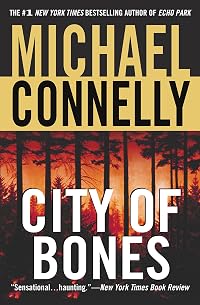
On New Year's Day, a dog finds a bone in the Hollywood Hills--and unearths a murder committed more than twenty years earlier. It's a cold case, but for Detective Harry Bosch, it stirs up memories of his childhood as an orphan. He can't let it go. As the investigation takes Bosch deeper into the past, a beautiful rookie cop brings him alive in the present. No official warning can break them apart--or prepare Bosch for the explosions when the case takes a few hard turns. Suddenly all of L.A. show more is in an uproar, and Bosch, fighting to keep control, is driven to the brink of an unimaginable decision. show lessTags
Recommendations
Member Reviews
This is classic Bosch, the lone wolf (though Coyote is more appropriate), scouring the past - his own and the victim's. A dog uncovers a set of bones in Laurel Canyon which turn out to be human. Evidence on the body points at least two decades back. The victim engaged in a high-risk lifestyle, largely due to a fractured home life. Bosch sees himself in the victim, both aiding the investigation and sending Bosch back to his own fractured youth. Along the way, Bosch gets involved with a rookie and, like most Bosch personal relationships, it ends badly - the specific ending of the relationship is the only detail that largely stretches the bounds of credibility. But it's a failing easily forgiven, as this is one of the standouts in the show more series so far.
5 bones!!!!!
Highly recommended show less
5 bones!!!!!
Highly recommended show less
I was eager to reach this installment in Michael Connelly’s series because the story told in City of Bones constitutes the narrative core for the first season of the TV series, which made me finally aware of this author’s works and introduced me to a very intriguing character. Unlike what happened with previous books, here both narrative paths (book and TV) follow the same progression, so there were no surprises for me story wise, and yet the novel was able to capture my attention from start to finish as if it were completely new - a further demonstration of Connelly’s narrative skills, not that I really needed it at this point…
It’s the first day of the new year, and - unsurprisingly - Harry Bosch is on duty when he’s called show more to the site of a grim discovery: the bones of a murdered child that have been lying in the ground for a long time, probably a couple of decades. Even worse than the murder of a child is the revelation that the poor kid had been the victim of prolonged abuse, as testified by the multiple healed fractures evident in the bones: nothing like this kind of innocent victim can drive Harry Bosch on an unstoppable quest to find the perpetrator, not even the awareness that the long time elapsed might turn into a fruitless search, at times hindered by the LAPD politics which don’t look too kindly on such an expenditure of time and resources for what looks like a very cold case.
But Bosch is quite determined to get to the bottom of this because this time it’s not just a matter of being faithful to his motto “everybody counts, or nobody counts”, which drives him to seek justice for those who don’t have a voice anymore; this time the case feels close and personal, touching on the hardships of his own childhood, spent between uncaring foster families and indifferent institutions after the murder of his own mother. Even though it’s never expressed openly, Bosch feels a kinship with young Arthur Delacroix, the victim, and also the need to avenge his stolen innocence. As he muses at some point:
Child cases haunted you. They hollowed you out and scarred you. There was no bulletproof vest thick enough to stop you from being pierced. Child cases left you knowing the world was full of lost light.
City of Bones is much more than a compelling police procedural, even though it’s a fascinatingly detailed one, because it turns out to be the book in which Bosch’s psychological makeup is explored in greater depth than before, showing how under the abrasive surface of his personality there is a very human individual who built that exterior armor of bluntness as a defense against the injuries of the world. The detective’s flaws are showcased here more than in previous books, often portraying him as fallible, since his single focus on the goal tends to make him ignore peripheral details that are later revealed in their importance, but it’s thanks to these flaws that the human being can be seen, and appreciated.
There are a couple of instances in which we see Bosch lowering his “shields” in this novel: one is focused on his relationship with Julia, a trainee officer who exposes him to the double dangers of letting down his defenses (and later paying the price) and of going against the department’s regulations concerning romantic attachments inside the force. Julia seems just as determined as he is in making a difference, but does so without the years-long experience that the older detective has acquired over time, and this costs her dearly, leaving Bosch saddled with an undefinable sense of guilt that weighs heavily on him. The other instance concerns his exchanges with the forensic pathologist charged with the examination of young Arthur’s bones: there is a moment in which the doctor shows Bosch some bones recovered from the city’s tar pits, bones that reveal how murder was a component of society even in prehistoric times - the indication that human wickedness possesses deep roots indeed. Which brings Bosch to a bitter conclusion:
[...] a truth he had known for too long. That true evil could never be taken out of the world. At best he was wading into the dark waters of the abyss with two leaking buckets in his hands.
It’s a very sad consideration, and probably the start of the process leading to the unexpected decision Bosch makes at the end of the book: a decision that mirrors the one he takes at the end of the TV series, but for completely different reasons. It’s possible that this choice comes from a number of factors, not least the depressing links between law enforcement and its political ramifications, which here also dovetail with media relationships and community awareness, creating a mix that the detective finds unpalatable and more constricting than ever. This heavy equation is further burdened by the lack of complete closure in the case: yes, the murderer is finally apprehended but it looks almost like an afterthought, and this certainly does not bring any kind of comfort to the shattered and dysfunctional family of poor Arthur, or to Bosch himself. The prospect of an incoming promotion leaves him cold and distant, almost in acknowledgment of the emptiness of the task he has dedicated himself to for so long: in the very moment we are allowed to see more clearly into the soul of this character, we are also led to what looks like a massive shift in his perspective and his life:
He had always known that the would be lost without his job and his badge and his mission. In that moment he came to realize that he could be just as lost with it all [...] The very thing he thought he needed the most was the thing that drew the shroud of futility around him. He made a decision.
Even though I have an inkling about what that decision might be, I more than look forward to actually learning what it is, and to allow Michael Connelly to intrigue me once again with his stories centered on such a fascinating character. I know that I will not wait too long to get to the next book in line… show less
It’s the first day of the new year, and - unsurprisingly - Harry Bosch is on duty when he’s called show more to the site of a grim discovery: the bones of a murdered child that have been lying in the ground for a long time, probably a couple of decades. Even worse than the murder of a child is the revelation that the poor kid had been the victim of prolonged abuse, as testified by the multiple healed fractures evident in the bones: nothing like this kind of innocent victim can drive Harry Bosch on an unstoppable quest to find the perpetrator, not even the awareness that the long time elapsed might turn into a fruitless search, at times hindered by the LAPD politics which don’t look too kindly on such an expenditure of time and resources for what looks like a very cold case.
But Bosch is quite determined to get to the bottom of this because this time it’s not just a matter of being faithful to his motto “everybody counts, or nobody counts”, which drives him to seek justice for those who don’t have a voice anymore; this time the case feels close and personal, touching on the hardships of his own childhood, spent between uncaring foster families and indifferent institutions after the murder of his own mother. Even though it’s never expressed openly, Bosch feels a kinship with young Arthur Delacroix, the victim, and also the need to avenge his stolen innocence. As he muses at some point:
Child cases haunted you. They hollowed you out and scarred you. There was no bulletproof vest thick enough to stop you from being pierced. Child cases left you knowing the world was full of lost light.
City of Bones is much more than a compelling police procedural, even though it’s a fascinatingly detailed one, because it turns out to be the book in which Bosch’s psychological makeup is explored in greater depth than before, showing how under the abrasive surface of his personality there is a very human individual who built that exterior armor of bluntness as a defense against the injuries of the world. The detective’s flaws are showcased here more than in previous books, often portraying him as fallible, since his single focus on the goal tends to make him ignore peripheral details that are later revealed in their importance, but it’s thanks to these flaws that the human being can be seen, and appreciated.
There are a couple of instances in which we see Bosch lowering his “shields” in this novel: one is focused on his relationship with Julia, a trainee officer who exposes him to the double dangers of letting down his defenses (and later paying the price) and of going against the department’s regulations concerning romantic attachments inside the force. Julia seems just as determined as he is in making a difference, but does so without the years-long experience that the older detective has acquired over time, and this costs her dearly, leaving Bosch saddled with an undefinable sense of guilt that weighs heavily on him. The other instance concerns his exchanges with the forensic pathologist charged with the examination of young Arthur’s bones: there is a moment in which the doctor shows Bosch some bones recovered from the city’s tar pits, bones that reveal how murder was a component of society even in prehistoric times - the indication that human wickedness possesses deep roots indeed. Which brings Bosch to a bitter conclusion:
[...] a truth he had known for too long. That true evil could never be taken out of the world. At best he was wading into the dark waters of the abyss with two leaking buckets in his hands.
It’s a very sad consideration, and probably the start of the process leading to the unexpected decision Bosch makes at the end of the book: a decision that mirrors the one he takes at the end of the TV series, but for completely different reasons. It’s possible that this choice comes from a number of factors, not least the depressing links between law enforcement and its political ramifications, which here also dovetail with media relationships and community awareness, creating a mix that the detective finds unpalatable and more constricting than ever. This heavy equation is further burdened by the lack of complete closure in the case: yes, the murderer is finally apprehended but it looks almost like an afterthought, and this certainly does not bring any kind of comfort to the shattered and dysfunctional family of poor Arthur, or to Bosch himself. The prospect of an incoming promotion leaves him cold and distant, almost in acknowledgment of the emptiness of the task he has dedicated himself to for so long: in the very moment we are allowed to see more clearly into the soul of this character, we are also led to what looks like a massive shift in his perspective and his life:
He had always known that the would be lost without his job and his badge and his mission. In that moment he came to realize that he could be just as lost with it all [...] The very thing he thought he needed the most was the thing that drew the shroud of futility around him. He made a decision.
Even though I have an inkling about what that decision might be, I more than look forward to actually learning what it is, and to allow Michael Connelly to intrigue me once again with his stories centered on such a fascinating character. I know that I will not wait too long to get to the next book in line… show less
One of Connelly's best.
Harry Bosch is sent out to see a bone unearthed by a citizen's dog. The discovery leads to the remains of a twelve-year-old boy, at least 20 years old, in the hillsides of the Santa Monica mountains.
As with all cases, Harry is impatient and wants to find the apparent killer immediately. He works night and day to identify the body,then track down possible suspects. In the course of the investigation he meets Julia Brasher, rookie cop, and finds a soulmate in her.
The investigation leads down one alley and then the other, at each turn encountering snags big and small. As usual, he is dogged by upper levels of police management wanting quick solves and willing to bend the truth to get there. The pursuit of image show more never interests Bosch and he insists on telling the truth every time.
More than once in the course of the story Bosch asks himself or is asked by others - what does he believe in? He says he believes in the "blue religion". The pursuit of the killers, the pursuit of justice, the truth. He is, however, as Deputy Chief Irvin Irving says, a "shit magnet". Bad things happen to Harry. Perhaps more so in this novel than in others.
IN the end the case is solved. But not particularly satisfactorily. We never really find out what happened, exactly, and the ending is ugly.
I have lived in Harry's body, in a way, for many months, as I read through this series. He would probably not find me interesting but I find him fascinating and very real. That reality comes from Connelly's attention to details. He doesn't have to trot out every injury in a homicide. Describe it fully. He doesn't have to tell us what a rich woman's house appears like to Bosch. He doesn't have to take us into the paperwork. But he does. And that's why I buy it all. show less
Harry Bosch is sent out to see a bone unearthed by a citizen's dog. The discovery leads to the remains of a twelve-year-old boy, at least 20 years old, in the hillsides of the Santa Monica mountains.
As with all cases, Harry is impatient and wants to find the apparent killer immediately. He works night and day to identify the body,then track down possible suspects. In the course of the investigation he meets Julia Brasher, rookie cop, and finds a soulmate in her.
The investigation leads down one alley and then the other, at each turn encountering snags big and small. As usual, he is dogged by upper levels of police management wanting quick solves and willing to bend the truth to get there. The pursuit of image show more never interests Bosch and he insists on telling the truth every time.
More than once in the course of the story Bosch asks himself or is asked by others - what does he believe in? He says he believes in the "blue religion". The pursuit of the killers, the pursuit of justice, the truth. He is, however, as Deputy Chief Irvin Irving says, a "shit magnet". Bad things happen to Harry. Perhaps more so in this novel than in others.
IN the end the case is solved. But not particularly satisfactorily. We never really find out what happened, exactly, and the ending is ugly.
I have lived in Harry's body, in a way, for many months, as I read through this series. He would probably not find me interesting but I find him fascinating and very real. That reality comes from Connelly's attention to details. He doesn't have to trot out every injury in a homicide. Describe it fully. He doesn't have to tell us what a rich woman's house appears like to Bosch. He doesn't have to take us into the paperwork. But he does. And that's why I buy it all. show less
This is another excellent entry in the Hieronymous (Harry) Bosch detective series. Connelly’s books are consistently excellent. Bosch is a return — resurrection might be a better word — to the anti-authority, hard-boiled, chain-smoking (although he has quit in the most recent novels)
cop who sets his own standards of excellence and tries to live up to them, often crossing swords with his superiors in the process. Unlike many modern “heroes,” he doesn't suffer from constant angst. He does take crime as a personal
affront and seeks the truth no matter where it might lead.
Harry and his partner, Jerry Edgar, are trying to find an identity to match with a child’s skeleton that had been dug up in the Hollywood hills. The child has show more apparently been beaten and abandoned, symbolic of what has happened to
Harry’s city. Bosch feels alone in his battle to
find the killer, hindered by an overzealous media,
and a department that doesn’t have the same zeal for the case that Harry does. Longhidden secrets emerge in numerous subplots as Bosch begins to unearth the truth. As in many
of the other novels, the perpetrator and motive for the crime emerge slowly and often surprisingly. As Harry’s captain remarks, Harry seems to be the department's “shit magnet,” with all the difficult and dirty cases falling his way.Connelly skillfully sketches in minor characters
as he takes the reader to the book’s inexorable
conclusion. Long live Harry Bosch! show less
cop who sets his own standards of excellence and tries to live up to them, often crossing swords with his superiors in the process. Unlike many modern “heroes,” he doesn't suffer from constant angst. He does take crime as a personal
affront and seeks the truth no matter where it might lead.
Harry and his partner, Jerry Edgar, are trying to find an identity to match with a child’s skeleton that had been dug up in the Hollywood hills. The child has show more apparently been beaten and abandoned, symbolic of what has happened to
Harry’s city. Bosch feels alone in his battle to
find the killer, hindered by an overzealous media,
and a department that doesn’t have the same zeal for the case that Harry does. Longhidden secrets emerge in numerous subplots as Bosch begins to unearth the truth. As in many
of the other novels, the perpetrator and motive for the crime emerge slowly and often surprisingly. As Harry’s captain remarks, Harry seems to be the department's “shit magnet,” with all the difficult and dirty cases falling his way.Connelly skillfully sketches in minor characters
as he takes the reader to the book’s inexorable
conclusion. Long live Harry Bosch! show less
The bones of a boy are found in one of the canyons, next to a street called Wonderland Avenue on the first day of the new year.
Welcome back to the Hollywood division of LAPD - where Harry Bosch is back on the Homicide table, with as single partner (Edgar) after Kiz was promoted to downtown in an earlier book. And they are on call in that day - mainly dealing with the usual suicides - January 1 is one of those days.
When the bones are dated, they turn out to be 20-30 years old which would usually make the case almost impossible to solve. Except in this case, the detectives seem to have the opposite issues - there seem to be too many possible suspects. And it also causes Harry a lot of flashbacks - he could have been this child - which show more clouds his mind occasionally.
And in the middle of all that, Harry manages to fall in love with a new cop, Julia Brasher. He is not supposed to - there are rules about that and it also blunts some of his reactions a bit - and that, combined with his connection to the boy, almost costs everyone a lot. In fact it ends up with another dead body - which will probably stay on his mind for a long time to come.
When the truth about the case finally gets into the light, it turns out to be sadder than anyone could have imagined. Cases involving kids are always hard but sometimes they hit especially hard - both the detectives who work them (Edgar has a child after all) and the reader (because it sounds way too real).
The end of the novel was not exactly unexpected - it closes a chapter for Bosch. Where we are going from here is unclear - so we will see what comes next.
The next Connelly book is one of his rare non-series books. So Bosch will wait a bit until I get back to him. show less
Welcome back to the Hollywood division of LAPD - where Harry Bosch is back on the Homicide table, with as single partner (Edgar) after Kiz was promoted to downtown in an earlier book. And they are on call in that day - mainly dealing with the usual suicides - January 1 is one of those days.
When the bones are dated, they turn out to be 20-30 years old which would usually make the case almost impossible to solve. Except in this case, the detectives seem to have the opposite issues - there seem to be too many possible suspects. And it also causes Harry a lot of flashbacks - he could have been this child - which show more clouds his mind occasionally.
And in the middle of all that, Harry manages to fall in love with a new cop, Julia Brasher. He is not supposed to - there are rules about that and it also blunts some of his reactions a bit - and that, combined with his connection to the boy, almost costs everyone a lot. In fact it ends up with another dead body - which will probably stay on his mind for a long time to come.
When the truth about the case finally gets into the light, it turns out to be sadder than anyone could have imagined. Cases involving kids are always hard but sometimes they hit especially hard - both the detectives who work them (Edgar has a child after all) and the reader (because it sounds way too real).
The end of the novel was not exactly unexpected - it closes a chapter for Bosch. Where we are going from here is unclear - so we will see what comes next.
The next Connelly book is one of his rare non-series books. So Bosch will wait a bit until I get back to him. show less
I definitely enjoyed "City of Bones." I really enjoyed this look at what it was that caused Harry Bosch to retire from the LAPD. I'm sad to think about what could have been though when you see a more thoughtful and happy Harry in this one.
Bosch is still teamed up with J. Edgar in this one (book Edgar still sucks) and they get called in when a bone is found up in the hills. When it becomes clear they are looking at human remains, Bosch is thrown into a high profile case that the LAPD just wants closed and doesn't seem to care about the truth. But long time readers know that is all Harry cares about.
Besides the high pressure case, we also have Bosch undertaking another romance in this one that I liked. Connelly always seems reluctant to show more me in showing Bosch in a relationship. Even when he does show bits of it, he seems to skip over showing any type of romance. Instead it also seems to fade to black. When Bosch gets involved with a rookie cop named Julia Brasher, it felt like the first time in a while we had him connect with someone.
The writing was great and I couldn't put this book down. It was honestly hard to stop. I think that was mostly because I felt invested in finding out who was responsible for the death of the victim in this one, and there was so many other layers to peel back here.
The flow was top notch though the ending felt a but abrupt. show less
Bosch is still teamed up with J. Edgar in this one (book Edgar still sucks) and they get called in when a bone is found up in the hills. When it becomes clear they are looking at human remains, Bosch is thrown into a high profile case that the LAPD just wants closed and doesn't seem to care about the truth. But long time readers know that is all Harry cares about.
Besides the high pressure case, we also have Bosch undertaking another romance in this one that I liked. Connelly always seems reluctant to show more me in showing Bosch in a relationship. Even when he does show bits of it, he seems to skip over showing any type of romance. Instead it also seems to fade to black. When Bosch gets involved with a rookie cop named Julia Brasher, it felt like the first time in a while we had him connect with someone.
The writing was great and I couldn't put this book down. It was honestly hard to stop. I think that was mostly because I felt invested in finding out who was responsible for the death of the victim in this one, and there was so many other layers to peel back here.
The flow was top notch though the ending felt a but abrupt. show less
When a dog returns to its waiting owner with a human bone clutched in its jaws, Detective Harry Bosch inherits one of the coldest of cases, the 20-year-old murder of a young boy who was never reported missing. Bosch has seen everything during his long career with the LAPD but he is still capable of feeling a sense of outrage about the murders he investigates for the city. And what he learns about the short life of this young murder victim will hit him particularly hard.
It soon becomes obvious that the boy lived not just a short life, but a very painful one. There is evidence of numerous breaks in the bones recovered by the police and some of the fractures appear to have been suffered when the boy was only two years old. Bosch knows show more there is a killer out there who believes that he will never be caught - and that the killer is likely to be one of the boy's parents. What he does not know is the boy's name or who his parents are.
There can be no doubt that Michael Connelly is a master of the police procedural and much of "City of Bones" is textbook police procedural. The reader is intimately exposed to the time-consuming and tedious process that is a police investigation, including the dozens of false leads that have to be worked before the real ones can be followed. Detective Bosh and his partner, Jerry Edgar, are determined that, against all odds, they will bring this boy's killer to justice and, as one piece of the puzzle after another slowly begins to fall into place, they seem to be getting there. But at what cost to the boy's family and to the detectives, themselves?
"City of Bones" is a superb procedural but what saves it from the possibility of becoming tedious are side-plots involving two women well known Harry Bosch. One is the egotistical coroner he is forced to work with, a woman so determined to become a national celebrity that she has her own documentary cameraman follow her around from case to case. The other is an overage police rookie who manages to attach herself to both Bosch and the case he is working. Between these complications, the internal politics of the LAPD and the 20-year-old murder case, Bosch has plenty on his plate.
What longtime Harry Bosch fans will remember most about "City of Bones," however, is likely to be the revelation Harry makes at the very end of the story.
Reader, beware: Don't go there first.
Rated at: 3.5 show less
It soon becomes obvious that the boy lived not just a short life, but a very painful one. There is evidence of numerous breaks in the bones recovered by the police and some of the fractures appear to have been suffered when the boy was only two years old. Bosch knows show more there is a killer out there who believes that he will never be caught - and that the killer is likely to be one of the boy's parents. What he does not know is the boy's name or who his parents are.
There can be no doubt that Michael Connelly is a master of the police procedural and much of "City of Bones" is textbook police procedural. The reader is intimately exposed to the time-consuming and tedious process that is a police investigation, including the dozens of false leads that have to be worked before the real ones can be followed. Detective Bosh and his partner, Jerry Edgar, are determined that, against all odds, they will bring this boy's killer to justice and, as one piece of the puzzle after another slowly begins to fall into place, they seem to be getting there. But at what cost to the boy's family and to the detectives, themselves?
"City of Bones" is a superb procedural but what saves it from the possibility of becoming tedious are side-plots involving two women well known Harry Bosch. One is the egotistical coroner he is forced to work with, a woman so determined to become a national celebrity that she has her own documentary cameraman follow her around from case to case. The other is an overage police rookie who manages to attach herself to both Bosch and the case he is working. Between these complications, the internal politics of the LAPD and the 20-year-old murder case, Bosch has plenty on his plate.
What longtime Harry Bosch fans will remember most about "City of Bones," however, is likely to be the revelation Harry makes at the very end of the story.
Reader, beware: Don't go there first.
Rated at: 3.5 show less
Members
- Recently Added By
Lists

Best Crime Fiction
262 works; 39 members

Top Cops (Detectives in Fiction)
86 works; 24 members

Crime and Mysteries to Read
746 works; 31 members

The Best Vampires, Werebeasts, Witches Books
192 works; 12 members

Books Read in 2016
4,666 works; 199 members

Books Read in 2002
201 works; 8 members

Books Read in 2018
4,360 works; 110 members

Books - Connolly, Michael: Bosch
44 works; 1 member
Author Information

160+ Works 154,697 Members
Michael Connelly was born in Philadelphia, Pennsylvania on July 21, 1956. He graduated from the University of Florida in 1980 where he majored in journalism and minored in creative writing. After graduation, he worked at newspapers in Daytona Beach and Fort Lauderdale, Florida, specializing in the crime beat. In 1986, he interviewed survivors of a show more plane crash with two other reporters and the magazine story subsequently written on the crash was on the short list for the Pulitzer Prize for feature writing. This story led to a job as a crime reporter for the Los Angeles Times. After three years there, he began writing his first novel. His first novel, The Black Echo, was published in 1992 and won the Edgar Award for best first novel. He is the author of the Harry Bosch series, the Jack McEvoy series, and the Mickey Haller series. He has won numerous awards including the Anthony Award, Macavity Award, Shamus Award, Dilys Award, Nero Award, Barry Award, Ridley Award, Maltese Falcon Award (Japan), .38 Caliber Award (France), Grand Prix Award (France), Premio Bancarella Award (Italy), and the Pepe Carvalho Award (Spain). (Bowker Author Biography) show less
Some Editions
Awards and Honors
Awards
Distinctions
Notable Lists
Series


Belongs to Publisher Series
Work Relationships
Is contained in
The Closers / Chasing the Dime / The Brass Verdict / The Last Coyote / Trunk Music / City of Bones by Michael Connelly
The Black Echo / The Concrete Blonde / Angels Flight / City of Bones / Lost Light / The Wrong Side of Goodbye / The Late Show by Michael Connelly
The Black Echo / The Concrete Blonde / Angels Flight / City of Bones / Lost Light / Two Kinds of Truth / The Late Show by Michael Connelly
The Black Echo / The Black Ice / The Concrete Blonde / The Last Coyote / The Poet / Trunk Music / Blood Work / Angels Flight / Void Moon / A Darkness More Than Night / City of Bones / Lost Light / The Narrows / The Closers / The Lincoln Lawyer / Echo Park / The Overlook / The Brass Verdict / Nine Dragons / The Reversal by Michael Connelly
Is abridged in
Livros Condensados: Sem Apelo Nem Agravo | A Estação de Waterloo | Cidade dos Ossos | Adeus, Paraíso by Reader's Digest
Livros Condensados: Garotinha do papai | Cidade dos ossos | Cartas de Sam para Jennifer | Teia de falsidade by Reader's Digest
Válogatott könyvek 31. Michael Connely - Csontok városa; Barbara Taylor Bradford - Három hét Párizsban; Bernard Cornwell - A bitófa árnyékában; Brian McGrory - A köztisztviselő by Reader's Digest
Common Knowledge
- Canonical title
- City of Bones
- Original title
- City Of Bones
- Original publication date
- 2002
- People/Characters
- Hieronymus 'Harry' Bosch; Jerry Edgar; Mankiewicz; Teresa Corazón; Kathy Kohl; Grace 'Bullets' Billets (show all 25); LeValley; Julia Brasher; Edgewood; Bill Golliher; Antoine Jesper; Rick Thornton; Nicholas Trent; Judy Surtain; Irvin Irving; Carol Bradley; Sheila Delacroix; Samuel Delacroix; Christine Waters (Christine Delacroix); Edward Morton; Sergio Medina; Johnny Stokes; Carmen Hinojos; Audrey Blaylock; Don Blaylock
- Important places
- Los Angeles, California, USA; Palm Springs, California, USA
- Dedication
- This is for John Houghton, for his help, the friendship and the stories
- First words
- The old lady had changed her mind about dying but by then it was too late.
- Quotations
- "You know," Bosch whispered, "I'm starting to think it comes as a relief when you tell it's just the cops after that knock. At least then they know it's not an earthquake."
- Last words
- (Click to show. Warning: May contain spoilers.)He held the boxes against his chest and waited in the rain.
Classifications
Statistics
- Members
- 4,978
- Popularity
- 2,830
- Reviews
- 89
- Rating
- (3.84)
- Languages
- 16 — Bulgarian, Czech, Danish, Dutch, English, Finnish, French, German, Italian, Norwegian (Bokmål), Norwegian, Polish, Portuguese, Spanish, Swedish, Turkish
- Media
- Paper, Audiobook, Ebook
- ISBNs
- 105
- UPCs
- 1
- ASINs
- 33