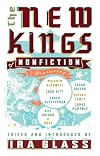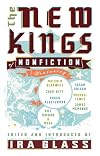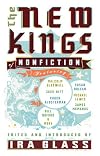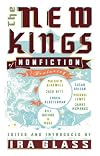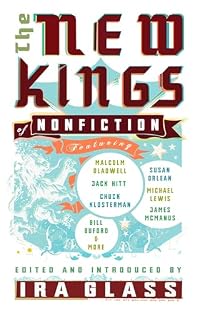
The New Kings of Nonfiction
by Ira Glass (Editor)
On This Page
Description
An anthology of the best new masters of nonfiction storytelling, personally chosen and introduced by Ira Glass, the producer and host of the award-winning public radio program This American Life. These pieces-on teenage white collar criminals, buying a cow, Saddam Hussein, drunken British soccer culture, and how we know everyone in our Rolodex-are meant to mesmerize and inspire. --From publisher description.Tags
Recommendations















Member Reviews
I'm about halfway through, but what seems to have gone unmentioned by Mr. Glass in his introduction is that all of these essays are connected by a central theme: the idea that the status quo, the rules that make the world work, the day-to-day way the world works, is all bullshit. Every one of these essays are about someone who has managed to work that out and take advantage of it in some way, by realizing that our everyday assumptions are valueless, existing only because we assume that they do exist, rather than because they are even remotely true.
...
And having finished the book, that evaluation remains the same. Every one of these essays, in some fashion, just hammers away at the simultaneous omnipotence and powerlessness of living in show more a world so defined by perception. Because even while perception defines and controls our existence, all it takes is for one person to realize that the only thing holding perception in place is the common consensus to bring down the whole edifice.
The essays themselves are all pretty great. I thought the poker one was probably the weakest, but that might have more to do with the fact that I've found poker a lot more boring now that so many have spent so much time thinking about it. Stripped of mystery and magic, it's just a bunch of math problems dressed up in personality and showdowns. "Jonathan Lebed's Extracurricular Activities," "The American Man, Age Ten," and "Host" were among my favorites, but I think the best essay is Lee Sandlin's "Losing the War." It seemed a bit pointless at first, but it really sneaks up on you, becoming even more potent as it goes along. show less
...
And having finished the book, that evaluation remains the same. Every one of these essays, in some fashion, just hammers away at the simultaneous omnipotence and powerlessness of living in show more a world so defined by perception. Because even while perception defines and controls our existence, all it takes is for one person to realize that the only thing holding perception in place is the common consensus to bring down the whole edifice.
The essays themselves are all pretty great. I thought the poker one was probably the weakest, but that might have more to do with the fact that I've found poker a lot more boring now that so many have spent so much time thinking about it. Stripped of mystery and magic, it's just a bunch of math problems dressed up in personality and showdowns. "Jonathan Lebed's Extracurricular Activities," "The American Man, Age Ten," and "Host" were among my favorites, but I think the best essay is Lee Sandlin's "Losing the War." It seemed a bit pointless at first, but it really sneaks up on you, becoming even more potent as it goes along. show less
A collection of articles, most of them originally published in magazines, on a wide range of topics. Among other things, it includes a look into the lives of a conservative talk radio host, a teenager indicted by the SEC for stock market fraud, Saddam Hussein, Val Kilmer, and a random American ten-year-old.
The somewhat clumsy title isn't entirely accurate. Certainly it's stretching the definition of "new"; the oldest of the articles first appeared in 1985, and several of them feel a bit dated now. Also, the field it draws from is a little more limited than the broad term "nonfiction" implies. All the articles are what editor Ira Glass calls "original reporting" (as opposed to, say, reflective essays), and all are to one degree or show more another presented with the kind of personal touch that Glass apparently favors.
As to whether the authors presented here are the "kings" of this particular kind of nonfiction... Well, a couple of these pieces I didn't care for. The hand-by-hand description of a poker tournament, for instance, was pretty much guaranteed to put a glazed look on my face, no matter how much testosterone and adrenalin the author tried to inject. But otherwise the writing ranged from moderately interesting all the way to utterly compelling. Bill Buford's piece on soccer hooligans made me immediately go out and add the book it was excerpted from to my wishlist, even though I would pretty much never have expected to find myself interested in a book about soccer hooligans. And Lee Sandlin's discussion of World War II in the perceptions and memories of the American people and in the actual experiences of soldiers on the battlefield was as fascinating and thought-provoking as anything I've read in ages. I think this book would feel worthwhile just for those two articles alone. show less
The somewhat clumsy title isn't entirely accurate. Certainly it's stretching the definition of "new"; the oldest of the articles first appeared in 1985, and several of them feel a bit dated now. Also, the field it draws from is a little more limited than the broad term "nonfiction" implies. All the articles are what editor Ira Glass calls "original reporting" (as opposed to, say, reflective essays), and all are to one degree or show more another presented with the kind of personal touch that Glass apparently favors.
As to whether the authors presented here are the "kings" of this particular kind of nonfiction... Well, a couple of these pieces I didn't care for. The hand-by-hand description of a poker tournament, for instance, was pretty much guaranteed to put a glazed look on my face, no matter how much testosterone and adrenalin the author tried to inject. But otherwise the writing ranged from moderately interesting all the way to utterly compelling. Bill Buford's piece on soccer hooligans made me immediately go out and add the book it was excerpted from to my wishlist, even though I would pretty much never have expected to find myself interested in a book about soccer hooligans. And Lee Sandlin's discussion of World War II in the perceptions and memories of the American people and in the actual experiences of soldiers on the battlefield was as fascinating and thought-provoking as anything I've read in ages. I think this book would feel worthwhile just for those two articles alone. show less
In my review of Sloane Crosley's latest book, How Did You Get This Number, I confessed my love for essays, particularly personal essays with a humorous bent. But I like harder hitting essays too, and this collection of non-fiction writing chosen and introduced by This American Life's Ira Glass was a real treat for an essay fan like myself. In my mind, it is also a good introduction to non-fiction writing—a genre that so many readers shy away from (for reasons that elude me).
What makes this book so wonderful is that Glass has cherry-picked some of his favorite non-fiction writing and put them all together so you get good writing on a wide range of topics—from profiles of Saddam Hussein to Val Kilmer, from soccer hooligans to a show more "typical" 10-year-old boy, from where a steak comes from to what is feels like to make the final table at the World Series of Poker. As you know if you're familiar with Ira Glass's work, he has diverse interests and a innate curiosity about the world around us—and this sensibility is reflected in his choices for this book. Perhaps the best way to get a sense of the diversity of the stories in the book is to provide a brief description of the various pieces (with a little bit of commentary on what I liked and didn't like).
* Michael Lewis kicks off the book with a piece called "Jonathan Lebed's Extracurricular Activities,"which was a fascinating look at a 15-year-old high-school boy who gets in trouble with the SEC after he makes a lot of money (like a half a million dollars!!) via day-trading and promoting various stocks on the Internet. In the SEC's mind, Jonathan has done something illegal, but his offense is one that even the head of the SEC is unable to clearly articulate. In the end, it seems that the "offense" was simply figuring out how to make money on the stock market at a young age.
* Jack Hitt's contribution, "Toxic Dreams: A California Town Finds Meaning In An Acid Pit," reads like a satire of the legal system—except that the case he writes about (Stringfellow) is an actual case that is ongoing to this day. I suspect that a writer couldn't come up with a mockery of what legal proceedings can turn into—or how they can take on a life of their own—that sounds more ridiculous than what the Stringfellow proceedings involve.
* Malcolm Gladwell makes an appearance with a story called "Six Degrees of Lois Weisberg," which is about how some people are people who seem to know everybody—a kind of living embodiment of the "Six Degrees of Kevin Bacon" game. (In fact, Gladwell alludes to this game and makes a pretty good case that it might be easier played with Burgess Meredith.) By the end, I guarantee that you'll be looking for the Lois Weisberg in your life!
* "Shapinsky's Karma" by Lawrence Weschler is one of the longer pieces in the book—chronicling the unlikely rise to fame by an obscure painter named Harold Shapinsky due to the tireless and almost maniacal efforts of an Indian fellow named Akumal Ramachander, which turns into a story as much about Akumal as it is about Shapinsky. A fascinating look at the art world and what one persistent person who believes in another can accomplish.
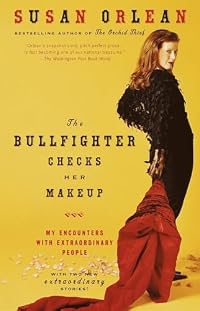
* Susan Orlean's contribution, "The American Man, Age Ten," was probably my favorite in the book. After her editor at Esquire asked her to write a profile of Macauley Culkin for a piece he planned on giving the same title to, Orlean asked if she could instead write about a "typical" American ten-year-old instead, which is how she ended up shadowing a New Jersey boy named Colin Duffy. The result is a fascinating, humorous and engrossing look into Colin's world—and what a wondrous place it is.
* "Among the Thugs" by Bill Buford was particularly timely as I read it while the World Cup was going on. The piece in the book (which was an early chapter from Buford's book of the same name) is a first-hand account of shadowing British soccer hooligans as they travel to Turin to watch their team (Manchester United) play. It was a glimpse into a scary world that I don't think I would want to get near.
* Chuck Klosterman writes about his interview with Val Kilmer in a piece called "Crazy Things Seem Normal, Normal Things Seem Crazy," which includes writing like: "The worst thing I could say about him is that he's kind of a name-dropper; beyond that, he seems like an affable fellow with a good sense of humor, and he is totally not f**ked up. But he is weird." As you can see, this isn't your ordinary, run-of-the-mill celebrity profile.
* David Foster Wallace's piece, "Host," was my least favorite piece in the book—probably due to the excessive use of footnotes (printed in the most unusual way) that kept distracting me from the main story, which is a profile of a radio talk show host named John Ziegler. I almost skipped this piece entirely but ended up powering through just so I could write this review and honestly say I read the entire book.
* "Tales of the Tyrant" by Mark Bowden is an extensive piece on Saddam Hussein, which I wish I'd read way back when the U.S. first started getting involved with Iraq. It was quite eye-opening and enlightening and shed a little more light on the country of Iraq and its long-time dictator and what kind of person he was.
* "Losing the War" by Lee Sandlin is an interesting piece in which the author asks various people what they know about war, specifically World War II. And what does he find? "Nobody could tell me the first thing about it. Once they got past who won they almost drew a blank. All they knew were the big totemic names—Pearl Harbor, D-day, Auschwitz, Hiroshima—whose unfathomable reaches of experience has been boiled down to an abstract atrocity. The rest was gone."
* One of the few pieces I felt didn't fit in was "The Hostess Diaries: My Year At A Hot Spot" by Coco Henson Scales. Although an amusing enough look at what really goes on behind-the-scenes at an exclusive nightclub, the piece felt too slight in comparison to the other pieces in the book.
* I really loved "My Republican Journey" by Dan Savage because it reminded me how much I enjoy Dan Savage's writing. (I used to read his sex column in The Onion and just loved his books The Kid: What Happened After My Boyfriend and I Decided to Go Get Pregnant and Skipping Towards Gomorrah.) In fact, it reminded me that I really should get the rest of Savage's books that he's been writing while I was doing other things. Shame on me!! This particular story chronicles Savage's attempt to infiltrate the Republican Party during the 1996 presidential elections in an effort to change the Republican's view of homosexuality from the "inside." If you've never read Savage's biting, hysterical point of view, this essay is a wonderful introduction. (But not if you're a hard-core, conservative Republican ... cuz' my guess is that you won't really care for Savage's worldview. I love him though.)
* "Power Steer" by Michael Pollan is almost guaranteed to put you off red meat for awhile. The story follows the short life of steer No. 534, which Pollan buys in an effort to "find out how a modern, industrial steak is produced in America these days, from insemination to slaughter." What he finds was eye-opening and probably more than I wanted to know. But if you eat meat, you should probably understand where it comes from the effects of the modern meat industry on the environment. After reading this essay, it made me want to read Pollan's longer books, like The Omnivore's Dilemma: A Natural History of Four Meals or In Defense of Food: An Eater's Manifesto.
* I particularly enjoyed James McManus's story, "Fortune's Smile: World Series of Poker," as Mr. Jenners and I went through a Texas Hold 'Em craze a few years back (along with much of America). Chronicling the author's unlikely journey to the final table at the World Series of Poker (back before it was a well-known and a regular fixture on TV), the piece has a "you are there" quality to it that I really enjoyed. If Mr. Jenners hadn't already consumed almost every anecdotal book on gambling and casinos, I might have even had a shot at getting him to read this one.
My Final Recommendation
If you're looking for a diverse collection of non-fiction writing that differs wildly in topics and style but that all share a foundation of good writing that involves the reader, look no further. This collection had everything you could want—and will probably lead you to seek additional works by the authors represented in the collection. show less
What makes this book so wonderful is that Glass has cherry-picked some of his favorite non-fiction writing and put them all together so you get good writing on a wide range of topics—from profiles of Saddam Hussein to Val Kilmer, from soccer hooligans to a show more "typical" 10-year-old boy, from where a steak comes from to what is feels like to make the final table at the World Series of Poker. As you know if you're familiar with Ira Glass's work, he has diverse interests and a innate curiosity about the world around us—and this sensibility is reflected in his choices for this book. Perhaps the best way to get a sense of the diversity of the stories in the book is to provide a brief description of the various pieces (with a little bit of commentary on what I liked and didn't like).
* Michael Lewis kicks off the book with a piece called "Jonathan Lebed's Extracurricular Activities,"which was a fascinating look at a 15-year-old high-school boy who gets in trouble with the SEC after he makes a lot of money (like a half a million dollars!!) via day-trading and promoting various stocks on the Internet. In the SEC's mind, Jonathan has done something illegal, but his offense is one that even the head of the SEC is unable to clearly articulate. In the end, it seems that the "offense" was simply figuring out how to make money on the stock market at a young age.
* Jack Hitt's contribution, "Toxic Dreams: A California Town Finds Meaning In An Acid Pit," reads like a satire of the legal system—except that the case he writes about (Stringfellow) is an actual case that is ongoing to this day. I suspect that a writer couldn't come up with a mockery of what legal proceedings can turn into—or how they can take on a life of their own—that sounds more ridiculous than what the Stringfellow proceedings involve.
* Malcolm Gladwell makes an appearance with a story called "Six Degrees of Lois Weisberg," which is about how some people are people who seem to know everybody—a kind of living embodiment of the "Six Degrees of Kevin Bacon" game. (In fact, Gladwell alludes to this game and makes a pretty good case that it might be easier played with Burgess Meredith.) By the end, I guarantee that you'll be looking for the Lois Weisberg in your life!
* "Shapinsky's Karma" by Lawrence Weschler is one of the longer pieces in the book—chronicling the unlikely rise to fame by an obscure painter named Harold Shapinsky due to the tireless and almost maniacal efforts of an Indian fellow named Akumal Ramachander, which turns into a story as much about Akumal as it is about Shapinsky. A fascinating look at the art world and what one persistent person who believes in another can accomplish.
* Susan Orlean's contribution, "The American Man, Age Ten," was probably my favorite in the book. After her editor at Esquire asked her to write a profile of Macauley Culkin for a piece he planned on giving the same title to, Orlean asked if she could instead write about a "typical" American ten-year-old instead, which is how she ended up shadowing a New Jersey boy named Colin Duffy. The result is a fascinating, humorous and engrossing look into Colin's world—and what a wondrous place it is.
* "Among the Thugs" by Bill Buford was particularly timely as I read it while the World Cup was going on. The piece in the book (which was an early chapter from Buford's book of the same name) is a first-hand account of shadowing British soccer hooligans as they travel to Turin to watch their team (Manchester United) play. It was a glimpse into a scary world that I don't think I would want to get near.
* Chuck Klosterman writes about his interview with Val Kilmer in a piece called "Crazy Things Seem Normal, Normal Things Seem Crazy," which includes writing like: "The worst thing I could say about him is that he's kind of a name-dropper; beyond that, he seems like an affable fellow with a good sense of humor, and he is totally not f**ked up. But he is weird." As you can see, this isn't your ordinary, run-of-the-mill celebrity profile.
* David Foster Wallace's piece, "Host," was my least favorite piece in the book—probably due to the excessive use of footnotes (printed in the most unusual way) that kept distracting me from the main story, which is a profile of a radio talk show host named John Ziegler. I almost skipped this piece entirely but ended up powering through just so I could write this review and honestly say I read the entire book.
* "Tales of the Tyrant" by Mark Bowden is an extensive piece on Saddam Hussein, which I wish I'd read way back when the U.S. first started getting involved with Iraq. It was quite eye-opening and enlightening and shed a little more light on the country of Iraq and its long-time dictator and what kind of person he was.
* "Losing the War" by Lee Sandlin is an interesting piece in which the author asks various people what they know about war, specifically World War II. And what does he find? "Nobody could tell me the first thing about it. Once they got past who won they almost drew a blank. All they knew were the big totemic names—Pearl Harbor, D-day, Auschwitz, Hiroshima—whose unfathomable reaches of experience has been boiled down to an abstract atrocity. The rest was gone."
* One of the few pieces I felt didn't fit in was "The Hostess Diaries: My Year At A Hot Spot" by Coco Henson Scales. Although an amusing enough look at what really goes on behind-the-scenes at an exclusive nightclub, the piece felt too slight in comparison to the other pieces in the book.
* I really loved "My Republican Journey" by Dan Savage because it reminded me how much I enjoy Dan Savage's writing. (I used to read his sex column in The Onion and just loved his books The Kid: What Happened After My Boyfriend and I Decided to Go Get Pregnant and Skipping Towards Gomorrah.) In fact, it reminded me that I really should get the rest of Savage's books that he's been writing while I was doing other things. Shame on me!! This particular story chronicles Savage's attempt to infiltrate the Republican Party during the 1996 presidential elections in an effort to change the Republican's view of homosexuality from the "inside." If you've never read Savage's biting, hysterical point of view, this essay is a wonderful introduction. (But not if you're a hard-core, conservative Republican ... cuz' my guess is that you won't really care for Savage's worldview. I love him though.)
* "Power Steer" by Michael Pollan is almost guaranteed to put you off red meat for awhile. The story follows the short life of steer No. 534, which Pollan buys in an effort to "find out how a modern, industrial steak is produced in America these days, from insemination to slaughter." What he finds was eye-opening and probably more than I wanted to know. But if you eat meat, you should probably understand where it comes from the effects of the modern meat industry on the environment. After reading this essay, it made me want to read Pollan's longer books, like The Omnivore's Dilemma: A Natural History of Four Meals or In Defense of Food: An Eater's Manifesto.
* I particularly enjoyed James McManus's story, "Fortune's Smile: World Series of Poker," as Mr. Jenners and I went through a Texas Hold 'Em craze a few years back (along with much of America). Chronicling the author's unlikely journey to the final table at the World Series of Poker (back before it was a well-known and a regular fixture on TV), the piece has a "you are there" quality to it that I really enjoyed. If Mr. Jenners hadn't already consumed almost every anecdotal book on gambling and casinos, I might have even had a shot at getting him to read this one.
My Final Recommendation
If you're looking for a diverse collection of non-fiction writing that differs wildly in topics and style but that all share a foundation of good writing that involves the reader, look no further. This collection had everything you could want—and will probably lead you to seek additional works by the authors represented in the collection. show less
Every time I finished an article in this collection, I immediately wanted to tell everyone all about it--they're that interesting and thought-provoking and entertaining. But then I'd stop myself and just say "You've really got to read this book", because I realized that half the joy of reading these articles is in discovering them yourself. So, the only thing I'm going to say on this collection is to read Ira Glass's introduction after reading the articles; he's so giddy about how awesome they are that he ends up spoiling some of their surprise--not "plot"-wise, but the surprise of what makes them so good. It's worth discovering that part for yourself.
I can't really fault the book for being eight years old and thus no longer "new" when I received it as a Christmas gift. I can, however, fault a book billing itself on its newness for containing many essays that were ten years old or more when the book was published; a quick calculation indicates the average age-at-publication of the essays at nine years.
Nor, I suppose, can I fault a book talking about "Kings" of non-fiction for being overwhelmingly male-dominated. Twelve of the fourteen authors are male, with the female authors relegated to writing about female experiences of male spaces, or of contexts where women are expected to please men; Susan Orlean writes a profile of a supposedly average (i.e. white, suburban, and middle-class show more - this is in fact specifically described as the description of "typical") ten-year-old boy, and Coco Scales writes about working as a hostess in an exclusive LA nightclub. Not only the authors but the subject matter for the remainder of the book are drenched in testosterone; should you choose to read this book despite this review (since it definitely does have a target audience, after all), you'll read about beef cattle, the World Series of Poker, Saddam Hussein, and World War II.
Midway through David Foster Wallace's interminable profile of a minor conservative talk radio host, I seriously considered abandoning the book half-read; instead, I decided to give each of the remaining essays a chance. I bailed partway through three of the remaining portions, but finished the last four essays.
Having opined about two of the three key words in the title, I suppose it's time to talk about "nonfiction"; all of these are definitely non-fiction, but it's all in a narrow genre of journalistic nonfiction heavily focused on individual experience; there's little history here and no science. show less
Nor, I suppose, can I fault a book talking about "Kings" of non-fiction for being overwhelmingly male-dominated. Twelve of the fourteen authors are male, with the female authors relegated to writing about female experiences of male spaces, or of contexts where women are expected to please men; Susan Orlean writes a profile of a supposedly average (i.e. white, suburban, and middle-class show more - this is in fact specifically described as the description of "typical") ten-year-old boy, and Coco Scales writes about working as a hostess in an exclusive LA nightclub. Not only the authors but the subject matter for the remainder of the book are drenched in testosterone; should you choose to read this book despite this review (since it definitely does have a target audience, after all), you'll read about beef cattle, the World Series of Poker, Saddam Hussein, and World War II.
Midway through David Foster Wallace's interminable profile of a minor conservative talk radio host, I seriously considered abandoning the book half-read; instead, I decided to give each of the remaining essays a chance. I bailed partway through three of the remaining portions, but finished the last four essays.
Having opined about two of the three key words in the title, I suppose it's time to talk about "nonfiction"; all of these are definitely non-fiction, but it's all in a narrow genre of journalistic nonfiction heavily focused on individual experience; there's little history here and no science. show less
Quite the dog's breakfast. Why would a radio host be chosen to edit a collection of nonfiction from magazines? Actually, it didn't work that way.These are just some of his favorite pieces. So we end up with Klosterman's profile of Val Kilmer, Bill Buford on soccer hooligans (they're scarier than I thought, but enough already) and then the always excellent Bowden (on Saddam's personalty, written for The Atlantic, circa early 2000's) . But I'd already read that, as well as the Malcolm Gladwell one on Jacob Weisberg's mother, Michael Pollan from his food book, and even the guy that went to the Las Vegas World Series of Poker (I read that book by mistake). Dan Savage on some Republican thing--well, why read that since you know the whole show more story already?
Big disappointment was David Foster Wallace on some conservative radio host; I hope it was for a magazine in the very local market because these things don't age well. I barely glanced at it. Michael Lewis never seems to age well--well, not if something started out in a magazine and ends up in a book. Either free-standing often works.
Lee Sandlin's shambling piece on the experience of WW2 for soldiers probably was gripping when read in the Chicago Reader. And it was great to see a good chunk on Okinawa, but, jeez, there's still not enough for a reader to get a sense of the extent of the Pacific War.
Susan Orlean's profile of an ordinary 10-year-old kid for a men's magazine: cool and innovative and using fictional techniques and since somehow I hadn't read it before, the second best piece in the collection.
The number 1? That's the New Yorker's Lawrence Weschler's "Shapinksy's Karma." Shapinsky being a long forgotten NY abstract expressionist who gets discovered and promoted by a fantastic Indian literature professor by the names of Ramachander --a whirlwind optimist, a professional discoverer, a Rushdie-esque figure (and Rushdie does turn up). I kept expecting that he'd prove to be a charlatan, or that his dreams wouldn't pan out. Well he isn't and they do and I was glued.
Glass tries to posit some overall unifying thread. But, really, what does a timeless piece like this have to do with a Val Kilmer profile or Lewis's scandal of the month in the internet dawn?
The annual Best American Essays, edited by a practitioner himself/herself, would always be a better choice. show less
Big disappointment was David Foster Wallace on some conservative radio host; I hope it was for a magazine in the very local market because these things don't age well. I barely glanced at it. Michael Lewis never seems to age well--well, not if something started out in a magazine and ends up in a book. Either free-standing often works.
Lee Sandlin's shambling piece on the experience of WW2 for soldiers probably was gripping when read in the Chicago Reader. And it was great to see a good chunk on Okinawa, but, jeez, there's still not enough for a reader to get a sense of the extent of the Pacific War.
Susan Orlean's profile of an ordinary 10-year-old kid for a men's magazine: cool and innovative and using fictional techniques and since somehow I hadn't read it before, the second best piece in the collection.
The number 1? That's the New Yorker's Lawrence Weschler's "Shapinksy's Karma." Shapinsky being a long forgotten NY abstract expressionist who gets discovered and promoted by a fantastic Indian literature professor by the names of Ramachander --a whirlwind optimist, a professional discoverer, a Rushdie-esque figure (and Rushdie does turn up). I kept expecting that he'd prove to be a charlatan, or that his dreams wouldn't pan out. Well he isn't and they do and I was glued.
Glass tries to posit some overall unifying thread. But, really, what does a timeless piece like this have to do with a Val Kilmer profile or Lewis's scandal of the month in the internet dawn?
The annual Best American Essays, edited by a practitioner himself/herself, would always be a better choice. show less
nonfiction essays. Liked most of them, but suggest skipping altogether "Shapinksy's Karma" (Lawrence Weschler) and I eventually lost interest in "Fortune's Smile: World Series of Poker" (James McManus). I maybe can't speak for 2007 when this was published, but feel like today's compilation would definitely include more women (Laura Hillenbrand? Sheryl WuDunn? I know many women have produced great writing on more weighty topics than working as a hostess at an upscale restaurant/bar.)--though I don't necessarily disagree with the title--since "king" does not necessarily have to continue as a gender-specific noun, just as "actor" can be used to describe both men and women.
Members
- Recently Added By
Author Information

All Editions
Common Knowledge
- Original publication date
- 2007
Classifications
Statistics
- Members
- 794
- Popularity
- 34,818
- Reviews
- 24
- Rating
- (3.91)
- Languages
- English
- Media
- Paper, Ebook
- ISBNs
- 2
- ASINs
- 5