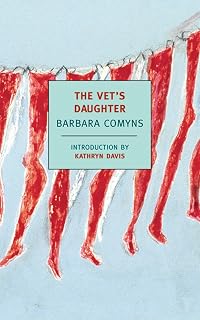
The Vet's Daughter
by Barbara Comyns
On This Page
Description
A small Gothic masterpiece… I have read it many times, and with every re-read I marvel again at its many qualities - its darkness, its strangeness, its humour, its sadness, its startling images and twists of phrase' - Sarah Waters. Growing up in Edwardian south London, Alice Rowlands longs for romance and excitement, for a release from a life that is dreary and lonely. Her father, a vet, is harsh and oppressive; his new girlfriend, brash and lascivious. Alice seeks refuge in fantasy, in show more her rapturous longing for Nicholas, a handsome young sailor, and in the blossoming of what she perceives as her occult powers. Harrowing and haunting, this Gothic tale is a strange cross between Daphne du Maurier and Stephen King, but will also intrigue readers of Silvia Moreno-Garcia and Diane Setterfield. show lessTags
Recommendations




















Member Recommendations
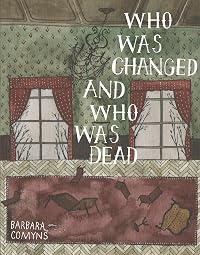
Swirl3d Another slim period novel set in London, with a female protagonist, a domestic setting and a sprinkling of the supernatural.
30
Member Reviews
Delightful, dark, and a skosh bizarre, this novel keeps the reader slightly off-balance as we listen to Alice Rowland recount her life in Edwardian London with an abusive father, a dying mother, and little hope of betterment until a young veterinarian comes to act as locum tenens for her father and offers her the chance to be a companion to his invalid mother. A touch of romance, a touch of the occult, and an ending that may be viewed as tragic or transcendent.
Reviewed in 2013
Reviewed in 2013
I was intrigued to find out from the introduction that Comyns's work is considered outsider art. I would not have thought that because her descriptive power is so gorgeously rich and well-crafted. It is true that there is a quality of surrealism in all of her work, but her prose has an ethereal quality that is not in the least amateurish. She may or may not be an outsider, but she is definitely an artist. Her work reminds me of Leonora Carrington's writing. Just as (spoiler alert) Alice can truly levitate, Comyns can construct a world so utterly realistic in its terribleness that you cannot be blamed for thinking that levitation is a proper response.
This is an odd little book that I loved. It's about Alice, the 17 year old daughter of a mean, abusive, drunk veterinarian. At the beginning of the book her mother is dying. There are odd animals all over the house, adding to the dark and weird vibe in the house. After her death her father takes up with a woman of loose morals and questionable merit. She moves into the house, relegating Alice to an even lower and more precarious position in her father's house. Fortunately (???), Alice meets a veterinary assistant working with her father, who takes and interest in her and seems to want to marry her. He arranges a way for her to get out of the house by going to be a companion for his solitary and deranged mother.
On top of all of this, show more Alice seems to have some special powers to make herself levitate. At first, of course, the reader will assume this is just a dream she is having, but later in the book it becomes clear that this is actually happening. This power has major consequences for Alice and those around her.
I thought this book was extremely clever and well written. I'd like to read more of Comyns's work if it's all as odd and interesting as this was. show less
On top of all of this, show more Alice seems to have some special powers to make herself levitate. At first, of course, the reader will assume this is just a dream she is having, but later in the book it becomes clear that this is actually happening. This power has major consequences for Alice and those around her.
I thought this book was extremely clever and well written. I'd like to read more of Comyns's work if it's all as odd and interesting as this was. show less
The Vet's Daughter is Alice Rowland, the 17-year-old daughter of an abusive father and a very unhappy (and abused) mother. Alice tells her own story in stark and simple prose, such as this scene at her mother's deathbed:
As I climbed upstairs I could hear the breathing again, now that everything in the house was still. I went to Mother's room and she was still asleep. Her face was flushed, and her breathing was certainly very loud. Although it seemed cruel, I shook her; but she still stayed asleep and the heavy breathing seemed to come louder. I didn't know if it was a good thing, this heavy-breathing sleep, or if I should send for a doctor although it was so late at night. I even wished Father would come home and tell me what to do. show more Eventually I left her well propped up with pillows so that she would not suffocate and went to bed. (p. 36)
After her mother's death, Alice lived in fear of her father and even suspected him of having done something to hasten her mother's passing. Her father quickly took up with another woman and ignored Alice. Alice knew her life wasn't "normal" or "happy," but was powerless to change it. Her only escape was an apparent supernatural power, the ability to levitate at will. Was this real, or psychological dissociation? Comyns lets the reader decide.
Barbara Comyns' novels are oddly fascinating, and I never know what to make of them. Her no-frills, unemotional writing style is about as exciting as reading a newspaper, and yet this is still an intense and tragic story. This is my third Comyns novel, and I'd say they are very much an acquired taste. show less
As I climbed upstairs I could hear the breathing again, now that everything in the house was still. I went to Mother's room and she was still asleep. Her face was flushed, and her breathing was certainly very loud. Although it seemed cruel, I shook her; but she still stayed asleep and the heavy breathing seemed to come louder. I didn't know if it was a good thing, this heavy-breathing sleep, or if I should send for a doctor although it was so late at night. I even wished Father would come home and tell me what to do. show more Eventually I left her well propped up with pillows so that she would not suffocate and went to bed. (p. 36)
After her mother's death, Alice lived in fear of her father and even suspected him of having done something to hasten her mother's passing. Her father quickly took up with another woman and ignored Alice. Alice knew her life wasn't "normal" or "happy," but was powerless to change it. Her only escape was an apparent supernatural power, the ability to levitate at will. Was this real, or psychological dissociation? Comyns lets the reader decide.
Barbara Comyns' novels are oddly fascinating, and I never know what to make of them. Her no-frills, unemotional writing style is about as exciting as reading a newspaper, and yet this is still an intense and tragic story. This is my third Comyns novel, and I'd say they are very much an acquired taste. show less
”A man with small eyes and a ginger moustache came and spoke to me when I was thinking of something else. Together we walked down a street that was lined with privet hedges. He told me his wife belonged to the Plymouth Brethren, and I said I was sorry because that is what he seemed to need me to say and I saw he was a poor broken down sort of creature. If he had been a horse, he would have most likely worn kneecaps. We came to a great red railway arch that crossed the road like a heavy rainbow; and near this arch there was a vet’s house with a lamp outside. I said, ‘ You must excuse me ,’ and left this poor man among the privet hedges.”
This is the opening paragraph and I hope you get the feeling I did on reading it. The author show more has immediately draped the novel in darkness, which she maintains throughout. It also brought up a number of questions: who is this stranger? Who are the Plymouth Brethen? Why was he so despondent? It just seemed like such a stark way to start the narrative. This same man makes a brief appearance at the culminating events at the end of the novel with still no explanation of his significance. So I keep thinking about him.
I finished this novel yesterday but had to give it some time to simmer before I could write a few words about this very dark novel. I couldn’t really decide what I thought about it. I found that I couldn’t stop thinking about it. Alice Rowland is the seventeen year old eponymous daughter and she faces many challenges. Her mother is gravely ill, her father is abusive and she would desperately like to be somewhere else when her mother dies and her father brings the local tart into the house to be his “housekeeper.” A savior attempts to save her by asking her to become a companion for his elderly mother in a distant village. Things continue to go downhill for her and she is faced with a Dickensian couple who maintain the woman’s residence and generally take advantage of her. Alice is forced to return home where her father continues his abuse of her until he discovers she has a gift he thinks he can capitalize on.
The horrifying culminating event presents Alice and her gift. This actually threw me for a loop and I find it interesting that some reviewers characterized this as Alice’s triumph. I didn’t see it that way at all but I did find the novel to be riveting and could hardly put it down. The writing is spare and the novel is stark. But absolutely fascinating. And I wonder when I’ll stop thinking about these well drawn characters. show less
The Vet’s Daughter is only the second book by Barbara Comyns that I’ve read, the other being Our Spoons Came from Woolworths, which is a wonderfully quirky, slightly sad little book. Comyns is an interesting writer, her prose is very readable, deceptively simple, yet her stories are visionary and unusual, combining realism and a little surrealism. As a reader one detects a sparkling, lively imagination. Having read the author’s own introduction this Virago edition, I think I can see where this strange slightly out of kilter world comes from.
“I was born in Warwickshire in a house on the banks of the Avon and was one of six children. Our father was a semi-retired managing director of a midland chemical firm. He was an impatient, show more violent man, alternately spoiling and frightening us. Our mother was many years younger and lived the life of an invalid most of the time. I remember her best lying in a shaded hammock on the lawns, reading and eating cherries, which she was inordinately fond of, or in the winter sitting by the morning-room fire and opening and shutting her hands before the blaze as if to store the heat. Her pet monkey sitting on the fender would be doing the same.”
(Barbara Comyns in her introduction to The Vet’s Daughter 1980)
I loved the opening of the novel, which serves to pull the reader immediately into the world of Alice Rowlands, our unforgettable narrator.
“A man with small eyes and ginger moustache came and spoke to me when I was thinking of something else. Together we walked down a street that was lined with privet hedges. He told me his wife belonged to the Plymouth Brethren, and I said I was sorry because that is what he seemed to need of me to say and I saw he was a poor broken down creature. If he had been a horse, he would have most likely worn knee caps. We came to a great red railway arch that crossed the road like a heavy rainbow; and near this arch there was a vet’s house with a lamp outside. I said, ‘You must excuse me.’ And left this poor man among the privet hedges.”
Alice is of course the vet’s daughter of the title, and her home life is dominated by her father, a cruel bullying man subject to sudden rages of temper. Alice by comparison to her father is a gentle innocent, her mother cowed by her marriage is very sick, and we know immediately she won’t last long, and Alice will be left alone with her unpredictable father. The house has a dark, sinister atmosphere – and when (on page 6) her father sells a sack of furry creatures – brought to him to be destroyed – to a vivisectionist, the reader can be in no doubt about what kind of man Alice’s father is. Alice’s life is lonely, restrictively dull and uneducated. She longs for romance – for a different life away from her father.
“Some day I’ll have a baby with frilly pillows and men much grander than my father will open shop doors to me – both doors at once. Perhaps…”
The only kind person in the vet’s house following Alice’s mother’s death is Mrs Churchill, who works as cook, and with whom Alice spends more and more time. While Alice’s father is away for a few weeks the business of the vet’s surgery is taken care of by Henry Peebles, the first ever man to treat Alice with kindness and consideration. Alice calls him Blinkers to herself, and starts to meet him in secret after her father’s return.
Her father arrived home with a young blonde woman in tow; Rose Fisher – a barmaid from The Trumpet – Mrs Churchill is scandalised by the appearance of a woman she renames ‘the strumpet from the Trumpet.’ Rose claims she will be Mr Rowland’s housekeeper but it seems no one believes that little bit of deception for a second. Rose is an over confident, blowsy young woman, who soon at home at the vet’s house, seeks to re-make young Alice in her own image.
Alice is briefly rescued from her life with her father – by going to live as companion to Henry Peebles’ mother in the countryside. Mrs Peebles is marooned in her own home – terrified of the two servants who run her house to suit their own needs. Alice and Mrs Peebles become friends and Alice is determined to get Henry to dispense with the services of the sinister couple.
“In the night I was awake and floating. As I went up, the blankets fell to the floor. I could feel nothing below me – and nothing above until I came near the ceiling and it was hard to breathe there. I thought “I mustn’t break the gas glove”. I felt it carefully with my hands, and something very light fell in them, and it was the broken mantle. I kept very still up there because I was afraid of breaking other things in that small crowded room; but quite soon, it seemed, I was gently coming down again. I folded my hands over my chest and kept very straight, and floated down to the couch where I’d been lying. I was not afraid, but very calm and peaceful. In the morning I knew it wasn’t a dream because the blankets were still on the floor and I saw the gas mantle was broken and the chalky powder was still on my hands.”
Alice’s world has been one of constant shocks, and during this turmoil Alice has discovered she a has strange ability – levitation – which over the coming months she practises with. It isn’t long before more change comes – this time to Mrs Peebles’ house, and Alice is obliged to return home to her father. When Mr Rowlands and Rose learn about Alice’s strange ability they seek to exploit it. Alice’s destiny leading to an extraordinary, and probably inevitable moment on Clapham Common.
I really loved this novel, and I am certainly determined to read more – I have a copy of Who was Changed and Who was Dead tbr. show less
“I was born in Warwickshire in a house on the banks of the Avon and was one of six children. Our father was a semi-retired managing director of a midland chemical firm. He was an impatient, show more violent man, alternately spoiling and frightening us. Our mother was many years younger and lived the life of an invalid most of the time. I remember her best lying in a shaded hammock on the lawns, reading and eating cherries, which she was inordinately fond of, or in the winter sitting by the morning-room fire and opening and shutting her hands before the blaze as if to store the heat. Her pet monkey sitting on the fender would be doing the same.”
(Barbara Comyns in her introduction to The Vet’s Daughter 1980)
I loved the opening of the novel, which serves to pull the reader immediately into the world of Alice Rowlands, our unforgettable narrator.
“A man with small eyes and ginger moustache came and spoke to me when I was thinking of something else. Together we walked down a street that was lined with privet hedges. He told me his wife belonged to the Plymouth Brethren, and I said I was sorry because that is what he seemed to need of me to say and I saw he was a poor broken down creature. If he had been a horse, he would have most likely worn knee caps. We came to a great red railway arch that crossed the road like a heavy rainbow; and near this arch there was a vet’s house with a lamp outside. I said, ‘You must excuse me.’ And left this poor man among the privet hedges.”
Alice is of course the vet’s daughter of the title, and her home life is dominated by her father, a cruel bullying man subject to sudden rages of temper. Alice by comparison to her father is a gentle innocent, her mother cowed by her marriage is very sick, and we know immediately she won’t last long, and Alice will be left alone with her unpredictable father. The house has a dark, sinister atmosphere – and when (on page 6) her father sells a sack of furry creatures – brought to him to be destroyed – to a vivisectionist, the reader can be in no doubt about what kind of man Alice’s father is. Alice’s life is lonely, restrictively dull and uneducated. She longs for romance – for a different life away from her father.
“Some day I’ll have a baby with frilly pillows and men much grander than my father will open shop doors to me – both doors at once. Perhaps…”
The only kind person in the vet’s house following Alice’s mother’s death is Mrs Churchill, who works as cook, and with whom Alice spends more and more time. While Alice’s father is away for a few weeks the business of the vet’s surgery is taken care of by Henry Peebles, the first ever man to treat Alice with kindness and consideration. Alice calls him Blinkers to herself, and starts to meet him in secret after her father’s return.
Her father arrived home with a young blonde woman in tow; Rose Fisher – a barmaid from The Trumpet – Mrs Churchill is scandalised by the appearance of a woman she renames ‘the strumpet from the Trumpet.’ Rose claims she will be Mr Rowland’s housekeeper but it seems no one believes that little bit of deception for a second. Rose is an over confident, blowsy young woman, who soon at home at the vet’s house, seeks to re-make young Alice in her own image.
Alice is briefly rescued from her life with her father – by going to live as companion to Henry Peebles’ mother in the countryside. Mrs Peebles is marooned in her own home – terrified of the two servants who run her house to suit their own needs. Alice and Mrs Peebles become friends and Alice is determined to get Henry to dispense with the services of the sinister couple.
“In the night I was awake and floating. As I went up, the blankets fell to the floor. I could feel nothing below me – and nothing above until I came near the ceiling and it was hard to breathe there. I thought “I mustn’t break the gas glove”. I felt it carefully with my hands, and something very light fell in them, and it was the broken mantle. I kept very still up there because I was afraid of breaking other things in that small crowded room; but quite soon, it seemed, I was gently coming down again. I folded my hands over my chest and kept very straight, and floated down to the couch where I’d been lying. I was not afraid, but very calm and peaceful. In the morning I knew it wasn’t a dream because the blankets were still on the floor and I saw the gas mantle was broken and the chalky powder was still on my hands.”
Alice’s world has been one of constant shocks, and during this turmoil Alice has discovered she a has strange ability – levitation – which over the coming months she practises with. It isn’t long before more change comes – this time to Mrs Peebles’ house, and Alice is obliged to return home to her father. When Mr Rowlands and Rose learn about Alice’s strange ability they seek to exploit it. Alice’s destiny leading to an extraordinary, and probably inevitable moment on Clapham Common.
I really loved this novel, and I am certainly determined to read more – I have a copy of Who was Changed and Who was Dead tbr. show less
This is a haunting and powerful story told by a young woman, still a teenager, living under psychologically oppressive conditions, her life barely her own. Alice lives with her father, the vet, a bitter, hateful, cruel, and nasty man, her mother, who is dying of an unmentioned but unbearably painful disease and who, under the influence of painkillers, reminisces about her happy childhood on a farm in Wales, and a varying menagerie of animals left at the vet's to heal or to board. Her only comfort is visiting her friend Lucy, who is deaf; they communicate in sign language. After her mother dies, the household and Alice's life change, but every slight opportunity she has to escape ends up making things worse and, naive as she is, she show more winds up in some scary and unhappy situations. Along the way she develops a strange power that at first the reader suspects is psychological and not real, but this too is taken out of her control, leading to a shocking conclusion.
Barbara Comyns is an amazing writer, who brilliantly creates these horrifying conditions so that the reader feels as oppressed as Alice. Not a detail escapes her, either psychologically or descriptively, and yet not a word is wasted. This is the second book I've read by Comyns, very different in mood from the first, but just as unique. I'm looking forward to reading more by her show less
Barbara Comyns is an amazing writer, who brilliantly creates these horrifying conditions so that the reader feels as oppressed as Alice. Not a detail escapes her, either psychologically or descriptively, and yet not a word is wasted. This is the second book I've read by Comyns, very different in mood from the first, but just as unique. I'm looking forward to reading more by her show less
Members
- Recently Added By
Published Reviews
ThingScore 100
The Vet’s Daughter combines shocking realism with a visionary edge. ....Harrowing and haunting, like an unexpected cross between Flannery O’Connor and Stephen King, The Vet’s Daughter is a story of outraged innocence that culminates in a scene of appalling triumph.
added by vancouverdeb
Lists

Favourite Virago Modern Classics
183 works; 38 members

Backlisted
109 works; 9 members

My Virago Modern Classics wish list
23 works; 3 members

Books Read in 2023
5,638 works; 145 members

Books Read in 2017
4,249 works; 130 members
Backlisted Podcast
65 works; 3 members

Books Read in 2018
4,360 works; 110 members
Author Information

12 Works 3,474 Members
Some Editions
Awards and Honors
Notable Lists
Series
Belongs to Publisher Series
Common Knowledge
- Canonical title
- The Vet's Daughter
- Original title
- The Vet's Daughter
- Original publication date
- 1959
- People/Characters
- Alice Rowland
- First words
- A man with small eyes and a ginger moustache came and spoke to me when I was thinking of something else.
The Vet's Daughter is Barbara Comyn's fourth and most startling novel. (Introduction) - Last words
- (Click to show. Warning: May contain spoilers.)The police stated that they had been unable to obtain any information from the girl's father, who had been seriously ill since witnessing the occurrence.
(Click to show. Warning: May contain spoilers.)I have no intention of revealing here what happens in the final chapter. (Introduction) - Blurbers
- Greene, Graham; Hollinghurst, Alan; Waters, Sarah
Classifications
Statistics
- Members
- 722
- Popularity
- 39,392
- Reviews
- 26
- Rating
- (3.90)
- Languages
- English, French, German, Spanish
- Media
- Paper, Audiobook, Ebook
- ISBNs
- 14
- ASINs
- 7