On This Page
Description
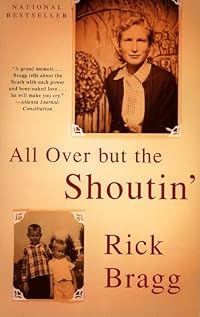
In a critically acclaimed memoir, a correspondent for The New York Times recounts growing up in the Alabama hill country, the son of a violent veteran and a mother who tried to insulate her children from the poverty and ignorance of life. This haunting, harrowing, gloriously moving recollection of a life on the American margin is the story of Rick Bragg, who grew up dirt-poor in northeastern Alabama, seemingly destined for either the cotton mills or the penitentiary, and instead became a show more Pulitzer Prize-winning reporter for The New York Times. It is the story of Bragg's father, a hard-drinking man with a murderous temper and the habit of running out on the people who needed him most. But at the center of this soaring memoir is Bragg's mother, who went eighteen years without a new dress so that her sons could have school clothes and picked other people's cotton so that her children wouldn't have to live on welfare alone. Evoking these lives--and the country that shaped and nourished them--with artistry, honesty, and compassion, Rick Bragg brings home the love and suffering that lie at the heart of every family. The result is unforgettable. show lessTags
Recommendations

Member Recommendations
Member Reviews
In this memoir, Pulitzer-Prize-winning journalist Rick Bragg outlines the difficulties of growing up “dirt poor” in Appalachia, with an alcoholic father who could never shake that demon and a mother who willingly sacrificed her own health and well-being for her children’s sake. He also gives the reader a look at the life of a child who felt loved and was free to explore and roam and enjoy the nature around him. He openly shares the differing paths his brothers took. Older brother Sam found his own success, taking on the mantle of adult responsibilities when he was still a child, while younger brother Mark continues to struggle. And Bragg gives a nod of thanks to the relatives (Uncle Ed, in particular), townspeople and teachers who show more recognized his talent and encouraged him to strive for something more.
There is a sense of nostalgia about some of his reminiscences. Bragg left his home, but his home never left him. His story in an honest, gripping, heart-wrenching and inspiring love letter to his mother. show less
There is a sense of nostalgia about some of his reminiscences. Bragg left his home, but his home never left him. His story in an honest, gripping, heart-wrenching and inspiring love letter to his mother. show less
A wonderful memoir of growing up poor white in the Southern USA. I had never heard of Bragg (who won the Pulitzer for journalism a couple of years ago), but had heard him interviewed on the radio, liked what he said and how he said it, and bought the book. He is a fine writer. How can one not like this opening paragraph:
My mother and father were born in the most beautiful place on earth, in the foothills of the Appalachians along the Alabama-Georgia line. It was a place where grey mists hid the tops of low, deep-green mountains, where redbone and bluetick hounds flashed through the pines as they chased possums into the sacks of old men in frayed overalls, where old women in bonnets dipped Bruton snuff and hummed "Faded Love and Winter show more Roses" as they shelled purple hulls, canned peaches and made biscuits too good for this world. It was a place where playing the church piano loud was near as important as playing it right, where fearless young men steered long, black Buicks loaded with yellow whiskey down roads the color of dried blood, where the first frost meant hog killin' time and the mouthwatering smell of cracklin's would drift for acres from giant bubbling pots. It was a place where the screams of panthers, like a woman's anguished cry, still haunted the most remote ridges and hollows in the dead of night, where children believed they could choke off the cries of night birds by circling one wrist with a thumb and forefinger and squeezing tight, and where the cotton blew off the wagons and hung like scraps of cloud in the branches of trees.
Bragg, in his Prologue, states:
This is not an important book. It is only the story of a strong woman, a tortured man and three sons who lived hemmed in by the thin cotton and ragged history in northeastern Alabama, in a time when blacks and whites found reason to hate each other and whole lot of people could not stand themselves.
Bragg writes very well. Clean, direct, declaratory language, but with strong descriptive powers, and an ability to reach beyond, to place human tragedy in a broader context, to see the threads, the hopes and fears that connect us all as human beings, regardless of class, race, power, money. He grew up hard, in a hard world of the poor white class, and by his own admission carried a huge chip on his shoulder for many years. He was the most "successful" of the three boys, driven by an ambition, and an ability to write and, he would be the first to admit, good luck. The memoir is an honest one in terms of Bragg's own faults: his inability to form any lasting relationship with any woman, and his touchiness based on a suspicion that it was all too good to be true and could turn to dust at any moment, just like the workers in the textile mills at home who would see a steady job and a regular pay check disappear in layoffs. It is also a story about him coming to terms with his father, who abandoned his young, uneducated wife with three small children and who was never a father to the boys. It is a very human, honest, well-written story of a group of lives that, as Bragg himself says, could be told by any number of people. It compares very well with two other popular memoirs that I've read: Angela's Ashes and The Color of Water. Interesting, but not surprising, that in all three books, it is the mother who is the central pillar of strength, who sacrifices herself and her own comfort but never her principles, and who keeps the family together and motivated. show less
My mother and father were born in the most beautiful place on earth, in the foothills of the Appalachians along the Alabama-Georgia line. It was a place where grey mists hid the tops of low, deep-green mountains, where redbone and bluetick hounds flashed through the pines as they chased possums into the sacks of old men in frayed overalls, where old women in bonnets dipped Bruton snuff and hummed "Faded Love and Winter show more Roses" as they shelled purple hulls, canned peaches and made biscuits too good for this world. It was a place where playing the church piano loud was near as important as playing it right, where fearless young men steered long, black Buicks loaded with yellow whiskey down roads the color of dried blood, where the first frost meant hog killin' time and the mouthwatering smell of cracklin's would drift for acres from giant bubbling pots. It was a place where the screams of panthers, like a woman's anguished cry, still haunted the most remote ridges and hollows in the dead of night, where children believed they could choke off the cries of night birds by circling one wrist with a thumb and forefinger and squeezing tight, and where the cotton blew off the wagons and hung like scraps of cloud in the branches of trees.
Bragg, in his Prologue, states:
This is not an important book. It is only the story of a strong woman, a tortured man and three sons who lived hemmed in by the thin cotton and ragged history in northeastern Alabama, in a time when blacks and whites found reason to hate each other and whole lot of people could not stand themselves.
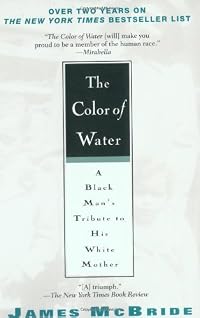
Bragg writes very well. Clean, direct, declaratory language, but with strong descriptive powers, and an ability to reach beyond, to place human tragedy in a broader context, to see the threads, the hopes and fears that connect us all as human beings, regardless of class, race, power, money. He grew up hard, in a hard world of the poor white class, and by his own admission carried a huge chip on his shoulder for many years. He was the most "successful" of the three boys, driven by an ambition, and an ability to write and, he would be the first to admit, good luck. The memoir is an honest one in terms of Bragg's own faults: his inability to form any lasting relationship with any woman, and his touchiness based on a suspicion that it was all too good to be true and could turn to dust at any moment, just like the workers in the textile mills at home who would see a steady job and a regular pay check disappear in layoffs. It is also a story about him coming to terms with his father, who abandoned his young, uneducated wife with three small children and who was never a father to the boys. It is a very human, honest, well-written story of a group of lives that, as Bragg himself says, could be told by any number of people. It compares very well with two other popular memoirs that I've read: Angela's Ashes and The Color of Water. Interesting, but not surprising, that in all three books, it is the mother who is the central pillar of strength, who sacrifices herself and her own comfort but never her principles, and who keeps the family together and motivated. show less
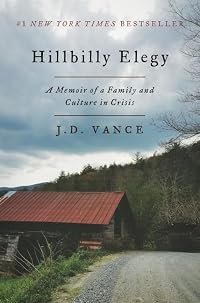
I am completely and thoroughly embarrassed to say that before reading this book I didn’t know Rick Bragg. Oh, I knew his name. Maybe I had seen him on Charlie Rose or on Stephanie Ruhle’s 11th Hour show, but I had never read anything he has written. And that includes the articles and/or columns he had written for his prestigious New York Times. If you are enamored of J.D. Vance because you read his best seller “Hillbilly Elegy,” I suggest you read someone who REALLY led that life. And that would be Rick Bragg. He comes from the roots that Vance claims to have come from (Middletown, Ohio, is about as close to being Appalachian as my Indiana hometown is), and he’s worked for the best newspapers, small and big, in the U.S. And, show more yes, he has one of those, a Pulitzer Prize. A friend of mine won one a few years ago. Know what he told me? He said, “About the only thing I can figure it does is ensure that the opening line of my obit will be pretty much the same as every other Pulitzer winner.” But, like Rick Bragg, he is proud of that award. Bragg was proud of having won the Pulitzer Prize more because of what it did for his mother than what it might do for him. And she wasn’t even really sure what the prize was. Plus, she said she couldn’t pronounce it, so she simply told friend that Rick had won a big award. Big award, indeed.
I loved this book, and I don’t say that very often. In the last eight years since I retired from high school English teaching, I’ve read 435 books, and Rick Bragg’s “All Over But the Shoutin’” is right at the top of that list. My fantasy at the ripe old age of 74 is for Rick to read this review on Amazon, Google me to find my phone number, and call me to thank me for writing it. That would be a little like how he felt when he bought his mamma that house. show less
I loved this book, and I don’t say that very often. In the last eight years since I retired from high school English teaching, I’ve read 435 books, and Rick Bragg’s “All Over But the Shoutin’” is right at the top of that list. My fantasy at the ripe old age of 74 is for Rick to read this review on Amazon, Google me to find my phone number, and call me to thank me for writing it. That would be a little like how he felt when he bought his mamma that house. show less
I have never lived south of Massachusetts, and to me the Deep South seems like a foreigh country. This book by Rick Bragg brought the place to life for me in a lovely way. It wasn't just his descriptions of the people and the customs, but his wonderful southern turns of phrase that captured the spirit so completely. One that stood out ... "as cool as the back side of a pillow"...struck me a particularly wonderful metaphor. It really made me feel the coolness that the back side of a pillow would bring on hot, humid night.
He also has a wonderful story to tell. Brought up in a poor family, and not a particularly good student, he found an outlet in writing and turned it into a career -- eventually winning a Pulitzer prize for journalism. show more
Definitely worth reading show less
He also has a wonderful story to tell. Brought up in a poor family, and not a particularly good student, he found an outlet in writing and turned it into a career -- eventually winning a Pulitzer prize for journalism. show more
Definitely worth reading show less
Rick Bragg needs you to understand three things about his life: One, he grew up with a strong mother. Two, his family was poorer than dirt. I don't know what's more poor than dirt, but Bragg will never let you forget he grew up less than dirt with words like white trash, ragged, welfare, slums, poverty, raggedy, and did I mention poor? Three, he's southern to the core, despite moving to New York City. Maybe it's this last point that makes it okay for him to use words like Eskimo. To be fair, we are a society becoming more and more sensitive to slights, real and perceived. But, I digress.
Bragg travels the world seeing atrocities far worse than growing up in poverty or having a delinquent dad or a drug-addled brother. His ability to tell show more stories from a compassionate point of view draws a great deal of attention and eventually, fame.
It is funny how when we are on the cusp of carrying on traditions from childhood we say we will do things differently than our parents. "I will not be my father. I will not be my mother." Yet, at the same time we are just like them without trying. Bragg spent a lifetime trying not to be his father, but at the end of All Over But the Shoutin' he is compelled to write his long-gone father a few words. show less
Bragg travels the world seeing atrocities far worse than growing up in poverty or having a delinquent dad or a drug-addled brother. His ability to tell show more stories from a compassionate point of view draws a great deal of attention and eventually, fame.
It is funny how when we are on the cusp of carrying on traditions from childhood we say we will do things differently than our parents. "I will not be my father. I will not be my mother." Yet, at the same time we are just like them without trying. Bragg spent a lifetime trying not to be his father, but at the end of All Over But the Shoutin' he is compelled to write his long-gone father a few words. show less
"The first memory I have is of a tall blond woman who drags a canvas cotton sack along an undulating row of rust-colored ground, through a field that seems to reach into the back forty of forever." The author was three years old at the time and the blond was his beloved Momma. This memoir is dedicated to her and you can feel the love and respect he has, for this tough incredible woman, as she struggles dirt-poor, to raise her three boys, while an absent father, is off on another drunk. Bragg is an acclaimed reporter for The New York Times, among other renowned newspapers and this is his story. He's a rustic poet and through his lovely prose, you will be sniffling and chuckling at regular intervals. Great stuff!
I was lucky enough to hear Rick Bragg speak last month at the University where I work. He's so personable, and a natural-born storyteller. I was rather delighted to discover that, as a Californian in a room full of Southerners (I live in Arkansas now), Bragg made several jokes that caused those around me to howl with laughter, while I sat there unsure of what just happened. It really cemented how different the South really is from everywhere else in the U.S., for good or bad. Afterwards, when it was my turn to meet Bragg at the book signing, he immediately caught on that I was not from around here. I told him I was from the Bay Area of California, but my grandma lived "up the road a ways" (i.e., 20 minutes down I-40), which was part of show more the reason I took the job in the first place. He smiled and simply said "Then you're home. As long as you have family near, you're home." I walked back to my apartment that night clutching his book to my chest and smiling like a loon. I started reading it right away.
Bragg's sincerity, charm, and wit - on full display during his talk - is doubly prevalent in his memoir about growing up in the South. But his memoir is about so much more than that; it's about the people and a place that you can never fully leave, even when you're in another country writing newspaper articles about the horrors you witness. Bragg frames his memoir around his "momma", a strong, sacrificing woman who did not leave her Alabama town until she accompanied Bragg to his Pulitzer Prize dinner (and you best believe I got teary-eyed at that bit).
There's so much to like about this book and I can go on and on about its merits, but instead I'll just encourage everyone to give it a read. I can think of no better way to try to understand what it means to be a Southerner than to read this book. Amazing, heartbreaking, lovely. show less
Bragg's sincerity, charm, and wit - on full display during his talk - is doubly prevalent in his memoir about growing up in the South. But his memoir is about so much more than that; it's about the people and a place that you can never fully leave, even when you're in another country writing newspaper articles about the horrors you witness. Bragg frames his memoir around his "momma", a strong, sacrificing woman who did not leave her Alabama town until she accompanied Bragg to his Pulitzer Prize dinner (and you best believe I got teary-eyed at that bit).
There's so much to like about this book and I can go on and on about its merits, but instead I'll just encourage everyone to give it a read. I can think of no better way to try to understand what it means to be a Southerner than to read this book. Amazing, heartbreaking, lovely. show less
Members
- Recently Added By
Lists

Non-Fiction Worth Reading
1,015 works; 261 members

Dysfunctional Families
133 works; 7 members

Carole's List
445 works; 13 members

Southern Fiction
212 works; 51 members

Books Read in 2016
4,666 works; 199 members

Adult Books for YA Readers
194 works; 6 members

AlphaKIT: Brown
21 works; 4 members

Coming of Age
33 works; 1 member
Author Information

15+ Works 6,092 Members
Rick Bragg was awarded the Pulitzer Prize for feature writing in 1996. A national correspondent for the "New York Times", he lives in Miami, Florida. (Bowker Author Biography)
Awards and Honors
Awards
Distinctions
Series

Work Relationships
Common Knowledge
- Canonical title
- All Over but the Shoutin'
- Original publication date
- 1997-08-15
- People/Characters
- Rick Bragg; Mark Bragg; Sam Bragg; Margaret Marie Bundrum Bragg
- Important places
- Alabama, USA; Miami, Florida, USA; Haiti; Cambridge, Massachusetts, USA; St. Petersburg, Florida, USA; New York, New York, USA
- Epigraph
- Living on the road my friend/ Was going to keep you free and clean/ Now you wear your skin like iron/ And your breath is hard as kerosene/ You weren't your momma's only boy/ But her favorite one, it seems/ She began to cry wh... (show all)en you said goodbye/ Saddled to your dreams
- T. Van Zandt - Dedication
- To my Momma and brothers
- First words
- I used to stand amazed and watch the redbirds fight.
- Last words
- (Click to show. Warning: May contain spoilers.)"You just been traveling."
Classifications
- Genres
- Biography & Memoir, Nonfiction, General Nonfiction
- DDC/MDS
- 070.92 — Computer science, information & general works News media, journalism & publishing Documentary media, educational media, news media; journalism; publishing Biography And History Biographies
- LCC
- PN4874 .B6625 .A3 — Language and Literature Literature (General) Literature (General) Journalism. The periodical press, etc. By region or country
- BISAC
Statistics
- Members
- 2,508
- Popularity
- 7,643
- Reviews
- 63
- Rating
- (4.03)
- Languages
- Chinese, Dutch, English, Portuguese
- Media
- Paper, Audiobook, Ebook
- ISBNs
- 24
- ASINs
- 8