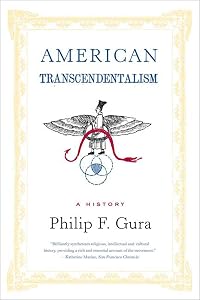
American transcendentalism
by Philip F. Gura
On This Page
Description
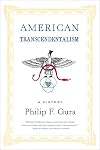
The first comprehensive history of the nineteenth-century American intellectual movement. American Transcendentalism is a comprehensive narrative history of America's first group of public intellectuals, the men and women who defined American literature and indelibly marked American reform in the decades before and following the America Civil War. Philip F. Gura masterfully traces their intellectual genealogy to transatlantic religious and philosophical ideas, illustrating how these informed show more the fierce local theological debates that, so often first in Massachusetts and eventually throughout America, gave rise to practical, personal, and quixotic attempts to improve, even perfect the world. The transcendentalists would painfully bifurcate over what could be attained and how, one half epitomized by Ralph Waldo Emerson and stressing self-reliant individualism, the other by Orestes Brownson, George Ripley, and Theodore Parker, emphasizing commitment to the larger social good. By the 1850s, the uniquely American problem of slavery dissolved differences as transcendentalists turned ever more exclusively to abolition. Along with their early inheritance from European Romanticism, America's transcendentalists abandoned their interest in general humanitarian reform. By war's end, transcendentalism had become identified exclusively with Emersonian self-reliance, congruent with the national ethos of political liberalism and market capitalism. show lessTags
Recommendations
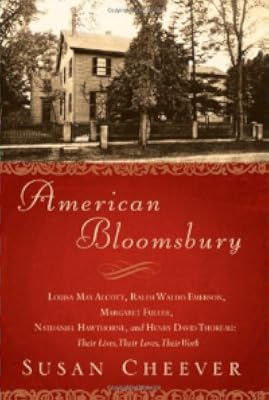
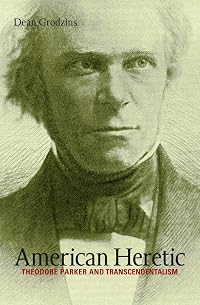










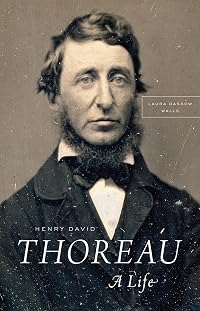
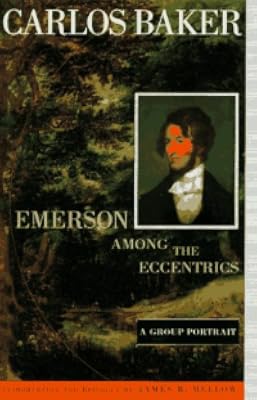













Member Recommendations


PuddinTame The two books complement each other, one the general background, and the other on specific individuals.
Member Reviews
In past decades I have read Emerson and about Emerson, about the Concord crowd, and about the early transendentalists. I haven't been reading much in that area recently, but I have tried to keep my faith alive by active participation in my local Unitarian Universalist church. The confluence of continued interest in the area and some alienating internal political changes in the church led me back to Philip F. Gura's American Transcendentalism. This is reading in American intellectual history, not scripture, and it seemed to me to serve admirably.
I had read that Emerson had come late to supporting the abolitionists. This book admirably distinguished the two transcendentalist factions, those seeking internal satisfaction and those seeking show more social satisfaction. I have long, in talking with myself at least, held, like Tolstoy and James Luther Adams, that religion is how we relate to the universe or to what is important and ultimate, and so it is comprehensible to me that one could spiritually spend one's time gazing at one's navel and equally one could spiritually spend one's time feeding the hungry. Now I know much more how the transcendentalists saw this distinction and where Emerson fit in. I am, however, not sure yet how finding deep within oneself the need to support one's neighbor rides on a scale like this.
I have, at the suggestion of a Unitarian Universalist minister, taken faith to be a matter more of commitment than of belief. I don't spend a whole lot of time on whether God exists. The book quoted Samuel Johnson (This is not Dr. Johnson but in LibraryThing terms is Samuel Johnson 7. This is a link to the Wikipedia article on the man) describing the 'natural religion' he preached as
Even so I am very glad that I read this history, and it opens new perspective in my continued reading.
Robert show less
I had read that Emerson had come late to supporting the abolitionists. This book admirably distinguished the two transcendentalist factions, those seeking internal satisfaction and those seeking show more social satisfaction. I have long, in talking with myself at least, held, like Tolstoy and James Luther Adams, that religion is how we relate to the universe or to what is important and ultimate, and so it is comprehensible to me that one could spiritually spend one's time gazing at one's navel and equally one could spiritually spend one's time feeding the hungry. Now I know much more how the transcendentalists saw this distinction and where Emerson fit in. I am, however, not sure yet how finding deep within oneself the need to support one's neighbor rides on a scale like this.
I have, at the suggestion of a Unitarian Universalist minister, taken faith to be a matter more of commitment than of belief. I don't spend a whole lot of time on whether God exists. The book quoted Samuel Johnson (This is not Dr. Johnson but in LibraryThing terms is Samuel Johnson 7. This is a link to the Wikipedia article on the man) describing the 'natural religion' he preached as
another name for truth, freedom, piety, righteousness, [and ] loveI have heard God described as Love, but I don't have a handle on it as a universal principal. The book did a good job of describing these people who held such notions, but the philosophy didn't run deep.
Even so I am very glad that I read this history, and it opens new perspective in my continued reading.
Robert show less
(Reprinted from the Chicago Center for Literature and Photography [cclapcenter.com]. I am the original author of this essay, as well as the owner of CCLaP; it is not being reprinted here illegally.)
The only time before this week that I had ever had experiences with the American Transcendentalist movement of the 1800s had been in high school, experiences that had not gone well at all; I remember something about them all being philosophers, or maybe it was authors or ministers or something, and I remember something about one of them living in the woods for two years, and my lit teacher saying something about them being the original hippies. (Of course, this was the early '80s, so my teacher herself was an aging hippie who meant it as a show more compliment, while we took it as an insult.). And I remember something about this insanely complicated belief system they had that was utterly incomprehensible even when you tried reading the most well-known of all their work, the Emerson lectures and Thoreau stories and all the rest. And that's a real shame, I've come to realize this week, because in so many ways this group deserves so much more modern respect than they usually get, and had a heavier influence over the modern world as it appears today than many of us realize. They were, after all, the very first group of philosophers in American history, the first to create a philosophy that was truly American; they were the group that coined the phrase 'civil disobedience,' the ones who brought about labor reform and women getting the vote; they were the last group in American history to be deeply religious yet consider themselves intellectuals, a distinction sorely missing from our country these days; and they're a fascinating example of how US history could've gone if not for the Civil War, a progressive and utopian vision that believed in the essential goodness of humanity, a vision collectively lost in the US for over a hundred and fifty years and just now starting to be found again in the 2008 election and the historic campaign of Barack Obama.
But there's a reason we have such a strange, fractured way of remembering the Transcendentalists, or so argues professor Philip Gura in his phenomenal new book American Transcendentalism: A History, which is hands-down easily the best nonfiction book I've read in the last year; and that's because the Transcendentalists themselves were a fractured and raucous group, a loose confederation of thinkers who were often at odds with each other over the details of their "movement," a group that finally fell apart precisely because of the Civil War and whose ideas were never picked up in a major way again by the American populace in general (or at least not yet). In many ways they're a historical anomaly, Gura argues, a burp in the usual conservative, free-market theme that pervades most of American history; and it's for that reason that it's so important to study and understand them, he says, precisely because they are a reflection of a time in American history no one had seen before and no one will ever see again (i.e. the "nation-building" years, the era lasting from the War of 1812 to the Civil War of 1860). And furthermore, Gura does this with a clarity that is simply unbelievable, given the complexity of the subject matter; and he does it in an incredibly tight and entertaining 300 pages, too, an astounding feat that you hope will earn him at least his own PBS special or something down the line.
In fact, that's the first thing to understand about Transcendentalism in general, even before picking up the book, is that its roots are mired in complexity to begin with, and with no one at any point in history ever really agreeing on even its general definition. You could say, for example, that the movement mostly grew out of a type of Christian denomination known as Unitarianism; for those unfamiliar with the subtleties of Christianity, it's considered one of the more liberal denominations out there, with their very name for example coming from the fact that they believe Jesus to simply have been a cool guy and important philosopher, but not literally the son of God. (So in other words, unlike other groups who believe in a "trinity" of holy figures at the heart of Christianity [a Father and Son and Holy Ghost], Unitarians believe in a unitary God who rules all by Himself.) It's the Unitarian preachers who are always the first to denounce wars; the ones you always see in the front of peace marches and labor rallies; the ones who have always first embraced things like interracial marriages and gay marriages.
But see, here's where it starts getting complicated, because it was just some of these liberal activist preachers who started rebelling against what was an accepted belief at the time; this being the early 1800s, of course, the very end of the rational Enlightenment years, most educated people still fundamentally believed in doing what these rational philosophers like Descartes and Locke advocated, which is to bring a cold, clinical, scientific eye to every facet of one's life. This resulted, for example, in a Unitarian church in the early 1800s that generally believed in "faith" being something to be externally proven, using scientific methods; in the minds of most church officials at the time, for example, the Bible was to be considered metaphorical only, much like a book of nursery rhymes, with the "truth" of Christianity resting much more on things like archeological digs and better interpretations of the original Aramaic scrolls.
But of course, the beginning of the 1800s was not just the end of the Enlightenment but the beginning of Romanticism; and there were definitely an amount of Unitarian ministers in those years feeling the pull to move in that direction, usually the youngest or most politically radical of the entire church. For example, it started becoming a popular theory among many of these rebels that it's actually one's inner spiritual voice that is the most important aspect of faith; that all of us as Christians are born with a calm, true, steady voice inside us, one that directly communicates with God, and that we don't need stupid archeological digs to tell us how to be good Christians. It's simply a matter of listening to this voice, these radical youthful ministers started arguing from their pulpits; it's a matter of turning inwards, of making faith more spiritual, of "transcending" the surface-level noise that humans and human churches add to the direct relationship all of us have with God. And hence the term "Transcendentalism," which like "beatnik" and "hippie" and "slacker" was actually first coined by the group's critics as an insult against them, before eventually being adopted by the very people the term was supposed to make fun of.
But see, the story of Transcendentalism is even more complicated than that; because frankly, there were lots of people taking up the mantle at the same time not primarily for religious reasons at all, but rather artistic and philosophical ones. Because it's important to remember what exactly was going on in America at the time, and what a strange and new period of our history it was; the first time in our history, in fact, when the question of whether the country even officially existed was finally answered by the rest of the world for good, the first time we could officially stop worrying about falling apart and instead concentrate on what exactly we were going to be. What was the US going to be, actually, now that it had fought and won its initial wars for independence and respect, now that it could start devoting an insane amount of resources simply into building an infrastructure and identity? Many of the country's smartest thinkers, for example, were calling for the US to finally establish an artistic and philosophical community for the first time -- to start really beefing up our school and university systems, stop automatically shipping off all our children to Europe in order to get a decent education, actually publish literary magazines and hold discussion salons and all the other things that at the time you literally had to sail all the way to London or Paris to find.
This is part of Transcendentalist history as well, Gura deftly shows in his book; not just the liberal preachers arguing for a more personal and Romantic understanding of God, but poets and editors and philosophers yearning for an entire Romantic artistic community, one that refocuses on nature and feelings and inner emotions, one where mood and atmosphere play a heavy role in the literature itself. But at the same time, Transcendentalism was also about political activism; it was about these ministers, these thinkers, these philanthropists, indeed turning inwards and realizing, "Why, as a good Christian, I should be helping others, and standing up for the meek, and trying to make the world a better place." And it's such a fascinating thing to look back on, I think, precisely because so much of this kind of stuff has literally disappeared in America; the idea of a Christian actually being an intellectual, the idea of a Christian actually being a liberal, the idea of Christians actually embracing experimental projects and radical theories. The people who identified themselves as Transcendentalists in these years were not just thinkers but doers; they were the ones setting up alternative schools, founding homeless shelters and soup kitchens, leading abolitionist marches, financing bizarre rural utopian societies*.
And like I said, a big part of this finally being a fascinating story to me for the first time is because of the insane skills of Gura, a professor of literature and culture at the University of North Carolina at Chapel Hill; he does no less, in fact, than take nearly 75 major characters, half a century of history, and a story that doesn't even agree with itself and never did from the start, and somehow manages to make it a coherent, even thrilling story, albeit a story you need to pay very close attention to while reading, and also know a fair amount of general 19th-century history before starting (and by "fair amount," I mean "a Saturday afternoon spent at Wikipedia"). Ultimately, Gura gets why this would make for such an important and interesting book in these times, and gears the entire storyline precisely in that direction; because among other things, Transcendentalism was about maintaining an optimistic, almost utopian look at the world, even in the face of some terrible, terrible things that were happening on a daily basis. It's that same kind of restless yearning that is fueling so much of these Last Days Of Bush here in the US, that has made so many people go so crazy over something like Barack Obama's presidential campaign this year; that after a decade of evil, of being ashamed to be an American, of a runaway unchecked administration that no one could stop, we are all desperate to believe that better days are coming, now that the neocon madness will almost definitely be put to an end here in about six months.
The liberals, the philosophers of America in the early 1800s were feeling the same thing, faced with an early Industrial Age marked mostly by greed, abuse and squalor; these Transcendentalists held on to their optimism and utopian vision, believed in it with a passion that made it actually happen, and along the way permanently changed the way this country works, with things like labor unions and civil-rights laws literally not existing if it hadn't been for them. It's a great message to be reminded of these days, which is partly why Gura's book is so welcome right now; not to mention that it finally gives you a clear picture of an infinitely complex time in US history, plus is simply a page-turning yarn that would make for a fine hipster high-def PBS documentary with plaintive indie-pop soundtrack (psst -- I hear Wilco's free). This is a great book, a must-read, one that will undoubtedly make CCLaP's Best of 2008 list at the end of the year; it comes highly recommended today.
Out of 10: 9.8
*And of course, it's only fair to point out (as Gura also does) that the Transcendentalists were also mercilessly made fun of in those years as well, and especially when it came to these radical rural utopian societies they kept trying to set up, almost all of which ended in comical disaster. In fact, one of the books coming up later this year in the "CCLaP 100" series of "classics" essays is Nathaniel Hawthorne's 1852 The Blithedale Romance, a blistering satire of such high-minded utopian disasters inspired by his own time spent hanging around with Transcendentalists in those years. show less
The only time before this week that I had ever had experiences with the American Transcendentalist movement of the 1800s had been in high school, experiences that had not gone well at all; I remember something about them all being philosophers, or maybe it was authors or ministers or something, and I remember something about one of them living in the woods for two years, and my lit teacher saying something about them being the original hippies. (Of course, this was the early '80s, so my teacher herself was an aging hippie who meant it as a show more compliment, while we took it as an insult.). And I remember something about this insanely complicated belief system they had that was utterly incomprehensible even when you tried reading the most well-known of all their work, the Emerson lectures and Thoreau stories and all the rest. And that's a real shame, I've come to realize this week, because in so many ways this group deserves so much more modern respect than they usually get, and had a heavier influence over the modern world as it appears today than many of us realize. They were, after all, the very first group of philosophers in American history, the first to create a philosophy that was truly American; they were the group that coined the phrase 'civil disobedience,' the ones who brought about labor reform and women getting the vote; they were the last group in American history to be deeply religious yet consider themselves intellectuals, a distinction sorely missing from our country these days; and they're a fascinating example of how US history could've gone if not for the Civil War, a progressive and utopian vision that believed in the essential goodness of humanity, a vision collectively lost in the US for over a hundred and fifty years and just now starting to be found again in the 2008 election and the historic campaign of Barack Obama.
But there's a reason we have such a strange, fractured way of remembering the Transcendentalists, or so argues professor Philip Gura in his phenomenal new book American Transcendentalism: A History, which is hands-down easily the best nonfiction book I've read in the last year; and that's because the Transcendentalists themselves were a fractured and raucous group, a loose confederation of thinkers who were often at odds with each other over the details of their "movement," a group that finally fell apart precisely because of the Civil War and whose ideas were never picked up in a major way again by the American populace in general (or at least not yet). In many ways they're a historical anomaly, Gura argues, a burp in the usual conservative, free-market theme that pervades most of American history; and it's for that reason that it's so important to study and understand them, he says, precisely because they are a reflection of a time in American history no one had seen before and no one will ever see again (i.e. the "nation-building" years, the era lasting from the War of 1812 to the Civil War of 1860). And furthermore, Gura does this with a clarity that is simply unbelievable, given the complexity of the subject matter; and he does it in an incredibly tight and entertaining 300 pages, too, an astounding feat that you hope will earn him at least his own PBS special or something down the line.
In fact, that's the first thing to understand about Transcendentalism in general, even before picking up the book, is that its roots are mired in complexity to begin with, and with no one at any point in history ever really agreeing on even its general definition. You could say, for example, that the movement mostly grew out of a type of Christian denomination known as Unitarianism; for those unfamiliar with the subtleties of Christianity, it's considered one of the more liberal denominations out there, with their very name for example coming from the fact that they believe Jesus to simply have been a cool guy and important philosopher, but not literally the son of God. (So in other words, unlike other groups who believe in a "trinity" of holy figures at the heart of Christianity [a Father and Son and Holy Ghost], Unitarians believe in a unitary God who rules all by Himself.) It's the Unitarian preachers who are always the first to denounce wars; the ones you always see in the front of peace marches and labor rallies; the ones who have always first embraced things like interracial marriages and gay marriages.
But see, here's where it starts getting complicated, because it was just some of these liberal activist preachers who started rebelling against what was an accepted belief at the time; this being the early 1800s, of course, the very end of the rational Enlightenment years, most educated people still fundamentally believed in doing what these rational philosophers like Descartes and Locke advocated, which is to bring a cold, clinical, scientific eye to every facet of one's life. This resulted, for example, in a Unitarian church in the early 1800s that generally believed in "faith" being something to be externally proven, using scientific methods; in the minds of most church officials at the time, for example, the Bible was to be considered metaphorical only, much like a book of nursery rhymes, with the "truth" of Christianity resting much more on things like archeological digs and better interpretations of the original Aramaic scrolls.
But of course, the beginning of the 1800s was not just the end of the Enlightenment but the beginning of Romanticism; and there were definitely an amount of Unitarian ministers in those years feeling the pull to move in that direction, usually the youngest or most politically radical of the entire church. For example, it started becoming a popular theory among many of these rebels that it's actually one's inner spiritual voice that is the most important aspect of faith; that all of us as Christians are born with a calm, true, steady voice inside us, one that directly communicates with God, and that we don't need stupid archeological digs to tell us how to be good Christians. It's simply a matter of listening to this voice, these radical youthful ministers started arguing from their pulpits; it's a matter of turning inwards, of making faith more spiritual, of "transcending" the surface-level noise that humans and human churches add to the direct relationship all of us have with God. And hence the term "Transcendentalism," which like "beatnik" and "hippie" and "slacker" was actually first coined by the group's critics as an insult against them, before eventually being adopted by the very people the term was supposed to make fun of.
But see, the story of Transcendentalism is even more complicated than that; because frankly, there were lots of people taking up the mantle at the same time not primarily for religious reasons at all, but rather artistic and philosophical ones. Because it's important to remember what exactly was going on in America at the time, and what a strange and new period of our history it was; the first time in our history, in fact, when the question of whether the country even officially existed was finally answered by the rest of the world for good, the first time we could officially stop worrying about falling apart and instead concentrate on what exactly we were going to be. What was the US going to be, actually, now that it had fought and won its initial wars for independence and respect, now that it could start devoting an insane amount of resources simply into building an infrastructure and identity? Many of the country's smartest thinkers, for example, were calling for the US to finally establish an artistic and philosophical community for the first time -- to start really beefing up our school and university systems, stop automatically shipping off all our children to Europe in order to get a decent education, actually publish literary magazines and hold discussion salons and all the other things that at the time you literally had to sail all the way to London or Paris to find.
This is part of Transcendentalist history as well, Gura deftly shows in his book; not just the liberal preachers arguing for a more personal and Romantic understanding of God, but poets and editors and philosophers yearning for an entire Romantic artistic community, one that refocuses on nature and feelings and inner emotions, one where mood and atmosphere play a heavy role in the literature itself. But at the same time, Transcendentalism was also about political activism; it was about these ministers, these thinkers, these philanthropists, indeed turning inwards and realizing, "Why, as a good Christian, I should be helping others, and standing up for the meek, and trying to make the world a better place." And it's such a fascinating thing to look back on, I think, precisely because so much of this kind of stuff has literally disappeared in America; the idea of a Christian actually being an intellectual, the idea of a Christian actually being a liberal, the idea of Christians actually embracing experimental projects and radical theories. The people who identified themselves as Transcendentalists in these years were not just thinkers but doers; they were the ones setting up alternative schools, founding homeless shelters and soup kitchens, leading abolitionist marches, financing bizarre rural utopian societies*.
And like I said, a big part of this finally being a fascinating story to me for the first time is because of the insane skills of Gura, a professor of literature and culture at the University of North Carolina at Chapel Hill; he does no less, in fact, than take nearly 75 major characters, half a century of history, and a story that doesn't even agree with itself and never did from the start, and somehow manages to make it a coherent, even thrilling story, albeit a story you need to pay very close attention to while reading, and also know a fair amount of general 19th-century history before starting (and by "fair amount," I mean "a Saturday afternoon spent at Wikipedia"). Ultimately, Gura gets why this would make for such an important and interesting book in these times, and gears the entire storyline precisely in that direction; because among other things, Transcendentalism was about maintaining an optimistic, almost utopian look at the world, even in the face of some terrible, terrible things that were happening on a daily basis. It's that same kind of restless yearning that is fueling so much of these Last Days Of Bush here in the US, that has made so many people go so crazy over something like Barack Obama's presidential campaign this year; that after a decade of evil, of being ashamed to be an American, of a runaway unchecked administration that no one could stop, we are all desperate to believe that better days are coming, now that the neocon madness will almost definitely be put to an end here in about six months.
The liberals, the philosophers of America in the early 1800s were feeling the same thing, faced with an early Industrial Age marked mostly by greed, abuse and squalor; these Transcendentalists held on to their optimism and utopian vision, believed in it with a passion that made it actually happen, and along the way permanently changed the way this country works, with things like labor unions and civil-rights laws literally not existing if it hadn't been for them. It's a great message to be reminded of these days, which is partly why Gura's book is so welcome right now; not to mention that it finally gives you a clear picture of an infinitely complex time in US history, plus is simply a page-turning yarn that would make for a fine hipster high-def PBS documentary with plaintive indie-pop soundtrack (psst -- I hear Wilco's free). This is a great book, a must-read, one that will undoubtedly make CCLaP's Best of 2008 list at the end of the year; it comes highly recommended today.
Out of 10: 9.8
*And of course, it's only fair to point out (as Gura also does) that the Transcendentalists were also mercilessly made fun of in those years as well, and especially when it came to these radical rural utopian societies they kept trying to set up, almost all of which ended in comical disaster. In fact, one of the books coming up later this year in the "CCLaP 100" series of "classics" essays is Nathaniel Hawthorne's 1852 The Blithedale Romance, a blistering satire of such high-minded utopian disasters inspired by his own time spent hanging around with Transcendentalists in those years. show less
An indepth history and analysis of the complex and sometimes contradictory movement known as Transcendentalism. There are many echoes of today, showing the deep and ongoing influence of the thinkers and their thoughts in the politics and culture of our day.
An interesting and well-researched look at the American Transcendentalists of the 19th century.
American History, Transcendentalism, New England, UU, Unitarianism
Ratings
Members
- Recently Added By
Author Information

16+ Works 635 Members
Philip F. Gura is the William S. Newman Distinguished Professor of American Literature and Culture at The University of North Carolina at Chapel Hill.
Some Editions
Awards and Honors
Awards
Common Knowledge
- Canonical title
- American transcendentalism
- Original publication date
- 2007
- People/Characters
- Orestes A. Brownson (as Orestes Brownson); Theodore Parker; Bronson Alcott; Ralph Waldo Emerson; Henry David Thoreau; Elizabeth Palmer Peabody (show all 8); Margaret Fuller; George Ripley
- Important places
- USA; Massachusetts, USA; Boston, Massachusetts, USA; Concord, Massachusetts, USA; Brook Farm; Fruitlands Farm
- Important events
- Transcendentalism
- Epigraph
- They called themselves "the club of the like-minded"; I suppose because no two . . . thought alike.
--James Freeman Clarke
No single term can describe them. Nothing can be more unjust to them, or more likely to mislead the public, than to lump them all together, and predicate the same things of them all.
--Orestes Browson
Thus, by mere attraction of affinity, grew together the brotherhood of the "like-minded," as they were pleasantly nicknamed by outsiders, and by themselves, on the ground that no two were of the same opinion.
--William... (show all) Henry Channing
The new Boston school of philosophy (hold) no very precise doctrines, and (are) without any one band of union . . . they comprise an independency of opinion. They unite to differ.
--"J"
Transcendentalism is the practical philosophy of belief and conduct. Every man is a transcendentalist; and all true faith, the motives of all past action, are transcendental.
--J. A. Saxton - Dedication
- For
Bob Richardson, always a guide on these trails - First words
- Most educated Americans identify Transcendentalism as a nineteenth-century intellectual movement that spawned Ralph Waldo Emerson, Henry David Thoreau, and Margaret Fuller. (Preface)
In 1869, Louisa May Alcott, under the cognomen Tribulation Periwinkle, submitted to the Springfield (Massachusetts) Republican a tongue-in-cheek letter with the "Latest News from Concord" Massachusetts. (Intr... (show all)oduction: "Locating the 'Like-Minded'." )
In the late summer of 1812, Harvard students and professors, clergymen, scholars, bibliophiles, and curious onlookers gathered in Boston "at the Mansion-House of the late Rev. Mr. Buckminster" for the sale of the minister's l... (show all)ibrary, one of the largest in New England. - Quotations
- Parker's central point in this sermon was that, "transient things form a great part of what is commonly taught as religion." For centuries, he noted, men had argued over theology and ecclesiology, and in doing so had forgott... (show all)en the Christianity of Christ. Their theology stood betwenn them and God. [. . .]
[. . .] Parker also contended that current notions respecting the infallible inspiration of the Bible had no foundation in scripture. Similarly, many religions made Christianity stand on the personal example of Christ, rather than on his truths, even though it was "hard to see why the great truths of Christianity rest on the personal authority of Jesus, more than the axioms of geometry rest on the personal authority of Euclid or Archimedes." In Parker's view, even if one proved that Jesus never lived, Christianity would still exist because of its inherent truth. (Chapter 5: "Centripetal Forces and Centrifugal Motion," p.145 (Hill & Wang, 2007))
"I do not know what their scheme will ripen to," she wrote a friend, for "it is only a little better way than others." "I doubt," she concluded, "that they will get free from all they deprecate in society." [Margaret Fuller... (show all), concerning George Ripley and the proposed Brook Farm.] (Chapter 6: "Heaven on Earth," p. 152, (Hill & Wang, 2007))
Not only is [Elizabeth Thayer Clapp's] Studies in Religion one of the few extended Transcendentalist texts, by a woman, it provides a superb understanding of how the Unitarian rank and file received, understood, and re... (show all)cycled the high intellectual philosophizing of Emerson and the other prominent Transcendentalists.
A letter of Clapp's from 1884 clarifies her earlier beliefs. "Mr. Emerson's method," she wrote, explaining her one time predisposition to it, "as translated into practice by its ordinary disciples, was to seek the presence and authority of spiritual law in one's own consciousness," and to "consider the innermost facts of the consciousness as one in nature with God and consequently divine in essence and infallible in its moral guidance." [. . .] In retrospect she grew to understand the danger of such reliance on those ill-suited to practice it. (Chapter 7: "Varieties of Transcendentalism," p. 190, (Hill & Wang, 2007)) - Last words
- (Click to show. Warning: May contain spoilers.)They were, if nothing else, great optimists.
- Blurbers
- Ellis, Joseph J.; Myerson, Joel; Buell, Lawrence; McWilliams, John; Brown, Richard D.; Robinson, David M. (show all 7); Aaron, David
Classifications
- Genres
- Nonfiction, Philosophy, History, General Nonfiction, Religion & Spirituality, Literature Studies and Criticism
- DDC/MDS
- 141.30973 — Philosophy & psychology Philosophical schools of thought Idealism and related systems and doctrines Transcendentalism
- LCC
- B905 .G87 — Philosophy, Psychology and Religion Philosophy (General) By period Modern By region or country
- BISAC
Statistics
- Members
- 287
- Popularity
- 112,127
- Reviews
- 5
- Rating
- (3.84)
- Languages
- English
- Media
- Paper, Ebook
- ISBNs
- 3
- ASINs
- 2