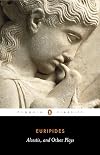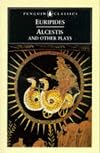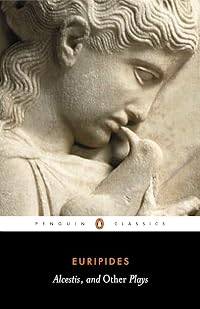
3 Plays: Alcestis / Hippolytus / Iphigenia in Taurus
by Euripides
On This Page
Description
One of the greatest playwrights of Ancient Greece, the works of Euripides (484-406 BC) were revolutionary in their depiction of tragic events caused by flawed humanity, and in their use of the gods as symbols of human nature. The three plays in this collection show his abilities as the sceptical questioner of his age. Alcestis, an early drama, tells the tale of a queen who offers her own life in exchange for that of her husband; cast as a tragedy, it contains passages of satire and comedy. show more The tragicomedy Iphigenia in Tauris melodramatically reunites the ill-fated children of Agamemnon, while the pure tragedy of Hippolytus shows the fatal impact of Phaedra's unreasoning passion for her chaste stepson. All three plays explore a deep gulf that separates man from woman, and all depict a world dominated by amoral forces beyond human control. show lessTags
Recommendations

















Member Reviews
The intro to this was interesting and kinda confirmed some of my observations from my first Euripides compilation (Medea and Other Plays) - I had observed that the primary theme of that collection appeared to be female rage. What was interesting to learn is that Euripides has historically been viewed as a misogynist due to his depiction of deeply flawed women. As the translator, Philip Vellacot, noted, this interpretation only holds on a shallow reading of his plays. While this collection seems to go easier on the female rage, Euripides still takes a great interest in the problems facing women in patriarchal Greek society, and their suffering at the hands of powerful men.
Alcestis is the story of a loyal wife who has given her life for show more her husband's. The choice was made years ago, and now the debt has come due. Much of the play consists of mourning and hand-wringing on the part of herself and her husband. The mood changes suddenly with the arrival of a tipsy Heracles, who beats up Death (Thanatos) and returns Alcestis (albeit mute) to her husband. It's quite the whiplash moment, but apparently this was supposed to be a comedy in spite of the tragic mood that prevails during most of the play, and a good performance crew could probably make the inappropriate arrival of Heracles hilarious. My favourite part was the conversation between Thanatos and Apollo at the start of the play.
Once of the mistakes modern dabblers in Greek mythology often seem to make is the idea that Aphrodite is a nice goddes. Hippolytus, on the other hand, really drives home how terrifying she can really be. Hippolytus is a young man who makes the mistake of shunning Aphrodite, and for that, she destroys not only his life, but his step-mother Phaedra's as well. He's not really a sympathetic victim - although it's understandable he might have some issues around sex stemming from his conception via rape, he dives into misogyny head-first despite worshipping Artemis, and his holier-than-though attitude is grating. In comparison, Phaedra, often seen as the villain, seems sympathetic until the point at which she unjustly accuses her step-son of assaulting her. Otherwise she is at the mercy of other people's actions or being used as a tool by a goddess to harm the men around her.
In Iphegenia in Tauris, it was fun to see a woman in a commanding role. This play belongs to an alternate timeline in which Iphegenia was rescued by Artemis from sacrifice at the last moment and brought to Tauris to serve as a priestess. Except everyone else considers her dead. We meet our old friends Orestes and Pylades as they almost get sacrificed. The main characters escape, leaving behind the chorus, who are all captured slave-women and fellow Greeks. They do make a vague promise to come back one day to free them, but it could be argued that the three main characters are selfishly focused only on their own safety. show less
Alcestis is the story of a loyal wife who has given her life for show more her husband's. The choice was made years ago, and now the debt has come due. Much of the play consists of mourning and hand-wringing on the part of herself and her husband. The mood changes suddenly with the arrival of a tipsy Heracles, who beats up Death (Thanatos) and returns Alcestis (albeit mute) to her husband. It's quite the whiplash moment, but apparently this was supposed to be a comedy in spite of the tragic mood that prevails during most of the play, and a good performance crew could probably make the inappropriate arrival of Heracles hilarious. My favourite part was the conversation between Thanatos and Apollo at the start of the play.
Once of the mistakes modern dabblers in Greek mythology often seem to make is the idea that Aphrodite is a nice goddes. Hippolytus, on the other hand, really drives home how terrifying she can really be. Hippolytus is a young man who makes the mistake of shunning Aphrodite, and for that, she destroys not only his life, but his step-mother Phaedra's as well. He's not really a sympathetic victim - although it's understandable he might have some issues around sex stemming from his conception via rape, he dives into misogyny head-first despite worshipping Artemis, and his holier-than-though attitude is grating. In comparison, Phaedra, often seen as the villain, seems sympathetic until the point at which she unjustly accuses her step-son of assaulting her. Otherwise she is at the mercy of other people's actions or being used as a tool by a goddess to harm the men around her.
In Iphegenia in Tauris, it was fun to see a woman in a commanding role. This play belongs to an alternate timeline in which Iphegenia was rescued by Artemis from sacrifice at the last moment and brought to Tauris to serve as a priestess. Except everyone else considers her dead. We meet our old friends Orestes and Pylades as they almost get sacrificed. The main characters escape, leaving behind the chorus, who are all captured slave-women and fellow Greeks. They do make a vague promise to come back one day to free them, but it could be argued that the three main characters are selfishly focused only on their own safety. show less
Alcestis is my favorite Greek play. Some modern critics reject the happy ending, but I like it.
If you're looking to read Euripides in English then this is the edition I recommend, or any edition with Philip Vellacott's translations.
Contents: Hippolytus -- Iphigenia in Tauris -- Alcestis
1953, 14Males, 7Females, full-length
Ratings
Members
- Recently Added By
Author Information

1,343+ Works 34,075 Members
Euripides was born in Attica, Greece probably in 480 B.C. He was the youngest of the three principal fifth-century tragic poets. In his youth he cultivated gymnastic pursuits and studied philosophy and rhetoric. Soon after he received recognition for a play that he had written, Euripides left Athens for the court of Archelaus, king of Macedonia. show more Fragments of about fifty-five plays survive. Among his best-known plays are Alcestis, Medea and Philoctetes, Electra, Iphigenia in Tauris, The Trojan Women, and Iphigenia in Aulis Iphigenia. He died in Athens in 406 B.C. (Bowker Author Biography) show less
Some Editions
Series
Belongs to Publisher Series
Penguin Classics (L031)
Work Relationships
Contains
Common Knowledge
- Canonical title
- 3 Plays: Alcestis / Hippolytus / Iphigenia in Taurus
- Original title
- Three plays : Hippolytus / Iphigenia in Taurus / Alcestis
- Alternate titles
- 3 Plays: Alcestis / Hippolytus / Iphigenia in Tauris; Alcestis / Hippolytus / Iphigenia in Tauris
- Original publication date
- 438 BCE ( Alcestis) ( Alcestis); 428 BCE (Hippolytus) (Hippolytus); 414 BCE (Iphigenia in Tauris) (Iphigenia in Tauris); 1953 (English: Philip Vellacott) (English: Philip Vellacott)
- Dedication
- To the Attic Players
- First words
- Euripides was born in 484 B.C and died in 407.
Introduction (Penguin Classics ed.).
APHRODITE: Powerful among mortals, glorious among the gods,
I am Aphrodite, named in heaven The Cyprian.
Hippolytus.
IPHIGENIA: I am Iphigenia. I am descended
From that fast charioteer, the son ... (show all)of Tantalus,
Pelops, who drove to Pisa and there won
His wife Hippodamia.
Iphigenia in Tauris.
APOLLO: House of Admetus! Here I have submitted
To eat a labourer's bread, and be content -
Yes, I, Apollo, a god!
Alcestis.
(Penguin Classics ed.).
Apollo: House of Admetus! Here I have endured to live
Content with labourers' bread - yes, I, a god, Apollo. - Last words
- (Click to show. Warning: May contain spoilers.)CHORUS: Gods manifest themselves in many forms,
Bring many matters to surprising ends;
The things we thought would happen do not happen;
Things unexpected God makes possible:
And that is what has happened here to-day!
(Penguin Classics ed.).
(Click to show. Warning: May contain spoilers.)Past all wonder, now to our despairing ears
Lips divine have spoken
Words of joy and comfort! - Original language
- English
- Disambiguation notice
- This record is only for collections containing only these three plays: 'Alcestis', 'Hippolytus' and 'Iphegenia in Tauris'.
Classifications
- Genre
- Fiction and Literature
- DDC/MDS
- 882.01 — Literature & rhetoric Classical & modern Greek literatures Classical Greek dramatic poetry and drama standard subdivisions; collections; history, description, critical appraisal; Specific periods Ancient period to ca. 499
- LCC
- PA3975 .A2 — Language and Literature Greek language and literature. Latin language and literature Greek literature Individual authors Euripedes
- BISAC
Statistics
- Members
- 700
- Popularity
- 40,589
- Reviews
- 5
- Rating
- (3.97)
- Languages
- Czech, English, German, Greek (Ancient)
- Media
- Paper, Ebook
- ISBNs
- 7
- UPCs
- 1
- ASINs
- 26