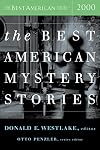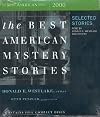
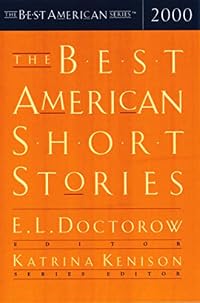
The Best American Mystery Stories : 2000
by Donald E. Westlake (Editor & Introduction), Otto Penzler (Series Editor)
The Best American Mystery Stories (2000), Best American (2000)
On This Page
Description
After just three years, THE BEST AMERICAN MYSTERY STORIES series is already a great success, earning raves from such diverse sources as Joyce Carol Oates, ENTERTAINMENT WEEKLY, and ELLERY QUEEN’S MYSTERY MAGAZINE. Little wonder, given the power of the Best American brand, the talent of the series editor, Otto Penzler, and the high profile of the guest editors. Now, with the legendary mystery writer Donald E. Westlake as guest editor, the 2000 edition is sure to boost the series’ show more popularity even more. From Tfty exceptional stories chosen by Penzler, Westlake has selected the twenty best, including stories by Tom Franklin, Jeffery Deaver, Shel Silverstein, and Dennis Lehane, for a collection that will delight mystery buffs and casual readers alike. show lessTags
Recommendations











Member Reviews
It seems they don't make mystery stories like they used to.
In the introduction to this collection, Otto Penzler defines mysteries as "any story in which a crime or the threat of a crime is central to the theme or plot," which traditionally (to me, at least) always meant detective fiction. Out of the twenty stories in this book, though, only two or three could be described that way (and then only loosely; for example, "Annie's Dream" by Bentley Dadmun follows a senior citizen as he tries to answer some old questions for the owner of his retirement community). There are two private eyes for hire, two legal dramas, one quasi-police procedural, and zero Miss Marples assembling all the suspects in the drawing room for a decisive show more confrontation.
Instead, the collection features disturbing, morally ambiguous stories that offer a view inside the mind of a killer. Favorite formulas include the good person who is forced by circumstance to do evil deeds ("Running Out of Dog" by Dennis Lehane), the point of view of a murderer who may or may not seem sympathetic at the beginning ("Sheep" by Thomas H. McNeely), and the criminal who takes things a step too far and finally gets what's coming to him ("The Island in the River" by Chad Holley). The stories are included in alphabetical order by the author's last name, but coincidentally, seven of the last eight are really creepy, leaving you with an aftertaste of what Buffy Summers would call "the wig."
I'm sure there's a lot of sociological analysis that could be done here. For instance, compare The Best American Mystery Stories with CSI:. Both feature a preponderance of morally depraved characters whose crimes sometimes approach mystery-horror, but CSI: situates these nasty individuals within a morally upright world where the inexorable trail of evidence (and David Caruso's righteous indignation) leads to their inevitable apprehension by the authorities. In the book, though, some of the nastiest characters get away, or fall into the hands of someone even nastier. Even more tragic are the good people, upright characters in a depraved world, who must sacrifice their closest friends and family, and then pay the consequences. Both TV and literature give recognition to the darkness within us; perhaps mass culture seeks to reassure its audience with happy endings, while individual writers of thrillers (at least the thrillers that Otto Penzler likes) see the world's unredeemed brutality.
One could also consider the role of women in these stories. Most are dissatisfied (which usually means unfaithful) wives, many are murder victims, but there are notable exceptions. In David Edgerley Gates's "Compass Rose," the daughter of a prostitute is forced to commit murder in order to make herself a better life in the man's world of turn-of-the-century Texas. In the decisive moment of "Grit" by Tom Franklin, the moll turns on the gangster. But in the end, for every serial killer driven by unexplained evil, there is another who kills because he has reached the extremes of sexual frustration; misunderstandings between men and women are the seeds that grow into violent crimes.
The collection is also notable because it reprints one of Shel Silverstein's last stories, a courtroom comedy called "The Guilty Party" where a rapist pleads innocent because his "Sam Johnson" did it.
Original post on "All The Things I've Lost" show less
In the introduction to this collection, Otto Penzler defines mysteries as "any story in which a crime or the threat of a crime is central to the theme or plot," which traditionally (to me, at least) always meant detective fiction. Out of the twenty stories in this book, though, only two or three could be described that way (and then only loosely; for example, "Annie's Dream" by Bentley Dadmun follows a senior citizen as he tries to answer some old questions for the owner of his retirement community). There are two private eyes for hire, two legal dramas, one quasi-police procedural, and zero Miss Marples assembling all the suspects in the drawing room for a decisive show more confrontation.
Instead, the collection features disturbing, morally ambiguous stories that offer a view inside the mind of a killer. Favorite formulas include the good person who is forced by circumstance to do evil deeds ("Running Out of Dog" by Dennis Lehane), the point of view of a murderer who may or may not seem sympathetic at the beginning ("Sheep" by Thomas H. McNeely), and the criminal who takes things a step too far and finally gets what's coming to him ("The Island in the River" by Chad Holley). The stories are included in alphabetical order by the author's last name, but coincidentally, seven of the last eight are really creepy, leaving you with an aftertaste of what Buffy Summers would call "the wig."
I'm sure there's a lot of sociological analysis that could be done here. For instance, compare The Best American Mystery Stories with CSI:. Both feature a preponderance of morally depraved characters whose crimes sometimes approach mystery-horror, but CSI: situates these nasty individuals within a morally upright world where the inexorable trail of evidence (and David Caruso's righteous indignation) leads to their inevitable apprehension by the authorities. In the book, though, some of the nastiest characters get away, or fall into the hands of someone even nastier. Even more tragic are the good people, upright characters in a depraved world, who must sacrifice their closest friends and family, and then pay the consequences. Both TV and literature give recognition to the darkness within us; perhaps mass culture seeks to reassure its audience with happy endings, while individual writers of thrillers (at least the thrillers that Otto Penzler likes) see the world's unredeemed brutality.
One could also consider the role of women in these stories. Most are dissatisfied (which usually means unfaithful) wives, many are murder victims, but there are notable exceptions. In David Edgerley Gates's "Compass Rose," the daughter of a prostitute is forced to commit murder in order to make herself a better life in the man's world of turn-of-the-century Texas. In the decisive moment of "Grit" by Tom Franklin, the moll turns on the gangster. But in the end, for every serial killer driven by unexplained evil, there is another who kills because he has reached the extremes of sexual frustration; misunderstandings between men and women are the seeds that grow into violent crimes.
The collection is also notable because it reprints one of Shel Silverstein's last stories, a courtroom comedy called "The Guilty Party" where a rapist pleads innocent because his "Sam Johnson" did it.
Original post on "All The Things I've Lost" show less
The Best American Mystery Series are all excellent collections of Mysteries in the short story form.. a difficult art form where each sentence, each plot line has to be close to perfect or it stands out like Wall Street financiers in a soup line. Each year has a different working editor who winnows down the list of nominees to the twenty or so who make the cut.. in 2000, the editor is the late Donald E. Westlake. Each year may have one or at the most two stories that are simply not quite as excellent as the rest.. a matter of preference. Among this years authors are the well knowns such as Shel Silverstein, Jeffery Deaver, and Dennis Lehane. Sprinkled among them are the relative unknowns or lesser-knowns like David Edgerley Gates, with show more his Compass Rose.. a story that you'd swear Cormac McCarthy had written, and written well! show less
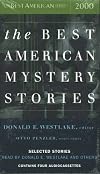
This, the audio edition, doesn't have all the stories that are in the paperback TOC I found on Barnes&Noble. The ones in bold were included. So right from the get go I felt ripped off. Over half the stories are missing (8 of 20 were included).
I wasn't even going to comment on this book because the showing was so poor. If these few stories were the best of the best, then it was a very sad year for the genre. The notable exception was Triangle by Jeffery Deaver. It's the only story in the lot that surprised me with a wonderful twist, a 5 star story that towered above the rest.
I'm not trying to be cruel here, but in a mystery/thriller/crime story I'm looking for 3 things; characters, situations, & a puzzle. I don't need to love or hate show more the character, I just need to feel a connection & I don't to idiots or psychopaths.
The situation needs to be compelling in one way or another & the story needs to play out in an interesting fashion. It doesn't have to be unique, but it has to hold my attention, make me wonder where it is going or even dread it, if there is a connection to a character. If I don't care about the character & can guess the entire line of the story within the first few minutes, why bother?
Introduction by Donald Westlake was interesting & good.
Miracles! Happen!
Ghosts
Spring Rite
Annie's Dream
Motel 66 by Barbara D'Amato had an interesting premise & method, but wasn't done to my taste. It felt forced in too many ways. Idiot characters & pretty obvious. The setting of 30 years or so of Route 66 was kind of interesting, but not enough.
Jumping with Jim
Triangle by Jeffery Deaver was WONDERFUL!!! (see above) It is a typical love triangle & the main character is kind of an idiot, but the end is masterful & I almost wanted to listen to it again. Wow!
The Instruments of Peace
Grit by Tom Franklin was obvious from the get go & I didn't like the main character.Idiot gambler gets sucked under the thumb of bad guy. Finally figures out that so are the other two & joins forces with them, so they kill the bad guy & take over his business. Yeah, OK. Some noir elements & everyman action kept it afloat - barely.
Compass Rose by David Edgerly Gates was kind of interesting, but took too long to get around to an obvious end. The setting, early 1900's American west, was the most interesting bit.
The Defenestration of Aba Sid
The Island in the River
ICU by Edward Lee - just gross & it's been done before & better. Perhaps if the end had been done in more detail, more realistically, it would have worked.Psychopath child pornographer gets the tables turned on him. The joint Feds & locals turning him over to a crook after he shot & killed one of each? Not happening. Just porking him in his battered condition without any great camera shots? I doubt it. If the horror element had been exploited, it might have seemed cheap, but it would have at least given it some value.
Running Out of Dog
Sheep
Dead Rock Singer
Wrong Numbers by Josh Pryor the only surprise was how obvious it was.Bitch HR lady turns down ex-con, pyscho phone tech for a job then gets driven crazy by weird phone calls. The video phone bit was a clunky SF element. It couldn't be checked until the guy got home? It was just an obvious ploy for the 'big reveal' which had been obvious from the first 5 minutes.
The Guilty Party by Shel Silverstein had a fun set of characters, but was again obvious & has been done before. I won't say it's been done better & the story was short, so worth the time. The misidentification of brothers by a cop used to beat a rap. A scruffy looking character has his brother's license & doesn't get taken down to the station when he's black & belligerent to a white cop? Seriously? Any one of those 3 get a guy hauled in. The saving grace of this story was the judge's character & the wandering stories of his decisions. They were fun.
Forgetting the Girl by Peter Moore Smith was just obvious & sick.Obvious psychopath with an ugly girl in love with him who is turned down by the lovely girls he photographs. I'm sure you just wrote the story in your head, too. The audio production added a creep factor & made it a bit better. It still didn't do anything for me.
Water Dog God
Contributors' Notes
Other Distinguished Mystery Stories of 1999 show less
I wasn't even going to comment on this book because the showing was so poor. If these few stories were the best of the best, then it was a very sad year for the genre. The notable exception was Triangle by Jeffery Deaver. It's the only story in the lot that surprised me with a wonderful twist, a 5 star story that towered above the rest.
I'm not trying to be cruel here, but in a mystery/thriller/crime story I'm looking for 3 things; characters, situations, & a puzzle. I don't need to love or hate show more the character, I just need to feel a connection & I don't to idiots or psychopaths.
The situation needs to be compelling in one way or another & the story needs to play out in an interesting fashion. It doesn't have to be unique, but it has to hold my attention, make me wonder where it is going or even dread it, if there is a connection to a character. If I don't care about the character & can guess the entire line of the story within the first few minutes, why bother?
Introduction by Donald Westlake was interesting & good.
Miracles! Happen!
Ghosts
Spring Rite
Annie's Dream
Motel 66 by Barbara D'Amato had an interesting premise & method, but wasn't done to my taste. It felt forced in too many ways. Idiot characters & pretty obvious. The setting of 30 years or so of Route 66 was kind of interesting, but not enough.
Jumping with Jim
Triangle by Jeffery Deaver was WONDERFUL!!! (see above) It is a typical love triangle & the main character is kind of an idiot, but the end is masterful & I almost wanted to listen to it again. Wow!
The Instruments of Peace
Grit by Tom Franklin was obvious from the get go & I didn't like the main character.
Compass Rose by David Edgerly Gates was kind of interesting, but took too long to get around to an obvious end. The setting, early 1900's American west, was the most interesting bit.
The Defenestration of Aba Sid
The Island in the River
ICU by Edward Lee - just gross & it's been done before & better. Perhaps if the end had been done in more detail, more realistically, it would have worked.
Running Out of Dog
Sheep
Dead Rock Singer
Wrong Numbers by Josh Pryor the only surprise was how obvious it was.
The Guilty Party by Shel Silverstein had a fun set of characters, but was again obvious & has been done before. I won't say it's been done better & the story was short, so worth the time.
Forgetting the Girl by Peter Moore Smith was just obvious & sick.
Water Dog God
Contributors' Notes
Other Distinguished Mystery Stories of 1999 show less
Ratings
Members
- Recently Added By
Author Information

Author Donald E. Westlake was born in Brooklyn, New York on July 12, 1933. He attended colleges in New York, but did not graduate. He wrote more than 100 novels and 5 screenplays throughout his lifetime. He also wrote under numerous pseudonyms including Richard Stark, Tucker Coe, and Samuel Holt. Almost 20 of his novels were adapted into films and show more he created the television series, The Father Dowling Mysteries. He is a three-time winner of the Edgar Award from the Mystery Writers of America and was nominated for an Academy Award for his screenplay for The Grifters. He was also named a Mystery Writers of America Grand Master in 1993. He died of a heart attack on December 31, 2008 at the age of 75. (Bowker Author Biography) Donald E. Westlake has won three Edgar Awards & was nominated for an Academy Award for Best Adapted Screenplay for "The Grifters". He lives in upstate New York. (Publisher Provided) show less

Otto Penzler owns the Mysterious Bookshop in New York & founded the Mysterious Press & Otto Penzler Books. He has written & edited several books, including the Edgar-winning "Encyclopedia of Mystery & Detection". (Bowker Author Biography)
All Editions
Series


Best American (2000)
Common Knowledge
- Canonical title
- The Best American Mystery Stories : 2000
- Original publication date
- 2000
Classifications
- Genres
- Fiction and Literature, Mystery
- DDC/MDS
- 813.087208 — Literature & rhetoric American literature in English American fiction in English By type Genre fiction Adventure fiction Mystery fiction Collections
- LCC
- PS648 .D4 — Language and Literature American literature American literature Collections of American literature Prose (General)
- BISAC
Statistics
- Members
- 156
- Popularity
- 208,940
- Reviews
- 3
- Rating
- (3.70)
- Languages
- English
- Media
- Paper, Audiobook
- ISBNs
- 5
- UPCs
- 4