The Works of Geoffrey Chaucer
by Geoffrey Chaucer
There is 1 current discussion about this work.
On This Page
Description
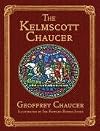
The edition of The Works of Geoffrey Chaucer published by the Kelmscott Press in 1896 combined the talents of William Morris, one of England's greatest typographers and printers, and those of artist Sir Edward Burne-Jones, who created the 87 full-page woodcut illustrations. For students of Chaucer, English literature, English printing history, and 19th-century British art, the Kelmscott Chaucer is a unique treasure. Originally published in a limited edition of fewer than 500 copies - hardly show more any of which surface on the rare book market - this masterpiece is now available to a new generation of collectors and bibliophiles. show lessTags
Recommendations





















Member Recommendations

Member Reviews
(Revew of Robinson) This is a reasonable student edition of Chaucer. The works are complete and there is supporting commentary for the non-expert. However, the apparatus does not provide variant readings, and there is no or little discussion of how the text was established.
Essential reading for its historical detail as well as its poetry.
LIKE HOLDING HISTORY IN ONE'S HAND
from class CSUS year after we married - probably 1971 - Dave quoted ... to me when we were courting
Favourite: “Flee from the press” (“and truth thee shall deliver, it is no dread”).
The Globe edition
Ratings
Members
- Recently Added By
Lists

Folio Society
831 works; 53 members
Talk Discussions
Current Discussions
Kelmscott Chaucer - Easton Press vs. Bradford Exchange side by side comparison in Easton Press Collectors (October 2025)
Past Discussions
The Works of Geoffrey Chaucer - Shakespeare Head Press (1928) in Fine Press Forum (June 2024)
Kelmscott Chaucer in Fine Press Forum (November 2022)
Author Information

469+ Works 45,925 Members
Geoffrey Chaucer, one of England's greatest poets, was born in London about 1340, the son of a wine merchant and deputy to the king's butler and his wife Agnes. Not much is known of Chaucer's early life and education, other than he learned to read French, Latin, and Italian. His experiences as a civil servant and diplomat are said to have show more developed his fascination with people and his knowledge of English life. In 1359-1360 Chaucer traveled with King Edward III's army to France during the Hundred Years' War and was captured in Ardennes. He returned to England after the Treaty of Bretigny when the King paid his ransom. In 1366 he married Philippa Roet, one of Queen Philippa's ladies, who gave him two sons and two daughters. Chaucer remained in royal service traveling to Flanders, Italy, and Spain. These travels would all have a great influence on his work. His early writing was influenced by the French tradition of courtly love poetry, and his later work by the Italians, especially Dante, Boccaccio, and Petrarch. Chaucer wrote in Middle English, the form of English used from 1100 to about 1485. He is given the designation of the first English poet to use rhymed couplets in iambic pentameter and to compose successfully in the vernacular. Chaucer's Canterbury Tales is a collection of humorous, bawdy, and poignant stories told by a group of fictional pilgrims traveling to the shrine of St. Thomas a Becket. It is considered to be among the masterpieces of literature. His works also include The Book of the Duchess, inspired by the death of John Gaunt's first wife; House of Fame, The Parliament of Fowls, and The Legend of Good Women. Troilus and Criseyde, adapted from a love story by Boccaccio, is one of his greatest poems apart from The Canterbury Tales. Chaucer died in London on October 25, 1400. He was buried in Westminster Abbey, in what is now called Poet's Corner. (Bowker Author Biography) show less
All Editions
Some Editions
Series
Belongs to Publisher Series
Work Relationships
Contains
Chaucer : the prologue, the knightes tale the nonne preestes tale from the Canterbury tales by Geoffrey Chaucer (indirect)
The Reeve's Prologue and Tale with the Cook's Prologue and the Fragment of his Tale by Geoffrey Chaucer (indirect)
The Tale of the Man of lawe;: The Pardoneres tale; the Second nonnes tale; the Chanouns yemannes tale, from the Canterbu by Geoffrey Chaucer (indirect)
The Prioresses tale,: Sir Thopas, the Monkes tale, the Clerkes tale, the Squieres tale, from the Canterbury tales; (Clar by Geoffrey Chaucer (indirect)
The Canterbury tales; the Prologue and four tales, with the Book of the duchess and six lyrics, by Frank Ernest Hill (indirect)
Eclectic English Classics (Chaucer's The Prologue and The Knightes Tale) by Geoffrey Chaucer (indirect)
The General Prologue & The Physician's Tale: In Middle English & In Modern Verse Translation by Geoffrey Chaucer (indirect)
The Friar's, Summoner's, and Pardoner's tales from the Canterbury tales (The London medieval and Renaissance series) by Geoffrey Chaucer (indirect)
Common Knowledge
- Original publication date
- 1478
- People/Characters
- The Wife of Bath/Alisoun/Alyson/Alys; Geoffrey Chaucer; The Knight; Kelmscott Press; The Miller; The Reeve (show all 48); The Cook; The Man of Law; The Friar (Hubert); The Summoner; The Clerk; The Merchant; The Squire; The Franklin; The Physician; The Pardoner; The Shipman; The Prioress; The Monk; The Nun's Priest; The Manciple; The Canon; The Parson; Chaucer the Pilgrim; Harry Bailley, the Host; Troilus; Cressida; Anelida; Arcite; Blanche, Duchess of Lancaster; Cleopatra VII; Pyramus; Thisbe; Aeneas; Dido; Hypsipyle; Medea; Lucretia (Lucrece); Ariadne; Philomela; Phyllis; Demophon; Hypermnestra; Dorigen; Griselda; Theseus; Emelye; Palamon
- Important places
- Canterbury, Kent, England, UK; The Tabard, Southwark, London, England, UK; Southwark, London, England, UK; Troy
- Important events
- Trojan War
- Dedication
- To My Beloved Wife
- First words
- Introduction: An eminent French critic of the last generation, complaining that the biographers of men of letters had given more attention to their correspondence, diaries, and other intimate records than to thei... (show all)r literary productions, expressed the fear that his period in criticism might be remembered as "I age des petits papiers."
- Last words
- (Click to show. Warning: May contain spoilers.)The Romaunt of the Rose:
If ye wol you now confesse,
And leave your synnes, more and lesse,
Without abode, knele down anon,
And you shal have absolucion.
Classifications
Statistics
- Members
- 877
- Popularity
- 31,028
- Reviews
- 6
- Rating
- (4.53)
- Languages
- English, English (Middle), Latin
- Media
- Paper, Ebook
- ISBNs
- 15
- ASINs
- 49