On This Page
Description
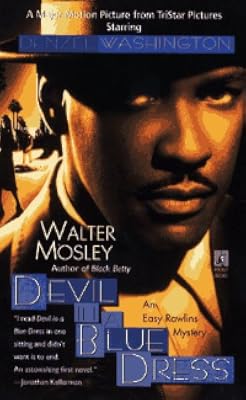
Devil in a Blue Dress, a defining novel in Walter Mosley's bestselling Easy Rawlins mystery series, was adapted into a TriStar Pictures film starring Denzel Washington as Easy Rawlins and Don Cheadle as Mouse.Set in the late 1940s, in the African-American community of Watts, Los Angeles, Devil in a Blue Dress follows Easy Rawlins, a black war veteran just fired from his job at a defense plant. Easy is drinking in a friend's bar, wondering how he'll meet his mortgage, when a white man in a show more linen suit walks in, offering good money if Easy will simply locate Miss Daphne Monet, a blonde beauty known to frequent black jazz clubs. show less
Tags
Recommendations


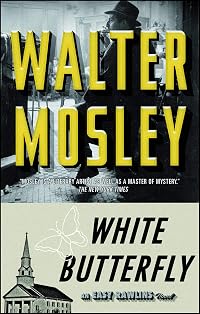









Member Recommendations

Vulco1 Lots of running around, betrayal and being in over thier heads.
Member Reviews
This is, to all intents and purposes, a Raymond Chandler novel written by a black American and herein lies a problem - do you give a book stars because of its literary merit or because it is sociologically or culturally important?
I go for literary merit in general and, though Mosley writes crisply with a fine ear for black dialect, there is none of the poetic magic of Chandler who defined an era by being there and not through observing it forty years on.
Sociologically and culturally though, it is an important book. Easy Rawlins might be, on the surface, just a dark skinned migrant version of Philip Marlowe, but the black experience of America has to be told and a reliance on 'Roots' is not going to be enough if white Americans are to show more understand the perspective of others who call themselves by the same name of 'American' but who have a very different historical experience.
Sadly, Americans go too far in thinking the experiences of Easy Rawlins to be peculiarly black - peasants, working class people and other migrants of every colour have much the same experience as Easy because the issues are about class and power and not colour of skin. An accident of history and 'black' potentates would have enslaved 'white' people as the North African slavers did long before the main Atlantic slave trade emerged.
As someone of working class stock who got a top notch education through the welfare state in its prime, I can testify to the discomfort a young man feels when introduced to a world of codes designed to turn him into something he is not. I can also testify to the ability of those who have a stake in the system to bully those who have not simply because of where they stand in the game of power - how much worse it was for people who, in an otherwise free society, could be marked out at thirty paces before they had even opened their mouth.
Still, Mosley is not here to talk about history in the round but to write of the specific experience of blacks in 1940s California, those who migrated from the pauper American South to get jobs in the burgeoning military-industrial complex where labour demands based on fat Cold War government contracts required willing and easily replaced low wage but skilled workers(as in the auto industry of Detroit).
Where Mosley does score, beyond the intricately plotted but fairly standard Chandleresque crime story, is in reproducing the psychological bullying that underpinned white dominance of black culture, where half the job of social control was being done by the black community itself who had little choice in the matter.
Black Americans seem to have adopted an uneasy combination of isolationist quasi-criminality alongside a troubled determination to keep their heads down in an attempt to find solace in a small degree of prosperity and respectability. The character of Easy Rawlins is designed to show how difficult it was to avoid straddling these two worlds - which helpfully gives him a stronger back drop for his troubled internal morality than the existentialist Mr. Marlowe.
Neither mode of social being, criminality or respectability, had blacks (not African Americans at this stage in history but 'blacks') seeking to be noticed by whites in this period so the criminals preyed on their own rather than bring down the sledgehammer of white policing, while respectable souls were forced into compromises with their integrity to avoid contact with a culture whose power was far more arbitrary than it should have been according to its own standards.
The roots of aggressive black pride and criminal defiance that emerged later in the 1970s were sown in the 1940s. Bluntly, observing the treatment of black Americans in the book, whitey really had it coming to him ...
This is why Mosley is worth reading - not for the jolly crime novel aspect (though that is entertaining enough) but the accumulating insight into a culture of anxiety and fear which, to his great credit, Mosley does not over-play. The book is the more effective for being understated and, to his credit, any temptation to grandstand that might have arisen amongst angry lesser minds is firmly resisted. show less
I go for literary merit in general and, though Mosley writes crisply with a fine ear for black dialect, there is none of the poetic magic of Chandler who defined an era by being there and not through observing it forty years on.
Sociologically and culturally though, it is an important book. Easy Rawlins might be, on the surface, just a dark skinned migrant version of Philip Marlowe, but the black experience of America has to be told and a reliance on 'Roots' is not going to be enough if white Americans are to show more understand the perspective of others who call themselves by the same name of 'American' but who have a very different historical experience.
Sadly, Americans go too far in thinking the experiences of Easy Rawlins to be peculiarly black - peasants, working class people and other migrants of every colour have much the same experience as Easy because the issues are about class and power and not colour of skin. An accident of history and 'black' potentates would have enslaved 'white' people as the North African slavers did long before the main Atlantic slave trade emerged.
As someone of working class stock who got a top notch education through the welfare state in its prime, I can testify to the discomfort a young man feels when introduced to a world of codes designed to turn him into something he is not. I can also testify to the ability of those who have a stake in the system to bully those who have not simply because of where they stand in the game of power - how much worse it was for people who, in an otherwise free society, could be marked out at thirty paces before they had even opened their mouth.
Still, Mosley is not here to talk about history in the round but to write of the specific experience of blacks in 1940s California, those who migrated from the pauper American South to get jobs in the burgeoning military-industrial complex where labour demands based on fat Cold War government contracts required willing and easily replaced low wage but skilled workers(as in the auto industry of Detroit).
Where Mosley does score, beyond the intricately plotted but fairly standard Chandleresque crime story, is in reproducing the psychological bullying that underpinned white dominance of black culture, where half the job of social control was being done by the black community itself who had little choice in the matter.
Black Americans seem to have adopted an uneasy combination of isolationist quasi-criminality alongside a troubled determination to keep their heads down in an attempt to find solace in a small degree of prosperity and respectability. The character of Easy Rawlins is designed to show how difficult it was to avoid straddling these two worlds - which helpfully gives him a stronger back drop for his troubled internal morality than the existentialist Mr. Marlowe.
Neither mode of social being, criminality or respectability, had blacks (not African Americans at this stage in history but 'blacks') seeking to be noticed by whites in this period so the criminals preyed on their own rather than bring down the sledgehammer of white policing, while respectable souls were forced into compromises with their integrity to avoid contact with a culture whose power was far more arbitrary than it should have been according to its own standards.
The roots of aggressive black pride and criminal defiance that emerged later in the 1970s were sown in the 1940s. Bluntly, observing the treatment of black Americans in the book, whitey really had it coming to him ...
This is why Mosley is worth reading - not for the jolly crime novel aspect (though that is entertaining enough) but the accumulating insight into a culture of anxiety and fear which, to his great credit, Mosley does not over-play. The book is the more effective for being understated and, to his credit, any temptation to grandstand that might have arisen amongst angry lesser minds is firmly resisted. show less
If you don't immediately start humming the song when you see this title, play it while you read. It is a classic:
http://youtu.be/KVbr37_yPeY
Easy Rawlins is just trying to get by. Laid off from his job building jets, he needs to make payment on his mortgage or face the loss of his house.
Drowning his woes at a tiny bar above a meatpacking warehouse, his friend and bar owner Joppy hooks him up with DeWitt Albright. Easy can't help but notice that Joppy, an ex-heavyweight fighter, is nervous, a sure tip-off there's something wrong. But Dewitt's a businessman with a simple job for Easy-- he offers him a hundred dollars to find a white girl known to hang out in the African-American community. In 1948, that's more than a couple mortgage show more payments to tide Easy over while he looks for his next job.
"'And just exactly what kind of business is it he does? I mean, is he a shirt salesman or what?'
'They gotta sayin' for his line'a work, Ease.'
'What's that?'
'Whatever the market can bear.' He smiled, looking like a hungry bear himself. 'Whatever the market can bear.'
Dewitt shows Easy a picture of the missing girl. Originally black and white, it's been touched up in color. "After staring at her a full minute I decided that she'd be worth looking for if you could get her to smile at you that way."
Everybody's seen her but no one wants to say where she is unless they get a piece of the action. Unfortunately, the devil has a blue dress, no doubt, and she seeds a trail of destruction in her wake. Part of the reason she breathes scandal is that her relationships transcend race, taboo at the time. Part of the reason is that the crowd she runs with includes pimps and underworld businessmen.
Soon the bodies start piling up, and the cops haul Easy in. But Easy fought in World War II, and if there is one thing he can't tolerate, it is disrespect. He decides to take control of the situation instead of letting himself be played.
"Somewhere along the way I had developed the feeling that I wasn't going to outlive the adventure I was having. There was no way out but to run, and I couldn't run, so I decided to milk all those white people for all the money they'd let go of."
His detective work takes him around various hangouts in L.A, including Ricardo's, a rough bar that you don't go into without an inside man. "Joppy had taken me to Ricardo's a few times after we locked up his bar. It was a serious kind of place peopled with jaundice-eyed bad men who smoked and drank heavily while they waited for a crime they could commit." Unsuccessful, he heads for a cut at the local barbershop, sure source of news and a neutral zone in the black community.
Devil in a Blue Dress won Moseley the Shamus award for first PI mystery, and it is easy (ha-ha) to see why. Succinct but encompassing descriptions that create a feel for L.A., the mood of post-WWII America, and an even better sense of what it felt like to be poor and black with the deck stacked against you. The experience of race weaves in and out of the storyline without being dominating or self-pitying, and has all the more impact for being so dispassionate. It affects Easy's life in so very many ways that it is an indirect commentary on race relations in the late 40s. The dialect has the flavor of Easy's southern heritage, contrasting with the more crisp language in his head. It makes for a nice reading balance, as it can be a reading challenge when dialect used for an entire book. This was an enjoyable, fast moving story that put Mosley on my authors-to-watch list.
Four easy stars.
And, of course, there's the movie.
Cross posted at http://clsiewert.wordpress.com/2013/04/14/devil-in-a-blue-dress-by-walter-mosley... show less
http://youtu.be/KVbr37_yPeY
Easy Rawlins is just trying to get by. Laid off from his job building jets, he needs to make payment on his mortgage or face the loss of his house.
Drowning his woes at a tiny bar above a meatpacking warehouse, his friend and bar owner Joppy hooks him up with DeWitt Albright. Easy can't help but notice that Joppy, an ex-heavyweight fighter, is nervous, a sure tip-off there's something wrong. But Dewitt's a businessman with a simple job for Easy-- he offers him a hundred dollars to find a white girl known to hang out in the African-American community. In 1948, that's more than a couple mortgage show more payments to tide Easy over while he looks for his next job.
"'And just exactly what kind of business is it he does? I mean, is he a shirt salesman or what?'
'They gotta sayin' for his line'a work, Ease.'
'What's that?'
'Whatever the market can bear.' He smiled, looking like a hungry bear himself. 'Whatever the market can bear.'
Dewitt shows Easy a picture of the missing girl. Originally black and white, it's been touched up in color. "After staring at her a full minute I decided that she'd be worth looking for if you could get her to smile at you that way."
Everybody's seen her but no one wants to say where she is unless they get a piece of the action. Unfortunately, the devil has a blue dress, no doubt, and she seeds a trail of destruction in her wake. Part of the reason she breathes scandal is that her relationships transcend race, taboo at the time. Part of the reason is that the crowd she runs with includes pimps and underworld businessmen.
Soon the bodies start piling up, and the cops haul Easy in. But Easy fought in World War II, and if there is one thing he can't tolerate, it is disrespect. He decides to take control of the situation instead of letting himself be played.
"Somewhere along the way I had developed the feeling that I wasn't going to outlive the adventure I was having. There was no way out but to run, and I couldn't run, so I decided to milk all those white people for all the money they'd let go of."
His detective work takes him around various hangouts in L.A, including Ricardo's, a rough bar that you don't go into without an inside man. "Joppy had taken me to Ricardo's a few times after we locked up his bar. It was a serious kind of place peopled with jaundice-eyed bad men who smoked and drank heavily while they waited for a crime they could commit." Unsuccessful, he heads for a cut at the local barbershop, sure source of news and a neutral zone in the black community.
Devil in a Blue Dress won Moseley the Shamus award for first PI mystery, and it is easy (ha-ha) to see why. Succinct but encompassing descriptions that create a feel for L.A., the mood of post-WWII America, and an even better sense of what it felt like to be poor and black with the deck stacked against you. The experience of race weaves in and out of the storyline without being dominating or self-pitying, and has all the more impact for being so dispassionate. It affects Easy's life in so very many ways that it is an indirect commentary on race relations in the late 40s. The dialect has the flavor of Easy's southern heritage, contrasting with the more crisp language in his head. It makes for a nice reading balance, as it can be a reading challenge when dialect used for an entire book. This was an enjoyable, fast moving story that put Mosley on my authors-to-watch list.
Four easy stars.
And, of course, there's the movie.
Cross posted at http://clsiewert.wordpress.com/2013/04/14/devil-in-a-blue-dress-by-walter-mosley... show less
This is a tough one to rate--the reading level is fairly low so this is a super quick read. Mosley nails the classic noir style, so if noir is your thing, you should love this. I'm not a huge fan of classic noir in general (because helpless beautiful women trope), but here it is the sights/sound of LA that I love.
Is this great literature? No. Is it a great show of LA, including parts of LA, like Watts, that you don't often see in fiction? Yes. Is this a nice palate cleanser between more-literary books? Yes. Will I read the rest of the series? Yes, but I'm not racing anyone.
Is this great literature? No. Is it a great show of LA, including parts of LA, like Watts, that you don't often see in fiction? Yes. Is this a nice palate cleanser between more-literary books? Yes. Will I read the rest of the series? Yes, but I'm not racing anyone.
This book is a hectic ride with a guy in over his head most of the time. I expect I will ride again with "Easy" Rawlins, though.
Never a dull moment if you love guns, knives, hot babes and a good mystery. And a bit of social commentary re: being Black in America circa 1948.
Easy tells the story and you're sitting right next to him. Seeing and feeling what he sees and feels:
"There was a butcher's knife buried deep in his chest. The smooth brown haft stood out from his body like a cattail from a pond. He'd fallen with his back on a bunch of blankets so that the blood had flown upward, around his face and neck. There was a lot of blood around his wide-eyed stare. Blue eyes and brown hair and dark blood so thick that you could have dished it show more up like Jell-O. My tongue grew a full beard and I gagged."
Later this ... "There was silence then. I thought of how they said in science class that outer space was empty, black and cold. I felt it then and I sure didn't want to."
And later this ... "But I didn't believe that there was justice for Negroes. I thought that there might be some justice for a black man if he had the money to grease it. Money isn't a sure bet but it's the closest to God that I've ever seen in this world."
OK, some of that prose is a bit purple ... but effective. show less
Never a dull moment if you love guns, knives, hot babes and a good mystery. And a bit of social commentary re: being Black in America circa 1948.
Easy tells the story and you're sitting right next to him. Seeing and feeling what he sees and feels:
"There was a butcher's knife buried deep in his chest. The smooth brown haft stood out from his body like a cattail from a pond. He'd fallen with his back on a bunch of blankets so that the blood had flown upward, around his face and neck. There was a lot of blood around his wide-eyed stare. Blue eyes and brown hair and dark blood so thick that you could have dished it show more up like Jell-O. My tongue grew a full beard and I gagged."
Later this ... "There was silence then. I thought of how they said in science class that outer space was empty, black and cold. I felt it then and I sure didn't want to."
And later this ... "But I didn't believe that there was justice for Negroes. I thought that there might be some justice for a black man if he had the money to grease it. Money isn't a sure bet but it's the closest to God that I've ever seen in this world."
OK, some of that prose is a bit purple ... but effective. show less
Devil in a Blue Dress opens in Joppy's Bar – "a small bar on the second floor of a butchers' warehouse. His only usual customers were the Negro butchers … The odor of rotted meat filled every corner of the building; there were few people, other than butchers who could stomach sitting in Joppy's bar."
There, Ezekiel (Easy) Rawlins, three years back from combat with Patton's army, single, with a fresh GED, a mortgage, and just unemployed, is introduced to DeWitt Albright, white, a former lawyer, present fixer, by Joppy Shag, ex-boxer, "ranked number seven in 1932 but his big draw was the violence he brought to the ring."
There is a taint to Albright: when Easy first sees him he feels a slight fear "that went away quickly because I was show more used to white people by 1948." Albright reminds Easy of Raymond (Mouse) Alexander, a friend he had when he lived in Houston.
Easy Rawlins is a decent, man, who has fought for his country, who knows he is entitled to his own pride and deserves respect and justice; but, he also knows that as a black man, he will not get either.
Rawlins is unjustly fired and finds himself in danger of not being able to meet his mortgage and of losing his house – without which his identity would be shattered: "I felt that I was just as good as any white man, but if I didn't even own my front door the people would look at me like just another poor beggar, his his hand outstretched." To hold on to his house, he accepts a job from Albright. He is to go into Watts to find a white girl, Daphne Monet, who "likes jazz and pigs' feet and dark meat, if you know what I mean." He discovers the whereabouts of Daphne from the wife of his friend Dupree, Coretta James and is paid by Albright.
The next day Rawlins is hauled in by two police detective, Miller and Mason, who throw him into an interrogation room and humiliate and brutalise him but do not charge him with anything. He is baffled by the detention but learns later that Coretta has been beaten to death similarly to Howard Green who was working for the corrupt politician and pedophile, Maththew Teran.
That night he receive a call from Daphne asking for his help. He tells her: "I could bring you some money and put you in a cab over on Main. That's all." He meets Daphne who is a radiant beauty and is wearing a simple blue dress. Instead of the cab, he takes her and a large suitcase to where she says is the home of her friend, Richard. When they arrive, Richard is found dead with a knife in his chest. Daphne stuffs the large bag into Richard's pink Studebaker and leaves. When Easy returns home he is greeted by Albright and two thugs who threaten him and demand that he find the gangster Frank (Knifehand) Green. Later in fear of his life and knowing he is in trouble too deep to handle alone, he calls Mouse's wife, Etta, and asks her to tell Mouse to come to LA. While waiting for Mouse, Easy finds his way to the plush office of Todd Carter, Daphne's wealthy lover, who cares little for the thirty thousand dollars she has stolen from him, but loves Daphne. Mr. Carter hires him to find Daphne and promises to fire Albright. He learns from Carter that Daphne's friend Richard is Richard McGee, a pimp who supplies children to perverts and who has blackmailed Daphne.
Easy determines to find Frank Green. "Knifehand held the answer to my problems. He knew where the girl was , if anyone did, and he knew who killed Coretta … I was poor and black and a likely candidate for the penitentiary unless I could get Frank to stand between me and the forces of DeWitt Albright and the law."
Easy believes that it was the next two days he spent searching the haunts of Green that made him into the detective he was to become, but at the end of the two days it was Knifehand that found Easy and was on the edge of cutting his throat when Mouse got the drop on him. Except for Easy, Mouse would have killed the gangster. After Knifehand escapes, Mason and Miller again apprehend Rawlins this time as a suspect in the murder of Mathew Teran and Richard McGee. They have no evidence and release Easy who confronts Daphne and learns that it was she who killed Teran who had been blackmailing her and sexually abusing a small Mexican boy whom she takes home. Easy knows who has killed Richard having found at the scene an exotic brand of cigarette that only Junior Fornay smoked. Rawlins and Mouse confront Junior and he confesses.
Albright and Joppy find Easy and Daphne hiding in a motel owned by Easy's Latino friend, Primo, Joppy knocks Rawlins out and take Daphne to Albright's house where Easy, after recovering, finds them. In a shoot out Mouse arrives in the nick of time to save Rawlins killing Joppy and wounding Albright who drives away and is found dead later. Mouse tells Daphne who is the mulatto sister of Frank Green that Joppy killed her brother; later, Mouse tells Easy that it was he who had killed Frank.
Daphne shares the three thousand she had stolen from Todd Carter with Easy and Mouse and she leaves. Easy puts Mouse on a bus to Houston and takes the little Mexican boy to Primo with the arrangement to provide for him. Rawlins then goes to Carter and in order to save Daphne from prosecution for the murder of Teran concoct a series of events that absolve all except those already dead. The only victim not accounted for was Richard McGee and since a fingerprint was found on the knife that killed him, Easy sends the detectives to question Junior Fornay whom they apprehend.
Easy questions his own morality: "If you know a an is wrong, I mean, if you know he did somethin' bad but you don't turn him in to the law because he's your friend, do you think that's right?" … But then what if you know somebody else who did something wrong but not so bad as the first man, but you turn this other guy in?" Easy resolves both in the words of his friend Odell Jones: "All you got is your friends, Easy." and "I guess that the other guy got ahold of some back luck."
The novel ends after that with "We laughed for a long time." show less
There, Ezekiel (Easy) Rawlins, three years back from combat with Patton's army, single, with a fresh GED, a mortgage, and just unemployed, is introduced to DeWitt Albright, white, a former lawyer, present fixer, by Joppy Shag, ex-boxer, "ranked number seven in 1932 but his big draw was the violence he brought to the ring."
There is a taint to Albright: when Easy first sees him he feels a slight fear "that went away quickly because I was show more used to white people by 1948." Albright reminds Easy of Raymond (Mouse) Alexander, a friend he had when he lived in Houston.
Easy Rawlins is a decent, man, who has fought for his country, who knows he is entitled to his own pride and deserves respect and justice; but, he also knows that as a black man, he will not get either.
Rawlins is unjustly fired and finds himself in danger of not being able to meet his mortgage and of losing his house – without which his identity would be shattered: "I felt that I was just as good as any white man, but if I didn't even own my front door the people would look at me like just another poor beggar, his his hand outstretched." To hold on to his house, he accepts a job from Albright. He is to go into Watts to find a white girl, Daphne Monet, who "likes jazz and pigs' feet and dark meat, if you know what I mean." He discovers the whereabouts of Daphne from the wife of his friend Dupree, Coretta James and is paid by Albright.
The next day Rawlins is hauled in by two police detective, Miller and Mason, who throw him into an interrogation room and humiliate and brutalise him but do not charge him with anything. He is baffled by the detention but learns later that Coretta has been beaten to death similarly to Howard Green who was working for the corrupt politician and pedophile, Maththew Teran.
That night he receive a call from Daphne asking for his help. He tells her: "I could bring you some money and put you in a cab over on Main. That's all." He meets Daphne who is a radiant beauty and is wearing a simple blue dress. Instead of the cab, he takes her and a large suitcase to where she says is the home of her friend, Richard. When they arrive, Richard is found dead with a knife in his chest. Daphne stuffs the large bag into Richard's pink Studebaker and leaves. When Easy returns home he is greeted by Albright and two thugs who threaten him and demand that he find the gangster Frank (Knifehand) Green. Later in fear of his life and knowing he is in trouble too deep to handle alone, he calls Mouse's wife, Etta, and asks her to tell Mouse to come to LA. While waiting for Mouse, Easy finds his way to the plush office of Todd Carter, Daphne's wealthy lover, who cares little for the thirty thousand dollars she has stolen from him, but loves Daphne. Mr. Carter hires him to find Daphne and promises to fire Albright. He learns from Carter that Daphne's friend Richard is Richard McGee, a pimp who supplies children to perverts and who has blackmailed Daphne.
Easy determines to find Frank Green. "Knifehand held the answer to my problems. He knew where the girl was , if anyone did, and he knew who killed Coretta … I was poor and black and a likely candidate for the penitentiary unless I could get Frank to stand between me and the forces of DeWitt Albright and the law."
Easy believes that it was the next two days he spent searching the haunts of Green that made him into the detective he was to become, but at the end of the two days it was Knifehand that found Easy and was on the edge of cutting his throat when Mouse got the drop on him. Except for Easy, Mouse would have killed the gangster. After Knifehand escapes, Mason and Miller again apprehend Rawlins this time as a suspect in the murder of Mathew Teran and Richard McGee. They have no evidence and release Easy who confronts Daphne and learns that it was she who killed Teran who had been blackmailing her and sexually abusing a small Mexican boy whom she takes home. Easy knows who has killed Richard having found at the scene an exotic brand of cigarette that only Junior Fornay smoked. Rawlins and Mouse confront Junior and he confesses.
Albright and Joppy find Easy and Daphne hiding in a motel owned by Easy's Latino friend, Primo, Joppy knocks Rawlins out and take Daphne to Albright's house where Easy, after recovering, finds them. In a shoot out Mouse arrives in the nick of time to save Rawlins killing Joppy and wounding Albright who drives away and is found dead later. Mouse tells Daphne who is the mulatto sister of Frank Green that Joppy killed her brother; later, Mouse tells Easy that it was he who had killed Frank.
Daphne shares the three thousand she had stolen from Todd Carter with Easy and Mouse and she leaves. Easy puts Mouse on a bus to Houston and takes the little Mexican boy to Primo with the arrangement to provide for him. Rawlins then goes to Carter and in order to save Daphne from prosecution for the murder of Teran concoct a series of events that absolve all except those already dead. The only victim not accounted for was Richard McGee and since a fingerprint was found on the knife that killed him, Easy sends the detectives to question Junior Fornay whom they apprehend.
Easy questions his own morality: "If you know a an is wrong, I mean, if you know he did somethin' bad but you don't turn him in to the law because he's your friend, do you think that's right?" … But then what if you know somebody else who did something wrong but not so bad as the first man, but you turn this other guy in?" Easy resolves both in the words of his friend Odell Jones: "All you got is your friends, Easy." and "I guess that the other guy got ahold of some back luck."
The novel ends after that with "We laughed for a long time." show less
- Authentic - The black dialect flowed like liquor in a bar and went down just as smooth.
'I always tried to speak proper English in my life, the kind of English they taught in school, but I found over the years that I could only truly express myself in the natural, “uneducated” dialect of my upbringing.'
'But how I even find’em t’sneak up on? What you want me t’do?'
- Atmospheric - Mosley brings the characters, places and drama to life, then reanimates it up a notch.
'She smiled like a child. Only a child could ever be that happy.'
'She looked like a frightened kitten on her first Fourth of July.'
- Raw - Strongly evocative feelings.
'Mouse frowned for just a second. It was like a small cloud passing quickly on a sunny day.'
'I felt show more something deep down in me, something dark like jazz when it reminds you that death is waiting.'
Reading(not listening to) this was like having Samuel Jackson take up residence in my head and I 'cain't' say that wasn't a nice experience (And it should get 5 stars just for that). As an aside, Devil in a Blue Dress might have been the only time I didn't jibe with a Denzel Washington movie much. show less
'I always tried to speak proper English in my life, the kind of English they taught in school, but I found over the years that I could only truly express myself in the natural, “uneducated” dialect of my upbringing.'
'But how I even find’em t’sneak up on? What you want me t’do?'
- Atmospheric - Mosley brings the characters, places and drama to life, then reanimates it up a notch.
'She smiled like a child. Only a child could ever be that happy.'
'She looked like a frightened kitten on her first Fourth of July.'
- Raw - Strongly evocative feelings.
'Mouse frowned for just a second. It was like a small cloud passing quickly on a sunny day.'
'I felt show more something deep down in me, something dark like jazz when it reminds you that death is waiting.'
Reading(not listening to) this was like having Samuel Jackson take up residence in my head and I 'cain't' say that wasn't a nice experience (And it should get 5 stars just for that). As an aside, Devil in a Blue Dress might have been the only time I didn't jibe with a Denzel Washington movie much. show less
I’d never read a Walter Mosley book before, but this won’t be my last. Mosley’s Easy Rawlins inhabits a world I’ll never know – black Los Angeles, 1948. Rawlins might have gotten along OK with Philip Marlowe and Lew Archer -- this is tough, gritty territory, and Mosley’s dialogue and plotting are exceptionally fine. The story is convoluted enough to do Raymond Chandler proud, and the dialogue seems earthy and authentic. I understand now why Mosley has such an enthusiastic following.
Members
- Recently Added By
Published Reviews
“In Mosley’s work, tropes of hard-boiled detective fiction exist to be turned upside down—they’re made deeper by the author’s understanding of history and racial tension.”
added by Lemeritus
Author Information

105+ Works 26,707 Members
Walter Mosley was born in Los Angeles, California on January 12, 1952. He graduated from Johnson State College in Vermont. His first book, Devil in a Blue Dress, was published in 1990, won a John Creasy Award for best first novel, and was made into a motion picture starring Denzel Washington in 1995. He is the author of the Easy Rawlins Mystery show more series, the Leonid McGill Mystery series, and the Fearless Jones series. His other works include Always Outnumbered, Always Outgunned, 47, Last Days of Ptolemy Grey, and Twelve Steps toward Political Revelation. He has received numerous awards, including an O. Henry Award, the Carl Brandon Society Parallax Award, and PEN America's Lifetime Achievement Award. (Bowker Author Biography) Walter Mosley is the author of the acclaimed Easy Rawlins series of mysteries, the novels "Blue Light" and "RL's Dream", and two collections of stories featuring Socrates Fortlow, "Always Outnumbered", "Always Outgunned", for which he received the Anisfield-Wolf Award, and "Walkin' the Dog". He is a member of the board of directors of the National Book Awards and the founder of the PEN American Center's Open Book Committee. At various times in his life he has been a potter, a computer programmer, & a poet. He was born in Los Angeles & now lives in New York. (Publisher Provided) show less
All Editions
Some Editions
Awards and Honors
Awards
Notable Lists
Series

Belongs to Publisher Series
Work Relationships
Is contained in
Has the adaptation
Common Knowledge
- Canonical title
- Devil in a Blue Dress
- Original title
- Devil in a Blue Dress
- Original publication date
- 1990
- People/Characters
- Ezekiel "Easy" Rawlins; Raymond "Mouse" Alexander; Daphne Monet
- Important places
- Los Angeles, California, USA
- Related movies
- Devil in a Blue Dress (1995 | IMDb)
- Dedication
- FOR JOY KELLMAN, FREDERIC TUTTEN,
AND LEROY MOSLEY - First words
- I was surprised to see a white man walk into Joppy's bar.
- Last words
- (Click to show. Warning: May contain spoilers.)We laughed for a long time.
- Blurbers
- Kellerman, Jonathan; Vachss, Andrew
- Original language
- English
- Canonical DDC/MDS
- 813.54
- Canonical LCC
- PS3563.O8
Classifications
Statistics
- Members
- 1,556
- Popularity
- 14,790
- Reviews
- 58
- Rating
- (3.81)
- Languages
- 15 — Chinese, Danish, Dutch, English, Estonian, Finnish, French, German, Greek, Italian, Norwegian, Spanish, Swedish, Turkish, Portuguese (Portugal)
- Media
- Paper, Audiobook, Ebook
- ISBNs
- 60
- UPCs
- 1
- ASINs
- 16
