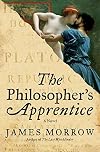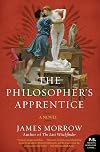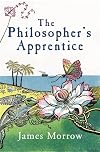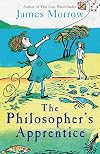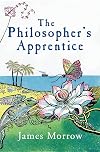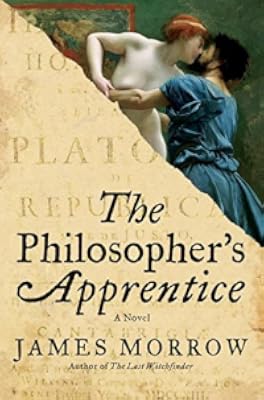
The Philosopher's Apprentice
by James Morrow
On This Page
Description
A brilliant philosopher with a talent for self-destruction, Mason Ambrose has torpedoed a promising academic career and now faces a dead-end future. Before joining the ranks of the unemployed, however, he's approached by a representative of billionaire geneticist Dr. Edwina Sabacthani, who makes him an offer no starving ethicist could refuse. Born and bred on Isla de Sangre, a private island off the Florida coast, Edwina's beautiful and intelligent adolescent daughter, Londa, has recently show more survived a freak accident that destroyed both her memory and her sense of right and wrong. Londa's soul, in short, is an empty vessel--and it will be Mason's job to fill it.Exploring his new surroundings, our hero encounters a lush Eden abounding in bizarre animals and strange vegetation engineered by Edwina and her misanthropic collaborator, Dr. Vincent Charnock. And Londa, though totally lacking a conscience, proves a vivacious young woman who quickly captivates her new teacher as he attempts to recalibrate her moral compass with the help of Western civilization's greatest ethical thinkers, living and dead.But there's trouble in this tropical paradise. Mason soon learns that he isn't the only private tutor on Isla de Sangre, nor is Londa the only child in residence whose conscience is a blank slate. How many daughters does Edwina Sabacthani really have, and how did she bring them into being?Undaunted by these mysteries, Mason continues to instruct Londa, hoping that she can lead a normal life when she eventually ventures forth into human society. His apprentice, however, has a different agenda. Her head crammed with lofty ideals, her heart brimming with fearsome benevolence, and her bank account filled to bursting, Londa undertakes to remake our fallen world in her own image--by any and all means necessary. show lessTags
Recommendations








Member Recommendations

bookfitz Another imaginative and thoughtful (and perhaps better?) novel by James Morrow, written in his signature style.
Member Reviews
This is exactly the kind of whack-a-doodle book I love--goofy, not particularly pretentious but with undertones of pretension--good, old-fashioned satire. Actually, I had a kind of aversion to this book because I thought I'd read something comparing it to the Da Vinci Code, and feared that it might be somewhat precious. But when I saw it at the library--being the slave to free books that I am--I looked again, and apparently, I'd been operating under quite the misapprehension.
Naturally, I love the fact that the main character gives a big "fuck you" to his committee during his dissertation defense. I can see myself doing something like that. (Good thing I quit ABD or I might have.) Sure, a lot of actual philosophy gets tossed in, but it show more doesn't come off as obnoxious, somehow, which is an achievement. I think there's a lot to like in this book, as long as the reader doesn't require silly things like realism. show less
Naturally, I love the fact that the main character gives a big "fuck you" to his committee during his dissertation defense. I can see myself doing something like that. (Good thing I quit ABD or I might have.) Sure, a lot of actual philosophy gets tossed in, but it show more doesn't come off as obnoxious, somehow, which is an achievement. I think there's a lot to like in this book, as long as the reader doesn't require silly things like realism. show less
Morrow likes to reify big questions. This was most obvious in Towing Jehovah and its sequels, but is both the theme and substance here. A philosophy graduate student, who is, and will remain, thanks to the events in chapter 1, ABD (all but dissertation), takes on the job of teaching ethics to a young woman who, her mother claims, lost all ethical understanding through an accident. Within a chapter or two, the true reason is revealed and it suffices to say that a science fictional device is involved. Said device enables most of the key events of the rest of the novel. It is no MacGuffin, but neither is this book a what-if exploration of a technological change. What it is is set up in the 2nd chapter, when our philosopher has to decide show more how to teach ethics. He decides to use some of the classic conundrums of Ethics 101 courses, situations where no choice is free of ethical downside. And that's what this novel becomes -- a series of extreme ethical choices. The novel is broken into three parts, as much trilogy as anything. Part 1, the story of the ethical education and early life of the young woman, forms a whole. Part 2 reads much like a sequel, a return to the characters and milieu but a new story. Part 3 is a wrap-up novella, distinct yet again, but concerned largely with resolving -- at the plot level -- the themes and character arcs set up in parts 1 and 2. Highly recommended to those who love debate, satire, Morrow, Jonathan Carroll. show less
I picked up The Philosopher’s Apprentice on a whim from the library. And what a whim. The flyleaf gave a thumbnail description of a philosophy doctoral student who takes a job becoming the tutor for a teenage girl who was in an accident and lost her sense of morality. OK, sounds interesting as far as that goes. But that’s just the beginning of the story.
The Philosopher’s Apprentice is really a story in three acts. Act One: doctoral student tutors teenager on remote Caribbean island. Finds out there is more to the island than he was led to believe, including two sisters of his student, a bunch of genetic engineering, and talking iguana. I know it sounds like a tripped-out dream, but it’s just hard to give a lot more detail show more without spoiling major points of the plot.
Act Two: philosophy tutor watches from a distance as his former student, suddenly fabulously wealthy, takes his teachings on morality to unbelievable ends.
Act Three: tutor and student end up together again and have to deal with the fallout from the rest of the world as it reacts to the student’s programs.
The Philosopher’s Apprentice is at times quite humorous, at times quite serious, and dances along the line between fiction and fantasy without quite ever deciding where to land. It was a fun read, provoking some interesting thoughts along the way. Worth picking up if you get the chance. show less
The Philosopher’s Apprentice is really a story in three acts. Act One: doctoral student tutors teenager on remote Caribbean island. Finds out there is more to the island than he was led to believe, including two sisters of his student, a bunch of genetic engineering, and talking iguana. I know it sounds like a tripped-out dream, but it’s just hard to give a lot more detail show more without spoiling major points of the plot.
Act Two: philosophy tutor watches from a distance as his former student, suddenly fabulously wealthy, takes his teachings on morality to unbelievable ends.
Act Three: tutor and student end up together again and have to deal with the fallout from the rest of the world as it reacts to the student’s programs.
The Philosopher’s Apprentice is at times quite humorous, at times quite serious, and dances along the line between fiction and fantasy without quite ever deciding where to land. It was a fun read, provoking some interesting thoughts along the way. Worth picking up if you get the chance. show less
After reading a few less than positive reviews of James Morrow's The Philosopher's Apprentice (William Morrow, 2008) I was a little leery of reading it; I really enjoyed Morrow's previous book (The Last Witchfinder) and didn't want my opinion of him to change. It's true that The Philosopher's Apprentice doesn't rise to the same level as Witchfinder, but I found it a good read just the same. The satire is a bit more rock-to-the-skull obvious this time around, and the plot gets a little bit absurd as the book progresses, but the issues are relevant and, dare I say, timely.
In the opening pages, Mason Ambrose, a would-be philosophy Ph.D. who finds his academic ambitions suddenly consumed in an entirely-self-inflicted conflagration, is show more offered a job he can't refuse: well-paid tutor to the only child of a reclusive geneticist living on a remote island in the Florida Keys. But, of course, Isla de Sangre isn't what it seems. There's some creepy stuff going on down there, and Mason soon finds out he's not the only tutor on the island, nor is his student the only child. Things just get creepier from there, as Ambrose works to give his strangely-begotten pupil a moral foundation and to discover just what the heck is going on around him.
Steeped in (perhaps even bloated with) philosophical and literary references (at least some of which whooshed over my head like one of Isla de Sangre's flying iguanas), Morrow's book tackles many questions of contemporary ethics, from the origins of life to the whole means justifying ends dilemma. As I said, Morrow doesn't go in for thin veils, so if you're looking for subtle, look elsewhere. But for a fairly amusing and incredibly disturbing book, it suffices.
http://philobiblos.blogspot.com/2008/10/book-review-philosophers-apprentice.html show less
In the opening pages, Mason Ambrose, a would-be philosophy Ph.D. who finds his academic ambitions suddenly consumed in an entirely-self-inflicted conflagration, is show more offered a job he can't refuse: well-paid tutor to the only child of a reclusive geneticist living on a remote island in the Florida Keys. But, of course, Isla de Sangre isn't what it seems. There's some creepy stuff going on down there, and Mason soon finds out he's not the only tutor on the island, nor is his student the only child. Things just get creepier from there, as Ambrose works to give his strangely-begotten pupil a moral foundation and to discover just what the heck is going on around him.
Steeped in (perhaps even bloated with) philosophical and literary references (at least some of which whooshed over my head like one of Isla de Sangre's flying iguanas), Morrow's book tackles many questions of contemporary ethics, from the origins of life to the whole means justifying ends dilemma. As I said, Morrow doesn't go in for thin veils, so if you're looking for subtle, look elsewhere. But for a fairly amusing and incredibly disturbing book, it suffices.
http://philobiblos.blogspot.com/2008/10/book-review-philosophers-apprentice.html show less
This is a rather disjointed novel, reminding me in some ways of Foucault's Pendulum. (In its disjointedness. In its rather horrifying picture of human credulity and barbarism.) In fact, I had to check the copyright to confirm this wasn't a satire of Trumpism. Actually more an uncanny prophecy. Full of insight. Full of nice lines. Short on cohesion and believable characters.
The premise: ganked from BN.com: A brilliant philosopher with a talent for self-destruction, Mason Ambrose has torpedoed a promising academic career and now faces a dead-end future. Before joining the ranks of the unemployed, however, he's approached by a representative of billionaire geneticist Dr. Edwina Sabacthani, who makes him an offer no starving ethicist could refuse. Born and bred on Isla de Sangre, a private island off the Florida coast, Edwina's beautiful and intelligent adolescent daughter, Londa, has recently survived a freak accident that destroyed both her memory and her sense of right and wrong. Londa's soul, in short, is an empty vessel—and it will be Mason's job to fill it.
Exploring his new surroundings, our hero show more encounters a lush Eden abounding in bizarre animals and strange vegetation engineered by Edwina and her misanthropic collaborator, Dr. Vincent Charnock. And Londa, though totally lacking a conscience, proves a vivacious young woman who quickly captivates her new teacher as he attempts to recalibrate her moral compass with the help of Western civilization's greatest ethical thinkers, living and dead.
But there's trouble in this tropical paradise. Mason soon learns that he isn't the only private tutor on Isla de Sangre, nor is Londa the only child in residence whose conscience is a blank slate. How many daughters does Edwina Sabacthani really have, and how did she bring them into being?
Undaunted by these mysteries, Mason continues to instruct Londa, hoping that she can lead a normal life when she eventually ventures forth into human society. His apprentice, however, has a different agenda. Her head crammed with lofty ideals, her heart brimming with fearsome benevolence, and her bank account filled to bursting, Londa undertakes to remake our fallen world in her own image by any and all means necessary.
My Rating
Must Have: James Morrow is simply one of those authors I genuinely want to read everything of. He's the kind of author that not only writes interesting and entertaining stories, but he makes me feel smart for reading them, even if I'm not an expert on genetics or philosophy or religion or whatever the focus of the book may be. The Philosopher's Apprentice is an incredibly engaging read, a must for readers who are fans of the "literary SF" movement (you like Margaret Atwood? Mary Doria Russell? Ursula K. Le Guin? Octavia E. Butler? Jeanette Winterson? You should read this!) as well as those readers who feel a little intimidated by science fiction and aren’t sure where to dip their toes in. That said, it’s not an easy read in terms of transparency, this book is rife with philosophy, but don’t let that be a hurdle. Morrow doesn’t make his reader feel like an idiot. There's so much to absorb, to enjoy, to appreciate, to ponder over. This isn't a book simply about clones, it's a book about what it means to be human and what wrongs we'll commit in order to make the world right. It's a great read, and one I'd highly recommend.
Review style: After discussing my history with James Morrow's fiction, I want to talk about the obvious inspirations fueling this book: Mary Shelley's Frankenstein, Vladimir Nabokov's Lolita, and George Bernard Shaw's Pygmalion. I also want to discuss how this isn't your conventional science fiction novel, let alone a conventional story about clones, but rather the exploration of morality and how--believe it or not--the book isn't preachy. No spoilers, as that would be rude since this initially a guest review at Jawas Read, Too!
REVIEW: James Morrow's THE PHILOSOPHER'S APPRENTICE
Happy Reading! show less
Exploring his new surroundings, our hero show more encounters a lush Eden abounding in bizarre animals and strange vegetation engineered by Edwina and her misanthropic collaborator, Dr. Vincent Charnock. And Londa, though totally lacking a conscience, proves a vivacious young woman who quickly captivates her new teacher as he attempts to recalibrate her moral compass with the help of Western civilization's greatest ethical thinkers, living and dead.
But there's trouble in this tropical paradise. Mason soon learns that he isn't the only private tutor on Isla de Sangre, nor is Londa the only child in residence whose conscience is a blank slate. How many daughters does Edwina Sabacthani really have, and how did she bring them into being?
Undaunted by these mysteries, Mason continues to instruct Londa, hoping that she can lead a normal life when she eventually ventures forth into human society. His apprentice, however, has a different agenda. Her head crammed with lofty ideals, her heart brimming with fearsome benevolence, and her bank account filled to bursting, Londa undertakes to remake our fallen world in her own image by any and all means necessary.
My Rating
Must Have: James Morrow is simply one of those authors I genuinely want to read everything of. He's the kind of author that not only writes interesting and entertaining stories, but he makes me feel smart for reading them, even if I'm not an expert on genetics or philosophy or religion or whatever the focus of the book may be. The Philosopher's Apprentice is an incredibly engaging read, a must for readers who are fans of the "literary SF" movement (you like Margaret Atwood? Mary Doria Russell? Ursula K. Le Guin? Octavia E. Butler? Jeanette Winterson? You should read this!) as well as those readers who feel a little intimidated by science fiction and aren’t sure where to dip their toes in. That said, it’s not an easy read in terms of transparency, this book is rife with philosophy, but don’t let that be a hurdle. Morrow doesn’t make his reader feel like an idiot. There's so much to absorb, to enjoy, to appreciate, to ponder over. This isn't a book simply about clones, it's a book about what it means to be human and what wrongs we'll commit in order to make the world right. It's a great read, and one I'd highly recommend.
Review style: After discussing my history with James Morrow's fiction, I want to talk about the obvious inspirations fueling this book: Mary Shelley's Frankenstein, Vladimir Nabokov's Lolita, and George Bernard Shaw's Pygmalion. I also want to discuss how this isn't your conventional science fiction novel, let alone a conventional story about clones, but rather the exploration of morality and how--believe it or not--the book isn't preachy. No spoilers, as that would be rude since this initially a guest review at Jawas Read, Too!
REVIEW: James Morrow's THE PHILOSOPHER'S APPRENTICE
Happy Reading! show less
A fantastical plot had sex with an overachieving thesaurus and this book was born! Even though this was really not a very good book from a literary standpoint, I had a wonderful time reading it - the words the author works in are pretty fascinating. Early on in the book, Morrow describes something blue as being "the same color as unoxygenated blood" and I was hooked.
Members
- Recently Added By
Published Reviews
ThingScore 67
"Morrow's intellectual fervor irradiates The Philosopher's Apprentice, but the warmth and empathy that characterized The Last Witchfinder is absent."
added by bookfitz
"The odd thing is that Morrow has pulled off this kind of arch diction before - The Last Witchfinder, for example, suggested an heir to John Barth - but here it's torture, and by the end it isn't Londa's humanity that you fear for."
added by bookfitz
"Morrow’s inventiveness is beguiling, as are his delight in Western philosophy and his concern for the sorry state of the world."
added by bookfitz
Author Information

68+ Works 7,964 Members
Awards and Honors
Common Knowledge
- Canonical title
- The Philosopher's Apprentice
- Original publication date
- 2008
- People/Characters
- Mason Ambrose; Edwina Sabacthani; Vincent Charnock; Londa Sabacthani
- Important places
- Isla de Sangre
- Epigraph
- Vain is the word of a philosopher
by whom no suffering is cured
Epicurus (341 - 270 BCE) - Dedication
- To my grandson, / William Alexander Morrow, / this story of generation, procreation, / and talking iguanas
- First words
- This begins with a butterfly.
- Last words
- (Click to show. Warning: May contain spoilers.)And so it was that, conjuring up the face and form of my impossible vatling, I bent low and inhaled the orchid's scent, happy in my knowledge that sometime tomorrow, or perhaps even later today, our daughter would move her tongue and part her lips and say her second word.
- Blurbers
- Straub, Peter
Classifications
Statistics
- Members
- 369
- Popularity
- 84,996
- Reviews
- 19
- Rating
- (3.69)
- Languages
- English, French
- Media
- Paper, Ebook
- ISBNs
- 11
- ASINs
- 5