On This Page
Description
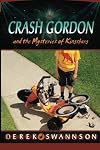
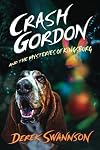
EASTER SUNDAY, 1973: Just before dawn in Kingsburg, California, six-year-old Gordon Swannson, asthmatic boy genius, gets his ass kicked by a spectral Easter Bunny--an event that sends his already hyperactive imagination spiraling toward paranoia. Gordon becomes convinced that ghosts and other weird entities inhabit a daimonic reality that can interact with our everyday world. He starts seeing mystery and danger everywhere in his isolated farming community. He even thinks his best friend, show more Jimmy, might be possessed by demons.... JUNE 7th, 1979: Reality catches up with Gordon's worst imaginings on the day after his thirteenth birthday, when his father dies by crashing a Cessna into the living room of their house. Gordon sets out to discover whether the plane crash was an accident or something far more sinister. Before he finds the answer, he'll experience puberty, Pink Floyd, trout fishing, lesbian vampire movies, and midnight cliff-diving with the Hells Angels--all while learning to cope with the trauma-induced narcolepsy that inspires his nickname, Crash Gordon.... HALLOWEEN, 1982: Gordon meets Jimmy's Uncle Lloyd, an obscenely rich insurance broker to the rocket industry who makes Woodward and Bernstein's Deep Throat look like a low-level bureaucrat. With Lloyd acting as their demented mentor, Gordon and his friends embark on a road trip to the Esalen Institute in Big Sur. Along the way, Lloyd lectures them about such diverse topics as hypnotism, assassination theories, MKULTRA, COINTELPRO, and the kidnapping of Patty Hearst; serial killers, satanic sacrifices, interdimensional energy portals, and the remote viewing program at the Stanford Research Institute; shamanism, ayahuasca, Terence McKenna's tryptamine-fueled encounters with the Logos, and the role "future causality" plays in the world's current fate. And that's only a prelude to Lloyd's startling explanation of how Gordon and Jimmy have become unwitting participants in a CIA mind control experiment known as Project MONARCH.... show lessTags
Recommendations





















Member Recommendations

Member Reviews
Crash Gordon and the Mysteries of Kingsburg, by Derek Swannson is a surprising and terrific book, and one of a very few lesser-known, self-published/small press (not sure which) books that have stayed with me since I finished reading it – more than a year ago! Be warned, however, that CGMK is not an easy read; it’s challenging, thought-provoking, following on (and fitting squarely within) the most advanced post-modern “traditions” of the late 20th and early 21st Centuries.
Like Thomas Pynchon’s Gravity’s Rainbow, CGMK is dirty, dangerous, and not to be recommended; but anyone who’s otherwise inclined to read it should be encouraged. Unlike GR, however, it’s the last half of CGMK – not the first 50 pages – that seems show more most demanding of the reader’s focus and stamina. Even the author anticipates, “people have probably taken a look at the book and said to themselves, ‘There’s 616 pages of this stuff? [Forget] that … I'm going back to David Sedaris.’” Readers disappointed with CGMK’s ending (and there will be some; but, no!, I’m not telling) should consider whether and how it works with the book’s larger theme(s) and overall structure.
For me, CGMK calls to mind some of the best Pynchon and Kurt Vonnegut, with flavors of Franz Kafka thrown in, and a “dash” of Joseph Heller to taste. It begins with the imaginative wild-ride of a 6- or 7-year-old boy thrust into the world (this one) at the tail-end of 1960s turbulence. That world is full of corporate materialism, a perennially plastic mix of 1970s excess, and heightened tension between promises of technology and reverence for natural (and supernatural) orders of the universe. A case in point (not to make too much of the detail): readers (ahem!) “old” enough to remember Farrell’s Ice Cream Parlors may appreciate their perfectly objective depiction here, with enough of a storyteller’s satirical slant to understand them in context as sublime, sinister, and just a bit ridiculous; but, OH! WHAT GREAT FUN THEY ARE! (Or are they?)
As an aftertaste, CGMK left a host of unanswered questions, inexplicable mysteries, and puzzling conundrums, particularly in the last half, where it gives free-reign to a wildly speculative, inter-connected, almost stream-of-consciousness flow of conspiracy theories and new-age mysticism. Rich stuff, to be sure; and rewarding, even if it’s “just” fiction. Some (most?) of the loose ends are likely meant to never be answered (in this life). For a few personal examples, and putting aside particulars of the text (i.e., no “spoilers” here, although that’s hardly a concern!), I wonder: Is the author using conspiracy theories and mysticism (masterfully!) first and foremost as literary devices; or does he want to impart deeper meanings and truths, or inspire soul-searching? What’s really the relationship between “Crash” Gordon Swannson and Derek Swannson in CGMK; is Derek the same as the author; and is their relationship (if any) intentional, stylistic, incidental, mystic – or all of the above? And – going further afield (as CGMK gleefully invites readers to do!) – what’s the relationship between “Crash” Gordon Swannson of CGMK and “Crash Gordon,” reportedly the author of Nitt-Witt Ridge (A Big Sur Freak Fable)? (Incidentally, NWR is the only other title currently appearing on the publisher’s website; see http://www.librarything.com/work/8214436
and http://threegracespress.com/.) The only answer I come up with is a resounding “Yes; No; Maybe,” and not necessarily in that order. Be that as it may, and – to borrow a phrase – "so it goes."
Finally, I heartily congratulate the author, his editor(s), and his publisher (one and the same?) on a highly professional finished product in the book itself, with excellent production qualities and (except that it’s soft-cover) apparently made to last. While I’m normally willing to go with an author’s stylistic oddities in service of the work, I’m (probably abnormally) sensitive to typos, faulty sentence structures, smudged ink, and other thoughtless or unintended shortcomings that I find in many self-published/small press editions. None of these nuisances are evident in CGMK, however; and the “irritants” here, such as they are, seem integral to the work – like grains of sand in oysters, which ultimately produce pearls. Regrettably, our LT review copy landed under wet towels in the bottom of a beach bag – not my doing (I promise!), but somehow fitting if one considers the indignities visited on Crash and his cohorts throughout these pages.
CGMK gets 4 of 5 stars only because I would save 4½ and 5 for the very, very best. Still, on a statistical bell-curve, I deem an honest 4 to be high praise indeed. Most importantly, CGMK needs a wide audience (and vice versa). If you’ve read this far, go get the book – and enjoy! show less
Like Thomas Pynchon’s Gravity’s Rainbow, CGMK is dirty, dangerous, and not to be recommended; but anyone who’s otherwise inclined to read it should be encouraged. Unlike GR, however, it’s the last half of CGMK – not the first 50 pages – that seems show more most demanding of the reader’s focus and stamina. Even the author anticipates, “people have probably taken a look at the book and said to themselves, ‘There’s 616 pages of this stuff? [Forget] that … I'm going back to David Sedaris.’” Readers disappointed with CGMK’s ending (and there will be some; but, no!, I’m not telling) should consider whether and how it works with the book’s larger theme(s) and overall structure.
For me, CGMK calls to mind some of the best Pynchon and Kurt Vonnegut, with flavors of Franz Kafka thrown in, and a “dash” of Joseph Heller to taste. It begins with the imaginative wild-ride of a 6- or 7-year-old boy thrust into the world (this one) at the tail-end of 1960s turbulence. That world is full of corporate materialism, a perennially plastic mix of 1970s excess, and heightened tension between promises of technology and reverence for natural (and supernatural) orders of the universe. A case in point (not to make too much of the detail): readers (ahem!) “old” enough to remember Farrell’s Ice Cream Parlors may appreciate their perfectly objective depiction here, with enough of a storyteller’s satirical slant to understand them in context as sublime, sinister, and just a bit ridiculous; but, OH! WHAT GREAT FUN THEY ARE! (Or are they?)
As an aftertaste, CGMK left a host of unanswered questions, inexplicable mysteries, and puzzling conundrums, particularly in the last half, where it gives free-reign to a wildly speculative, inter-connected, almost stream-of-consciousness flow of conspiracy theories and new-age mysticism. Rich stuff, to be sure; and rewarding, even if it’s “just” fiction. Some (most?) of the loose ends are likely meant to never be answered (in this life). For a few personal examples, and putting aside particulars of the text (i.e., no “spoilers” here, although that’s hardly a concern!), I wonder: Is the author using conspiracy theories and mysticism (masterfully!) first and foremost as literary devices; or does he want to impart deeper meanings and truths, or inspire soul-searching? What’s really the relationship between “Crash” Gordon Swannson and Derek Swannson in CGMK; is Derek the same as the author; and is their relationship (if any) intentional, stylistic, incidental, mystic – or all of the above? And – going further afield (as CGMK gleefully invites readers to do!) – what’s the relationship between “Crash” Gordon Swannson of CGMK and “Crash Gordon,” reportedly the author of Nitt-Witt Ridge (A Big Sur Freak Fable)? (Incidentally, NWR is the only other title currently appearing on the publisher’s website; see http://www.librarything.com/work/8214436
and http://threegracespress.com/.) The only answer I come up with is a resounding “Yes; No; Maybe,” and not necessarily in that order. Be that as it may, and – to borrow a phrase – "so it goes."
Finally, I heartily congratulate the author, his editor(s), and his publisher (one and the same?) on a highly professional finished product in the book itself, with excellent production qualities and (except that it’s soft-cover) apparently made to last. While I’m normally willing to go with an author’s stylistic oddities in service of the work, I’m (probably abnormally) sensitive to typos, faulty sentence structures, smudged ink, and other thoughtless or unintended shortcomings that I find in many self-published/small press editions. None of these nuisances are evident in CGMK, however; and the “irritants” here, such as they are, seem integral to the work – like grains of sand in oysters, which ultimately produce pearls. Regrettably, our LT review copy landed under wet towels in the bottom of a beach bag – not my doing (I promise!), but somehow fitting if one considers the indignities visited on Crash and his cohorts throughout these pages.
CGMK gets 4 of 5 stars only because I would save 4½ and 5 for the very, very best. Still, on a statistical bell-curve, I deem an honest 4 to be high praise indeed. Most importantly, CGMK needs a wide audience (and vice versa). If you’ve read this far, go get the book – and enjoy! show less
This review was written for LibraryThing Member Giveaways.
Crash Gordon and the Mysteries of Kingsburg
Derek Swannson
Three Graces Press
2007
616 Pages
If I had to describe this book in two words I’d have to say… Absolutely brilliant!!
Fortunately, I’m not bound nor inclined to short descriptions.
“Crash Gordon and the Mysteries of Kingsburg” is a uniquely engrossing and entertaining read from the first page to the very last word. In the opening scene we meet our hero, the reincarnated, polymath infant Gordon, who guides us through a fantastic journey of mysticism, intrigue, and conspiracy as he strives toward manhood.
With an incredibly intelligent plot, elegant and gripping phrasing, versant nostalgia and a sprinkling of comedy Swannson proves that he has a unique and distinctive voice. show more This odd but entertaining novel contains familiar elements of Shea and Wilson’s “Illuminatus! Trilogy,” Kerouac’s “On the Road,” Wolfe’s “The Electric Kool-Aid Acid Test,” and the entire catalog of Hunter S. Thompson. I was wholly entertained by every one of the six-hundred plus pages of this epic coming of age story. Swannson allows us to be our almost forgotten adolescent selves again while we tag along with Gordon and friends on their strange journey into adulthood.
If you like smart, literate, and humorous Conspiracy Theories about secret societies, alien manipulation, Freemasonry, narcolepsy, Templar’s and the occasional psychedelic acid trip (and who doesn’t?) then this book is for you! In my estimation, Derek Swannson has created a true masterpiece that will stand the test of time. He weaves intricately patterned characters and scenes with great skill and while the novel is a trifle lengthy there is not a single wasted or misplaced word.
Being of a certain age I identified completely with the pop-culture, drug-related, Rock ‘n Roll references, socio-political movements, and historical moments identified in the book. I have to admit that I couldn’t help but laugh at the adolescent banter, insults and jokes between Crash and his friends. And the nostalgia… ah… Farrell’s Ice Cream Shop and the infamous Pig Trough, Speedos, Quadraphonic stereos, camping, and hellgrammites for fishing. Swannson may have channeled every teenage boy I ever knew.
I’m told that the sequel, “Crash Gordon and the Revelations From Big Sur” is forthcoming. I, for one, can’t wait! Do your self a favor and purchase Swannson’s “Crash Gordon and the Mysteries of Kingsburg” and his other previously published novel “Nitt-Witt Ridge.” You certainly won’t be disappointed.
Rating: (The very rare) Six out of Five Stars
More about the author and the book can be found at the following website:
http://crashgordonbooks.com/home/
The Alternative
Southeast Wisconsin show less
Derek Swannson
Three Graces Press
2007
616 Pages
If I had to describe this book in two words I’d have to say… Absolutely brilliant!!
Fortunately, I’m not bound nor inclined to short descriptions.
“Crash Gordon and the Mysteries of Kingsburg” is a uniquely engrossing and entertaining read from the first page to the very last word. In the opening scene we meet our hero, the reincarnated, polymath infant Gordon, who guides us through a fantastic journey of mysticism, intrigue, and conspiracy as he strives toward manhood.
With an incredibly intelligent plot, elegant and gripping phrasing, versant nostalgia and a sprinkling of comedy Swannson proves that he has a unique and distinctive voice. show more This odd but entertaining novel contains familiar elements of Shea and Wilson’s “Illuminatus! Trilogy,” Kerouac’s “On the Road,” Wolfe’s “The Electric Kool-Aid Acid Test,” and the entire catalog of Hunter S. Thompson. I was wholly entertained by every one of the six-hundred plus pages of this epic coming of age story. Swannson allows us to be our almost forgotten adolescent selves again while we tag along with Gordon and friends on their strange journey into adulthood.
If you like smart, literate, and humorous Conspiracy Theories about secret societies, alien manipulation, Freemasonry, narcolepsy, Templar’s and the occasional psychedelic acid trip (and who doesn’t?) then this book is for you! In my estimation, Derek Swannson has created a true masterpiece that will stand the test of time. He weaves intricately patterned characters and scenes with great skill and while the novel is a trifle lengthy there is not a single wasted or misplaced word.
Being of a certain age I identified completely with the pop-culture, drug-related, Rock ‘n Roll references, socio-political movements, and historical moments identified in the book. I have to admit that I couldn’t help but laugh at the adolescent banter, insults and jokes between Crash and his friends. And the nostalgia… ah… Farrell’s Ice Cream Shop and the infamous Pig Trough, Speedos, Quadraphonic stereos, camping, and hellgrammites for fishing. Swannson may have channeled every teenage boy I ever knew.
I’m told that the sequel, “Crash Gordon and the Revelations From Big Sur” is forthcoming. I, for one, can’t wait! Do your self a favor and purchase Swannson’s “Crash Gordon and the Mysteries of Kingsburg” and his other previously published novel “Nitt-Witt Ridge.” You certainly won’t be disappointed.
Rating: (The very rare) Six out of Five Stars
More about the author and the book can be found at the following website:
http://crashgordonbooks.com/home/
The Alternative
Southeast Wisconsin show less
This review was written for LibraryThing Member Giveaways.
The book that introduced the memorable character of Crash Gordon to the world, this is an origins story that shows us Crash’s history, from childhood as an imaginative, gifted and somewhat paranoid kid through young adulthood. While reading this fantastic trip through a series of incredible, funny, mind-bending adventures it was hard not to think of Wolfe’s ‘Electric Kool Aid Test” and much of the writing of Hunter S. Thompson. But this book is never imitative or derivative. The characters, particularly that of Gordon Swannson (who later becomes Crash Gordon) are truly originals and it is their personalities, along with the author’s elegant and irreverent writing style that keep you engaged and entranced throughout. This is show more truly not a “simple” book. On one level it’s a coming of age tale filled with strange happenings, conspiracy theories and cabals, acid trips gone awry and pervasive narcolepsy. On another it presents some serious political theories and introduces multi-layered characters with complicated emotions and motivations. It may not be everyone’s cup of tea, but if you are willing to be open to the wild ride that is Crash Gordon’s life and to thinking about the mundane in new, often revelatory ways, I think you’ll love this book. show less
Captivated and engaged by the very first page, I have enjoyed every bit of dialogue between Derek Swannson’s characters, along with their background and the thought processes shared. Their idiosyncrasies and flaws are brought to the forefront as a means to show the lessons we might learn from adversity. It's reading that reminds you how to be thankful, without the condescension typically applied in other books. The suggestion that there is a plan and that it isn't necessarily some big celestial idea will be found intriguing by anyone who questions traditional religion.
Gordon's pseudo-uncle, Johnny Hoss, was my favorite character—a cantankerous but well-intentioned devils' advocate who helps Gordon let off steam, gives him a beer show more every now and then, and generally eases the blows when Gordon is rejected by his father. When Gordon is feeling like a general disappointment, Johnny picks him back up and dusts him off and even helps him forget his problems. Johnny reminded me of a favorite uncle of mine that I looked up to; I'd have a hard time imagining that he wouldn't be a favorite to anyone else.
I've utilized all my free time to read this book and I’m eager to read the second in this series. I've also heard whispers of another book from this author that could maybe potentially theoretically be in the works... but don't quote me. I love an author who can fully develop his or her characters, and I love the underdogs most of all—I identify with them almost exclusively and begrudge the alpha dog characters even when they show humility and pain. I'm sure that says much about me, but regardless—don't hesitate to buy this book. I've been wowed and enthralled since page one. I immediately felt for Gordon because his parents really suck and his friend who is his neighbor is not the nicest kid, although maybe that’s just how boys behave.
To a certain degree you almost expect Gordon to die halfway through the book. His life is just filled with knock out after knock out. I won't tell you any more, except to say that I've read a lot of genres and science fiction is becoming a favorite by far. This book is a great example of why. There's real life written into these pages. The characters and the places the author takes you will tap into your own memories, both good and bad. This is DEFINITELY one of those books that will stay with you long after you finish reading it. show less
Gordon's pseudo-uncle, Johnny Hoss, was my favorite character—a cantankerous but well-intentioned devils' advocate who helps Gordon let off steam, gives him a beer show more every now and then, and generally eases the blows when Gordon is rejected by his father. When Gordon is feeling like a general disappointment, Johnny picks him back up and dusts him off and even helps him forget his problems. Johnny reminded me of a favorite uncle of mine that I looked up to; I'd have a hard time imagining that he wouldn't be a favorite to anyone else.
I've utilized all my free time to read this book and I’m eager to read the second in this series. I've also heard whispers of another book from this author that could maybe potentially theoretically be in the works... but don't quote me. I love an author who can fully develop his or her characters, and I love the underdogs most of all—I identify with them almost exclusively and begrudge the alpha dog characters even when they show humility and pain. I'm sure that says much about me, but regardless—don't hesitate to buy this book. I've been wowed and enthralled since page one. I immediately felt for Gordon because his parents really suck and his friend who is his neighbor is not the nicest kid, although maybe that’s just how boys behave.
To a certain degree you almost expect Gordon to die halfway through the book. His life is just filled with knock out after knock out. I won't tell you any more, except to say that I've read a lot of genres and science fiction is becoming a favorite by far. This book is a great example of why. There's real life written into these pages. The characters and the places the author takes you will tap into your own memories, both good and bad. This is DEFINITELY one of those books that will stay with you long after you finish reading it. show less
Being that this is my second exposure to mister Swannson's work, I really wasn't quite sure what to expect. I read through one of his other books (the second in this series) when a friend recommended it to me and. . . Well, I was thoroughly hooked, but missing a fair bit of context to really enjoy some of the finer points and in jokes.
So when he gave me a copy of the first book, I was really curious to see how this would pan out. Sometimes first books tend to be those books in which the author is getting their feet under them and so tend to be a bit rough around the edges.
Crash Gordon and the Mysteries of Kingsburg does suffer from the occasional waffling where the author takes you on tangents that might not seem relevant at first but show more actually tie deeply into the plot threads which are otherwise expertly woven throughout the book. These tangents are also called back to obliquely in the second book making those little 'aha, I see what you did!' moments very enjoyable and a treat to read.
All in all, Derek's high brow played as low brow writing style amuses and enthralls. There have been times where I burst out laughing at something that, without any context at all would sound absolutely ridiculous, but within the world of the story makes perfect sense (but is just as hilarious). “I’ve been giving aliens asthma attacks?” Comes to mind.
There are some small tics where the author is getting a handle on things (you'd be hard pressed to find any one person who could do all the work needed to make this kind of plot sing) but once the momentum gets going, you're in for one hell of a ride.
If intelligent, slightly surreal, plots are something you enjoy, you really need to pick this up. I know I'm going to be looking for more! show less
So when he gave me a copy of the first book, I was really curious to see how this would pan out. Sometimes first books tend to be those books in which the author is getting their feet under them and so tend to be a bit rough around the edges.
Crash Gordon and the Mysteries of Kingsburg does suffer from the occasional waffling where the author takes you on tangents that might not seem relevant at first but show more actually tie deeply into the plot threads which are otherwise expertly woven throughout the book. These tangents are also called back to obliquely in the second book making those little 'aha, I see what you did!' moments very enjoyable and a treat to read.
All in all, Derek's high brow played as low brow writing style amuses and enthralls. There have been times where I burst out laughing at something that, without any context at all would sound absolutely ridiculous, but within the world of the story makes perfect sense (but is just as hilarious). “I’ve been giving aliens asthma attacks?” Comes to mind.
There are some small tics where the author is getting a handle on things (you'd be hard pressed to find any one person who could do all the work needed to make this kind of plot sing) but once the momentum gets going, you're in for one hell of a ride.
If intelligent, slightly surreal, plots are something you enjoy, you really need to pick this up. I know I'm going to be looking for more! show less
When I read the back-of-book blurb I thought, "Bunnies and plane crashes--what is this, Donnie Darko: The Book?" Well, if Donnie Darko, Fringe, and X-Files had a literary love child with all of their humorous genes dominant in the DNA, it would read like Crash Gordon. I mean this as a compliment.
What I'm saying is, if you like a good conspiracy theory, or a good story of teen angst, you'll like this book. (And that would be any and all conspiracy theories--I'm pretty sure all of them are hit upon at one time or another in this book, in somewhat more detail than I cared for, but I still enjoyed myself immensely.) Actually, so much attention is paid to explicating the various conspiracies that it's a wonder the characters don't get short show more shrift; for the most part, they don't, but sometimes I wished for less explanation and more story.
I was afraid I'd feel cheated when I realized that the final 125 or so pages of the book would be dedicated to such theory-expounding--what would happen to our hero and his friends? Surprisingly, the emotional pay-off was worthwhile, and didn't seem hideously tacked-on just to satisfy whiners like myself. Whenever a book is over 600 pages, though, I always feel like it's scrimping to just end things so suddenly and unsatisfyingly--what, after that long, you think we won't stay with you? You can't give us, you're faithful readers, a little more time?
I heartily recommend Crash Gordon--it's quite fun, totally absorbing, and probably even better if you've ever been an adolescent boy. Having read it, I can now channel a paranoid adolescent boyhood ca. early-1980s suburbia. Oh, wait...I knew some of those kids... show less
What I'm saying is, if you like a good conspiracy theory, or a good story of teen angst, you'll like this book. (And that would be any and all conspiracy theories--I'm pretty sure all of them are hit upon at one time or another in this book, in somewhat more detail than I cared for, but I still enjoyed myself immensely.) Actually, so much attention is paid to explicating the various conspiracies that it's a wonder the characters don't get short show more shrift; for the most part, they don't, but sometimes I wished for less explanation and more story.
I was afraid I'd feel cheated when I realized that the final 125 or so pages of the book would be dedicated to such theory-expounding--what would happen to our hero and his friends? Surprisingly, the emotional pay-off was worthwhile, and didn't seem hideously tacked-on just to satisfy whiners like myself. Whenever a book is over 600 pages, though, I always feel like it's scrimping to just end things so suddenly and unsatisfyingly--what, after that long, you think we won't stay with you? You can't give us, you're faithful readers, a little more time?
I heartily recommend Crash Gordon--it's quite fun, totally absorbing, and probably even better if you've ever been an adolescent boy. Having read it, I can now channel a paranoid adolescent boyhood ca. early-1980s suburbia. Oh, wait...I knew some of those kids... show less
This review was written for LibraryThing Member Giveaways.
Crash Gordon is an excellent blend of conspiracy theory and humor. The first half is a tour de force mixing action, mystery, nostalgia (1970s in the US), and absurdly funny happenings. Like a psychotic Easter Bunny attack. And pea-green soup reenactments of a certain Exorcist scene. The second half slows down with more conspiracy theory expounded on through conversations between the characters. It can take a while to get through and keep straight all the conspiracy touched on in the latter half. Especially, if the reader goes online to check out some of these theories. The author went deep into this territory of the paranoid.
Crash is ribald humor, coming of age wackiness, conspiracy theory, some metaphysics, and quite unlike most other show more books out there. It was a long journey and an enjoyable one in a crazy demented feel-good way. show less
Crash is ribald humor, coming of age wackiness, conspiracy theory, some metaphysics, and quite unlike most other show more books out there. It was a long journey and an enjoyable one in a crazy demented feel-good way. show less
This review was written for LibraryThing Member Giveaways.
Members
- Recently Added By
Author Information

4+ Works 94 Members

Derek Swannson is a LibraryThing Author, an author who lists their personal library on LibraryThing.
Series

Work Relationships
Has the (non-series) prequel
Common Knowledge
- Canonical title
- Crash Gordon and the Mysteries of Kingsburg
- Original publication date
- 2007
- People/Characters
- Gordon Swannson; Jimmy Marrsden; Lloyd Marrsden; Skip Sorenson; Isabelle Ramirez (Twinker); Hideo Nakamatsu (Hideous) (show all 7); Doug the Hermaphrodite (D.H.)
- Important places
- Kingsburg, California; Esalen Institute, Big Sur, California, USA
- Epigraph
- Maybe this world is some other planet's hell.
—Aldous Huxley
Ethos anthropoi daimon.
—Heraclitus - Dedication
- For my three graces
- First words
- Picture six-year-old Gordon Swannson skulking along a shag-carpeted hallway in the predawn stillness of his parents' 1960s-style suburban ranch home.
- Last words
- (Click to show. Warning: May contain spoilers.)He chose to live.
- Publisher's editor
- Darren Westlund
Classifications
Statistics
- Members
- 52
- Popularity
- 585,770
- Reviews
- 11
- Rating
- (4.41)
- Languages
- English
- Media
- Paper, Ebook
- ISBNs
- 5
- ASINs
- 3