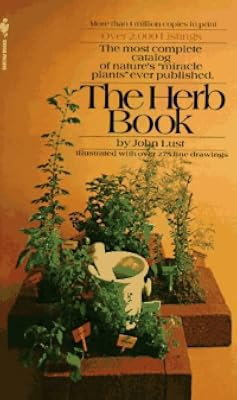
The Herb Book
by John Lust
On This Page
Description
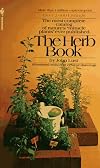
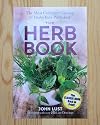
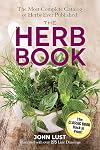
More than 2,000 listings offer remedies for ragged nerves, nightmares, and coughing fits as well as suggestions for adding spice to recipes, coloring fabrics, freshening breath, and a host of other uses. Complete and concise descriptions of herbs, illustrated by more than 275 line drawings, offer the most comprehensive catalog of "miracle plants" ever published.Tags
Recommendations













Member Reviews
This is the book I go to when I want to find out about the traditional medicinal properties of an herb. It's especially helpful for warning about toxicity and contraindications.
It includes the latin name for the herb, many of the common names and a description of the plant parts. The medicinal properties require a bit of cross referencing to the section that tells you what "febrifuge" and all the other "technical terms" means ("an agent that reduces or eliminates fever").
I'm always amazed by the people that start using an herb (even in a tea or "food" form) extensively without checking in such a book. For instance, Rosemary can raise blood pressure. Before falling madly in love with everything Rosemary, I'd probably want to find out a show more little more about the herb if I had a problem with high blood pressure.
There are not a whole lot of citations given for "proof" about most of the claims, but the author is a widely recognized expert with an extensive education on the topic. His point is not to prove but to get his knowledge across.
There's even a nice section on non-medicinal purposes of herbs, like for dyes, cosmetics, beverages, etc. show less
It includes the latin name for the herb, many of the common names and a description of the plant parts. The medicinal properties require a bit of cross referencing to the section that tells you what "febrifuge" and all the other "technical terms" means ("an agent that reduces or eliminates fever").
I'm always amazed by the people that start using an herb (even in a tea or "food" form) extensively without checking in such a book. For instance, Rosemary can raise blood pressure. Before falling madly in love with everything Rosemary, I'd probably want to find out a show more little more about the herb if I had a problem with high blood pressure.
There are not a whole lot of citations given for "proof" about most of the claims, but the author is a widely recognized expert with an extensive education on the topic. His point is not to prove but to get his knowledge across.
There's even a nice section on non-medicinal purposes of herbs, like for dyes, cosmetics, beverages, etc. show less
This is my favorite book on herbalism (neurobiology for my Canadian and British friends). It lists almost every herb which has had any use anywhere -- for example -- pennyroyal was used by some Native American women as a contraceptive (of course, I would not recommend that use now).
Unfortunately, as far as I can determine, the book was only published between 1975 and 1979, and has languished in book purgatory ever since. So, if you wish had a copy, you're going to have to contact Bantam Books and ask them to republish.
Unfortunately, as far as I can determine, the book was only published between 1975 and 1979, and has languished in book purgatory ever since. So, if you wish had a copy, you're going to have to contact Bantam Books and ask them to republish.
Not much depth here but it's useful for a quick reference.
Media Type:Book. SUBJECT: 1. Medicinal plants. 2. Herbs.
Bible for herbs
not an easy read. This is an encyclopedia of herbs, their uses and preparations.
As always - be careful following the instructions!
As always - be careful following the instructions!
Ratings
Members
- Recently Added By
Author Information
2 Works 958 Members
Common Knowledge
- Canonical title
- The Herb Book
- Original title
- The Herb Book
- Original publication date
- 1974
- Dedication
- I dedicate this book to my wife, Virginia.
- First words
- Herbalism-the knowledge and study of herbs-may not be a term in your active vocabulary, but it is a reality in your life.
- Last words
- (Click to show. Warning: May contain spoilers.)Wormwood is a principal ingredient in the dangerous alcoholic drink absinthe, which has been made illegal all over the world because it deteriorates the nervous system, causing attacks similar to epileptic seizures.
- Original language
- English
Classifications
Statistics
- Members
- 920
- Popularity
- 29,265
- Reviews
- 6
- Rating
- (4.20)
- Languages
- English
- Media
- Paper, Ebook
- ISBNs
- 12
- UPCs
- 1
- ASINs
- 9