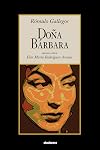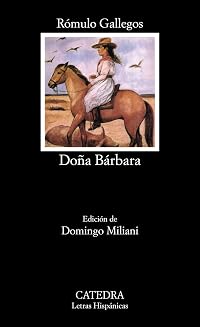
Doña Barbara
by Rómulo Gallegos
On This Page
Description
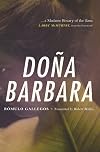
Rmulo Gallegos is best known for being Venezuela's first democratically elected president. But in his native land he is equally famous as a writer responsible for one of Venezuela's literary treasures, the novel Doa Barbara. Published in 1929 and all but forgotten by Anglophone readers, Doa Barbara is one of the first examples of magical realism, laying the groundwork for later authors such as Gabriel Garca Mrquez and Mario Vargas Llosa. Following the epic struggle between two cousins for an show more estate in Venezuela, Doa Barbara is an examination of the conflict between town and country, violence and intellect, male and female. Doa Barbara is a beautiful and mysterious woman - rumored to be a witch - with a ferocious power over men. When her cousin Santos Luzardo returns to the plains in order to reclaim his land and cattle, he reluctantly faces off against Doa Barbara, and their battle becomes simultaneously one of violence and seduction. All of the action is set against the stunning backdrop of the Venezuelan prairie, described in loving detail. Gallegoss plains are filled with dangerous ranchers, intrepid cowboys, and damsels in distress, all broadly and vividly drawn. A masterful novel with an important role in the inception of magical realism, Doa Barbara is a suspenseful tale that blends fantasy, adventure, and romance. show lessTags
Recommendations















Member Reviews
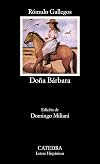
Hay novelas que, a pesar del paso del tiempo, no pierden su vigencia, historias que resultan inolvidables porque, a fin de cuentas, nos hablan del ser humano, de sus avatares, sus deseos, de su grandeza y también de sus miserias. A esta estirpe literaria pertenece Doña Bárbara (1929-1930), obra maestra de la narrativa hispanoamericana, retrato en el que, más allá de maniqueísmos, tienen cabida todos los matices de una vida. Doña Bárbara, la protagonista, es espejo del llano venezolano, es rica y poderosa, bella y hostil. Es una heroína rencorosa, imprevisible y caprichosa. Es una mujer independiente llena de vicios y pasiones, una fuerza ciega de la naturaleza que, a su paso, es capaz de dañar a su hija y al hombre que busca show more seducir show less
As his inheritance diminishes due to corrupt judges settling disputes against him, Santos Luzardo returns from Caracas to his estate near the Arauca river where he decides to fight against Doña Bárbara, who has gained possession of the neighbouring estate by seducing Santos's alcoholic cousin.
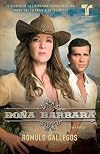
Any attempt to summarise the plot makes it sound like a Mills & Boon or soap opera (in fact the book has been turned into a telenovela), but there's actually some quite meaty stuff here about how adverse circumstances can mar a person's character, how we are the result of the choices we've made, and reflections on how and whether a good man can survive in a society where might makes right.
The book may be a jewel of Spanish prose for all I know, show more but the translation does seem rather clunky and over-literal at first, but I got used to it and am glad I persevered. show less
Any attempt to summarise the plot makes it sound like a Mills & Boon or soap opera (in fact the book has been turned into a telenovela), but there's actually some quite meaty stuff here about how adverse circumstances can mar a person's character, how we are the result of the choices we've made, and reflections on how and whether a good man can survive in a society where might makes right.
The book may be a jewel of Spanish prose for all I know, show more but the translation does seem rather clunky and over-literal at first, but I got used to it and am glad I persevered. show less
3.5***
This classic of South American literature was first published in 1929 and virtually forgotten by US readers. It first came to my attention through Public Broadcasting System’s Great American Read program in 2019.
It is an epic tale of two cousins who are fighting for control of a vast estate / ranch in Venezuela. Doña Barbara is beautiful and powerful. At her core she hates men for the way she was used and abused as a young girl. She has earned a reputation as a witch and is widely known for using, abusing and tossing aside her lovers as whim and her needs dictate. She fits perfectly into the wild, untamed landscape of the llano (prairie) and the surrounding swamps, bogs and jungles.
In contrast, we have Santos Luzardo, who, show more while born on the plains has long left for an education in the city. Now he returns to reclaim his inheritance – land and cattle. But he retains the manners and customs of his city education. Their battle is both cerebral (who can outwit the other?), and physical, involving seduction, chicanery, violence, gamesmanship, cunning and some magic as well.
The novel is an early example of magical realism and Gallegos weaves together adventure, fantasy, and romance. He uses vivid description and outlandish storytelling (I loved the one-eyed monster alligator!) to bring this era to life. The various outdoor scenes were particularly exciting – I could practically taste the grit, feel the dust in my nostrils, hear the roar of stampeding herd, and smell the smoke of an uncontrolled wildfire.
If there was an element that made me downgrade my rating it was the story of Marisela, and the way that Doña Barbara came to terms with that character. It was rather melodramatic and very soap-opera-ish.
In the introduction, Larry McMurtry writes: “[Doña Barbara] is, in her way, a tragic heroine, seeking to attract a decent lover, while giving herself day and night to very coarse lovers indeed. She is, however very vividly drawn, a Bovary of the llano.” show less
This classic of South American literature was first published in 1929 and virtually forgotten by US readers. It first came to my attention through Public Broadcasting System’s Great American Read program in 2019.
It is an epic tale of two cousins who are fighting for control of a vast estate / ranch in Venezuela. Doña Barbara is beautiful and powerful. At her core she hates men for the way she was used and abused as a young girl. She has earned a reputation as a witch and is widely known for using, abusing and tossing aside her lovers as whim and her needs dictate. She fits perfectly into the wild, untamed landscape of the llano (prairie) and the surrounding swamps, bogs and jungles.
In contrast, we have Santos Luzardo, who, show more while born on the plains has long left for an education in the city. Now he returns to reclaim his inheritance – land and cattle. But he retains the manners and customs of his city education. Their battle is both cerebral (who can outwit the other?), and physical, involving seduction, chicanery, violence, gamesmanship, cunning and some magic as well.
The novel is an early example of magical realism and Gallegos weaves together adventure, fantasy, and romance. He uses vivid description and outlandish storytelling (I loved the one-eyed monster alligator!) to bring this era to life. The various outdoor scenes were particularly exciting – I could practically taste the grit, feel the dust in my nostrils, hear the roar of stampeding herd, and smell the smoke of an uncontrolled wildfire.
If there was an element that made me downgrade my rating it was the story of Marisela, and the way that Doña Barbara came to terms with that character. It was rather melodramatic and very soap-opera-ish.
In the introduction, Larry McMurtry writes: “[Doña Barbara] is, in her way, a tragic heroine, seeking to attract a decent lover, while giving herself day and night to very coarse lovers indeed. She is, however very vividly drawn, a Bovary of the llano.” show less
Published in 1929, this historical novel is set in Venezuela. It centers on two protagonists, Doña Bárbara and Santos Luzardo, with a large cast of supporting characters. Santos returns from abroad to his run his father’s ranch, Altamira, when he realizes it is controlled by a wealthy, manipulative local landowner, Doña Bárbara. She lives on the neighboring ranch, El Miedo (The Fear). She has had a tumultuous relationship with Lorenzo Barquero, and they have a daughter, Marisela. After spurning both Lorenzo and Marisela, she sets her sights on Santos.
The main theme of this novel is the coming of modern ways to the llanos (plains). The old ways are maintained by Doña Bárbara, and she attempts to take over the land and cattle that show more belong to Santos. This is a time before fencing of the land, so cattle were routinely “re-branded” and claimed by others. There are many local superstitions. The local people think Doña Bárbara is a sorceress.
I read the English translation by Robert Malloy. It beautifully describes the Venezuelan landscape, including the plains, jungles, rivers, and mountains, each with distinctive flora, fauna, climate, and customs. It is an inhospitable region. This book is similar to an old-fashioned US “western,” but with more poetic writing and set on the Venezuelan plains. It is an allegorical novel, and it will not be difficult to spot the symbolism. The characters are a bit thin, but it is definitely worth reading for its historical significance, especially if you are interested in world literature. show less
The main theme of this novel is the coming of modern ways to the llanos (plains). The old ways are maintained by Doña Bárbara, and she attempts to take over the land and cattle that show more belong to Santos. This is a time before fencing of the land, so cattle were routinely “re-branded” and claimed by others. There are many local superstitions. The local people think Doña Bárbara is a sorceress.
I read the English translation by Robert Malloy. It beautifully describes the Venezuelan landscape, including the plains, jungles, rivers, and mountains, each with distinctive flora, fauna, climate, and customs. It is an inhospitable region. This book is similar to an old-fashioned US “western,” but with more poetic writing and set on the Venezuelan plains. It is an allegorical novel, and it will not be difficult to spot the symbolism. The characters are a bit thin, but it is definitely worth reading for its historical significance, especially if you are interested in world literature. show less
The blurb on the cover says "a Madame Bovary of the llano", but really it feels much more akin to Steinbeck's East of Eden, both in setting - ranching and farming - and in content: generational family story centered on a scion of the family returning to the family ranch and trying to do good; and the contrast between love and lust and hate; and the good that good and love eventually works. Some of the comments by the narrative voice and the characters regarding women, indigenous, and racialized peoples are bothersome, but they are product of a time and a place and we cannot deny that these ideas or attitudes did not exist. There is a term in the original that has been translated as "tiger" and I just cannot fathom tigers being out on show more the plains of Venezuela. show less
Published in 1929, this historical novel is set in Venezuela. It centers on two protagonists, Doña Bárbara and Santos Luzardo, with a large cast of supporting characters. Santos returns from abroad to his run his father’s ranch, Altamira, when he realizes it is controlled by a wealthy, manipulative local landowner, Doña Bárbara. She lives on the neighboring ranch, El Miedo (The Fear). She has had a tumultuous relationship with Lorenzo Barquero, and they have a daughter, Marisela. After spurning both Lorenzo and Marisela, she sets her sights on Santos.
The main theme of this novel is the coming of modern ways to the llanos (plains). The old ways are maintained by Doña Bárbara, and she attempts to take over the land and cattle that show more belong to Santos. This is a time before fencing of the land, so cattle were routinely “re-branded” and claimed by others. There are many local superstitions. The local people think Doña Bárbara is a sorceress.
I read the English translation by Robert Malloy. It beautifully describes the Venezuelan landscape, including the plains, jungles, rivers, and mountains, each with distinctive flora, fauna, climate, and customs. It is an inhospitable region. This book is similar to an old-fashioned US “western,” but with more poetic writing and set on the Venezuelan plains. It is an allegorical novel, and it will not be difficult to spot the symbolism. The characters are a bit thin, but it is definitely worth reading for its historical significance, especially if you are interested in world literature. show less
The main theme of this novel is the coming of modern ways to the llanos (plains). The old ways are maintained by Doña Bárbara, and she attempts to take over the land and cattle that show more belong to Santos. This is a time before fencing of the land, so cattle were routinely “re-branded” and claimed by others. There are many local superstitions. The local people think Doña Bárbara is a sorceress.
I read the English translation by Robert Malloy. It beautifully describes the Venezuelan landscape, including the plains, jungles, rivers, and mountains, each with distinctive flora, fauna, climate, and customs. It is an inhospitable region. This book is similar to an old-fashioned US “western,” but with more poetic writing and set on the Venezuelan plains. It is an allegorical novel, and it will not be difficult to spot the symbolism. The characters are a bit thin, but it is definitely worth reading for its historical significance, especially if you are interested in world literature. show less
Plot is hard to summarize, but broadly, this is set in the 1930s and concerns a man, Santos Luzardo, trying to recover his ranch land on the plains of Venezuela most of which has been swallowed up by a witch-like woman, Doña Barbara, and her evil henchmen while Santos has been away and dependent on an unscrupulous overseer. We are given a good deal of the local color. This is a seminal work in Latin American literature, with the beginnings of "magic realism", developed more fully in later works. As far as characters: names are symbolic: "Santos"--holy or saintly; "Barbara", a wild, untamed force. There's even an Ugly American, Señor Danger, one of the villains. Besides the regaining of Santos's land, a big theme is Transformation to show more the positive of the personalities of the main female characters.
This may read better in the original Spanish; I felt this English translation was clunky. show less
This may read better in the original Spanish; I felt this English translation was clunky. show less
Members
- Recently Added By
Lists

PBS The Great American Read
100 works; 21 members

Lamont's Hundred Best Novels (1947)
100 works; 4 members

Las 100 mejores novelas de la literatura hispanoamericana
96 works; 1 member

Around the World in 80 Books
79 works; 4 members

Canon de la narrativa universal del s. XX (cicutadry)
499 works; 3 members
Las 100 mejores novelas de la literatura hispanoamericana (cicutadry)
100 works; 1 member
Author Information

32+ Works 777 Members
Some Editions
Awards and Honors
Distinctions
Notable Lists
The Great American Read (100)
Series
Belongs to Publisher Series
Common Knowledge
- Canonical title
- Doña Barbara
- Original title
- Doña Bárbara : novela; Doña Bárbara
- Original publication date
- 1929
- People/Characters
- Doña Bárbara; Santos Luzardo
- Important places
- Venezuela
- Original language
- Spanish
Classifications
- Genres
- Fiction and Literature, General Fiction
- DDC/MDS
- 863.62 — Literature & rhetoric Spanish Literature Spanish fiction 20th Century 1900-1945
- LCC
- PQ8549 .G24 .D6 — Language and Literature French, Italian, Spanish and Portuguese literatures Spanish literature Provincial, local, colonial, etc. Spanish America
- BISAC
Statistics
- Members
- 568
- Popularity
- 51,963
- Reviews
- 16
- Rating
- (3.67)
- Languages
- 7 — English, Estonian, Finnish, French, German, Portuguese, Spanish
- Media
- Paper, Audiobook, Ebook
- ISBNs
- 58
- UPCs
- 2
- ASINs
- 23