On This Page
Description
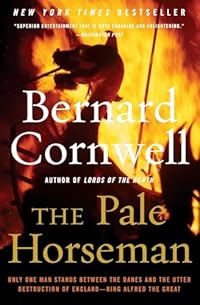
The second installment of Bernard Cornwell's New York Times bestselling series chronicling the epic saga of the making of England, "like Game of Thrones, but real" (The Observer, London)—the basis for The Last Kingdom, the hit television series.As the last unvanquished piece of England, Wessex is eyed hungrily by the fearsome Viking conquerors. Uhtred, a dispossessed young nobleman, is tied to the imperiled land by birth and marriage but was raised by the Danish invaders—and he show more questions where his allegiance must lie. But blood is his destiny, and when the overwhelming Viking horde attacks out of a wintry darkness, Uhtred must put aside all hatred and distrust and stand beside his embattled country's staunch defender—the fugitive King Alfred.
The Pale Horseman is a gripping, monumental adventure that gives breathtaking life to one of the most important epochs in English history—yet another masterwork from New York Times bestselling author Bernard Cornwell.
. show less
Tags
Recommendations






Member Reviews
‘The Pale Horseman’ is the sequel to the best-selling ‘The Last Kingdom’ and continues the tale of the great warrior Uhtred, born in Northumberland. Raised as a Dane, he is now married to a Saxon girl. He is a pagan and his alliance with the pious Alfred the Great does not sit easily on the shoulders of either man.
However, the Danes break a truce with the Saxons in Wessex and slaughter most of the Saxon leaders. Only Alfred's family, Uhtred and a small number of his companions escape from the Danes. They are driven deeper and deeper into a swamp, where they are helpless to try to gather forces to stand against their enemy.
The Danes now hold most of England and it has been a disastrous time for the Saxons. Uhtred finds himself show more torn between the growing respect he has for Alfred and the love he has for his Danish foster brother, Ragnor. He has to wrestle with his heart and decide whether to try and rally the Saxons and drive out the Danes, or change sides and go to stand with Ragnor.
Particularly convincing is Cornwell’s portrayal of the almost crippling effect on the Saxon war effort of King Alfred's belief that God alone will rescue England from the Danes. That contrasts and conflicts with Uhtred's warrior's instincts - and the tension between Uhtred and his king is cleverly written. Just as Uhtred slowly resolves his conflict of loyalty, so Alfred gradually changes from a king who refuses to do anything other than pray to a warrior who might be able to save his people. Even the supporting cast, notably the priest Asser (who wrote a life of Alfred), is well characterised.
The atmosphere is superb - there is a thick mist hanging around saxon times but Mr. Cornwell offers a set of fog lights. Yes, some bits are not strictly bound to the historical record; but it is downright believable. His characters are not bound to some higher cause, they are just normal people who make normal mistakes and have normal emotions.
There are some fascinating new characters that have an influence on Uhtred and the story. The mysterious Briton queen Iseult, and the excellent Father Pyrlig. We also get to find out what characters like Leofric, Beocca, Ragner, Brida and Aethelwold have been up to and their further adventures.
It's the kind of book that leaves you wanting much more! Roll on book 3! show less
However, the Danes break a truce with the Saxons in Wessex and slaughter most of the Saxon leaders. Only Alfred's family, Uhtred and a small number of his companions escape from the Danes. They are driven deeper and deeper into a swamp, where they are helpless to try to gather forces to stand against their enemy.
The Danes now hold most of England and it has been a disastrous time for the Saxons. Uhtred finds himself show more torn between the growing respect he has for Alfred and the love he has for his Danish foster brother, Ragnor. He has to wrestle with his heart and decide whether to try and rally the Saxons and drive out the Danes, or change sides and go to stand with Ragnor.
Particularly convincing is Cornwell’s portrayal of the almost crippling effect on the Saxon war effort of King Alfred's belief that God alone will rescue England from the Danes. That contrasts and conflicts with Uhtred's warrior's instincts - and the tension between Uhtred and his king is cleverly written. Just as Uhtred slowly resolves his conflict of loyalty, so Alfred gradually changes from a king who refuses to do anything other than pray to a warrior who might be able to save his people. Even the supporting cast, notably the priest Asser (who wrote a life of Alfred), is well characterised.
The atmosphere is superb - there is a thick mist hanging around saxon times but Mr. Cornwell offers a set of fog lights. Yes, some bits are not strictly bound to the historical record; but it is downright believable. His characters are not bound to some higher cause, they are just normal people who make normal mistakes and have normal emotions.
There are some fascinating new characters that have an influence on Uhtred and the story. The mysterious Briton queen Iseult, and the excellent Father Pyrlig. We also get to find out what characters like Leofric, Beocca, Ragner, Brida and Aethelwold have been up to and their further adventures.
It's the kind of book that leaves you wanting much more! Roll on book 3! show less
The second book in The Saxon Chronicles follows Uhtred's adventures after the Battle of Cynuit. Uhtred is an exiled Ealdorman of Northumbria. He largely spends his time with King Alfred and becomes a key figure in the plan to save Wessex from the Danes. The story features some striking settings, such as the swamps of southern England which still existed then, as well as some memorable side characters whom I loved dearly. But most of all I enjoyed the atmosphere the author creates and Uhtred's narrative voice. Uhtred is unlikeable quite often and many of his actions are questionable, but he is an interesting character and because the tale is narrated from the perspective of a much older Uhtred, it is easy to forgive him. The writing show more style is just wonderful and I am already looking forward to the next book. The only quibble I have is that the depiction of the female characters is wanting, but in this book it is a bit better than in the first one. show less
I really do like the straightforward prose in this series. I feel like it fits well with Uhtred's personality and how he would tell a story.
There weren't as many battles in this book as in the first, and that worked well since for the majority of this book Alfred and the Saxons are pretty much hiding and trying to build up their ranks.
Uhtred grows more as a character. He's only 21 in this book, but he's seen some shit and is already growing tired and becoming more mature and seasoned.
I love the historical note in the back where Cornwell goes over who were real and what things really did happen, as well as what characters and events were either made up by him or were based on folklore.
There weren't as many battles in this book as in the first, and that worked well since for the majority of this book Alfred and the Saxons are pretty much hiding and trying to build up their ranks.
Uhtred grows more as a character. He's only 21 in this book, but he's seen some shit and is already growing tired and becoming more mature and seasoned.
I love the historical note in the back where Cornwell goes over who were real and what things really did happen, as well as what characters and events were either made up by him or were based on folklore.
(47) The 2nd in the Uthred series in the late 9th century (!) medieval England when the Danes invaded England and the only kingdom standing was Alfred the Great's Wessex. The Danes attack and seemingly vanquish Alfred and a band of survivors to the swamps outside of London including Uthred. This is the story of how they fight back and how Uthred comes to win back his King's favor as well as reunite with his adopted brother the Dane Earl Ragnar.
It had been awhile since I read the first installment and it took me a bit to get used to the characters but in the end it comes down to fighting, blood and guts, betrayal, greed, power -- the usual historical fiction. It really is amazing that humans (mainly men) have been slaughtering each show more other in the name of country, religion, tribe, etc. since time immemorial. Sigh.
So despite my snark, I was reluctantly pulled in. I love imagining what life may have been like so long ago. I am a sucker for a story well-told however hackneyed. I can put up with melodrama if I am given dramatic tension. I can stand cliche reaction if I am given authentic action. I would much rather read straightforward unadorned prose than pretentious derivative twaddle. So there you have it. I enjoyed it. Bring on Book 3! And I just may Netflix it as well. show less
It had been awhile since I read the first installment and it took me a bit to get used to the characters but in the end it comes down to fighting, blood and guts, betrayal, greed, power -- the usual historical fiction. It really is amazing that humans (mainly men) have been slaughtering each show more other in the name of country, religion, tribe, etc. since time immemorial. Sigh.
So despite my snark, I was reluctantly pulled in. I love imagining what life may have been like so long ago. I am a sucker for a story well-told however hackneyed. I can put up with melodrama if I am given dramatic tension. I can stand cliche reaction if I am given authentic action. I would much rather read straightforward unadorned prose than pretentious derivative twaddle. So there you have it. I enjoyed it. Bring on Book 3! And I just may Netflix it as well. show less
This is the second book in The Saxon Tales series. It picks up where The Last Kingdom left off. The storyline follows the history of Alfred the Great during the period 876 - 878. Protagonist Uhtred of Babbenburg, originally from Northumbria, has ties to both the Saxons and the Danes. The origin of his dual ties is told in the first book. As the second book begins, Uhtred is in his twenties and has just defeated the Danish leader, Ubba Lothbrokson. Alfred is sheltering in the swamps of Wessex and trying to expel the Danes from southern England. Uhtred’s loyalties are tested, and he must choose sides.
This book is atmospherically written, creating vivid scenes of the period and setting. Cornwell’s style is gritty, realistic, and show more engaging. His characters are well-developed and flawed. Uhtred is often rash in his actions. He is stubborn and proud. He expects to be rewarded for his battle prowess but finds his credit claimed by another warrior. At times I wanted to warn him not to do what he was planning.
I am enjoying this series and getting to know more about the period of Alfred the Great. It is immensely entertaining with almost non-stop battles. It’s a bit too gruesome for me in several places, but still very enjoyable. I appreciate the author’s note in which Cornwell explains what is real versus fictional, and what is based on folklore. This is a top tier historical adventure. show less
This book is atmospherically written, creating vivid scenes of the period and setting. Cornwell’s style is gritty, realistic, and show more engaging. His characters are well-developed and flawed. Uhtred is often rash in his actions. He is stubborn and proud. He expects to be rewarded for his battle prowess but finds his credit claimed by another warrior. At times I wanted to warn him not to do what he was planning.
I am enjoying this series and getting to know more about the period of Alfred the Great. It is immensely entertaining with almost non-stop battles. It’s a bit too gruesome for me in several places, but still very enjoyable. I appreciate the author’s note in which Cornwell explains what is real versus fictional, and what is based on folklore. This is a top tier historical adventure. show less
This the second in the Saxon Chronicles (starting with The Last Kingdom) and continues in excellent full blooded form the story of Uhtred (who still wants to regain lordship of Bebbanburgh, now known as Bamburgh) and his love/hate relationship with King Alfred of Wessex. This is both a ripping yarn, with the narrative drive of beautiful racing horse, and a well researched reconstruction from the available sources (as far as I can tell).
I was exasperated by Uhtred's pig-headed obtuseness at the beginning of this novel, especially when he rides on horseback into church to announce his victory at Cynuit (a hillfort in Somerset) to the devout and pious Alfred. However, the novel provides wonderful set pieces and subsequently shows Uhtred's show more character development.
The first part continues Uhtred' sea adventures as he sails to Cornwalum, meets Britons (Celts) and the beautiful Iseult.
The large second section of the novel relates mainly to King Alfred's enforced stay in the "swamps" of the Somerset levels, which are well described in their undrained state. There is also the scene when having been reunited with an old Danish friend, Uhtred realises that for all his love of the Danes (who had brought him up after killing his father in Northumbria), he can only hope to regain his land and castle at Bebbanburg as a free lord if he accepts his Saxon destiny and so helps Alfred.
The climax comes with the battle of Ethandun, which is convincingly told.
Alfred is convincingly portrayed as a complex man who would have been happy as a scholarly priest or monk, but born into a royal family has the ambition and drive to make the necessary hard decisions to try to regain his Christian kingdom, although he has doubts and weaknesses that arise from very piety that makes him consider it his destiny to preserve Christianity.
Uhtred makes a convincing pagan in a world which his fellow Saxons are fighting to keep Christian - "The world began in chaos and it will end in chaos. The gods brought the world into existence, and they will end it when they fight among themselves, but in between the chaos of the world’s birth and the chaos of the world’s death is order, and order is made by oaths, and oaths bind us like the buckles of a harness.". show less
I was exasperated by Uhtred's pig-headed obtuseness at the beginning of this novel, especially when he rides on horseback into church to announce his victory at Cynuit (a hillfort in Somerset) to the devout and pious Alfred. However, the novel provides wonderful set pieces and subsequently shows Uhtred's show more character development.
The first part continues Uhtred' sea adventures as he sails to Cornwalum, meets Britons (Celts) and the beautiful Iseult.
The large second section of the novel relates mainly to King Alfred's enforced stay in the "swamps" of the Somerset levels, which are well described in their undrained state. There is also the scene when having been reunited with an old Danish friend, Uhtred realises that for all his love of the Danes (who had brought him up after killing his father in Northumbria), he can only hope to regain his land and castle at Bebbanburg as a free lord if he accepts his Saxon destiny and so helps Alfred.
The climax comes with the battle of Ethandun, which is convincingly told.
Alfred is convincingly portrayed as a complex man who would have been happy as a scholarly priest or monk, but born into a royal family has the ambition and drive to make the necessary hard decisions to try to regain his Christian kingdom, although he has doubts and weaknesses that arise from very piety that makes him consider it his destiny to preserve Christianity.
Uhtred makes a convincing pagan in a world which his fellow Saxons are fighting to keep Christian - "The world began in chaos and it will end in chaos. The gods brought the world into existence, and they will end it when they fight among themselves, but in between the chaos of the world’s birth and the chaos of the world’s death is order, and order is made by oaths, and oaths bind us like the buckles of a harness.". show less
I found this second book in the series compelling but insulting.
The historical elements are rich enough to taste and give the story a texture that places the reader back over a thousand years ago in a world that would be alien to us. I loved the historical notes at the end of the book, and the attention to historical authenticity in the Battle of Ethandun. I disagree with some other reviewers in that I believe Uhtread was a good choice for a main character. As a Saxon adopted by Danes, he was privy to both worlds; as a warrior, he had firsthand accounts of events that changed 9th Century England. It is a stretch to believe that one person would be witness to all these events, but I’ll give the author leeway in order to get a show more compelling story. In addition, most of the characters have depth, are compelling, and have unique voices.
However, I find the anti-Christian bias more than distasteful. I can understand that Uhtred, having been raised by Danes, clings to the Norse gods, especially since their warrior code justifies and compels Uhtred’s barbaric actions. I can also understand that since the story is told from his point of view, that the story will have this bias, but please: it’s been taken to an extreme. Every Christian portrayed in the story is either an idiot, a jerk, or a hypocrite.It almost seems like the priest Father Pyrlig will put Christianity in a good light, but alas, he gets it all wrong and insults the religion as well. Iseult is a British shadow queen from Cornwall, and his latest lover. She is a noble character who, despite the rejection of others, heals the king’s son at great personal loss. I was surprised at this miracle. The author had taken an strictly historical/scientific approach to this point, pooh-poohing miraculous claims by Christians (i.e. the storm sinking of the Danish fleet) while embracing the veracity of her metaphysical healing ritual.
The plot also seems to meander, literally bogging down in the swamp, during long stretches of the story. I am fascinated that the story follows the history of Alfred the Great between 876 – 878, but certain parts of the story seem like fillers between historical milestones, and these sections do not move the story along.
As for character development, I’m still waiting for Uhtread to grow up. The man is a wonton murderer and worse even by 9th Century Saxon standards, moreover, other than his military strategy, he is an idiot. Even when presented with the obvious “right” thing to do, he spurns it like an adolescent and does the opposite. It is very difficult to have character empathy for him. I agree with Beth Cato who almost wished “for his manbits to be ravaged by syphilis."
Still, like a junkie looking for his next fix, I will read the next book in the series, [b:Lords of the North The Saxon Stories 3|68526|Lords of the North (The Saxon Stories, #3)|Bernard Cornwell|https://d.gr-assets.com/books/1399623827s/68526.jpg|891853]. show less
The historical elements are rich enough to taste and give the story a texture that places the reader back over a thousand years ago in a world that would be alien to us. I loved the historical notes at the end of the book, and the attention to historical authenticity in the Battle of Ethandun. I disagree with some other reviewers in that I believe Uhtread was a good choice for a main character. As a Saxon adopted by Danes, he was privy to both worlds; as a warrior, he had firsthand accounts of events that changed 9th Century England. It is a stretch to believe that one person would be witness to all these events, but I’ll give the author leeway in order to get a show more compelling story. In addition, most of the characters have depth, are compelling, and have unique voices.
However, I find the anti-Christian bias more than distasteful. I can understand that Uhtred, having been raised by Danes, clings to the Norse gods, especially since their warrior code justifies and compels Uhtred’s barbaric actions. I can also understand that since the story is told from his point of view, that the story will have this bias, but please: it’s been taken to an extreme. Every Christian portrayed in the story is either an idiot, a jerk, or a hypocrite.
The plot also seems to meander, literally bogging down in the swamp, during long stretches of the story. I am fascinated that the story follows the history of Alfred the Great between 876 – 878, but certain parts of the story seem like fillers between historical milestones, and these sections do not move the story along.
As for character development, I’m still waiting for Uhtread to grow up. The man is a wonton murderer and worse even by 9th Century Saxon standards, moreover, other than his military strategy, he is an idiot. Even when presented with the obvious “right” thing to do, he spurns it like an adolescent and does the opposite. It is very difficult to have character empathy for him. I agree with Beth Cato who almost wished “for his manbits to be ravaged by syphilis."
Still, like a junkie looking for his next fix, I will read the next book in the series, [b:Lords of the North The Saxon Stories 3|68526|Lords of the North (The Saxon Stories, #3)|Bernard Cornwell|https://d.gr-assets.com/books/1399623827s/68526.jpg|891853]. show less
Members
- Recently Added By
Lists

Historical Fiction
889 works; 91 members

Best 21st Century Books (So Far)
670 works; 86 members

Books Read in 2020
4,379 works; 123 members

infjsarah's wishlist
408 works; 2 members
Author Information

167+ Works 93,337 Members
Bernard Cornwell was born in London, England, on February 23, 1944, and came to the United States in 1980. He received a B.A. from the University of London in 1967. Cornwell served as producer of the British Broadcasting Corporation from 1969-1976. After this he was head of current affairs for BBC-TV in Belfast, Northern Ireland. In 1979 he became show more editor of television news for Thames Television of London. Since 1980 he has been a freelance writer. he lives with his wife on Cape Cod. Cornwell's Sharpe series, adventure stories about a British soldier set in the Peninsula War of 1808-1814, are built on the author's interest in the Duke of Wellington's army. Titles include Sharpe's Rifles, Sharpe's Revenge, Sharpe's Siege, Sharpe's Regiment, and Sharpe's Waterloo. The Last Kingdom series has ten books. Book ten, The Flame Bearer is on the bestsellers list. He has also written other works including Wildtrack, Killer's Wake, Sea Lord, Stormchild, Rebel, Copperhead, and Battle Flag. His title Death of Kings made The New York Times Best Seller List in 2012 and In 2014 his title The Pagan Lord made the list again. (Bowker Author Biography) show less
Some Editions
Awards and Honors
Distinctions
Series

Belongs to Publisher Series
Goldmann (24283)
Work Relationships
Is contained in
Has the adaptation
Common Knowledge
- Canonical title
- The Pale Horseman
- Original title
- The Pale Rider
- Original publication date
- 2005-10-03
- People/Characters
- Uhtred of Bebbanburg; Alfred the Great (king of Wessex); Iseult; Mildrith (wife of Uhtred); Leofric; Odda the Younger (Ealdorman of Devon) (show all 26); Steapa Snotor (fighter of Odda); Wulfhere (Ealdorman of Wiltshire); Ealhswith (as Ælswith, wife of king Alfred); Æthelflæd (daughter of Alfred); Edward the Elder (son of Alfred); Æthelwold (nephew of Alfred); Guthrum; Svein (fictional); Ragnar Ragnarson; Haesten Storrison; Asser; Father Beocca; Father Willibald; Alewold (bishop of Exeter); Father Pyrlig; Eanflæd (prostitute); Hild (nun); Haswold (marsh leader); Eofer (bowman); Osric
- Important places
- Wessex, England, UK; Exeter, Devon, England, UK (as Exanceaster); Cornwall, England, UK (as Cornwalum); Lundy Island, Devon, England, UK (as Lundi); Chippenham, Wiltshire, England, UK (as Cippanhamm); Somerset Levels and Moors, Somerset, England, UK (show all 12); Athelney, Somerset, England, UK (as Æthelingæg); Devon, England, UK (as Defnascir); Somerset, England, UK (as Sumorsæte); Dorset, England, UK (as Thornsæta); Wiltshire, England, UK (as Wiltunscir); England, UK
- Important events
- Battle of Chippenham (878); Battle of Ethandun (878); Viking Age; Middle Ages
- Epigraph
- Ac her forþ berað; fugelas singað,
gylleð grœghama.
For here starts war, carrion birds sing,
and grey wolves howl.
From The Fight at Finnsburh - Dedication
- The Pale Horseman is for George MacDonald Fraser, in admiration
- First words
- These days I look at twenty-year-olds and think they are pathetically young, scarcely weaned from their mothers' tits, but when I was twenty I considered myself a full-grown man.
- Quotations
- Fate is inexorable.
- Last words
- (Click to show. Warning: May contain spoilers.)Wessex.
- Blurbers
- Child, Lee
- Original language
- English
Classifications
Statistics
- Members
- 3,518
- Popularity
- 4,678
- Reviews
- 75
- Rating
- (4.03)
- Languages
- 14 — Czech, Danish, English, Finnish, French, German, Italian, Norwegian (Bokmål), Polish, Romanian, Russian, Spanish, Swedish, Portuguese (Brazil)
- Media
- Paper, Audiobook, Ebook
- ISBNs
- 79
- ASINs
- 27