Wandering Home: A Long Walk Across America's Most Hopeful Landscape, Vermont's Champlain Valley and New York's Adirondack
by Bill McKibben
Crown Journeys
On This Page
Description
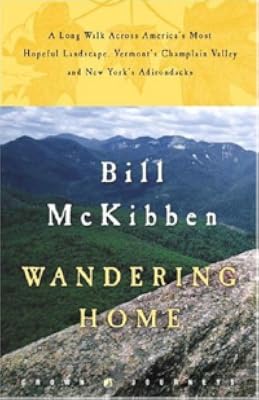
The acclaimed author ofThe End of Naturetakes a three-week walk from his current home in Vermont to his former home in the Adirondacks and reflects on the deep hope he finds in the two landscapes. Bill McKibben begins his journey atop Vermont’s Mt. Abraham, with a stunning view to the west that introduces us to the broad Champlain Valley of Vermont, the expanse of Lake Champlain, and behind it the towering wall of the Adirondacks. “In my experience,” McKibben tells us, “the world show more contains no finer blend of soil and rock and water and forest than that found in this scene laid out before me—a few just as fine, perhaps, but none finer. And no place where the essential human skills—cooperation, husbandry, restraint—offer more possibility for competent and graceful inhabitation, for working out the answers that the planet is posing in this age of ecological pinch and social fray.” The region he traverses offers a fine contrast between diverse forms of human habitation and pure wilderness. On the Vermont side, he visits with old friends who are trying to sustain traditional ways of living on the land and to invent new ones, from wineries to biodiesel. After crossing the lake in a rowboat, he backpacks south for ten days through the vast Adirondack woods. As he walks, he contemplates the questions that he first began to raise in his groundbreaking meditation on climate change,The End of Nature: What constitutes the natural? How much human intervention can a place stand before it loses its essence? What does it mean for a place to be truly wild? Wandering Homeis a wise and hopeful book that enables us to better understand these questions and our place in the natural world. It also represents some of the best nature writing McKibben has ever done. show lessTags
Recommendations
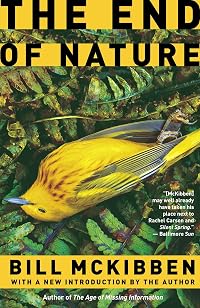
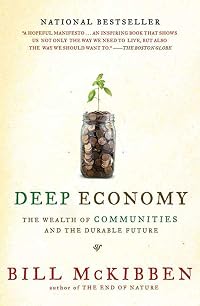









Member Recommendations

Member Reviews
I had this book reserved prior to my trip to Vermont last month, but I ended up receiving it after I returned. As it turned out, that was actually a good thing.
We were only in Vermont for a few days so it wasn't like I got the "full experience" of what living there is like, but we spent a lot of time driving around and visiting local places so it was a nice introduction. It turned out that this brief intro was helpful when I started reading this book because while I didn't visit most of the places mentioned, I still was able to picture them, as well as have a feeling for Vermont life while reading.
So far, including this one, I've read three Crown Journeys books. While they all fall into the general travel genre, I've found that you show more never know what you're going to get in each book. With this, I thought it was going to be a standard "experiences in Vermont" type book, focused on hiking in particular. But I got much, much more than that.
While it is about the author hiking through Vermont and into the Adirondacks in New York, the book is more a philosophical reflection of our place within nature, and particularly the wilderness. And the author calls it "wandering," not hiking, which I felt was accurate in terms of his actual journey and the thoughts expressed throughout his trip.
Bill McKibben is the author of The End of Nature (which I have yet to read!), a book exploring environmental issues and their effects, and how we need a fundamental shift in how we view nature and our place within it if we are ever to solve these problems. (I'm basing this on reading the blurb about the book and a couple of reviews.) That originally came out in 1989, and this book seems to tread some of the same issues, but also touches on ways people are trying to make a difference in Vermont.
There is some of the "typical Vermont" that you think of:
- Subarus are to Vermont what bicycles were once to Beijing, so nearly ubiquitous that it's impossible to recognize your neighbor by his vehicle. The supermarket parking lot might as well be a Subaru dealership. (p20)
But while wandering through, McKibben visits and introduces us to farmers, professors, students, birders, other environmentalists - a whole host of characters who have found their homes throughout the region and are working on ways to make it better. Sometimes he talks about the huge and long-term effort it takes to turn an environmental issues into something positive:
- It takes longer to be responsible, in logging as in every other thing on the Earth. (p26)
Overall, McKibben comes off as somewhat curmudgeonly but I usually found it hard to disagree with most of what he says. There are moments of optimism:
- To be around young people, who haven't yet made all the compromises and concessions that life will urge them to make, and to see them finding older people who can help them go a different way, is to be reminded that the world really is constantly fresh, and that therefore despair for its prospects is not required. (p51)
Of course, considering my interests, my favorite sections were when he discusses wildlife conservation. For example, there is a lot of worry around the world about invasive species - animals that make a place within an environment to which they are not native and end up wreaking havoc (see: lionfish in Florida). McKibben explores some of that while hanging out with Warren King, conservation biologist and birder:
- If we're going to talk about wildness, and believe me we are, we have to face the truth that it's a little hard to separate out the natural and the artificial, a little hard to figure out exactly where we're planting our feet. For instance: this afternoon Warren and I are standing on a little bridge above Dead Creek a few miles south of the waterfowl refuge. "You notice how the water is kind of mocha here?" he asks. "One reason is the clay soils - the particles get stirred up all the way along the creek by carp fanning their tails." But carp are an exotic species, introduced from afar. So is the mocha color "right"? (p66)
He goes on to talk about more at-one-time-invasive species, that have made a home in the area, and how some of them are wiping out native species, while at the same time, creating their own niche and becoming helpful to other species in the area. McKibben continues,
- So do you wring your hands over this, rooting for the dogwood and the prickly ash, rooting up the buckthorn? Or do you just decide that nature is whatever it is - that since the world is in constant flux, there's no real damage that can be done to it? (p67)
- These questions of what constitutes the natural, what composes the real, when you draw the baseline, how much change a place can stand before it loses it essence - they are the questions that will grow stronger and louder the farther west we go, into the Adirondack wild (whatever "wild" means). (p69)
I found the discussion of what "wild" really means anymore fascinating. This was somewhat touched upon in Craig Child's The Animal Dialogues, though I think he still distinguishes between "scenic wilderness" that you may find in a park versus true, wild wilderness. McKibben, however, wonders if this "wild" really exists anymore.
- Was our place wild, or natural, anymore? For that matter, was any place? The peculiar physics of global warming mean, in fact, that the North and South Poles will be hardest hit - that is, the places that really are free of any other human history, really are wild if any place is wild, might just as well be in the middle of the eastern megalopolis or the SoCal suburbs. (p99).
However, he goes on to add that "the idea that there is no such thing as pure wilderness has made the relative wild all the more precious." (p100)
- For me, then, one of the reasons for wild places is so other people can fall in love with them — because surely there are others wired like me, for whom this landscape w ill be enough. Enough to reorient their compass in a new direction, too. Most of the time now we live under a kind of spell, a lulling enchantment sung by the sirens of our consumer society, telling us what will make us happy. That enchantment is a half-truth at best — you don't need to look very hard at our culture to see that deep happiness is not its hallmark. But breaking that spell requires something striking. For some, it requires seeing how poor people really live, or understanding the depth of our ecological trouble. Or, maybe better, it requires seeing other possibilities, the kind of possibilities I've been describing on this trip. A world where neighbors provide more for each other, growing food and bottling wine and making music, a world where we could take our pleasure more in the woods than in the mall. A world where hyperindividualism begins to fade in the face of working human and natural communities. (p134)
I'm not sure how wide the appeal for this book might be, but I'd definitely recommend it for environmentalists, conservationists, and others, like me, interested in these kinds of issues. It will certainly give you a lot to think about and absorb. This was not what I expected out of this short book about wandering through Vermont but it was more than worth it! show less
We were only in Vermont for a few days so it wasn't like I got the "full experience" of what living there is like, but we spent a lot of time driving around and visiting local places so it was a nice introduction. It turned out that this brief intro was helpful when I started reading this book because while I didn't visit most of the places mentioned, I still was able to picture them, as well as have a feeling for Vermont life while reading.
So far, including this one, I've read three Crown Journeys books. While they all fall into the general travel genre, I've found that you show more never know what you're going to get in each book. With this, I thought it was going to be a standard "experiences in Vermont" type book, focused on hiking in particular. But I got much, much more than that.
While it is about the author hiking through Vermont and into the Adirondacks in New York, the book is more a philosophical reflection of our place within nature, and particularly the wilderness. And the author calls it "wandering," not hiking, which I felt was accurate in terms of his actual journey and the thoughts expressed throughout his trip.
Bill McKibben is the author of The End of Nature (which I have yet to read!), a book exploring environmental issues and their effects, and how we need a fundamental shift in how we view nature and our place within it if we are ever to solve these problems. (I'm basing this on reading the blurb about the book and a couple of reviews.) That originally came out in 1989, and this book seems to tread some of the same issues, but also touches on ways people are trying to make a difference in Vermont.
There is some of the "typical Vermont" that you think of:
- Subarus are to Vermont what bicycles were once to Beijing, so nearly ubiquitous that it's impossible to recognize your neighbor by his vehicle. The supermarket parking lot might as well be a Subaru dealership. (p20)
But while wandering through, McKibben visits and introduces us to farmers, professors, students, birders, other environmentalists - a whole host of characters who have found their homes throughout the region and are working on ways to make it better. Sometimes he talks about the huge and long-term effort it takes to turn an environmental issues into something positive:
- It takes longer to be responsible, in logging as in every other thing on the Earth. (p26)
Overall, McKibben comes off as somewhat curmudgeonly but I usually found it hard to disagree with most of what he says. There are moments of optimism:
- To be around young people, who haven't yet made all the compromises and concessions that life will urge them to make, and to see them finding older people who can help them go a different way, is to be reminded that the world really is constantly fresh, and that therefore despair for its prospects is not required. (p51)
Of course, considering my interests, my favorite sections were when he discusses wildlife conservation. For example, there is a lot of worry around the world about invasive species - animals that make a place within an environment to which they are not native and end up wreaking havoc (see: lionfish in Florida). McKibben explores some of that while hanging out with Warren King, conservation biologist and birder:
- If we're going to talk about wildness, and believe me we are, we have to face the truth that it's a little hard to separate out the natural and the artificial, a little hard to figure out exactly where we're planting our feet. For instance: this afternoon Warren and I are standing on a little bridge above Dead Creek a few miles south of the waterfowl refuge. "You notice how the water is kind of mocha here?" he asks. "One reason is the clay soils - the particles get stirred up all the way along the creek by carp fanning their tails." But carp are an exotic species, introduced from afar. So is the mocha color "right"? (p66)
He goes on to talk about more at-one-time-invasive species, that have made a home in the area, and how some of them are wiping out native species, while at the same time, creating their own niche and becoming helpful to other species in the area. McKibben continues,
- So do you wring your hands over this, rooting for the dogwood and the prickly ash, rooting up the buckthorn? Or do you just decide that nature is whatever it is - that since the world is in constant flux, there's no real damage that can be done to it? (p67)
- These questions of what constitutes the natural, what composes the real, when you draw the baseline, how much change a place can stand before it loses it essence - they are the questions that will grow stronger and louder the farther west we go, into the Adirondack wild (whatever "wild" means). (p69)
I found the discussion of what "wild" really means anymore fascinating. This was somewhat touched upon in Craig Child's The Animal Dialogues, though I think he still distinguishes between "scenic wilderness" that you may find in a park versus true, wild wilderness. McKibben, however, wonders if this "wild" really exists anymore.
- Was our place wild, or natural, anymore? For that matter, was any place? The peculiar physics of global warming mean, in fact, that the North and South Poles will be hardest hit - that is, the places that really are free of any other human history, really are wild if any place is wild, might just as well be in the middle of the eastern megalopolis or the SoCal suburbs. (p99).
However, he goes on to add that "the idea that there is no such thing as pure wilderness has made the relative wild all the more precious." (p100)
- For me, then, one of the reasons for wild places is so other people can fall in love with them — because surely there are others wired like me, for whom this landscape w ill be enough. Enough to reorient their compass in a new direction, too. Most of the time now we live under a kind of spell, a lulling enchantment sung by the sirens of our consumer society, telling us what will make us happy. That enchantment is a half-truth at best — you don't need to look very hard at our culture to see that deep happiness is not its hallmark. But breaking that spell requires something striking. For some, it requires seeing how poor people really live, or understanding the depth of our ecological trouble. Or, maybe better, it requires seeing other possibilities, the kind of possibilities I've been describing on this trip. A world where neighbors provide more for each other, growing food and bottling wine and making music, a world where we could take our pleasure more in the woods than in the mall. A world where hyperindividualism begins to fade in the face of working human and natural communities. (p134)
I'm not sure how wide the appeal for this book might be, but I'd definitely recommend it for environmentalists, conservationists, and others, like me, interested in these kinds of issues. It will certainly give you a lot to think about and absorb. This was not what I expected out of this short book about wandering through Vermont but it was more than worth it! show less
I found this to be a relaxing, interesting, and slightly light-ish read. The idea is lovely: Bill McKibben hikes from Vermont to his home in the Adirondacks and, along the way, meets with various intelligent articulate people who hike and chat with him for a little while. The book felt like more argument than exploration for sure. Rather than investigating a variety of possible options/opinions for nature-wilderness-human relationship, McKibben definitely knows what he believes, and what he thinks is right and wrong, and he talks with people who support those beliefs (it would have been interesting, for example, had he hiked with some people who disagreed with him). That said, I'm still glad I read this.
Readers who (like me) have spent show more some time in the Adirondacks and Vermont may particularly enjoy Wandering Home. It was exciting, for reasons I don't totally understand, to realize Bill McKibben was walking along some of the same trails I also walked on. show less
Readers who (like me) have spent show more some time in the Adirondacks and Vermont may particularly enjoy Wandering Home. It was exciting, for reasons I don't totally understand, to realize Bill McKibben was walking along some of the same trails I also walked on. show less
I picked up my copy of Wandering Home during a recent trip to Vermont. While there, as I often do, I asked a book store clerk to point me in the direction of a local author or a book set in the area. In this case, I was pointed to Wandering Home and David Mamet's South of the Northeast Kingdom. I'd not read anything by either writer and both books looked perfect for my purpose so I quickly made my purchase excited by my soon-to-be-had literary travels.
Wandering Home was a very good book on the Lake Champlain area of Vermont and New York. The author, Bill McKibben, is an environmentalist author who takes you along for the ride on his hiking journey from his home in the Champlain Valley on the Vermont side to his home in the Adirondacks show more on the NY side. The book was stimulating in its description of the area and his hike but its greater good was its ability to show the "right habitation of a place". McKibben makes the case that extreme naturalists (everything must be wild, humans be damned) are unrealistic. He also makes the case that nature holds precedent - not the other way around. In other words, he leans a good bit more towards the extreme naturalists than the humanist. This was new territory for me.
I thought McKibben made a strong case for his way of life and those that he hikes with along the way. It is no doubt gratifying to live with nature in the way that they do. I love the idea of buying locally produced items, caring for the environment, and such. Oddly enough, the book left me with as many questions as answers. I wonder about McKibben's take on living in the general population. Surely he doesn't expect everyone to live as he does. For example, I doubt there's the space to empty NYC into the surrounding area. Even if it did, do we let the City "go natural"? Living as he does, in the area he does, it makes all the sense in the world to buy locally produced food. But if NYC started buying only local can they possibly remain the small local farmers? Would they not get so large as to begin doing damage to their areas again? More personally, I sensed some distaste for vacation homes in the area belonging to city dwellers. For those like myself who agree with much of what he's said, but are unwilling to dive in to the deep end immediately, should we disavow any place in the woods to experience?
It's unfair to pin the expectation of answers to these questions on this book. It wasn't its intended topic. Nonetheless, these are topics (among others) raised to one extent or the other so it left me with many questions. I suppose I'll have to read McKibben's new book (that I had seen but didn't realize was his) Deep Economy or one of his previous works for answers.
Wandering Home was a treat for hearing more about the area surrounding Lake Champlain, including areas I'd recently visisted like Bristol andMiddlebury. It also opened my mind to an area of social responsibility to which I'd been unaware. I look forward to digging in for more answers from additional resources.
Favorite quotes:
"The battle for the future is precisely between those who are willing to engineer every organism for our convenience, who will countenance the radical change of our climate rather than risk any damage to our cosseted and swaddled Economy, and those who are willing to say there is something other than us that counts. Wilderness and Gandhian nonviolence were the two most potentially revolutionary ideas of the twentieth century, precisely because they were the two most humble: they imagine a whole different possibility for people."
"There is a surprising glory in our right habitation of a place - it's the orderliness of the college garden, the calm of Mitchell's pasture, the humming industry of Kirk Webster's hives, the sweet draught of Granstorm's wine, the endless slow bounty of David Brynn's forests. It's the glory of the land and the human making sense of each other. (emphasis in book) That conversation has almost died out in our nation, drowned by the roar of thoughtless commerce, pointless ease; that's why it's so fine to see places like the Champlain Valley where you can still hear it going on, indeed hear it growing a little louder." show less
Wandering Home was a very good book on the Lake Champlain area of Vermont and New York. The author, Bill McKibben, is an environmentalist author who takes you along for the ride on his hiking journey from his home in the Champlain Valley on the Vermont side to his home in the Adirondacks show more on the NY side. The book was stimulating in its description of the area and his hike but its greater good was its ability to show the "right habitation of a place". McKibben makes the case that extreme naturalists (everything must be wild, humans be damned) are unrealistic. He also makes the case that nature holds precedent - not the other way around. In other words, he leans a good bit more towards the extreme naturalists than the humanist. This was new territory for me.
I thought McKibben made a strong case for his way of life and those that he hikes with along the way. It is no doubt gratifying to live with nature in the way that they do. I love the idea of buying locally produced items, caring for the environment, and such. Oddly enough, the book left me with as many questions as answers. I wonder about McKibben's take on living in the general population. Surely he doesn't expect everyone to live as he does. For example, I doubt there's the space to empty NYC into the surrounding area. Even if it did, do we let the City "go natural"? Living as he does, in the area he does, it makes all the sense in the world to buy locally produced food. But if NYC started buying only local can they possibly remain the small local farmers? Would they not get so large as to begin doing damage to their areas again? More personally, I sensed some distaste for vacation homes in the area belonging to city dwellers. For those like myself who agree with much of what he's said, but are unwilling to dive in to the deep end immediately, should we disavow any place in the woods to experience?
It's unfair to pin the expectation of answers to these questions on this book. It wasn't its intended topic. Nonetheless, these are topics (among others) raised to one extent or the other so it left me with many questions. I suppose I'll have to read McKibben's new book (that I had seen but didn't realize was his) Deep Economy or one of his previous works for answers.
Wandering Home was a treat for hearing more about the area surrounding Lake Champlain, including areas I'd recently visisted like Bristol andMiddlebury. It also opened my mind to an area of social responsibility to which I'd been unaware. I look forward to digging in for more answers from additional resources.
Favorite quotes:
"The battle for the future is precisely between those who are willing to engineer every organism for our convenience, who will countenance the radical change of our climate rather than risk any damage to our cosseted and swaddled Economy, and those who are willing to say there is something other than us that counts. Wilderness and Gandhian nonviolence were the two most potentially revolutionary ideas of the twentieth century, precisely because they were the two most humble: they imagine a whole different possibility for people."
"There is a surprising glory in our right habitation of a place - it's the orderliness of the college garden, the calm of Mitchell's pasture, the humming industry of Kirk Webster's hives, the sweet draught of Granstorm's wine, the endless slow bounty of David Brynn's forests. It's the glory of the land and the human making sense of each other. (emphasis in book) That conversation has almost died out in our nation, drowned by the roar of thoughtless commerce, pointless ease; that's why it's so fine to see places like the Champlain Valley where you can still hear it going on, indeed hear it growing a little louder." show less
An ok hiking memoir, with references to sustainability and environmental challenges. The author's rambling style first reminded me of William Burroughs, rather than John Burroughs, but I soon fell into stride.
The weakness in this book, for me, is that it could have been written in the absence of the 'long walk' referred in the title. Too much of the content deals with issues that the author could have mused about without this walk and not enough was about the actual events of the long walk.
Although this book is written as a hike, the hike is just a setting used to go over deep thoughts, born of long experience, reading, and classes on complex but known topics about cooperation, global changes, and difficulties were are beginning to face. Much is negative but there are still many upbeat moments that give the author a sense that our human race could pull through and come out with a better world to live in, if we heed advice from those who have studied the problems we now face.
Disappointing. Too much environmentalism-related talk (what else would you expect from McKibben!), not enough about the surroundings he was walking through. I've been through this area myself, and I just couldn't picture it from his descriptions.
Members
- Recently Added By
Author Information

50+ Works 6,659 Members
Bill McKibben grew up in Lexington, Massachusetts. He was president of the Harvard Crimson newspaper in college. Immediately after college he joined the New Yorker magazine as a staff writer, and wrote much of the "Talk of the Town" column from 1982 to early 1987. After quitting this job, he soon moved to the Adirondack Mountains of upstate New show more York. His first book, The End of Nature, was published in 1989 by Random House after being serialized in the New Yorker. It is regarded as the first book for a general audience about climate change, and has been printed in more than 20 languages. Several editions have come out in the United States, including an updated version published in 2006. His next book, The Age of Missing Information, was published in 1992. It is an account of an experiment: McKibben collected everything that came across the 100 channels of cable tv on the Fairfax, Virginia system (at the time among the nation's largest) for a single day. He spent a year watching the 2,400 hours of videotape, and then compared it to a day spent on the mountaintop near his home. This book has been widely used in colleges and high schools, and was reissued in 2006. McKibben's latest book is entitled, Eaarth: Making a Life on a Tough New Planet. Bill currently resides with his wife, writer Sue Halpern, and his daughter, Sophie in Ripton, Vermont. He is a scholar in residence at Middlebury College. 030 (Bowker Author Biography) show less
Series

Common Knowledge
- Canonical title
- Wandering Home: A Long Walk Across America's Most Hopeful Landscape, Vermont's Champlain Valley and New York's Adirondack
- Important places
- Adirondack Mountains, New York, USA; Vermont, USA; New England, USA; USA; New York, USA
- Quotations
- People say, "I'm too old, I can't get where I used to." "To me", says Steve Ovitt, "you get a certain amount of time and then you get your memories. And if you're driving into some place on your ATV, you're messing it up for ... (show all)the people who are making their memories now."
Classifications
- Genres
- Travel, Nonfiction, Science & Nature, General Nonfiction, Sports and Leisure, Biography & Memoir
- DDC/MDS
- 917.475 — History & geography Geography & travel Geography of and travel in North America Northeastern U.S. New York State Northern counties of New York; Adirondack Mountains
- LCC
- F127 .A2 .M357 — Local History of the United States, Canada and Latin America United States local history New York
- BISAC
Statistics
- Members
- 210
- Popularity
- 155,205
- Reviews
- 9
- Rating
- (3.67)
- Languages
- English
- Media
- Paper, Audiobook, Ebook
- ISBNs
- 8
- ASINs
- 2