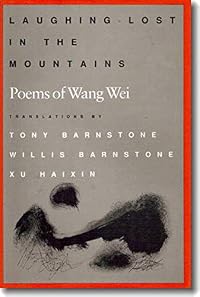
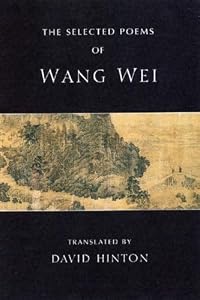
Laughing Lost in the Mountains: Poems of Wang Wei
by Wang Wei
On This Page
Description
The largest selection from the work of Wang Wei (circa 699-761), one of the finest poets in China's long literary history, is offered here in accessible and definitive translations. Wang Wei is among the three most important Chinese poets (with Li Po and Tu Fu) and wrote during the Tang Dynasty, the pinnacle of Chinese literary achievement. Though widely known to Western readers, his work has never before been presented in such a comprehensive volume in English. The 171. Poems here may be show more read with pleasure by the general reader and scholar alike, for the distinguished translators succeed in making the pieces work poetically in modern English while still retaining their ecstasy of stillness and quiet lucidity. A critical introduction provides helpful background and compares Wang Wei to mystical poets in other cultures; extensive endnotes permit deeper appreciation of the works. Wang Wei was a talented musician, painter, and poet who. Served in various official posts throughout his life, at times suffering banishment and even imprisonment as he came in or out of favor. During frequent retreats to his country estate on the Wang River, he sought the "reality of disengagement and the study of nonbeing and illumination," write the Barnstones. A devout Buddhist, he wrote "poems of eremitic seclusion" in which the empty mountain, rain, clouds, and other aspects of nature form a literary landscape painting. Rich with meaning. The poet is "invisibly present and intensely personal" in poems on grief, friendship, loneliness, reverie, exile, and aging. Without being theological, he evokes key notions of Buddhism and Taoism in these exquisitely rendered translations that shimmer with beauty and quietude. show lessTags
Recommendations













Member Reviews
It can be very difficult to translate Chinese poetry into languages such as English, because in Chinese, the script itself lends to poeticity. However, Tony Barnstone is the finest translator I've ever read, and he does so here with a sensitivity as great as that of the great poet Wang Wei.
Wang Wei, a poet somehow of the Springtime of
things... dreaming of beloved mountains and
the song of fishermen heard over the waters
and a Taoist temple maybe in the morning mist...
things... dreaming of beloved mountains and
the song of fishermen heard over the waters
and a Taoist temple maybe in the morning mist...
Want Wei is my favorite poet. A voice of joy and hope in hard times.
Ratings
Members
- Recently Added By
Author Information

29+ Works 1,300 Members
Wang Wei is an exceptionally visual poet, and in reading his descriptions of the play of light over forest and moss, or the reflection of bamboos in a meandering stream, we can easily accept that in his lifetime he was known as much for his paintings as for his verse. In fact, there is some evidence to suggest that he was the first to paint show more landscapes on long horizontal scrolls, an innovation that brought much greater scope and complexity to Chinese painting. Originally written to accompany such a scroll of unfolding landscapes along the river is a series of poems, the "Wang River Sequence," in which Wang Wei writes of scenes near his country estate in Lan-t'ien (a day's journey in his time from the capital in Ch'ang-an). Unfortunately, though the poems survive, the paintings do not. Wang Wei had the best pedigree of all of the greatest T'ang poets. His father hailed from the T'ai-yuan (Shensi) Wang clan, one of the most powerful in the capital region, and his mother was a Ts'ui, an equally old and prominent family of accomplished literati. Therefore, it is not surprising that his talents were noticed early and that he passed the highest examinations when he was only 23. His career, however, was not outstanding. He served on and off in a number of modest posts, interspersed with periods of retirement at his beloved estate. What distinguishes Wang is that this failure to rise to high position was probably largely his own choice. While he did not shun the court and politics for the life of a total recluse, he also did not strive. He was a devout Buddhist and seems to have had as strong a pull toward passive contemplation as toward active involvement. It is his Buddhist inclinations which inspire Wang Wei's poetry; he loves natural imagery as a focus of contemplation, but it is a means for him of reaching integration and harmony with the universe and not merely an end in itself. (Bowker Author Biography) show less
All Editions
Some Editions
Common Knowledge
- People/Characters
- Wang Wei
Classifications
- Genres
- Poetry, Fiction and Literature
- DDC/MDS
- 895.1 — Literature & rhetoric Asian Literature Literatures of East and Southeast Asia Chinese
- LCC
- PL2676 .A226 — Language and Literature Languages and literatures of Eastern Asia, Africa, Oceania Languages of Eastern Asia, Africa, Oceania Chinese language and literature Chinese literature Individual authors and works
- BISAC
Statistics
- Members
- 64
- Popularity
- 484,037
- Reviews
- 3
- Rating
- (4.70)
- Languages
- English
- Media
- Paper, Ebook
- ISBNs
- 5
- ASINs
- 1