On This Page
Description
The Torch in My Ear is the account of Canetti's young manhood, of his arrival in Vienna in the early 1920s, of his schooling, and of the beginning of his life as a writer.Tags
Recommendations






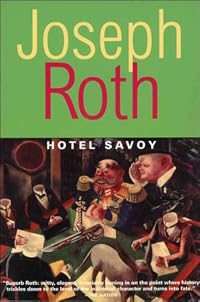
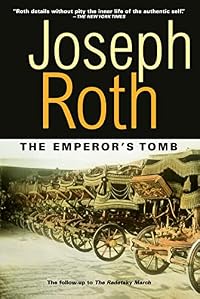
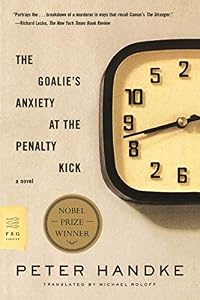
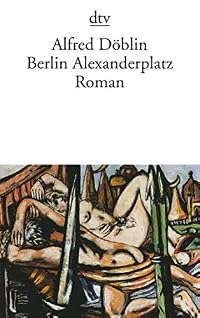














Member Recommendations

Member Reviews
The second part of Canetti’s memoirs opens in 1921 with him as a sixteen-year-old who has just been transplanted, on his mother’s whim, from the school and friends he loved in Zürich to an anonymous boarding-house in Frankfurt. We follow him through his last years in school and his time as a chemistry(!) student in Vienna up to the moment in 1931 when the structure of his great novel Die Blendung/Auto-da-fé became clear in his mind.
As the title implies, the big intellectual figure dominating Canetti’s Vienna years was the satirist Karl Kraus, although it’s clear by the end of the book that Canetti was starting to break with his hegemony. In his personal life, there is a bitter duel being fought over him between his mother and show more his future wife, Veza Taubner-Calderon. But there’s also a more picaresque female figure playing a prominent part in the latter part of the book, the Hungarian poet Ibby Gordon, who introduced Canetti to Brecht, Georg Grosz, Isaac Babel, and a host of other big names in Berlin after she moved there from Vienna in 1927. Canetti spends rather too much energy on persuading us that he wasn’t in love with Ibby, all the while talking about her in a way that people normally only use for talking about those they are in love with…
The great turning point at the centre of the book is the moment when he finally asserts himself as an independent adult and moves out of the apartment he’s been sharing with his mother and brothers — in the most Austrian way possible, the symbolic moment of rupture comes when he goes off with a friend for a summer climbing holiday. But the book has another, more literary and political turning-point too: the Vienna workers’ rising of 15 July 1927, which culminated in the burning of the Palace of Justice and the shooting of 90 workers by the police. The young Canetti was in the middle of all the action, and it turned into a key scene of Die Blendung as well as being an important part of the inspiration for Masse und Macht.
An engaging and often witty and chatty stream of reminiscence, which also turns from time to time into serious reflection about the way we see the world as we grow up into it, the tension between the family pressure to find a useful career and make money and the individual desire to explore deep ideas and find artistic expression. There’s oddly little in the way of direct reaction to the political and economic events of the time, except for things he experienced at first hand — perhaps Canetti felt that a memoir should keep the focus on individual development, or perhaps he just thought that his understanding of wider politics at the time was simply too naive to be worth discussing? show less
As the title implies, the big intellectual figure dominating Canetti’s Vienna years was the satirist Karl Kraus, although it’s clear by the end of the book that Canetti was starting to break with his hegemony. In his personal life, there is a bitter duel being fought over him between his mother and show more his future wife, Veza Taubner-Calderon. But there’s also a more picaresque female figure playing a prominent part in the latter part of the book, the Hungarian poet Ibby Gordon, who introduced Canetti to Brecht, Georg Grosz, Isaac Babel, and a host of other big names in Berlin after she moved there from Vienna in 1927. Canetti spends rather too much energy on persuading us that he wasn’t in love with Ibby, all the while talking about her in a way that people normally only use for talking about those they are in love with…
The great turning point at the centre of the book is the moment when he finally asserts himself as an independent adult and moves out of the apartment he’s been sharing with his mother and brothers — in the most Austrian way possible, the symbolic moment of rupture comes when he goes off with a friend for a summer climbing holiday. But the book has another, more literary and political turning-point too: the Vienna workers’ rising of 15 July 1927, which culminated in the burning of the Palace of Justice and the shooting of 90 workers by the police. The young Canetti was in the middle of all the action, and it turned into a key scene of Die Blendung as well as being an important part of the inspiration for Masse und Macht.
An engaging and often witty and chatty stream of reminiscence, which also turns from time to time into serious reflection about the way we see the world as we grow up into it, the tension between the family pressure to find a useful career and make money and the individual desire to explore deep ideas and find artistic expression. There’s oddly little in the way of direct reaction to the political and economic events of the time, except for things he experienced at first hand — perhaps Canetti felt that a memoir should keep the focus on individual development, or perhaps he just thought that his understanding of wider politics at the time was simply too naive to be worth discussing? show less
Another great segment in the trilogy. It was rewarding to read as Canetti matured. The next, and last book, should be a knockout as he becomes the writer he has worked so hard to be. This was a man who read everything he possibly could and his self-study was remarkable in its expansive ideal.
Massapsycholoog en literator Elias Canetti (1905-1994), winnaar van de Nobelprijs voor literatuur 1982, wierf met het eerste deel van zijn autobiografie, vertaald als "De behouden tong" een uitbreiding van zijn lezerspubliek onder hen voor wie zijn wetenschappelijk werk te moeilijk en zijn roman en novellen te eigenzinnig bleken. Dit tweede deel, al even fraai, zorgvuldig en integer verwoord (en navenant vertaald) heeft, meer dan het eerste, juist de kenners van het overige werk veel te bieden, zoals de geschiedschrijving van zijn massapsychologische preoccupaties zoals die zich in de periode tot zijn 30e jaar definitief vormden, al is het zeker ook los daarvan te waarderen als intelligente en adembenemend rijke sociaal-culturele show more caleidoscoop, met onvergetelijke karakterologische case-stories (Kraus, Brecht, Babel, de verlamde filosofiestudent Marek). show less
1
Ratings
Members
- Recently Added By
Lists

Best Autobiographies and Memoirs
370 works; 67 members

German Literature
518 works; 55 members

Schwob Nederland
207 works; 2 members
Author Information

98+ Works 10,435 Members
Elias Canetti was born in Rustschuk, Bulgaria on July 25, 1905 into a Sephardic Jewish family. He was educated in Germany, Switzerland, and Austria and received a Ph.D. in chemistry from the University of Vienna in 1929. He wrote novels and plays in German. His works explored the emotions of crowds, the psychopathology of power, and the position show more of the individual at odds with the society around him. His novels include Auto-da- Fé and Masse und Macht. His plays include Hochzeit, Komödie der Eitelkeit, and Die Befristeten. He also published excerpts from his notebooks, a book of character sketches, and an autobiography. He received numerous awards including the Vienna Prize in 1966, the Critics Prize (Germany) in 1967, the Great Austrian State Prize in 1967, the Buchner Prize in 1972, the Sachs Prize in 1975, the Hebbel Prize in 1980, and the Nobel Prize for Literature in 1981. He died on August 14, 1994. (Bowker Author Biography) show less
Some Editions
Awards and Honors
Distinctions
Notable Lists
Series

Belongs to Publisher Series
Work Relationships
Common Knowledge
- Canonical title*
- De fakkel in het oor
- Original title
- Die Fackel im Ohr
- Original publication date
- 1980
- People/Characters*
- Elias Canetti
- Important places*
- Oostenrijk; Roese, Bulgarije; Bulgarije
- Original language*
- Duits
*Some information comes from Common Knowledge in other languages. Click "Edit" for more information.
Classifications
Statistics
- Members
- 654
- Popularity
- 43,978
- Reviews
- 3
- Rating
- (3.87)
- Languages
- 16 — Catalan, Czech, Danish, Dutch, English, Finnish, French, German, Hebrew, Italian, Japanese, Norwegian (Bokmål), Polish, Portuguese, Spanish, Swedish
- Media
- Paper, Ebook
- ISBNs
- 44
- ASINs
- 21