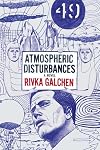
Atmospheric Disturbances: A Novel
by Rivka Galchen
On This Page
Description
When Dr. Leo Liebenstein's wife disappears, she leaves behind a single, confounding clue: a woman who looks, talks, and behaves exactly like her-or almost exactly like her-and even audaciously claims to be her. While everyone else is fooled by this imposter, Leo knows better than to trust his senses in matters of the heart. Certain that the original Rema is alive and in hiding, Leo embarks on a quixotic journey to reclaim his lost love. With the help of his psychiatric patient Harvey-who show more believes himself to be a secret agent who can control the weather-Leo attempts to unravel the mystery of the spousal switch. His investigation leads him to the enigmatic guidance of the meteorologist Dr. Tzvi Gal-Chen, the secret workings of the Royal Academy of Meteorology in their cosmic conflict with the 49 Quantum Fathers, and the unwelcome conviction that somehow he-or maybe his wife, or maybe even Harvey-lies at the center of all these unfathomables. From the streets of New York to the southernmost reaches of Patagonia, Leo's erratic quest becomes a test of how far he is willing to take his struggle against the seemingly uncontestable truth he knows in his heart to be false. Atmospheric Disturbances is at once a moving love story, a dark comedy, a psychological thriller, and a deeply disturbing portrait of a fracturing mind. With tremendous compassion and dazzling literary sophistication, Rivka Galchen investigates the moment of crisis when you suddenly realize that the reality you insist upon is no longer one you can accept, and the person you love has become merely the person you live with. This highly inventive debut explores the mysterious nature of human relationships, and how we spend our lives trying to weather the storms of our own making. show lessTags
Recommendations























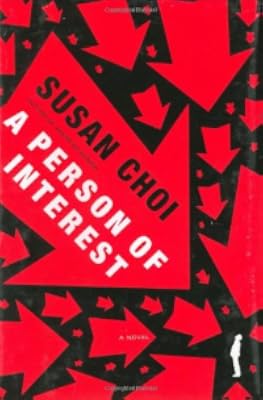



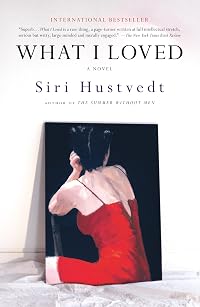


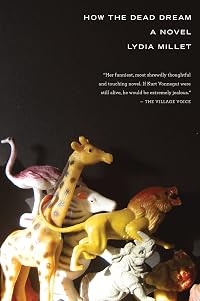

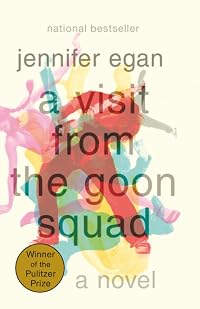
Member Recommendations
K-PAX by Gene Brewer
sanddancer Atmospheric Disturbances is a more literary work, but both involve plots where it is certain whether someone is mentally ill or telling the truth even though it is odd.

Member Reviews
This was a random selection from the library shelves & I hit a winner. The cool, clinical tone was perfect for the story of mental derailment from reality. The story brought up some provoking thoughts about reality (what it is vs. what we perceive), how we rationalize things, how we engage or detach from the world around us, how we cope. I'd recommend it to some, but I realize it is not a book that will appeal to others.
A post-modern psychological novel, not quite exciting enough to call a thriller, but a worthy read nonetheless. One day a clinical psychiatrist wakes up to discover his wife has been replaced with a doppelganger (or has she?) and he ends up on a hemisphere-crossing journey in the hopes of figuring out a mystery.
Thematically built around the loss of parents (Rema, the doppelganger wife) lost her father in her youth, according to her he walked out on her and her mother, whilst her mother claims he is a Desaparecido, the book never stating which is true. Leo, the husband and psychiatrist, lost a father at some point in his youth (or maybe never had one, I do not remember exactly) and the book makes it clear his analytic mind has made an show more effort not to confront these emotions. And hanging over the entire book is the Author's own father, Tzvi Gal-chen, who is a character in the story, and also a loved one that Rivka lost in her childhood. (The book includes several, presumably real, pictures of their family)
The journey taken on the book begins in New York City, before traveling to Buenos Aires and later the extreme southern end of Argentina, as it builds towards not necessarily a climax, but certainly an ending. But most of the journey is spent in the mind of Leo, a scientific man to the extreme, who never doubts his own sanity, even as he begins to believe in an elaborate conspiracy of weather systems and doppelgangers, one that he may have invented entirely on his own. Or maybe not. show less
Thematically built around the loss of parents (Rema, the doppelganger wife) lost her father in her youth, according to her he walked out on her and her mother, whilst her mother claims he is a Desaparecido, the book never stating which is true. Leo, the husband and psychiatrist, lost a father at some point in his youth (or maybe never had one, I do not remember exactly) and the book makes it clear his analytic mind has made an show more effort not to confront these emotions. And hanging over the entire book is the Author's own father, Tzvi Gal-chen, who is a character in the story, and also a loved one that Rivka lost in her childhood. (The book includes several, presumably real, pictures of their family)
The journey taken on the book begins in New York City, before traveling to Buenos Aires and later the extreme southern end of Argentina, as it builds towards not necessarily a climax, but certainly an ending. But most of the journey is spent in the mind of Leo, a scientific man to the extreme, who never doubts his own sanity, even as he begins to believe in an elaborate conspiracy of weather systems and doppelgangers, one that he may have invented entirely on his own. Or maybe not. show less
Well that was quite odd. The basic premise of the book was well-done: a psychiatrist's descent into psychosis. Here Dr. Galchen's medical background really shines from the accuracy with which she portrays her protagonist's failed reality checking and lack of insight, to the subtle historic clues that suggest a schizophreniform personality (excessive paranoia, overvalued ideas), Galchen parades nearly every possible positive psychotic symptom. Leo experiences thought insertion, overvalued ideas, pressure speech with train of thought patterns, hallucinosis, and delusions of every flavor. It's all done organically, realistically and from a first person perspective. While unique and originally fun as a concept, once Leo finishes his descent show more into psychosis, the plot doesn't really go anywhere, and I found the last 25% or so of the book dragged.
What really struck me though, almost immediately, was the inclusion of Tzvi Gal-Chen as a character. "How odd, Gal-Chen, that sounds familiar," I thought, then remembered that the book was by Rivka Galchen. I then checked the acknowledgements, yup, she includes Tzvi in there. A quick google search revealed that Tzvi Gal-Chen is Rivka's (deceased) father (But no information about the surname spelling discrepancy). The pictures of him in the book, citations of his research and figures from his papers are all real, as is the description of him and his computer programmer wife living in Oklahoma with their two kids (Google has no opinion as to whether Rivka and her brother were indeed spoiled, bad at soccer, and good at math). In an interview, Rivka mentioned that readers rarely notice but for her the inclusion of her father is the largest part of the book. Well, I noticed and for me, it loomed large, as you can tell by the amount of googling it provoked. It's just such a strange decision: why include one's dead father in an otherwise non-autobiographical novel, as the hallucination of the psychotic protagonist? To make the reader feel like they're going crazy and overvaluing ideas? To invoke a Freudian feel wherein the reader sits around asking "but what does she mean by her dead father?" It's so very weird and it completely broke my ability to otherwise concentrate on the novel at all.
What I did appreciate even more knowing that Rivka grew up with a meteorologist for a father was her obvious love of language. It was clear that she had been rolling around words and turns of phrase in her head for a long time, taking them in and out of context, so when she got the chance to explore every possible meaning of every phrase, she really made the technical language sing. show less
What really struck me though, almost immediately, was the inclusion of Tzvi Gal-Chen as a character. "How odd, Gal-Chen, that sounds familiar," I thought, then remembered that the book was by Rivka Galchen. I then checked the acknowledgements, yup, she includes Tzvi in there. A quick google search revealed that Tzvi Gal-Chen is Rivka's (deceased) father (But no information about the surname spelling discrepancy). The pictures of him in the book, citations of his research and figures from his papers are all real, as is the description of him and his computer programmer wife living in Oklahoma with their two kids (Google has no opinion as to whether Rivka and her brother were indeed spoiled, bad at soccer, and good at math). In an interview, Rivka mentioned that readers rarely notice but for her the inclusion of her father is the largest part of the book. Well, I noticed and for me, it loomed large, as you can tell by the amount of googling it provoked. It's just such a strange decision: why include one's dead father in an otherwise non-autobiographical novel, as the hallucination of the psychotic protagonist? To make the reader feel like they're going crazy and overvaluing ideas? To invoke a Freudian feel wherein the reader sits around asking "but what does she mean by her dead father?" It's so very weird and it completely broke my ability to otherwise concentrate on the novel at all.
What I did appreciate even more knowing that Rivka grew up with a meteorologist for a father was her obvious love of language. It was clear that she had been rolling around words and turns of phrase in her head for a long time, taking them in and out of context, so when she got the chance to explore every possible meaning of every phrase, she really made the technical language sing. show less
While browsing the "New Books" shelf at my library, I picked up this book, which begins: "Last December a woman entered my apartment who looked exactly like my wife." Intrigued, I stood and read the first couple of pages and thought, "I must read this". Sadly, I have to report that the book does not live up to its promise.
When the protagonist, New York psychiatrist Leo Liebenstein, arrives at this conclusion, he is also dealing with a patient, Harvey, who believes that he is receiving secret orders from the Royal Academy of Meteorology in controlling the world's weather. Leo's "false" wife, Rema, whom he refers to as "the simulacrum", suggests that he pretend to be an agent of the RAM as well, transmitting directions from a show more meteorologist named Tsvi Gal-Chen. The relationship between this therapeutic fraud and Leo's search for the real Rema are the crux of Galchen's book.
Now, am I right? Those plots, and their intertwining, ought to make for good reading. But Galchen's prose is so dense and convoluted that it was hard to get through the book, much less enjoy it. I don't mind that it's never clear whether Liebenstein is himself suffering from mental illness (some reviews firmly state that he is suffering from Capgras Syndrome, though Galchen is never definite) or whether Rema really has been replaced by a fake. Nor do I mind that it's unclear whether the RAM really is trying to stop a cabal of errant meteorologists. What I do mind is that Galchen never makes me care about the outcome or her characters, so at the end (which is very unsatisfying, by the way) I just felt as though my struggle to finish had been a waste of time.
The fact that Galchen uses her own surname, names a person called "Tsvi" in the acknowledgements, and, as one discovers with a bit of research, has used parts of her father's work and history in her book, could have given the novel extra depth, but in Galchen's hands seems merely self-indulgent. show less
When the protagonist, New York psychiatrist Leo Liebenstein, arrives at this conclusion, he is also dealing with a patient, Harvey, who believes that he is receiving secret orders from the Royal Academy of Meteorology in controlling the world's weather. Leo's "false" wife, Rema, whom he refers to as "the simulacrum", suggests that he pretend to be an agent of the RAM as well, transmitting directions from a show more meteorologist named Tsvi Gal-Chen. The relationship between this therapeutic fraud and Leo's search for the real Rema are the crux of Galchen's book.
Now, am I right? Those plots, and their intertwining, ought to make for good reading. But Galchen's prose is so dense and convoluted that it was hard to get through the book, much less enjoy it. I don't mind that it's never clear whether Liebenstein is himself suffering from mental illness (some reviews firmly state that he is suffering from Capgras Syndrome, though Galchen is never definite) or whether Rema really has been replaced by a fake. Nor do I mind that it's unclear whether the RAM really is trying to stop a cabal of errant meteorologists. What I do mind is that Galchen never makes me care about the outcome or her characters, so at the end (which is very unsatisfying, by the way) I just felt as though my struggle to finish had been a waste of time.
The fact that Galchen uses her own surname, names a person called "Tsvi" in the acknowledgements, and, as one discovers with a bit of research, has used parts of her father's work and history in her book, could have given the novel extra depth, but in Galchen's hands seems merely self-indulgent. show less
The strange tale of Dr. Leo Liebenstein, his missing wife, Rema, and his psychiatric patient Harvey. Leo's wife returns one day with a dog and Leo senses right away that she is a forgery, a simulacrum. With the help of Harvey, who believes himself to be a secret agent capable of contoling the elements, Leo journeys throughout the world in search of his real true love. But is she really missing or is Leo simply going mad? Can overanalysis actually drive you nuts? Read the following excerpt and you decide:
"I saw the blond woman's face in the mirror, and if she appeared to be looking at the same point in the mirror that I was looking at, then actually she was looking at my face in the mirror while I was looking at her face in the mirror, show more that our faces could be in the same places (in the mirror) depending on just where one was looking from. So she wasn't thinking of, looking at, only herself. Nor was I thinking of just myself. That's just what it seemed like if one didn't account for anticipatable perceptive distortions."
Hmmm....On the other hand. There are little gems sprinkled throughout: "His response was neither random nor spontaneous; it was predetermined by his previous ideas about me; habits of thought are death to truth; I was outside of my habits; and he -- he was wrong." I kinda like that one.
Reminiscent of Kafka's explorations, but not nearly as deftly crafted. A bizarre little book. Strangely memorable. show less
"I saw the blond woman's face in the mirror, and if she appeared to be looking at the same point in the mirror that I was looking at, then actually she was looking at my face in the mirror while I was looking at her face in the mirror, show more that our faces could be in the same places (in the mirror) depending on just where one was looking from. So she wasn't thinking of, looking at, only herself. Nor was I thinking of just myself. That's just what it seemed like if one didn't account for anticipatable perceptive distortions."
Hmmm....On the other hand. There are little gems sprinkled throughout: "His response was neither random nor spontaneous; it was predetermined by his previous ideas about me; habits of thought are death to truth; I was outside of my habits; and he -- he was wrong." I kinda like that one.
Reminiscent of Kafka's explorations, but not nearly as deftly crafted. A bizarre little book. Strangely memorable. show less
I picked up "Atmospheric Disturbances" after reading a piece that Rivka Galchen wrote for Harper's. She argued that Daedalus, who built Icarus's wings and successfully escaped from the maze, might be a better metaphor for science's work than his son, Icarus, who is remembered mostly for his hubris and tragic demise. I thought that this was a pretty striking idea, so I'm sorry to say that I felt a bit let down by Galchen's debut novel. Like her essay, it's inspired by science – Galchen introduces her meteorologist father as a character and has a good ear for the accidental poetry of scientific terminology. Her writing's her own, too; it's quirky and occasionally very funny. Still, this novel proves what anyone who's already sat through show more "The Butcher Boy" or read Bessie Head's "A Question of Power" already knows – novels told from the perspective of the disturbed tend to be pretty disturbing, and, in the end, sort of tedious. The metaphor that Galchen's unhinged narrator uses to describe his unraveling relationship to reality is, appropriately enough, inspired by science and, again, very clever, but I'm not sure it makes her novel any easier to read. I also might have been put off by the fact that "Atmospheric Disturbances" treads the same territory as Richard Powers's "The Echo Maker," another novel that I found interesting but also sort of dry. While I admire both Galchen and Powers's willingness to write novels that engage with current scientific theory, it's possible that I'm just too much of a Modernist to enjoy them. I still think that there's a lot left to say about the things that don't show up too easily on a CAT scan: memory, consciousness, and, as Faulkner put it, "the conflicts of the human heart." show less
I found this book somewhat slow going at first, but finished it quite rapidly when I picked it up again after a longish hiatus. Fair warning: If you prefer straightforward narratives (not to mention a narrator whose grasp of reality is not in question), the off-kilter beauty and complexity of Rivka Galchen's first novel will not appeal to you. What would you miss? Some very lovely writing and some darkly humorous insights into the hall of mirrors that presents itself to us when we take a closer look at our relationships with people around us (even, perhaps especially, those relationships we presume to be our most intimate).
Members
- Recently Added By
Published Reviews
ThingScore 100
It’s unusual — in fact (why be coy?), it’s extremely rare — to come across a first novel by a woman writer that concerns itself with such quirky, philosophical, didactic explorations; a novel in which the heart and the brain vie for the role of protagonist, and the brain wins.
added by zhejw
Meteorology, in Galchen's hands, becomes a fertile field, yielding insights into emotion and, in particular, the anxiety caused by knowing that we can never truly fathom the person we love.
added by 1morechapter
Lists

Best Contemporary Literary Fiction (Around the Last 30 Years)
388 works; 124 members

2008-2012 Notable Books for Adults
127 works; 10 members

BingoDOG - Scientists in Fiction
111 works; 17 members
Author Information

14+ Works 2,229 Members
Some Editions
Awards and Honors
Awards
Distinctions
Notable Lists
Common Knowledge
- Original title
- Atmospheric Disturbances
- Original publication date
- 2008
- People/Characters*
- Leo Liebenstein; Rema; Magda; Harvey; Tzvi Gal-Chen; Lola (show all 7); Anatole
- Important places*
- New York, New York, États-Unis; Buenos Aires, Argentine
- Epigraph*
- Depuis le premier modèle de prédiction numérique, la prévision des flux à grande échelle a connu des progrès continus. Mais, à l'échelle humaine (c'est-à-dire la mésosphère), on n'a constaté pratiquement aucun pr... (show all)ogrès. On a évoqué plusieurs raisons [...], mais la plus évidente (à mon sens, du moins) est que nous ne pouvons réduire le temps du lendemain (ou de l'heure qui suit) car nous ne savons pas avec suffisamment de précision le temps qu'il fait à l'instant même.
Tzvi Gal-Chen, « Initialisation de modèles à l'échelle mésosphérique : l'impact possible des données obtenues par télédétection »
Il se peut que l'amitié se nourrisse d'observation et de conversation, mais l'amour naît et se nourrit d'interprétation silencieuse. L'être aimé [...] exprime un monde possible inconnu de nous [...] qu'il faut déchiffrer.
Gilles Deleuze, Proust et les signes - Dedication
- For Aaron
- First words
- Last December a woman entered my apartment who looked exactly like my wife.
- Last words
- (Click to show. Warning: May contain spoilers.)But for all that ignorance, still - that image of Tzvi in my mind, underground, holding that baby, dressed in a way that could make him a foreigner or a hipster or an accident or a transplant from another time- I'll at least know the purpose of the rest of my life.
- Publisher's editor*
- Jacqueline Chambon
- Blurbers
- Vida, Vendela; Julavits, Heidi; O'Neil, Heather
*Some information comes from Common Knowledge in other languages. Click "Edit" for more information.
Classifications
Statistics
- Members
- 945
- Popularity
- 28,097
- Reviews
- 48
- Rating
- (3.18)
- Languages
- 7 — Dutch, English, French, German, Italian, Portuguese, Spanish
- Media
- Paper, Audiobook, Ebook
- ISBNs
- 25
- ASINs
- 6