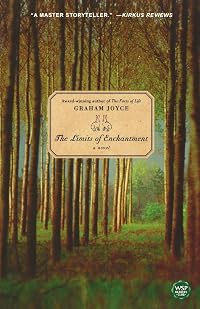
The Limits of Enchantment
by Graham Joyce
On This Page
Description
The story of a young woman in the midlands in 1966. A woman who may be a witch. She and her family live on the margins of society. Nevertheless her family life is stifling and she seeks freedom with more outsiders, a group of beatniks, but fights to find acceptance there also. And all the time she is struggling with her fey powers. Isabel Allende said of Joyce's previous novel, The Facts of Life: 'This is the kind of book I love to read! I have not been so charmed by a novel in a long time'.Tags
Recommendations
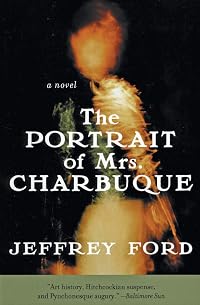
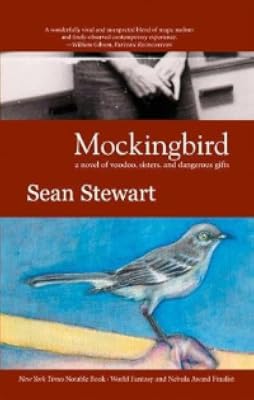
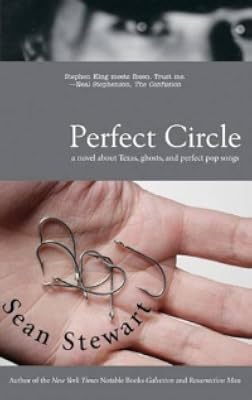
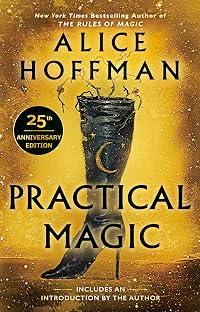
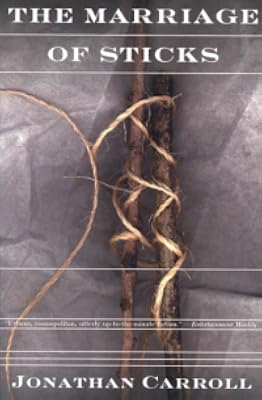
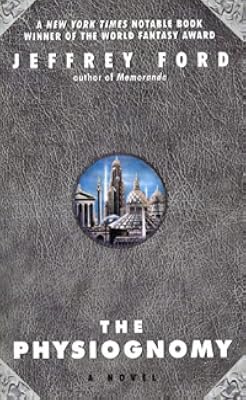
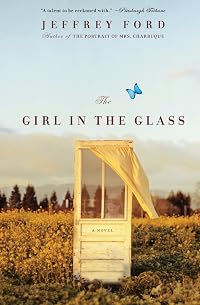
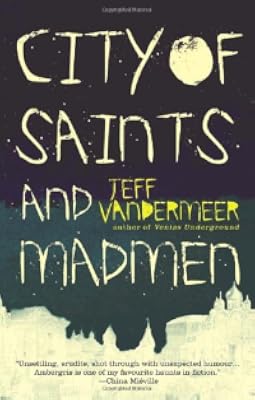




Member Recommendations
Member Reviews
Set in the 1960s in a rural village in England, “The Limits of Enchantment” is the story of Fern, a teenage girl who has learned midwifery and herbal medicine from Mammy, the woman who raised her. When one of Mammy’s cases turns out badly, the village turns against her and she ends up hospitalized after being attacked. Fern, who has been utterly dependent on Mammy, must learn who she is, both as a woman and as a witch.
Fern is naïve and socially awkward and it is a fascinating to read about her stumbling journey into adulthood. The author makes a compelling observation about how the changes in culture are encroaching on “the old ways,” most notably in the clash between modern medicine and the methods Fern has learned from show more Mammy. Midwifery has been brought under legislation, and practioners are required to obtain a license from the government. Fern struggles to accept this, while also clinging to the more mystical lifestyle she learned from Mammy.
I had two problems with this book. First, there is very little plot development. I finished the book with the feeling that I was still waiting for something to happen. Second, I don’t understand why this is classified as fantasy or why it was nominated for the World Fantasy Award. It comes down to a question of whether one believes witchcraft is real or unreal. Witchery as practiced by Fern and Mammy is a way of life embraced by many, including people I know, so I had difficulty accepting this book as fantasy and felt the book did not deliver what was promised.
Despite my disappointment with “The Limits of Enchantment,” I did come away from the book with a sense that the author is talented, so I plan to read some of his other work. show less
Fern is naïve and socially awkward and it is a fascinating to read about her stumbling journey into adulthood. The author makes a compelling observation about how the changes in culture are encroaching on “the old ways,” most notably in the clash between modern medicine and the methods Fern has learned from show more Mammy. Midwifery has been brought under legislation, and practioners are required to obtain a license from the government. Fern struggles to accept this, while also clinging to the more mystical lifestyle she learned from Mammy.
I had two problems with this book. First, there is very little plot development. I finished the book with the feeling that I was still waiting for something to happen. Second, I don’t understand why this is classified as fantasy or why it was nominated for the World Fantasy Award. It comes down to a question of whether one believes witchcraft is real or unreal. Witchery as practiced by Fern and Mammy is a way of life embraced by many, including people I know, so I had difficulty accepting this book as fantasy and felt the book did not deliver what was promised.
Despite my disappointment with “The Limits of Enchantment,” I did come away from the book with a sense that the author is talented, so I plan to read some of his other work. show less
The last Graham Joyce book I read was The Tooth Fairy and I can't believe I waited this long to read another. This is just so damn good. Set in the early sixties, rural England, the daughter of a traditional midwife, herbalist and occasional abortionist has to cope with suddenly coping all be herself, caught between the demands of the old ways and the modern. That makes it sound a bit worthy and dull, frankly, and it isn't. It's magical and funny and scary and it evokes time and place beautifully. Brilliant.
This is a wonderful tale, dark and light in turns, weird in the ways of the old wise women. There is magic here. On every page, Joyce gives us glimpses of country practices that should never have been forgotten. The arrival of “modern medicine” heralded the end of women like Mammy in most places. Yet we see the tenacity of these folk, and those they catered to, and the lengths to which they would go to maintain their practice and safety from those who would harm them. In this story, Mammy was one of “the few,” a term foreshadowed and demonstrated, but never exactly explained. It came clear to me, though, that she was a witch in the old sense, one who whispered love into the baking of a wedding cake, or healing into a poultice. show more She dwelled apart and lived close to the Earth and its cycles, marking the passage of time with seasonal changes rather than a calendar. Wise woman, witch, healer—all terms apply.
Having spent some time among witches, healers, and herbalists, there were details here I recognized. But as the story takes place in an earlier time, and in rural England, I also found practices, not to mention language, unfamiliar to me. Most is understandable given the context, but it did trip me up a time or two. While the story is fictional, the tale it tells is not. The Hare Pie Scramble and Bottle Kicking festivities that play a role in the story are an actual custom in Hallaton, England that dates back over 300 years. The practices of midwifery and herbal magic, too, are taken almost word-for-word from the real world. It’s details like these, as well as Mammy’s and Fern’s unique character portrayals, that give this book so much charm. (Pun definitely intended.)
True, too, are the portrayals of Mammy’s enemies, men who were threatened by Mammy, Fern, and others like them, women who stood their ground against the power of their detractors who were determined to push them out. I despised the males in this story that thought themselves better than Mammy, and who hurt her in an effort to stop her. In Mammy, and then in Fern, we see wonderful portrayals of strong women, as unstoppable in their own ways as any storm.
This is the first book I’ve read by Graham Joyce, but I’m certain it won’t be the last. The Limits of Enchantment is an excellent tale by a peerless storyteller. If you love tales of magic, of the unique ability to see through the veil between this world and the next, add this book to your list. You won’t want to miss it. show less
Having spent some time among witches, healers, and herbalists, there were details here I recognized. But as the story takes place in an earlier time, and in rural England, I also found practices, not to mention language, unfamiliar to me. Most is understandable given the context, but it did trip me up a time or two. While the story is fictional, the tale it tells is not. The Hare Pie Scramble and Bottle Kicking festivities that play a role in the story are an actual custom in Hallaton, England that dates back over 300 years. The practices of midwifery and herbal magic, too, are taken almost word-for-word from the real world. It’s details like these, as well as Mammy’s and Fern’s unique character portrayals, that give this book so much charm. (Pun definitely intended.)
True, too, are the portrayals of Mammy’s enemies, men who were threatened by Mammy, Fern, and others like them, women who stood their ground against the power of their detractors who were determined to push them out. I despised the males in this story that thought themselves better than Mammy, and who hurt her in an effort to stop her. In Mammy, and then in Fern, we see wonderful portrayals of strong women, as unstoppable in their own ways as any storm.
This is the first book I’ve read by Graham Joyce, but I’m certain it won’t be the last. The Limits of Enchantment is an excellent tale by a peerless storyteller. If you love tales of magic, of the unique ability to see through the veil between this world and the next, add this book to your list. You won’t want to miss it. show less
I recently read Joyce's 'The Silent Land' and said, "Why haven't I read any of this author's work before?" I still don't know! I picked this up next - and it's even better than 'The Silent Land.'
Set in the 1960's, in rural England, it deftly draws the strange line of culture clash between old-fashioned ways of life and the incursion of the modern world.
The protagonist is a young woman, apprentice to a traditional midwife. Her learning has been herb-lore and beliefs called superstition, and although she has her loyal customers, business is hurting now that pre-natal care is provided by the National Health Service.
The traditional midwife also provides abortions, though...
And when a young woman dies, tensions in the village come to a show more head...
Things aren't helped by the commune of free-love hippies who've taken over the adjoining farm, and are also regarded with deep suspicion by most of the villages.
What unfolds is a tale that, yes, is on the edge of fantasy, containing magic and the unexplained, but is first and foremost a tale of people, beliefs, and ways of life.
I absolutely loved it. show less
Set in the 1960's, in rural England, it deftly draws the strange line of culture clash between old-fashioned ways of life and the incursion of the modern world.
The protagonist is a young woman, apprentice to a traditional midwife. Her learning has been herb-lore and beliefs called superstition, and although she has her loyal customers, business is hurting now that pre-natal care is provided by the National Health Service.
The traditional midwife also provides abortions, though...
And when a young woman dies, tensions in the village come to a show more head...
Things aren't helped by the commune of free-love hippies who've taken over the adjoining farm, and are also regarded with deep suspicion by most of the villages.
What unfolds is a tale that, yes, is on the edge of fantasy, containing magic and the unexplained, but is first and foremost a tale of people, beliefs, and ways of life.
I absolutely loved it. show less
I came to this book not long after reading the same author's 'The Facts of Life', and at first I thought that there might be some connection between the two stories. In 'The Facts of Life', one of the protagonists, fey Cassie Vine, gave away an unwanted illegitimate girl child in that book's back story, in Coventry in about 1939-40; in this book, the protagonist is Fern Cullen, who is in her twenties in 1966 but who was adopted by Mammy Cullen, is being brought up in the ways of wise women, has no formal record of her birth (and so might be the odd year or so older than we are led to believe), and, perhaps most importantly for this hypothesis, lives in rural Leicestershire, not a million miles from Coventry.
Ultimately, we find that this show more hypothesis has nothing to support it, even though the evidence in the book of Fern's origin is purely circumstantial; but the exploration of that possibility made for an interesting narrative hook.
The novel is about Fern, her relationship with her adoptive mother, Mammy Cullen, and her induction into the ways of folk medicine and its particular application to birth and conception, and sometimes the prevention of those things. But it is 1966, times are changing, and the old ways are under threat from both the march of modernisation on the one hand - the NHS, now nearly 20 years old and establishing itself as the sole arbiter of what is acceptable medicine and what is not, and with radical new technologies (ultrasound scans) on the horizon that will make the old ways seem arbitrary and old-fashioned - and the rearguard actions of the Establishment on the other in trying to perpetuate traditional feudal relationships in the face of alternative lifestyles new and old.
The setting for the book, rural eastern Leicestershire, is well depicted. It is still today a rather hilly and isolated area, and it is easy to imagine old traditions surviving in such an area. Graham Joyce looked deeply into the old ways and reflected many of them in this book. The climax of the book is a traditional football match between the villages of Hallaton and Medbourne (both of which exist); this is not football as most people will know it, but rather a more traditional form of institutionalised warfare between two village teams, fought out over a large tract of land, with little in the way of rules and with an annual toll of injuries. Similar football matches can be found on Shrove Tuesday at places such as Ashbourne in Derbyshire and Atherstone in Warwickshire. In the novel, the villagers use the football match as a pretext for taking their revenge on certain people who had been conspiring against Fern; and for me, this was where the novel, which up to that point had been a fairly static if well-drawn picture of Fern, the characters she meets and the folk rituals she carries out, came to life.
Although the time of the novel is 1966, I know from my own experience that the "Swinging Sixties" took quite some time to penetrate some of the more rural corners of England; and some of the characters and situations seem a little more reminiscent of D.H.Lawrence and the inter-war years than the late 20th century. But that is how it was. And the arrival of a hippy commune in the village does little to change that view, even as the very presence of the commune offers another challenge to to Establishment.
Ultimately, this book didn't engage me as viscerally as 'The Facts of Life', but nonetheless it is a good picture of a particular time and place. show less
Ultimately, we find that this show more hypothesis has nothing to support it, even though the evidence in the book of Fern's origin is purely circumstantial; but the exploration of that possibility made for an interesting narrative hook.
The novel is about Fern, her relationship with her adoptive mother, Mammy Cullen, and her induction into the ways of folk medicine and its particular application to birth and conception, and sometimes the prevention of those things. But it is 1966, times are changing, and the old ways are under threat from both the march of modernisation on the one hand - the NHS, now nearly 20 years old and establishing itself as the sole arbiter of what is acceptable medicine and what is not, and with radical new technologies (ultrasound scans) on the horizon that will make the old ways seem arbitrary and old-fashioned - and the rearguard actions of the Establishment on the other in trying to perpetuate traditional feudal relationships in the face of alternative lifestyles new and old.
The setting for the book, rural eastern Leicestershire, is well depicted. It is still today a rather hilly and isolated area, and it is easy to imagine old traditions surviving in such an area. Graham Joyce looked deeply into the old ways and reflected many of them in this book. The climax of the book is a traditional football match between the villages of Hallaton and Medbourne (both of which exist); this is not football as most people will know it, but rather a more traditional form of institutionalised warfare between two village teams, fought out over a large tract of land, with little in the way of rules and with an annual toll of injuries. Similar football matches can be found on Shrove Tuesday at places such as Ashbourne in Derbyshire and Atherstone in Warwickshire. In the novel, the villagers use the football match as a pretext for taking their revenge on certain people who had been conspiring against Fern; and for me, this was where the novel, which up to that point had been a fairly static if well-drawn picture of Fern, the characters she meets and the folk rituals she carries out, came to life.
Although the time of the novel is 1966, I know from my own experience that the "Swinging Sixties" took quite some time to penetrate some of the more rural corners of England; and some of the characters and situations seem a little more reminiscent of D.H.Lawrence and the inter-war years than the late 20th century. But that is how it was. And the arrival of a hippy commune in the village does little to change that view, even as the very presence of the commune offers another challenge to to Establishment.
Ultimately, this book didn't engage me as viscerally as 'The Facts of Life', but nonetheless it is a good picture of a particular time and place. show less
I’m quite a fan of Graham Joyce and his writing. He really knows how to suck you into the worlds he creates. His are novels that tend to straddle the “genre” divide. You could as easily class them under general fiction as under fantasy. And I’m sure some genre snobs would never think of him as a fantasy writer. Me, I see the teeniest bit of magic and it is going under sff. This novel, The Limits of Enchantment, is set in rural England in the 1960’s, when modern medical practices are taking over the role traditionally held by women like Mammy Cullen. Some may call her a witch, others might refer to her as a wisewoman, but for those in her village she is someone to turn to in times of need, but also to fear. Fern, her adopted show more daughter, grows up learning all about herbs and sayings, midwifery and natural remedies. But at the same time is sheltered from the changing atmosphere of the times. No swinging sixties for her. Joyce is a master story-teller; but while I thoroughly enjoyed this novel it doesn’t really linger the way some others have. I liked the character of Fern, she was so full of knowledge and yet so innocent at the same time. And Mammy Cullen was a character and a half. But for some reason, once I put the book aside to do something else I felt no great compulsion to pick it up again. Of course, as soon as I did I was sucked right back in, but it doesn’t have that something that makes me love a book. But I suppose in a way the opening tells the reader that the book is better enjoyed in one sitting, although we have lost the talent of Listening, and so may be distracted, and so the story may not work as well :) There is plenty to make you think; abortion, the role of the outsider in any situation, the nature of reality. But I found myself content to simply experience and enjoy the story rather than ponder any deeper message. show less
This is a very interesting book, which is hard to characterise. It's the mid-1960s, and Britain is changing. This book focuses on one of the changes which has been chewed over less than most others - increasing bureaucratisation/standardisation of life. Oh dear, that sounds incredibly dull, but it is anything but!
Fern is the daughter of a hedgerow healer and traditional midwife, Mammy Cullen. With the arrival of the NHS - and especially, free and formally-trained midwives for every pregnant woman - some of her work has dried up, although there are folk who still trust the old ways. Mammy may also be a witch ("we few"). When Mammy takes to her sickbed after a treatment apparently goes wrong, Fern knows that she has to make a decision - show more to follow the old, traditional ways, or to fit in with the new. But there are obstacles on both sides as well as benefits - the old feudalistic snobbery and the new uncaring bureaucracy.
A good read. show less
Fern is the daughter of a hedgerow healer and traditional midwife, Mammy Cullen. With the arrival of the NHS - and especially, free and formally-trained midwives for every pregnant woman - some of her work has dried up, although there are folk who still trust the old ways. Mammy may also be a witch ("we few"). When Mammy takes to her sickbed after a treatment apparently goes wrong, Fern knows that she has to make a decision - show more to follow the old, traditional ways, or to fit in with the new. But there are obstacles on both sides as well as benefits - the old feudalistic snobbery and the new uncaring bureaucracy.
A good read. show less
Members
- Recently Added By
Lists

Jones & Newman: Best Horror Books Further Recommended Reading
577 works; 4 members
Author Information

47+ Works 5,022 Members
Graham Joyce, a four-time winner of the British Fantasy Award, lives in Leicester, England. His books include Dark Sister, Requiem, and The Tooth Fairy, which received a Booker nomination and was chosen as a Publishers Weekly Best Book of 1998. (Publisher Provided) Graham Joyce was born on October 22, 1954. He received a Master's Degree in modern show more English and American literature from Leicester University. Before becoming an author, he worked for the National Association of Youth Clubs for eight years. His first novel, Dreamside, was published in 1991. His other works included House of Lost Dreams, Requiem, The Tooth Fairy, Some Kind of Fairy Tale, and The Year of the Ladybird. He won several awards including the British Fantasy award. He also taught a creative writing course at Nottingham Trent University. He died of lymphoma cancer on September 9, 2014 at the age of 59. (Bowker Author Biography) show less
Awards and Honors
Awards
Distinctions
Series
Belongs to Publisher Series
Gallimard, Folio SF (532)
Common Knowledge
- Canonical title
- The Limits of Enchantment
- Original publication date
- 2005
Classifications
Statistics
- Members
- 303
- Popularity
- 105,822
- Reviews
- 20
- Rating
- (3.86)
- Languages
- 5 — English, French, Italian, Portuguese, Spanish
- Media
- Paper, Ebook
- ISBNs
- 10
- UPCs
- 1
- ASINs
- 5