On This Page
Description
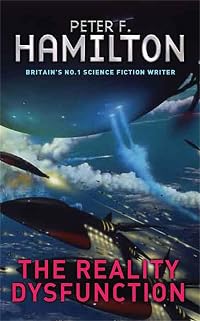
In AD 2600 the human race is finally beginning to realize its full potential. Hundreds of colonized planets scattered across the galaxy host a multitude of prosperous and wildly diverse cultures. Genetic engineering has pushed evolution far beyond nature's boundaries, defeating disease and producing extraordinary spaceborn creatures. Huge fleets of sentient trader starships thrive on the wealth created by the industrialization of entire star systems, and throughout inhabited space the show more Confederation Navy keeps the peace. A true golden age is within our grasp. But now something has gone catastrophically wrong. On a primitive colony planet a renegade criminal's chance encounter with an utterly alien entity unleashes the most primal of all our fears. An extinct race which inhabited the galaxy aeons ago called it the "Reality Dysfunction." It is the nightmare which has prowled beside us since the beginning of history. show lessTags
Recommendations
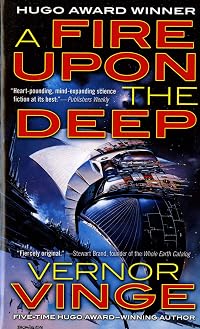
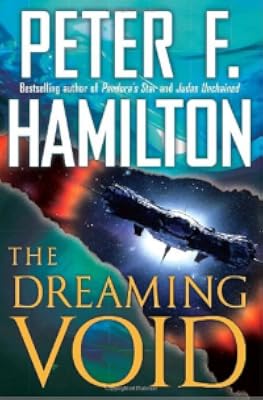
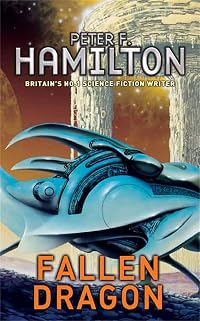

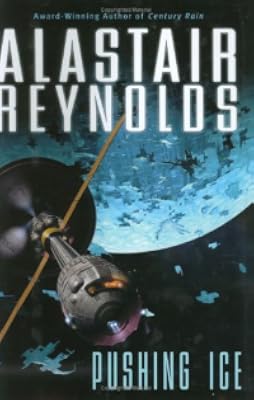
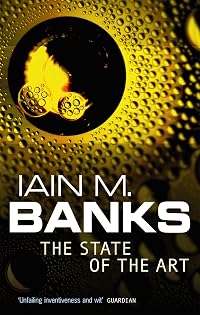
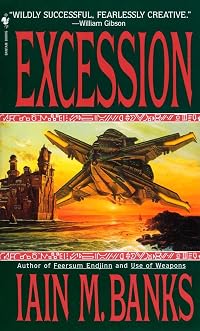
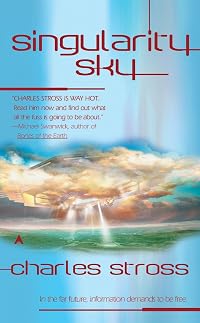
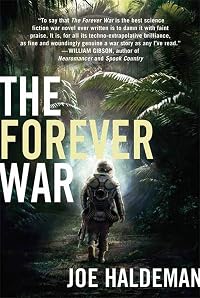
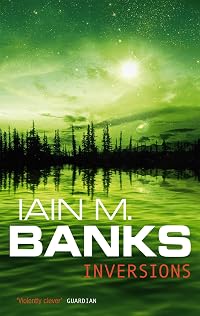
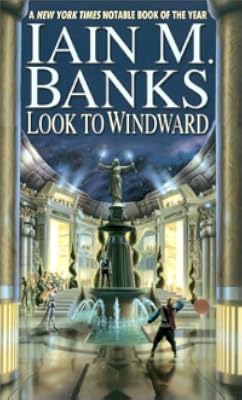
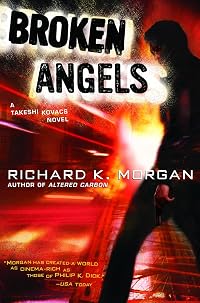
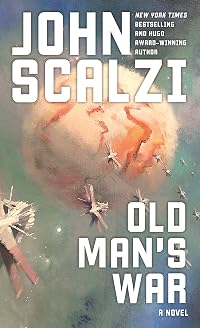



Member Recommendations
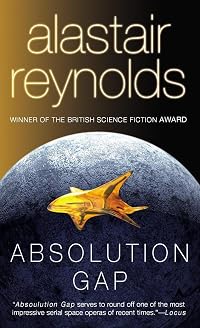
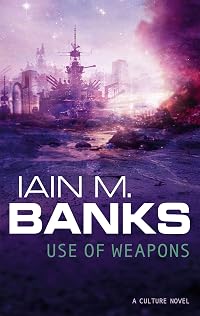
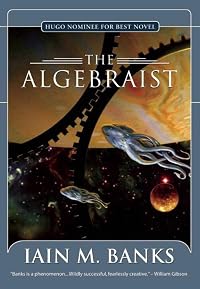
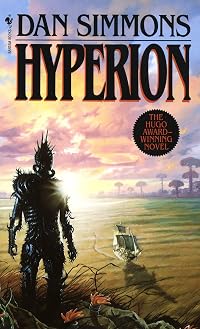
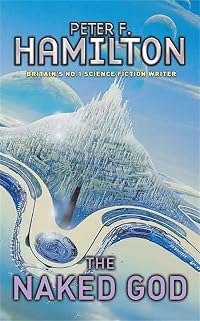
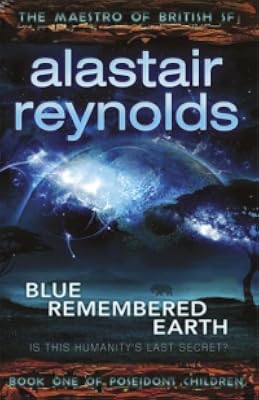
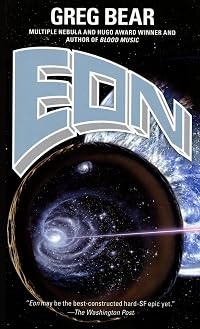
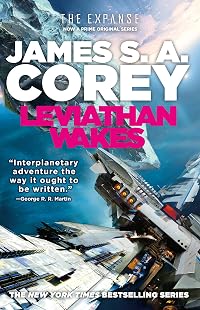
lithicbee Both are science-fiction epics heavy on the space opera, with an overwhelming alien threat and a large cast of characters and political factions.

Member Reviews
This blockbuster comes in at 1,225 pages and is only the first part of a trilogy. It is a space opera that morphs into cosmic horror with a religious tinge by way of some passages of soft porn and even an excursion into something damn close to Mills and Boon-style romance. It certainly gets marks for exuberance.
Its strength lies in the intensely cinematic writing which manages to be both dense and readable with very plausible accounts of alien worlds, alien species (where Hamilton shows restraint in restricting his canvas) and, so long as one does suspend disbelief somewhat, futurist biotech and hardware.
The weakness lies not so much in it being too long (the langours are few and largely limited to the dull almost repetitive sexual show more athletics of young spacers) but in some of the core assumptions of his universe. Above all, the sheer scale of the proposed human colonisation of space requires a lot more time than his 600 or so years.
Similarly the assumptions that Christianity (let alone Islam) will survive as a unified central force for humanity and that planetary colonisation will largely be based on earth ethnicities threaten to turn the novel into fantasy rather than science fiction. It just does not work. The Chinese get a bare mention which is absurd even in 1996.
The planetary cultures too show a peculiar conservatism as if humanity, having gone through the traumas of massive technological shift, is going to stabilise into societies that are partial throwbacks to earlier ages in human history - benign monarchies or a 'British' planet run on county set lines or settler pioneers.
Part of the plot depends on an evil force exploiting the discontent of the masses so that, on two different planets, we see the most lowly elements in society presented as criminal mobs when it is clear that, in at least one case, the originating mob was made up of ordinary workers fighting for trades union rights and democracy.
Hamilton's heroes and heroines are Hamilton's wet dream of an elite of young beautiful people (perhaps he could have called them Thielians today) who pilot space ships through impossible situations, engage in endless free love, trade exotic goods between fellow elites and rule by something like divine right.
Of course, their perfect little world of derring-do, privilege and achievement, with a cast of largely benign corporate entities, space pirates and outlaws, sentient lovable space ships and kindly or at least not threatening aliens is challenged by that evil force where everything is done to make it appear extreme and unstoppable.
A good versus evil horror story ensues where, sadly, there is too much evidence, despite the author's intention, that this noble perfect elite is perhaps not quite as impressive as it thinks it is when viewed from below. Having said that, Hamilton's 'evil dead' thesis works. It is genuinely disturbing if you give yourself time to think on it.
Still, moralism aside, the bulk of the tale is undeniably exciting with all the tropes of space opera thrown in - the docking ships, the bars where the spacers hang out, dog fights between the stars, the bodily strains of flight beyond light speed and hunter and hunted mercenary battles on the planet of Lalonde.
If you want to while away the time with a space fantasy and don't bridle at religious themes (which are not over-played despite the prominent role of another literary trope, the whisky priest), then you will should find it enjoyable and it stops with enough loose ends to intrigue us as to how it will play out for another 2,500 pages. show less
Its strength lies in the intensely cinematic writing which manages to be both dense and readable with very plausible accounts of alien worlds, alien species (where Hamilton shows restraint in restricting his canvas) and, so long as one does suspend disbelief somewhat, futurist biotech and hardware.
The weakness lies not so much in it being too long (the langours are few and largely limited to the dull almost repetitive sexual show more athletics of young spacers) but in some of the core assumptions of his universe. Above all, the sheer scale of the proposed human colonisation of space requires a lot more time than his 600 or so years.
Similarly the assumptions that Christianity (let alone Islam) will survive as a unified central force for humanity and that planetary colonisation will largely be based on earth ethnicities threaten to turn the novel into fantasy rather than science fiction. It just does not work. The Chinese get a bare mention which is absurd even in 1996.
The planetary cultures too show a peculiar conservatism as if humanity, having gone through the traumas of massive technological shift, is going to stabilise into societies that are partial throwbacks to earlier ages in human history - benign monarchies or a 'British' planet run on county set lines or settler pioneers.
Part of the plot depends on an evil force exploiting the discontent of the masses so that, on two different planets, we see the most lowly elements in society presented as criminal mobs when it is clear that, in at least one case, the originating mob was made up of ordinary workers fighting for trades union rights and democracy.
Hamilton's heroes and heroines are Hamilton's wet dream of an elite of young beautiful people (perhaps he could have called them Thielians today) who pilot space ships through impossible situations, engage in endless free love, trade exotic goods between fellow elites and rule by something like divine right.
Of course, their perfect little world of derring-do, privilege and achievement, with a cast of largely benign corporate entities, space pirates and outlaws, sentient lovable space ships and kindly or at least not threatening aliens is challenged by that evil force where everything is done to make it appear extreme and unstoppable.
A good versus evil horror story ensues where, sadly, there is too much evidence, despite the author's intention, that this noble perfect elite is perhaps not quite as impressive as it thinks it is when viewed from below. Having said that, Hamilton's 'evil dead' thesis works. It is genuinely disturbing if you give yourself time to think on it.
Still, moralism aside, the bulk of the tale is undeniably exciting with all the tropes of space opera thrown in - the docking ships, the bars where the spacers hang out, dog fights between the stars, the bodily strains of flight beyond light speed and hunter and hunted mercenary battles on the planet of Lalonde.
If you want to while away the time with a space fantasy and don't bridle at religious themes (which are not over-played despite the prominent role of another literary trope, the whisky priest), then you will should find it enjoyable and it stops with enough loose ends to intrigue us as to how it will play out for another 2,500 pages. show less
Six-word review: Ponderous, overwrought futuristic space series opener.
Extended review:
I knew when I started this one that it was not just the first installment of a trilogy but the first half of the first book in a six-book "trilogy." So I did not expect a complete story arc with all plot developments resolved and all loose ends tied up.
I could also tell pretty quickly that I was not the primary intended audience. This passage from the opening battle scene (page 1) made that plain:
"His neural nanonics relayed information from the ship's external sensor clusters directly into his brain. Out here in the great emptiness of interstellar space starlight wasn't powerful enough to provide an optical-band return. He was relying on the infrared show more signature alone, arching smears of pinkness which the discrimination programs struggled to resolve. Radar pulses were fuzzed and hashed by the ships' electronic-warfare pods."
But still.
I expected that at some point there would at least be a focal character, some good guys and some bad guys, a challenge to overcome or a foe to defeat, a prize to win or lose.
Yet with a cast of thousands, it never became apparent in nearly 600 pages if there was a main character or even who the top ten contenders for the honor might be.
New characters were introduced by the barrelfull, chapter after chapter, page after page, right up until a few pages from the end, many of them dragging such bargeloads of information (age, appearance, attire, birthplace, personal background, social class, physical prowess, employment history, political affiliation) that you thought they had to be important, even while knowing you were never going to remember all that stuff--only to have them disappear after one mention and play no further part.
What's more, chapter after chapter introduced entire separate worlds, with different physical and atmospheric composition and characteristics, orbiting satellites, native species, natural resources, global governance, economics, social structures, etc., etc., etc., and vast technological scopes, complete with history, with the chemistry and physics of everything explained in encyclopedic detail. But there was no clue to which of these mattered to the story or why, or even if there was a story. It seemed as if the author was inventing for the sheer sake of invention, indiscriminately, just because he could.
One word for it might be exhaustive. Another might be exhausting.
I nearly gave up after six chapters and 124 pages, already weary of waiting for some constants of character, setting, and plot to emerge. After all, the author was working so hard. He must have had voluminous notebooks, charts, timelines, character bios, resources in hard science and speculative science, and much, much more. He was also exercising his thesaurus to death (although not always successfully). Surely this must all have been to some purpose.
In fact, I pressed on because I was just curious enough to want to see where the author was going with all this.
I never did.
Book one-half of three resolves nothing. It is just acres and acres of setup. And the prospect of thousands more pages of relentless exposition is more than I can face. At the end of 588 pages there is no character prominent enough about whom I care enough even to wonder what happens next.
Moreover, the writing has two flaws that I find intolerable. One is that it is rife with comma splices. My impression is that there are several on virtually every page. After a score of pages of that, I begin to feel short of breath. I can see why nobody gave this a careful, conscientious edit, but that doesn't mean it didn't need it.
Almost as if to balance this debit with a credit, the author generates sentence fragments--hundreds of them--as if he were paying a fee to pair subjects with predicates.
And the other flaw is that the author practically raises malapropism to a fine art. That thesaurus I mentioned? Time and again he makes a wrong word choice, as if picking from a list of near-synonyms without knowing which suited the case, or in some instances as if he just went with the first word he thought of and didn't give it so much as a second glance.
A few random examples:
"Enlistment offered a golden ticket offplanet, away from the rain, the heat, and the remorseless physical labor of the farms."
The word he reached for was "relentless." But he missed.
"Lori evinced a five-room building standing apart from the others."
In context he seems to mean "noticed."
"Outside Colsterworth the rolling countryside was a patchwork of small fields separated by immaculately layered hedges."
It simply makes no sense to say that hedges are purely and spotlessly layered.
I'll just add two more excerpts without comment:
"But while the Swithland {a boat} and her ilk were bland distaff inheritors utilizing technology instead of engineering craftsmanship, this grande dame could have been a true original."
and
"The colourful solid mirage sailed on regally down the river, its wake of joyous invocation tarrying above the brown water like a dawn mist."
You can find all of these with the "search inside" function on Amazon.
I gave the book two and a half stars and consider that generous. I recognize the tremendous effort that went into it. But as for the effort it would take to get something out of it--I leave that to hardier souls than I. show less
Extended review:
I knew when I started this one that it was not just the first installment of a trilogy but the first half of the first book in a six-book "trilogy." So I did not expect a complete story arc with all plot developments resolved and all loose ends tied up.
I could also tell pretty quickly that I was not the primary intended audience. This passage from the opening battle scene (page 1) made that plain:
"His neural nanonics relayed information from the ship's external sensor clusters directly into his brain. Out here in the great emptiness of interstellar space starlight wasn't powerful enough to provide an optical-band return. He was relying on the infrared show more signature alone, arching smears of pinkness which the discrimination programs struggled to resolve. Radar pulses were fuzzed and hashed by the ships' electronic-warfare pods."
But still.
I expected that at some point there would at least be a focal character, some good guys and some bad guys, a challenge to overcome or a foe to defeat, a prize to win or lose.
Yet with a cast of thousands, it never became apparent in nearly 600 pages if there was a main character or even who the top ten contenders for the honor might be.
New characters were introduced by the barrelfull, chapter after chapter, page after page, right up until a few pages from the end, many of them dragging such bargeloads of information (age, appearance, attire, birthplace, personal background, social class, physical prowess, employment history, political affiliation) that you thought they had to be important, even while knowing you were never going to remember all that stuff--only to have them disappear after one mention and play no further part.
What's more, chapter after chapter introduced entire separate worlds, with different physical and atmospheric composition and characteristics, orbiting satellites, native species, natural resources, global governance, economics, social structures, etc., etc., etc., and vast technological scopes, complete with history, with the chemistry and physics of everything explained in encyclopedic detail. But there was no clue to which of these mattered to the story or why, or even if there was a story. It seemed as if the author was inventing for the sheer sake of invention, indiscriminately, just because he could.
One word for it might be exhaustive. Another might be exhausting.
I nearly gave up after six chapters and 124 pages, already weary of waiting for some constants of character, setting, and plot to emerge. After all, the author was working so hard. He must have had voluminous notebooks, charts, timelines, character bios, resources in hard science and speculative science, and much, much more. He was also exercising his thesaurus to death (although not always successfully). Surely this must all have been to some purpose.
In fact, I pressed on because I was just curious enough to want to see where the author was going with all this.
I never did.
Book one-half of three resolves nothing. It is just acres and acres of setup. And the prospect of thousands more pages of relentless exposition is more than I can face. At the end of 588 pages there is no character prominent enough about whom I care enough even to wonder what happens next.
Moreover, the writing has two flaws that I find intolerable. One is that it is rife with comma splices. My impression is that there are several on virtually every page. After a score of pages of that, I begin to feel short of breath. I can see why nobody gave this a careful, conscientious edit, but that doesn't mean it didn't need it.
Almost as if to balance this debit with a credit, the author generates sentence fragments--hundreds of them--as if he were paying a fee to pair subjects with predicates.
And the other flaw is that the author practically raises malapropism to a fine art. That thesaurus I mentioned? Time and again he makes a wrong word choice, as if picking from a list of near-synonyms without knowing which suited the case, or in some instances as if he just went with the first word he thought of and didn't give it so much as a second glance.
A few random examples:
"Enlistment offered a golden ticket offplanet, away from the rain, the heat, and the remorseless physical labor of the farms."
The word he reached for was "relentless." But he missed.
"Lori evinced a five-room building standing apart from the others."
In context he seems to mean "noticed."
"Outside Colsterworth the rolling countryside was a patchwork of small fields separated by immaculately layered hedges."
It simply makes no sense to say that hedges are purely and spotlessly layered.
I'll just add two more excerpts without comment:
"But while the Swithland {a boat} and her ilk were bland distaff inheritors utilizing technology instead of engineering craftsmanship, this grande dame could have been a true original."
and
"The colourful solid mirage sailed on regally down the river, its wake of joyous invocation tarrying above the brown water like a dawn mist."
You can find all of these with the "search inside" function on Amazon.
I gave the book two and a half stars and consider that generous. I recognize the tremendous effort that went into it. But as for the effort it would take to get something out of it--I leave that to hardier souls than I. show less
I was rather apprehensive of this doorstop of a book, but I needn't have worried. Hamilton takes up a cracking pace, even with extensive world-building. Even when the story veered into quasi-religious zombie horror, the pace didn't slacken and that carried me through something that in any other book would have made me hurl it aside in disgust. But quite apart from the irresponsibility of such an action in this case - the risk of injury to passers-by is too great, given the size of the book! - it says much for Hamilton's ability as a writer that in a universe of wonders, he is able to carry off the necessary suspension of disbelief when he introduces elements of the fantastical. I reached the end in a state of amazement, only partly due show more to finding that a 1200-pager in this author's hands was not a chore. show less
I got to the part where a sentient spaceship had a college dorm-like philosophical discussion with its captain about the existence of souls, and my eyes got too tired from rolling to read any further. Puzzlnigly, a handful of LTers have this book tagged "hard sf." Maybe by "hard" they mean "hard to finish."
A truly astounding first volume in the "Nights Dawn" trilogy. This is a huge work on a vast "space opera" canvas, a vividly painted, grandiose vision which creates a wonderfully complex and compelling picture of humanity in the 26th century. Whilst technology holds sway, there is an undercurrent of "science vs magic" which explodes into a horror story on an epic, galaxy spanning scale.
This book took me about a month to read. It is a slow, rolling build that lays the groundwork for the subsequent novels in the series and if you're not into long worldbuilding and set-up, it might be a dull start. I do enjoy those things and found the world of Night's Dawn compelling and exciting and, since it takes a while to get going, spent most of the novel on edge waiting for the blurb to kick in. It's like the climb before the drop on the rollercoaster - make it through that and you're treated to a wild ride that jaunts back and forth across the entire galaxy.
The old joke from Annie Hall comes to mind. Two old women complaining about a restaurant, one says "The food here is terrible." The other, "...and the portions so small!"
Well at least no one can complain about Hamilton's portion size. There go 1200 pages of some of the worst prose I've had to endure. Just a goddamned waste of my time because the significant story and action (which was interesting) took up less than half that length. The rest was filled with the kind of world building you might care about if you can quickly envision a litany of length by width measurements of various structures in meters. The characters were mostly superficial. Women functioned primarily as objects. There are many MANY sex scenes, which hey I can get show more into that, but they were soooo cringe inducing mainly due to an immature framework that my eyes hurt from so much rolling.
A sample: "...gloating at her wide-eyed incredulity as his semen surged into her in a long exultant consummation."
Good one.
Unfortunately, the final 100 pages or so were exciting and the stopping point of the first novel felt pretty arbitrary. The reader just has to face they've gotten themselves into a 3,800 page book. I have to face this. Oh god. I'm totally going to read the next book in the series. show less
Well at least no one can complain about Hamilton's portion size. There go 1200 pages of some of the worst prose I've had to endure. Just a goddamned waste of my time because the significant story and action (which was interesting) took up less than half that length. The rest was filled with the kind of world building you might care about if you can quickly envision a litany of length by width measurements of various structures in meters. The characters were mostly superficial. Women functioned primarily as objects. There are many MANY sex scenes, which hey I can get show more into that, but they were soooo cringe inducing mainly due to an immature framework that my eyes hurt from so much rolling.
A sample: "...gloating at her wide-eyed incredulity as his semen surged into her in a long exultant consummation."
Good one.
Unfortunately, the final 100 pages or so were exciting and the stopping point of the first novel felt pretty arbitrary. The reader just has to face they've gotten themselves into a 3,800 page book. I have to face this. Oh god. I'm totally going to read the next book in the series. show less
Members
- Recently Added By
Lists

Best Science Fiction Novels
816 works; 430 members

Schisms in transhumanity - SF
34 works; 1 member

Want to Read — open list
55 works; 2 members

Best Books With Aliens
67 works; 10 members

Jean's Sci Fi/Fantasy Reading list
189 works; 12 members

Read-Alike - Incarnations of Immortality Series
19 works; 1 member
Favorite Science Fiction
458 works; 224 members
Author Information

127+ Works 42,907 Members
Peter F. Hamilton was born in Rutland, England on March 2, 1960. He started writing in 1987 and sold his first short story to Fear magazine in 1988. His first novel, Mindstar Rising, was published in 1993. His other works include the Night's Dawn series; Fallen Dragon; and the Void series. (Bowker Author Biography)
Some Editions
Awards and Honors
Notable Lists
Series

Work Relationships
Is contained in
Contains
Has as a reference guide/companion
Common Knowledge
- Canonical title
- The Reality Dysfunction
- Original title
- The Reality Dysfunction
- Original publication date
- 1996-01
- First words
- Space outside the attack cruiser Beezling tore open in five places.
- Last words
- (Click to show. Warning: May contain spoilers.)He lowered his gaze again, and resumed his earthbound search for his lost masterlove.
- Blurbers
- Baxter, Stephen; Benford, Gregory
- Original language
- English
Classifications
Statistics
- Members
- 3,042
- Popularity
- 5,855
- Reviews
- 57
- Rating
- (3.97)
- Languages
- English, French
- Media
- Paper, Audiobook, Ebook
- ISBNs
- 21
- ASINs
- 18