On This Page
Description
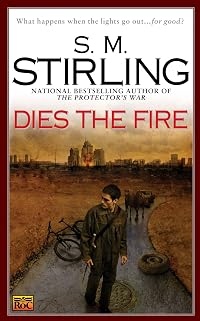
S. M. Stirling presents his first Novel of the Change, the start of the New York Times bestselling post-apocalyptic saga set in a world where all technology has been rendered useless. The Change occurred when an electrical storm centered over the island of Nantucket produced a blinding white flash that rendered all electronic devices and fuels inoperable and plunged the world into a dark age humanity was unprepared to face... Michael Havel was flying over Idaho en route to the holiday home show more of his passengers when the plane's engines inexplicably died, forcing a less than perfect landing in the wilderness. And as Michael leads his charges to safety, he begins to realize that the engine failure was not an isolated incident. Juniper Mackenzie was singing and playing guitar in a pub when her small Oregon town was thrust into darkness. Now, taking refuge in her family's cabin with her daughter and a growing circle of friends, Juniper is determined to create a farming community to benefit the survivors of this crisis. But even as people band together to help one another, others are building armies for conquest... show lessTags
Recommendations






Member Recommendations



Member Reviews
A good start to this post-apocalyptic novel. Set in the west of the USA, specifically Oregon and Idaho, this picks up almost immediately after The Change - something that has suppressed electricity and almost all exothermic reactions - so no guns, explosions or propulsion from fossil fuels. It follows two groups of people as they immediately struggle to find safety and food and adapt to the new conditions. Society quickly goes to anarchy and chaos and they must literally fight to stay alive. The primary characters of Mike Havel and Juniper MacKenzie are excellent. The rest of the series is too.
I read less than 60 pages into the novel and promptly put it back on the shelf. I never throw out books no matter how bad they are, but this one will definitely stay on the shelf forever. The sword wielding, history professor, "Lord Protector" that can defeat 4 enemies at once (2 policemen and 2 soldiers) was quite enough for me. Two weeks after the "event" and both the Government and Provisional Governments have fallen and already a minor fiefdom has formed. Not to mention that the only survivors from the after effects of the event seem to be people that participate in historical societies and renaissance fairs. Apparently all the other people that don't fit this mold laid down and died. Stirling needs to look up the definition of show more "deus ex machina" because every few pages he seems to find the need to introduce a new one. Rubbish. show less
What happens when one day the combustion engine, electrical systems and gunpowder stops working? When American society implodes? This is the story of what happens then. A story of a few different groups who form when society breaks down, some people use the opportunity to fulfil their wildest dreams of megalomania and others want to create a workable society.
The use of Irish with translation was a bit pretentious really and in ways jarred from the meat of the story, which was interesting. I was very amused at the way people decided to join the wiccans because of how they treated other people. The use of Kilts amused as well.
Interesting but somehow lacking. It reads well but I wanted both more and less.
The use of Irish with translation was a bit pretentious really and in ways jarred from the meat of the story, which was interesting. I was very amused at the way people decided to join the wiccans because of how they treated other people. The use of Kilts amused as well.
Interesting but somehow lacking. It reads well but I wanted both more and less.
This book which I thoroughly enjoy and have read multiple times is the first in a series by S. M. Stirling. Dies the Fire is about the end of the world as we know it. In an instant all modern technology stops working. Planes fall from the sky. Cars stop where they are. Machines die. Electricity doesn't work. Even guns won't fire. Cities are overpopulated and can't feed themselves. Disease is rampant. Hungry people starve or resort to cannibalism. Within the first year ninety percent of the Earth's population is dead. This is the story of some of the survivors and the new societies they build during that first year.
Juniper Mackenzie is an Irish American folksinger who supplements her income performing at Renaissance Faires. She is also show more the mother of a young deaf teenager. Juniper's quick thinking saves the lives of a number of her friends when she leads the way to the country house she inherited in the Willamette Valley. There with hunger never far her group sets out to survive the first Change year. This involves a lot of hard work such as building a defensible community, farming, learning ancient arts such as bow making and weaving, and defending their land and food supply. Clan Mackenzie develops into a close knit Celtic pagan type community known for their skill with the bow.
Mike Havel is a charter pilot and former marine. He is in the air when the Change takes place. His immediate thoughts are how to land the plane and keep his passengers alive. The Larson family who were his passengers tell Mike about their country house in the Willamette Valley. It is well situated they believe to survive. Mike and the Larson family set out for Larsdalen and on the way acquire people with various skills such as horse wrangling and sword and armor making. If they want to survive this hard-nosed practical group will have to work together to perfect their fighting skills. As they travel west, Mike's group becomes known for the help they provide others and due to an early incident acquire the name Bear Killers. To his consternation the youngest Larson dubs Mike, Lord Bear.
Norman Arminger and his wife Sandra are sociopaths, but they are skilled members of the Society For Creative Anachronism familiar with the production and use of ancient weaponry. Norman is also a history professor specializing in medieval Europe. Together Norman and Sandra along with members of various gangs set out to build a castle and feudal society going so far as to enslave people who don't have useful skills. This group becomes known as The Protectorate.
There are other groups which are seen less in this volume. For example the city of Corvalis is run now by the university. A group of monks have a community, and a group of cattle ranchers have allied with each other. There are lots of other interesting groups as well throughout the series including one very central the series that doesn't appear in this volume.
This is a science fantasy, but aside from the premise it's easy to miss the fantastic here. This first volume is very narrowly focused on survival with characters living a hand-to-mouth existence. It is fascinating to see the creative solutions the characters employ with the resources they have available. Later in the series, though hard work is always evident, the fantastic becomes more apparent.
The author is impressively knowledgeable about what it would take to survive. I asked over and over, "How would I fare?" I don't like to think of my answer. I hope I would find myself somewhere in the vicinity of the author with some skill he would deem useful to his community. I wonder if crochet would cut it?
I had just finished reading this again when the lights went out one morning. Not that it's a scary book as such, but I had to keep reminding myself that it's just a story as I strained to hear cars in the distance.
Very highly recommended. show less
Juniper Mackenzie is an Irish American folksinger who supplements her income performing at Renaissance Faires. She is also show more the mother of a young deaf teenager. Juniper's quick thinking saves the lives of a number of her friends when she leads the way to the country house she inherited in the Willamette Valley. There with hunger never far her group sets out to survive the first Change year. This involves a lot of hard work such as building a defensible community, farming, learning ancient arts such as bow making and weaving, and defending their land and food supply. Clan Mackenzie develops into a close knit Celtic pagan type community known for their skill with the bow.
Mike Havel is a charter pilot and former marine. He is in the air when the Change takes place. His immediate thoughts are how to land the plane and keep his passengers alive. The Larson family who were his passengers tell Mike about their country house in the Willamette Valley. It is well situated they believe to survive. Mike and the Larson family set out for Larsdalen and on the way acquire people with various skills such as horse wrangling and sword and armor making. If they want to survive this hard-nosed practical group will have to work together to perfect their fighting skills. As they travel west, Mike's group becomes known for the help they provide others and due to an early incident acquire the name Bear Killers. To his consternation the youngest Larson dubs Mike, Lord Bear.
Norman Arminger and his wife Sandra are sociopaths, but they are skilled members of the Society For Creative Anachronism familiar with the production and use of ancient weaponry. Norman is also a history professor specializing in medieval Europe. Together Norman and Sandra along with members of various gangs set out to build a castle and feudal society going so far as to enslave people who don't have useful skills. This group becomes known as The Protectorate.
There are other groups which are seen less in this volume. For example the city of Corvalis is run now by the university. A group of monks have a community, and a group of cattle ranchers have allied with each other. There are lots of other interesting groups as well throughout the series including one very central the series that doesn't appear in this volume.
This is a science fantasy, but aside from the premise it's easy to miss the fantastic here. This first volume is very narrowly focused on survival with characters living a hand-to-mouth existence. It is fascinating to see the creative solutions the characters employ with the resources they have available. Later in the series, though hard work is always evident, the fantastic becomes more apparent.
The author is impressively knowledgeable about what it would take to survive. I asked over and over, "How would I fare?" I don't like to think of my answer. I hope I would find myself somewhere in the vicinity of the author with some skill he would deem useful to his community. I wonder if crochet would cut it?
I had just finished reading this again when the lights went out one morning. Not that it's a scary book as such, but I had to keep reminding myself that it's just a story as I strained to hear cars in the distance.
Very highly recommended. show less
S.M. Stirling is one of our local writers; a member of the Critical Mass writing group out of Santa Fe that includes George R. R. Martin, Daniel Abraham, and Melissa Snodgrass. One of those names is certainly widely recognizable, but the others are either known within their markets or regions – an unfortunate situation. Undertaking this book was a function of supporting a local and expanding my reading into the more hard core fantasy world.
[Dies the Fire] is based on a terribly intriguing concept – everything powered by electricity quits working. Further examination reveals that even guns and combustible materials don’t behave in the same way, burning slowly instead of quickly – so no guns or explosives either. Obviously, the show more world changes – the apocalyptic event is called, “The Change” in the book. What results is a return to agrarian and feudal organization. The story is told primarily through the eyes of Mike Havel, a US Army Ranger veteran, and Juniper Mackenzie, a Wiccan minstrel. Both establish communities within the Oregon wilderness, along the Willamette River. Portland is taken over by a history professor who establishes the evil kingdom with which Havel’s Bearkillers and Juniper’s Mackensie clan must battle.
Stirling is a master of research and minute detail, to the point of extraction, fortunately or unfortunately, depending on how much rein he gives his predilections. Discussing the book with a friend wise in the ways of hardcore fantasy, I learned that this is a common expectation amongst readers of the oeuvre, and a common criticism amongst the outsiders who deign to enter the world. There is a necessity of much of Stirling’s explanation, but it can be wearying sometimes. There is only so much I need to know about the length, width, angle, construction, etc. of every weapon. But beyond the extreme attention to detail, and the occasional bout of fantasy tropism, the book is readable and engaging. The characters are a little stereotypical – that’s where those tropes seem to descend most often – but they are interesting and complete.
There appear to be several other books in this part of Stirling’s series. I say, “this part of the series” because there are other books that relate to how the Change occurred and deal with other locations and times. In any case, Stirling has me wanting to come back for more.
Bottom Line: A great concept and interesting characters, even if the detail can be burdensome – a readable start to a series that I want to read more about.
3 ½ bones!!!!! show less
[Dies the Fire] is based on a terribly intriguing concept – everything powered by electricity quits working. Further examination reveals that even guns and combustible materials don’t behave in the same way, burning slowly instead of quickly – so no guns or explosives either. Obviously, the show more world changes – the apocalyptic event is called, “The Change” in the book. What results is a return to agrarian and feudal organization. The story is told primarily through the eyes of Mike Havel, a US Army Ranger veteran, and Juniper Mackenzie, a Wiccan minstrel. Both establish communities within the Oregon wilderness, along the Willamette River. Portland is taken over by a history professor who establishes the evil kingdom with which Havel’s Bearkillers and Juniper’s Mackensie clan must battle.
Stirling is a master of research and minute detail, to the point of extraction, fortunately or unfortunately, depending on how much rein he gives his predilections. Discussing the book with a friend wise in the ways of hardcore fantasy, I learned that this is a common expectation amongst readers of the oeuvre, and a common criticism amongst the outsiders who deign to enter the world. There is a necessity of much of Stirling’s explanation, but it can be wearying sometimes. There is only so much I need to know about the length, width, angle, construction, etc. of every weapon. But beyond the extreme attention to detail, and the occasional bout of fantasy tropism, the book is readable and engaging. The characters are a little stereotypical – that’s where those tropes seem to descend most often – but they are interesting and complete.
There appear to be several other books in this part of Stirling’s series. I say, “this part of the series” because there are other books that relate to how the Change occurred and deal with other locations and times. In any case, Stirling has me wanting to come back for more.
Bottom Line: A great concept and interesting characters, even if the detail can be burdensome – a readable start to a series that I want to read more about.
3 ½ bones!!!!! show less
This post-apocalyptic novel set mostly in Oregon includes good characterizations and lots of action, but the reader will have to accept some fine coincidences and some unexplained hocus-pocus about the cause of The Change.
A never-explained phenomenon (Aliens? Angry deities? Overlapping realities) suddenly causes all electrical systems all over the world to simply ... die. Not even dry-cell batteries will work. Nor -- and this is important to the story, so either suck it up or find something else to read -- will explosives of any kind. No guns, no bombs, not even steam power (but homemade napalm is okay -- go figure). Civilization promptly crumbles, and starvation and disease are rampant as the remaining population struggles to stay show more alive.
The story centers on two groups, who ultimately meet and combine forces to survive both the suddenly-Dark-Ages technology and to defend themselves against the rise of the eternal bully-boys who see the chance to take up cudgel and sword against less organized and more peacefully-inclined neighbors.
There are lots of characters here, but most are drawn clearly enough to be memorable. As noted above, the reader either accepts the notion that the survivors who find each other are all uniquely qualified by arcane skills or knowledge to survive in this world with its new set of rules. Stirling excuses himself by having characters say, on more than one occasion, "Well, we had to be damned lucky and skillful just to survive long enough to meet each other." We'll give him that because this is a ripping good yarn.
It's also the start of a multi-book saga "Novels of the Change". With 15 entries in the series to date, anyone who wants to explore further in Stirling's world, will have plenty of reading to do. show less
A never-explained phenomenon (Aliens? Angry deities? Overlapping realities) suddenly causes all electrical systems all over the world to simply ... die. Not even dry-cell batteries will work. Nor -- and this is important to the story, so either suck it up or find something else to read -- will explosives of any kind. No guns, no bombs, not even steam power (but homemade napalm is okay -- go figure). Civilization promptly crumbles, and starvation and disease are rampant as the remaining population struggles to stay show more alive.
The story centers on two groups, who ultimately meet and combine forces to survive both the suddenly-Dark-Ages technology and to defend themselves against the rise of the eternal bully-boys who see the chance to take up cudgel and sword against less organized and more peacefully-inclined neighbors.
There are lots of characters here, but most are drawn clearly enough to be memorable. As noted above, the reader either accepts the notion that the survivors who find each other are all uniquely qualified by arcane skills or knowledge to survive in this world with its new set of rules. Stirling excuses himself by having characters say, on more than one occasion, "Well, we had to be damned lucky and skillful just to survive long enough to meet each other." We'll give him that because this is a ripping good yarn.
It's also the start of a multi-book saga "Novels of the Change". With 15 entries in the series to date, anyone who wants to explore further in Stirling's world, will have plenty of reading to do. show less
I read all the other reviews before me at this time and I can’t really argue against any of them…we’re talking individual tastes and predilections here. Yes, Stirling makes Wiccans out to be a far more mainstream religion than it will ever become; and it attracts way more converts than anyone can realistically expect…but! “Thus are legends born.” If not for the main female character being a Wiccan we wouldn’t have the joy of seeing someone possessed by a “higher power” explode onto the battle field and awe the bad guys. No Christian, Moslem, Buddhist or Hindi is believably capable of channeling forces of nature as this woman does—it’s one of the most moving scenes of the story and well worth the suspension of show more disbelief...and 5 stars.
Let’s face it, the willing suspension of disbelief has to be a major factor in any story that is a) built on the sudden disappearance of a major facet of modern civilization; b) the confluence of some incredibly useful people and skills to fight the forces of chaos; c) the incredible self-centeredness of the bad guys who are either extremely-stupid-and-yet-competent-enough (the low level bad guys) or extremely-competent-and-yet-too-stupid-to-see-the-flaws-they're-propagating (the major bad guy).
The first part of the story deals with the immediate necessity of accepting the new status quo and getting to somewhere relatively safe ASAP. The second part is a bit hokey—as has been said—in that the right people emerge at the right time to help establish a grouping that stands a chance of surviving long-term. But, let’s face it, that’s why I read books like this: if you read Science Fiction and complain about this book, then you’re just quibbling about which group of beliefs/disbeliefs you personally which to question/accept.
Meanwhile, the third part of the tale deals with all of the characters and groups converging in a major battle with the good-guys winning. As I said…a lot of the action is hokey…but it’s heart-warming hokey, for me. I quite enjoyed the plot and sub-plots.
After reading several more books in this particular series it's obvious that Stirling had to gather the right type of heroes in order to get to the end he wants. There's a spiritual framework that's needed in order to encompass the ultimate evil of the stories, and still be able to overpower them/it. show less
Let’s face it, the willing suspension of disbelief has to be a major factor in any story that is a) built on the sudden disappearance of a major facet of modern civilization; b) the confluence of some incredibly useful people and skills to fight the forces of chaos; c) the incredible self-centeredness of the bad guys who are either extremely-stupid-and-yet-competent-enough (the low level bad guys) or extremely-competent-and-yet-too-stupid-to-see-the-flaws-they're-propagating (the major bad guy).
The first part of the story deals with the immediate necessity of accepting the new status quo and getting to somewhere relatively safe ASAP. The second part is a bit hokey—as has been said—in that the right people emerge at the right time to help establish a grouping that stands a chance of surviving long-term. But, let’s face it, that’s why I read books like this: if you read Science Fiction and complain about this book, then you’re just quibbling about which group of beliefs/disbeliefs you personally which to question/accept.
Meanwhile, the third part of the tale deals with all of the characters and groups converging in a major battle with the good-guys winning. As I said…a lot of the action is hokey…but it’s heart-warming hokey, for me. I quite enjoyed the plot and sub-plots.
After reading several more books in this particular series it's obvious that Stirling had to gather the right type of heroes in order to get to the end he wants. There's a spiritual framework that's needed in order to encompass the ultimate evil of the stories, and still be able to overpower them/it. show less
Members
- Recently Added By
Lists

Best Post-Apocalyptic Stories
143 works; 88 members

Recommended Apocalyptic Novels
53 works; 24 members

Read-alike - Year one by Nora Roberts
19 works; 1 member

Post-Apocalyptic Fiction
57 works; 3 members

Good (mostly) modern science fiction
40 works; 4 members

TBR - Older Books
92 works; 1 member

Post Apocalyptic Novels
41 works; 1 member
Author Information

149+ Works 32,444 Members
Stephen Michael Stirling is a French-born Canadian-American science fiction and fantasy author. His Birthday is September 30, 1953. He has lived in several countries and currently resides in the United States in New Mexico with his wife. He is probably best known for his Draka series of novels and his more recent time travel/alternate history show more Nantucket series and Emberverse series. In 2014 his title The Golden Princess made The New York Times Best Seller List. (Bowker Author Biography) show less
Some Editions
Series


Work Relationships
Is contained in
Common Knowledge
- Canonical title
- Dies the Fire
- Original title
- Dies the Fire
- Original publication date
- 2004-07-01
- People/Characters
- Mike Havel; Juniper Mackenzie; Henry Armitage; Sam Aylward; Eric Larsson; Signe Larsson (show all 51); Astrid Larsson; Eilir Mackenzie; Norman Arminger; Luanne Hutton; Mellie Jones; Kenneth Larsson; Mary Larsson; Bilitis (cat); Gustav (horse); Loughi (dog); Dennis Martins; Eddie Liu; Chuck Barstow; Judy Barstow; Pywackett (cat); Andy Trethar; Diana Trethar; Sandra Arminger; Luther Finney; Edward Finney; Sally Quinn; Will Hutton; Angelica Hutton; John Carson; Cynthia Carson; Alex Barstow; Pam Arnstein; Dave Mondarian; Josh Sanders; Annie Sanders; Aaron Rothman; Peter Jones; Hugo Zeppelt; Cuchulain (dog); Sheriff John Woburn; Howard Reines; Eddie Running Horse; Billy Waters; Jane Waters; Fred Naysmith; Mother Superior Gertrude; Jeb Smith; Pete Sacket; Randy Sacket; John Brown (representative of Central Oregon Rancher's Association)
- Important places
- Willamette Valley, Oregon, USA; Corvallis, Oregon, USA; Portland, Oregon, USA; Idaho, USA; Oregon, USA; Grangeville, Oregon, USA (show all 10); Boise, Idaho, USA; Lowell, Idaho, USA; Dable, Oregon, USA; Sutterdown, Oregon, USA
- Dedication
- To Gina Taconi-Moore, and to her Andrew, currently serving the great Republic in a far-off, sandy, unpleasant place. Long life and happiness!
- First words
- Michael Havel pulled his battered 4×4 into the employees’ parking lot, locked up and swung his just-in-case gear out of the back, the strap of the pack over one shoulder and the gun case on the other.
- Last words
- (Click to show. Warning: May contain spoilers.)The voice that sounded out in tones as perfect as cut crystal was hers, but the words...
"Sad Winter's child, in this leafless show-
Yet be Son, and Lover, and Horned Lord!
Guaridan of My sacred Wood, and Law-
His people's strength-and the Lady's sword!" - Publisher's editor
- Buchanan, Ginjer
- Blurbers
- Turtledove, Harry; Drake, David; Ringo, John
- Original language
- English
Classifications
Statistics
- Members
- 2,678
- Popularity
- 6,927
- Reviews
- 95
- Rating
- (3.74)
- Languages
- English
- Media
- Paper, Audiobook, Ebook
- ISBNs
- 16
- ASINs
- 9