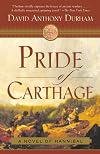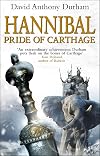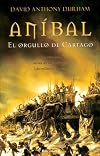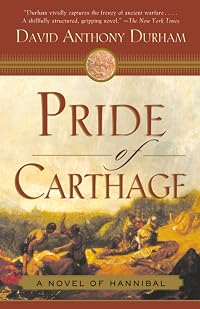
Pride of Carthage: A Novel of Hannibal
by David Anthony Durham
On This Page
Description
A saga set against the backdrop of the ancient Punic Wars describes Hannibal's struggle against the Roman Republic, his decision to attack Rome via a land route deemed impossible, and the young Roman military leader who defeated him.Tags
Recommendations








Member Recommendations
Member Reviews
TDLR; The book is good, go read it.
Trowed in a mass of very old and brown books there was this book.
It was one of those shops where people trowed old books and just pilled on top of each other, this one was one of the few in decent conditions/the cover was still attached to the book.
I didn't know what awaited me.
This book managed to grasp and hold the attention span of a very distracted teenager in school for a very long time, an achievement that should automatically give this book five stars.
I fell in love with the characters, the story, the plot, the style.
The only thing that I really regret is that when I read most of the book I knew next to nothing about writing or reading. After a long break and an (around) fifty pages sprint I show more realized how wonderfully written this book really was, I saw something like this only a few times.
By the end of this book, you will not want to wage a war. The author's brutal, realistic and clean when it comes to describing it. The author also goes unusually far to describe the effect that long-term war has on people personality and psyche.
Really good book, I will read it again in a few years. show less
Trowed in a mass of very old and brown books there was this book.
It was one of those shops where people trowed old books and just pilled on top of each other, this one was one of the few in decent conditions/the cover was still attached to the book.
I didn't know what awaited me.
This book managed to grasp and hold the attention span of a very distracted teenager in school for a very long time, an achievement that should automatically give this book five stars.
I fell in love with the characters, the story, the plot, the style.
The only thing that I really regret is that when I read most of the book I knew next to nothing about writing or reading. After a long break and an (around) fifty pages sprint I show more realized how wonderfully written this book really was, I saw something like this only a few times.
By the end of this book, you will not want to wage a war. The author's brutal, realistic and clean when it comes to describing it. The author also goes unusually far to describe the effect that long-term war has on people personality and psyche.
Really good book, I will read it again in a few years. show less
Splendid, and straight onto my list of most-admired HFs – and since Hannibal is a real hero of mine, and his story nigh perfect for a novel, high on that list too. My only complaint is that I feel sure this book needed to be 800 pages, not 600. At times he moves too fast over the ground, so that there are pages almost indistinguishable from a historian’s.
He uses an old fashioned, classic language that, I’d say, maintains the dignity of the material; there’s a dignity and weight. He is not indulgent. Although his scenes are deeply emotional – and he conveys the full horror to you – it seems to me he can have more effect for a discipline he keeps (perhaps like Hannibal’s discipline). Along with that, he didn’t indulge me show more when my sentimental side asked for a happy sequel or more certain knowledge. I don’t mean at the end here, but for instance, among the love stories – each of which was very particular to the people involved: even the sex scenes might only have been acted by those actors – Hanno had the unlikeliest, but that got aborted and I did wish to see... It’s better that he doesn’t indulge me. And war can’t pause for them or for my wish to follow their lives, and there is much uncertainty, for these people, about what’s happening to those they care about.
A couple of the Barca brothers or sisters I only came to care about halfway or two-thirds through. This is a good thing. Circumstances bring out a side to them I hadn’t met before.
By the time you’re through this you won’t want to wage war. As glorious as Hannibal is. The wives’ side – his mother’s disclosures about his father, the sister who has been the staunchest of Barcas and insistent upon duty – weighs heavily by the end, when Hannibal goes home to face his wife and child. The soldiers admit they may have lived their lives quite wrongly – both Hannibal and his father have moments like that – but they know war is a way of life, the way of the world, and there was never an escape.
For me the story finishes at the right time, but you are left to imagine the remainder of Hannibal’s life, the sad remainder and what must have been the ignominy.
We follow the tales of two men in his army. Imco, accidental hero and reluctant soldier, who hallucinates the ghost of a girl he killed and falls in love with a camp follower who’s had the toughest life in the book. Tusselo, ex-slave of Rome, who finds he can never put an 'ex' there, although he grow out his African hair and know again his African pride. Carthage is very African, in this book. And Rome – Rome is a danger, a danger to the world, a new thing in the world, think the Barcas. It needs to be stopped. The Barcas’ commitment to this cause pulls you in –
Even though the city behind them, Carthage itself, proves almost more an enemy than Rome, to its great men, who nevertheless serve it. The vicious irony and the sadness of this story are from history, but he makes you feel them.
It was never once too slow for me, only, in fact, too fast. When Hasdrubal awaits a fleet and thinks uneasily about how water floats a boat... that’s because he’s standing there, and thinks, and doesn’t always think things relevant to the plot. The body language, too, helps make these people real; once or twice you won’t understand a gesture, and neither does the gesturer, but it’s what people do. For me there wasn’t a tedious page in this book and that includes the military detail that can be so dully written. He makes use of his several point-of-view figures to give us the famous battles from different perspectives: another antidote to boredom. In the Alps, at Cannae, familiar as events were, I was nothing but gripped, and laughed with very excitement.
Finished yesterday and so soon after I think the whole thing is horribly sad. I may be a sop but like I say, Hannibal is one of my heroes and I find the histories hard to stand, never mind when he’s put into fiction. I bawled. show less
He uses an old fashioned, classic language that, I’d say, maintains the dignity of the material; there’s a dignity and weight. He is not indulgent. Although his scenes are deeply emotional – and he conveys the full horror to you – it seems to me he can have more effect for a discipline he keeps (perhaps like Hannibal’s discipline). Along with that, he didn’t indulge me show more when my sentimental side asked for a happy sequel or more certain knowledge. I don’t mean at the end here, but for instance, among the love stories – each of which was very particular to the people involved: even the sex scenes might only have been acted by those actors – Hanno had the unlikeliest, but that got aborted and I did wish to see... It’s better that he doesn’t indulge me. And war can’t pause for them or for my wish to follow their lives, and there is much uncertainty, for these people, about what’s happening to those they care about.
A couple of the Barca brothers or sisters I only came to care about halfway or two-thirds through. This is a good thing. Circumstances bring out a side to them I hadn’t met before.
By the time you’re through this you won’t want to wage war. As glorious as Hannibal is. The wives’ side – his mother’s disclosures about his father, the sister who has been the staunchest of Barcas and insistent upon duty – weighs heavily by the end, when Hannibal goes home to face his wife and child. The soldiers admit they may have lived their lives quite wrongly – both Hannibal and his father have moments like that – but they know war is a way of life, the way of the world, and there was never an escape.
For me the story finishes at the right time, but you are left to imagine the remainder of Hannibal’s life, the sad remainder and what must have been the ignominy.
We follow the tales of two men in his army. Imco, accidental hero and reluctant soldier, who hallucinates the ghost of a girl he killed and falls in love with a camp follower who’s had the toughest life in the book. Tusselo, ex-slave of Rome, who finds he can never put an 'ex' there, although he grow out his African hair and know again his African pride. Carthage is very African, in this book. And Rome – Rome is a danger, a danger to the world, a new thing in the world, think the Barcas. It needs to be stopped. The Barcas’ commitment to this cause pulls you in –
Even though the city behind them, Carthage itself, proves almost more an enemy than Rome, to its great men, who nevertheless serve it. The vicious irony and the sadness of this story are from history, but he makes you feel them.
It was never once too slow for me, only, in fact, too fast. When Hasdrubal awaits a fleet and thinks uneasily about how water floats a boat... that’s because he’s standing there, and thinks, and doesn’t always think things relevant to the plot. The body language, too, helps make these people real; once or twice you won’t understand a gesture, and neither does the gesturer, but it’s what people do. For me there wasn’t a tedious page in this book and that includes the military detail that can be so dully written. He makes use of his several point-of-view figures to give us the famous battles from different perspectives: another antidote to boredom. In the Alps, at Cannae, familiar as events were, I was nothing but gripped, and laughed with very excitement.
Finished yesterday and so soon after I think the whole thing is horribly sad. I may be a sop but like I say, Hannibal is one of my heroes and I find the histories hard to stand, never mind when he’s put into fiction. I bawled. show less
Started off with a huge bang as I freaked out and couldn't put it down. Slowed considerably in the middle, which seemed counterintuitive (Hannibal was wreaking HAVOC in Italy) but a nice work of historical fiction. Hannibal's example helped me man up formidably as I read it last summer (crossing the Alps with 110K and a herd of elephants in the winter time will do that).
Despite the subject matter (at least for me), Mr. Durham's work is very readable. He manages to combine historical wars with a more intimate sense of the people involved. But at the same time I didn't feel like I was reading a modern story covered in the trappings of a historical period. I was left with a sense of the hopelessness of a people forever embroiled in war and bloodshed.
I hit a reading slump reading this. It got to the point I was skimming through because I thought I should finish the book even though it no longer interested me. I still thought the premise was good.
The author writes well capturing his characters admirably but the blood and guts of the constant warfare detracts from the overall story
I grabbed this at random off the library shelf and I'm glad I did. It's a really interesting take on Hannibal's fight with Rome, his family (brothers, sisters, and mother) and the man that ultimately defeated him. I thoroughly enjoyed it.
Members
- Recently Added By
Lists

al.vick-wishlist-historical fiction
129 works; 1 member
Author Information

15+ Works 3,053 Members
Awards and Honors
Awards
Common Knowledge
- Canonical title
- Pride of Carthage: A Novel of Hannibal
- Alternate titles
- Pride of Carthage
- Original publication date
- 2005
- People/Characters
- Hanibal Barca; Publius Cornelius Scipio Africanus
- Important places
- Carthage, Tunis, Tunisia; Rome, Italy; Sagunto, Valencia, Spain (as Saguntum); Cannae, Apulia, Italy; Roman Empire
- Important events
- Second Punic War (218 - 201 BC)
Classifications
Statistics
- Members
- 504
- Popularity
- 60,011
- Reviews
- 12
- Rating
- (3.67)
- Languages
- English, Italian, Spanish, Swedish
- Media
- Paper, Audiobook, Ebook
- ISBNs
- 14
- ASINs
- 4