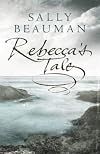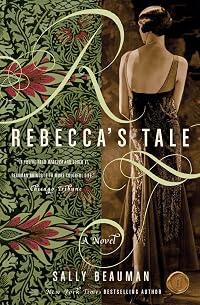
Rebecca's Tale
by Sally Beauman
On This Page
Description
April 1951. It has been twenty years since the death of Rebecca, the hauntingly beautiful first wife of Maxim de Winter, and twenty years since Manderley, the de Winter family's estate, was destroyed by fire. But Rebecca's tale is just beginning. Colonel Julyan, an old family friend, receives an anonymous package concerning Rebecca. An inquisitive young scholar named Terence Gray appears and stirs up the quiet seaside hamlet with questions about the past and the close ties he soon forges show more with the Colonel and his eligible daughter, Ellie. Amid bitter gossip and murky intrigue, the trio begins a search for the real Rebecca and the truth behind her mysterious death. show lessTags
Recommendations














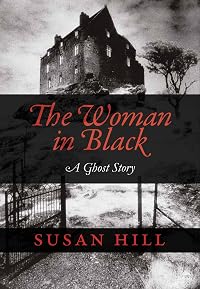
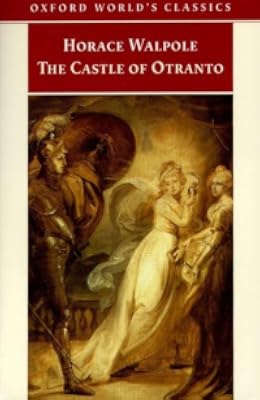
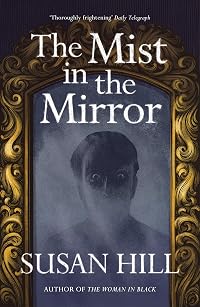
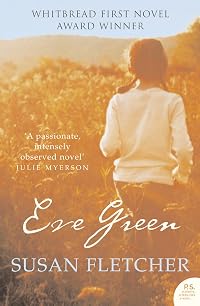
Member Recommendations

Member Reviews
Rebecca was a wonderfully, haunting gothic tale. Rebecca's tale is not. It's not even a decent detective story. Rebecca is a vivid character, a character that colours the lives of everyone in the original work, you are left to wonder at her. She is accomplished, beautiful and everyone desires her, yet.. It is made clear in the original story that she is manipulative, a liar and she had numerous affairs (confirmed by Flavell and Danvers).
However, Miss Beauman decides that clearly Rebecca is a modern heroine who must be praised for cuckolding her husband. After all she was being emotionally oppressed by the man apparently so everything her character does is justified. It is a very modern approach to the character and pushed so throroughly show more that we have to hate the timid original narrator. Indeed when Mrs De Winter appears, she does not seem to have aged, in fact, she seems as dreamy and timid as from the first book.
Rebecca's Tale does not give us a true picture of Rebecca, it gives us a rosy, sympathetic view. She is portrayed as this ultimate feminist, obviously wonderful because she doesn't settle into a 'wifely' role and perfectly entitled to cheat on her husband, because he doesn't stoke her fire enough. Rebecca in the original is ambivalent, she's a strong woman, yet deceitful; accomplished yet her likeability is a façade, she is a bright star that burns. Her truth can be seen through many of the characters in Rebecca, not just Max. Mrs Danvers confirms that she hates the men in her life and that she slept around, that Maxim was tricked into marriage. Yes Rebecca is a vivid character, yet this obsession to turn her into a modern heroine who is railing against traditional constraints is terrible and doesn't work.
Maxim is also terribly dealt with, once again, the depths of the character are ignored and Miss Beauman focuses on the 'evilness' of being a man unwilling to endure scandal. Maxim always struck me as a troubled character, one driven to the ultimate act of revenge, struck by guilt and his attention to duty. Yet Max De Winter is ignobly killed off.
I found Rebecca's tale unsatisfying as it seemed determined to push modern attitudes on the main characters and ignoring the many facets of the original cast. There was a determination to push Rebecca as a victim of terrible men and really, there was more to the character than that. show less
However, Miss Beauman decides that clearly Rebecca is a modern heroine who must be praised for cuckolding her husband. After all she was being emotionally oppressed by the man apparently so everything her character does is justified. It is a very modern approach to the character and pushed so throroughly show more that we have to hate the timid original narrator. Indeed when Mrs De Winter appears, she does not seem to have aged, in fact, she seems as dreamy and timid as from the first book.
Rebecca's Tale does not give us a true picture of Rebecca, it gives us a rosy, sympathetic view. She is portrayed as this ultimate feminist, obviously wonderful because she doesn't settle into a 'wifely' role and perfectly entitled to cheat on her husband, because he doesn't stoke her fire enough. Rebecca in the original is ambivalent, she's a strong woman, yet deceitful; accomplished yet her likeability is a façade, she is a bright star that burns. Her truth can be seen through many of the characters in Rebecca, not just Max. Mrs Danvers confirms that she hates the men in her life and that she slept around, that Maxim was tricked into marriage. Yes Rebecca is a vivid character, yet this obsession to turn her into a modern heroine who is railing against traditional constraints is terrible and doesn't work.
Maxim is also terribly dealt with, once again, the depths of the character are ignored and Miss Beauman focuses on the 'evilness' of being a man unwilling to endure scandal. Maxim always struck me as a troubled character, one driven to the ultimate act of revenge, struck by guilt and his attention to duty. Yet Max De Winter is ignobly killed off.
I found Rebecca's tale unsatisfying as it seemed determined to push modern attitudes on the main characters and ignoring the many facets of the original cast. There was a determination to push Rebecca as a victim of terrible men and really, there was more to the character than that. show less
I should first say that I'm not a diehard fan of Rebecca (though I do quite like it), so my response to Rebecca's Tale may be different from truly devoted fans of the original novel.
The novel is divided into 4 parts, each with a different narrator (I won't name them here in case that counts as a spoiler!). Beauman does a good job of giving each character his / her own distinct voice; some writers attempt to narrate with different characters, but everyone sounds the same-- that's not the case here. Chalk one up for Beauman's style.
I think what I liked most about Beauman's novel was the themes she chose to pick up and elaborate on from Rebecca: death sealed in persons (along with sterility), the life in nature, the notion of place (and show more breaking away from it), and a few others. Explorations of sexuality are also more explicit in this novel; even nature becomes almost overwhelmingly fecund. The novel still hovers at the question of who Rebecca was in life, but it also tries to pick apart who and what she has become in death.
I should emphasize that this is NOT a retelling of Rebecca but a "further-telling" of, perhaps, Manderly itself and the lives of all it touches. It's not a remake, and it's overall not an attempt to explain (its weakest moments are, in fact, when it DOES try to explain, and that's why I give it 4 stars, along with the fact that it can be rather obvious in its "mysteries" at some points).
Recommended, especially after rereading Rebecca. show less
The novel is divided into 4 parts, each with a different narrator (I won't name them here in case that counts as a spoiler!). Beauman does a good job of giving each character his / her own distinct voice; some writers attempt to narrate with different characters, but everyone sounds the same-- that's not the case here. Chalk one up for Beauman's style.
I think what I liked most about Beauman's novel was the themes she chose to pick up and elaborate on from Rebecca: death sealed in persons (along with sterility), the life in nature, the notion of place (and show more breaking away from it), and a few others. Explorations of sexuality are also more explicit in this novel; even nature becomes almost overwhelmingly fecund. The novel still hovers at the question of who Rebecca was in life, but it also tries to pick apart who and what she has become in death.
I should emphasize that this is NOT a retelling of Rebecca but a "further-telling" of, perhaps, Manderly itself and the lives of all it touches. It's not a remake, and it's overall not an attempt to explain (its weakest moments are, in fact, when it DOES try to explain, and that's why I give it 4 stars, along with the fact that it can be rather obvious in its "mysteries" at some points).
Recommended, especially after rereading Rebecca. show less
Dreadful. Re-read DuMaurier's original, and use your own imagination. Beauman drains the shadowy anti-heroine of all mystery and spirit, rewriting her as misunderstood and abused, instead of dangerous and romantic; she also insists on linking every character in the original novel by a random process of dot-to-dot, so that Manderley becomes some incestuous tangled web. The author's 'original characters' are also very weak and cliched, and the reader cares little for them, put off by the first person narrative instead of feeling invited in to their world. Contrived, convoluted melodrama; Rebecca deserves more than this.
Rebecca was a wonderfully, haunting gothic tale. Rebecca's tale is not. It's not even a decent detective story. Rebecca is a vivid character, a character that colours the lives of everyone in the original work, you are left to wonder at her. She is accomplished, beautiful and everyone desires her, yet.. It is made clear in the original story that she is manipulative, a liar and she had numerous affairs (confirmed by Flavell and Danvers).
However, Miss Beauman decides that clearly Rebecca is a modern heroine who must be praised for cuckolding her husband. After all she was being emotionally oppressed by the man apparently so everything her character does is justified. It is a very modern approach to the character and pushed so throroughly show more that we have to hate the timid original narrator. Indeed when Mrs De Winter appears, she does not seem to have aged, in fact, she seems as dreamy and timid as from the first book.
Rebecca's Tale does not give us a true picture of Rebecca, it gives us a rosy, sympathetic view. She is portrayed as this ultimate feminist, obviously wonderful because she doesn't settle into a 'wifely' role and perfectly entitled to cheat on her husband, because he doesn't stoke her fire enough. Rebecca in the original is ambivalent, she's a strong woman, yet deceitful; accomplished yet her likeability is a façade, she is a bright star that burns. Her truth can be seen through many of the characters in Rebecca, not just Max. Mrs Danvers confirms that she hates the men in her life and that she slept around, that Maxim was tricked into marriage. Yes Rebecca is a vivid character, yet this obsession to turn her into a modern heroine who is railing against traditional constraints is terrible and doesn't work.
Maxim is also terribly dealt with, once again, the depths of the character are ignored and Miss Beauman focuses on the 'evilness' of being a man unwilling to endure scandal. Maxim always struck me as a troubled character, one driven to the ultimate act of revenge, struck by guilt and his attention to duty. Yet Max De Winter is ignobly killed off.
I found Rebecca's tale unsatisfying as it seemed determined to push modern attitudes on the main characters and ignoring the many facets of the original cast. There was a determination to push Rebecca as a victim of terrible men and really, there was more to the character than that. show less
However, Miss Beauman decides that clearly Rebecca is a modern heroine who must be praised for cuckolding her husband. After all she was being emotionally oppressed by the man apparently so everything her character does is justified. It is a very modern approach to the character and pushed so throroughly show more that we have to hate the timid original narrator. Indeed when Mrs De Winter appears, she does not seem to have aged, in fact, she seems as dreamy and timid as from the first book.
Rebecca's Tale does not give us a true picture of Rebecca, it gives us a rosy, sympathetic view. She is portrayed as this ultimate feminist, obviously wonderful because she doesn't settle into a 'wifely' role and perfectly entitled to cheat on her husband, because he doesn't stoke her fire enough. Rebecca in the original is ambivalent, she's a strong woman, yet deceitful; accomplished yet her likeability is a façade, she is a bright star that burns. Her truth can be seen through many of the characters in Rebecca, not just Max. Mrs Danvers confirms that she hates the men in her life and that she slept around, that Maxim was tricked into marriage. Yes Rebecca is a vivid character, yet this obsession to turn her into a modern heroine who is railing against traditional constraints is terrible and doesn't work.
Maxim is also terribly dealt with, once again, the depths of the character are ignored and Miss Beauman focuses on the 'evilness' of being a man unwilling to endure scandal. Maxim always struck me as a troubled character, one driven to the ultimate act of revenge, struck by guilt and his attention to duty. Yet Max De Winter is ignobly killed off.
I found Rebecca's tale unsatisfying as it seemed determined to push modern attitudes on the main characters and ignoring the many facets of the original cast. There was a determination to push Rebecca as a victim of terrible men and really, there was more to the character than that. show less
I’ve recently read the three novels that are continuations or, or inspired by, Daphne Du Maurier’s ‘Rebecca’. Of the three – ‘The Other Rebecca’ by Maureen Freely, ‘Mrs De Winter’ by Susan Hill and ‘Rebecca’s Tale’ by Sally Beaumann, the first prize must go to Beaumann. She keeps the voice of the original well, in terms of time and place, but the first narrator, in a novel of four parts, is the aged Colonel Julyan, who presided over Rebecca’s inquest. He’s always had his suspicions about what truly happened, but the mistake that Favell made, and perhaps readers too, is that he didn’t keep his suspicions quiet in order to protect Maxim and his family name, as was implied. He kept his silence in order to show more protect Rebecca, as he’d been very fond of her. The novel starts with him reminiscing over the past, because an upstart author wants to write yet another book about the Manderley mystery, which has become folklore in its part of the world. Julyan recollects his long relationship with the De Winter family, and I loved his description of being a boy, playing at the great old house. His portraits of the terrifying De Winter matriarch, (Maxim’s grandmother), the kind but wilting Virginia (his mother) and her glorious sisters, and of Bea and Maxim as children, are wonderful. The story draws you right in from the start because what happened to Rebecca was wholly tied up with the way the De Winters were, an ancient family going back eight hundred years. There’s more than a whiff of authors like P G Wodehouse and Evelyn Waugh, in the light, acerbic wit of the writing. This is nowhere near a ‘women’s romantic novel’ as I'd mistakenly believed.
I was surprised – and pleased – to find ‘Rebecca’s Tale’ keeps to the ‘canon’ found in Hill’s ‘Mrs De Winter’ – i.e. what happened to the De Winters when they returned to England, or at least as much of that as Julyan and other major characters can possibly know – which is only the bare facts. Still, this novel carries on neatly from Hill’s, (and was written afterwards), and it seems to me that Beaumann must have known of that book and kept to the same story. Or the similarities are just uncanny coincidences…
Part Two of the story is told by Terence Grey, the writer who’s in Kerrith investigating the story of Rebecca. Grey is a complex character, with secrets and tragedies of his own. His interest in the old story lurches towards obsession, dangerously so. Through Grey we meet some of the other characters from ‘Rebecca’ and hear their version of events – such as the cousin Jack Favell, Frith the erstwhile butler of Manderley, and other colourful Kerrith characters. The truth about Rebecca, it seems, is more convoluted than everyone thought. Her own history is revealed in tantalizing glimpses – the girl she’d once been and the woman she became who was mistress of Manderley. The reader begins to learn about her heritage. While Grey investigates, an anonymous individual is sending notebooks of Rebecca’s to Colonel Julyan, and is also perhaps the same person who leaves a wreath at Rebecca’s old boathouse cottage, and sends a piece of her jewellery to Favell. Mysteries mount, and I couldn’t turn the pages fast enough!
Part three is Rebecca’s own tale, as found in the second notebook sent to Julyan. But we know already that Rebecca is often a minx. Is her testimony reliable? Whether this is true or not, it’s riveting to read. A free spirit, Rebecca was born ahead of her time, totally unsuited to a woman’s life in the early part of the 20th century. She suffered for her difference, as she was rarely understood. And the tragic way she narrates her story to an unborn child she believes she is carrying is moving while being unsentimental. Naturally, Rebecca’s tale is cut short by her own death. Many threads are left dangling.
Part four is related by Ellie, Colonel Julyan’s daughter. Hers is a strong, true voice, but even she has her obsession with Rebecca, seeing in the dead woman a promising template for female emancipation at a time in history when women were fighting for their rights, and most men still regarded them as mistresses, mothers or domestics. Ellie’s is undoubtedly the most political account, but she is also a vibrant, convincing character with her own desires and dreams. Ellie uncovers more mysteries, and in one case solves one, while simultaneously growing as a person. During her account, the narrative never falters. All four narrators, each with their distinctive voice, carry the story along at a good pace, but it is still deep and ponderous – and I don’t mean that in a bad way. This is not a short or shallow book by any means.
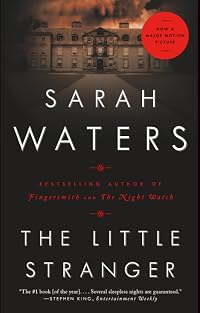
Most, but not all, of the threads finally weave together and the reader is left to make up their own mind. You don’t feel in any way short-changed by that, though. What Beaumann has done is create a convincing account, including the difficulty of discovering historical truths, when the main protagonists are dead. Some truth died with them. Rebecca affected everyone she met, often dramatically. She is perhaps all the things everyone ever thought her to be, and more, a girl who fought to survive throughout a difficult childhood and adolescence, who set her will at making an adult life for herself, to her liking. But she is always human, believable. Her gift to Ellie is revealed at the end of book, perhaps far different from what you expect all the way through. I loved that. My favourite book of those I’ve read over the past few years is ‘The Little Stranger’ by Sarah Waters, but Sally Beaumann’s ‘Rebecca’s Tale’ will now be stored on the same shelf. show less
I was surprised – and pleased – to find ‘Rebecca’s Tale’ keeps to the ‘canon’ found in Hill’s ‘Mrs De Winter’ – i.e. what happened to the De Winters when they returned to England, or at least as much of that as Julyan and other major characters can possibly know – which is only the bare facts. Still, this novel carries on neatly from Hill’s, (and was written afterwards), and it seems to me that Beaumann must have known of that book and kept to the same story. Or the similarities are just uncanny coincidences…
Part Two of the story is told by Terence Grey, the writer who’s in Kerrith investigating the story of Rebecca. Grey is a complex character, with secrets and tragedies of his own. His interest in the old story lurches towards obsession, dangerously so. Through Grey we meet some of the other characters from ‘Rebecca’ and hear their version of events – such as the cousin Jack Favell, Frith the erstwhile butler of Manderley, and other colourful Kerrith characters. The truth about Rebecca, it seems, is more convoluted than everyone thought. Her own history is revealed in tantalizing glimpses – the girl she’d once been and the woman she became who was mistress of Manderley. The reader begins to learn about her heritage. While Grey investigates, an anonymous individual is sending notebooks of Rebecca’s to Colonel Julyan, and is also perhaps the same person who leaves a wreath at Rebecca’s old boathouse cottage, and sends a piece of her jewellery to Favell. Mysteries mount, and I couldn’t turn the pages fast enough!
Part three is Rebecca’s own tale, as found in the second notebook sent to Julyan. But we know already that Rebecca is often a minx. Is her testimony reliable? Whether this is true or not, it’s riveting to read. A free spirit, Rebecca was born ahead of her time, totally unsuited to a woman’s life in the early part of the 20th century. She suffered for her difference, as she was rarely understood. And the tragic way she narrates her story to an unborn child she believes she is carrying is moving while being unsentimental. Naturally, Rebecca’s tale is cut short by her own death. Many threads are left dangling.
Part four is related by Ellie, Colonel Julyan’s daughter. Hers is a strong, true voice, but even she has her obsession with Rebecca, seeing in the dead woman a promising template for female emancipation at a time in history when women were fighting for their rights, and most men still regarded them as mistresses, mothers or domestics. Ellie’s is undoubtedly the most political account, but she is also a vibrant, convincing character with her own desires and dreams. Ellie uncovers more mysteries, and in one case solves one, while simultaneously growing as a person. During her account, the narrative never falters. All four narrators, each with their distinctive voice, carry the story along at a good pace, but it is still deep and ponderous – and I don’t mean that in a bad way. This is not a short or shallow book by any means.
Most, but not all, of the threads finally weave together and the reader is left to make up their own mind. You don’t feel in any way short-changed by that, though. What Beaumann has done is create a convincing account, including the difficulty of discovering historical truths, when the main protagonists are dead. Some truth died with them. Rebecca affected everyone she met, often dramatically. She is perhaps all the things everyone ever thought her to be, and more, a girl who fought to survive throughout a difficult childhood and adolescence, who set her will at making an adult life for herself, to her liking. But she is always human, believable. Her gift to Ellie is revealed at the end of book, perhaps far different from what you expect all the way through. I loved that. My favourite book of those I’ve read over the past few years is ‘The Little Stranger’ by Sarah Waters, but Sally Beaumann’s ‘Rebecca’s Tale’ will now be stored on the same shelf. show less
Reading Wide Sargasso Sea reminded me that years ago I'd bought a copy of Beauman's novel — which in effect gives the other side of the story about Daphne Du Maurier's Rebecca. Although chastened by the Rhys book, I plunged in anyway.
The novel has four narrators: Colonel Julyan, who was Maxim de Winter's old pal and who was keen not to raise too many questions about Rebecca's death; a young scholar who's come to snoop around Manderley for reasons of his own; Rebecca herself in a discovered diary from twenty years earlier; and Colonel Julyan's daughter Ellie.
It's something of a problem that the first narrator we encounter is Colonel Julyan. He's portrayed as a somewhat irascible, rather likable, slightly devious but in all truth pretty show more boring old fart — which is absolutely fine and dandy so far as Beauman's tale is concerned, but not for the poor reader who has to spend the first hundred pages or so in Colonel Julyan's company. It was here that I felt my training, as it were, with Wide Sargasso Sea came in especially useful, because I plowed on nevertheless.
And I'm extremely glad I did so. By the end of this longish book about three days later I was quite literally breathless. The unraveling of the mystery surrounding Rebecca — in her life as much as her death — makes absorbing reading, and the last quarter of the book is all the more compulsively readable because one spends it in the company of Julyan's daughter Ellie, easily the most attractive and sympathetic of the four narrators. Jolly good stuff. show less
The novel has four narrators: Colonel Julyan, who was Maxim de Winter's old pal and who was keen not to raise too many questions about Rebecca's death; a young scholar who's come to snoop around Manderley for reasons of his own; Rebecca herself in a discovered diary from twenty years earlier; and Colonel Julyan's daughter Ellie.
It's something of a problem that the first narrator we encounter is Colonel Julyan. He's portrayed as a somewhat irascible, rather likable, slightly devious but in all truth pretty show more boring old fart — which is absolutely fine and dandy so far as Beauman's tale is concerned, but not for the poor reader who has to spend the first hundred pages or so in Colonel Julyan's company. It was here that I felt my training, as it were, with Wide Sargasso Sea came in especially useful, because I plowed on nevertheless.
And I'm extremely glad I did so. By the end of this longish book about three days later I was quite literally breathless. The unraveling of the mystery surrounding Rebecca — in her life as much as her death — makes absorbing reading, and the last quarter of the book is all the more compulsively readable because one spends it in the company of Julyan's daughter Ellie, easily the most attractive and sympathetic of the four narrators. Jolly good stuff. show less
From my 50 book challenge as "bookiemonster81":
I'm surprised at the mostly negative reviews here. I've always been rather against modern authors tampering with a beloved book. I guess since Daphne du Maurier's 1938 work of schlock-goth fiction Rebecca isn't exactly one of my beloveds, I was more willing to give this a try.
And what a surprise! It's much better written than the orginal, though without the deliciously gothic sense of foreboding and Jane Eyre-ness that haunted du Maurier's book. I very much enjoye this, primarily for the quite subtle yet striking commentary it makes on the nature of memory. What Beauman does so well is not necessarily to revive long-buried characters but rather to demonstrate how evasions, forgetting, and show more bias can influence how we remember and retell important events in our lives. None of the narrators--least of all Rebecca herself--is reliable, yet the reader gets the sense that each is truly telling the story as he or she remembers it. show less
I'm surprised at the mostly negative reviews here. I've always been rather against modern authors tampering with a beloved book. I guess since Daphne du Maurier's 1938 work of schlock-goth fiction Rebecca isn't exactly one of my beloveds, I was more willing to give this a try.
And what a surprise! It's much better written than the orginal, though without the deliciously gothic sense of foreboding and Jane Eyre-ness that haunted du Maurier's book. I very much enjoye this, primarily for the quite subtle yet striking commentary it makes on the nature of memory. What Beauman does so well is not necessarily to revive long-buried characters but rather to demonstrate how evasions, forgetting, and show more bias can influence how we remember and retell important events in our lives. None of the narrators--least of all Rebecca herself--is reliable, yet the reader gets the sense that each is truly telling the story as he or she remembers it. show less
Members
- Recently Added By
Lists

BBC Radio 4 Bookclub
341 works; 13 members

Stories Inspired by Other Fiction
127 works; 24 members
Author Information

31+ Works 2,957 Members
Sally Beauman was born in Paignton, Devon, England on July 25, 1944. She read English literature at Girton College, Cambridge. While living in the United States, she worked as a staff writer for New York magazine before becoming an associate editor. She moved to London in 1970 and became the editor of Queen Magazine. After that, she worked as a show more freelancer for Vogue, the Daily Telegraph, the Sunday Times, and the Observer. She was the first winner of the Catherine Pakenham award for journalism. Under the pseudonym Vanessa James, Beauman wrote seven Harlequin romances in the 1980s including The Fire and the Ice and Give Me This Night. The first novel written under her own name was Destiny, which was published in 1987. Her other novels included Dark Angel, Lovers and Liars, Danger Zones, Sextet, Rebecca's Tale, The Landscape of Love, and The Visitors. She died of cancer on July 7, 2016 at the age of 71. (Bowker Author Biography) show less
Some Editions
Work Relationships
Is a (non-series) sequel to
Common Knowledge
- Original publication date
- 2001
- People/Characters
- Rebecca de Winter; Maxim de Winter; Colonel Julyan; Terence Gray; Ellie Julyan
- Important places
- England, UK
- Epigraph
- We were riding through the frozen fields in a wagon at dawn. A red wing rose in the darkness. And suddenly a hare ran across the road. One of us pointed to it with his hand. That was long ago. Today neither of them is al... (show all)ive. Not the hare, nor the man who made the gesture. O my love, where are they, where are they going The flash of a hand, streak of movement, rustle of pebbles. I ask not out of sorrow, but in wonder.
-"Encounter," Czeslaw Milosz, The Collected Poems, 1931-1987
...They thought death was worth it, but I Have a self to recover, a queen. Is she dead, is she sleeping? Where has she been, With her lion-red body, her wings of glass? Now she is flying. More terrible than she ever was, red Scar in the sky, red comet Over the engine that killed her-The mausoleum, the wax house. -"Stings." Sylvia Plath, Ariel - Dedication
- For Alan
- First words
- Last night I dreamt I went to Manderly again.
- Last words
- (Click to show. Warning: May contain spoilers.)When the air was ordinary again, I returned to the car, and told the driver to take me to the station.
- Canonical DDC/MDS
- 823.914
- Canonical LCC
- PR6052.E223
Classifications
Statistics
- Members
- 993
- Popularity
- 26,515
- Reviews
- 36
- Rating
- (3.50)
- Languages
- 8 — Czech, Dutch, English, Estonian, German, Italian, Portuguese, Swedish
- Media
- Paper, Audiobook, Ebook
- ISBNs
- 42
- ASINs
- 9