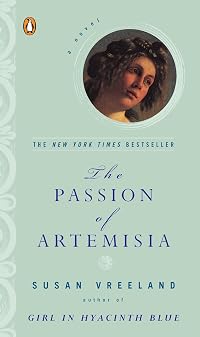
The Passion of Artemisia
by Susan Vreeland
On This Page
Description
"Susan Vreeland set a high standard with Girl in Hyacinth Blue.... The Passion of Artemisia is even better.... Vreeland's unsentimental prose turns the factual Artemisia into a fictional heroine you won't soon forget." —PeopleA true-to-life novel of one of the few female post-Renaissance painters to achieve fame during her own era against great struggle. Artemisia Gentileschi led a remarkably "modern" life. Vreeland tells Artemisia's captivating story, beginning with her public show more humiliation in a rape trial at the age of eighteen, and continuing through her father's betrayal, her marriage of convenience, motherhood, and growing fame as an artist. Set against the glorious backdrops of Rome, Florence, Genoa, and Naples, inhabited by historical characters such as Galileo and Cosimo de' Medici II, and filled with rich details about life as a seventeenth-century painter, Vreeland creates an inspiring story about one woman's lifelong struggle to reconcile career and family, passion and genius. show less
Tags
Recommendations

































Member Recommendations
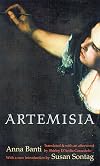
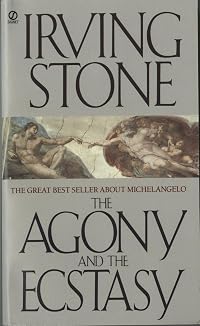
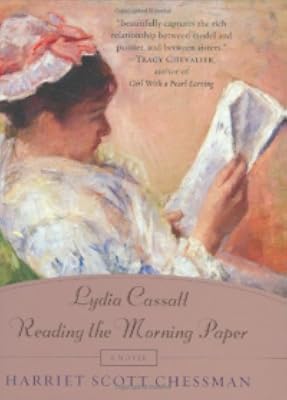
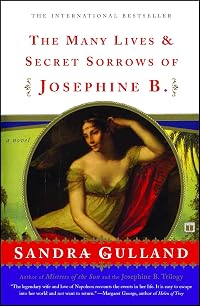
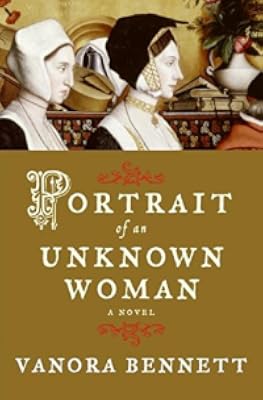
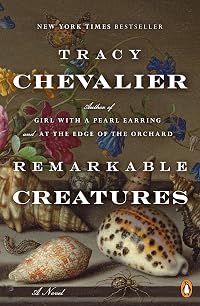
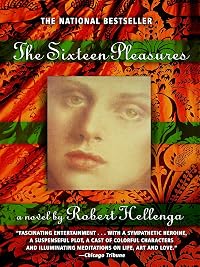
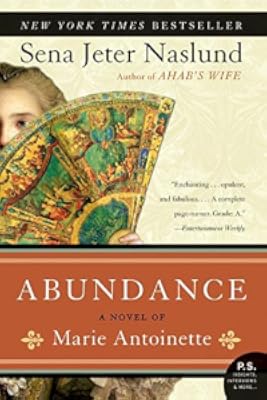
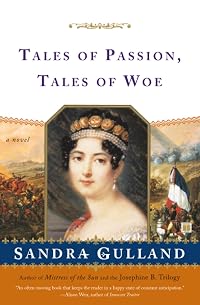
Nickelini Artemisia by Italian author Anna Banti is a critically acclaimed novel about the artist
Member Reviews
I thought this was a good biographical novel on the artist and I was particularly impressed with the author's characterization of Artemisia. But did it blow me away? Not really. Did it challenge me? Nope. Will I remember it for years to come. Don't think so. It was average, though not in a bad way. Just an average way. I'd still recommend.
The Passion of Artemisia by Susan Vreeland
Source: Purchase
My Rating: 5/5 stars
My Review:
As some of you know, I am an Art Historian in my “real” life and one of my favorite genres is historical fiction related to art and artists. Susan Vreeland is hands-down one of my favorite authors and when she wrote The Passion of Artemisia, she found a fan for life in me. I hate being asked who my favorite artist is because I could never, ever choose just one but I do have a top twenty-ish list and Artemisia Gentileschi has been near the top of that list for many, many years.
Artemisia Gentileschi was a woman far, far ahead of her time and her place and despite the all of the significant odds against her, she was able to succeed in a time and show more place when women were little more than property. Artemisia was born to paint and from an early age her father trained her in order to enhance her own innate talent. Intent on being a painter for the rest of her life, Artemisia’s path was set until the moment she was raped by one her father’s colleagues. For more than a year, Artemisia endured a very public trial to determine her guilt or innocence. Yes, you read that correctly, her guilt or innocence was on trial, not her rapists. For all intents and purposes, the allegation alone was enough to taint Artemisia and her reputation for life. By all accounts, Artemisia didn’t allow the rape nor the trial to defeat her but to empower her and inform her art for the rest of her life.
Along with her trial, history also tells us that Artemisia did things that no woman before her ever had. First and foremost among her accomplishments was being the first woman admitted to the prestigious Florentine Academy. Following her admittance to the Academy, Artemisia spent her time and her life in the service of her patrons. From Rome to Florence to Venice to Naples and, to England, Artemisia worked for some Europe’s most important citizens including the Medici Family and the King of England. She tended toward large canvases featuring strong, determined and completely capable women as seen through the eyes of and interpreted by a woman who refused to be known as a victim but rather as a preeminent painter.
The Bottom Line: This is my second reading of Vreeland’s Passion of Artemisia and as with the first reading, I was simply blown away. Vreeland has a singular ability to bring history to life. Vreeland takes the historical information that remains and turns it into a living, breathing human being, an individual whose impact on the world of art is nothing short of significant. Reading Vreeland’s account of Artemisia’s life reminds me of the fact that nothing is impossible!! Artemisia survived an unspeakable horror and rather than allowing that event to define her life, she rose above all that was done to her and succeeded in a way that no woman before her ever had. If her accomplishments during her own lifetime weren’t enough – and they certainly were – Vreeland’s accounting in this modern age is finely crafted reminder of what genius looks like. show less
Source: Purchase
My Rating: 5/5 stars
My Review:
As some of you know, I am an Art Historian in my “real” life and one of my favorite genres is historical fiction related to art and artists. Susan Vreeland is hands-down one of my favorite authors and when she wrote The Passion of Artemisia, she found a fan for life in me. I hate being asked who my favorite artist is because I could never, ever choose just one but I do have a top twenty-ish list and Artemisia Gentileschi has been near the top of that list for many, many years.
Artemisia Gentileschi was a woman far, far ahead of her time and her place and despite the all of the significant odds against her, she was able to succeed in a time and show more place when women were little more than property. Artemisia was born to paint and from an early age her father trained her in order to enhance her own innate talent. Intent on being a painter for the rest of her life, Artemisia’s path was set until the moment she was raped by one her father’s colleagues. For more than a year, Artemisia endured a very public trial to determine her guilt or innocence. Yes, you read that correctly, her guilt or innocence was on trial, not her rapists. For all intents and purposes, the allegation alone was enough to taint Artemisia and her reputation for life. By all accounts, Artemisia didn’t allow the rape nor the trial to defeat her but to empower her and inform her art for the rest of her life.
Along with her trial, history also tells us that Artemisia did things that no woman before her ever had. First and foremost among her accomplishments was being the first woman admitted to the prestigious Florentine Academy. Following her admittance to the Academy, Artemisia spent her time and her life in the service of her patrons. From Rome to Florence to Venice to Naples and, to England, Artemisia worked for some Europe’s most important citizens including the Medici Family and the King of England. She tended toward large canvases featuring strong, determined and completely capable women as seen through the eyes of and interpreted by a woman who refused to be known as a victim but rather as a preeminent painter.
The Bottom Line: This is my second reading of Vreeland’s Passion of Artemisia and as with the first reading, I was simply blown away. Vreeland has a singular ability to bring history to life. Vreeland takes the historical information that remains and turns it into a living, breathing human being, an individual whose impact on the world of art is nothing short of significant. Reading Vreeland’s account of Artemisia’s life reminds me of the fact that nothing is impossible!! Artemisia survived an unspeakable horror and rather than allowing that event to define her life, she rose above all that was done to her and succeeded in a way that no woman before her ever had. If her accomplishments during her own lifetime weren’t enough – and they certainly were – Vreeland’s accounting in this modern age is finely crafted reminder of what genius looks like. show less
It was very hard to relate to the main character and her sensibilities, but the author is quite right to pen Artemisia Gentileschi in such a frustrating manner. She was a woman of her time who possessed a difficult manner. Most of the characters are difficult to understand, but I think it was the time and the patrician nature of religion. The author sees through it and allows her feminine characters to be true to themselves.
The setting was irresistible and the tale is well told. As I was reading, I looked up the paintings mentioned and looked at each through the author's/character's eyes. Very satisfying.
The setting was irresistible and the tale is well told. As I was reading, I looked up the paintings mentioned and looked at each through the author's/character's eyes. Very satisfying.
As a young girl, Artemisia Gentileschi (c. 1593-1656) had learned from her father how to paint the dramatic Biblical and mythological scenes that were popular in the homes of the well-to-do during the post-Renaissance era. Despite this advantage, Artemisia nonetheless leads a difficult life. She survives sexual abuse at the hands of her father's friend, a humiliating rape trial, and a marriage of convenience to a man who is jealous of her superior talents. All this happens in the first few chapters. As the story progresses, Artemisia evolves into a woman modern readers can understand: a single, working mother who strives to provide the best for her bratty daughter (the same basic set-up as Joan Crawford's soapy movie Mildred Pierce), show more while worrying about where her next commission will come from.
In an interview with the author in the back of the paperback edition of the book, Vreerland admitted that she streamlined Artemisia's life, eliminating her real-life "brothers, sons, and many of the people she for whom painted in order to reveal her relationships with her father, husband, and daughter more deeply." (p. 5). Vreeland also made the interesting decision to make her Artemisia convent-educated, literate and even able to quote the Bible at will. In real life, eighteen-year-old Artemisia testified at the rape trial that she was illiterate. Apparently, she did learn how to read and write as an adult. But much of Artemisia's art involved storytelling, and it would have been intriguing for Vreeland to examine how Artemisia's illiteracy as a young woman impacted the narrative quality of her paintings.
Nonetheless, despite its lack of historical accuracy, I did enjoy the Passion of Artemisia as a Baroque soap opera. show less
In an interview with the author in the back of the paperback edition of the book, Vreerland admitted that she streamlined Artemisia's life, eliminating her real-life "brothers, sons, and many of the people she for whom painted in order to reveal her relationships with her father, husband, and daughter more deeply." (p. 5). Vreeland also made the interesting decision to make her Artemisia convent-educated, literate and even able to quote the Bible at will. In real life, eighteen-year-old Artemisia testified at the rape trial that she was illiterate. Apparently, she did learn how to read and write as an adult. But much of Artemisia's art involved storytelling, and it would have been intriguing for Vreeland to examine how Artemisia's illiteracy as a young woman impacted the narrative quality of her paintings.
Nonetheless, despite its lack of historical accuracy, I did enjoy the Passion of Artemisia as a Baroque soap opera. show less
love it and see her paintings too
Italian painter Artemisia Gentileschi (1593-1653), the novel tells the story of Gentileschi's life and career in Renaissance Italy. Publicly humiliated and scorned in Rome after her participation as defendant in a rape trial in which the accused is her painting teacher (and father's friend) Agostino Tassi, Artemisia accepts a hastily arranged marriage at the age of 18 to Pietro Stiatessi, an artist in Florence. Her marriage, while not a love match, proves at first to be affectionate, and the arrival of a daughter, Palmira, strengthens the bond with her husband. But rifts soon develop as Artemisia begins to have some success: she wins the patronage of the Medicis and is the first woman to be elected to show more the Accademia dell'Arte before her husband. Studio and home become the battlefields of Artemisia's life, and Vreeland chronicles 20 years of the painter's struggles while raising her daughter alone. Details and visuals abound in the book; readers who loved the painterly descriptions of Girl will be spellbound in particular by the scenes in which Artemisia is shown at work. While some threads in the story are frustratingly dropped and the narrative concludes before the end of Artemisia's life, the underlying themes of familial and artistic reconciliation are satisfyingly developed. show less
Italian painter Artemisia Gentileschi (1593-1653), the novel tells the story of Gentileschi's life and career in Renaissance Italy. Publicly humiliated and scorned in Rome after her participation as defendant in a rape trial in which the accused is her painting teacher (and father's friend) Agostino Tassi, Artemisia accepts a hastily arranged marriage at the age of 18 to Pietro Stiatessi, an artist in Florence. Her marriage, while not a love match, proves at first to be affectionate, and the arrival of a daughter, Palmira, strengthens the bond with her husband. But rifts soon develop as Artemisia begins to have some success: she wins the patronage of the Medicis and is the first woman to be elected to show more the Accademia dell'Arte before her husband. Studio and home become the battlefields of Artemisia's life, and Vreeland chronicles 20 years of the painter's struggles while raising her daughter alone. Details and visuals abound in the book; readers who loved the painterly descriptions of Girl will be spellbound in particular by the scenes in which Artemisia is shown at work. While some threads in the story are frustratingly dropped and the narrative concludes before the end of Artemisia's life, the underlying themes of familial and artistic reconciliation are satisfyingly developed. show less
A fine historical fiction following the life of Artemisia Gentileschi, the first woman in 1600s Italy to be accepted to the Academy of the Arts of Drawing in Rome. Her works, of which her series of the Judith story is the most famous, portray strong females with attention to their natural form, rather than the more commonly idealized version of the female form by male painters of the time.
Her life as a painter was almost destroyed when she stood a public and humiliating court trial after her father accused her painting teacher of raping her. She was subjected to a public gynecological examination and tortured with thumbscrews during her interrogation. The belief at the time, was that, if a person could tell the same story under show more torture, then it must be true. She bore the physical scars of the thumbscrews for the rest of her life on her hands.
To escape from the jeers and slurs in Rome slung at her, her father arranged her marriage to a Florentine artist and she left Rome. While being a wife and mother, her artistic career started to take flight in Florence, where she gained the protection of the Granduke Cosimo de Medici. She became friends with Galileo, and she was favored by Michaelangelo Buonarroti the younger, (nephew of the great Michaelangelo).
But an artist's survival depends on patrons who commission works from them, and that meant sometimes that the artist had to move to new cities to find new commissions. Artemisia took her family with her as she moved from Florence to Rome, Venice, Naples and briefly England.
The fictitious take on Artemisia's life, while changing some of her conditions and certainly the make up of her family as a child, and her family after marriage, doesn't detract from showcasing a woman who lived for painting, a woman who didn't allow her past to turn her into a meek and apologetic woman, a woman curious about the world and a woman who sought to make those who look at her works think of the people in them, as opposed to looking at them as flat figures. In a way, I'd say she sought to challenge their opinions of familiar subjects. show less
Her life as a painter was almost destroyed when she stood a public and humiliating court trial after her father accused her painting teacher of raping her. She was subjected to a public gynecological examination and tortured with thumbscrews during her interrogation. The belief at the time, was that, if a person could tell the same story under show more torture, then it must be true. She bore the physical scars of the thumbscrews for the rest of her life on her hands.
To escape from the jeers and slurs in Rome slung at her, her father arranged her marriage to a Florentine artist and she left Rome. While being a wife and mother, her artistic career started to take flight in Florence, where she gained the protection of the Granduke Cosimo de Medici. She became friends with Galileo, and she was favored by Michaelangelo Buonarroti the younger, (nephew of the great Michaelangelo).
But an artist's survival depends on patrons who commission works from them, and that meant sometimes that the artist had to move to new cities to find new commissions. Artemisia took her family with her as she moved from Florence to Rome, Venice, Naples and briefly England.
The fictitious take on Artemisia's life, while changing some of her conditions and certainly the make up of her family as a child, and her family after marriage, doesn't detract from showcasing a woman who lived for painting, a woman who didn't allow her past to turn her into a meek and apologetic woman, a woman curious about the world and a woman who sought to make those who look at her works think of the people in them, as opposed to looking at them as flat figures. In a way, I'd say she sought to challenge their opinions of familiar subjects. show less
When I started reading this book I had high hopes, since it's a book about a female painter in Rome. I was disappointed after the active beginning that most of it came across as either a textbook on art or on Italian history, neither of which I was expecting. However, as the characters developed more and the timeflow became less irregular (or rather I became more accustomed to the irregularity), the real message of forgiveness and how our lives impact others came across. Overall it was worth the read but could have used an editor with a heavier hand. It also dealt heavily with rape and the mentality surrounding it: specifically that the victim should be ashamed instead of the perpetrator, a concept she brings to the forefront to show more question and reason against. show less
Members
- Recently Added By
Lists

Historical Fiction
889 works; 91 members

Books Read in 2015
3,299 works; 129 members

Books set in Firenze (Florence, Italy)
35 works; 1 member

KayStJ's to-read list
1,616 works; 11 members
Author Information

27+ Works 9,047 Members
Susan Vreeland was born in Racine, Wisconsin on January 20, 1946. She received a bachelor's degree in literature from San Diego State University. After graduating, she taught high school English in San Diego from 1969 to 2000. In 1980, she began writing articles about art, culture, and travel for newspapers and magazines. Her first novel What Love show more Sees was published in 1988. Her other novels include Girl in Hyacinth Blue, The Passion of Artemisia, Luncheon of the Boating Party, Life Studies, The Forest Lover, Lisette's List, and Clara and Mr. Tiffany. Her short fiction has appeared in numerous publications including The Missouri Review, Ploughshares, New England Review, Alaska Quarterly Review, and Connecticut Review. She died after heart surgery on August 23, 2017 at the age of 71. (Bowker Author Biography) show less
Some Editions
Awards and Honors
Awards
Notable Lists
Series
Belongs to Publisher Series
Common Knowledge
- Canonical title
- The Passion of Artemisia
- Original title
- The Passion of Artemisia
- Original publication date
- 2001-11-08
- People/Characters
- Artemisia Gentileschi
- Important places
- Rome, Italy; Florence, Tuscany, Italy
- Epigraph
- About suffering they were never wrong,
The Old Masters: how well they understood
Its human position; how it takes place
While someone else is eating or opening a window
or just walking dully along.
-W. H. Auden
“Musee des Beaux Arts,” 1940 - Dedication
- To Kip, amore mio, for his understanding
- First words
- My father walked beside me to give me courage, his palm touching gently the back laces of my bodice.
- Quotations
- I closed my eyes and breathed slower to let the new truth settle and find a spot to live in me – how hard the world was going to make me.
“I long to know everything you’ve seen in Florence – every painting and sculpture, every church, piazza, and tower, everything in sunlight, shadow, even rain. If you could spare the time and if it would please you, put... (show all) your artist’s eyes into words.”
“Where art and science touch is the realm of the imagination, the place where original ideas are born, the place where both of us are most alive.”
I could study this Sabine woman who lived nineteen centuries ago and feel empathy for her, but now her struggle did not devastate me, did not make me wince as I had the first time I’d seen her. I had walked by this sculptu... (show all)re a thousand times on my way to the vegetable market and I had not become rigid with anger. Those atrocities against women had not ceased to exist in the world, but life marches on. Onions and white beans must still be bought.
At home I untied the string and tipped out the earring – Graziela’s pearl drop. On a scrap of paper edged with Graziela’s leafy tendrils were the words, “Sell the pair. Buy paint.” A warm wave passed through me. ... (show all) I touched the earring to my lips and closed my eyes, sure that I had never understood love till now.
“I paint out of honor and pride and rapture and grief and doubt and love and yearning.” I spoke evenly, but quickly so he wouldn’t interrupt me. “I hope I may live so long as to paint out of every emotion felt by hu... (show all)mankind.”
Had I done something similar to what Father had done, sacrificed a person for my art? … Love is so easily bruised by the necessity of making choices.
“At some times in our lives, our passion makes us perpetrators of hurt and loss. At other times we are the ones who are hurt – all in the name of art. Sometimes we get what we want. Sometimes we pay for another to get ... (show all)what he or she wants.” I looked at Palmira apologetically. “That’s the way the world works.”
I scraped back my chair and stood up, still waiting for her to say something. I took the letter back from her, went into the other room and poured a glass of wine, sat there alone and drank it all, quickly, three gulps. My ... (show all)cup of bitterness. I had a daughter with no feeling for others.
“Only painting and a daughter,” he murmured. Like him, I suddenly realized. He’d had the same two. Only I had denied him the joy of one in a way Palmira had not denied me. We looked into each other’s eyes at the s... (show all)ame instant, both of us awash with sorrow and recognition, seeing each other face to face. I felt the cords of connection tighten. “I am my father’s daughter.” “How’s that?” “We have both chosen art over our daughters,” I said softly.
Author's notes: The Passion of Artemisia is fiction, which is to say, imagined conversations seamed together by pieces of days and nights, trivial as well as momentous actions, invented characters as well as actual people. ... (show all)Woolf says women’s history “has to be invented – both discovered and made up.” This is the process by which a historic figure moves from yellowed archives to academic interest and from scholarship to heroic popular legend, becoming more complex and beloved as a result. I wanted to participate in giving Artemisia her cultural moment, her own heroism. I was true to fact only so long as fact furnished believable drama, in the hope that what I produced would be concordant with the soul and passions of the real Artemisia Gentileschi, 1593 – 1653, for whom the story behind the art was always vital. - Last words
- (Click to show. Warning: May contain spoilers.)“Si, Papa.” I kissed him lightly on the forehead. “I will.”
- Original language
- English
Classifications
Statistics
- Members
- 1,989
- Popularity
- 10,607
- Reviews
- 42
- Rating
- (3.75)
- Languages
- 13 — Czech, Danish, Dutch, English, Finnish, French, German, Italian, Portuguese, Slovak, Spanish, Swedish, Turkish
- Media
- Paper, Audiobook, Ebook
- ISBNs
- 39
- UPCs
- 1
- ASINs
- 11