
The Hunting of the Snark
by Lewis Carroll 
On This Page
Description
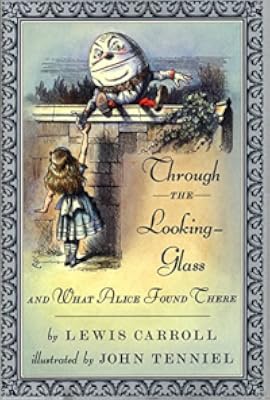
The nonsensical poem The Hunting of the Snark (An Agony in Eight Fits) was written by Lewis Carroll in 1874 and published in 1876. Describing ""with infinite humor the impossible voyage of an improbable crew to find an inconceivable creature"", the work borrows in-part from Carroll's Jabberwocky in Through the Looking-Glass .Tags
Recommendations

















Member Recommendations

Member Reviews
"The Hunting of the Snark," Lewis Carroll's fantastically inventive, perfectly metered history of an eventful hunt, is, in the humble opinion of this English major, most certainly not a nonsense poem. That such a charge would be leveled against his work the great author foresaw, and wrote a foreword addressing the claim so that future generations would be clear upon on the subject. Alas, it seems that no one reads forewords anymore, or else readers would see the perfect sense and beauty of this epic quest. I shall attempt to elucidate, by simple literary deduction, the elegant clarity of Carroll's monumental work.
Take, for example, this recurring stanza. The sense of it should be clear to anyone who has ever taken a college English show more course in one of our learned universities:
They sought it with thimbles, they sought it with care;
They pursued it with forks and hope;
They threatened its life with a railway-share;
They charmed it with smiles and soap.
"They sought it with thimbles" — well, as anyone knows, thimbles are a fumbling, seeking sort of thing. Just see how well you can get your finger in one and still be able to sew. Clearly it is a symbol of the difficulty of their venture. "They sought it with care" — naturally hunts are carried out with care, especially when the quarry is so dreadful. "They pursued it with forks," yes, I should imagine they did. Forks would likely prove useful, as a sort of skewering instrument. "And hope" hardly needs explanation: who sets out on a hunt without it? "They threatened its life with a railway-share" — yes indeed, only a personage such as the Banker could contemplate shares and stocks without a tremor, and Carroll is here giving us a rare insight into the personality of the hunted beast. And finally, "They charmed it with smiles and soap" — who isn't charmed by such things? My husband charms me regularly by such means. Apparently Snarks also find smiling, pleasant-smelling people as attractive as we do.
So really, after such a simple exercise it seems ridiculous that anyone could think the poem nonsense — that is, devoid of sense. There are a great many elements of sense, symbols, and semantics stuffed into it, perhaps more than is contained in the average modern misanthropy passed off as literature today. And what is more, Carroll's story rhymes. I should like to see several contemporary authors tell a sensible story in rhyming, rhythmic verse. How quickly we would spot the barrenness of their subjects!
In this lovely hardcover edition by Tundra Books, Oleg Lipchenko's beautiful sepia illustrations form a rich complement to the lavish language and ingenious storytelling of Carroll's poem. He has captured the serious mood of the piece while keeping its light dressing: an enviable feat. If I had the Bellman's bell, I would ring it to honor Mr. Lipchenko's success.
In short, "The Hunting of the Snark" is a deeply moving work that has found an enduring place in the great literary tradition of quest tales. Whether that quest was successful or not, I shall leave to future generations of critics to determine. But it does seem as if the essence of Snark (different, of course, from mere Sarcasm or Snip, those imposters) has been disseminated among many today. Perhaps we did catch it... or has it caught us? show less
Take, for example, this recurring stanza. The sense of it should be clear to anyone who has ever taken a college English show more course in one of our learned universities:
They sought it with thimbles, they sought it with care;
They pursued it with forks and hope;
They threatened its life with a railway-share;
They charmed it with smiles and soap.
"They sought it with thimbles" — well, as anyone knows, thimbles are a fumbling, seeking sort of thing. Just see how well you can get your finger in one and still be able to sew. Clearly it is a symbol of the difficulty of their venture. "They sought it with care" — naturally hunts are carried out with care, especially when the quarry is so dreadful. "They pursued it with forks," yes, I should imagine they did. Forks would likely prove useful, as a sort of skewering instrument. "And hope" hardly needs explanation: who sets out on a hunt without it? "They threatened its life with a railway-share" — yes indeed, only a personage such as the Banker could contemplate shares and stocks without a tremor, and Carroll is here giving us a rare insight into the personality of the hunted beast. And finally, "They charmed it with smiles and soap" — who isn't charmed by such things? My husband charms me regularly by such means. Apparently Snarks also find smiling, pleasant-smelling people as attractive as we do.
So really, after such a simple exercise it seems ridiculous that anyone could think the poem nonsense — that is, devoid of sense. There are a great many elements of sense, symbols, and semantics stuffed into it, perhaps more than is contained in the average modern misanthropy passed off as literature today. And what is more, Carroll's story rhymes. I should like to see several contemporary authors tell a sensible story in rhyming, rhythmic verse. How quickly we would spot the barrenness of their subjects!
In this lovely hardcover edition by Tundra Books, Oleg Lipchenko's beautiful sepia illustrations form a rich complement to the lavish language and ingenious storytelling of Carroll's poem. He has captured the serious mood of the piece while keeping its light dressing: an enviable feat. If I had the Bellman's bell, I would ring it to honor Mr. Lipchenko's success.
In short, "The Hunting of the Snark" is a deeply moving work that has found an enduring place in the great literary tradition of quest tales. Whether that quest was successful or not, I shall leave to future generations of critics to determine. But it does seem as if the essence of Snark (different, of course, from mere Sarcasm or Snip, those imposters) has been disseminated among many today. Perhaps we did catch it... or has it caught us? show less
 This review was written for LibraryThing Early Reviewers.
A phantasmagoric fever dream of a book, The Hunting of The Snark is that extra goody lovers of Lewis Carroll get to visit after consuming the two Alice books and hungering for more. Slight, but stuffed with nonsensical rhyme and non-reason, The Snark has always been one of my favorite diversions. This new edition published by Tundra Books and featuring the brilliant art of Oleg Lipchenko is a delight from invocation to denouement! The dense sepia toned drawings require long minutes of careful study to pluck all the hidden mystery from their midst. This is a worthy addition to add to the shelf next to the classic edition with the drawings of Henry Holiday.
This review was written for LibraryThing Early Reviewers.As much as I adore Lewis Carroll’s whimsical writing and Chris Riddell’s amazing illustrations, I couldn’t quite enjoy this book. The format and page layout is what really threw me in retrospect, which is odd but not completely unexpected. The Hunting of the Snark is a poem afterall, and the designers chose to break it up so much that I found it difficult to follow the story - to the effect that even after reading the book twice I was still left not in good stead. Riddell’s drawings were individually wonderful (I loved how he made the baker into a kind of disguised lone woman to explain her multitude of baggage and strange attitude during the voyage), but they lost their effect when coupled with the text in such a haphazard way! show more Oh well, not every seemingly perfect combination is meant to turn out as expected, and I’m still looking forward to seeing more of Riddell’s work in combination with other writers (most excitedly, with Neil Gaiman for an illustrated edition of Odd and the Frost Giants). show less
I checked this book out from my university's library. For one of my school projects I'm reworking some things from Alice in Wonderland and in order to figure out the next aspect to work with, I decided to read this book and try to find some inspiration after seeing somewhere online that it mentions words and creatures from The Jabberwocky (one of my favorite poems ever). Now I have a pretty good idea of what I can do. This was a super quick, and super fun, read. I might just have to purchase a copy of it for myself sometime and because of it, I'm considering checking out the copy of collected poems written by Carroll that is also sitting in the university's library. I just can't seem to get enough of this nonsense.
He had bought a large map representing the sea,
Without the least vestige of land;
And the crew were much pleased when they found it to be
A map they could all understand.
The map, of course, is blank. Much of this poem is absence, but where The Jabberwocky fills absence with vague nonsense that somehow expands to suggest a world of dread, the story of the snark simply isn't, until it is, and that was not enough to carry the thing for me. However, this is a fun read, and as I'm turning it over I find the ending terrifying, just somehow anticlimactic. A Snark is not a Jabberwock, much as we might wish otherwise.
The illustrations by Lipchenko in this particular edition are gorgeous and well worth seeking out. (I regret that I am not enough show more of a techno wiz to put a sample in to see.) show less
Without the least vestige of land;
And the crew were much pleased when they found it to be
A map they could all understand.
The map, of course, is blank. Much of this poem is absence, but where The Jabberwocky fills absence with vague nonsense that somehow expands to suggest a world of dread, the story of the snark simply isn't, until it is, and that was not enough to carry the thing for me. However, this is a fun read, and as I'm turning it over I find the ending terrifying, just somehow anticlimactic. A Snark is not a Jabberwock, much as we might wish otherwise.
The illustrations by Lipchenko in this particular edition are gorgeous and well worth seeking out. (I regret that I am not enough show more of a techno wiz to put a sample in to see.) show less
Mit mondjak, szeretem a nonszensz műfaját, ezt már az első Edward Lear-vers óta tudom. Ez a szöveg tulajdonképpen egész normális, nagyobb katyvaszra számítottam, de teljesen rendes szavakat használ, és nem is annyira elrugaszkodott, mint az Alice. Viszont nagyon szórakoztató. A ritmusa pedig teljesen benne maradt a fejemben. Ja, és az előszó! Még az is óriási, aki tudja, olvassa!
I was searching for books by Tove Jansson, and happened upon this one! It's illustrated wonderfully by Jansson, though the writing is all Lewis. There are so many similarities to Jabberwocky, and it's a ton of fun (even if I don't really understand what happens in the poem). I hadn't realized that it was a poem when I checked it out, but I really enjoyed reading it! Anyone who enjoys The Jabberwocky and wants more should check this out. I especially liked the illustrations in this edition.
Members
- Recently Added By
Lists

Folio Society
831 works; 53 members

Poetry Corner
187 works; 15 members

Works Referenced in The League of Extraordinary Gentlemen
122 works; 6 members

Books Read in 2014
2,343 works; 89 members
Author Information

1,474+ Works 108,595 Members
Charles Luthwidge Dodgson was born in Daresbury, England on January 27, 1832. He became a minister of the Church of England and a lecturer in mathematics at Christ Church College, Oxford. He was the author, under his own name, of An Elementary Treatise on Determinants, Symbolic Logic, and other scholarly treatises. He is better known by his pen show more name of Lewis Carroll. Using this name, he wrote Alice in Wonderland and Through the Looking Glass. He was also a pioneering photographer, and he took many pictures of young children, especially girls, with whom he seemed to empathize. He died on January 14, 1898. (Bowker Author Biography) show less
Lewis Carroll has a Legacy Library. Legacy libraries are the personal libraries of famous readers, entered by LibraryThing members from the Legacy Libraries group.
Some Editions
Awards and Honors
Awards
Notable Lists
Series
Belongs to Publisher Series
Work Relationships
Is contained in
Alice's Adventures in Wonderland / Through the Looking Glass / The Hunting of the Snark by Lewis Carroll
Alice's Adventures in Wonderland, Through the Looking-Glass, The Hunting of the Snark, Phantasmagoria and Other Poems by Lewis Carroll
Has the (non-series) sequel
Has the adaptation
Inspired
Has as a supplement
Common Knowledge
- Canonical title*
- La caccia allo Snark
- Original title
- The Hunting of the Snark: An Agony in Eight Fits
- Original publication date
- 1876
- People/Characters
- The Bellman; The Boots; The Barrister; The Beaver; The Baker; The Broker (show all 7); The Billiard-marker
- Important places
- Snark Island
- Dedication
- Inscribed to a dear Child:
in memory of golden summer hours
and whispers of a summer sea. - First words
- "Just the place for Snark!" the Bellman cried,
As he landed his crew with care;
Supporting each man in the top of the tide
By a finger entwined in his hair. - Last words
- (Click to show. Warning: May contain spoilers.)In the midst of the word he was trying to say,
In the midst of his laughter and glee,
He had softly and suddenly vanished away —
For the Snark was a Boojum, you see. - Blurbers
- Fremont-Smith, Eliot; Crowder, Joan; Kanfer, Stefan
- Original language
- English
*Some information comes from Common Knowledge in other languages. Click "Edit" for more information.
Classifications
Statistics
- Members
- 1,450
- Popularity
- 16,192
- Reviews
- 47
- Rating
- (4.03)
- Languages
- 18 — Catalan, Czech, Danish, Dutch, English, Estonian, Finnish, French, German, Hebrew, Italian, Multiple languages, Norwegian, Polish, Portuguese, Russian, Spanish, Swedish
- Media
- Paper, Audiobook, Ebook
- ISBNs
- 159
- ASINs
- 60
