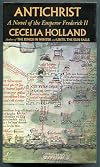
Antichrist: A Novel of the Emperor Frederick II
by Cecelia Holland
On This Page
Tags
Recommendations















Member Reviews
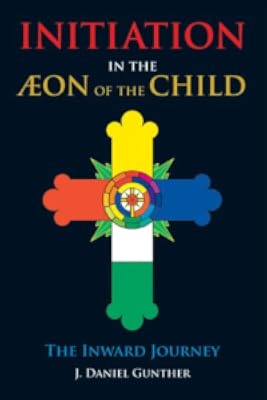
Historical novelist Cecelia Holland is the author of Antichrist: a novel of the Emperor Frederick II (1970). The British issue of the same book had a more timid publisher, it seems. The title there was Wonder of the World, in reference to Frederick's renown as stupor mundi. The US Primate of the Gnostic Catholic Church identifies Frederick II as the "Frederick of Hohenstaufen" enumerated among the saints of Liber XV, and he points to Frederick's notable antagonism with Rome, but he fails to note the item that gave Holland her title: a tradition of identifying Frederick as the Antichrist.
Antichrist is an inherently prophetic figure, and the prophecies of Frederick’s Antichrist status were initially derived from Joachim of Fiore’s show more writings. Holland observes this fact with a brief notice in her prefatory “Note” (ix). The Super Hieremiam was a pseudo-Joachimist work that identified Frederick as a head of the apocalyptic dragon and as the emperor whose death would inaugurate the age of the Holy Spirit. The prophecy regarding Frederick is one of the elements that made Joachim’s work topical for the Franciscans who became interested in it during the 1240s.
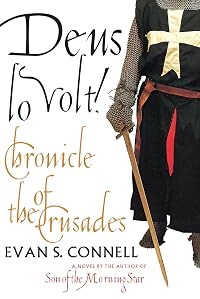
Holland’s story is set in the 1220s, with Frederick’s prosecution of the Sixth Crusade. She depicts the Franciscans in Outremer as opponents of the Emperor, and she has them accuse him of being Antichrist. Whether they would have done so at that time, before taking up the ideas from Joachim, or whether the accusation in the novel was anachronistic, I don’t know.
Besides the Franciscan Order, Antichrist includes a rough and caricaturing treatment of the military Orders of the Temple and the Hospital. Of the former, Holland writes that they “were beyond doubt Satanist,” choosing to take the French court proceedings as gospel on this count (xiii). She depicts both Orders--who were, after all, opposed to her protagonist Frederick--as corrupt and malevolent. In fact, her depiction of them is much in keeping with the villainous roles that they play in the novels of Sir Walter Scott (1771-1832).
An important aspect of the novel (and the events it attempts to describe) is the relationship between Christians and Muslims, both in southern Europe and in Palestine. The idea that Frederick was Antichrist had much to do with his perceived and actual intimacy with Saracens and Islam. Holland creatively adds a member of the Order of Assassins to Frederick’s bodyguard in Palestine. This touch on her part leads to a historical error, in which she has the “Assassins” in question refer to themselves as Hashishiyyun (164). The Muslims associated with Alamut whom the Crusaders called “Assassins” were sometimes called hashishis as a term of derision by their Muslim antagonists, but they were in fact, and knew themselves as, Syrian Ismailis of the Nizari sect.
Holland’s book was great fun to read: it has a lot of witty dialogue and vivid description. If handled respectfully, it would probably make a terrific movie. Although she makes some outright errors, the author provides the unusual courtesy among historical novelists of pointing out which principal features of the story are her conscious interpolations (xii-xiii). As far as the broad outlines of her narrative go, there is nothing to contradict any of the history I have read. show less
Antichrist is an inherently prophetic figure, and the prophecies of Frederick’s Antichrist status were initially derived from Joachim of Fiore’s show more writings. Holland observes this fact with a brief notice in her prefatory “Note” (ix). The Super Hieremiam was a pseudo-Joachimist work that identified Frederick as a head of the apocalyptic dragon and as the emperor whose death would inaugurate the age of the Holy Spirit. The prophecy regarding Frederick is one of the elements that made Joachim’s work topical for the Franciscans who became interested in it during the 1240s.
Holland’s story is set in the 1220s, with Frederick’s prosecution of the Sixth Crusade. She depicts the Franciscans in Outremer as opponents of the Emperor, and she has them accuse him of being Antichrist. Whether they would have done so at that time, before taking up the ideas from Joachim, or whether the accusation in the novel was anachronistic, I don’t know.
Besides the Franciscan Order, Antichrist includes a rough and caricaturing treatment of the military Orders of the Temple and the Hospital. Of the former, Holland writes that they “were beyond doubt Satanist,” choosing to take the French court proceedings as gospel on this count (xiii). She depicts both Orders--who were, after all, opposed to her protagonist Frederick--as corrupt and malevolent. In fact, her depiction of them is much in keeping with the villainous roles that they play in the novels of Sir Walter Scott (1771-1832).
An important aspect of the novel (and the events it attempts to describe) is the relationship between Christians and Muslims, both in southern Europe and in Palestine. The idea that Frederick was Antichrist had much to do with his perceived and actual intimacy with Saracens and Islam. Holland creatively adds a member of the Order of Assassins to Frederick’s bodyguard in Palestine. This touch on her part leads to a historical error, in which she has the “Assassins” in question refer to themselves as Hashishiyyun (164). The Muslims associated with Alamut whom the Crusaders called “Assassins” were sometimes called hashishis as a term of derision by their Muslim antagonists, but they were in fact, and knew themselves as, Syrian Ismailis of the Nizari sect.
Holland’s book was great fun to read: it has a lot of witty dialogue and vivid description. If handled respectfully, it would probably make a terrific movie. Although she makes some outright errors, the author provides the unusual courtesy among historical novelists of pointing out which principal features of the story are her conscious interpolations (xii-xiii). As far as the broad outlines of her narrative go, there is nothing to contradict any of the history I have read. show less
(Of interest to nobody but myself, but I ordered this book from the library and went in to collect it on Monday. Just as it was being put on my card, I glanced at the New Arrivals table and saw the latest James Lee Burke and grabbed it. It was only yesterday that I noticed the congruity between the title of this, The Wonder Of The World and the Burke, The Light Of The World. Furthermore, I sat down last night to watch the latest episode of the superb tv show Fargo, titled A Fox, A Rabbit And A Cabbage, and one of the characters posed the timeless riddle of the man with the three objects, no two of which can be left alone together, the river and the small boat. Only a few hours earlier I had found myself reading about three characters show more discussing the same riddle (with a wolf and a goat - the cabbage is a constant) in the pages of The Wonder Of The World. I'm pretty sure this means something. I'm pretty sure it means I should get out more.)
Another Cecelia Holland novel, another medieval hero winding his way to a crucial turning point in his career or in history itself, or both. Frederic, Emperor of the Holy Roman Emperor sets out to finally sort out the pesky Middle East Problem once and for all. He's pretty sure he can negotiate a treaty granting him the Holy City of Jerusalem without the messy, if more traditional, business of Christians and Infidels slaughtering each other. Quite a lot of Christians think this is unsporting, including the Pope, who appears to have excommunicated Frederick for not going on a crusade and promptly invades Frederick's beloved Sicily while he's off on Crusade, despite the fact that the Pope himself has laid an interdiction against anyone attacking crusader's lands while they're off on Crusade.
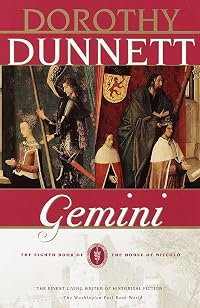
Frederick is brilliant, charismatic, mercurial, passionate, lecherous, easily bored and a bit of a thrill-seeker. This is the most Dunnetish of the books so far, though Frederick isn't as enigmatic as Lymond or Niccolo. This isn't a novel of clever, witty, textual games. There are complex themes and deals and political situations all over the place, but Frederick, and Holland, deals with them smoothly in that wonderful, clear, polished prose. There's no battle, either, though there's a nasty street fight. Battles are largely avoided, much to everyone's annoyance, even Frederick's, at the end, as he pursues the Papal forces through Sicily. Climactic conflict eludes him, and us, and then you get to the end, and you realise it was probably just as well. show less
Another Cecelia Holland novel, another medieval hero winding his way to a crucial turning point in his career or in history itself, or both. Frederic, Emperor of the Holy Roman Emperor sets out to finally sort out the pesky Middle East Problem once and for all. He's pretty sure he can negotiate a treaty granting him the Holy City of Jerusalem without the messy, if more traditional, business of Christians and Infidels slaughtering each other. Quite a lot of Christians think this is unsporting, including the Pope, who appears to have excommunicated Frederick for not going on a crusade and promptly invades Frederick's beloved Sicily while he's off on Crusade, despite the fact that the Pope himself has laid an interdiction against anyone attacking crusader's lands while they're off on Crusade.
Frederick is brilliant, charismatic, mercurial, passionate, lecherous, easily bored and a bit of a thrill-seeker. This is the most Dunnetish of the books so far, though Frederick isn't as enigmatic as Lymond or Niccolo. This isn't a novel of clever, witty, textual games. There are complex themes and deals and political situations all over the place, but Frederick, and Holland, deals with them smoothly in that wonderful, clear, polished prose. There's no battle, either, though there's a nasty street fight. Battles are largely avoided, much to everyone's annoyance, even Frederick's, at the end, as he pursues the Papal forces through Sicily. Climactic conflict eludes him, and us, and then you get to the end, and you realise it was probably just as well. show less
Ratings
Members
- Recently Added By
Lists

Fiction Featuring Real People
81 works; 17 members
Author Information

53+ Works 3,334 Members
Born in Henderson, Nevada, Cecelia Holland was educated at Pennsylvania State University and Connecticut College, where she received her B.A. degree. She has served as a visiting professor of English at Connecticut College since 1979. Holland's historical novels have received broad critical acclaim. According to one critic, she "proves that there show more can be more to historical thrillers than swordplay and seduction." (Time) Among her novels is City of God (1979), which is set in Rome during the period of the Borgia family. Told from the point of view of Nicolas, a secretary to the Florentine ambassador to Rome, this novel brings to life the period of the Renaissance, including the political intrigue that characterized Rome at the time. Other works include Until the Sun Falls (1969), a story of the ancient Mongols and their empire, The Firedrake (1966), her first published novel, Great Maria (1974), The Bear Flag (1990), and Pacific Street (1991). Holland is very adept at capturing the period she writes about, including the clothing, furnishings, and customs of the time. One critic has noted that Holland "is never guilty of the fatuity which plagues most historical fiction: she never nudges the reader into agreeing that folks way back then were really just like you and me, only they bathed less often." (Bowker Author Biography) show less
Awards and Honors
Notable Lists
Common Knowledge
- Canonical title
- Antichrist: A Novel of the Emperor Frederick II
- Original publication date
- 1970
- People/Characters
- Frederick II, Holy Roman Emperor; Yolande of Jerusalem
Classifications
Statistics
- Members
- 32
- Popularity
- 883,140
- Reviews
- 2
- Rating
- (3.70)
- Languages
- English, German
- Media
- Paper
- ISBNs
- 3
- ASINs
- 3